Showing posts with label Pew Research. Show all posts

Sunday, May 17, 2026

Agriculture In Africa: Science And Research Can’t Make An Impact Without Investment And Good Policies

Women rice farmers in Senegal. Photo by Alvo Pavan, via Getty Images


BY PAPE ABDOULAYE SECK
CHERCHEUR ACADEMIE NATIONALE,
DES SCIENCE ET TECHNIQUES 
DU SENEGAL (ANSTS)

Agriculture is the lifeblood of Africa. More than 60% of African households depend directly or indirectly on the land for their livelihoods. And the continent has nearly 60% of the world’s uncultivated arable land.

Farming is a fragile sector, however. It has to deal with climate change, market volatility, weak infrastructure and demographic pressure. Addressing these challenges requires political commitment and investment. It also requires science, innovation and high-quality research.

I have been involved in scientific research, particularly agricultural research, for more than four decades. My roles have included researcher, member of multiple science academies, director general of the Africa Rice Center/CGIAR, and Senegal’s minister in charge of agricultural research.

Throughout these years, one criticism has repeatedly surfaced: agricultural research is often perceived as expensive while delivering little for people. This perception is widely shared and frequently echoed in political and media debates.

Based on my experience, I believe the criticism rests on a questionable assumption: that the impact of science depends exclusively on those who produce it. When innovations fail to change the world, scientists themselves are often presented as the culprits.

The reality is far more complex. The history of agricultural transformation across the world shows that research alone never changes societies. Impact follows when an agricultural ecosystem effectively connects science to producers, markets, finance, institutions and public policy.

International institutions have highlighted the difficulties many developing countries face in turning scientific knowledge into development. The reasons include weak innovation ecosystems, too little infrastructure and limited institutional coordination.

An example of what success looks like is the Green Revolution in Asia. Scientific breakthroughs improved wheat and rice varieties which transformed agriculture. It was not simply because the science was strong. There were other factors too. They included governments investing in irrigation, extension services, rural infrastructure, credit systems and market organisation.

In India and Vietnam, for example, science operated within a coherent system linking researchers, farmers, institutions and markets.

Science generates knowledge, informs policies, stimulates innovation and opens new possibilities. But it does not change societies on its own.

The missing parts

Recent decades have brought advances on a number of fronts. In seeds, irrigation, soil fertility management, climate adaptation, biotechnology, digital agriculture, agroecology and sustainable food systems.

African researchers, universities and international agricultural research centres have contributed enormously to this progress.

Rwanda and Ethiopia provide useful examples of how coordinated ecosystems can speed up change. In both, stronger links between research, extension systems, public investment and farmer support mechanisms have made a difference. They have contributed to faster uptake of new technologies. And they have led to productivity gains in several strategic crops such as maize, rice, cassava, beans and soybeans.

Another example is rice. During my years at AfricaRice, I saw major scientific advances in rice research. This included the development of New Rice for Africa varieties. ⁠ These resulted from years of scientific work combining the high productivity potential of Asian rice with the resilience of African rice, particularly its tolerance to drought, poor soils and local climatic stresses. It wasn’t easy, because the two rice species are genetically distant.

Farmers quickly took up the new varieties. Farmer incomes and food production improved in countries where governments, seed systems, extension services and development partners worked together. In Uganda, Guinea and several west African countries, coordinated programmes helped accelerate adoption among smallholder farmers.

These examples show that effective agricultural innovation will only be adopted and scaled if several conditions are met together. These include:

access to inputs and technologies

accessible financing

efficient extension services

functioning infrastructure

organised markets

coherent, predictable public policies.

Without these conditions, innovations often remain confined to research stations, pilot projects or scientific publications. Where seed systems, rural financing or market organisation are weak, good science makes little difference.

In several African countries, farmers aren’t using improved seed varieties because they can’t get certified seeds at scale. Likewise, promising innovations in irrigation, post-harvest technologies or digital agriculture have struggled because of weaknesses in infrastructure, rural credit or institutional coordination.

What’s needed

Debates on agricultural research in Africa must go beyond simplistic criticism. Agricultural research should not be viewed as a cost. Rather it is a strategic investment in food security, economic sovereignty, environmental sustainability, public health, social stability and human dignity.

Blaming science for lacking impact masks the weaknesses of broader development systems.

As Africa faces the defining challenge of the 21st century – feeding its population without destroying the planet – it would be a mistake to weaken scientific research. The continent must instead strengthen alliances between science, policy, finance, private sector actors, farmers, universities and civil society.

Across Africa, emerging innovation platforms show that when these actors work together, scientific advances can create tangible economic and social change. The challenge now is to broaden this beyond isolated successes.

In the end, the impact of science is a collective responsibility.

And science can only change the world when societies decide to give it the means to do so.

READ ORIGINAL STORY HERE

Monday, May 04, 2026

The Bias In Medical Research: Africa Carries A Huge Disease Burden But Is Missing From Clinical Trials

Researchers at the Institute of Medical Research and Medicinal Plant Studies in Yaounde, Cameroon. Daniel Beloumou Olomo / AFP via Getty Images

BY BAMBA GAYE
ADJUNCT PROFESSOR, UNIVERSITE
CHEIKH ANTA DIOP DE DAKAR

Modern medicine prides itself on being a universal science, built on evidence from clinical trials.

But there’s a bias in medical research. While Africa accounts for roughly 25% of the global disease burden and 19% of the global population, the continent’s people are largely invisible in some clinical trials.

The scale of the erasure is revealed in a landmark study of 2,472 randomised controlled trials globally published between 2019 and 2024.

I led this team of researchers, who scrutinised the world’s most influential medical publications to quantify African representation. They included the New England Journal of Medicine, The Lancet, the Journal of the American Medical Association, Nature Medicine, and the British Medical Journal. There were also three leading cardiovascular journals in the study: Circulation, the European Heart Journal and the Journal of the American College of Cardiology.

I am a physician-scientist working at the intersection of cardiometabolic epidemiology and biomedical data science. I also focus on large-scale population studies in Africa and data-driven cardiovascular prevention.

Randomised controlled trials are a cornerstone of evidence-based medicine. Introduced in the mid-20th century, they rigorously evaluate the safety and effectiveness of treatments by randomly assigning participants to different groups. This is done to minimise bias. Trials like these have been central to major medical breakthroughs, from cardiovascular therapies to vaccines. They continue to guide clinical decisions and the development of new treatments worldwide.

What we discovered

Our findings show a profound imbalance in the global clinical research landscape. Across the five most prestigious general medical journals, only 3.9% of trials were conducted exclusively in Africa. In cardiovascular health, the numbers drop to a statistical whisper. Of the major trials published in leading cardiology journals, just two studies (0.6%) were conducted solely on African soil.

This is a crisis of scientific accuracy. When clinical trials exclude African populations, they produce evidence that lacks “external validity”. This refers to how well the results of a study can be generalised beyond the participants. It asks whether findings from a clinical trial will still hold true when applied to different populations, settings, or real-world conditions.

Without that validity, doctors are essentially conducting unmonitored experiments on millions of patients every day.

Modern medicine cannot claim to be universal if entire populations remain invisible in the evidence base. Biology, health systems and disease patterns are not identical across the world.

The gap and why it matters

Many treatments used across the continent are based on evidence generated in non-African populations, raising concerns about their applicability.

Moreover, most Africa-based trials still focus on infectious diseases, despite the rising burden of non-communicable diseases such as cardiovascular disease.

Emerging evidence shows that genetics, environment and diet can radically alter how a body responds to a drug. It therefore makes no medical sense that an entire continent is left out of the trial net.

There’s also evidence showing that certain treatments have different safety profiles in Black patients. Diabetes and gout are just two examples. So are certain common blood pressure medications, such as angiotensin-converting enzyme (ACE) inhibitors. Research shows that they carry a three- to four-fold higher risk of severe, life-threatening side effects in people of African descent compared to other populations.

When clinical trials exclude populations, doctors are forced to extrapolate findings from one population and apply them to another.

The study also highlights a dangerous lag between global research funding and the evolving reality of African health. The new data show that nearly 76% of trials conducted exclusively in Africa focused on infectious diseases. But the continent is undergoing a massive epidemiological shift. Non-communicable diseases – heart disease, stroke, and diabetes – now account for about 38% of all deaths in many African nations.

The middle class in Africa has tripled to 300 million people from roughly 100 million people in the early 2000s. More people are now living long enough with lifestyles that increase the risk of chronic conditions such as heart disease, diabetes, and hypertension. Consequently, there is a growing need and market for long-term treatments that manage these diseases, rather than short-term therapies for infections. Yet cardiovascular trials continue to be discouraged.

Even within the continent, the data show deep “black holes” of information. South Africa accounted for over 62% of all trials conducted on the continent. Central Africa, a region that’s home to more than 180 million people, was virtually non-existent in the global research record. It contributed less than 3% of the continent’s limited trial output. Possible reasons include South Africa’s decades of cumulative investment, seen in stronger academic hubs, research governance, experienced trial units, and more established sponsor relationships. Other regions face barriers like fewer resourced research institutions, less access to trial platforms, and sometimes language and publication issues that can reduce visibility in top-tier journals.

The inequity extends into the hierarchy of science itself. Even when African sites are included in large, multicontinental trials, they are often relegated to the role of “recruitment hubs” rather than scientific partners. Our study found that African scientists led only 3.6% of multicontinental trials that included an African site.

Towards a new era of African science

Africa should not simply be a location where studies are conducted.

It must be a place where research is conceived, led and interpreted. The current model creates a cycle of external dependence where international institutions manage the funding and the data. This leaves local research systems fragile and unable to translate evidence into national policy.

There is need for “ring-fenced” funding for African-led research, the development of regional trial networks, and a mandate for medical journals to report on the diversity of trial populations.

There are signs of a rising momentum. Organisations like Alliance for Medical Research in Africa are working to equip a new generation of African investigators. Africa must create a research ecosystem that is too important for the global community to ignore.

READ ORIGINAL STORY HERE

Tuesday, April 28, 2026

Why Do So Many African Women Bleach Their Skin? Study Looks Beyond What They Tell Researchers

Skin lightening cosmetic products displayed at the Koumassi market in Abidjan, Cote d'Ivoire. Sia Kambou/AFP via Getty Images

BY OYENIKE BALOGUN
ASSISTANT PROFESSOR OF PSYCHOLOGY,
BENTLEY UNIVERSITY, MASSACHUSETTS

In some African countries, more than 50% of women regularly use skin-lightening products. In South Africa, the rate is 32%, while in Nigeria it’s 77%. This dwarfs rates in other regions of the world.

The health consequences are not trivial. Over-the-counter skin lightening creams and pills have been linked to severe skin discoloration, organ damage, neurological conditions, and dangerous complications during surgery.

Yet researchers still don’t have a clear understanding of why women use these products. This is an important question to answer because it should guide the design of public health solutions.

One intuitive explanation, that women bleach their skin because they are dissatisfied with their skin colour, turns out to be surprisingly difficult to confirm.

Most research on body image relies on explicit measures – essentially, surveys where participants are asked directly how they feel about their appearance. But my work as a mixed-methods researcher and counselling psychologist suggests that the method has limits. People don’t always answer accurately. In contexts where preferring lighter skin can feel like – or be viewed as – an admission of self hatred, there are strong social pressures shaping how people respond to direct questions.

To overcome this problem, my co-authors and I approached the issue differently. In our recently published study, we explored whether an implicit measure, the Skin Implicit Association Test (Skin IAT), might reveal something that self-report scales may miss.

The test, adapted from the Implicit Association Test by social psychologist Anthony Greenwald and colleagues, measures how quickly participants pair images of light and dark skin tones with positive or negative words. The logic is simple: if someone automatically associates light skin with positive words and dark skin with negative ones, that association shows up in their response time – even if they would never directly say so on a survey.

Developers of implicit measures suggest that these tests get around self-report biases by assessing automatic, instinctive associations rather than asking for expressed beliefs, attitudes, or self-evaluations. The tests may bypass the filter of what people feel comfortable admitting. Implicit association tests have also been used to assess other implicit preferences, including race, weight, religion and age.

Our findings uncovered a striking gap: nearly 79% of participants showed an automatic preference for lighter skin on the implicit test. The standard surveys in our study identified less than a third of those surveyed.

These findings matter because they underscore the fact that forces driving skin bleaching across the African continent can’t be reduced to a single psychological construct. They are embedded in centuries of colonial history, in the global circulation of Eurocentric beauty ideals, in economic systems that attach social capital to lighter skin, and in media environments that relentlessly reinforce those hierarchies.

A research design that rises up to this complexity must be equally multidimensional by combining implicit and explicit measures with qualitative approaches that create space for women to articulate, in their own terms, how skin colour operates in their lives.

Measuring unconscious responses

Our study included a sample of 221 predominantly South African Black women. This sample represented the largest share of respondents for this online survey, which was targeted to Black African women across the continent.

Respondents were asked to complete two self-report measures of skin colour satisfaction as well as the Skin Implicit Association Test. To be eligible for the study, respondents had to identify as Black African women, be at least 18 years old, and be willing to answer questions about their physical appearance.

Following the implicit test, 78.5% showed a preference for lighter skin. The two self-report measures identified far fewer (18.5% and 29.8% respectively).

The implicit test results in our study (78.5% preferring lighter skin) more closely matched the higher limit of reported rates of skin bleaching on the continent (77% in Nigeria).

This measurement gap matters. It may suggest that for a substantial number of Black African women, lighter skin preferences may be operating below the level of conscious awareness. Or, perhaps, below the level of what feels safe to express. These are women who, on a survey, may report being satisfied with their skin, but whose automatic associations tell a different story.

Better research

As researchers, we are not advocating that self-report measures should be abandoned. They capture things like conscious attitudes, values and beliefs. For many research questions, they remain indispensable.

Our findings, rather, point to the need to use more than one method of investigating what respondents think and feel.

Implicit measures probe associations that may operate below the threshold of deliberate reflection.

In-depth interviews, focus groups and community-based methods can reveal the varied texture of experiences that no scale, implicit or otherwise, can fully capture. Mixed methods, then, are not a compromise between imperfect tools. They are the appropriate response to a phenomenon that is at once structural, cultural, and deeply personal.

As African countries grapple with the public health dimensions of a practice that is common but poorly understood, the research community has an obligation to do better. That means investing in measurement tools developed specifically for, and with, Black African women. It means accounting for regional variety. It also means taking seriously the possibility that what women report about their bodies and their private feelings or unconscious experiences are not always the same thing.

READ ORIGINAL STORY HERE

Thursday, December 18, 2025

‘This Year Nearly Broke Me As A Scientist’ – US Researchers Reflect On How 2025’s Science Cuts Have Changed Their Lives

Many researchers are working to advocate for science in the public sphere. John McDonnell/AP Photo

BY CARRIE MCDONOUGH, BRIAN G. HEN NING, CARA POLAND, NATHANIEL M. TRAN, RACHAEL SIRIANI AND STEPHANIE J. NAWYN

From beginning to end, 2025 was a year of devastation for scientists in the United States.

January saw the abrupt suspension of key operations across the National Institutes of Health, not only disrupting clinical trials and other in-progress studies but stalling grant reviews and other activities necessary to conduct research. Around the same time, the Trump administration issued executive orders declaring there are only two sexes and ending DEI programs. The Trump administration also removed public data and analysis tools related to health disparties, climate change and environmental justice, among other databases.

February and March saw a steep undercutting of federal support for the infrastructure crucial to conducting research as well as the withholding of federal funding from several universities.

And over the course of the following months, billions of dollars of grants supporting research projects across disciplines, institutions and states were terminated. These include funding already spent on in-progress studies that have been forced to end before completion. Federal agencies, including NASA, the Environmental Protection Agency, the National Oceanic and Atmospheric Administration and the U.S. Agency for International Development have been downsized or dismantled altogether.

The Conversation asked researchers from a range of fields to share how the Trump administration’s science funding cuts have affected them. All describe the significant losses they and their communities have experienced. But many also voice their determination to continue doing work they believe is crucial to a healthier, safer and more fair society.


Pipeline of new scientists cut off

Carrie McDonough, Associate Professor of Chemistry, Carnegie Mellon University

People are exposed to thousands of synthetic chemicals every day, but the health risks those chemicals pose are poorly understood. I was a co-investigator on a US$1.5 million grant from the EPA to develop machine-learning techniques for rapid chemical safety assessment. My lab was two months into our project when it was terminated in May because it no longer aligned with agency priorities, despite the administration’s Make America Healthy Again report specifically highlighting using AI to rapidly assess childhood chemical exposures as a focus area.

Labs like mine are usually pipelines for early-career scientists to enter federal research labs, but the uncertain future of federal research agencies has disrupted this process. I’m seeing recent graduates lose federal jobs, and countless opportunities disappear. Students who would have been the next generation of scientists helping to shape environmental regulations to protect Americans have had their careers altered forever.

I’ve been splitting my time between research, teaching and advocating for academic freedom and the economic importance of science funding because I care deeply about the scientific and academic excellence of this country and its effects on the world. I owe it to my students and the next generation to make sure people know what’s at stake.

Fewer people trained to treat addiction

Cara Poland, Associate Professor of Obstetrics, Gynecology and Reproductive Biology, Michigan State University


I run a program that has trained 20,000 health care practitioners across the U.S. on how to effectively and compassionately treat addiction in their communities. Most doctors aren’t trained to treat addiction, leaving patients without lifesaving care and leading to preventable deaths.

This work is personal: My brother died from substance use disorder. Behind every statistic is a family like mine, hoping for care that could save their loved one’s life.

With our federal funding cut by 60%, my team and I are unable to continue developing our addiction medicine curriculum and enrolling medical schools and clinicians into our program.

Meanwhile, addiction-related deaths continue to rise as the U.S. health system loses its capacity to deliver effective treatment. These setbacks ripple through hospitals and communities, perpetuating treatment gaps and deepening the addiction crisis.

Communities left to brave extreme weather alone

Brian G. Henning, Professor of Philosophy and Environmental Studies and Sciences, Gonzaga University


In 2021, a heat dome settled over the Northwest, shattering temperature records and claiming lives. Since that devastating summer, my team and I have been working with the City of Spokane to prepare for the climate challenges ahead.

We and the city were awarded a $19.9 million grant from the EPA to support projects that reduce pollution, increase community climate resilience and build capacity to address environmental and climate justice challenges.

As our work was about to begin, the Trump administration rescinded our funding in May. As a result, the five public facilities that were set to serve as hubs for community members to gather during extreme weather will be less equipped to handle power failures. Around 300 low-income households will miss out on efficient HVAC system updates. And our local economy will lose the jobs and investments these projects would have generated.

Despite this setback, the work will continue. My team and I care about our neighbors, and we remain focused on helping our community become more resilient to extreme heat and wildfires. This includes pursuing new funding to support this work. It will be smaller, slower and with fewer resources than planned, but we are not deterred.

LGBTQ+ people made invisible

Nathaniel M. Tran, Assistant Professor of Health Policy and Administration, University of Illinois Chicago


This year nearly broke me as a scientist.

Shortly after coming into office, the Trump administration began targeting research projects focusing on LGBTQ+ health for early termination. I felt demoralized after receiving termination letters from the NIH for my own project examining access to preventive services and home-based care among LGBTQ+ older adults. The disruption of publicly funded research projects wastes millions of dollars from existing contracts.

Then, news broke that the Centers for Disease Control and Prevention would no longer process or make publicly available the LGBTQ+ demographic data that public health researchers like me rely on.

But instead of becoming demoralized, I grew emboldened: I will not be erased, and I will not let the LGBTQ+ community be erased. These setbacks renewed my commitment to advancing the public’s health, guided by rigorous science, collaboration and equity.

Pediatric brain cancer research squelched

Rachael Sirianni, Professor of Neurological Surgery, UMass Chan Medical School


My lab designs new cancer treatments. We are one of only a few groups in the nation focused on treating pediatric cancer that has spread across the brain and spinal cord. This research is being crushed by the broad, destabilizing impacts of federal cuts to the NIH.

Compared to last year, I am working with around 25% of our funding and less than 50% of our staff. We cannot finish our studies, publish results or pursue new ideas. We have lost technology in development. Students and colleagues are leaving as training opportunities and hope for the future of science dries up.

I’m faced with impossible questions about what to do next. Do I use my dwindling research funds to maintain personnel who took years to train? Keep equipment running? Bet it all on one final, risky study? There are simply no good choices remaining.

Inequality in science festers

Stephanie Nawyn, Associate Professor of Sociology, Michigan State University


Many people have asked me how the termination of my National Science Foundation grant to improve work cultures in university departments has affected me, but I believe that is the wrong question. Certainly it has meant the loss of publications, summer funding for faculty and graduate students, and opportunities to make working conditions at my and my colleagues’ institutions more equitable and inclusive.

But the greatest effects will come from the widespread terminations across science as a whole, including the elimination of NSF programs dedicated to improving gender equity in science and technology. These terminations are part of a broader dismantling of science and higher education that will have cascading negative effects lasting decades.

Infrastructure for knowledge production that took years to build cannot be rebuilt overnight.

READ ORIGINAL STORY HERE

Thursday, August 21, 2025

New Research Suggests That Studying Philosophy Makes People Better Thinkers

Students take a philosophy test in Strasbourg, France, on June 18, 2024. Frederick Florin/AFP via Getty Images

BY MICHAEL VASQUEZ AND MICHAEL PRINZING

Philosophy majors rank higher than all other majors on verbal and logical reasoning, according to our new study published in the Journal of the American Philosophical Association. They also tend to display more intellectual virtues such as curiosity and open-mindedness.

Philosophers have long claimed that studying philosophy sharpens one’s mind. What sets philosophy apart from other fields is that it is not so much a body of knowledge as an activity – a form of inquiry. Doing philosophy involves trying to answer fundamental questions about humanity and the world we live in and subjecting proposed answers to critical scrutiny: constructing logical arguments, drawing subtle distinctions and following ideas to their ultimate – often surprising – conclusions.

It makes sense, then, that studying philosophy might make people better thinkers. But as philosophers ourselves, we wondered whether there is strong evidence for that claim.

Students who major in philosophy perform very well on tests such as the Graduate Record Examination and Law School Admission Test. Studies, including our own, have found that people who have studied philosophy are, on average, more reflective and more open-minded than those who haven’t. Yet this doesn’t necessarily show that studying philosophy makes people better thinkers. Philosophy may just attract good thinkers.

Our latest study aimed to address that problem by comparing students who majored in philosophy and those who didn’t at the end of their senior year, while adjusting for differences present at the start of their freshman year. For example, we examined students’ performance on the GRE, which they take toward the end of college, while controlling for scores on the SAT, which they take before college.

We did the same when analyzing survey data collected by the Higher Education Research Institute at the start and end of college. These surveys asked students to, for example, rate their abilities to engage with new ideas or have their own ideas challenged, and how often they explored topics raised in class on their own or evaluated the reliability of information.

All told, we looked at test and survey data from over 600,000 students. Our analysis found that philosophy majors scored higher than students in all other majors on standardized tests of verbal and logical reasoning, as well as on self-reports of good habits of mind, even after accounting for freshman-year differences. This suggests that their intellectual abilities and traits are due, in part, to what they learned in college.
Why it matters

Public trust in higher education has hit record lows in recent years, according to polling by the Lumina Foundation and Gallup. Meanwhile, the rapid advance of generative AI has threatened the perceived value of a traditional college degree, as many previously vaunted white-collar skills are at risk of being automated.

Yet now more than ever, students must learn to think clearly and critically. AI promises efficiency, but its algorithms are only as good as the people who steer them and scrutinize their output.

The stakes are more than personal. Without citizens who can reason through complex issues and discern good information from bad, democracy and civic life are at risk.
What still isn’t known

While our results point to real growth in students’ intellectual abilities and dispositions, they do not capture everything philosophers mean by “intellectual virtue.” Intellectual virtue is not just a matter of possessing certain abilities but of using those abilities well: at the right times, for the right reasons, and in the right ways.

Our measures do not tell us whether philosophy majors go on to apply their newfound abilities in the service of truth and justice or, conversely, for personal gain and glory. Settling that question would require gathering a different kind of evidence.

The Research Brief is a short take on interesting academic work.

Wednesday, July 16, 2025

What Is Peer Review? The Role Anonymous Experts Play In Scrutinizing Research Before It Gets Published

Peer reviewers’ comments can help researchers revise and strengthen their work. AJ_Watt/E+ via Getty Images

BY JOSHUA WINOWIECKI
ASSISTANT PROFESSOR OF NURSING,
MICHIGAN STATE UNIVERSITY

Reviewer 1: “This manuscript is a timely and important contribution to the field, with clear methodology and compelling results. I recommend publication with only minor revisions.”

Reviewer 2: “This manuscript is deeply flawed. The authors’ conclusions are not supported by data, and key literature is ignored. Major revisions are required before it can be considered.”


These lines could be pulled from almost any editorial decision letter in the world of academic publishing, sent from a journal to a researcher. One review praises the work, while another sees nothing but problems. For scholars, this kind of contradiction is common. Reviewer 2, in particular, has become something of a meme: an anonymous figure often blamed for delays, rejections or cryptic critiques that seem to miss the point.

But those disagreements are part of the peer-review process.

As a clinical nurse specialist, educator and scholar who reviews studies in nursing and health care and teaches others to do so critically as well, I’ve seen how peer review shapes not just what gets published, but what ultimately influences practice.

Peer review is the checkpoint where scientific claims are validated before they are shared with the world. Researchers and scholars submit their findings to academic journals, which invite other scholars with similar expertise – those are the peers – to assess the work. Reviewers look at the way the scholar designed the project, the methods they used and whether their conclusions stand up.

The point of peer review

This process isn’t new. Versions of peer review have been around for centuries. But the modern form – anonymous, structured and managed by journal editors – took hold after World War II. Today, it is central to how scientific publishing works, and nowhere more so than health, nursing and medicine. Research that survives review is more likely to be trusted and acted upon by health care practitioners and their patients.

Millions of research papers move through this process annually, and the number grows every year. The sheer volume means that peer review isn’t just quality control, it’s become a bottleneck, a filter of sorts, and a kind of collective judgment about what counts as credible.

In clinical fields, peer review also has a protective role. Before a study about a new medication, procedure or care model gains traction, it is typically evaluated by others in the field. The point isn’t to punish the authors – it’s to slow things down just enough to critically evaluate the work, catch mistakes, question assumptions and raise red flags. The reviewer’s work doesn’t always get credit, but it often changes what ends up in print.

So, even if you’ve never submitted a paper or read a scientific journal, peer-reviewed science still shows up in your life. It helps shape what treatments are available, what protocols and guidelines your nurse practitioner or physician uses, and what public health advice gets passed along on the news.

This doesn’t mean peer review always works. Plenty of papers get published despite serious limitations. And some of these flawed studies do real harm. But even scholars who complain about the system often still believe in it. In one international survey of medical researchers, a clear majority said they trusted peer-reviewed science, despite frustrations with how slow or inconsistent the process can be.

What actually happens when a paper is reviewed?

Before a manuscript lands in the hands of reviewers, it begins with the researchers themselves. Scientists investigate a question, gather and analyze their data and write up their findings, often with a particular journal in mind that publishes new work in their discipline. Once they submit their paper to the journal, the editorial process begins.

At this point, journal editors send it out to two or three reviewers who have relevant expertise. Reviewers read for clarity, accuracy, originality and usefulness. They offer comments about what’s missing, what needs to be explained more carefully, and whether the findings seem valid. Sometimes the feedback is collegial and helpful. Sometimes it’s not.

Here is where Reviewer 2 enters the lore of academic life. This is the critic who seems especially hard to please, who misreads the argument, or demands rewrites that would reshape the entire project. But even these kinds of reviews serve a purpose. They show how work might be received more broadly. And many times they flag weaknesses the author hadn’t seen.

Review is slow. Most reviewers aren’t paid, with nearly 75% reporting they receive no compensation or formal recognition for their efforts. They do this work on top of their regular clinical, teaching or research responsibilities. And not every editor has the time or capacity to sort through conflicting feedback or to moderate tone. The result is a process that can feel uneven, opaque, and, at times, unfair.

It doesn’t always catch what it is supposed to. Peer review is better at catching sloppy thinking than it is at detecting fraud. If data is fabricated or manipulated, a reviewer may not have the tools, or the time, to figure that out. In recent years, a growing number of published papers have been retracted after concerns about plagiarism or faked results. That trend has shaken confidence in the system and raised questions about what more journals should be doing before publication.

Imperfect but indispensable

Even though the current peer-review system has its shortcomings, most researchers would argue that science is better off than it would be without the level of scrutiny peer review provides. The challenge now is how to make peer review better.

Some journals are experimenting with publishing reviewer comments alongside articles. Other are trying systems where feedback continues after publication. There are also proposals to use artificial intelligence to help flag inconsistencies or potential errors before human reviewers even begin.

These efforts are promising but still in the early stages of development and adoption. For most fields, peer review remains a basic requirement for legitimacy, while some, such as law and high-energy physics, have alternate methods of communicating their findings. Peer review assures a reader that a journal article’s claim has been tested, scrutinized and revised.

Peer review doesn’t guarantee truth. But it does invite challenge, foster transparency, offer reflection and force revision. That’s often where the real work of science begins.

Even if Reviewer 2 still has notes.

READ ORIGINAL STORY HERE

Saturday, June 14, 2025

Horse Teeth Hold Historical Clues About Military Power And Trade In Western Africa

Venerable unearths a dog skeleton during a field school program at the Saclo Village archaeological site in Benin. Photo: UC Santa Cruz and the Université d’Abomey-Calavi


BY ALLISON ARTEAGA SOERGEL

During her time at UC Santa Cruz, anthropology major Elyse Venerable conducted undergraduate research to help solve a centuries-old mystery. The Oyo Empire, once located in present-day western Nigeria, was known for its impressive cavalry, which cemented the empire’s power across Western Africa from the 17th to 18th century. But the region is also home to the tsetse fly, a notorious vector for diseases that kill horses. So cavalry horses must have been continuously imported. But from where? The answer could help anthropologists understand historical trade networks.

“Oyo’s cavalry made it one of the biggest imperial cities and kingdoms in the region, even having influence across the Sahara,” Venerable explained. “But it wouldn’t have been possible without trade. And now, through strontium isotope analysis, which is a type of archaeological science, we can start to trace the origins of these horses.”

To investigate, Venerable first identified horse teeth from archaeological sites in Nigeria and sorted them to determine which individuals they came from. Horses have certain teeth that develop in the early years of their adolescence, similar to humans, so Venerable determined each horse’s earliest and latest formed tooth based on tooth type of position. She used a diamond saw blade to extract a tiny enamel sample from each tooth. After dissolving the samples in acid, she conducted chemical analysis, using a mass spectrometer to measure the strontium isotope ratios in teeth of different ages from certain individual horses.

Strontium isotope ratios are a chemical signature in organic material, like bones and teeth, that reflects the unique environment where an organism lived while it was growing. Venerable matched the strontium isotope ratios from horse tooth samples against a strontium isotope map of Sub-Saharan Africa, developed by UC Santa Cruz Professor Vicky Oelze. The results show how the Oyo Empire’s horses may have moved throughout their lives, including through trans-Saharan trade.

Venerable and the research team are currently in the midst of writing a scientific paper on their findings and will submit them for publication in academic journals. Venerable’s contributions recently won her the UC Santa Cruz Chancellor’s Award and Dean’s Award for the Social Sciences Division, both of which honor outstanding undergraduate research. Professor Oelze, who was Venerable’s mentor on the project, praised her work ethic, teamwork, and remarkable ability to effectively immerse herself in new topics.

“For this project, Elyse actually taught herself the anatomy of domestic horses and how to evaluate their age at death from dental status,” Oelze said. “That is very impressive to do as a bachelor’s student. I absolutely loved working with Elyse and am immensely proud of her achievements.”

Venerable said she enjoyed the freedom that research gave her to develop new skills, with the support of a mentor.

“I never thought I’d be in a lab pouring acids on tooth enamel and using saw blades,” she said. “But knowing that I have that capability, and I can be STEM smart—especially for someone with a low income background, and who didn’t even know that I would get into college—it was empowering beyond words.”

Venerable credits the experience with helping to build her confidence as a researcher, and says the financial support she received for her research through the Building Belonging program was essential to making it all possible. Throughout her undergraduate career, she also had other amazing opportunities, like receiving funding to participate in archeological digs in Benin alongside Professor J. Cameron Monroe. She encourages other UC Santa Cruz students to connect with their professors and ask about opportunities to get involved outside of class.

Since graduating from UC Santa Cruz in Spring 2024, Venerable has been accepted to Harvard University’s Ph.D. program in Anthropology, where she’ll start in the fall.

“I’ll be training under Dr. Shayla Monroe, who’s an esteemed zooarchaeologist,” she said. “I’m looking forward to continuing to study historical African cavalries. I’d like to expand beyond the Oyo Empire to show how horses from across the Northern Sahara emerged in different African communities.”

Monday, October 07, 2024

Don’t Expect Human Life Expectancy To Grow Much More, Researcher Says

FILE- Emma Morano holds a cake with candles marking 117 years on the day of her birthday, Nov. 29, 2016, in Verbania, Italy. (AP Photo/Antonio Calanni)

BY MIKE STOBBE

NEW YORK (AP)
— Humanity is hitting the upper limit of life expectancy, according to a new study.

Advances in medical technology and genetic research — not to mention larger numbers of people making it to age 100 — are not not translating into marked jumps in lifespan overall, according to researchers who found shrinking longevity increases in countries with the longest-living populations.

“We have to recognize there’s a limit” and perhaps reassess assumptions about when people should retire and how much money they’ll need to live out their lives, said S. Jay Olshansky, a University of Illinois-Chicago researcher who was lead author of the study published Monday by the journal Nature Aging.

Mark Hayward, a University of Texas researcher not involved in the study, called it “a valuable addition to the mortality literature.”

“We are reaching a plateau” in life expectancy, he agreed. It’s always possible some breakthrough could push survival to greater heights, “but we don’t have that now,” Hayward said.
What is life expectancy?

Life expectancy is an estimate of the average number of years a baby born in a given year might expect to live, assuming death rates at that time hold constant. It is one of the world’s most important health measures, but it is also imperfect: It is a snapshot estimate that cannot account for deadly pandemics, miracle cures or other unforeseen developments that might kill or save millions of people.

In the new research, Olshansky and his research partners tracked life expectancy estimates for the years 1990 to 2019, drawn from a database administered by the Max Planck Institute for Demographic Research. The researchers focused on eight of the places in the world where people live the longest — Australia, France, Hong Kong, Italy, Japan, South Korea, Spain and Switzerland.

The U.S. doesn’t even rank in the top 40. But is also was included “because we live here” and because of past, bold estimates that life expectancy in the U.S. might surge dramatically in this century, Olshansky said.

Who lives the longest?

Women continue to live longer than men and life expectancy improvements are still occurring — but at a slowing pace, the researchers found. In 1990, the average amount of improvement was about 2 1/2 years per decade. In the 2010s, it was 1 1/2 years — and almost zero in the U.S.

The U.S. is more problematic because it is harder hit by a range of issues that kill people even before they hit old age, including drug overdoses, shootings, obesity and inequities that make it hard for some people to get sufficient medical care.

But in one calculation, the researchers estimated what would happen in all nine places if all deaths before age 50 were eliminated. The increase at best was still only 1 1/2 years, Olshansky said.

Eileen Crimmins, a University of Southern California gerontology expert, said in an email that she agrees with the study’s findings. She added: “For me personally, the most important issue is the dismal and declining relative position of the United States.”

Why life expectancy may not be able to rise forever

The study suggests that there’s a limit to how long most people live, and we’ve about hit it, Olshansky said.

“We’re squeezing less and less life out of these life-extending technologies. And the reason is, aging gets in the way,” he said.

It may seem common to hear of a person living to 100 — former U.S. President Jimmy Carter hit that milestone last week. In 2019, a little over 2% of Americans made it to 100, compared with about 5% in Japan and 9% in Hong Kong, Olshansky said.

It’s likely that the ranks of centenarians will grow in the decades ahead, experts say, but that’s because of population growth. The percentage of people hitting 100 will remain limited, likely with fewer than 15% of women and 5% of men making it that long in most countries, Olshansky said.

Tuesday, May 16, 2023

COVID-19’s Total Cost To The Economy In US Will Reach $14 Trillion By End Of 2023 – New Research


BY JAKUB HLAVKA AND ADAM ROSE
UNIVERSITY OF SOUTHERN CALIFORNIA

The Research Brief is a short take about interesting academic work.

The big idea

The economic toll of the COVID-19 pandemic in the U.S. will reach US$14 trillion by the end of 2023, our team of economists, public policy researchers and other experts have estimated.

Putting a price tag on all the pain, suffering and upheaval Americans and people around the world have experienced because of COVID-19 is, of course, hard to do. More than 1.1 million people have died as a result of COVID-19 in the U.S., and many more have been hospitalized or lost loved ones. Based on data from the first 30 months of the pandemic, we forecast the scale of total economic losses over a four-year period, from January 2020 to December 2023.

To come up with our estimates, our team used economic modeling to approximate the revenue lost due to mandatory business closures at the beginning of the pandemic. We also used modeling to assess the economic blows from the many changes in personal behavior that continued long after the lockdown orders were lifted – such as avoiding restaurants, theaters and other crowded places.

Workplace absences, and sales lost due to the cessation of brick-and-mortar retail shopping, air travel and public gatherings, contributed the most. At the height of the pandemic, in the second quarter of 2020, our survey indicates that international and domestic airline travel fell by nearly 60%, indoor dining by 65% and in-store shopping by 43%.

We found that the three sectors that lost the most ground during the first 30 months of the pandemic were air travel, dining, and health and social services, which contracted by 57.5%, 26.5% and 29.16%, respectively.

These losses were offset to a degree by surges in online purchases, a series of large fiscal stimulus and economic relief packages and an unprecedented expansion of the number of Americans working from home – and thus were able to keep doing jobs that might otherwise have been cut.

From 2020 to 2023, the cumulative net economic output of the United States will amount to about $103 trillion. Without the pandemic, the total of GDP over those four years would have been $117 trillion – nearly 14% higher in inflation-adjusted 2020 dollars, according to our analysis.

We also simulated four different possible economic outcomes had the number of COVID-19 deaths been different because of either more or less successful public health strategies in the first 30 months of the pandemic.

The direct health expenses, driven mostly by hospitalization costs in these scenarios, would have totaled $20 billion in a best-case scenario in which 65,000 Americans would have died from January 2020 to June 2022. In the worst-case scenario, about 2 million would have died during that period, with $365 billion in direct health-related expenses.

Based on our findings, most economic losses were not due to these health care expenditures.

Why it matters

The COVID-19 pandemic’s economic consequences are unprecedented for the U.S. by any measure. The toll we estimate that it took on the nation’s gross domestic product is twice the size of that of the Great Recession of 2007-2009. It’s 20 times greater than the economic costs of the 9/11 terrorist attacks and 40 times greater than the toll of any other disaster to befall the U.S. in the 21st century to date.

Although the federal government has now lifted its COVID-19 Public Health Emergency declaration, the pandemic is still influencing the U.S. economy. The labor force participation rate, which stood at 62.6% in April 2023, has only recently neared the February 2020 level of 63.3%.

What is not known

We modeled only the pandemic’s standard economic effects. We didn’t estimate the vast array of economic costs tied to COVID-19, such as lost years of work after an early death or a severe case of long-COVID-19.

We also didn’t assess the costs due to the many ways that the disease has affected the physical and mental health of the U.S. population or the learning loss experienced by students.

Thursday, August 25, 2022

These Extinct Giant Crocs May Have Hunted Our Ancient Ancestors


BY SARA NOVAK

Research uncovers two species of ancient crocodiles that might have preyed upon primates in what is now the Great Rift Valley in Africa.

Today, the Great Rift Valley spans from the lower tip of the Middle East all the way down to southern Africa. This dry swath of land is interspersed with grasslands that make up the African savannah. But it has not always been that way.

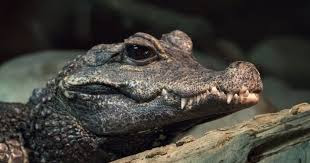
Some 15 million years ago, this part of the world — which would later become the cradle of humankind — looked entirely different. Much of the area was made up of dense tropical rainforests and humid woodlands that made it easier for predators to hide. One of the most dangerous was the giant dwarf crocodile, a vicious carnivore which likely had a taste for the primates that would one day evolve into hominids.

These ancient human relatives still walked on all fours and probably measured no taller than 3 or 4 feet, according to Christopher Brochu, a paleontologist at the University of Iowa. Their life in the Rift Valley was likely a risky endeavor, thanks to this now extinct crocodile species.

Brochu’s findings, published in the journal The Anatomical Record, show that the creature could grow to about three times the size of today’s African dwarf crocodile, a small but aggressive species found in Central West Africa. And like modern crocodiles, the giant dwarf would have gone for whatever it could swallow.

Two newly discovered dwarf crocodile species called Kinyang mabokoensis and Kinyang tchernovi lived in present day Kenya during the middle Miocene period. Both had broad snouts that made them look like they were cracking a smile, but in reality, "they could bite your head off,” as Brochu recently explained to IowaNow News.

Brochu uncovered this new species of crocodilian while looking over a collection of Rift Valley fossils in Nairobi, Kenya. “Just by looking at the specimen, I could tell that this was a big crocodile but it was related to the modern dwarf crocodile, not the Nile crocodile,” he says.

The more he looked at these and other similar samples, Brochu realized this species was entirely undiscovered. The palette, tip of the snout and brain encasement resembled the modern dwarf crocodile.

“The bigger picture is that if you look at the east African Rift Valley system, between 19 and 15 million years ago, this is the type of crocodilian you would find,” says Brochu. This, he says, has to do with the topography of the time. Unlike Nile crocodiles, who spend most of their time in the water, these crocs lived on land. The modern dwarf crocodile, for example, is found only in the forests of West Africa.

Dwarf crocodiles live exclusively in forested areas because they forage on the forest floor and their nesting behavior requires more vegetation. Some crocs dig holes in the mud to nest and some collect vegetation to form a mound that will eventually house their eggs. “Dwarf crocodiles (ancient and modern) are strict mound nesters, meaning they require vegetation to build their nests and they also prefer to live on the forest floor,” says Brochu.

Why Did They Go Extinct?

We don’t know for sure why this ferocious-hunter species disappeared. But we know that the modern dwarf crocodile survives today in what’s left of the West African tropical rainforests, similar to its extinct ancestor. So the extinction likely has to do with changes in topography.

Volcanic activity, says Brochu, may have led to the lakes and rivers becoming too alkaline. “But what we think most likely happened is a drying trend across East Africa, which made it difficult for them to survive,” he says.

Modern humans, who would later evolve from the Great Rift Valley, may have dodged a bullet with the extinction of the giant dwarf. But that’s not to say that deadly croc-human encounters are a thing of the past. Nile crocodiles can grow up to 20-feet-long today, weighing in at roughly 2,000 pounds. And these mega-beasts attacked 214 humans last year alone.

READ ORIGINAL ARTICLE HERE

Monday, February 17, 2020

Meteorology Society Lauds Jenkins For Commitment To Diversity, Africa

Meteorology professor Gregory Jenkins said winning the American Meteorological Society’s Charles E. Anderson Award was especially rewarding because Anderson helped him early in his career. Image: American Meteorological Society
BY PENN STATE

Gregory Jenkins was honored with the American Meteorological Society’s (AMS) Charles E. Anderson Award for his tireless and sustained contributions to the promotion of diversity in atmospheric science through education, community service and engaging students in internationally focused research, according to the society.

Jenkins, a professor of meteorology at Penn State, said he’s honored to be recognized with an award that bears the name of the nation’s first African American to earn a doctorate in meteorology.

“I had the honor of meeting him as a postdoctoral researcher, and he imparted his wisdom to me,” Jenkins said. “I have a deep level of respect for him and Warren Washington, who were pioneers in the field.”

Jenkins’ research focuses on atmospheric hazards in West Africa, where air quality threatens more than 350 million people. At Penn State, Jenkins is the director of the Alliance for Education, Sciences, Engineering and Development in Africa, which builds research and education partnerships between Penn State and African institutions. He also helped establish the Penn State chapter of the national EnvironMentors program, which aims to improve underrepresented students in STEM fields through mentoring partnerships.

“To me, a big part of the University is about empowering people,” Jenkins said. “Young people can find solutions that go beyond the classroom. We can teach them things, but until they make that knowledge more than an inert piece of information, it has no power. So, it’s about how we help them find their power.”

Jenkins was honored at the 2020 AMS Annual Meeting, held from Jan. 12-16 in Boston, which he attended to present research and to engage with mentors and former students.

Tuesday, December 10, 2019

NAMIBIA; £795k Award Supports New African Research Partnership Tackling Drug-Resistant TB

Dr Mareli Claassens (fourth from left) and fellow researchers at the University of Namibia. Imagevia Imperial College London

BY GENEVIEVE TIMMINS


The funding, awarded as part of the MRC/DFID African Research Leader scheme, brings together researchers from Imperial and the University of Namibia.

Imperial’s Dr James Seddon will oversee a five-year project in partnership with Dr Mareli Claassens at the University of Namibia. The research will focus on using whole genome sequencing and social networking analysis to identify where transmission occurs between individuals with multidrug-resistant tuberculosis (TB).

The scheme, jointly funded by the UK Medical Research Council and the UK Department for International Development, aims to strengthen research leadership across sub-Saharan Africa by attracting and retaining talented individuals who will lead high-quality programmes of research on key global health issues pertinent to the region. Emerging African research leaders are nominated and supported by a UK-based partner.

Fighting the multidrug-resistant TB epidemic
Each year, over half a million individuals develop multidrug-resistant TB, a form of the disease which is caused by organisms that are resistant to the most effective anti-TB drugs, rifampicin and isoniazid. Although these cases represent only 5% of the global TB burden, multidrug-resistant TB can consume over 50% of the TB budget in many high-burden countries and is a major threat to plans to eliminate the disease. To prevent ongoing transmission, infectious cases must be identified early, diagnosed and treated.

Led by Dr Seddon and Dr Claassens, researchers will work in two regions of Namibia over two years, identifying all multidrug-resistant TB cases that are diagnosed. The team will carry out whole genome sequencing on samples from individuals to evaluate relatedness and transmission dynamics. They will also contact and interview the patients, collecting clinical, epidemiological and social network data. Following this, researchers will combine whole genome sequencing and social network data to identify geographical sites where transmission could take place, potential ‘transmission hotspots.’

The team will then carry out feasibility studies to evaluate three methods of active case-finding, one of which will be the hotspots technique. This stage will involve undertaking qualitative research, in which patients and staff are interviewed to find out how acceptable the interventions are, as well as quantitative research, which will measure the proportion of cases that are identified and how much the activities cost.

Finally, researchers will use mathematical models to determine the potential impact on the national burden of multidrug-resistant TB if different strategies for case finding were employed, as well as their respective cost and cost-effectiveness.

Far-reaching benefits

Commenting on the potential impact of the planned research, Dr Seddon said: “Identifying transmission hotspots not only gives a unique insight into the drug-resistant tuberculosis epidemic but could also potentially provide a novel and effective method of finding new cases that have not yet been identified.”

“This proposal will not only enable new scientific discoveries in a much-neglected field but will also support the professional development of a promising Namibian researcher and build much-needed research capacity in an emerging academic centre in Southern Africa.”

Dr Claassens added: “I am extremely excited to have this opportunity to collaborate with Imperial in Namibia, where the proportion of drug-resistant tuberculosis is second highest in the region according to a recent survey.”

“Through this project, we will be able to address important scientific questions applicable not only to Namibia but also to other high burden areas, while building local capacity and working together with the National Tuberculosis and Leprosy Programme and other stakeholders.”

Commenting on the wider significance of the award, Professor Maggie Dallman, Vice-President (International) at Imperial: “I am delighted to hear about this exciting new project with Namibia. We have many exciting examples of work between African countries and Imperial, and the College is keen to work with African partners to build long-lasting, sustainable links that will benefit everyone involved.”

“Over the last few years, the College has been working to deepen our networks across Africa and ensure that we are supporting talented young Africans. The project is an excellent example of this work.”

The project is set to commence in Namibia in April 2020.


SOURCE: IMPERIAL COLLEGE LONDON

Wednesday, June 05, 2019

Trump Halts Fetal Tissue Research By Government Scientists

In this Aug. 17, 2009 file photo, Dr. Francis Collins, director of the National Institutes of Health, at NIH headquarters in Bethesda, Md. The Trump administration is ending the medical research by government scientists using human fetal tissue. Officials said Wednesday government-funded research by universities will be allowed to continue, subject to additional scrutiny. (AP Photo/J. Scott Applewhite)


BY RICARDO ALONSO-ZALDIVAR, LAURAN NEERGAARD

WASHINGTON (AP)
— The Trump administration said Wednesday that it is ending medical research by government scientists that uses human fetal tissue, overriding the advice of scientists who say it has led to lifesaving medical advances and handing abortion opponents a major victory.

The Health and Human Services Department said in a statement that government-funded research by universities that involves fetal tissue can continue for now, subject to additional scrutiny — although it also ended one major university project that used the tissue to test HIV treatments. That school — University of California, San Francisco — called the decision “politically motivated.”

Administration officials said the federal policy changes will not affect privately funded research.

Ending the use of fetal tissue by the National Institutes of Health has been a priority for anti-abortion activists, a core element of President Donald Trump’s political base. A senior administration official said it was the president’s call. The official wasn’t authorized to publicly discuss internal deliberations and spoke on condition of anonymity.

But research using fetal tissue has led to lifesaving advances , including development of vaccines for rubella and rabies and drugs to treat HIV. Scientists around the country denounced the decision, saying that fetal tissue was critically needed for research on HIV vaccines, treatments that harness the body’s immune system to battle cancer, and other health threats, including some to fetuses themselves.

“Prohibiting valuable research that uses fetal tissue that is otherwise going to be discarded doesn’t make any sense,” said Dr. Lawrence Goldstein, a regenerative medicine specialist at the University of California, San Diego. “It blocks important future research vital to the development of new therapies.”

The government’s own top medical scientist, NIH Director Francis Collins, said as recently as last December that he believes “there’s strong evidence that scientific benefits come from fetal tissue research ,” and that fetal tissue, rather than any alternatives, would “continue to be the mainstay” for certain types of research for the foreseeable future.

“Today, fetal tissue is still making an impact, with clinical trials underway using cells from fetal tissue to treat conditions including Parkinson’s disease, ALS, and spinal cord injury,” said Doug Melton, co-director of Harvard’s Stem Cell Institute and president of the International Society for Stem Cell Research.

Last year, the administration announced a review of whether taxpayer dollars were being properly spent on fetal tissue research. As a result, NIH froze procurement of new tissue. On Wednesday, the administration also said it is not renewing an expiring contract with the University of California, San Francisco, that used fetal tissue to create a human-like immune system in mice for HIV research.

University Chancellor Sam Hawgood said in a statement that the Trump administration action ended a 30-year partnership with NIH. “UCSF exercised appropriate oversight and complied with all state and federal laws,” said Hawgood. “We believe this decision to be politically motivated, shortsighted and not based on sound science.”

HHS says it is trying to balance “pro-life” and “pro-science” imperatives.

Kristan Hawkins, president of Students for Life of America, said in a statement that the Trump administration has “once again done the right thing in restoring a culture of life to our government.”

The Susan B. Anthony List, a group that works to elect lawmakers opposed to abortion, said in a statement that taxpayer funding ought to go to promoting alternatives to using fetal tissue in medical research. The NIH is funding a $20 million program to “develop, demonstrate, and validate experimental models that do not rely on human fetal tissue from elective abortions.”

That idea got strong support from a Republican senator who oversees NIH funding.

“Today’s action is a significant pro-life victory,” Sen. Roy Blunt of Missouri said in a statement. NIH “has directed funding toward the development of alternative research methods that do not rely on human fetal tissue from elective abortions and I remain supportive of that effort.”

But the scientific consensus is there is no adequate substitute for fetal tissues in some research areas. For example, to learn how the mosquito-borne Zika virus moves from a pregnant woman’s bloodstream into her fetus and attacks the developing brain — and how to prevent that — requires studying fetal brain cells, neuroscientist Sally Temple of the Neural Stem Cell Institute in New York wrote in the journal Science this year.

“Despite the president’s pledge to ‘end the HIV epidemic,’ today’s announcement poses a direct threat to crucial research to find treatments for HIV and other health threats,” Megan Donovan of the Guttmacher Institute, a research organization that supports abortion rights. “Ideologues should not be allowed to stand in for real doctors and scientists when the government is making decisions about lifesaving medicine.”

The government has funded research using fetal tissue for decades, under administrations of both political parties.

Officials said there are currently at least three active federal research projects that involve human fetal tissue, and possibly as many as 12. Among university research projects funded by the government, officials said, fewer than 200 of 50,000 rely on human fetal tissue.

The International Society for Stem Cell Research questioned whether the new scrutiny that university projects will face will follow long-accepted ethical guidelines or instead block the research for ideological reasons.

Aside from the canceled UCSF contract, no university-led programs will be affected for the time being, the administration said. New projects that propose to use fetal tissue and current projects up for renewal will be subject to additional reviews.

KNOCK, KNOCK

By issuing subpoenas to five Times journalists, the Trump administration reveals its first response to unwanted national security coverage: ...