Showing posts with label Gambia. Show all posts

Tuesday, August 26, 2025

The Gambia’s New Constitution Has Stalled Again – 5 Reasons Why And What That Means For Democracy

Election officials and volunteers carry drums of marbles representing votes, prior to the count in Banjul on 4 December 2021. John Wessels/AFP via Getty Images

BY SATANG NABANEH
DIRECTOR OF PROGRAMS, HUMAN RIGHTS
CENTER, RESEARCH PROFESSOR OF LAW,
UNIVERSITY OF DAYTON SCHOOL OF LAW,
UNIVERSITY OF DAYTON

The Gambia’s post-dictatorship democratic transition recently suffered a setback. The Constitution of the Republic of The Gambia (Promulgation) Bill, 2024 failed to pass its second reading in the national assembly.

Passing the bill required the support of at least 75% of The Gambia’s 58-member parliament, including the speaker. Now, there’s uncertainty over the country’s democratic reforms.

This leaves The Gambia governed by the 1997 constitution drafted under Yahya Jammeh’s military junta. The 1997 constitution was widely seen as a tool for executive overreach. It didn’t have term limits, stalled key democratic reforms and lacked sufficient protection for human rights and democratic principles.

Failure to pass the new constitution is a setback to the “New Gambia” agenda, a campaign promise of the 2016 ruling coalition, which included the drafting of a new constitution and ensuring accountability for past human rights violations, and could lead to renewed political tension.

Proponents hailed the proposed new constitution as a step towards institutionalising checks and balances and strengthening civil liberties. Critics pointed to a lack of transparency, the absence of broad stakeholder consultation, and specific controversial clauses.

Those clauses included the removal of a retroactive presidential term limit, the weakening of checks and balances by reducing parliamentary oversight on appointments, and the potential erosion of judicial independence.

I am a Gambian legal scholar, researcher and human rights practitioner and I have been tracking The Gambia’s journey to solidify its democracy since the dictatorship of Jammeh. In this article, I present five of the most important things to know about this constitutional reform effort and why it failed to advance.

New constitution triggers and why it failed

1. Unfulfilled search for a new foundation:

A truly democratic constitution has been a central promise since the ousting of former president Jammeh in 2017.

An initial 2020 draft, the product of extensive nationwide consultations, also failed to pass. There were disagreements over provisions like retroactive presidential term limits. But the 2024 bill continues to face political and social hurdles.

The 1997 constitution presents a paradoxical approach to democratic governance, particularly in its mechanisms for political transition and constitutional amendment. For example, it has stringent requirements for constitutional change: a three-quarters majority vote from all national assembly members across two readings.

It also requires a national referendum, with 50% voter participation and 75% approval.

A high bar for constitution amendments can protect against impulsive alterations. But it also puts disproportionate power in the hands of a parliamentary super majority. This politicises constitutional reform, making it contingent on party allegiance and strategic manoeuvring rather than a broad national consensus.

An arrangement like the one in The Gambia could hinder the natural evolution of democratic governance and limit the nation’s capacity to adapt its basic law to the changing will of the people.

2. Unresolved concerns over presidential powers:

A key reason the 2024 draft faced such strong opposition related to presidential powers. The 2020 draft sought a two-term limit with a retroactive clause (meaning President Adama Barrow would not be able to run in the 2026 election). But the 2024 draft removed this retroactive counting.

This remained a point of contention, fuelling fears of potential term limit manipulation. More broadly, the bill proposed removing parliamentary oversight for all appointments, including ministers, the Independent Electoral Commission and independent institutions.

It also sought to grant the president more power over national assembly members. These proposals were viewed as undue centralisation of authority and a regression from the 1997 constitution.

3. Unaddressed threats to judicial independence:

The bill’s stated goal of judicial independence was undermined by certain provisions. The 2024 draft removed the requirement that the national assembly confirm the appointment of the chief justice and Supreme Court judges.

It also removed the citizenship requirement for the chief justice. Given The Gambia’s recent history where foreign judges on politically appointed, renewable contracts served as a tool of repression and eroded public trust, these changes therefore raised alarm about judicial impartiality and the erosion of oversight.

The bill left out Chapter V on “Leadership and Integrity” which was in the 2020 draft. This chapter, which outlined a framework for public officer conduct and aimed at combating corruption, was seen as vital for accountability.

4. Contentious provisions on human rights and civil liberties:

While the 2024 draft generally aimed to modernise fundamental rights and introduce additional socio-economic protections, it also contained specific restrictions that human rights advocates criticised. These included an increase in police detention periods from 48 to 72 hours, and perceived limitations on the rights to education, to petition public officials, and to freedom of assembly.

Provisions affecting citizenship by marriage (doubling the waiting period for foreign spouses to gain citizenship) and limiting media ownership and operation to Gambian citizens sparked debates over inclusivity and media freedoms.

These clauses likely contributed to the insufficient votes for the bill to pass.

5. Public fatigue amid the bill’s failure:

The failure of the 2024 constitution draft bill to pass second reading reflects a complex and polarised public discourse. While the government championed the bill as essential for stability and a modern republic, the main opposition, the United Democratic Party, opposed it.

Numerous civil society organisations expressed concerns about the diluted democratic safeguards and expanded presidential powers. In the end, a perceived lack of genuine public participation prevented its advancement.

The way forward

This outcome shows a division among the public. Some are tired of the drawn-out constitutional reform process. They want stability now. Others want to keep pursuing a genuinely transformative constitution.

This division is made worse by widespread disillusionment due to economic hardships and slow progress with various reforms since the post-dictatorship transition began.

The failure of the 2024 bill leaves The Gambia in a state of uncertainty about its foundational legal framework.

As I have noted elsewhere, it’s time for all to commit to an inclusive reform process.

READ ORIGINAL STORY HERE

Wednesday, July 30, 2025

The Oyster Farmers Paving The Way For Women In West Africa

Oysters are sorted and measured for size and quality Credit: Jason Florio

BY JESSAMY CALKIN

Known as ‘the smiling coast of Africa’ the Gambia is a lively little country which wriggles through the middle of Senegal like an intestine. The river after which it was named starts in Guinea, and runs 700 miles directly through the Gambia to Banjul, where it joins the Atlantic Ocean.

It is not somewhere one might immediately associate with oysters, yet oysters are one of the mainstays of the Gambian diet – high in protein and essential nutrients, they grow prolifically on the roots of the mangroves that border the many tributaries of the river.

We are not talking about raw oysters served on an elegant dish with a slice of lemon and Tabasco and a glass of Picpoul; these oysters are shucked, cooked and sold in the market for 60 dalasi (about 60p) for a large cupful; tiny little things that look like mussels and are often served in a stew.

But oyster harvesting is a tough job, and 98 per cent of the people who do it are women. During the designated oyster harvesting season – which is four months of the year, from March to June – the women take canoes out on the water at low tide, and chip the oysters off the roots of the mangroves with small axes.

They then have to be sorted, shucked and cooked, before being sold at the market. It’s an arduous job, especially because many of the women can’t swim – there is no swimming culture in the Gambia, the river is something to be afraid of – so drowning is not uncommon. They have only very basic facilities where the preparation is done, with limited access to fresh water, and they have to rent canoes.

But thanks to an initiative called Fish4ACP, which was launched in 2022 by the FAO (Food and Agriculture Organisation) and partly funded by the EU and Germany (and, until recently, USAID) support and resources are on hand for the women: swimming lessons, lifejackets, canoes and new cultivating initiatives which will increase productivity and improve standards of living.

An unlikely sounding player in this is the founder and owner of the very successful Whitstable Oyster Company, James Green, who has been employed by the FAO since 2022 in an advisory capacity, to improve oyster productivity. Using coupelles and grow bags means that oysters can be cultivated in parts of the river where the water is at its purest. Cooking the oysters kills the pathogens and algotoxins, but the eventual aim is to be able to sell raw oysters to Gambia’s many tourists. Hopefully, this will come to fruition next year.

Green, who studied marine biology and has a Masters in Aquaculture, has been here several times over the last three years. “It takes 12-18 months for an oyster to grow here in Gambia, because it’s warm. In England it can take up to three years. My part of the project is to source a fresh oyster product: a quality individual oyster that people can have on the half shell, with a bit of lime or lemon juice.”

Another new initiative of the oyster industry, to supplement income, is a handicrafts and jewellery project, using the shells of oysters and other shellfish, which are painted and laminated and crafted into jewellery. The idea behind this is also to attract younger women into the business (known as ‘the young ones’) who might be put off by the hard grafting of hacking and shucking, but are interested in the creative side.

So we begin with a visit to Lamin, a village south east of Banjul in Tanbi wetland. Development is frenzied in Banjul and its surrounding areas and the roads are fringed with multitudes of unfinished buildings.

Traffic has dramatically improved thanks to a new three lane road, which was years in the making. There used to be only one traffic light in the country, our driver tells us, and people would use it as a landmark: ‘Go right at Traffic Light.’ And there was also only one roundabout, which was known as Turntable. “When it was first built, people didn’t know what it was and drove over it.”

At Lamin Lodge there is a lot of activity: women are cleaning oyster shells and painting them. Around the hut – indeed all over every beach we saw – are huge piles of discarded oyster shells like shingle, often with tiny goats climbing all over them. (The shells can be burned and reduced to lime to make paint, but that takes a lot of wood and costs more than it’s worth in labour and fuel.)

Profit from the sale of the jewellery is reinvested in buying materials and infrastructure for the handicrafts project, which is the initiative of TRY Oyster Collective, a community-based organisation with about 600 members (which is one of the beneficiaries of Fish4ACP) working to improve livelihoods and raise standards of living.

A lot of women in West Africa work in the shellfish sector; I am told that men tend to think that harvesting oysters is not worth their time; they stick to fishing, which is responsible for 12 per cent of the country’s GDP. But fishing here, like in many other African countries, has been vastly depleted by Chinese-owned trawlers and fishmeal factories, making it harder and harder for the local fishermen to make a living.

Fatou Jahna Mboob is the director of TRY, which she founded in 2007; a formidable and warm-hearted woman who has devoted herself to empowering the oyster women, and protecting the local ecosystem.

One of her goals is to get the younger generation on board. “One mother told me that harvesting oysters is very hard and they are only doing it in order to get a better education for their children – it is not how they want their children to end up, struggling in the water. But their children can do both – go to school, and work in oysters. Once you’ve been educated, and learned to swim, you can contribute a lot more.”

Thanks to Fatou, TRY now has exclusive harvesting rights in the Tanbi wetland complex, which covers about 6000 hectares, over two thirds of which is mangroves. Previously the women would cut the mangroves to remove the oysters, now they chip them off, which is arduous but more sustainable.

Further east along the river, at Kubeneh, the oyster harvesting is in full swing. Supervised by James Green, the women are removing rubber spat collectors (known as coupelles) from a wooden rack in the river, in the intertidal zone, where they have been languishing since October – to be stripped of their bounty. When oyster larvae attach themselves to a surface, it is known as spat, which will grow into adult oysters.

These oysters will be transferred to Kartong, where the water has been tested, to be put in the river to grow. “We take them off the spat collectors and put them into floating bags,” says Green, “and then you have to maintain the stock to keep the oysters individual – they’ve got a propensity to settle on other oyster shells and you don’t want oysters clumped together like on mangroves because you can’t sell those as a fresh product. The bags are secured to anchored floating lines where they stay for another year to grow into a market sized oyster.”

There is a gentle breeze as the women sit underneath the neem tree, shucking cooked oysters. Their hands are covered in callouses, but they are very lively and cheerful. Any excuse for shouting and singing. Lunchtime – spicy Pempem – soon turns into a song and dance session, with James and Khadija Diallo, project co-ordinator of the FAO, dragged in for good measure.

“We couldn’t find the right guy until James came along,” says Diallo, “but it was clear that he knew what he was doing; he listens to the women, and guides them – he’s been here several times and he’s like family to these communities. He understands the culture which is very important.”

There are 16 separate oyster gathering communities on the west coast of the Gambia. Fatou Sambou is the president of the Kubeneh community, which has grown from 15 members to 44 in the last two years (the youngest being 21 and the oldest 70) and has a backstory which is fairly typical: now aged 54, she never went to school and her parents were farmers.

She started working in oysters after she got married. She works on the oysters during the season, the rest of the time she picks up crabs and cockles; anything to help feed her six children (one of her own and five nephews and nieces who she has adopted.) Her husband lives in Senegal, where he has two other wives. “The oyster community is like my family – we look after each other and respect each other.”

The following day, in Kartong, we are beside the Allahein river on the border with Senegal, one km from the sea, and James and the oyster women are fixing plastic fasteners to the special bags that the oysters which we have brought from Kubeneh will be placed in to grow – about 300 oysters to each bag.

Marie Demba is 44 but looks much younger. She never finished school as both her parents died when she was young, and she has worked in oysters ever since leaving school. How has the oyster business changed since then?

“We had no money and struggled – we used to only be able to charge 10 dalasi (10p) for a cup – now it’s 60 dalasi. We are like a family now, this association.” The season finishes next month, and for the rest of the year she is a fish smoker, which is very bad for the lungs, and she has been hospitalised. “Others do gardening – grow okra, sorrel, onions, and sell them in the market.”

We wait until the tide is out and then climb in a boat. The boat trip is a rowdy affair – the women are wearing life jackets, special footwear and gloves. They take the bags and attach them to specially constructed floating racks; then check the cuprolles that are already in place there.

The following day we go to another site – Old Jeshwang, so I can see what the oyster harvesting in the mangroves is like. While we wait for the tide to be right, I talk to some of the women about their lives, and meet Alice, who is 26, a young man called Lima Manga, who does data collection for TRY, and Andrea, a volunteer and self-confessed ‘oyster nerd’ from Maine, USA who is researching the benefits of oysters for the environment.

Alice was studying to be an accountant but had to give up her studies when her father became sick; now she is involved with the handicrafts and helps her mother with shucking. Her mother wants her to continue her education, and not be an oyster harvester. “My mother says, ‘Look at my hands! Do you want to look like this?’”

Fatou tells me that TRY has helped the women manage their finances; and taught them how to save. Everyone keeps their own profits, but each community contributes a small amount to a central fund which helps out if someone is sick or needs a loan. “Before they didn’t use banks – sometimes they would bury their money under piles of oyster shells.” The involvement of the young will help, she thinks, they all speak English learned at school, for a start, and they know how to use technology.

Our boatman takes us out on the river to follow the women in their canoes who are headed for the mangroves. After about a mile we find a place where the oysters are deemed big and plentiful enough. The women use a small axe to hack the oysters off the mangroves and they all sing as they do it and shout, and tease each other. They have a way of making everything into a party here. When one of the women drops her axe in the water they all stop to help her

It is clear that being able to swim is crucial. “Believe it or not, most of these women never knew how to swim,” says Khadija. “There have been incidents of drowning that are never reported – they’ve seen family members washed away. It’s not our culture here in the Gambia, but we explained the benefits – to keep safe, and how it would boost their productivity.

“However we had to get permission from spouses and community leaders in order to implement the training programme. We have seven female instructors in the navy. Some women did not mind being trained by men. Others were very conservative – so we divided them into groups accordingly. Some of the women are elderly, and the Navy trainers – who are all young – showed them respect and earned their trust before they started to teach them.”

Several members of the Gambian Navy are waiting for us at Lamin the following day, for a swimming lesson, along with a medical team of three, who take people’s blood pressures and listen to their hearts, to make sure it’s safe for them to go into the water. If they find a problem, they will prescribe medicines. All statistics are carefully noted in a ledger by an army sergeant.

In the river, a man and his children are washing the family goat. After the First Aid session about 20 of the the women – aged from 26 to 72 – all get ready for the river in a bizarre assortment of outfits, and the Navy instructors – mostly men but a couple of women – put them through a quick aerobic work out, led by 42 year old Ibrima Colley, who is extremely tall and fit.

They jump in. Firstly they do floating exercises (the water is warm and buoyant and slightly salty as we are only three miles from the sea) looking like a bunch of slightly unruly synchronised swimmers, then there is some general stroke practise followed by a lifesaving demonstration and then a quick race. Funded by Fish4ACP, it’s a six week programme, with four sessions a week. So far, 150 women have been trained – and more sessions are scheduled for October.

Colley has been in the Navy for 19 years. “We’ll work whenever there is funding to employ us because we feel it’s our social responsibility to share life saving skills with the people who are seafarers.” This reduces the demand for one of the Navy’s other jobs – rescue operations.

“When I was a kid if we swam in the river, we would get flogged when we came home. Most of our parents couldn’t swim so they were afraid of water. We would sneak to the river, then find some fresh water in a well and rinse ourselves so when we got home they couldn’t tell that we’d been swimming.”

Oyster season is about to draw to a close and James is preparing to leave. The goal is to be able to serve up the first raw oysters to tourists next year – on newly established National Oyster Day in May. In a country where the fish supplies have deteriorated and the population is growing, the oyster sector is increasingly important to the economy and the livelihood of women, and the Gambian model is paving the way in West Africa.

READ ORIGINAL STORY HERE

Friday, October 04, 2024

Money Gambians Send Home From Europe Is A Lifeline For Their Families But The Sacrifices Take A Toll

Children play in Kwinella village, Gambia, where many Gambians emigrated from, on July 27, 2024. (AP Photo/Annika Hammersschlag)

BY MONIKA PRONCZUK

KWINELLA, GAMBIA (AP)
— Binta Bah met her husband last year on a dating app and instantly fell in love. They spent hours every day glued to their mobile phones and soon got married on a video call.

But they’ve met in person only once, when Suleyman Bah came home to Gambia for a visit, months after the wedding. He is one of tens of thousands of West Africans who have undertaken the perilous journey to Europe, and is now working in a factory in Germany.

Every month he sends money home. He is not alone — Gambians abroad send hundreds of millions of dollars a year in remittances, according to the World Bank. The remittances account for a fourth of the tiny country’s economy — the highest such proportion on the African continent.

Even as European countries increase their efforts to keep migrants out, Gambians and other West Africans keep risking the dangerous route, known locally as “the backway,” in unsafe boats across the Atlantic Ocean — or trek hundreds of miles across the Sahara Desert and then cross the Mediterranean Sea.

Almost 10% of Gambia’s population of 2.7 million has left the country, most of them young men from rural areas. The money they send is an economic lifeline for their families but their absence weighs heavily on their communities.

“It’s difficult to be apart,” the 24-year-old Binta Bah said of her long-distance marriage. “But it’s good when the other person takes care of you.”

“Whenever I need something, like to see a doctor, he sends the money straight away,” added Bah, who lives with her mother-in-law.

Life is increasingly difficult in their village of Kwinella, where villagers for centuries grew rice, maize, millet and peanuts to make a living. But ravages of climate change and outdated farming practices have made their traditional lifestyle unsustainable.

Moustapha Sabally, deputy chief of Kiang Central province, which includes Kwinella, said the rains have become unpredictable for farming, which is still done by hand and without tractors. Few young men are around to do that work, he said, and estimated that about 70% of them left the province for the capital, Banjul, or for Europe.

That leaves women and older people who struggle with the long and laborious work on the land, forcing the community to depend on remittances, Sabally said.

Without the remittances, “life would be very difficult,” he said.

Gambia, the smallest country on the African mainland, is surrounded by Senegal except for a sliver of the coast where the Gambia River flows into the Atlantic Ocean. According to the World Bank, 75% of its population lives in poverty and there is virtually no industry. The economy relies on imports, and living costs have skyrocketed since the coronavirus pandemic.

Nearly 60% of Gambians are under 25, and nearly half of them are unemployed. Despite European Union’s efforts in West Africa to reduce the number of migrants, the lack of jobs reinforces the conviction of many that leaving is their only option.

Last year alone, over 8,000 Gambians arrived in Europe, according to the International Organization for Migration.

Many others die trying. Earlier this year, a boat carrying 300 migrants, mostly from Gambia and Senegal, capsized off Mauritania; more than a dozen were killed and at least 150 others went missing. Last year, a young man from Kwinella drowned on his way to Europe.

Because the journey is so risky, most young men slip away for Europe without letting their loved ones know they’re leaving.

Musukebbe Manjang’s 39-year-old husband left Kwinella for Italy 10 years ago, after he could no longer make enough money from construction work. She never encouraged him to leave, “the risk was just too high,” she said.

One evening, when Manjang was pregnant with their third child, her husband’s younger brother called him from Italy, and he simply disappeared without a word. He later called to say he had left for Europe.

Then she heard nothing for nine months, and her anger turning to fear. When he finally arrived in Italy, he called and explained that he had been kidnapped in Libya, long a key starting point for many Mediterranean crossings to Europe.

These days, Manjang’s husband sends around 14,000 dalasi, or $200, a month, enough to cover the children’s school fees, food and clothes, she said. But on a personal level, it’s been difficult.

“He misses all the important moments,” she said. “He hasn’t even met our youngest daughter.”

Gambia’s central bank says remittances amounted to over $730 million last year but experts warn that the rising costs of living will push more men to migrate abroad.

Eliman Jallow, 42, the Gambia-born founder of a U.K.-based company that facilitates sending money home to Africa, says his clients are a mix, from highly skilled workers to manual laborers.

The son of Ansumana Sanneh from Kaiaf, a village not far from Kwinella, was a teacher. He left for Europe because he could barely make a living on a teacher’s monthly salary of 5,000 dalassi, about $70.

His journey was cut short when he was kidnapped by a Libyan militia and Sanneh paid the equivalent of $700 in ransom before his son was freed and returned home.

Sanneh believes the dreams of the young village men are fueled by the misguided idea of Europe as a promised land. But with rising costs of living in European countries, migrants today are able to send less money home than in the past, he said.

The gamble is simply not worth the risks, Sanneh said.

But stories of success journeys and evidence of what remittances can do often outweigh such words of caution — large concrete village homes built with money sent back are solid; images posted on social media by migrants who work in Europe appeal to the young men still in the village.

Despite his ordeal, Sanneh’s son hopes to find a way to leave Gambia again.

Not far from their home, a group of teenagers practiced a dance routine in front of a stylish brick house, its driveway lined with spotless pink tiles. The teens were recording a video for TikTok, they said, and chose the prettiest — and largest — village house for the background.

The house, they said, belongs to a family whose young man migrated to the United States, for many, the most coveted migrant destination.

For more news on Africa and development: https://apnews.com/hub/africa-pulse

Saturday, December 25, 2021

Gambia Commission Recommends Ex-Dictator Jammeh Face Trial

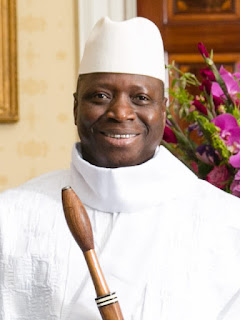
Yahya Jammeh


BY ABDOULIE JOHN

BANJUL, GAMBIA (AP)
— Gambia’s former dictator, Yahya Jammeh, should face prosecution for murder, torture and sexual violence, according to a new report by a truth, reconciliation and reparations commission established after he fled into exile five years ago.

The long-awaited report recommends that a special international court be set up to try Jammeh and others in West Africa, but outside of Gambia.

The report, which is based on years of witness testimonies, already had been presented to President Adama Barrow, but its posting online late Friday marked the first time that the complete findings were made public.

Gambian Justice Minister Amadou Dawda Jallow said that the government was “committed to the implementation of the report,” but wouldn’t release a paper before May on how it plans to go forward.

Reed Brody with the International Commission of Jurists said he expected pressure to now mount on Gambia’s leader “to deliver justice without further delay for victims who have already waited five years, and in some cases much longer.”

“There is still a lot that needs to be done, but I wouldn’t be surprised if we see Yahya Jammeh in a court sooner rather than later,” said Brody, who also played an instrumental role in bringing former Chadian dictator Hissene Habre to trial at a special court in Senegal.

Jammeh, who ruled Gambia for 22 years, lost the 2016 presidential election, but he refused to concede defeat to Barrow. He ultimately took exile in Equatorial Guinea amid threats of a regional military intervention to force him from power.

It remains unclear whether Equatorial Guinean authorities would extradite Jammeh should criminal charges be filed.

Barrow, who ultimately prevailed after the 2016 vote, was reelected earlier this month.

The truth commission was mandated to establish an impartial historical record of abuses committed from July 1994 to January 2017, when Jammeh fled the country. More than two years of hearings that led to the report documented human rights abuses and horrors that occurred under Jammeh’s rule.

Human rights groups say arbitrary arrests, enforced disappearances and summary executions became the hallmark of the regime. Testimonies made by perpetrators before the truth commission confirmed that some killings were done at Jammeh’s direction.

The truth commission report also said that Jammeh had raped women including Fatou Jallow, who later testified before the truth commission and published a book earlier this year about her ordeal.

Jammeh denies any wrongdoing.

Friday, January 17, 2020

Sick Sales Inside ‘Paedo Paradise’ In The Gambia


BY GRAEME CULLIFORD

THE GAMBIA (THE SUN)
--TRAGIC Gambian children are being sold to British paedophiles for as little as £2-a-time by their desperate parents, Sun Online can reveal.

Huge numbers of predators are taking advantage of lax laws in the poverty stricken African country to embark on sick child abuse holidays where they openly target little boys and girls.

Sun Online saw first hand how poor Gambian children can be vulnerable to British paedos when we visited the beach resorts that dot Kololi on the country’s picturesque Atlantic coastline.

Our reporter was constantly shocked by the number of unaccompanied African minors he saw being cared for by middle-aged, Western men who did not appear to be their biological fathers.

The encounters witnessed included a girl aged between six and eight having lunch with a balding, white haired man in a restaurant filled with similarly aged tourists.

The same day we saw a stoutly built man in his 50s or 60s wading into the ocean gripping the hand of a tiny African child in white swimming shorts.

Equally unsettling was the sight of a Gambian toddler watching wide-eyed with fear as a middle-aged white woman got into a fist fight with a young black prostitute at a popular beach bar.

It was 11.30pm at night and the air was thick with cigarette smoke. The child, no older than two, was being held closely by a white man with a British accent.

Children sold for £2

Our investigation comes as experts warn that the economic crisis unleashed by the collapse of travel firm Thomas Cook is helping turn the former British colony into a “paedophile paradise” where perverts can operate unchecked.

Thomas Cook flew 45 per cent of The Gambia’s 100,000 annual visitors from the UK to the capital Banjul until it went into liquidation under the weight of its debts in September.

In an exclusive interview, Lamin Fatty, the National Coordinator of the Child Protection Alliance in The Gambia, reveals that both male and female tourists are targeting African minors.

He warns: “Sex is cheap in my country and children are being sold for as little as 150 dalasis, or just over £2 in your currency.

“Some of the parents know their children are being abused and they accept it because they are so desperate for food in their bellies.

“Others are too naïve to realise. They think the Westerner is paying their bills and helping their boy or girl out of the kindness of their heart, while in reality they have bad intentions.

“Child abuse is going on all the time in The Gambia and the government is not doing enough to put a stop to it.

“Our children are being approached directly on the beaches or the street and child abusers from all over Europe including the UK are coming here for this.

“I want to make clear that this does not just involve men but also adult women who are paying for sex with teenage boys in The Gambia.

"We have laws that are supposed to stop this from happening but they are not being enforced so we have become a paradise for paedophiles."

Locals 'desperate' after Thomas Cook collapse


Two school-age girls play at the feet of two men, their mums nowhere in sight. Image: My Story Media via The Sun

As tourism makes up one-third of the country’s GDP, there are fears that businesses will go bust and locals will go hungry following an estimated 50 per cent drop in economic activity that has already hit beach resorts.

Lawyer and children’s rights advocate Malick Jallow told Sun Online: “While some tourists will always want to help poor Gambians, others will see this situation as an opportunity to exploit young children.

“The problem is that the abuse is sometimes carried out with the blessing of the parents because they are so in need.

“The perception is that white people, or ‘toubabs’ as they call them, have stacks of cash and these parents are often excited that their child has attracted the attention of a white man.

“It actually makes them feel proud so they give their permission for the boy or girl to go with the person and when the police try to question them they will not co-operate.”

'She didn't look comfortable at all'

Former Thomas Cook rep Anne Heap, 53, from Wigan, said: “These people are as poor as poor can be — it’s rare to see a child wearing shoes — and there isn’t any other trade for them outside tourism.

“Thomas Cook used to always give us an extra 10kg luggage allowance so the workers and passengers could bring aid boxes to The Gambia — basic things like clothes, medicine and school equipment.

“The first thing I thought of when we went under was, 'What is going to happen to people in The Gambia?' We were the only airline flying directly there.

“I’ve heard that crime has already shot up as there is not enough money coming in — the hand that feeds them is gone.

“Sex tourism is already huge in The Gambia — some bars are like brothels — and I do worry that more children will get lured into prostitution to feed their families.

“When I was working there I would see old men walking with girls as young as 10, 11 or 12. There is a dark side to The Gambia.

“One time when we were flying back to Manchester there was a British man in his 70s with a girl who was only about eight or nine. This was about eight years ago.

“I was so concerned about what was going on that I got chatting to him outside the toilet during the flight. I wanted to speak to the girl too but she never left her seat, she didn’t look comfortable at all.

“I reported it and border security later told me the man had been ‘apprehended’ but I was not able to find out what happened to him or the girl after that."

Tots hand-in-hand with 'paedos'

There is no proof to suggest that any of the men we pictured were paedophiles.

However the experts we showed our dossier of photos to said the police should have questioned them according to Gambian child protection laws.

Lamin Fatty said: “This does worry me because, if the children are unaccompanied, they should not be alone in tourist areas without their parents.

“It is also forbidden for a child to be in a bar so late at night and we do not encourage physical affection with minors.

“I work with young girls and boys and I would not hug them or pick them up, it is not appropriate.”

Malick Jallow added: “I would have questioned these men had I seen them myself. As a lawyer and an activist, I would want to know if they have the authority to be caring for that child.

“We have a lot of good Samaritans coming to The Gambia but we also have people who use charity as a front to hide their bad intentions.

“The security guards should have questioned these men but there is a culture of inferiority here and they would have been scared to challenge a wealthy Westerner.”

British tourists can still fly to The Gambia via Lisbon with the TAP airline or via Casablanca with Royal Air Maroc. There is also a limited direct service run by ‘The Gambia Experience’ company and package deals can be snapped up for just over £500 a person.

Pensioners taking teens to hotels

Health care assistant Lucy Mendy, 33, from Gloucester, was trying to enjoy a winter holiday in the country she has come to see as a second home — but says she was shocked by some of the things she had witnessed during her trip.

She said: “I’ve seen old men taking girls looking as young as 15 or 16-years-old to their hotel room.

“It made me feel sick and I wish I could have intervened, but this is not the UK and I was scared what might have happened if I tried to confront them.

“People here are so poor, some of them will do anything for money, even if it means giving their bodies to a tourist.”

Lucy’s mum, pensioner Marjorie Botton, 68, also from Gloucester, added: “The collapse of Thomas Cook has hit people so hard.

“They are getting half as many British tourists and that means they might not make enough money to get through the quiet season, which starts in April.”

Dutch tourist Corina Bouwman also witnessed suspected child abuse during her two week, winter vacation in December.

The social worker, 54, said: “I’ve seen a number of tiny African children walking around with big white men.

“On each occasion I thought, ‘What is going on here? Where is the child’s mother?’

“But I didn’t want to accuse anyone in case I had misread the situation.”
'White men approach little boys and girls'

Father-of-four Abdullah Labamba, 48, runs a fruit stand next to one of the many hotels that line Kololi’s palm-tree fringed beach and says he has witnessed paedophiles targeting vulnerable child workers selling peanuts for less than £1 a bag.

He said: “I’ve seen white men approach the little boys and girls right here on the beach. I do my best to stop them.

"I tell the children, ‘Get out of here, this is not a safe place for you.’

“The children will run away but they normally come back. It's shocking.

"Their parents are desperate for money and they know they won’t be allowed home until they have sold at least five bags.

“Some men try to take advantage of that by offering them £50 for the whole basket. Then they will ask them to come back to go somewhere private.”

Child abuse scourge

Tragically, child abuse is now endemic in The Gambia, where 60 per cent of the 1.9m population live below the poverty line.

Previous research has shown that paedophiles often pose as charity workers and Good Samaritans so they can befriend poor families — and UNICEF has warned that The Gambia is one of Africa’s top destinations for child sex tourism.

The Gambian government meanwhile has tried to crack down and in 2013 introduced new laws allowing them to seize hotel properties if children are knowingly abused on the premises.

They also pledged to give out “hefty fines” and “stiff sentences” to paedophiles that are caught.

But incredibly there has been only one successful prosecution since laws were tightened and that man ended up being pardoned by the president.

Norwegian teacher Svein Agesandakar, 57, was found guilty of abusing six children, the youngest aged three, in 2006.

The court heard how he had tricked his way into a hard-up Gambian family by posing as a do-gooder, giving the parents sacks of rice and new shoes in exchange for time alone with their large brood of six kids in a hotel room.

The paedophile had separate convictions for child abuse in Norway but was sentenced to just three years in jail.

Then, in 2018 President Adama Barrow decided to pardon him for reasons that have never been explained.

The pardon was later revoked amidst a public outcry but experts fear his case has given a green light to other paedophiles.

Predator free

In October last year an official UN investigation found that Gambia’s tourist areas continue to be a dangerous place for children and that predators now stay in motels and private apartments so they can avoid prying eyes.

UN Special Rapporteur Maud de Boer-Buquicchio reported: “The rare instances when complaints are lodged with the police are not duly acted upon, the gathering of compelling evidence is delayed, and investigation and prosecution is stalled, resulting in victims or witnesses withdrawing their complaints.

“Some cases have also reportedly been dismissed on the grounds that statements by child victims were allegedly inconsistent.”

Our report comes after the UK government was slammed for failing to protect children overseas from British predators.

A report by the Independent Inquiry into Child Sexual Abuse (IICSA) found more needs to be done to make sure offenders operating in poor countries like The Gambia are caught and prosecuted.

Calling for a new national plan to tackle the problem, Debbie Beadle, Director of Programmes at the child protection organisation ECPAT UK, said: “We hope that by bringing these institutional failings to light, the UK can become a world leader in tackling the abuse of vulnerable children globally, and that child victims abroad are no longer ‘under the radar’ of authorities.

Tuesday, December 10, 2019

Samuel Okudzeto Ablakwa Demands Fresh Probe Into Killing Of 44 Ghanaians In The Gambia

Former Gambia dictator Yahya Jammeh. Image: Getty


MYJOYONLINE

ACCRA  (GHANA WEB) -- Members of parliament are pushing for a fresh probe into the execution of some 56 West African migrants including 44 Ghanaians in The Gambia back in 2005.

The renewed calls come on the back of confessions by two Gambian soldiers who admitted to participating in the execution of the Ghanaian nationals on the orders of then Gambian President Yahya Jammeh.

Lt. Malick Jatta and Cpl. Omar A. Jallow earlier this year revealed to Gambia’s Truth, Reconciliation and Reparations Commission that, the migrants were executed by the “Junglers” squad, a paramilitary force that took orders from Jammeh, across the Gambian border in Senegalese territory.

Member of Parliament for North Tongu, Samuel Okudzeto Ablakwa in a statement on the floor in commemoration of International Human Rights Day urged the house to push for the prosecution of the perpetrators behind the massacre.

“Parliament must urge the Government of Ghana to re-open an investigation into the killings with the ultimate aim of bringing those who bear the greatest responsibility for the murder, enforced disappearance and torture of our constituents, to justice.” Ablakwa said.

Meanwhile, Speaker of Parliament Prof. Aaron Mike Oquaye has referred the statement to the Constitutional, Legal and Affairs committee for perusal. The committee is expected to submit a report to the house before resumption of parliament.

Read the full statement below.

Statement by Samuel Okudzeto Ablakwa, MP for North Tongu and Ranking Member, Foreign Affairs Committee on the commemoration of International Human Rights Day on December 10, 2019.

1. Right Honourable Speaker, I rise to make this statement in commemoration of International Human Rights Day, which is today, December 10. I will like to use this day to urge our Government and all stakeholders to work to actualize the provisions of the Universal Declaration of Human Rights by seeking justice and compensation for the 44 Ghanaian migrants who were massacred in the Gambia in July 2005.

2. Mr. Speaker, as we know, the commemoration of Human Rights Day on December 10 each year followed the adoption of the Universal Declaration of Human Rights by the United Nations on December 10, 1948, a declaration which has become the world standard for the respect, protection, and promotion of human rights. Two years later, on December 4, 1950, the UN General Assembly passed Resolution 423 (V) urging Member States of the UN and non-state actors to adopt and commemorate December 10 each year as Human Rights Day. Ghana is a respected Member of the United Nations and a State Party to several international and regional human rights instruments which derived from the provisions of the Universal Declaration of Human Rights. Indeed the 1992 Constitution of Ghana draws tremendous inspiration from this which reflects in the fundamental human rights provisions in Chapter 5 of our Constitution.

3. Mr. Speaker, some of the core provisions of the Universal Declaration of Human Rights which are especially pertinent to my call on the Government of Ghana and all partners to ensure justice and compensation for the 44 Ghanaians pertain to the provisions in the Universal Declaration of Human Rights on the Right to Life (Article 3); prohibition against torture, cruel, inhuman or degrading treatment (Article 5); prohibition against arbitrary arrest or detention (Article 9), and the right to be given an effective remedy (Article 8) when these rights are violated.

4. Mr. Speaker, this august House played a leading role in demanding information about the circumstances that led to the unlawful killing of 44 of our citizens, brothers, family members, and constituents, when we heard they had been killed in the Gambia on July 23, 2005. I recognize the efforts of all Members of this august House, who played significant roles in ensuring that this matter was kept on the front burner of national discussion, and to His Excellency, the former President, John Agyekum Kufuor, for promptly sending a High Powered Delegation to the Gambia within a week of hearing about the unlawful killing. The Ghana delegation was led by then Minister of Foreign Affairs, who is now our President, His Excellency Nana Addo Dankwa Akufo-Addo. I would be remiss if I did not recognize the untiring efforts of His Excellency, former President John Dramani Mahama, on this matter from when he was the Member of Parliament for Bole Bamboi and Ranking Member of the Committee on Foreign Affairs, Vice-President, and President of Ghana. Civil society organizations led by the Commonwealth Human Rights Initiative, Media Foundation for West Africa and Africa Legal Aid as well as prominent individuals including Nana Oye Lithur, Mr. Akoto Ampaw, and Professor Kwame Karikari also need to be recognized for the key roles they played in this matter. Mr. Speaker, on the unlawful killing of our citizens we have been instructively and commendably united in seeking justice and compensation for the victims and their families.

5. Mr. Speaker in the aftermath of the unlawful killing, Ghana and the Gambia agreed to establish a joint investigative team to investigate the matter; however, following the lack of cooperation by the Government of the Gambia for the establishment of a Ghana-Gambia investigation, ECOWAS and UN established a joint Fact-Finding Team on August 14, 2008 to investigate the 2005 killings. The Fact-Finding Team, which was led by Mr. Curtis Ward, an advisor to the UN, submitted its report on or about April 3, 2009 to ECOWAS and the UN. The report, a copy of which was made available to Ghana, has since not been made public. However, snippets of the report published by the media and the UN DPA stated, among other things, that the Fact-Finding Team absolved the State of Gambia of blame for the unlawful killing, noting that rogue elements acting on their own were responsible for the murder of our citizens. Based on the findings of the Fact-Finding Team, Ghana and the Gambia signed a Memorandum of Understanding on 2nd July, 2009 in Sirte, Libya, under the auspices of ECOWAS and UN. The two countries pledged, among other things, to bring the actual perpetrators of the massacre to justice if new evidence emerges providing a prima facie case against the alleged perpetrators. Following the signing of the MOU, the Gambia provided $500,000 towards the burial expenses, not compensation, of those who were killed and eight bodies were flown to Ghana for burial at the Osu Cemetery.

6. Mr. Speaker, through the work of the Jammeh2Justice Ghana CSO Coalition led by CDD-Ghana, with members comprising Africa Center for International Law and Accountability, Commonwealth Human Rights Initiative, Amnesty International Ghana, among others, and international partners such as Human Rights Watch, TRIAL International, we have learned that our citizens were actually killed by uniformed Gambian soldiers on the orders of Mr. Yahya Jammeh, former president of the Gambia.

7. Right Honorable Speaker, even more significant, three Gambian soldiers admitted in July this year, 2019, to participating in the 2005 execution of the 44 Ghanaians on the orders of Jammeh. Lieutenant Malick Jatta and Corporal Omar A. Jallow revealed to Gambia’s Truth, Reconciliation and Reparations Commission (TRRC) that the migrants were executed by the “Junglers” squad, a paramilitary force that took orders from Jammeh, across the Gambian border in Senegalese territory. “We were told they were mercenaries,” Jatta said, adding that he shot and killed one of the migrants. “I heard people shouting in the forest saying ‘save us Jesus.’” Jallow told the TRRC that Lt Col Solo Bojang, the leader of the operation, told the men that “the order from Yahya Jammeh is that they are all to be executed.”

8. Mr. Speaker, when the Gambia and Ghana signed the MOU, they pledged, among other things, to bring the actual perpetrators of the massacre to justice if new evidence emerges providing a prima facie case against the alleged perpetrators. The three soldiers have confessed to participating in the killing of our citizens and other West African migrants on the orders of Yahya Jammeh and this confession was broadcast live to the world at the ongoing Truth, Reconciliation and Reparations Commission in the Gambia in July this year, 2019.

9. Mr. Speaker, since Ghana and Gambia pledged to bring the actual perpetrators to justice and the soldiers have confessed to murdering our constituents on the orders of Yahya Jammeh, this august House should take keen interest in this matter. Parliament must urge the Government of Ghana to re-open an investigation into the killings with the ultimate aim of bringing those who bear the greatest responsibility for the murder, enforced disappearance and torture of our constituents, to justice. The unlawful killing violates the provisions in the Universal Declaration of Human Rights on the Right to Life (Article 3); prohibition against torture, cruel, inhuman or degrading treatment (Article 5); prohibition against arbitrary arrest or detention (Article 9), and the right to be given an effective remedy (Article 8) when such rights have been violated.

9) In addition, this august House should urge the ECOWAS Commission and Ministry of Foreign Affairs and Regional Integration to release the ECOWAS/UN Fact-Finding Report into the massacre of our brothers, fathers and breadwinners especially in the light of the confessions by the soldiers. The victims and their families also have a right to be provided a copy of the report.

10) Mr. Speaker, as we observe this all-important day - International Human Rights Day; and acknowledging your widely acclaimed human rights credentials, I humbly invite you, respectfully, and at your discretion to issue any further consequencial directives that will assist in securing justice for our 44 compatriots.

11. Right Honourable Speaker, thank you most sincerely for this opportunity.


SOURCE: MY JOY ONLINE

Wednesday, November 13, 2019

Gambia Truth Hearings Grip Nation As Past Atrocities Emerge

In this photo taken on Thursday Oct. 31 2019 and released by the Truth, Reconciliation and Reparations Commission (TRRC), Fatou "Toufah" Jallow, a former beauty pageant winner, testifies that she was raped by former Gambia President Yahya Jammeh, to the TRRC in Banjul, Gambia. Heart-wrenching testimonies that have been nationally broadcast since the beginning of the year, as Gambia's 2 million people grapple with revelations revealed to the TRRC about horrors that occurred in the shadows of Jammeh's 22-year rule. (Truth, Reconciliation and Reparations Commission via AP)


BY ABDOULIE JOHN, CARLEY PETESCH

BANJUL, GAMBIA (AP)
— The confessions stop people short in Gambia’s sunbaked streets, drawing crowds to radios crackling with accounts of atrocities that are only now coming to light.

Murders. Rapes. Beatings. For more than two decades the citizens of this tiny West African nation knew life was deeply troubled under dictator Yahya Jammeh, who fled into exile nearly three years ago after a surprise election loss.

Now they have proof, in the form of sometimes heart-wrenching testimonies that have been nationally broadcast since the beginning of the year.

Gambia’s 2 million people are grappling with the revelations of the country’s Truth, Reconciliation and Reparations Commission as it attempts to unearth and record the horrors that occurred in the shadows of Jammeh’s 22-year rule.

Gambians flock to shops to watch on television or gather near radios to hear the most high-profile accounts. The hum of daily life slows, and debate begins.

“Every time the prominent witnesses appear at the TRRC, I’ve noticed it is just like an unproductive day,” said a taxi driver, Aziz Jobe.

President Adama Barrow’s administration has vowed to right the wrongs of the past. The commission is mandated to establish an impartial historical record of abuses committed from July 1994 to January 2017.

“Atrocities happened in the past, tearing families and communities apart. People have genuine grievances in their chest,” civil society activist Madi Jobarteh said.

Victims and perpetrators are taking the stand in chronological order, or by theme. The commission will then recommend whom should be prosecuted, whom should receive amnesty and what reparations can be granted. The government recently injected an “initial amount” of 50 million dalasis, or about $1 million, into the commission’s trust fund, saying the money came from the sale of Jammeh’s assets.

The goal is to “heal the nation and then move forward as one people,” chairman Lamin J. Sise has said.

It is likely that in the end Jammeh’s prosecution will be recommended, given the overwhelming testimonies of crimes, experts say. The former leader, however, is in Equatorial Guinea, which is unlikely to hand him over.

Most prominent among those testifying have been the “Junglers,” the notorious paramilitary hit men for Jammeh, who all indicated they acted at his direction to torture or kill.

Then, to the shock and dismay of many Gambians, they were released.

Justice Minister Aboubacarr Tambadou declined to confirm whether a plea deal had been struck with the men, who had been detained for two years without trial.

“We want to assure the Gambian public that they have not escaped the long arm of the law,” said Gambia’s army commander, Brig. Gen. Momat Cham. “They are still being monitored. Let us wait until the final outcome of the TRRC.”

That attempt at reassurance doesn’t ease the minds of people like Naffie Ceesay, whose brother, former Finance Minister Ousman Koro Ceesay, was killed in 1995.

She had hoped that Edward Singhateh, defense minister under Jammeh, would confess to the murder.

While Singhateh did confess to having direct responsibility for the summary executions of 11 people linked to a 1994 coup attempt, he denied having any link with Ceesay’s killing, instead linking it to rebels in neighboring Senegal’s Casamance region. Many Gambians found that account surreal.

“Forgiveness is not for the villain,” said the U.S.-based Ceesay, who said she felt Singhateh was bent on tarnishing her brother’s image.

Reed Brody, a legal expert with Human Rights Watch, called the hearings only one step in Gambia’s long journey toward justice.

“This is the truth step, which is really important. It’s harder for people in good faith to deny the crimes that took place” with all of the testimonies coming forward, he said. But “for most victims, the truth is not enough. They want to see justice.”

Many Gambians have been moved by the stories of victims who were silenced for so long.

Late last month, a tearful Fatou “Toufah” Jallow, a former beauty pageant winner, told the commission she was raped by Jammeh and suffered deep humiliation.

She then sought asylum in Canada. She said her family in Gambia continued to suffer and that other pageant contestants were punished because she fled.

Jallow said she decided to come forward and tell her story “and take whatever backlash comes with it” so the next person can feel empowered to speak.

“I can still be a Gambian,” she said. “Jammeh is not more Gambian than I am.”

Hers was just one of the testimonies alleging the former president was a sexual predator who coerced young women into relationships by promising scholarships, even putting some on the state payroll.

Jammeh is yet to break his silence over the rape allegations and the leader of the former governing party, Fabakary Tombong Jatta, has dismissed the details of Jallow’s testimony. He told reporters that “what was wrong when they were in power cannot be right today.”

At the conclusion of Jallow’s testimony commission chairman Sise apologized, summing up the sentiments that have run deeply through the months of confessions.

“This is not just an assault on this young vulnerable woman, it was an assault on Gambia as a whole,” he said. “We are truly sorry about that, that you had to endure this.”

___

Petesch reported from Dakar, Senegal.

___

Follow Africa news at https://twitter.com/AP_Africa

Friday, October 12, 2018

Gambia Set To Probe Pain Of Past In Truth Commission


Present but absent: The figure of former president Yayah Jammeh, now in self-imposed exile in Equatorial Guinea, will loom over Gambia's truth and reconciliation panel (AFP Photo/ISSOUF SANOGO)


BY EMIL TOURAY

BANJUL, GAMBIA (AFP) - The tiny West African state of The Gambia will journey into its grim past on Monday as it begins a probe into atrocities committed under former dictator Yahya Jammeh.

Dubbed the Truth, Reconciliation and Reparations Commission (TRRC), the panel faces high expectations of justice in this struggling young democracy.

But it is far from clear whether the man at the centre of it all will ever be put in the dock.

"Prosecuting perpetrators is a lesson to others that no amount of time or distance or power can prevent justice," human rights activist Madi Jobarteh told AFP.

"Justice provides solace and relief to victims, even if it does not fully restore the rights, dignity and properties they lost, or ease the pain they endured."

For 22 years, Jammeh was kept in place by a web of oppression that touched nearly every part of Gambian society.

Death squads, disappearances, sexual violence, torture and summary detention were its hallmarks.

- Need to heal -

The nightmare -- but not the memories -- ended only when Jammeh was forced out in January 2017 after he stunningly lost elections to opposition leader Adama Barrow.

He flew into self-imposed exile in Equatorial Guinea after regional countries intervened diplomatically and militarily.

Despite taking the helm of one of the world's poorest countries, Barrow has earned much praise for sweeping away Jammeh's structure of oppression.

But healing the wounds largely lies with the TRCC, a project inspired by the South Africa's famous post-apartheid Truth and Reconciliation Commission.

Created under an act of parliament, it aims at using openness and a court-like approach to investigate how abuse began and became systemic and the impacts it had.

Victims and witnesses will be invited to testify in public hearings, with specific sessions on certain themes or the role of institutions.

The commission will be empowered to recommend financial compensation and advise prosecution of perpetrators.

Eleven commissioners, drawn from all the major regions, its five main ethnic groups and two religions, will be sworn in on Monday.

The panel, led by a retired UN diplomat, Lamin Sise, notably includes four women, one of whom is deputy chair. Gender-based violence is expected to be a major theme of the two-year mission.

- Hundreds of cases -

The Center for Victims of Human Rights Violations, an NGO set up by victims and relatives of victims, says it has already documented hundreds of cases, although the full extent of abuse may never be known.

Political dissidents and the media were especially targeted.

One such victim was the BBC's former correspondent in Banjul, Lamin Cham, who was picked up in June 2006 and tortured by Jammeh’s personal bodyguards at the headquarters of the dreaded National Intelligence Agency (NIA).

"I was asked why I chose to report for a particular foreign media organization, and why I mentioned Yaya Jammeh's name on my reports," Cham told AFP.

Senior members of the NIA are already on trial in a major case, and some members of Jammeh's ultra-loyal death squad, known as the "Junglers" are behind bars.

- Challenges -

In South Africa, the trail-blazing Truth and Reconciliation Commission began its work after an orderly, negotiated end to apartheid and democratic elections.

But the TRRC does not enjoy the advantages of political closure.

It must juggle the anger of victims with the resentment of Jammeh supporters and the absence of the former autocrat himself.

The tense mood is reflected by brawls outside the trial which began last year of nine NIA officials, including its director general and deputy director general, accused of torturing to death a political activist, Solo Sandeng, in 2016.

Marta Colomer of Amnesty International said the TRRC's immediate task was to ensure "people from all over the country fully understand its mandate and missions."

"This will be key to managing the victims' expectations," she told AFP.

"They suffered terrible human rights violations for many years and some of them have really high expectations of what the TRRC will be doing for them."

- Shadow -

The TRRC's work will unfold even as Jammeh continues to cast his shadow over the country.

In July, the country was shocked by a leaked 10-minute audio recording between Jammeh and a senior figure of the former ruling party, the Alliance for Patriotic Reorientation and Construction (APRC).

It was the first time, Jammeh's voice had been heard since he went into self-imposed exile.

In it, Jammeh, 53, was heard laughing and cracking jokes.

"I... once told Gambians that they will not know who I am until I leave that country," he said, in remarks that some feared were a hint of a comeback.

Thursday, February 09, 2017

EU To Give 'Virtually Bankrupt' Gambia $340 million

AFP


BANJUL, GAMBIA (AFP) - The European Union announced aid worth 225 million euros (S$340 million) for The Gambia on Thursday (Feb 9) as President Adama Barrow warned that the nation was "virtually bankrupt" due to economic mismanagement by the former regime.

The EU froze assistance to The Gambia in December 2014 over the dire human rights record of ex-president Yahya Jammeh, whose security services were accused by rights groups of extrajudicial killings, torture and forced disappearances.

Barrow's victory over Jammeh in December's election is seen by foreign donors as a new chance for human rights and the rule of law to be better respected in the tiny west African nation.

Neven Mimica, European Commissioner for International Cooperation and Development, hailed "a peaceful democratic change in The Gambia" and said the bloc was "fully committed to engage with President Barrow and his government".

Immediate financial assistance of 75 million euros would target food insecurity and unemployment and help improve the nation's roads, the European Commission said in a statement.

A further 150 million euros would be disbursed following a future visit by an EU delegation, it added.

Barrow said in a speech at the signing of the aid deal that The Gambia had just two months of foreign exchange reserves left, and described "an economy that is virtually bankrupt and in need of immediate rescue".

"Most public enterprises are debt-ridden and underperforming including the energy sector," he said, adding that youth unemployment had rocketed.

Specific funding worth 11 million euros will go towards creating jobs for young people in a nation that currently sends the highest per capita number of migrants across the Mediterranean to Italy.

"To stem the current migration trend, it is crucial to step up job creation and create more meaningful income opportunities at home," said Trade Minister Isatou Touray.

Jammeh is accused by Gambians of land grabs and taking over businesses for his personal gain, while new Interior Minister Mai Fatty alleged last month the ex-president took US$11 million from state coffers before heading for exile in Equatorial Guinea.

Foreign Minister Ousainou Darboe said human rights concerns would be "speedily addressed" by the new administration, and that the process of rejoining the International Criminal Court would begin soon.

The Gambia notified the United Nations in November that it would withdraw from the ICC on Jammeh's orders.

Sunday, January 22, 2017

Gambia's Ex-Leader Made Off With Millions, Luxury Cars

ASSOCIATED PRESS
JANUARY 22, 2017


A ferry bringing back people who fled arrives at the port in Banjul, Gambia, as it reopens Saturday Jan. 21, 2017. life slowly returns to the Gambian capital as Gambia's defeated leader Yahya Jammeh announced early Saturday he has decided to relinquish power, after hours of last-ditch talks with regional leaders and the threat by a regional military force to make him leave. Image: Jerome Delay/AP


BANJUL, GAMBIA (AP) — Exiled Gambian ruler Yahya Jammeh stole millions of dollars in his final weeks in power, plundering the state coffers and shipping out luxury vehicles by cargo plane, a special adviser for the new president said Sunday.

Meanwhile, a regional military force rolled in, greeted by cheers, to secure this tiny West African nation so that democratically elected President Adama Barrow could return home. He remained in neighboring Senegal, where he took the oath of office Thursday because of concerns for his safety.

At a press conference in the Senegalese capital, Barrow's special adviser Mai Ahmad Fatty told journalists that the president "will return home as soon as possible." Underscoring the challenges facing the new administration, Fatty confirmed that Jammeh made off with more than $11.4 million during a two-week period alone. That is only what they have discovered so far since Jammeh and his family took an offer of exile after more than 22 years in power and departed late Saturday.

"The Gambia is in financial distress. The coffers are virtually empty. That is a state of fact," Fatty said. "It has been confirmed by technicians in the ministry of finance and the Central Bank of the Gambia."

Fatty also confirmed that a Chadian cargo plane had transported luxury goods out of the country on Jammeh's behalf in his final hours in power, including an unknown number of vehicles. Fatty said officials at the Gambia airport have been ordered not to allow any of Jammeh's belongings to leave. Separately, it appeared that some of his goods remained in Guinea, where Jammeh and his closest allies stopped on their flight into exile.

Fatty said officials "regret the situation," but it appeared that the major damage had been done, leaving the new government with little recourse to recoup the funds. The unpredictable Jammeh, known for startling declarations like his claim that bananas and herbal rubs could cure AIDS, went into exile under mounting international pressure, with a wave to supporters as soldiers wept. He is now in Equatorial Guinea, home to Africa's longest-serving ruler and not a state party to the International Criminal Court.

Jammeh's dramatic about-face on his December election loss to Barrow, at first conceding and then challenging the vote, appeared to be the final straw for the international community, which had been alarmed by his moves in recent years to declare an Islamic republic and leave the Commonwealth and the ICC.

Barrow's adviser disavowed a joint declaration issued after Jammeh's departure by the United Nations, African Union and West African regional bloc ECOWAS that bestowed a number of protections upon Jammeh, his family and his associates — including the assurance that their lawful assets would not be seized.

"As far as we're concerned, it doesn't exist," Fatty said. The declaration also said Jammeh's exile was "temporary" and that he reserved the right to return to Gambia at the time of his choosing. Although the declaration was written to provide Jammeh with maximum protection, it doesn't give him amnesty, according to international human rights lawyer Reed Brody.

"Under international law in fact you can't amnesty certain crimes like torture and massive or systematic political killings," he said in an email. "Depending where Jammeh ends up, though, the real obstacles to holding him accountable will be political."

Barrow will now begin forming a Cabinet and working with Gambia's national assembly to reverse the state of emergency Jammeh declared in his final days in power, said Halifa Sallah, spokesman for the coalition backing the new leader.

The president's official residence, State House, needs to be cleared of any possible hazards before Barrow arrives, Sallah added. The regional military force that had been poised to force out Jammeh if diplomatic efforts failed rolled into Gambia's capital, Banjul, on Sunday night to secure it for Barrow's arrival.

Hundreds greeted the force's approach to State House, cheering and dancing, while some people grabbed soldiers to take selfies. The force will remain in the country "until such time the security general situation is comprehensively redressed," Barrow said in a statement.

Marcel Alain de Souza, chairman of the regional bloc, said part of Gambia's security forces needed to be "immobilized," and he confirmed that Jammeh had had mercenaries by his side during the standoff. The former leader also had requested "a sort of amnesty" for him and his entourage and had wanted to remain in his home village, de Souza said.

With Jammeh gone, a country that had waited in silence during the crisis sprang back to life. Shops and restaurants opened, music played and people danced in the streets. Defense chief Ousmane Badjie said the military welcomed the arrival of the regional force "wholeheartedly." With proper orders, he said, he would open the doors to the notorious prisons where rights groups say many who have disappeared over the years may be kept.

"We are going to show Barrow we are really armed forces with a difference, I swear to God," Badjie said. "I have the Quran with me." Some of the 45,000 people who had fled the tiny country during the crisis began to return. The nation of 1.9 million, which promotes itself to overseas tourists as "the Smiling Coast of Africa," has been a major source of migrants heading toward Europe because of the situation at home.

"I think it will be safer now," said 20-year-old Kaddy Saidy, who was returning to Banjul with her three young children. Barrow, who has promised to reverse many of Jammeh's actions, told The Associated Press on Saturday he will launch a truth and reconciliation commission to investigate alleged human rights abuses of Jammeh's regime. Rights groups say those include arbitrary detentions, torture and even killing of opponents.

"After 22 years of fear, Gambians now have a unique opportunity to become a model for human rights in West Africa," Amnesty International's deputy director for West and Central Africa, Steve Cockburn, said in a statement Sunday.

Larson reported from Dakar, Senegal. Associated Press writers Babacar Dione in Dakar, Senegal; Youssouf Bah in Conakry, Guinea; and Abdoulie John and photographer Jerome Delay in Banjul contributed.

Gambia: A Lesson For African Dictators

What Gambia Can Teach Other Countries About The Peaceful Transfer Of Power


AL JAZEERA


Image courtesy of African Leadership


Soon after the peaceful transition of power from Barack Obama to Donald Trump in the US, Gambia's crisis was also resolved without a single gunshot. The embattled President Yahya Jammeh appeared on national TV announcing his decision "to relinquish the mantle of leadership".

Jammeh's decision to step down was not only important to his own people, as he effectively decided not to push the country into bloodshed to retain power, but it also set an important precedent in Africa for a peaceful transition of power after a decades-long dictatorship.
The descent into a preventable crisis

The political turmoil in Gambia, was the result of what I call "the curse of an authoritarian electoral defeat". It is a curse that plagues any country with long authoritarian rule where questions about the fate of the outgoing leader during and after the handover of power and about the transition from authoritarian to democratic politics remain unresolved.

Jammeh took power in Gambia in 1994 through a military coup and stayed in power for 22 years, getting regularly re-elected in, what were perceived as, unfair elections. On December 1, 2016 Jammeh's opponent, Adama Barrow, won the elections with a four percent lead, a defeat that the incumbent initially accepted.

The crisis started when, on December 9, Jammeh rescinded his earlier concession of defeat . Although Jammeh claimed that there were electoral irregularities, what really pushed him to change his mind was his fear of political reprisals against him by the opposition.

Instead of seizing Jammeh's concession of defeat as an opportunity to negotiate an exit strategy ensuring peaceful transfer of power, politics of vengeance, not uncommon in transitions from authoritarian rule, started to creep into the political discourse. Members of the opposition started talking about annulling Gambia's withdrawal from the International Criminal Court, refusing immunity to Jammeh, having him prosecuted, and seizing his assets.

Jammeh was cornered and went on the offensive, declaring a state of emergency and pressing the parliament to extend his rule by three months.
Diplomatic efforts

Central to the success of diplomatic efforts to resolve the crisis was regional leadership. The Economic Community of West African States (ECOWAS) took the lead both in setting the agenda and launching the diplomatic process which involved five rounds of presidential missions to Banjul mobilising a total number of six African presidents, including Nobel Peace Prize laurate, Ellen Johnson Sirleaf, president of Liberia.

Unlike in other African transfer of power crises, where power sharing was the focus of negotiations, ECOWAS decided not to compromise and pushed for enforcing the outcome of the December 1 elections.

Its diplomatic efforts also received firm support from international actors such as the African Union, which warned Jammeh of " serious consequences ", the United Nations, and the European Union.

An important factor in the successful resolution of the crisis was that ECOWAS did not limit its actions only to diplomacy, but also backed its efforts with a credible threat of military action. Apart from its 17 December summit decision to "undertake all necessary action" - a euphemism for use of force - ECOWAS member states mobilised their troops and prepared to enter Gambia's territory upon the expiry of the 19 January deadline they set for Jammeh to leave power.

The crumbling of Jammeh's regime from inside was major internal catalyst for the swift and peaceful end of the stalemate. The string of cabinet resignations followed by the departure of long-time vice president, Isatou Njie-Saidy, forced Jammeh to dissolve his cabinet entirely. Even Jammeh's military chief who stood by him throughout the crisis eventually announced that he had no plan to fight the ECOWAS troops marching into the Gambia.

Trying to avoid bloodshed, ECOWAS decided not to follow up on its initial threat of ensuring the inauguration of Mr Barrow in Banjul and instead opted for an extraordinary decision to swear Gambia's new president in the Gambian embassy in Senegal's capital, Dakar on January 19 .

This act sealed Jammeh's political defeat, paving the way for the AU and others to withdraw their recognition of Jammeh and welcome Mr Barrow as the legitimate president of Gambia.
A lesson for other African dictators

What ultimately guaranteed the peaceful end of the crisis was the eventual successful negotiation of the terms for Jammeh's exit. In exchange for peaceful transfer of power to the new president, he received guarantees of a secure retirement with full benefits of a citizen, a party leader and a former head of state.

In this way, Gambia set an important precedent for other authoritarian rulers, who continue to be in power long after losing popular support due to their uncertain future. Gambia's experience shows that they can get a dignified exit, if they allow free and fair election.

In so doing, not only would they spare their countries the agonies of a violent transition, but also avoid the fate of Ivory Coast's former president Laurent Gbagbo, who is on trial at the ICC after he was forced out of power by a French military intervention in 2011.

The clear lesson for opposition parties and the citizenry in countries with authoritarian leaders is that not only should they forge unity during elections, but also prepare to work with regional and international bodies for a negotiated exit guaranteeing peaceful transfer of power.

As Barrow's plan to convene a truth and reconciliation commission for dealing with past abuses shows, Jammeh's exit does not completely preclude the pursuit of measures of accountability as part of an inclusive transitional process.

Solomon Ayele Dersso is a senior legal scholar and an analyst on Africa and African Union affairs.

KNOCK, KNOCK

By issuing subpoenas to five Times journalists, the Trump administration reveals its first response to unwanted national security coverage: ...