Showing posts with label AFP. Show all posts

Tuesday, August 13, 2024

Africa's CDC Declares Mpox A Public Health Emergency

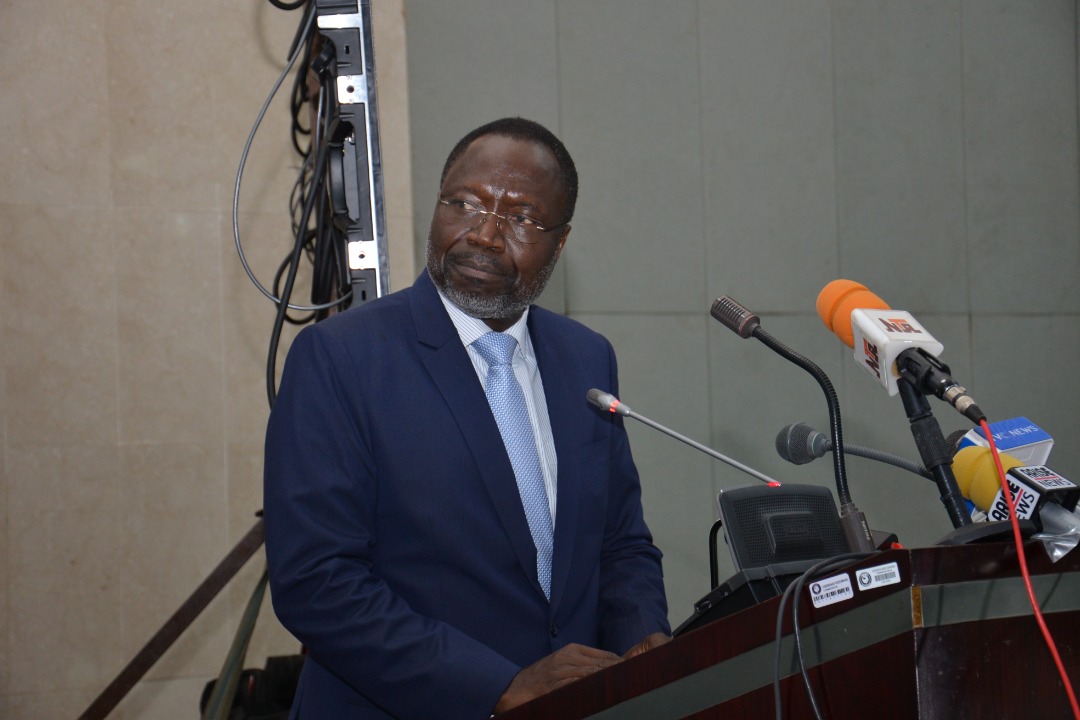
Director General of Africa Center for Disease Control Dr. Jean Kaseya (African Union)

The African Union's health watchdog on Tuesday declared a public health emergency over the growing mpox outbreak on the continent, saying the move is a "clarion call for action".

The outbreak has swept through several African countries, particularly the Democratic Republic of Congo, where the virus formerly called monkeypox was first discovered in humans in 1970.

"With a heavy heart but with an unyielding commitment to our people, to our African citizens, we declare mpox as public health emergency of continental security," Jean Kaseya, head of the Africa Centres for Disease Control and Prevention (Africa CDC), said during an online media briefing.

"Mpox has now crossed borders, affecting thousands across our continent, families have been torn apart and the pain and suffering have touched every corner of our continent," he said.

According to CDC data as of August 4, there had been 38,465 cases of mpox and 1,456 deaths in Africa since January 2022.

"This declaration is not merely a formality, it is a clarion call to action. It is a recognition that we can no longer afford to be reactive. We must be proactive and aggressive in our efforts to contain and eliminate this threat," Kaseya said.


It is the first time the Addis Ababa-headquartered agency has used the continental security power it was given in 2022.


The decision is expected to help to mobilise money and other resources early in any efforts to halt the spread of disease.

Boghuma Titanji, assistant professor in medicine at Emory University in the United States, said the CDC declaration was a "crucial step" towards enhancing coordination among African countries and encouraging them to allocate funds to combat the outbreak.

"While there has been substantial criticism of foreign donors for inadequate support, the over-reliance on external aid has highlighted a major flaw in the current response efforts," Titanji said in a statement.

- Complementary actions -

CDC's announcement on Tuesday comes ahead of a meeting of the World Health Organization's emergency committee on August 14 to decide whether to trigger a public health emergency of international concern (PHEIC) -- the highest alarm the WHO can sound.

"What we are declaring today can be complemented by the action WHO can take," Kaseya said.

The United States said it was in "close coordination" on mpox with DR Congo, other affected countries and health bodies.

"We are tracking closely the spread of mpox in Central Africa. We are pleased to see international leadership in this area," State Department spokesman Vedant Patel told reporters.

He said that the United States so far this year has contributed $17 million beyond already programmed assistance to help African countries prepare and respond to mpox.

In May 2022, mpox infections surged worldwide, mostly affecting gay and bisexual men, due to the Clade IIb strain.

That led the WHO to declare a PHEIC, which lasted from July 2022 to May 2023. The outbreak caused some 140 deaths out of around 90,000 cases.

Titanji, a Cameroonian-born doctor, said that declaration did not however "lead to significant- improved access to diagnostics, therapeutics, or vaccines for African countries".

Renamed from monkeypox in 2022, mpox is an infectious disease caused by a virus transmitted to humans by infected animals but can also be passed from human to human through close physical contact.

The disease causes fever, muscular aches and large boil-like skin lesions.


There are two subtypes of the virus: the more virulent and deadlier Clade I, endemic in the Congo Basin in central Africa; and Clade II, endemic in West Africa.

The cases that have been surging in the DRC since September 2023 are due to a different strain: the Clade Ib subclade.

A PHEIC has been declared by the WHO seven times since 2009: over H1N1 swine flu, poliovirus, Ebola, Zika virus, Ebola again, Covid-19 and mpox.

-----------AFP

Thursday, February 01, 2024

Coup Trio’s Exit From West Africa Bloc Shakes Region


BY CAMILLE LAFFONT

The military regimes in Burkina Faso, Mali and Niger have announced their immediate withdrawal from the West African bloc, Ecowas, accusing it of posing a threat to their sovereignty.

Burkina Faso and Mali said they had sent the Economic Community of West African States “formal notice” of their exit, with Niger expected to follow suit soon, after the three countries unveiled their move in a joint statement at the weekend.

Some observers fear the exit of three founding members of the Ecowas, formed in 1975, could compromise trade and push back the return to civilian rule in the countries concerned as they battle jihadist violence and poverty.

The three slammed Ecowas’s “irrational and unacceptable posture” after the 15-member bloc imposed a range of sanctions in an attempt to hasten a return to democratic rule.

In August, Ecowas threatened military intervention after the toppling of Niger’s president, Mohamed Bazoum. Although that did not materialise, the fallout notched up tensions that had been brewing following coups in Mali in 2020 and Burkina Faso in 2022.

On Sunday, the trio — who have formed an Alliance of Sahel States (AES) — said Ecowas had come “under the influence of foreign powers, betraying its founding principles” and was a “threat to member states and peoples”.

Burkina Faso and Mali were supposed to hold elections later this year, which would meet an Ecowas condition to drop sanctions. But the military authorities want to extend the “transition” periods, citing the insecurity engendered by jihadist unrest.

Niger’s military leader, General Abdourahamane Tiani, has yet to unveil an intended timeline for restoring civilian rule.

Fahiraman Rodrigue Kone, a Sahel regional expert for the Institute for Security Studies, suggested that “the AES states anticipated a coming debate on the end of the transitions”.

“Withdrawing from Ecowas seems to put that on the back burner.”

Le Patriote, a pro-government newspaper in Côte d’Ivoire, commented: “Well ensconced and enjoying the trappings of power, they [the AES leaders] wish to linger forever in their presidential chairs.”

Withdrawal will hit hard given that Ecowas guarantees visa-free travel and right of settlement and work in member countries. Losing such benefits will cause concern, as will the potential effect on regional trade.

All three countries are landlocked and their main coastal economic partners, notably Senegal and Côte d’Ivoire, are, like them, members of the West African Economic and Monetary Union (WAEMU). The grouping also guarantees “freedom of movement and residence” between its eight members, as well as tariff-free trade on certain items along with tariff harmonisation and trade norms.

One country that could feel the effects of the triple withdrawal is Nigeria, which is not a WAEMU member. Nigeria accounts for more than half of Ecowas’s overall GDP and is neighbouring Niger’s main economic partner — although much of their shared 1  500km border is poorly controlled both in terms of security and trade.

“Even if it’s through smuggling, goods and people will return to Niger. You can’t separate Sokoto [northern Nigeria] from Konni [Niger] — it’s the same people,” said Chaibou Tchiombiano, secretary general of Niger’s import-export and wholesalers’ union.

Although the military regimes say they are withdrawing “without delay”, Ecowas regulations stipulate that requests to leave must be made in writing a year beforehand.

Ecowas said on Sunday that it had not received notification.

“Legally, withdrawal with no delay is not possible,” Kone said. “These states will have to find some form of agreement and negotiations will go in the direction of finding the means to undertake withdrawal gradually.”

Amid jihadist advances in the Sahel, “the region is fragmenting, becoming the object of stronger geostrategic competition, and this is not good news for stability”, Kone warned.

Sharp criticism of the CFA franc, the common currency of WAEMU members, by the military regimes and their supporters could see Alliance of Sahel States countries leave the organisation and renounce the free exchange of goods and labour. — AFP

Thursday, August 03, 2023

U.S. Seeks To Balance Security And Human Rights In Turbulent West Africa

Army Capt. Ibrahim Traoré, Burkina Faso’s new president, poses in the capital, Ouagadougou, with the torch given by elder revolutionaries during a ceremony on Oct. 15, 2022, marking the 35th anniversary of the assassination of coup leader and former president Thomas Sankara. (Olympia De Maismont/AFP/Getty Images)

BY RACHEL CHASON AND JOHN HUDSON

DAKAR, SENEGAL
 (THE WASHINGTON POST) —The Biden administration faces a dilemma in West Africa: Should the United States help a country in the region run by a military junta with a troubling record on human rights or risk the country’s losing territory to Islamic extremists and partnering with Russian mercenaries?

It is a quandary that, in various forms, has repeatedly confronted the administration in Africa.

Senior officials at the State Department and Pentagon are supporting the provision of nonlethal security assistance to Burkina Faso’s military, arguing that the threat posed by a spiraling Islamist insurgency requires action, especially since Russia’s Wagner Group would be eager to step in. A senior administration official said Wagner is “salivating” for the chance to establish a formal partnership with the Burkinabè government.

In urgent phone calls and private meetings, top Burkinabè officials have appealed to foreign diplomats for help in defeating the insurgents, according to multiple U.S. government officials. But the Burkinabè government took power in a military coup last year and has been implicated by human rights groups in violence against civilians, including a massacre of at least 156 people in April allegedly carried out by the army.

As with Burkina Faso, the U.S. and other Western governments have been wrestling with how best to balance security and human rights concerns elsewhere in and near Africa’s Sahel region, including in Mali, Chad and the Central African Republic — all of which are mired in political turmoil, targeted by Wagner and ruled by governments implicated in abuses.

The challenge for an administration that is outspoken in support of democracy became even more acute last week, when soldiers in the West African country of Niger overthrew its elected president, who had been a key Western ally in the fight against Islamist militants. The United States has about 1,100 soldiers based in Niger and operates a drone base there.

The Pentagon announced Tuesday that it had suspended security cooperation with Niger’s military, including U.S. training of Nigerien soldiers, “in light of the situation.” But the administration has so far not formally declared the seizure of power in Niger a coup, which would require the freezing of military aid under U.S. law. U.S. officials are part of a chorus of foreign leaders urging that constitutional order be restored in Niger and that the ousted president, Mohamed Bazoum, be released. It is unclear what shape U.S. support for Niger eventually will take if those demands are not met.

U.S. officials have been weighing similar considerations in Burkina Faso over recent months. When a 34-year-old army captain named Ibrahim Traoré wrested power last year, he vowed to improve the security situation in Burkina Faso, which has been at the center of the insurgency. The Global Terrorism Index, produced by the Institute for Economics and Peace, ranks Burkina Faso only behind Afghanistan for extremist violence. Traoré and other members of the junta have said the Burkinabè want to do their own fighting but need training, equipment and intelligence-gathering, according to government officials and aides on Capitol Hill.

U.S. officials, concerned about Russian influence in the region, said that the Wagner Group has been courting junta members in Burkina Faso and that Moscow has provided equipment to the military. Already, Wagner is deeply entrenched in the Central African Republic and Mali and has been trying to sow instability in Chad, including by training rebels to overthrow its president. The declaration late last week by Wagner leader Yevgeniy Prigozhin that his operatives will continue expanding operations in Africa has renewed concerns in Washington about Burkina Faso’s fate.

A senior member of the Biden administration said State Department officials are supporting the transfer of nonlethal security assistance to Burkina Faso, which would involve training and equipment for the Burkinabè army. This proposed package has not previously been reported.

“They’re bleeding out on the battlefield,” said the senior administration official, describing the violent standoff between security forces and Islamist militants. “They don’t have as much battlefield awareness as they need. They need more anti-mine training. We could do some of that stuff.”

That U.S. official, who, like others, spoke on the condition of anonymity to discuss a sensitive diplomatic issue, said that such a package would require Burkina Faso to improve its respect for human rights. The administration would have to consult with Congress and waive a provision of U.S. law that bans military aid for governments that take power via coup, the officials said. The package has yet to get White House approval, officials said, and could face pushback on Capitol Hill, where lawmakers have questioned the administration’s ability to balance democracy-promotion and managing security concerns.

A top Biden administration official said the administration fears that Burkina Faso will become a gateway for terrorism in coastal West African countries.

Critics, including officials on Capitol Hill and researchers, say that providing military assistance will send the wrong message to a regime that lacks democratic legitimacy and has a troubling human rights record. By providing even nonlethal support to the Burkinabè military, the United States could encourage army excesses and thus further inflame the insurgency, the critics warn.

U.S. officials, concerned about Russian influence in the region, said that the Wagner Group has been courting junta members in Burkina Faso and that Moscow has provided equipment to the military. Already, Wagner is deeply entrenched in the Central African Republic and Mali and has been trying to sow instability in Chad, including by training rebels to overthrow its president. The declaration late last week by Wagner leader Yevgeniy Prigozhin that his operatives will continue expanding operations in Africa has renewed concerns in Washington about Burkina Faso’s fate.

A senior member of the Biden administration said State Department officials are supporting the transfer of nonlethal security assistance to Burkina Faso, which would involve training and equipment for the Burkinabè army. This proposed package has not previously been reported.

“They’re bleeding out on the battlefield,” said the senior administration official, describing the violent standoff between security forces and Islamist militants. “They don’t have as much battlefield awareness as they need. They need more anti-mine training. We could do some of that stuff.”

That U.S. official, who, like others, spoke on the condition of anonymity to discuss a sensitive diplomatic issue, said that such a package would require Burkina Faso to improve its respect for human rights. The administration would have to consult with Congress and waive a provision of U.S. law that bans military aid for governments that take power via coup, the officials said. The package has yet to get White House approval, officials said, and could face pushback on Capitol Hill, where lawmakers have questioned the administration’s ability to balance democracy-promotion and managing security concerns.

A top Biden administration official said the administration fears that Burkina Faso will become a gateway for terrorism in coastal West African countries.

Critics, including officials on Capitol Hill and researchers, say that providing military assistance will send the wrong message to a regime that lacks democratic legitimacy and has a troubling human rights record. By providing even nonlethal support to the Burkinabè military, the United States could encourage army excesses and thus further inflame the insurgency, the critics warn.

Touring sub-Saharan Africa last year, Secretary of State Antony J. Blinken differentiated American policy from that of China and Russia — which have accumulated influence in Africa by focusing on business and security, respectively — saying the Biden administration’s policy was based on promoting democracy. But the United States also has a long history of partnering with coup-makers and authoritarian leaders in Africa when it suits American security or economic interests, the political scientist Alex Thurston of the University of Cincinnati and other researchers noted, including Yoweri Museveni in Uganda and the Déby family in Chad.

In Burkina Faso, a once-peaceful country known in part for its international film festival, the United States cut about $158 million in security assistance after the first of two coups last year. The bulk of U.S. aid to that country now is for development, officials said, in addition to a training program for local police and a partnership with the D.C. National Guard.

A senior Defense Department official said “the urgency of the emergency” means the United States has to do more. “Burkina Faso is at a tipping point,” said the official. “Our position is that if we don’t provide assistance, then someone else will, whether it is Wagner or China or another group.”

In October, senior officials from the White House, Pentagon and State Department visited Burkina Faso and met with senior Burkinabé officials. During the visit, the U.S. officials said, they told Traoré that if he did business with the Wagner Group, that would cross a red line for the United States. They said that while the United States would try to extend more help within the constraints of American law, “if you go Prigozhin, we will be done.”

A fraught decision

Despite Traoré’s promises to take control of the security situation, it has only become worse. More than 1,600 civilians are projected to die this year in events related to extremists, according to data from the Washington-based Africa Center for Strategic Studies, more than double last year.

Government violence against civilians also has surged, according to Human Rights Watch and Amnesty International, with the army and informal militias perpetrating executions and forced disappearances.

The Burkinabè government did not respond to repeated requests for comment for this story. It has previously said it would investigate the April massacre.

Stephanie Savell, a Brown University anthropologist who has researched Burkina Faso, said U.S. security assistance has worsened the crisis by intensifying a cycle of revenge, noting frequent accounts of Burkinabè men joining insurgent groups after government or militia violence affects their families.

“Americans are failing to ask the big-picture questions about what has happened in the past and whether it is effective,” she said. “Instead of asking those big-picture questions, people are saying, ‘How can we do this slightly better or slightly differently,’ rather than saying, ‘Is military assistance the right response at all?’'

Cameron Hudson, a senior associate at the Washington-based Center for Strategic and International Studies, said the administration needs to have a clearer strategy toward the Sahel region.

“The question is: How do we walk and chew gum at the same time?” Hudson said. “If these governments lose battles or decide to call in the Russians, that has a serious and measurable effect on national security interests. But at the same time, we don’t want to condone or legitimize their rule from a political standpoint.”

A senior U.S. government official said the administration was pushing for a democratic transition in Burkina Faso while considering the options available to help the country’s government defend itself.

“We have to lead with our democratic values,” the official said, “but we can’t turn a blind eye to a security situation that is deteriorating every day.”

Hudson reported from Washington.

Tuesday, May 23, 2023

'Modern Slavery' Most Common In North Korea And Eritrea: Study

Image via Asmarino

LONDON (AFP)--North Korea, Eritrea and Mauritania have the highest prevalence of modern slavery in the world, according to the 2023 Global Slavery Index published Wednesday, which noted a "worsening" situation globally since its last survey five years earlier.

The report said an estimated 50 million people were "living in situations of modern slavery" in 2021, an increase of 10 million over 2016, when the problem was last measured.

The figure includes some 28 million people in forced labour and 22 million living in a forced marriage.

The situation is worsening "against a backdrop of increasing and more complex armed conflicts, widespread environmental degradation" and impacts from the coronavirus pandemic, among other factors, the investigation said.

Compiled by the human rights charity Walk Free, the report defines modern slavery as encompassing "forced labour, forced or servile marriage, debt bondage, forced commercial sexual exploitation, human trafficking, slavery-like practices, and the sale and exploitation of children."

Slavery's core principle entails "the systematic removal of a person’s freedom" -- from the right to accept or refuse labour to the liberty to determine if, when and whom to marry.

By this benchmark, reclusive and authoritarian North Korea has the highest prevalence of modern slavery (104.6 per 1,000 population), according to the report.

It is followed by Eritrea (90.3) and Mauritania (32), which in 1981 became the last country in the world to make hereditary slavery illegal.

The 10 countries with the highest prevalence of modern slavery have some common characteristics, including "limited protections for civil liberties and human rights".

Many of the countries are in "volatile" regions experiencing conflict or political instability, or home to a large populaton of "vulnerable people" such as refugees or migrant workers.
'Mirror held to power'

Also in the top 10 globally were Saudi Arabia, the United Arab Emirates and Kuwait, where migrant workers' labour rights are restricted by the "kafala" sponsorship system.

Other countries in the top 10 are Turkey, "which hosts million of refugees from Syria", Tajikistan, Russia and Afghanistan.

While forced labour is more common in low-income countries it is "deeply" connected to demand from higher-income countries, the report said, noting that two-thirds of all forced labour cases are linked to global supply chains.

The report said G20 countries -- made up of the EU and the world's 19 top economies -- are currently importing $468 billion worth of goods that are at risk of being produced with forced labour, up from $354 billion in the previous report.

Electronics remain the highest value at-risk product, followed by garments, palm oil and solar panels, in a sign of high demand for renewable energy products.

"Modern slavery permeates every aspect of our society. It is woven through our clothes, lights up our electronics, and seasons our food," the group's founding director Grace Forrest said.

"At its core, modern slavery is a manifestation of extreme inequality. It is a mirror held to power, reflecting who in any given society has it and who does not," she added.

© 2023 AFP

Sunday, December 04, 2022

West African Leaders Agree To Create Regional Force

Omar Alieu Touray, President of the ECOWAS Commission


NIGERIA (AFP) -- West African leaders agreed to create a regional force to intervene against extremism and in the event of coups, a senior official said.

Leaders of the Economic Community of West African States had decided to act to "take care of our own security in the region", Omar Alieu Touray, president of the ECOWAS commission, told journalists on Sunday at a summit in Nigeria.

They are "determined to establish a regional force that will intervene in the event of need, whether this is in the area of security, terrorism and restore constitutional order in member countries," he added.

Mali, Guinea and Burkina Faso have all been hit by military coups in the last two years.

Several countries in the region are also suffering from the spread of extremism, including Mali, Burkina Faso and Niger, and southwards to the Gulf of Guinea.

National armies, largely powerless against the extremist forces operating across borders, have been cooperating with external actors such as the UN, France and Russia.

But Touray said this decision would "restructure our security architecture".

The modalities of the planned regional force will be considered by defence chiefs in the second half of 2023, Touray said.

The funding of the force must also be decided, but the ECOWAS official stressed that such an operation could not be solely dependent on voluntary contributions.

Coup-hit nations

The West African leaders, concerned about instability and contagion, have been pressing for months for the quickest possible return to civilian rule in the three countries which have undergone coups in recent years.

Mali and Burkina Faso have both been severely shaken by the spread of extremism.

All three countries have been suspended from the decision-making bodies of ECOWAS.

Leaders of the military juntas have pledged, under pressure, to step down after two years, allowing for a transition period during which they all say they want to "rebuild" their state.

ECOWAS has been looking to see what progress each nation has been making towards restoring constitutional order.

'Serious concerns'

In Mali, "it is essential that constitutional order returns within the planned timeframe", said Touray.

If Mali's military meets the announced deadline of March 2024 -- after months of confrontation with ECOWAS and a severe trade and financial embargo that has now been lifted -- the "transition" will in fact have lasted three and a half years.

Touray urged the junta in Guinea to involve all parties and civil society in dialogue "immediately" on the process of restoring civilian rule.

The main political parties and much of civil society there have been boycotting the authorities' offer of dialogue.

As for Burkina Faso, Touray expressed ECOWAS's "serious concerns" about the security situation and the humanitarian crisis there, while pledging support for the country.

Saturday, February 05, 2022

Israel Dispute Erupts At African Union Summit


ADDIS ABABA (AFP) — Palestinian Prime Minister Mohammed Shtayyeh on Saturday urged the African Union (AU) to withdraw Israel's accreditation, bringing simmering tensions to a head as the 55-member bloc opened a two-day summit in Addis Ababa.

Even as the continent reels from a spate of military coups and the coronavirus pandemic, the relationship with Israel is expected to figure prominently during the summit this weekend.

The dispute was set in motion last July when Moussa Faki Mahamat, chair of the African Union Commission, accepted Israel's accreditation to the bloc, triggering a rare dispute within a body that values consensus.

As heads of state gathered in Ethiopia's capital on Saturday, Shtayyeh called on the body to reject Faki's move.

"Israel should never be rewarded for its violation and for the apartheid regime it does impose on the Palestinian people," he said.

"Your excellencies, I'm sorry to report to you that the situation of the Palestinian people has only grown more precarious."

The summit may see a vote on whether to back or reject Faki's decision, which could yield an unprecedented split in the bloc.

Israel's accreditation last year drew quick protest from powerful members, including South Africa and Algeria which argued that it flew in the face of AU statements supporting the Palestinian Territories.

Earlier Saturday Faki said the AU's commitment to the Palestinian push for independence was "unchanging and can only continue to go stronger".

He defended Israel's accreditation, however, saying it could be "an instrument in the service of peace" while calling for "a serene debate" on the issue.

War in Ethiopia

This year's summit comes as the AU faces mounting pressure to push for a ceasefire in host country Ethiopia, where a 15-month war has killed thousands of people and, the UN says, driven hundreds of thousands to the brink of starvation.

The conflict pits Prime Minister Abiy Ahmed’s government against fighters from the northern Tigray region.

It has precipitated a rapid deterioration in ties between Abiy, the 2019 Nobel Peace Prize winner, and Western powers who once saw him as a reformer but have condemned alleged massacres and mass rape committed during the conflict by Ethiopian and allied forces.

The fact that Ethiopia hosts the AU has made any intervention by the bloc especially delicate, and Faki waited until last August — nine months after fighting began — to appoint Nigeria’s former president Olusegun Obasanjo as a special envoy tasked with trying to broker a ceasefire.

On Saturday, Abiy praised his fellow African leaders for what he described as their “support”.

“Ethiopia’s challenge was internal in nature and a matter of maintaining law and order. But the solution of our internal matters was made exceedingly difficult by the role played by external actors,” Abiy said.

“I wish to take this opportunity to thank you all for your support, solidarity and understanding as we underwent these trying times.”

Abiy also proposed the creation of “an African Union continental media house”, renewing his criticism of international media coverage of Ethiopia and the continent at large.

“Negative media representation of Africa not only disinforms the rest of the world about our continent, but also shapes the way we see ourselves as Africans,” he said.

Coup ‘resurgence’

African leaders are also preoccupied with a recent string of military coups.

Four member states have been suspended by the AU’s Peace and Security Council since mid-2021 because of unconstitutional changes of government — most recently Burkina Faso, where soldiers ousted President Roch Marc Christian Kabore last month.

Addressing African foreign ministers this week, Faki denounced a “worrying resurgence” of such putsches.

But the AU has been accused of an inconsistent response, notably by not suspending Chad after a military council took over following the death of longtime President Idriss Deby Itno on the battlefield last April.

Attendees will also discuss the coronavirus pandemic, with South African President Cyril Ramaphosa, who is participating in the summit virtually, expected to provide an update on Africa’s response to COVID-19, nearly two years after the continent’s first case was detected in Egypt.

As of January 26, only 11 per cent of Africa’s more than one billion people had been fully vaccinated, according to the Africa Centres for Disease Control and Prevent

Sunday, March 01, 2020

Vatican Opens Archives On History's Most Controversial Pope

Pope Pius XII


VATICAN (AFP)--The Vatican unseals the archives of history's most contentious popes on Monday, potentially shedding light on why Pius XII stayed silent during the extermination of six million Jews in the Holocaust.

Two hundred researchers have already requested access to the mountain of documents, made available after an inventory that took more than 14 years for Holy See archivists to complete.

Award-winning German religious historian Hubert Wolf will be in Rome on Monday, armed with six assistants and two years of funding to start exploring documents from the "private secretariat" of the late pope.

Wolf, a specialist on the relationship of Pius XII with the Nazis, is anxious to discover the notes of the his 70 ambassadors -- the pontiff's eyes and ears during his time as head of the Catholic Church between 1939 and his death in 1958.

There should also be records of urgent appeals for help from Jewish organisations, as well as his communications with the late US President Franklin D. Roosevelt.

The unsealed archives additionally cover a post-World War II era in which writers were censored and some priests hounded for suspected communist sympathies.

The Vatican first published the essentials covering the Holocaust four decades ago, an 11 volume work compiled by Jesuits.

But some crucial pieces are still missing, including the pope's replies to notes and letters -- for example, those about Nazi horrors.

The Jesuits already published "documents the pope received about the concentration camps, but we never got to see his replies," Wolf said in an interview.

"Either they do not exist, or they are in the Vatican," he told AFP.

Historians have already examined the 12 German years of Eugenio Pacelli, the future pope's real name which he used while posted there as the Holy See ambassador in 1917-1929

There, he witnessed the rise of Nazism, then returned to Rome to become the right-hand man of his predecessor Pius XI, elected in 1922.

Past archives have revealed exchanges in which he was alerted about the extermination of European Jews once he himself became the pope.

"There is no doubt that the pope was aware of the murder of Jews," Wolf said.

"What really interests us is when he learned about it for the first time, and when he believed that information."

- Cryptic Christmas message -

On December 24, 1942, Pius XII delivered one of history's most debated Christmas radio messages.

Buried in its long text was a reference to "hundreds of thousands of people who, without any fault of their own and sometimes for the sole reason of their nationality or race, were doomed to death or gradual extermination".

Was his message -- delivered in Italian and aired just once, and which never explicitly mentioned either the Jews or Nazis -- heard and understood by German Catholics?

"The only ones who heard it were the Nazis," said Wolf, noting that the radio waves were scrambled and that the pope could have spoken German -- if he had really wanted to reach the German faithful.

"After the war, Pius XII told a British ambassador: 'I was very clear.' And the ambassador will say in reply: 'I did not understand you'," the historian said.

Those who rise to the pope's defence note that Pius XII was a former diplomat who was trained in prudence, anxious to remain neutral in time of war, and concerned about being able to shield Catholics from the unfolding devastation.

He simply could not be any more explicit, Pius XII's supporters say. Historians estimate the Church hid around 4,000 Jews in its Roman institutions during the war.

"Quite a few Jews were saved in convents," David Kertzer, an American historian who won the Pulitzer Prize for a book about the era, told AFP.

"But why were they murdered by people viewing themselves as Christians?"

For Kertzer, the reasons behind the "silence of the pope" are key.

"He wasn't happy about mass murder. He seemed upset. He knew by 1941," said Kertzer.

And yet "never uttered the word Jew".

Wolf, the German historian, added that Pius XII "remained very withdrawn after the war, saying nothing about the Holocaust".

He also never recognised the creation of the State of Israel in 1948.

"Why?" Wolf asks.

Thursday, January 30, 2020

Four Burundi Journalists Get Jail Terms Over Rebel Coverage

The journalists of the Burundi's independent media Iwacu Press Group,(L to R) Christine Kamikazi, Agnes Ndirubusa, Terence Mpozenzi and Egide Harerimana were handed jail terms. Image:Tchandrou Nitanga/AFP

BY AFP

A Burundi court Thursday sentenced four reporters covering an incursion of rebels from neighbouring DR Congo to 18 months in jail, sparking immediate criticism from rights watchdog Amnesty International.

The journalists were working for Iwacu, one of Burundi's few independent media outlets when they were arrested on October 22 and charged with endangering state security.

"We are in shock. The court has just sentenced the four Iwacu journalists to two-and-a-half years in prison and fined them one million Burundi francs (485 euros, $535)," a witness who was in court told AFP.

"It's a shame because they were simply doing their job."

The prosecution had called for a 15-year prison sentence largely based on a WhatsApp exchange of messages between one of the reporters and a colleague based abroad in which the former wrote: "We are heading for Bubanza ... to help the rebels."

A further demand was for the four to be denied their civic rights for 20 years.

Iwacu's founder, Antoine Kaburahe, who lives in exile in Belgium, tweeted that the organisation would appeal the sentence.

Police say at least 14 rebels from the Burundian RED-Tabara group, based across the border in eastern DR Congo, were killed in an attack the day the journalists were arrested.

The rebels say they killed a dozen security personnel.

"The conviction and sentencing of Agnes Ndirubusa, Christine Kamikazi, Egide Harerimana and Terence Mpozenzi on trumped-up charges marks a sad day for the right to freedom of expression and press freedom in Burundi," Seif Magango, Amnesty International's Deputy Regional Director for East Africa said.

"The authorities must quash the conviction and sentences, and the four journalists must be immediately and unconditionally released," he said.

Magango underscored that journalists should be allowed to work freely "particularly ahead of upcoming elections" in May.

The Reporters Without Borders NGO, which places Burundi a lowly 159th on its global list of press freedom, says those detained were simply doing their job.

Sunday, December 29, 2019

Sixty Years On, Africa Still Seeks Right Model For Growth

Socio-economic changes in sub-Saharan Africa since 1960.


BY MARIE WOLFROM/AFP
As 1960 dawned, sub-Saharan Africa braced for historic change: that year, 17 of its countries were destined to gain independence from European colonial powers.

But six decades on, the continent is mired in many problems. It is struggling to build an economic model that encourages enduring growth, addresses poverty and provides a future for its youth.

Here are some of the key issues:

Youth 'explosion'

Africa's population grew from 227 million in 1960 to more than one billion in 2018. More than 60 percent are aged under 25, according to the Brookings Institution, a US think tank.

"The most striking change for me is the increasing reality of disaffected youth... a younger population that is ready to explode at any moment," Cameroonian sociologist Francis Nyamnjoh told AFP.

"They are hungry for political freedoms, they are hungry for economic opportunities and they are hungry for social fulfilment ."

Joblessness is a major peril. Unemployed youths are an easy prey for armed groups, particularly jihadist movements in the Sahel, or may be tempted to risk clandestine emigration, often at the cost of their lives.

The continent's population is expected to double by 2050, led by Nigeria, Ethiopia and Democratic Republic of Congo (DRC).

Poverty and inequality
The proportion of Africa's population living below the poverty line —- less than $1.90 (1.7 euros) per day —- fell from 54.7 percent in 1990 to 41.4 percent in 2015, according to the World Bank.

But this average masks enormous differences from one country to another, exemplified by Gabon (3.4 percent of the population in 2017) and Madagascar (77.6 percent in 2012).

"The inequalities between countries are as extreme as in Asia and the inequalities within countries as as high as in Latin America, where landless peasants coexist with huge landowners," said Togolese economist Kako Nubukpo.

Christophe Cottet, an economist at the French Development Agency (AFD), pointed out that inequality in Africa is "very poorly measured."

"There are notably no figures on inequalities of inherited wealth, a key issue in Africa."

Mega-cities and countryside

Recent decades have seen the expansion of megacities like Lagos and Kinshasa, typically ringed by shantytowns where people live in extreme poverty, although many medium-sized cities have also grown.

More than 40 percent of Africans now live in urban areas, compared with 14.6 percent in 1960, according to the World Bank.

In 1960, Cairo and Johannesburg were the only African cities with more than a million residents. Consultants McKinsey and Company estimate that by 2030, about 100 cities will have a million inhabitants, twice as many as in Latin America.

But this urban growth is not necessarily the outcome of a rural exodus, said Cottet.

"The population is rising across Africa as a whole, rather faster in towns than in rural areas," said Cottet.

"There is also the problem of unemployment in towns—(rural) people have little interest in migrating there."

Lost decades of growth
Growth in Africa slammed to a halt in the early 1980s, braked by a debt crisis and structural adjustment policies. It took two decades to recover.

Per-capita GDP, as measured in constant US dollars, shows the up-and-downs, although these figures are official and do not cover Africa's large informal economy: $1,112 in 1960, $1,531 in 1974, $1,166 in 1994 and $1,657 in 2018.

"If you do an assessment over 60 years, something serious happened in Africa, with the loss of 20 years. But there is no denying that what is happening now is more positive," Cottet said.

The IMF's and World Bank's structural adjustment programmes "broke the motors of growth," said Nubukpo, whose book, "L'Urgence Africaine," (The African Emergency) makes the case for a revamped growth model.

The belt-tightening programmes "emphasised the short term, to the detriment of investments in education, health and training."

New thinking needed

Africa has a low rate of industrialisation, is heavily dependent on agriculture and its service sector has only recently started to emerge.

"We have not escaped the colonial model. Basically, Africa remains a producer and exporter of raw materials," said Nubukpo.

He gave the example of cotton: 97 percent of Africa's cotton fibre is exported without processing—the phase which adds value to raw materials and provides jobs.

For Jean-Joseph Boillot, a researcher attached to the French Institute for International and Strategic Affairs, "Africa is still seeking an economic model of development."

"There is very little development of local industries," he said.

"This can only be achieved through a very strong approach, of continental industrial protection—but this is undermined by the great powers in order to pursue free trade.

"The Chinese, the Indians and Westerners want to be able to go on distributing their products."

Governance problem

Lack of democracy, transparency and efficient judicial systems are major brakes on African growth, and wealth is concentrated in the hands of a few, said the experts.

Of the 40 states deemed last year to be the most world's most corrupt countries, 20 are in sub-Saharan Africa, according to Transparency International.

"Africa is not developing because it is caught in the trap of private wealth and the top wealth holders are African leaders," said Nubukpo.

"We must promote democracy, free and transparent elections to have legitimate leaders who have the public interest at heart, which we absolutely do not have."

Nyamnjoh also pointed to marginalised groups—"There should be more room for inclusivity of voices, including voices of the young, voices of women."

Monday, December 09, 2019

Corruption Trial Of Angolan Ex-President’s Son Begins

Jose Filomeno dos Santos


AFP

The son of former Angolan President Jose Eduardo dos Santos appeared in court on Monday, at the start of his trial on corruption charges.

It is the first time a member of the dos Santos family appears in dock since President Joao Lourenco came to power in 2017, part of a wave of change that has followed his arrival.

Jose Filomeno dos Santos, 41, also known as “Zenu” is accused of having tried to steal $1.5 billion (1.3 billion euros) from Angola’s sovereign wealth fund during the time that he ran it.

He appeared before the Supreme Court along with three codefendants, who also face charges of money laundering and embezzlement — one of the former central bank governor Valter Filipe da Silva.

Zenu was appointed the head of the $5 billion funds in 2013, 34 years into his father’s reign.

In January 2018, only months after Lourenco came to power, Zenu was fired from his position. He was arrested in September that year and held in custody for seven months before being released on bail.

Lourenco has launched a large-scale purge of the dos Santos administration, during which key sectors of the economy were awarded to the former president’s close allies and relatives.

Zenu’s half-sister Isabel dos Santos was ousted from her position as chair of the state oil giant Sonangol even sooner, in November 2017.

Cited as the richest woman in Africa, she is also being investigated for embezzlement.

She has since quit Angola for Britain, from where she has denounced Lourenco, saying she has been censored in the Angolan press and alleging that she quit the country because she had received death threats.

Lourenco is struggling to wean Angola’s economy off of oil, which accounts for one-third of the former Portuguese colony’s GDP and more than 90 percent of exports.

The country is still recovering from a 27-year civil war, which ended in 2002, and the global fall in oil prices in 2014.

Despite extensive oil, gas and mineral reserves, the majority of Angolans live in poverty and continue to rely on subsistence agriculture.

Most members of the dos Santos family have moved abroad.

Saturday, November 02, 2019

IS Claims Responsibility For Deadly Mali Attacks On 50 Soldiers

Mali’s army has been struggling in the face of a jihadist revolt (AFP Photo/Souleymane Ag Anara)


BY BY AGENCE FRANCE-PRESSE

The Islamic State on Saturday claimed responsibility for a devastating raid that killed 49 Malian troops as well as a blast that led to the death of a French soldier who became the latest casualty in the conflict-torn region.

The strikes underscored the fragility of an area straddling several West African countries battling increasing jihadist violence that has claimed hundreds of lives.

Friday’s assault on a Malian military outpost at Indelimane in the eastern Menaka region near Niger killed 49 soldiers, wounded three and left 20 survivors, the Malian Armed Forces (FAMa) said Saturday.

“Soldiers of the caliphate attacked a military base where elements of the apostate Malian army were stationed in the village of Indelimane,” the IS said in a statement on its social media channels.

On Saturday, French corporal Ronan Pointeau, 24, died after an armoured vehicle in which he was travelling hit an improvised explosive device (IED) near the city of Menaka, a French defence ministry statement said.

The IS late Saturday also claimed responsibility for that, saying its fighters had “detonated an explosive device on a French army convoy in the Indelimane area”.

Pointeau and his colleagues were escorting a convoy between the cities of Gao and Menaka.

“This insidious attack shows the importance and bitterness of the fight against armed terrorist groups” in the border region straddling Mali, Niger and Burkina Faso, the French defence ministry said.

French Armed Forces Minister Florence Parly said she would be “visiting Mali very soon to hold discussions with Malian authorities.”

President Emmanuel Macron paid tribute to Pointeau and expressed solidarity with the French and African troops fighting in the region.

The Malian government initially said 53 people died in what it described as a “terrorist attack” at Indelimane.

An army officer said troops arrived at the outpost around 5:00 pm on Friday and “took back control of our positions.

“The terrorists carried out a surprise attack at lunchtime. Army vehicles were destroyed, others taken away,” he told AFP.

The attacks came a month after two jihadist assaults killed 40 soldiers near the border with Burkina Faso. Several sources have said the real death toll was higher.

MINUSMA, the UN mission in Mali, condemned the raid and said its peacekeepers were helping Malian troops secure the region.

– ‘We can resist’ –
“This bloodshed that Mali has been living through cannot go on,” imam Mahamound Dicko, an influential religious leader in Mali, said.

“Do you want us to resign ourselves to this suffering? We can resist,” he added.

Rights activist Alioune Tine, from Mali’s western neighbour Senegal, called for action across Africa to tackle the threat.

“If Africa does not mobilise for Mali and Burkina (Faso), it won’t be spared the bushfire that is quickly catching West Africa’s coastal countries, the next chosen targets” of the jihadists, he said.

The violence has also spilled over into Burkina Faso and Niger where extremists have exploited existing inter-communal strife, leaving hundreds dead.

In Mali, the attacks have spread from the arid north to its centre, an ethnically mixed and explosive region.

The recent assaults are a humiliation for the so-called G5 Sahel force — a much-trumpeted initiative under which five countries created a joint 5,000-man anti-terror force — and for former colonial ruler France, which is helping to bring security to the fragile region.

Northern Mali came under the control of Al-Qaeda linked jihadists after Mali’s army failed to quash a rebellion there in 2012.

A French-led military campaign was launched against the jihadists, pushing them back a year later.

But the jihadists have regrouped and widened their hit-and-run raids and landmine attacks to central and southern Mali.

Thursday, September 26, 2019

UK Court Orders Nigeria To Pay US$200mn In US$9.6bn Case


AGENCE FRANCE-PRESSE


LONDON (AFP)
-- A UK court on Thursday ordered the Nigerian government to pay US$200 million pending its appeal against the US$9.6 billion awarded to a tiny offshore firm involved in a failed gas deal.

The high-stakes dispute pits Process and Industrial Developments Limited (P&ID) — a British Virgin Islands-registered company founded by two Irish business partners — against the energy-rich but troubled nation of 200 million people.

The original settlement against the Nigerian government represented around a fifth of the foreign reserves held by Africa’s largest economy.

Justice Christopher Butcher of the Commercial Court in London granted the Nigerian government a stay of execution of the fine pending an appeal.

But he also gave the government 60 days to make a US$200-million security payment — and 14 days to pay running costs whose sum was not disclosed in court.

Justice Butcher said P&ID had the right to seize Nigerian assets should either of those deadlines be missed.

The justice based his decision on the “real risk” that Nigeria’s “assets will not be returned in the event that the appeal is successful and would be lost to the government and to the people of Nigeria.’’

He added that there was the “risk of immediate, serious and potentially irreparable damage” should P&ID use “third-party agents” to monetise and stash away the assets seized pending an appeal.

Justice Butcher further ruled “that there may be immediate and potentially severe damage to Nigeria if there is no stay”.

The appeal relates to a running dispute over which country’s court — and law — has jurisdiction over the explosive case.

Government lawyer Harry Matovu claimed Nigeria’s “sovereign immunity rights” were being violated by the settlement amount.

The original contract required the Nigerian government to pay US$300 million for P&ID to set up a way to turn a dirty form of natural gas burned off during oil production into electricity for local government use.

The deal fell through in 2012 amid mutual recriminations and claims of fraud. The US$9.6 billion represents money that added up through accrued interest payments.

‘No fraud’

Both P&ID and the Nigerian government claimed Thursday’s court decision as a victory.

Nigeria’s Attorney General Abubakar Malami insisted he was “pleased with today’s development” and viewed it as a “positive resolution that constitutes an important step in the government’s efforts to defend itself in a fair and just process”.

“We look forward to challenging the UK Commercial Court’s recognition of the tribunal’s decision in the UK Court of Appeal, uncovering P&ID’s outrageous approach for what it is: a sham based on fraudulent and criminal activity,“ he said in a statement.

The company in its response welcomed the ruling for requiring the security payment and condemned a separate ruling in Nigeria requiring the firm to forfeit its assets to the West African country.

“The Nigerian government will now have to put its money where its mouth is if it wants to avoid immediate seizure of assets,“ P&ID said in a statement.

“The Nigerian government knows there was no fraud and the allegations are merely political theatre designed to deflect attention from its own shortcomings.”

The Abuja court ruling came after two local P&ID representatives pleaded guilty to charges of fraud and economic sabotage.

P&ID called the Abuja case a “sham investigation”.

Its lawyer Ian Mill argued in court that the entire appeal was groundless because the government has provided “no reason why that money should not be paid”.

He called it an unlawful “attempt to reargue the case”.

But government attorney Matovu countered that Nigeria should not be forced to turn over such a huge sum when the jurisdiction of presiding courts was still under dispute.

He called it a “paradigm case” that would set precedent for similar court battles.

The date of the Nigeria’s appeal has not yet been set. — AFP

Monday, September 02, 2019

Burkina Faso Court Jails Two Generals Over 2015 Coup

Burkina Faso's former foreign minister Djibril Basole (R) was jailed for 10 years, and former head of the presidential security, General Gilbert Diendere, was given a 20-year sentence. Image: Ahmed Quoba/AFP

BY ARMEL BAILY, DAVID ESNAULT

OUAGADOUGOU (AFP)
- A military court in Burkina Faso on Monday convicted and jailed two generals on charges of masterminding a coup in the fragile Sahel state in 2015.

General Gilbert Diendere was convicted on charges of murder and harming state security and handed a 20-year prison term, while General Djibrill Bassole, accused of treason, was ordered jailed for 10 years.

The coup, carried out by troops loyal to ousted president Blaise Compaore, was thwarted by public protest but at the cost of 14 lives and 270 wounded.

The two generals were the leading figures in a 19-month trial of 84 people accused of the attempted overthrow of Burkina's transitional government.

The coup was mounted by an elite unit of the army, the Presidential Security Regiment (RSP), on September 16 2015, less than a month before scheduled general elections.

It fizzled out within a week after army-backed street protestors attacked the rebels' barracks.

Compaore had fled to Ivory Coast in October 2014 after 27 years in office marked by assassinations and mounting public unrest.

He was forced out by a revolt sparked by his attempts to extend his grip on power, and a transitional government took the helm.

- Compaore's man -

Diendere, 60, had been Compaore's right-hand man and a former head of the RSP. He is rumoured to have taken part in the assassination in 1987 of Burkina's charismatic Marxist leader, Thomas Sankara -- the killing that brought Compaore to power.

Diendere, who was educated at the French military school of Saint-Cyr, gained high marks within the French intelligence service for his "professionalism and expertise" during the Compaore years, a source said.

This included contacts with Sahel jihadists that deterred them from operating in Burkina Faso, it said.

During the 2015 coup, Diendere took the helm of the putschists' governing body, the so-called National Council for Democracy.

Bassole, 62, was a foreign minister under Compaore and was one of the regime's most visible figures. He gained prominence in Arab and African countries as a mediator for the UN in the Darfur crisis.

Both had denied the charges against them, and Bassole's lawyers argued for him to be sent to France for cancer treatment.

But the prosecution, which had sought life sentences, said the pair had been instrumental in events.

Diendere was "the main instigator in the coup" and Bassole "helped to prepare (it)," said military prosecutor Pascaline Zoungrana.

The pair have two weeks in which to appeal.

Among 10 rebel troops who arrested members of the transitional government, a sentence of 19 years was handed down against a non-commissioned officer, Eloi Badiel, and 17 years against another NCO, Moussa Nebie, nicknamed Rambo. The others in this group were given 15 years.


Lieutenant-Colonel Mamadou Bamba, who had read the coup leaders' statement on television, was given 10 years, five of them suspended.

- Traumatic -

Although the would-be putsch was quickly quelled, it had traumatic consequences for Burkina Faso, one of the world's poorest countries with a history of chronic instability.

It dug a deep rift in the armed forces, weakening their ability to cope with mounting jihadist attacks that have now claimed more than 500 lives, analysts say.

Many in Burkina have been hoping that the end of the trial will shed light on what happened and usher in reconciliation.

Guy-Herve Kam, a lawyer representing civilian plaintiffs, said the trial had served the purposes of transparency.

"Today, we know who did what and, especially, why."

"For the Burkinabe people, this is a historic day," said fellow attorney Prosper Farama, paying tribute to a "fair and transparent trial" and "a victory for the state of law."

Paul Ouangrawa, secretary of an association of wounded victims, also said he was satisfied with the outcome.

"We are now waiting to see what happens next, especially about compensation, because there are dead and wounded."

But Serge Bayala, a member of a citizens' campaign group called Balai, said he was disappointed. Many of the prison terms were below what prosecutors had demanded.

"The level of punishment is not equal to even a third of the damage inflicted to lives and property," he argued.

Friday, August 16, 2019

Shiite Cleric Returns To Nigeria After India Medical Row

Nigerian Shiite cleric Ibrahim Zakzaky had been in custody in Nigeria since his arrest in December 2015. Image: AFP


ABUJA (AFP) -- Shiite leader Ibrahim Zakzaky, who was granted permission to travel to India for medical care after years in detention, returned to Nigeria on Friday following a row over his treatment, his supporters said.

Zakzaky, founder of the pro-Iranian Islamic Movement in Nigeria (IMN), and his wife Zeenah Ibrahim were "whisked away by security agents" to avoid waiting media after touching down at the airport in the capital Abuja, group member Abdurrahman Abubakar told AFP.

There was no official comment from the Nigerian authorities on the couple's whereabouts.

The cleric had been in custody in Nigeria along with his wife since December 2015 after they were arrested during violence in which the army killed some 350 of his followers and buried many in mass graves.

The couple flew to India on Monday after a court gave them permission to travel abroad for medical treatment under Nigerian government supervision following a spate of bloody protests by IMN supporters.

But the medical care was held up by a row over the conditions for the treatment as the IMN complained its leader had been denied access to his preferred doctors and was kept under close guard.

On Thursday Zakzaky said he and his wife were told to leave India.

The Nigerian authorities had said Zakzaky would still stand trial on his return from India.

- Deadly protest clashes -

Fears about the health of the cleric, in his mid-sixties, had fuelled near daily protests by his followers in Abuja that descended into bloodshed after a crackdown by security forces.

His lawyers say he has lost sight in one eye, is on the verge of going blind in the other and has blood poisoning caused by bullet fragments lodged in his body from the 2015 violence.

In a statement released after Zakzaky's return the IMN said it would "continue its struggle to ensure that our leader gets the appropriate medical treatment he deserves".

At least eight people, including six protesters, a senior police officer and a trainee journalist, were killed during clashes on July 22. The IMN said 20 of its members were shot dead.

The Nigerian government officially outlawed the group late last month in a move that sparked fears of a harsher clampdown.

A court in 2016 ordered Zakzaky and his wife be released -- but the authorities ignored the demand and filed charges including homicide against the cleric.

Zakzaky and his group, which emerged from a student movement in the 1970s, have been at loggerheads with the authorities for years because of calls for an Iranian-style Islamic revolution in Nigeria.

Shiites make up a small minority in predominantly Sunni Muslim northern Nigeria.

Estimates put their numbers at around four million in a national population of about 190 million.

Wednesday, August 07, 2019

Zimbabweans Are ‘Marching Towards Starvation’

Scraping by: Emilda Chingarambe prepares a meal in the Chinamhora district northeast of Harare. She says there is no bread in the shops and she can’t afford groceries. (Jekesai Njikizana/AFP)

AFP AUGUST 8, 2019

 HARARE, ZIMBABWE (AFP)
-- The United Nations food agency on Tuesday launched a $331-million appeal for aid donations to feed millions of people in crisis-hit Zimbabwe, which is reeling from a drought and the high cost of food.

About five million people, or a third of the country’s 16 million-strong population, are in need of aid and at least half of them are on the cusp of “starvation”, according to the World Food Programme (WFP).

Speaking at the launch of the appeal, WFP executive director David Beasley said 2.5-million Zimbabweans were “in crisis emergency mode … marching towards starvation”.


He added that by early next year a total of 5.5-million people would be in a similar position.

Zimbabwe was previously the breadbasket of Southern Africa, but its economy has been on a downturn for more than a decade with perennial food shortages, a foreign currency crunch, scarcity of basic commodities and high unemployment.

The government blames the food shortages on the effects of climate change, although critics say the shortages are a result of a slump in agricultural production following the government’s land reforms.

The last agricultural period was particularly bad as the country was hit by an El Niño-induced drought.

In addition to food shortages, the appeal also targeted the humanitarian needs of victims of cyclone Idai, which swept through parts of eastern Zimbabwe earlier this year.

The cyclone, which also hit parts of Malawi and Mozambique, affected 570 000 Zimbabweans and displaced about 50 000 people in the country.

Finance Minister Mthuli Ncube last week said the government was feeding hundreds of thousands of people affected by drought in both rural and urban areas, and had provided grain to 757 000 households since January.

The country’s inflation rate spiked to 176% in June up from 97.85% in May, according to official figures, and the government has decided to stop publishing inflation statistics for the next six months, raising fears of that the hyperinflation of 2008 may return.

President Emmerson Mnangagwa took over from veteran autocrat Robert Mugabe after a military coup in November 2017. In July last year Mnangagwa won disputed elections. During campaigning he pledged to revive the moribund economy, attract foreign investment, create jobs and turn the country into a middle-income economy by 2030.

But the dire financial problems of the Mugabe era returned to haunt the new leader, when a new 2% tax on electronic transactions in October spawned shortages of fuel and basic commodities.
The tax pushed the prices of food beyond the reach of many people.

Mnangagwa then announced a 150% fuel price increase in January, triggering countrywide protests that left at least 17 people dead and scores injured when soldiers opened fire on unarmed demonstrators. This fuel price hike — and five subsequent increases — were meant to ease shortages that have seen queues, in some cases more than a kilometre long, become a regular sight at petrol stations. Despite the price increases, the shortages persist.

Tuesday, June 18, 2019

Suspected Jihadists Raid Nigeria Military Base, Town

More than 40 people were injured in the triple suicide bombing in northeast Nigeria's Borno state that claimed 30 lives (AFP Photo/Audu Ali MARTE)

BY AFP

KANO, NIGERIA (AFP)
- Suspected Boko Haram jihadists have overrun a military base and looted a nearby town in northeast Nigeria, security sources and residents said Tuesday, the latest such attack in the restive region.

The raids came a day after 30 people were killed on Sunday in a triple suicide bombing in the region that also bore the hallmarks of Boko Haram.

Boko Haram's decade-long campaign of violence has killed 27,000 people and displaced about two million in Nigeria.

Late on Monday assailants, arriving on nine armoured trucks, stormed into the military base outside the town of Gajiram, 80 kilometres (50 miles), north of the Borno state capital Maiduguri.

They were suspected to be from IS-affiliated Boko Haram faction known as the Islamic State West Africa Province (ISWAP).

"They dislodged troops from the base after a fight," a security source told AFP.

"We don't know the extent of damage and looting in the base. An assessment is being carried out".

It was not immediately clear if there were any casualties.

Residents said the Islamists drove into the town after sacking the base and looted shops, shooting into the air.

-- Residents flee --

Their presence forced residents to flee into the bush while others shut themselves in their homes.

"The gunmen drove into the town around 6pm (1700GMT) after overpowering soldiers in the base," Gajiram resident Mele Butari told AFP.

"They stayed for almost five hours. They broke into the shops and looted food supplies and provisions," he said.

"They didn't hurt anyone and they made no attempt to attack people who fled into the bush or hid indoors".

Soldiers were seen returning to the town from the bush Tuesday morning.

Traffic on the main road through Gajiram was suspended as soldiers assessed the damage in the base, said residents who returned to the town.

Gajiram lies on the highway linking Maiduguri and the garrison town of Monguno, 55 kilometres away.

Gajiram and the nearby base have been repeatedly attacked by the insurgents.

In June last year, ISWAP raided the same base, killing nine soldiers.

ISWAP has targeted dozens of military bases since last year, killing scores of soldiers.

Last week, several troops were killed in an ISWAP attack on a remote base in Kareto village, near the border with Niger, according to military sources.

Sunday's suicide bombings occurred in the town of Konduga, 38 kilometres from Maiduguri.

The attacks appeared to be the work of a Boko Haram faction loyal to longtime leader Abubakar Shekau.

Boko Haram violence has spilled over into neighbouring Niger, Chad and Cameroon, prompting formation of a regional military coalition to defeat the jihadist group.

Thursday, June 13, 2019

US And African Envoys Push For Sudan Solution

Fewer members of the paramilitary Rapid Support Forces were seen patrolling Khartoum than in previous days (AFP Photo)


BY JAY DESHMUKH, MENNA ZAKI

KHARTOUM (AFP)
- US and African Union diplomats stepped up efforts Thursday to find a peaceful solution to a standoff between Sudan's protesters and generals following a deadly crackdown on demonstrators.

The diplomatic push comes after protesters demanding civilian rule called off a nationwide civil disobedience campaign and agreed to resume talks with the generals who ousted veteran leader Omar al-Bashir in April.

Traffic jams returned to downtown Khartoum and some shops in the capital's famous gold market began to reopen Thursday as more residents and office employees ventured out.

Fewer troops and members of the feared paramilitary Rapid Support Forces, who protesters and rights groups accuse of leading the June 3 crackdown on protestors, were on the streets in downtown Khartoum, according to an AFP correspondent who toured parts of the capital.

But they were deployed in force in the northern district of Bahari, a bastion of protests against the ruling military council.

Several parts of the city suffered electricity cuts early on Thursday, while internet services remained erratic.

"Today is my first day to work after the campaign ended but I'm not in the mood to work," said Suheir Hassan, an employee at a government office.

"Because, on my way I passed by the sit-in area and remembered that all those voices who used to chant revolutionary slogans have now disappeared."

Protesters ended their disobedience campaign late on Tuesday and agreed to hold fresh talks with the ruling generals following mediation led by Ethiopian Prime Minister Abiy Ahmed.

Demonstrators launched the strike after men in military fatigues carried out a brutal assault on a sit-in of thousands of people outside the army headquarters last week, killing dozens.

- Protesters brief US envoys -

Washington and the AU, who have consistently pushed for civilian-led rule following Bashir's ouster, stepped up efforts to find a solution Thursday.

Washington's newly appointed special envoy to Sudan Donald Booth, along with US Assistant Secretary of State for Africa Affairs Tibor Nagy, were scheduled to meet General Abdel Fattah al-Burhan, head of the ruling military council on Thursday.

It was still unclear if the meeting took place.

Washington said Booth had been named to help craft a "peaceful solution" to the crisis that has rocked the northeast African country.

The Alliance for Freedom and Change umbrella protest movement said that its leaders briefed the two US officials on Wednesday on the need for a transparent investigation in the June 3 killings.

They also called for the withdrawal of "militias" from the streets in Khartoum and other towns, an end to the internet blockade and the establishment of a civilian administration, it said in a statement.

The AU, which suspended Sudan following the crackdown, said global efforts were on to resolve the crisis.

"I can say without excess optimism that the discussions that we are holding with each side separately are moving forward to a great extent," AU Special Envoy to Sudan Mohamed El Hacen Lebatt told reporters Thursday.

An international team of diplomats was working to resolve the crisis, he added.

- Demand for guarantees -

The US diplomats were also expected to meet Thursday with top envoys of Saudi Arabia, the United Arab Emirates and Egypt in Khartoum.

Experts say the three regional Arab nations appear to back the generals.

Days after Bashir's overthrow, Saudi Arabia and the UAE offered a three-billion-dollar aid package to Khartoum, including a $500 million cash injection into the central bank to help support the Sudanese pound which has plunged since last year against the dollar.

It was the country's worsening economic crisis that first triggered the protests against Bashir's iron-fisted rule.

Talks between the protest leaders and generals broke down in mid-May over disagreements on who should lead a new governing body -- a civilian or a soldier.

Relations worsened following the crackdown, with protest leaders now insisting any agreement reached with the generals have "regional and international" guarantees for it to be implemented.

Sudan has been led by a military council since the generals ousted Bashir on April 11 after months of nationwide protests against his three-decade rule.

Protesters remained encamped outside the military headquarters in Khartoum for weeks afterwards demanding civilian rule, until the June 3 crackdown.

Around 120 people have been killed since then, according to doctors close to the protesters. The health ministry has acknowledged 61 people died nationwide.

Sunday, June 02, 2019

Pope Apologises To Roma For Catholic Church's 'Discrimination'

Pope Francis--Image: Reuters


ROMA, ROMANIA (AFP) -- Pope Francis apologised to the Roma people on Sunday for the Roman Catholic Church's "discrimination" against them as he wrapped up a visit to Romania.Making up around 10 percent of Romania's 20 million people, many Roma are marginalised and live in poverty and have suffered centuries of discrimination and insults.

"I ask forgiveness – in the name of the Church and of the Lord – and I ask forgiveness of you. For all those times in history when we have discriminated, mistreated or looked askance at you," the pope said in a speech to the Roma community in the central town of Blaj.

"My heart, however, is heavy. It is weighed down by the many experiences of discrimination, segregation and mistreatment experienced by your communities. History tells us that Christians too, including Catholics, are not strangers to such evil," he said.

"Indifference breeds prejudices and fosters anger and resentment. How many times do we judge rashly, with words that sting, with attitudes that sow hatred and division!"

Earlier, the pontiff beatified seven Greco-Catholic bishops jailed and tortured during the Communist era.

"The new blessed ones suffered and sacrificed their lives, opposing a system of totalitarian and coercive ideology," he told some 60,000 worshippers attending mass on a "Field of Liberty" in Blaj.

"These shepherds, martyrs of faith, garnered for and left the Romanian people a precious heritage which we can sum up in two words: freedom and mercy," added Francis, while praising the "diversity of religious expression" in mainly Orthodox Romania.

Regime officials detained the beatified bishops overnight on October 28, 1948, accusing them of "high treason" after they refused to convert to Orthodoxy.

The Greek-Catholic Church was outlawed under 1948-89 Communist rule.
- Buried in secret -

The bishops died of maltreatment, some still in jail, others in confinement in an Orthodox monastery. They were then buried in secret -- to this day the whereabouts of four of their graves is unknown.

The bars of the cells where they were held were symbolically incorporated into the throne built specially for the papal visit.

The bishops followed the Eastern Rite Catholic Church which emerged from an Orthodox schism at the end of the 17th century when the central region of Transylvania was part of the Austro-Hungarian empire.

While retaining Orthodox practices they recognised Roman Catholic papal authority -- unacceptable for the Communist regime which took power following World War II. Under a 1948 decree formally abolishing the Eastern Catholic churches, Greco-Catholics were forcibly obliged to return to the Orthodox fold.

Under such stark political repression, most Romanian Catholics -- who numbered more than 1.5 million in 1948, abandoned their faith and their community has shrunk to around 200,000 today in a country of 20 million, almost nine in 10 of whom profess Orthodoxy.

The politics which has seeped through Romania's modern religious history has poisoned inter-faith relations -- even if the papal visit has softened feelings to a degree.

"No matter where we go, to the town hall, to the police or to school, doors get closed," a 72-year-old Roma, who gave his name as Ion, told AFP.

Roma, originating from northern India, suffered around five centuries of slavery before the practice was formally abolished in 1856.

But they remain a mainly poor and marginalised community -- even if recent years have seen roads paved and homes getting running water and electricity.
- Seeking inclusiveness -

Francis's arrival in Blaj to wind up his visit was part of his attempt at inclusiveness on his three-day visit to one of what remains Europe's poorest states.

Although Romania has developed apace since obtaining EU membership in 2007 there remain some "urban or rural ghettos where nothing has changed," according to sociologist Gelu Duminica, who heads the anti-discrimination Impreuna (Together) association.

Duminica and others in Blaj saw it as no coincidence that Francis, often seen as a defender of the rights of the most marginalised, chose the Barbu Lautaru district of Blaj, whose inhabitants are mainly Roma, to launch his appeal for tolerance and social inclusion.

"The pope's visit is a message for those who are marginalised, disregarded or not accepted by others," said Mihai Gherghel, an eastern Catholic priest, who supervised the construction of the Blaj church where Francis celebrated Sunday mass.

Wednesday, May 22, 2019

New Nigeria Versus Old As Governor Cuts Emir's Power

The Emir of Kano (C), Muhammadu Sanusi II is at the centre of tensions between new and old styles of governance AFP


KANO, NIGERIA (AFP) -- When the emir of Kano returned from pilgrimage this month, dancing supporters lined the streets to welcome a monarch commanding millions as one of Nigeria's principal Islamic leaders.

For years, the Emir of Kano, Muhammadu Sanusi II, has inherited an ancient title in northern Nigeria that gave him power over an area the size of Israel with the population of Portugal.

But this month his power was cut, in a clash between traditional rule and formal government in Africa's most populous nation that has some worried about power struggles ahead.

The local governor carved up Kano emirate creating four new emirs -- and Sanusi's funds from state government were split among them in what critics say was a bid to curb his influence.

"Kano's pre-eminence as an emirate is dented," said Sule Bello, a history professor from Nigeria's Ahmadu Bello University.

"The new emirates will cause the influence and the prestige of the traditional institution to be whittled away."

In a changing Nigeria, it is a test case of tensions between governance styles old and new, experts say, that could have wide-reaching impact on other areas of the country.

- 'Power struggles' -

Kano state governor Abdullahi Umar Ganduje is the man who signed the new emirs into law.

Ganduje was narrowly re-elected in February and sees Sanusi as pro-opposition -- but insists he just wants to make traditional institutions more accountable.

"It is not a vendetta," Ganduje told reporters. "I'm not against him."

But others worry it is a divide-and-rule policy that could lead to conflict.

A group of activists, powerful politicians and academics from northern Nigeria calling themselves the "Friends of Democracy", said they were worried about potential violence.

Creating new emirs means the "politicisation of traditional authority", the group said.

"The situation will lead to power struggles for the throne among the different ruling clans in the new emirates," said Bello, a former head of the National Council for Arts and Culture.

- Scholar and critic -

Sanusi, an Islamic scholar, is the 14th emir following centuries of rule.

But the 57-year-old straddles two very different worlds; a leader of an ancient monarchy, he was once the governor of the Central Bank of Nigeria -- a critical role in Africa's biggest oil producer.

In that post, he earned a reputation as a straight-talking leader, not afraid to speak out against corruption, although he faced -- and denied -- accusations of graft himself.

He became emir in 2014, selected by elders and then confirmed by the governor, after inheriting the post from his great-uncle.

A modernist reformer, he has also spoken out against traditions of marrying multiple wives and having several children if the man cannot support the family, angering some Islamic leaders.

- 'Unity' -

Loyalty to the emir remains strong.

Many ordinary people have grown sceptical of democratic systems they see as rigged, and where elected officials treat public cash as their own private funds.

Traditional leaders, viewed as the holders of ancient cultural powers passed down through the centuries, still have major influence.

As an Islamic leader in a state with sharia law in majority Muslim northern Nigeria, it is a powerful post.

"I grew up to revere the emir," said Saratu Bature, a mother, who cried at the news of the changes, fearing it could weaken an ancient system of stability.

"The emir has been a source of unity among our people," she said. "The new decision will destroy all that."

Many people are unhappy.

"The creation of new emirates in Kano was done in bad faith... the governor has politicised his personal problem with the emir," said Mansur Ibrahim, a textile trader in Kano.

"Breaking it into smaller emirates will no doubt distort our history, culture and tradition."

- Show of power -

Supporters of the emir of Kano see the new law as a way to reduce his influence in the state.

"Dismembering the emirate is nothing but destroying it," said teacher Umar Habu.

"We all know the governor and the emir have differences, but instead of fighting the emir, the governor is destroying the royal institution. He is throwing away the baby and the bathwater."

The move to cut Sanusi's powers was made while he was in Saudi Arabia on pilgrimage to Mecca.

Neither Sanusi nor his courtiers have made a statement on the issue -- but when he returned to Nigeria, his arrival reception was held with extra flair.

Supporters fired muskets into the air, as the emir drove through the city in a white Rolls-Royce, dressed in his finery of embroidered robes and turban.

It was a very visible display of power.

As a message, it could not have been clearer; the emir is here to stay.

KNOCK, KNOCK

By issuing subpoenas to five Times journalists, the Trump administration reveals its first response to unwanted national security coverage: ...