Showing posts with label Leaders. Show all posts

Thursday, August 18, 2022

With Eight Years Left To 2030, Bold Actions Are Required For Africa To Feed Herself


BY H. E. HAILEMARIAM DESSALEGN

Promising progress is being made in Africa’s agricultural transformation. On my recent mission to Malawi, I witnessed the plans to create an Agricultural Transformation Agency in the country, a significant milestone in the journey towards fast-tracking transformation of the continent’s food systems.

This bold move by the government not only signifies commitment to take a holistic approach in dealing with hunger in the country, from the farm to the fork, but the creation of this body to coordinate different agencies’ efforts also sets a good example for the rest of the continent.

With eight years left towards the landmark 2030 when Africa, like the rest of the world, must have achieved the SDGs – notably the eradication of hunger, tackling food security will require global collaboration. It will require coordinated strategies, government commitment and large-scale action in mobilizing resources needed to unlock Africa’s ability to feed itself and the rest of the world.

In just over one month (Sept 5 – 9), leaders from Africa and the world, scientists and farmers will convene in Kigali, Rwanda for the AGRF Summit, which resumes In-person sessions after the last two years of the Covid pandemic, when a hybrid format was adopted.

Under the theme Grow, Nourish, Reward – Bold Actions for Resilient Food Systems, the summit will explore the action tracks that will accelerate food system transformation, especially after the 2021 UN Food Systems Summit, where over 30 African national pathways were charted, but which must now be turned into actionable strategies for the attainment of the Malabo, CAADP and Sustainable Development Goals (SDGs).

Currently, about 57.9 per cent of the people in Africa are under-nourished, according to the recently released State of Food Security and Nutrition in the World 2022, which also projects that hunger could increase, making Africa the region with the largest number of undernourished people. These statistics cannot be ignored, we need everyone to come to the table and find solutions. We all want better results, we are all interested in feeding our communities and economies that can thrive from agriculture and so we must challenge each other and keep each other accountable if we are to eradicate hunger.

Steps have already been taken by various stakeholders to deliver the innovations required to drive food system transformation, and these must be amplified for quicker impact. The Alliance for a Green Revolution in Africa (AGRA) has, for example, trained hundreds of seed scientists, who have released about 700 improved seed varieties for 18 different crops. Many of the commercialized varieties are of indigenous crops, which are already adapted to local conditions and have high nutrient values.

This is in addition to the capacitating of other experts who understand the intricacies of soil nutrition and can provide the best management plans for tremendous crop yields. For meaningful impact, such expertise must be circulated around Africa through partnerships with governments, the private sector and farmers’ organizations.
For agriculture to make sense, it must be viewed not just as a source of sustenance, but as a rewarding business. It is, therefore, important that we capitalize on the food trade opportunities enshrined in the African Continental Food Trade Area (AfCFTA) to create new markets for smallholder farmers, who on many occasions are forced to watch as their produce decays away for lack of local buyers.

Outside the continent, we must continue collaborating with like-minded partners in advancing solutions for global challenges like climate change, which requires diverse technical capacity and financial resources to address.
These are some of the agenda items that will define the conversations in Kigali, where participants will come together to derive actionable strategies for a food system transformation built on ambition, action and partnership. Engagements at the summit will drive towards achieving climate action, promoting of innovation, advancing market development, and deriving the right formulas for nutritious diets.

In addition, there will be numerous investment opportunities presented by both the private sector and governments, including through the Agribusiness Deal Room, which last year alone registered commitments worth $12.5 billion.

I am looking forward to exceptional outcomes from this year’s event, including detailed conversations on Africa’s response to climate change ahead of the 27th Conference of Parties (COP27), which takes place in Egypt later in the year.

I invite you to reconnect and regroup with us, as we define the practical steps needed to transform and advance Africa’s food systems at the AGRF 2022 Summit

H.E. Hailemariam Dessalegn is the former Prime Minister of Ethiopia, and the current chairman of the Alliance for a Green Revolution in Africa (AGRA) and the AGRF Partner’s Group.

Wednesday, December 29, 2021

2021: The Year Of Failed Political Leadership

BY NANJALANYABOLA
AL JAZEERA

A protester holds a placard during a demonstration demanding more action while G20 climate and environment ministers hold a meeting in Naples, Italy, July 22, 2021 [File: Reuters/Guglielmo Mangiapane]


This year has shown that governance guided only by ideology without any concern for moral outcomes is dangerous.

2021 was the year of political leadership, or more importantly, lack of it, and an invitation to reflect on the social consequences of leadership failures. I think for many of us, it was the year that felt like when time slows down while you are witnessing an accident happen – two seconds that feel like two minutes – or in this case, twelve months that feel like a decade of closings, openings, lockdowns, mandates, curfews, hoarding and devastation.


In this year, in which millions of people lost everything, we are reminded that the purpose of leadership goes beyond telling people what to do. We are prompted to consider – in the spirit of recently departed philosopher bell hooks – how governance that has no love for the people it oversees is vulnerable to tyranny and failure.

Since the end of World War II, the dominant thinking in political science was that we were all stuck in a battle for ideas, that ideology was the most important thing to debate and that everything would flow from that. Communism versus capitalism was the thing, never mind the violence that proponents of both ideologies inflicted all around the world in the name of ideology.

Capitalist governments assassinated communist leaders in poor countries and funded shadow wars while ignoring the leadership vacuums they created, while communist governments sponsored never-ending conflicts while discounting their human cost.

From the so-called Third World, we watched as each side went to exactly the same extreme as the other, often in our countries, but tried to reassure us that when they enacted violence on us, it was out of love and when the other side did it, it was out of greed and hatred.

There was only limited engagement with the moral claims that the various leaders made: what mattered was that they sang from the correct ideological hymnbook.

2021 has reminded us that governance guided only by ideology without any concern for moral outcomes is a dangerous and deadly trap. Around the world, countries of various political persuasion are making a mockery of the claim that ideology can be an accurate predictor of how a country will perform in the middle of a crisis.

The main challenge is of course the COVID-19 pandemic, crashing into its third year and causing unprecedented upheaval and devastation. At the time of writing there were 280 million cases reported worldwide and up to 5.4 million deaths – i.e. the equivalent of a country the size of Slovakia being wiped out.

With the Omicron variant, countries like France and the United States are reporting their highest number of cases since the beginning of the pandemic, despite having vaccines in abundance. At the same time, there is a real anxiety in countries that have been denied access to vaccines through the complicity of the world’s wealthiest nations that this is the wave that will break through their meagre defences and the cycle of lockdowns and travel bans they have been depending on.

But it is not just COVID-19 that has revealed the paucity of moral leadership in the world. The global refugee and migrant crisis continues, with an increasing number of people on the move all over the world because of conflict, economic collapse and climate change.

The return of the Taliban in Afghanistan left hundreds of thousands of Afghans scrambling for an exit, the vast majority ending up in neighbouring countries like Pakistan and Iran without a plan except to avoid the reprisals that have since been enacted against those considered to have collaborated with the US occupation. In Myanmar, minorities persecuted by the junta are arriving in Bangladesh and Thailand by the hundreds, while the slow collapse of several Central American nations into political uncertainty and gang violence continues to send caravans towards the US-Mexico border.

The Mediterranean Sea remains a watery grave for thousands of people denied safe routes to asylum or migration while the English Channel and the Belarussian-Polish border have turned into new fronts where European countries can play politics with the lives of vulnerable people. Uighur people are still languishing in detention camps in China and the war in Yemen rages on, driven by Gulf countries and fought with weapons manufactured in the West.

2021 was also the year that the climate crisis hinted at the scale of devastation that is knocking at our doors. Flood waters rushed through and destroyed towns and cities in countries as far apart as Germany, the Philippines, Australia, Indonesia and Brazil. Unprecedented rainfall all over the world surged rivers that had quietly run their course for hundreds of years and they suddenly burst their banks.

In 2021, temperatures in the Arctic peaked, while scientists warned that Antarctica’s Doomsday Glacier threatens to collapse in the next three years and could raise sea levels by more than half a metre (about 20 inches), damning coastal cities like New York, Mumbai, and Mombasa. And yet, the UN Climate Conference held in Glasgow culminated in a mealy-mouthed statement and a heartbroken conference chair softly weeping at the podium as a result of the failure.

2021 is an invitation to reconsider ideology as the be all and end all for measuring how governments perform, inviting us instead to judge them by what they do and not just what they say. The capitalism of the United States has failed to deliver a meaningful response to the COVID-19 pandemic; it has secured a glut of vaccines but failed in establishing a functioning COVID-19 testing system or retaining medical staff, as doctors and nurses leave the profession for lack of support.

Meanwhile tiny communist Cuba has developed its own vaccine, fully inoculated 85 percent of its population and kept a low mortality rate of 0.9 percent compared to the US’s 1.6 percent.

Canada, often vaunted as an example of democracy and progress has been one of the worst offenders in regards to hoarding vaccines and taking discriminatory political action, including racist bans against Southern African countries for flagging the emergence of the new strain.

Russia is spoiling for a war in Ukraine even while the COVID-19 death rate in the country hovers at around 2.9 percent.

By contrast, the leadership of Prime Minister Jacinda Adern in New Zealand continues to set a new global standard for what governance beyond rhetoric and ideological competition should look like – providing for people, maintaining open lines of communication between government and the governed, responding swiftly to emerging challenges.

All of these contradictions and more are an invitation to think beyond ideology as a simplistic frame of reference. 2021 has reminded us that there is an emptiness behind the simplistic “us-versus-them” narratives that currently dominate political thinking and practice. These are approaches to politics that are centred on competition rather than cooperation, and jingoistic nationalism that privileges the political survival of the few over the collective well-being of the many.

In the spirit of bell hooks, whose untimely death has robbed the world of a scholar who created a framework of thinking about politics and society rooted in values like love, 2021 was the year that a tiny virus invited us to remember why we enter society in the first place – to make sure that we are all better off and not to pursue empty ideological triumphs at the expense of others. Political leaders should take heed if 2022 is to be any better.


Nanjala Nyabola is a writer and political analyst based in Nairobi, Kenya. She is the author of "Digital Democracy, Analogue Politics", a book on the impact of the internet on Kenyan politics (Zed Books, 2018)

Wednesday, April 03, 2019

Nigeria: Mobilizing Resources To Invest In People

Spending on health and education in Nigeria is among the lowest in the world. To fund these crucial sectors, Nigeria will have to maximize the amount of revenue it raises.


People walking in downtown Lagos, Nigeria. Spending on education and health are among the lowest in the world, and insufficient to address growing challenges (iStock/peeterv)

INTERNATIONAL MONETARY FUND

Diversifying the government’s revenue base, increasing non-oil revenues, and securing oil revenues, will all be critical, says the IMF in its latest economic health check of sub-Saharan Africa’s most populous economy.

“Identifying two or three big-ticket items could lift revenue sustainably and in a timely manner—other reforms could follow,” said Amine Mati, IMF mission chief and senior resident representative in Nigeria.

Challenges of a global dimension

According to the report, public services and infrastructure in Nigeria are under considerable strain. Globally, Nigeria ranks first in the number of children out of school. Infant mortality is also high: 12 percent of all children who die under the age of five are Nigerian.

At 1.7 percent and 0.6 percent of GDP, levels of spending on education and health are among the lowest in the world, and insufficient to address growing challenges. To meet these large spending needs, greater resource mobilization is critical. With rapid population growth that could make Nigeria the third most populous country in the world by 2050, these issues will intensify if left unaddressed.

Limited breathing space
The revenue base is simply too low to address the current challenges, says the IMF. At 3-4 percent of GDP, Nigeria’s non-oil revenue mobilization has been one of the lowest worldwide, reflecting weaknesses in revenue administration systems and systemic noncompliance.

For corporate income tax, less than 6 percent of registered taxpayers are active. Estimates on payment compliance in the case of value added tax (VAT) vary between 15 and 40 percent, and Nigeria raises less than 1 percent of GDP in VAT revenue, compared to almost 4 percent of GDP in the countries of the Economic Community of West African States (ECOWAS). Tax exemptions and incentives are narrowing the base.

International evidence shows that a minimum tax-to-GDP ratio of 12.75 percent is associated with a significant acceleration in growth and development of state capacity. It would allow increased expenditure for economic development and reduce budget exposure to oil revenue volatility.

Accelerated and forceful reforms needed to make a visible dent

The government is recognizing these challenges. It has taken welcome steps to increase tax audits, use e-filing, self-assessments, conduct data matching exercises to close collection loopholes, strengthen tax enforcement, and combat corruption in tax offices, and increased excises on alcohol and tobacco. It also launched the Strategic Revenue Growth Initiative that calls for the appointment of a high-powered steering committee to guide reforms and monitor progress on several welcome proposals.

A more comprehensive tax reform could help increase the tax-to-GDP ratio by about 8 percentage points. These could be generated through tax policy and revenue administration measures that could yield an additional 3½ percent of GDP from VAT reforms, 1½ percent of GDP from excises, 2 percent of GDP from the rationalization of tax expenditures, more than 1 percent of GDP from efficiency gains and stronger internally-generated revenue collection, and through taxation of property at the state level.

Such a reform program would broaden the base of income and consumption taxes, improve data collection and monitoring, improve tax compliance and create incentives for sub-national tiers of the government to raise their own revenues.

Moving forward

"VAT reform would benefit both the federal and subnational budgets," said Amine Mati, IMF mission chief and senior resident representative in Nigeria. "It would include tax credits for intermediary inputs used for the final products and capital expenditures, an annual turnover threshold for VAT registration to exclude small and micro businesses, and improved monitoring and control," he added.

The report suggests there should be a single and higher rate for VAT of between 10-15 percent. Exemptions should be limited, well-targeted and follow equity considerations. The report underlines that vulnerable populations must be shielded from any negative impact of the reform, including through targeted social transfers.

Short-term tax and customs administration measures are essential, suggest IMF economists. They should include strengthening taxpayer register and improving filing and payment compliance and initiating large scale data analysis and cross matching. Improving filing and payment compliance, for example, through document simplification and penalties for non-compliance, and putting in place appropriate management controls in customs are other key measures.

Oil revenues that make up a substantial share of government revenues also need to be secured. This includes ensuring that the ongoing work on new petroleum legislation brings an appropriate government take, while not discouraging foreign investment. It is also important that any sales of oil assets should be preceded by changes in legislation (Petroleum Profit Tax Act) to ensure revenues of the new operator are not exempted and find their way into public finances.

The report acknowledges that raising revenues in a short time by a significant amount is ambitious, but the authors believe the proposal is feasible, as shown by international experience. Facing this challenge will help Nigeria make the necessary investment into priority areas—crucial to boost living standards for its young and rapidly growing population.

Monday, April 01, 2019

Algeria's Leader, Ceding To Protests, Will Quit By April 28

Teargas is used to disperse demonstrators during clashes with police in Algiers, Algeria, March 29, 2019. Algerians taking to the streets for their sixth straight Friday of protests aren't just angry at their ailing president, they want to bring down the entire political system that has sustained him. (AP Photo/Fateh Guidoum )
BY AOMAR OUALI, THOMAS ADAMSON

ALGIERS, ALGERIA(AP)
— Algerian President Abdelaziz Bouteflika will step down before his fourth term ends on April 28, his office said Monday, as the ailing leader capitulated to growing calls for his resignation after two decades in power.

It’s unclear if the stunning move will appease the masses of protesters whose vociferous calls for Bouteflika and his cadre of loyalists to quit have expanded to demand an overhaul of the entire political system.

Their weekly protests since Feb. 22 have challenged the political status quo in the country long ruled by Bouteflika, 82, a onetime wily political survivor who has rarely been seen in public since he suffered a stroke in 2013.

A short statement from Bouteflika’s office said he would take “important steps to ensure the continuity of the functioning of state institutions” after he leaves the office he assumed in 1999.

The Algerian Constitution calls for the head of the upper house of parliament, Abdelkader Bensalah, to act as interim leader for a maximum of 90 days while an election is organized.

Algerian national television reported Sunday night that Bouteflika and the replacement prime minister he appointed last month, Noureddine Bedoui, had formed a new government after struggling for weeks to find potential Cabinet ministers amid the uncertainty surrounding the president.

The new government must stay in place during the transition period before the next election.

In recent weeks, the president saw key figures withdraw their support from him. Algeria’s powerful army chief proposed launching a procedure to have Bouteflika declared unfit for office, prompting tensions between the army and the president’s inner circle.

The president’s concession came after a court in Algeria said it was investigating corruption and the illegal transfer of funds abroad amid concerns about a flight of capital from the country amid political instability.

The official APS news agency quoted the Algerian prosecutor’s office Monday as saying “certain people” were banned from leaving the country “for the needs of the investigation,” providing no details.

Police detained a powerful industrialist who is thought to be close to Bouteflika, Ali Haddad, near the Algerian-Tunisian border over the weekend.

Algeria is Africa’s biggest country by land mass and a major natural gas producer, but its energy riches have not trickled down to reach the pockets of its people.

The protests have been driven mostly by young Algerians, many of whom struggle to find jobs. Desperation has driven some to attempt to migrate to Europe on rickety boats.


Demonstrators said Bouteflika and the rest of the political establishment were out of touch with their everyday problems. They have called for a rewritten constitution that gives fewer powers to the president in a bid to strengthen democracy in the gas-rich North African country.

Ending his presidency amid the protests was a bold decision for Bouteflika, who in February declared he would seek a fifth term in the presidential election originally scheduled for April 18.

He postponed the election and said he would not be a candidate when it was held, but did not set a new date, angering critics who saw the delay as designed to hold onto power.

Bouteflika had been known as a political survivor ever since he fought during the 1950s and 1960s for Algeria’s independence from France.

He became foreign minister at the age of 25, and stood up to the likes of Henry Kissinger at the height of the Cold War, when Algeria was tethered to the former Soviet Union.

Bouteflika famously negotiated with the Venezuelan terrorist known as Carlos the Jackal to free oil ministers who were taken hostage in a 1975 attack on OPEC headquarters in Vienna and flown to Algiers.

Most crucially, he helped reconcile Algeria’s citizens after a decade of civil war between radical Muslim militants and Algerian security forces left some 200,000 people dead in the 1990s and nearly tore Algeria apart.

During his 20 years in office, age and illness took a toll on the once-charismatic figure. Corruption scandals over infrastructure and hydrocarbon projects have also dogged him for years and tarnished many of his closest associates.

Algeria has been a key partner to the United States and Europe in fighting Islamic extremism. The recent political crisis caused concern among Western allies.

Elaine Ganley and Angela Charlton contributed.

Adamson reported from Paris.

Tuesday, November 06, 2018

Africa And The Burden Of Leadership

Aigboje Imoukhuede image via The Guardian


THE GUARDIAN, NIGERIA
NOVEMBER 7, 2018

The challenge and the opportunity that Africa represents of the 195 countries in the world today, 54 of them are in Africa.

That is 30% of sovereign states and with a population of 1.3bn people, 16% of the world, Africa, my continent can’t be ignored.

Take our medical professionals out of the United States medical system and see whether you can ignore Africa. But Africa is the worst performing continent by almost any index that measures quality of life.

Whether we look at wealth or health; access to shelter; access to electricity; access to finance and basic financial services like pensions and insurance; access to food or the availability of basic infrastructure.

It is not just the worst performing, it is worst performing by a relatively long way. We experience the problems of the world, at their most extreme.

The vast majority of the rest of the world have solved most of the basic challenges I just listed, and most nations operate at well above the minimum standard of living.

But the minimum standards acceptable in most of the world tend to be beyond the grasps of most Africans.

When we add in the demographics of the continent, and we see the pace of population growth, the scale of our challenge becomes even greater.

While I’m alive Africa will double from 1.3 to 2.6bn accounting for ½ of world population growth from 16% to 26%.

By 2100 Africa is projected to be home to one third of the world’s population. That will be 4.1 billion people.

Addressing the needs of the existing population and having the resources to support the pace of growth is the greatest challenge Africa faces. I dare to suggest that it is one of the greatest challenges the world will face over the next century.

An adverse outcome for Africa is unacceptable. It is unacceptable for us as Africans, and it should be unacceptable to the world.

But while I think it is important to be clear about the challenges that we face, I want to be equally clear that I view this as a unique opportunity. No where in the world is it possible to have greater impact than in Africa.

My investment theory is aligned with this. I believe the concept of impact investing is do or die in Africa.

Investing itself, so long as it follows acceptable global standards and is done with integrity, will always have impact. Africa is where both the challenges, and the opportunities are at their most extreme.

Africa’s reality today, is that the most fundamental living standards remain out of reach for the vast majority of our people, some of basic things still work as well as they did 50 years ago when the gap was not so wide, and some things, unfortunately few and far between match or even exceed global norms.

Perhaps the starkest example of an unacceptable inequality, is access to electricity. Out of the 195 countries (World Bank data), 100 of them have 100% electricity coverage.

The next 95, 30 of them have 90% electricity. Then when you get to the poorest performers, you get to Africa. Out of the 34 worst performers, 32 of them are in Africa.

In percentages, 85% of mankind has electricity. Of the 1 billion or so people that don’t have access to electricity, 57% are in Africa.

The impact on daily life, let alone on wider economic productivity, is catastrophic. Think of the barber on the streets of Lagos, beyond his skill at cutting hair, he has to be skilled at power generation and transmission, this constrains his competitiveness against his peers in, say Laos, Vietnam.

Hurricane Maria (2017) caused mayhem in Puerto Rico which used to be one of the 100% electricity performers, the lack to access to electricity led to spikes in mortality rates that are deemed unacceptable.

Wouldn’t life be good if we could turn on our light switches and they worked 100% of the time. For most of us in the world, it is an assumed norm.

Electricity is such a fundamental thing. Giving reliable electricity should not be a feat of magic. It should be a globally accepted standard.

Why is it that 95% of African countries are struggling to provide it between 10 and 50% of the time. It should NOT be a big deal. These are questions that the fine graduates from this school must be capable of answering.

Thankfully, there are some things that evidence the impact of good leadership in the past, or systems that have remained largely unchanged over the years.

I like to give the example of when I received my first pair of glasses. I had just turned 11, in Kaduna.

I went to the local general hospital, saw the optician, waited a couple of hours for my eyes to be tested and then returned two weeks later to collect my glasses.

Last week I sent someone to that same hospital in Kaduna to understand whether that was still possible. I was delighted to be told that glasses are now issued within 7 days. A simple process, repeated over time, can be maintained.

But we are also able to go beyond the norm when people like you put your abilities to work for Africa and exceed global standards. It is this that creates the opportunity, and which gives me hope.

Come to Nigeria today and you will find world leading mobile banking applications, sometimes beyond the scope and capability of those here in the UK.

Go to Kenya, and you will find the home of the concept of mobile money, which has become a global norm. Technology disrupts, wherever you are, and I believe it sits at the heart of Africa’s future.

My background, and core experience is in finance. For over two decades my core focus was on mobilising capital towards the opportunities I think Africa represents. Building sustainable and strong institutions.

But one of the most important lessons I have learnt on that journey is that capital will only go where it makes sense from a return perspective, the policy context is appropriate, and predictable.

Where the right conditions are not in place then capital will look elsewhere.

That is why, after those three decades in finance, I have turned my attention to the role and capacity of the public sector in Africa to provide the environment needed to facilitate our economic and social development.

To ensure that the signature of a public servant does not result in negative outcomes but positive results.

It is clear to me that the scale and scope of grand corruption in Nigeria has fundamentally obstructed our nation’s economic growth, has eroded public confidence, legitimacy and transparency, and also limited the ability for businesses to reach their maximum potential.

The fact is, more often than not, that the issues that plague our core sectors — inefficient power supply, poor food distribution, access to clean water, provision of quality education and healthcare services, etc.— stem from poor leadership and governance in the public sector.

It is the disconnect between the aspirations of Africans and the capacity of leaders to govern that has led to the level of dysfunction that we face.

This is the reason why so many African’s do not have access to electricity, and why the level of inequality on the continent is growing.

This is a challenge that we have no option but to overcome. We must minimise the negative social impacts from becoming even more catastrophic as our population grows ever larger, and ever younger.

This challenge was the reason that I established the Africa Initiative for Governance (or A.I.G.), as a way to channel my support for public sector reform in Africa.

AIG was established as a not for profit company in Nigeria in 2014, with a mission to be a catalyst for a high performing public sector in Africa.

We believe that the civil service is the single most important institution in the country.

If we can enable it, enhance it and help it to operate to the same standards as some of our global contemporaries then it will drastically increase the chances of achieving every other reform required to drive development and growth.

Without doing so, we will struggle and continue to experience the challenges of the past. And the prospects of a great future for AFRICA become very bleak indeed, but we can’t let this happen. We MUST work to support and empower the civil service to achieve that.

We MUST find a way to ensure that they are adequately compensated for the work that they do, and fully enabled to deliver the value that we need and we MUST ensure that they are trained to the same level, and using the same metrics, as their private sector counterparts.

As well as working directly with national (and hopefully state level) civil service, AIG is also working to attract, inspire and support future leaders of the public sector. We believe that with continuing support, these high-calibre individuals will drive best practice standards of governance across Africa, ensuring sustainable economic growth and social justice.

Today, we have a number of initiatives already in operation to achieve this goal: We provide scholarships for outstanding candidates to undertake post-graduate training in governance and public policy here at the Blavatnick School of Government.

We fund fellowships for accomplished public servants who are developing transformational initiatives.

We are also partnering with government to support public sector reform. We offer grants, and technical support to public sector institutions to help them achieve their reform objectives.

Currently we are working with the Office of the Head of the Civil Service of the Federation, who we have signed a ground breaking public-private partnership with to help them transform the Nigerian Civil Service.

The main project in this partnership has been our work to facilitate the development of a Prioritised 2017-2020 Nigerian Civil Service Transformation Strategy and Implementation Plan.

This is the contribution that I have decided to make to try and contribute to a more positive future for our continent.

For those of you here today who are Africans, and who now have decisions to make about where and how to apply the skills you have acquired at Oxford, I say to you that those skills and capabilities are a gift. You are in the privileged position to be able to go out and do anything that you want.

But I also say that a part of your conscience should be telling you that you have a responsibility, a burden perhaps, or an obligation to use those skills to impact millions of lives. They are skills that Africa desperately needs and you must use them well.

For those of you who are not Africans, I make the same request. You may not have family or interests in Africa today, but I believe that the future of Africa is inextricably linked to the future of the world.

We see that everyday already, as the global debate about migration becomes ever louder. It will only become more relevant over the coming decades.

Every person and government in the world will be affected by how Africa performs. If you are not affected today, you will be tomorrow.

I believe that every Class at Blavatnik has the potential to graduate evangelists who will save these lives. You carry a unique burden, the blessing of light. Intelligence and capability come with expectation.

I urge you to bring the skills you have acquired to support us as we seek to overcome those challenges and build an Africa that will not only survive, but thrive.

I sometimes look at my generation and think; are we going to be remembered as one that provided poor leadership and destroyed the hope for future generations.

I am absolutely and completely committed to ensuring that does not happen. I hope that today, I have persuaded some of you of the merits, and the urgent need, to do the same for Africa.

Africa’s fire is burning go and get your buckets!
Aig-Imoukhuede delivered this speech at the Oxford University Blavatnik School of Government 2018 graduation.

Friday, November 02, 2018

Ritual Cemeteries—For Cows And Then Humans—Plot Pastoralist Expansion Across Africa

Khoikhoi of South Africa dismantling their huts, preparing to move to new pastures—aquatint by Samuel Daniell (1805). Pastoralism has a rich history in Africa, spreading from the Saharan region to East Africa and then across the continent. (Samuel Daniell)


BY JOSHUA RAPP LEARN
NOVEMBER 1, 2018

AFRICA (SMITHSONIAN)
--As early herders spread across northern and then eastern Africa, the communities erected monumental graves which may have served as social gathering points

In the Saharan regions of Africa around the sixth millennium B.C., 2,500 to 3,000 years before the great dynasties of Egypt rose along the Nile, a new way of life spread across the northeastern reaches of the world’s second largest continent. While the Sahara Desert was still relatively wet and green, nomads began to cross into the region, possibly from the Middle East, seeking more stable and plentiful lives. The traditional subsistence method of hunting and gathering was slowing giving way to a more secure practice, keeping a backup supply of food living right next to you through animal domestication and herding.

Around this time, some of the earliest ritual monuments to the dead were built by animal herders—only these cemeteries were built for cows, not humans.

“Cattle already, at a very early date, have social and probably symbolic significance in these societies,” says Paul Lane, the Jennifer Ward Oppenheimer Professor of the Deep History and Archaeology of Africa at Cambridge University. It’s not hard to see why early herders worshiped the docile and accompanying animals, which provided a reliable source of food and saved them from the hassle of tracking more elusive and dangerous prey.

But the early pastoralists still had their work cut out for them. As they moved into unfamiliar territory, they faced extreme landscapes, hostile neighbors and poorly understood climate patterns. In order to overcome these obstacles, ancient headers must have gathered from time to time to provide breeding opportunities for their animals and replenish lost livestock, not to mention renewing family ties and forging new bonds through the propagation of our own species. At the same time, periodic gatherings allowed the nomads to share advice about good pastures and warnings of danger in unfamiliar lands.

“If you are a lone dude with a herd, as soon as you lose your herd, you are done,” says Elizabeth Sawchuk, a post-doctoral archaeological researcher at Stony Brook University.

According to new archaeological research led by Sawchuk, early cattle cemeteries may have provided the assembly grounds that cemented networks of herders. These social gathering points allowed the pastoralists to spread through vast stretches of northern and eastern Africa over the millennia. Along with the bones of livestock, archaeologists have discovered colorful stone beads and other artifacts at the burial sites, suggesting the cemeteries played a critical role in early pastoralist life.

“We’re dealing with groups that have developed sophisticated social networks that they adapt and modify as they encounter new landscape challenges,” Lane says. “It’s about the beginnings of herding,” Sawchuck adds. “It’s really the thing that kicks off the east African pastoralist tradition.”

The beginning of cattle herding in Africa is contentious, but some of the first evidence for pastoralist ritual gathering dates to around 7,500 years ago at a cattle burial site in modern-day Egypt called Nabta Playa. This and other burials in the region, sometimes accompanied by megalithic standing stones, reveal that herders took the time to bury their animals, a significant ritual practice, even before they started burying each other.

But the good times quickly dried up for pastoralists of the Sahara. Desertification and conflicts with hunter-gatherer tribes sent the herders out from Egypt, some moving west as the desert dried, while others followed the lush Nile Valley to the south. At this point, humans start to show up in the huge cemetery mounds attributed to herders.

“We can see that these early pastoralists around the Nile are doing similar things to the people burying cattle were doing,” Sawchuk says, adding that these burials sometimes included family groupings and also contained similar types of stone beads as the earlier cattle cemeteries.

Recently, Sawchuk was involved in a prominent dig at a monumental, roughly 5,000-year-old cemetery called Lothagam North Pillar on the shores of Lake Turkana in Kenya. The site is one of the largest such cemeteries discovered in the region to date, with an estimated 580 burials spanning a period as long as 900 years. It also contains the telltale signs of ancient herders—people who made their way even farther south from the Nile Valley. The dig revealed human remains along with vibrant stone beads, rodent teeth necklaces and other artifacts.

These grand cemeteries have long perplexed archaeologists because they contrast starkly with the burial practices of modern-day African pastoralists, which are influenced by religious conversion to Christianity or Islam. The massive group burials also differ from the customs of African herders encountered by colonial Europeans, who up until the early 20th century often left their dead out in the bush due to a belief that burying them would pollute the earth.

Sawchuk and a team of researchers are attempting to fit Lothagam North into the larger trend of monumental pastoralist cemeteries, spanning roughly 7,500 to 2,000 years ago, when the last pastoral burial sites, which had expanded to the Central Rift Valley by this point, mostly disappeared from the archaeological record of East Africa. The team published a study last month suggesting the grand cemeteries were among the first things that pastoralists created when they arrived in new territories. After all, one of the first places a culture on the move needs is a place to bury their dead.

Lothagam North shows a high degree of multi-generational planning, with bodies interred in such a way that they rarely overlapped with others. But what’s particularly unique about the Lothagam North site is the lack of hierarchy between the buried dead. This egalitarian approach to death separates these cemeteries from the monumental burials of agricultural societies. (Entire pyramids were built for certain pharaohs, while ancient Egyptian commoners were laid to rest in unmarked pits.)

“It’s really not about one person but about community,” Sawchuk says.

Lane, who was not involved in Sawchuk’s research, is in “broad agreement” with her argument that the ruins of cemeteries represent early pastoralism culture around Lake Turkana. It is difficult to follow the trajectory of these pastoralists from the Nile Valley into the Lake Turkana region, however, as the area between, South Sudan, lacks archaeological research due to current political volatility. But even so, Lothgam North and five other nearby cemeteries suggest the first herders arrived about 5,000 years ago.

“This is kind of a crazy time in the Turkana Basin,” Sawchuk says, explaining that the desertification of the Sahara led to the giant lake shrinking over time. The changing climate likely ruined some of the deep lake fishing enjoyed by communities around Turkana, but it also opened up fresh grassland in formerly submerged areas—perfect for grazing cattle.

Sawchuk is currently applying for grants to excavate Lothagam South, another cemetery across the lake from the northern site, which is only just beginning to be explored. Many of the six sites around the lake occupy vantage points, and Sawchuk hopes to determine whether they were built by the same people and whether the network of burials was planned from the beginning.

Times eventually changed for the pastoralists, who in later years resorted to “bush burials,” leaving their dead in the wild without internment. Religious conversions meant a return to burying the dead, but never again in the same grand cemeteries where the herds of the past would gather. Sawchuk believes that the effort to build these sites became too burdensome, especially as towns grew more common and easier forms of networking appeared, such as marriage alliances, which are invisible to the archaeological record but still used today.

But in another sense, the lives of modern-day herders are intricately tied to their pastoralist ancestors. Traveling animal husbandmen continue to experience boom and bust cycles as they face extreme and unpredictable landscapes. And the ancient cemeteries, though abandoned, serve as a reminder of the critical support system that millions of herders in East Africa still rely on today, Sawchuk says. The persistence of pastoralism in East Africa is “why you see a Maasai warrior waving at you from the Nairobi airport when you land.”

As today’s wandering herders of Africa confront the changes and challenges of the future, they may take comfort in their ancestors’ steadfast ability to survive by relying on one another.

Sunday, March 27, 2016

Bridging Gaps In Implementing The SDGs In Africa: The Environment Lens – Analyses

BY RICHARD MUNANG AND ROBERT MUGENDI
THE SOUTHERN TIMES, MARCH 27, 2016


Boys do homework at a UNHCR's camp for Syrian refugees in south Lebanon on April 14, 2015. More than 12 million children in the Middle East are not being educated, despite advances in efforts to expand schooling, the UN children's agency UNICEF said. The figure does not include children forced from school by the conflicts in Syria and Iraq, who would bring the total not receiving an education to 15 million, the agency said in a new report. AFP PHOTO / MAHMOUD ZAYYAT


September 2015 saw Africa’s Heads of States and Governments join their counterparts from across the globe to unanimously adopt the Sustainable Development Goals (SDGs) at the 70th UN General Assembly.

This signaled a common global intent to transition into economic, social and environmental progress in the next 15 years: a united, mutually collective front against hunger, malnutrition, poverty, unemployment, disease, climate change, low agricultural productivity, degraded ecosystems and social inequity, among the notable challenges facing Africa.

The SDGs dovetailed into the Africa Agenda 2063. Achieving the SDGs in a fast, efficient, impactful and lasting way is not predestined and will require innovative action from all fronts. This imperative is most critical on the financing front. There is consensus that financing the SDGs and Agenda 2030 will require trillions of dollars – at least $1.5 trillion extra annually over the MDGs, and public international financing alone is inadequate.

Astronomical investments needed to achieve the SDGs in Africa

For instance, Africa’s energy sector needs investment of $55 billion annually until 2030 to achieve universal access to electricity. Cumulatively, it is projected that the region will require investment of up to $490 billion by 2040 for new electricity generation capacity alone, and 31% more for an aggressive focus on renewables. On climate change, Africa needs to invest between $50-100 billion annually by 2050. On infrastructure, the region needs nearly $500 billion, translating toover $93 billion annually until 2020 for infrastructure development.

Education and healthcare is equally costly. UNESCO estimates that Sub Saharan Africa (SSA) will need to invest up to $26 billion annually to achieve universal education by 2020. In healthcare, Africa, which lags behind the rest of the world in all the indicators of health and where few African countries are able to spend the WHO recommended $35 per capita for minimum healthcare, needs to invest a minimum of USD 31.5 billion annually..

Declining official development assistance (ODA)

ODA to Africa is declining. In 2013, aid to the African continent had fallen by 5.6%. In 2012, aid to Africa had fallen by 9.9%, relative to 2011. Indications are that this downward trend may persist as traditional partner governments tighten budgets. Earlier pledges from the G8 have also not materialized, and where they come through Africa gets only a fraction of the money. For instance, a 2005 pledge by the G-8 to increase aid by $50 billion by 2010 (half of which was destined for Africa) did not materialize. Instead, aid increased by $30 billion and only USD 11 billion went to Africa.

Going forward, it will be more strategic for Africa not to rely on external development financing alone. Relying on international public finance alone to finance development is a risky strategy and Africa needs to look for alternative sources, drawing domestically. Africa, already facing financing challenges, has recognized this and acknowledged in a number of regional blueprints principally the AU Agenda 2063, the AMCEN Cairo Declaration, and the second Africa Adaptation Gap report(AAGR2). Global processes including the 3rd Financing for Development Outcome (FfD3) concur and buttress this critical perspective.

Africa’s natural capital financial worth

According to the African Development Bank, about 30% of the world’s mineral reserves are in Africa. The continent has 8% of world’s natural gas reserves, 12% of the world’s oil reserves, 40% of its gold, and 80 – 90% of its chromium and platinum. Africa’s natural capital has underpinned the continent’s economy and continues to represent a significant development opportunity for her people. In 2012, natural capital accounted for 77% of total exports and 42% of government revenues. Over 70% of the SSA population depends on forests and woodlands for livelihood. Land in Africa is an economic development asset as well as a socio-cultural resource. Going forward, achieving long term sustainable development and poverty alleviation in Africa relies on the sustainable and optimal management of its natural capital.

Africa’s natural capital losses

Even with this significant contribution, a substantial share of this natural capital is lost. The High Level Panel report on Illicit Financial Flows from Africa documents that Africa has lost amounts significantly exceeding $50 billion annually through IFFs. Cumulatively, this report observes that over the past 50 years, Africa has lost amounts estimated to exceed $1 trillion, a sum roughly equivalent to all of the official development assistance received by the continent during the same timeframe.

The 2014 Africa progress report gives further credence to these colossal figures. It notes that Africa’s natural capital is also at the heart of illicit global trade that is costing the continent in excess of $50 billion annually or a colossal 5.7% of its annual GDP. On ecosystems and food security, the fact that 180 million people are relying on depleted soil to grow their food is a key reason why sub-Saharan Africa lags behind other developing regions in meeting its food security goals. The economic loss associated with land degradation in sub-Saharan Africa is estimated at$68 billion per year.

Rwanda’s plans to light the country with solar energy plans, is just one of the initiative that supporters admire. Implementing the SDGs and Agenda 2030 in Africa

Africa should prioritize reversing natural capital losses and appropriately prioritizing what is currently earned to catalyze implementing the SDGs. For example, reversing land degradation will not only enhance food production, but could potentially inject $68 billion annually into the economy for re-investment in healthcare and education.

On current earnings, a portion of the 42% average revenue that African governments earn directly from natural capital through export of timber, fisheries, minerals etc., could through policy actions be re-invested to boost productivity of highly potent and inclusive sectors.

For example, investing in Ecosystem Based Driven-Agriculture and its linkage to commercial value chains, especially clean energy to catalyze rural agro-processing, affordable financing, and accessible markets, can enhance not only food security, but enhance farmer incomes while creating up to 17 million jobs. EBA Driven-Agriculture can potentially combat climate change, while also enhancing the health of ecosystems.

Policy imperatives

An example of a policy imperative could be ensuring a percentage of natural capital export earnings is dedicated to programmes that enhance agro-productivity through access to affordable financing of agro-value chains, targeted rural infrastructure development especially clean off-grid & mini-grid solutions to catalyze rural agro-industry, among others.

It is documented that enhancing productivity of the agro-sector in Africa could potentially catalyze achievement of all the SDGs. Leveraging natural capital in the above ways will require cross-cutting partnerships forged between government, the private sector and the non-governmental sector.

It will require governments to create an enabling policy environment, the private sector to inject sustainable commercialization and capital, researchers and academia to inform government of optimal policies, and development partners to facilitate capacity building and technology transfer.

• Dr. Richard Munang is Africa Climate Change & Development Policy Expert., while Robert Mgendi is the Adaptation Policy Expert

Sunday, January 03, 2016

Time To Revisit The Issue Of Poor African Leadership

BY PATIENCE ZONGE


With many in South Africa and elsewhere asking questions about governance and politicians it is useful to reflect on the state of leadership across our African continent.

In 1986, the year he came to power, the president of Uganda, Yoweri Museveni, published a book titled “What is wrong with Africa?”, in which he said poor and corrupt leadership was the problem, pointedly referring to the misrule of his predecessors — General Idi Amin and Milton Obote — as the cause of many of Uganda’s problems.

Ironically, Museveni, whom many in Uganda now consider to have been in office too long and who is criticised for his autocratic rule, wrote: “The problem of Africa in general and Uganda in particular is not the people but leaders who want to overstay in power.”

Twenty-two years later, in 2008, delivering the sixth Nelson Mandela annual lecture in Kliptown, Johannesburg, the president of Liberia, Ellen Johnson-Sirleaf, remarked: “It is our firm conviction that Africa … is not poor, but rather poorly managed. Corruption, exploitation and the misuse of Africa’s resources are central to the inability of African governments to ably and sufficiently respond to the needs of the African people.”

The deficit of leadership in Africa is hardly a new or a ground-breaking observation; it has been well documented. But this doesn’t mean that the issue should not be regularly revisited and interrogated.

The urgent need to confront and address the leadership deficit on the continent is pressing given the complexity of the myriad challenges that confront Africa, including terrorism, climate change, seemingly intractable conflicts such as those in South Sudan and the eastern Democratic Republic of Congo, and the mass outbreak of epidemics like Ebola among others.

Protest movements that swept across the continent four years ago and led to the toppling of so-called “strongmen” in countries such as Tunisia (the ousting of longtime president Zine El Abidine Ben Ali in January 2011), Egypt (Hosni Mubarak overthrown in the same month), Burkina Faso (Blaise Compaoré forced to resign in November 2014) and Libya (the overthrow of Muammar Gaddafi in September 2011) are a clear sign that citizens across Africa are tired of being governed with impunity.

The maturing aspiration of Africa’s citizens for better lives means they have become increasingly intolerant of poor and corrupt leadership.

Burundi was thrown into turmoil earlier this year because President Pierre Nkurunziza, who had been in power since 2005, insisted on running for a third term, despite a constitutional limitation of two terms.
However, despite the recognition by some African leaders that there has been a failure of leadership on the continent, there is a strong reluctance by many of them to step down to make way for fresh blood or to allow free and fair elections that would see them being replaced.

Burundi was thrown into turmoil earlier this year because President Pierre Nkurunziza, who had been in power since 2005, insisted on running for a third term, despite a constitutional limitation of two terms. In the wake of his announcement that he would seek re-election, there was a short-lived, unsuccessful coup and least 100 people were killed in the protests that erupted.

Thousands fled their homes in fear of a civil war and these refugees have been thrust into an uncertain future and a precarious existence.

The future of the already fragile country is at stake, its gains reversed, its potential curtailed, and the aspirations of its people bleak.

Recent third-term bids couched in manipulated constitutional reforms, as we have recently seen in Togo, Rwanda, the Democratic Republic of the Congo and the Republic of Congo are hardly a sign of principled leadership.

It is a travesty that Nkurunziza and other leaders in Africa are unashamedly willing to sacrifice the lives of their country’s citizens for their continued stranglehold on power; that they are content to hold back their countries’ potential and growth due to their limited vision and poor strategic direction; that they appear to see nothing wrong in presiding over crumbling economies and decaying public institutions that offer hopelessly poor services; that they are content to exploit and benefit from the largesse of the state, carelessly exploiting its resources for personal gain without thinking of future generations; that they are, in the main, unwilling to shoulder the responsibility of what has gone wrong — and is going wrong — on the continent and choose to defend their poor decisions while vehemently laying the blame for their shortcomings elsewhere.

This is all arguably a sign that, although we have leaders aplenty on our continent, there is little in the exercise of true, solid
governance to show for it.
The essence of true leadership lies in improving the lives of the people you rule over, and leaving them better off than they were when you took office.

It means governing with a conscience, knowing that it’s not about you as the leader, but about the citizens who are the collective soul and lifeblood of a nation.

It means having a strong and compelling vision of the future where you want to take your nation, and ensuring that that vision is a collective one, shared and supported by citizens.

It is not surprising to hear from Africa’s citizens that they have no idea what their governments’ long-term vision is and where exactly their countries are headed. Leadership is about the ability to mobilise the civic energies of people towards solving their common problems.

It is about self-sacrifice, and requires true stewardship.

To be entrusted with the hopes and aspirations of your people, the lives and well-being of society, is a great responsibility and a great honour — and one that needs to be discharged with integrity.

Leadership requires wisdom, compassion, empathy, and staying in touch with the realities on the ground. Leadership requires the courage to act.

As the citizens of Africa, we need to realise the anticipated dividends that should ideally accrue from a solid leadership.

We do not want to have to be compelled to settle for less, nor accept tokens from our leaders as if they are doing us a favour by governing us.

Relying on a heavily flawed notion of leadership that focuses all attention on the leaders while we passively look on has done little to serve us.

We need to move beyond this paradigm. We equally have a responsibility outside of protests in ensuring that we get to enjoy those much anticipated leadership dividends.

Rather than abdicating our role and leaving it up to our leaders to “save us”, we need to realize the importance of our collective
capacity and agency to self-lead and work together in solving our common problems.
This opinion piece was first published on www.democracyworks.org.za

Patience Zonge is a skilled trainer, researcher and material developer and an accredited trainer to the Building Resources in Democracy, Governance and Elections (BRIDGE) programme, with particular focus on the socio-economic and political development of the African region. Her areas of speciality and interest centre on working with youth, women and political parties in leadership development and democratic governance issues. She has worked in Lesotho, Kenya, Malawi, South Africa, Tanzania and Zimbabwe, where she has been championing the roll out of the Initiative for Leadership and Democracy in Africa (ILEDA).

Her research interests are in gender, conflict, social capital and civic agency. She holds a Masters’ degree in Public and Development Management from the University of Witwatersrand, a Masters degree in Monitoring and Evaluation from Stellenbosch University and an Honours degree in Psychology from the University of Zimbabwe.

Friday, April 30, 2010

2010 Time's 100 Most Influential People

It's no surprise that the leader of the free world, my man, President Barack Obama was the opening shot of Time's 2010 100 most influential people in what dramatically is changing the world and how close, as the world becomes smaller and smaller with a fast-paced technology. Clearly, David Remnick, editor of the New Yorker and author of The Bridge: The Life and Rise of Barack Obama points it out simply about the man who made history and have influenced us that "we can" under any circumstances. Remnick writes;

"When Barack Obama was still in his 20s and ran for the presidency of the Harvard Law Review, he won not least because he was able to attract conservatives as well as liberals. His capacity to project a receptive political personality attracted students who, although they saw themselves as ideological opponents, thought they could get a fair hearing from him. That habit of mind, which Obama made so conspicuous in the 2008 campaign, came up hard against the realities of U.S. politics as they are lived in the furious here and the partisan now."

Time's 100 list in "the people who most affect our world" has people from all walks of life which is quite fascinating. The list includes "Bad Boy" Bill Clinton, J.T. Wang, Don Bloom, Didier Drogba, my girl Liya Kebede, Prince, Lady Gaga, Oprah Winfrey, Lea Michele, Elton John, David Chang, James Cameron, Zaha Hadid, Atul Gamande, Victor Pinchuk, Lee Kuan Yew, Deborah Gist, Lisa Jackson, Sonia Sotomayor; among others. Interestingly, social networking made the list which brings to the fore the powerful effect of Facebook, Twitter, Yahoo and all the numerous networking families.


David Remnick on President Barack Obama


Humanitarian and Rock icon Bono on Bad Boy Bill


Tom Ford on My girl, Liya Kebede


Phil Donahue on Oprah Winfrey


Ebel Harrell on soccer maestro Didier Drogba


Jeff Koons on Steve Jobs


Nate Silver on "Social Networking Influence Index"


Billie Jean King on Serena Williams


Robert De Niro on Ben Stiller's amazing charity work in Haiti


Tom Dascchle on Atul Gawande

Saturday, October 24, 2009

Memorable Images and Time

Muhammad Ali sightseeing downtown Kinshasha, Zaire on September 17, 1974 greets fans before fighting opponent George Foreman, twice his size in Kinshasha on October 30, 1974. Ali gave Foreman a stunning defeat in "Rumble in the Jungle." (Associated Press Photo)

Nelson Mandela, center, sings with supporters and fellow accused during his first treason trial in Johannesburg. Mandela and the other 150 people accused were acquitted after a four and a half year trial. Photo taken in 1956 by Peter Megubane/Associated Press.

1961: Nelson Mandela and his then wife, Winnie, show off their firstborn daughter, Zindzi, at their home in Soweto. Mandela fled into exile overseas as the political situation in South Africa worsened, returning only to be arrested and sentenced to life improsonment in what became known as the Rivonia Trial. Alf Khumalo/Associated Press.

Dr. Martin Luther King Jr. presents his "I Have a Dream" speech at the Lincoln Memorial, August 28, 1963. (AP Photo)

The release of "Yellow Fever" was composed, arranged and produced at the Chief Priest, Fela Anikulapo Kuti's communal compound called Kalakuta Republik, located on Agege Motor Road. Who steal my bleaching...I buy am for shopping...your mustache go show...your nyash go black...I go die o...

The Showdown: Undisputed World Welterweight Champion Sugar Ray Leonard and Thomas "Hitman/Motor City Cobra" Hearns battle it out in 1981 during the golden era of boxing when the sport was for pride and passion not for profit and commercial success. I had a bet with my brother, then, but Sugar Ray came from behind and knocked out Hearns in the 14th Round on a TKO.

Saturday, October 03, 2009

EHIRIM FILES CLASSIC: Igbo Political Errors and the Leadership Debates


The following article was published all around the web including Kilima on October 01, 2000. I am dedicating it to Egbebelu Ugobelu (Samuel Obi) who passed away last month after a long battle with cancer. The last time I spoke to Ugobelu was sometime in 2003 when he shipped to me some of his published books. In the symposium following this article in Igbo Forum, Ugobelu wrote;

"Umu-Igbo:

Mazi Ehirim's argument on this topic is unimpeachable. I thank him very much for taking his time and patience to go to the length he went to. In doing so he was able to delineate the facts about Igbo culture and the modus operandi of Igbo government. His statement that things worked very well under such a state of affair is also true and unimpeachable. Those of us who are not aware of these facts or gospel truths are aware of the present state of affairs with the Igbo or Igbo government,which is another truth he talked about.The question then is if it worked so well with the former system, why should we try to replace it with something that is not working, hasn't worked and never going to work?

Our forebears built an enviable egalitarian system. A system where everybody is equal. A system where the leader is only a 'figure head.' We can even call this leader orator or speaker. A condition that the rest of the world dream of achieving.

Ehirim did not try to state his idea of the solution except in the insinuation of writing that we would be better off going back to the old system. I am not given to such political finese or Western way of writing. I do like to think and write the way we do in Igboland. As people who are nuts about justice, we cannot help by being judgemental and we are. It works too. We see things and we say them the way we see them. If we think we have an answer to anything, we do attempt to be diplomatic about it..."


And giving an eye witness account to the pogrom and Civil War, Ugobelu in his book Biafra War Revisited: A Concise and Accurate Account of the Events That Led to the Nigerian Civil War, wrote:

“…Before long we were eating rats, lizards, grasshoppers and frogs. Snakes and tortoise were known to be eaten by some towns... The first time I tasted a snake, it was just the juice…We would be searching for food at times and encounter some civilians who braved it and came to search for food also, I mean within a mile to the forward location. Often they came to see if there were some ripe palm fruits to cut down or some fairly ripe bananas and plantains to cut down…When someone discovered a bunch of bananas somewhere, he kept checking and praying that someone else didn’t see it; sometimes he covered it up. The idea was to allow it to be fairly ripe. Nine times out of ten, he lost because maybe ten or more others had indeed seen it and were also waiting and praying….Besides, I was looking for a family member principally for the purpose of knowing his or her address in order to fill out an allotment form so that he or she would be drawing my allotment, and in the event of my death, if it so happened…”

I salute your courage and Rest In Peace!


Once upon a time, it was easily perceived and predicted with near-certainty where people actively concerned about Igbo leadership would stand on any issue that might arise from an economical, social and political standpoint. But since the end of the civil war and especially with the eruption first of Igbos marginalization, the Abandon Property Case, reparations, and the cleansing of ethnic minorities, so many have taken positions so different from what would have been natural to them in the past that it has become impossible to tell where they will come out in any new situation.

This weird occurrence has triggered a whole series of heated debates over Igbos role in Nigeria--in which again, many people, Igbo intellectuals, hardliners and merchants, have sided with ideas they once battled against with all their might, and have allied themselves with longtime ideological enemies. The case of MASSOB is just one example. The result has been to vindicate, to a degree that may be unprecedented in the annals of political warfare and leadership crises, the old adage that Igbos have no king (Igbo enwe eze). The most general of these debates has focused on an old question since the tussle for leadership began over which Igbo intellectuals, scholars, professionals, merchants, thoughtful laymen, have never stopped quarreling; whether or not the Igbos need a leader.

Let me pause here and recall an incident from my childhood. This was an era when my friends and I would go out into the fields or parks and play football just for the sake of it, until sunset, while our parents would hold meetings long into the night with the abstract points of Zikism, Michael Okpara, K. O. Mbadiwe, Akanu Ibiam, Nwafor Orizu, Mbonu Ojike, and other notable Igbo intellectuals and pragmatists. It agitated and excited them; my non Igbo friends would say to me, your people are always "together and conferencing"--which is good. My father with no formal education headed these meetings, then, and it turned out with prospects. It was collectivity that led to utopia. These were Igbos of the 60s.

My question here is, do Igbos need a leader as in monarchical imperialism? Would that change our ways of thinking to "bow" because it is a prescription? Or do we appoint our leaders based on wealth, academia, privilege and flamboyancy--the ability to influence a local village chief in order to be ordained the "Ogbuefi 1 of Ugwumagala?" That these questions were anything academic or farce was made patently clear, when on this past August 12, 2000, Chigbo Tagbo wrote:

"In Nigeria, Igbo society has always been something of an anomaly in not having power concentrated in a few leaders. The British on conquering the Igbos in the nineteenth century were frustrated by the absence of traditional rulers. Where is your Sultan of Sokoto, your Ooni of Ife, they asked? Receiving the answer in the negative, they sought to create them for their new subjects and came up with the much hated and politically ineffectual warrant chiefs."

I would agree partly. But I would add that the "devaluation" of leadership was a nasty contention over this matter and it helped destroy Igbo organizational effectiveness, in its entirety. On the other hand, I would say I had problems agreeing that the adoption of chieftaincy titles was not influential. The obvious reason here is, the chiefs whether through coercion or by merit were kingmakers, whether in their locality or at the elite levels. That era, however, saw the steady crystallization of some principles carried out by these chiefs in its entirety which was a mark of leadership.

For nearly six months, Igbos mounted a heated debate to determine an Igbo agenda with a profound Igbo leadership come the just concluded World Igbo Congress (WIC) convention held in Dallas and sponsored by Igbo Cultural Association of Nigeria, Dallas/Fort Worth. The decidedly mixed reaction to the convention and its report, and the persistent Igbo problems have raised more questions about the plight of the Igbos in Nigeria and the Diaspora. From the report, many questions should be asked dating back to the First Republic with a clear acknowledgement of errors. Errors, so pervasive that it is now baked in every Igbo gene.

In 1978, when the Murtala Mohammed/Olusegun Obasanjo administration lifted the ban on political activities, Igbos did not have a sense of direction, while Obafemi Awolowo had already scheduled his plan as a prospective leader of the Second Republic and other political parties in the making, Igbos had no agenda; without a political party and without form. It was not until Ibrahim Waziri invited Nnamdi Azikiwe and other Igbo dignitaries to his party that they became actively engaged in the political campaigns of the Second Republic. On that note, and on the course of Shehu Shagari's ruling party (National Party of Nigeria) in the Second Republic, Igbos, confused, lacking political wisdom and tact, formed an alliance with NPN whose accord would head to "splitville" in a matter of time. However Awo maintained opposition, normal of nascent democracies.

In 1992, when Ibrahim Babangida wrote the platforms of the still borne Third Republic and gathered his cronies--Moshood Abiola and Bashir Tofa--as presidential aspirants, Igbos still marginalized, divided and conquered had no idea what to make of the widespread scandal of "wuruwuru," "jipiti" and "magomago" in Humphrey Nwosu's organized infamous June 12, 1993 elections. Save for the fearless and no nonsense Arthur Nzeribe, who assembled his own gang and threatened the formations of a Third Republic for Babangida's "wizard dribbling" and Abiola's neglect of the Igbos, thus, (Abiola) adding more insult to dishonor, Igbos had no practical endeavor to be part of the Third Republic had it survived the hostilities tailored by Babangida and his gang of Northern ruling elites. That election was declared null and void on the grounds of too many irregularities, while Babangida left office under pressure and in disgrace. Nigeria, henceforth, would never be the same again.

The transition that brought in Sani Abacha was the only administration that got Igbos into mainstream Nigeria politics since the post Civil War era. Though not very fanciful as in Abacha's reign of terror with a service chief to their credit, the descendants of Oduduwa, once again, grouped and formed an opposition using all diplomatic tools within their reach to unseat Abacha. And what would that diplomatic tool be? An effective and efficient press. Luck and psychology had played its role and Abacha would die in office.

In 1998, as the government of Abdulsalami Abubakar lifted the ban on political activities, Igbos, again, would be divided to a point finding the needed populist theme was bastardized by some Igbo cohorts who parted ways with Alex Ekwueme and found solace in giving Obasanjo all the votes he could lay his hands on during the primaries. Obasanjo, just out from prison and close to death, rose to the occasion, fully backed by his American cronies and the Hausa-Fulani Brahmins he has dined and wined with all his life. Ekwueme lost in the primaries and the rest is now history. Igbos would never grasp with the simple truth; that they are a finished people.

Somehow, it sounds plausible that Igbo politicians are particularly uncomfortable with the role history has thrust upon them: the people of ideas and intellectualism in an era well defined by the exhaustion of academia and powered by a centered and efficient press. Axis press as a form of propaganda has played a more important role in partisanship based on the interest, causes and effect. To take the salient example, during Abacha's reign of terror, NADECO and the press sent Abacha to his grave without bombing Aso Rock. If the Igbos think they can win the nasty war of political impotence, they must have an axis press; of a complete conservative Igbo writers and thinkers.

Igbos seems to have abandoned their original faith. Both home and abroad, there are thousands of Igbo organizations, all with a seemingly equally intense inclination towards political errors, often crossing over into the realm of the politically suicidal. My experience has shown me how totally disorganized the Igbos are. For instance, their meetings, at special conventions like the one just concluded in Dallas, and all gatherings of that nature, in most cases, end up in chaos. The well publicized Dallas Convention was no exception. Our meetings are no longer a place of solutions and dialogue, rather the magnitude of wealth and showing off hauls of academic records indicated who would be honored, applauded, and for money worshippers, kow-towed.

But that wasn't the case in the 60s. The meetings I watched my father and his Igbo colleagues conduct in the 60's, as a seven year old child, are no longer the same. Then, in the 60's, they were so organized they spoke with one voice. There was no leaning to the left or right, no preaching of sort (pacifism and isolationism), neither were there "hawking" and "doving". It was an atmosphere of diplomacy and dialogue programmed unquestionably to effect change in Igboland. It was transparency and accountability. It was full of objectivity from which standpoint they dominated Nigeria's polity.

My real question again here is, what accounted for so momentous a change in the ethos of Nd'igbo, Ohaneze and local chapters of Igbo organizations? The short answer, as it is clearly known, was the civil war. "Igbo enwe eze," we must divide and conquer you. The Eastern Region prior to the civil war had been an Igbo state with ethnic minorities widely distributed down the riverine areas and being economically and politically revamped by Igbo merchants and politicians. But the key element to this dramatic change was honestly the creation of more Igbo states.

At the same time, the progress Nigeria made steadily was more states created in Igboland giving it a great boost to the final call: a defeated and conquered people, as land and border disputes between these new states (Anambra, Imo, Abia, Enugu, Ebonyi) became inevitable. It became a brothers war over who is the superior Igbo and who merits the leadership. The uprisings between Akokwa and Osina; Umuleri and Aguleri are perfect examples of ugly seeds of discord sown in the Igbo nation. I have taken these issues very seriously and I'm greatly perturbed by it, seeing in it how we allowed external forces and influence to destroy our myths and legends.

There are uncountable Igbo organizations in the Diaspora. But one cannot count any of these organizations as being feasible, profound and intact in addressing the plight of the Igbo man on the street, in a hospital, in jail unjustly incarcerated, or the flea market; rather, one would easily encounter an Igbo man speaking ill of his own kin. It is, in fact, disturbing. So where does this leave us? Well, at the very least, there remains not a shadow of a doubt that standards so recently prevalent in the areas I outlined--politics, cultural organizations, and collectivism and/or utopia have dramatically surged and gotten worse. Of course, I consider these fragile issues a problem.

Chukwuemeka Odumegwu Ojukwu, in his speech at the WIC's Dallas Convention had warned that if the mantle of Igbo leadership is not given adequate attention, emphasizing on the privileged Diasporan Igbos, that we are destined to collapse as a nation (Igbo nation). He told the Dallas audience he did it at a very young age, urging Diasporan Igbos to "grab" the mantle of leadership for onward objectivity. Rudolf Okonkwo who took note at the convention, in his translation summed it up; Ojukwu's speech:

"I am now an old man. I have done mine. I have not seen who will take the baton from me. I was 33 years when I did it. That the old did not agree to hand over power is not true. Come and take the baton. If we refuse to give it to you, grab it by force. You Igbos abroad are the window of the world to us. Don't turn your back on anything Igbo. Come and join. Our time is gone."

It is an earnest call for action required of the Diasporan Igbos. The question here is, can the more privileged Diasporan Igbos willing by a consensus take over the affairs of state in the much craved Igbo leadership? Are we determined to make that sacrifice in order to effect change? Do we have the "guts" to be tolerant and accept the nonsense that comes along with true leadership? Are we (Diasporan Igbos, particularly the American sojourns), we who do not exactly have a brilliant record and competent enough to bring about the desired result? Can we "wholly" achieve this very phenomenon, in other words, community in propelling the Igbo nation to the forefront and back to its past path?

I must freely admit, I am too disturbed by these list of questions, to which I freely confess I do not have answers. But there is one thing that I do know. Igbos of the Diaspora are skeptical and can no longer trust themselves. In fact, the "most disorganized bunch" as specified in several occasions by many Igbo writers and commentators. The question may then lie on what do the Diasporan Igbos believe in? Are our children being raised as Igbos or Americans? Do they speak Igbo fluently? Are we becoming to the fact Igbos of the Diaspora have pursued away and lost the true meaning of our creed? And what are we doing about these rigmaroles seemingly destroying the way things use to be--the 40's, the 50's and the 60's? Who among our children in the Diaspora, even at home, for example, reads Flora Nwapa, John Munonye, Ogbalu, Cyprien Ekwensi, Emmanuel Ifejika, Arthur Nwankwo, Adiele Eberechukwu Afigbo, Obi Egbuna and of course, Chinua Achebe today? When I was growing up everyone read all these authors I just outlined. They were Igbos leading writers, political philosophers and thinkers. These writers are not read anymore in Igbo literature, political science classes and fundamentals in cultural anthropology. Some of these books are out of print and no one cares to reprint them for the elegancy and ideas of enduring value they contained. These are the Igbo thinking one should rely on, of permanent term and relevant and not contemporary as "this is America, man," has destroyed the good fate of Igbo ideals.

If we could go back to this tradition, our children in the Diaspora would have the enabling factors to know, have the awareness, in its totality, their origin and where they came from. To effect this, we must have Igbo institutions of ethnic and cultural studies. It has become obvious and really dramatic, a problem for the Igbos in the Diaspora, since we appreciate the importance of freedom and democracy; hence, now having difficulties understanding the role played in a healthy society by tradition and vice versa.

So far, we have gotten away with this arrogance. We have abandoned our culture. We are lost. Within this range, how do we take over the mantle of Igbo leadership seriously asked by Ojukwu. Ojukwu, once again, (from Okonkwo's translation):

"My people, I will not lie to you. We came from home, we laugh and embrace, but I can tell you that big rain is falling. Our land is not good. Our condition is like a war. Nobody loves Igbos. The person who is scared of you will not love you. But that we are not loved is Nigeria's problem not ours. If they love you, it is good. But the greatest is to be feared. We want to be feared."

The various disputes now unfolding, even with the recent mess at the Dallas Convention, and since the post civil war era, are not unprecedented, with respect either to the basic issues they raise or to the intensity with which they are being fought, can be attributed to the same question being asked over and over again: leadership. Ojukwu is worried and I too 'am very much disturbed by this phenomenon.

We must act now to bring about change. There is much work to be done in Igboland. Leadership, education, technology, industrialization and employment opportunities are the entailed issues that must be addressed immediately. These issues cannot be done by our Igbo brethrens at home alone. A greater input is required of the Diasporan Igbos. Without our brethrens at home, the Diasporan Igbos cannot survive and without the Diasporan Igbos our brethrens would not survive. And neither community can survive without working together for the development of a sound Igbo tradition which will teach us among many things: our history, our culture, our economics and relationships with our neighbors. We must help ourselves now because our destinies are fused.
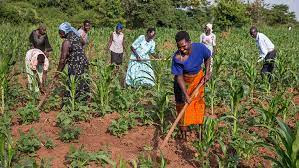
KNOCK, KNOCK

By issuing subpoenas to five Times journalists, the Trump administration reveals its first response to unwanted national security coverage: ...