Showing posts with label Nike Basketball. Show all posts

Wednesday, May 31, 2023

In ‘Air,’ Michael Jordan’s Silence Speaks Volumes About The Marketing Of Black Athletes


BY A. JOSEPH DIAL


The film “Air,” which tells the story of Nike’s signing of Michael Jordan, isn’t actually about Michael Jordan at all.

It’s about the beauty of design and the seduction of marketing. It’s about power suits, purple Porsches and Rolexes. It’s about white men languishing through midlife crises who salivate over the branding potential of a star basketball player.

As for Jordan? Audiences just see his back as he strolls into the Nike offices and his hands as he admires the Air Jordan prototype – but never his face. In the entire film, he utters only three words.

Much has been made about Michael Jordan’s representation or lack thereof in “Air.”

During the summer of 1984, Nike shoe designer Peter Moore and Strasser gathered in the Washington, D.C., office of Jordan’s agent, David Falk.

In a scene authors Rodrigo Corral, Alex French and Howie Kahn detail in their 2017 book, “Sneakers,” Falk, after exchanging pleasantries, looked to Strasser and said, “Rob, I’ve got an idea. I want to marry Michael to your airbag technology.”

Nike had developed its air cushions in 1977. It involved infusing the midsoles of shoes with pockets of pressurized gas to absorb shock, but the company was having a difficult time marketing it.

Falk then paused for dramatic effect, before uttering, “Air Jordan.”

In 1985, Nike released the first Air Jordan sneaker. A year later, Nike sold US$100 million worth of Air Jordan shoes and apparel, boosting the company’s profits to $59 million from only $10 million the year before.

After 38 years and 37 iterations of their flagship line of basketball shoes, Jordans have become a transcendent cultural talisman memorializing Michael Jordan’s career and basketball’s influence on American life – but also, his labor.

Today, Nike is worth a staggering $200 billion. Meanwhile, the Jordan brand, which was spun off into its own company in 1997, brings in billions of dollars per year, of which Jordan pockets 5%.

Buying a piece of Blackness

I’m writing a book that explores the intimate connections between sneakers and Blackness. In it, I argue that the Black body’s long history of objectification and commodification undergirds the branding, mass consumption and culture of sneakers.

What “Air” does better than anything else is to unbox a provocative, sobering truth about Jordans’ meteoric rise: They are cast as literal extensions of Black bodies. They represent the literal molding of a Black man’s feet, with their vulcanized rubber, leather and laces encapsulating Black athletic greatness and cool.

Finally figuring out how to sell Nike’s airbag technology was the other side of Air’s recipe for success.

In truth, Nike Air was a curiosity. It was unstable and unreliable. But runners became enamored with the idea of a cushioning technology they couldn’t see and much less understand. People knew they loved the sensation of Air even though the “how” remained a mystery.

The seemingly simple concept of explaining Air had eluded the company. In an interview with journalist Scoop Jackson, Bruce Kilgore, Nike designer responsible for the Air Force 1, articulated the difficulty of taking the air midsole from idea to execution to market: “How do you take something inherently unstable and put [it] into [a basketball shoe] that is all about stability?”

But six years after the development of the air midsole, David Falk cracked the code of Nike’s transparent, little black box: Don’t market the technology. Market the body that wears it.

This marketing ploy to shift the attention of consumers from mundane pockets of polyurethane to on-court performances, while indeed innovative, centers an incredibly old tradition of Americans seeing Black bodies as being spectacularly convertible to profit.

Air Jordans romanticize an American wistfulness for the stoic and branded Black workhorse. John Henry, the legendary steel driver, was a hero, and so, too, is Jordan. For Black bodies – Jordan and Henry, but also athletes like Damar Hamlin, who suffered a near-fatal injury during an NFL game in early 2023 – heroism is articulated through the hypnotizing anthem of toil and exhaustion.

Sports provide an easy cover for the perpetuation of this myth. Disgraced sports commentator Jimmy “The Greek” Snyder once said, “The Black is a better athlete to begin with … They can jump higher and run faster.”

How far removed is the marketing of Air Jordans from the words of Jimmy the Greek?

As the voiceover in the first Air Jordan television ad proclaims, “Who says man was not meant to fly?”

Bodies ripe for the picking

Before Nike’s dominance, brands like Pony, Converse and Adidas were popular on street corners and basketball courts around the country – a history told by DJ and author Bobbito Garcia in his 2003 book, “Where’d You Get Those?

Nike and the Air Jordan, however, represented a watershed moment in which this bubbling market of “sneaker fiends,” as Garcia calls them, went mainstream. Through artful placement in Black films – specifically Spike Lee’s “Do the Right Thing” – and with an assist from Michael Jackson and hip-hop, the Air Jordan line transformed sneakers into one of the most important footwear items and fashion brands the world has ever witnessed.

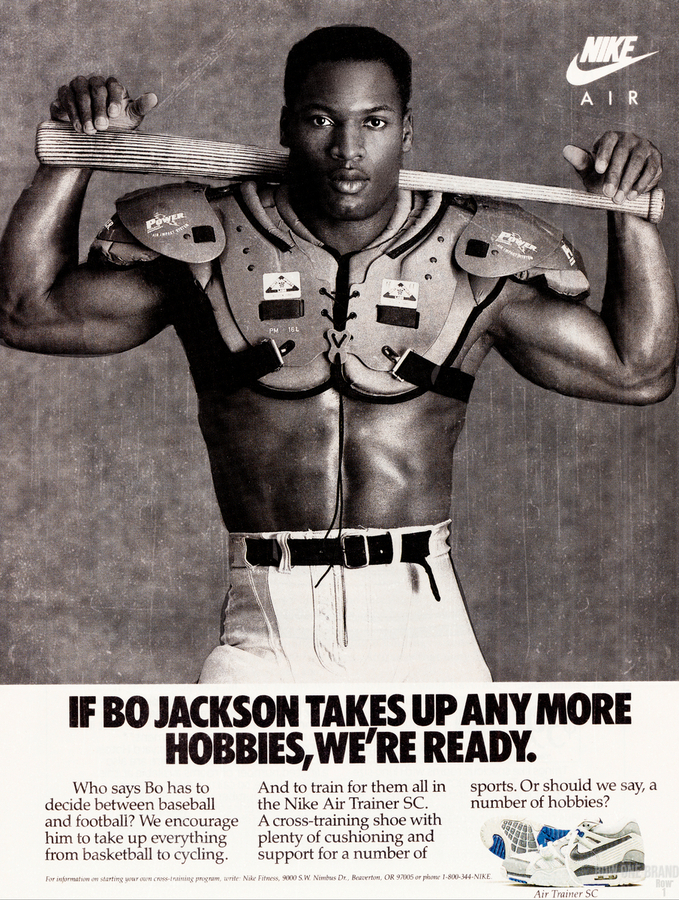
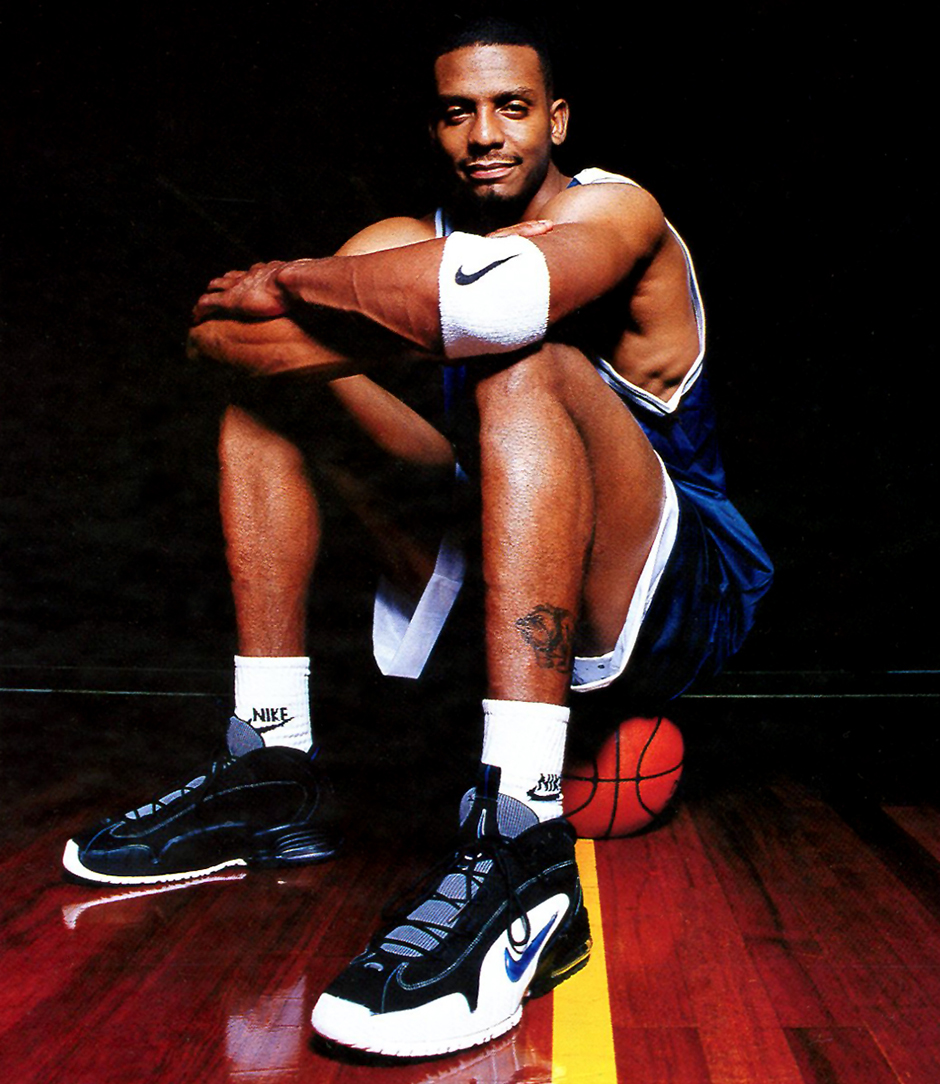
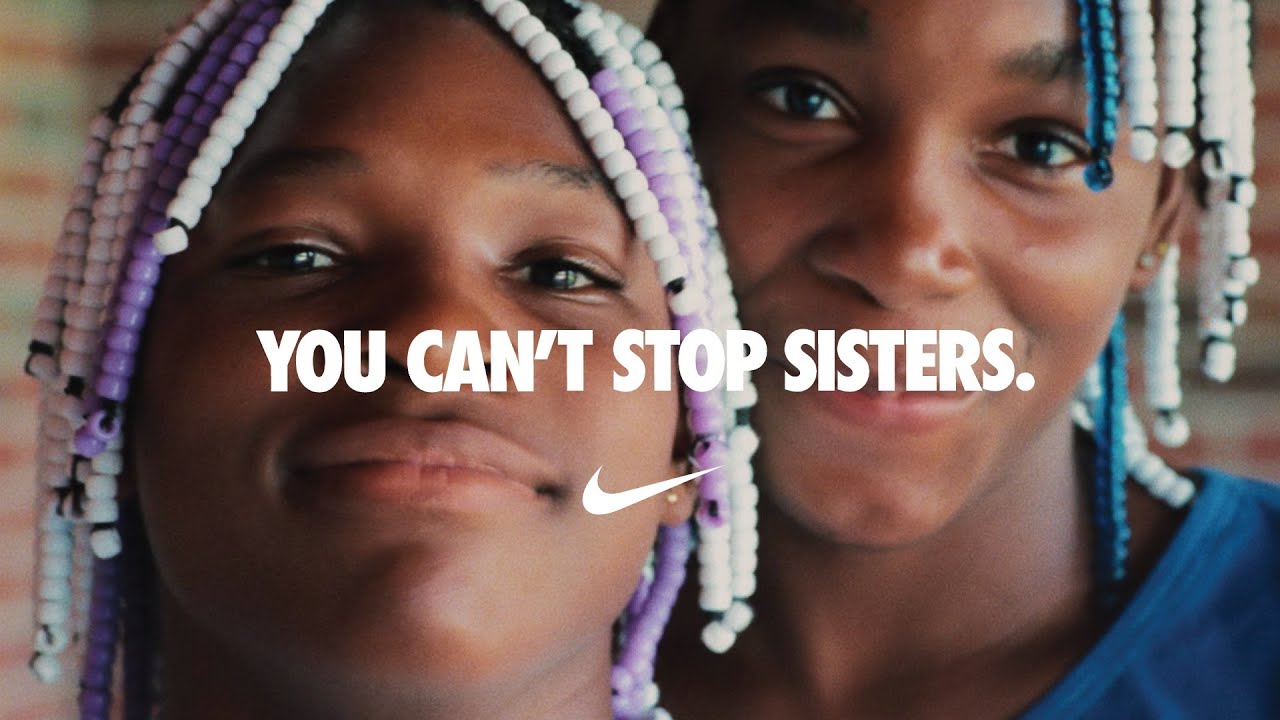
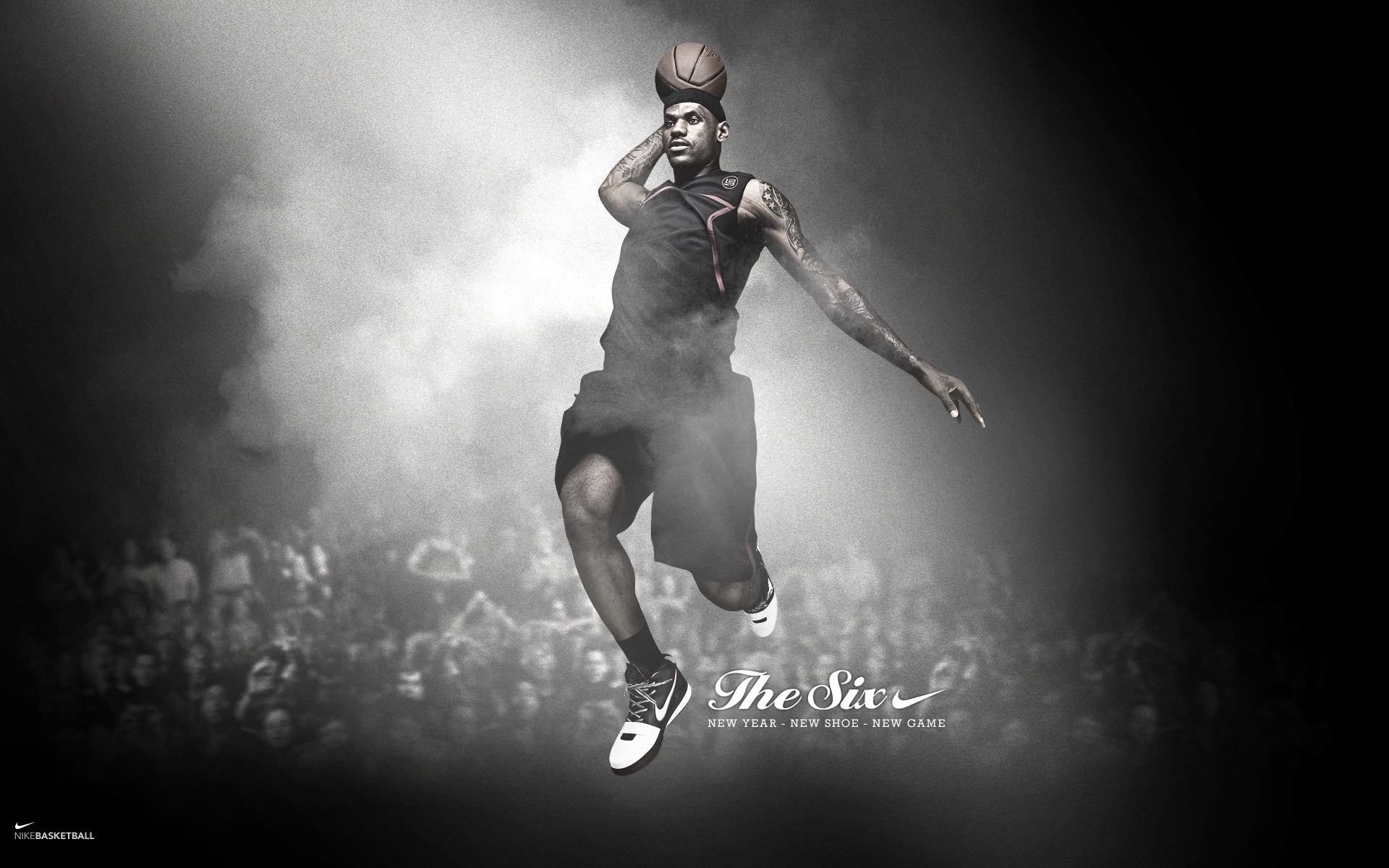
Nike would go on to feature scores of other Black athletes in its ad campaigns, and the names of these heroes ring off the tongue sharp and proud like a trumpet’s blare: Bo Jackson, Penny Hardaway, Kobe Bryant, Venus and Serena Williams, Lebron James.

None of this would be possible without Nike’s big bet on Jordan.

So why does a film give Michael Jordan, the man who had so much to do with Nike’s success, so little to say?

I believe the answer is as uncomfortable as it is simple: Michael Jordan isn’t the film’s subject, but its object.

In one of the film’s more memorable scenes, Nike marketing executive Sonny Vaccaro, played by Matt Damon, goes to visit the Jordan family in Wilmington, North Carolina.

When he arrives, he greets James, Michael’s father, before being passed off to the real decision-maker: Deloris Jordan, the matriarch of the Jordan clan. Viola Davis portrays Deloris with a drowning depth. Every utterance and glance simmers.

“Five generations of Jordans are buried in these forests,” she announces as she sits with Vaccaro in their backyard. She’s polite but distant. Her piercing eyes know to be wary of unannounced visits from white men in shiny cars. Everyone wants a piece of her son, and it’s her job to keep him whole.

In the film, before unveiling the Air Jordan 1 to Vaccaro and Strasser, Peter Moore, played by Matthew Maher, describes the shoe: “It has the logic of water, like shoe was always here, like it always existed.”

What Moore cannot know is how right he really is. Deloris Jordan and those five buried generations have always been here.

The Black body, from America’s inception, has always been there, as cotton and as sugar, ripe for the picking.

READ ORIGINAL STORY HERE

Monday, July 11, 2022

John Amaechi: Where Are They Now?

John Amaechi

BY CHRIS BALLARD

In relating how he got where he is today, John Amaechi likes to tell a story.

The year was 1999 and Amaechi, then a center for the Magic, was considered by teammates—and much of the league—to be something of an odd duck. One of the first British NBA players, he drank tea, eschewed partying and read psychology textbooks on the team plane, studying toward a degree, while others played cards.

One evening, as he was sitting at a four-top table on the team flight, eating catered PF Chang’s and typing away on a primitive laptop, a teammate sat down with him.

Amaechi closed his computer, surprised. “Hey,” he said.

The teammate looked at Amaechi, then declared, “My girlfriend doesn’t like my wife very much.”

That was it. No preamble. So Amaechi did his best to help. “I shudder to think what I told him,” says Amaechi. “Because I know I was s— [as a therapist] back then. Knowing the right thing to say and the thing to shut up about, how much to let the pauses breathe—it’s something you pick up over time. You don’t really get it at first because you think therapy is advice. It’s not that. It’s asking people questions. Noticing things.”

Amaechi kept at it, though, and by the time he retired from the NBA, in 2003, after five seasons split between the Cavs, the Magic and the Jazz, he was on his way to receiving his doctorate and embarking upon a second career far from the court, as he’d always planned.

On his way out the door, Amaechi decided to stir the pot a bit.

The news broke Feb. 7, 2007. “In a groundbreaking revelation that began to reverberate around the NBA,” wrote ABC News, “Amaechi has become the first professional basketball player to openly identify himself as gay.”

Perhaps you recall the general reaction. Amaechi’s disclosure, in his book Man in the Middle, led to a celebration in the LGBTQ community. “It’s hugely important for the kids, so they don’t feel alone in the world,” said Martina Navratilova, the most prominent openly gay athlete at the time. “We’re role models. We’re adults, and we know we’re not alone—but kids don’t know that.”

“What John did is amazing,” said Esera Tuaolo, who’d come out in 2002, three years after his own career as an NFL defensive tackle ended. “He does not know how many lives he’s saved by speaking the truth.”

Others responded with less enthusiasm. “As long as you don’t bring your gayness on me, I’m fine,” said the 76ers’ Shavlik Randolph. LeBron James, in his fourth season with the Cavaliers, talked about trust: “With teammates you have to be trustworthy, and if you’re gay and you’re not admitting that you are, then you are not trustworthy.” But the most jarring response came from Tim Hardaway, a five-time All-Star who was four years out of the league at the time. “I hate gay people, so I let it be known,” Hardaway said on The Dan Le Batard Show. “I wouldn't want him on my team. … If he was on my team, I would, you know, really distance myself from him because, uh, I don’t think that’s right. … I don’t think he should be in the locker room while we’re in the locker room.”

A furor ensued, one that would trail Hardaway—and, to a certain extent, Amaechi—for years. And then the world moved on. For most American sports fans, Amaechi’s announcement likely remains the last thing they remember about him. Big British guy. Drank a lot of tea. First NBA player to come out.

And plenty of people might be pleased with this legacy. It’s not the worst thing to be known as a pro athlete and a trailblazer, after all. Brands have been built on less.

But Amaechi is not like most people, and certainly not like most NBA players. A story like his requires telling two separate but intertwined tales: the story of John Amaechi, and the story of what John Amaechi represents.

Let’s start with Amaechi.

On a recent spring morning he buzzes me up to his top-floor flat in the Covent Garden neighborhood of London, not far from the theater district and the Royal Opera House. On this morning, as with many, he’s been up since 3:45, when he brewed enough tea to fill three thermoses, from which he sips throughout the day.

Now 51, his head is shaved and his finely trimmed beard traces his jawline before culminating in a magnificent white goatee, which, when paired with round, dark-framed glasses, give the impression of an exceptionally large guru or professor. Which he is, basically.

After retiring from the NBA, Amaechi did get that degree. He put in the thousands of hours of required training, studied family therapy, got his MFT, and then specialized in organizational psychology, earning accreditation from the British Psychological Society. He picked up a host of other titles, including becoming a fellow of the Royal Society for Public Health, founded a psychology-based consulting firm, now known as APS Intelligence, and began working with businesses across Europe, focusing on teamwork, leadership, efficiency, diversity and inclusion.

In his living room you’ll find various research commendations, along with a photo of him with Barack Obama, a tome on cognitive psychology and a mug that reads OF COURSE I TALK TO MYSELF (SOMETIMES I NEED EXPERT ANALYSIS). Even his knick-knacks—of which a fair share are Star Wars-themed—help tell his story. Ask Amaechi about the Encanto figurines on his bookshelf and he gushes: “I mean, there's a cartoon about intergenerational trauma and its impacts on people’s behavior, which I think is fascinating.”

Only with some searching, however, can you find any reminders of his first career. There, wedged into the bottom of the bookshelf, a single volume: The NBA Encyclopedia, in which Amaechi appears near the start, between Aluma, Peter and Amaya, Ashraf. His online presence is similarly spare; you have to scroll through 18 experiences on his LinkedIn page (where he lists himself as an “everyday Jedi”) before, at the bottom, you find mention of any affiliation with the NBA, where his experience is described simply: Player.

Amaechi has a few reasons for downplaying his career—and for wearing his lengthy CV like “a sandwich board,” as he puts it. The first is practical. “The stereotypes around athletes are not conducive to people [taking me seriously]. ... It takes a remarkably long time to convince the general population that a large black person is clever,” he says. “So, it’s a non-useful piece of background knowledge … which doesn’t mean anything to most people here anyway.”

Here is Europe, where Amaechi is a sought-after speaker and something of a thought leader. A lot of what people get when they bring on his company, from what I can tell, is a heavy dose of John. Additionally, he hosts podcasts and virtual Q&As. Not long ago, he interviewed the popular science author Adam Grant for APS. Soon, he’ll interview the director JJ Abrams. He writes for The Guardian and weighs in on social and cultural issues for CNN and The Dan Le Batard Show. When the BBC needed someone to explain the concept of white privilege for a series of videos geared toward school children, producers called on Amaechi. “White privilege doesn’t mean you haven’t worked hard or you don’t deserve the success you’ve had,” Amaechi said. “It doesn’t mean that your life isn’t hard or that you’ve never suffered. It simply means that your skin color has not been the cause of your hardship or suffering.” Those videos went viral, racking up more than four million views. (As with viral things, some loved them, and some hated them.)

On the morning I visit, he is presenting a virtual keynote with a French company in the advertising and PR sector. By 7:45 he has settled into his home office on the lower floor of the flat. In part because of the pandemic, and in part because Amaechi is an introvert—he likes people but finds them “energy-expensive”—he does nearly all his work here, in a converted bedroom outfitted with a green screen, a bank of lights and two webcams.

During his NBA days Amaechi made the All-Interview team, and to spend any amount of time with him is to understand why. He is funny, he can speak in paragraphs and he has a disarming habit of pausing just longer than expected. He presents as self-deprecating but authoritative, peppering his speech with psychological terms such as “introjected regulation,” which he then waves away, so as not to sound stuffy, saying, essentially, You don’t need to remember this, but know that it’s a thing.

Splashed across Amaechi’s T-shirt this morning: ACCOUNTABILITY IS SEXY. Personal responsibility is a recurring theme, both in his speeches and in his recent book, The Promises of Giants, which argues that leaders need to be aware of their impact at all times and that transparency, empathy and accountability are paramount. “Tough, objective, regular feedback is one of the ways we show we care,” he tells the execs at the French company.

Over the course of the day, I observe Amaechi presenting, taking calls and leading a pair of one-on-one executive coaching sessions. While he says that APS is financially successful, with offices in Manchester and London, and 20 employees, he hopes that his work with Fortune 100 firms will one day subsidize a turn toward coaching a new generation of leaders that is “more broad and diverse.” He compares this tradeoff to an actor who shoots a Marvel movie so he can also do an indie project.

I listen in on one of these indies, a free coaching session with a young, successful exec at a nonprofit. Midway through the conversation, Amaechi reframes what this woman has said to pinpoint what she feels is missing in her life.

Quietly, she begins crying. He asks why.

“No one has ever explained me like that before,” she says.

It’s O.K. to feel like this, Amaechi tells her. “Some of the most successful people are profoundly sad.”

Amaechi grew up in Stockport, not far from Manchester, the child of a white British doctor and a Nigerian businessman. (John’s given name is Uzoma Ekwugha Amaechi.) The rare dark-skinned boy in a white community, he felt like an outsider from an early age. Introverted, “fat and nerdy,” he towered over his classmates, whom he recalls gawking at him and calling him “the Whale.” He saw in their faces disdain, suspicion, pity. And so he retreated to his room to read science fiction books and eat sweets.

When as a schoolboy he read The Hunchback of Notre Dame, he did so in a day, feeling seen in a way he never had before—the story mirrored how he felt treated by others. Years later he would learn a term in psychology, coined in 1902 by the American sociologist Charles Cooley: the looking-glass self. In essence, we each develop our identity based on the perceptions of others.

Then, when Amaechi was 17, a man stopped him on the street and said he looked like he could be great at basketball. Not good, great. John gave it a try. He missed the backboard on his first shot. Even so, on the court he felt special. Other boys vied to pick him for their team. By high school he was writing in his yearbook that his ambition was “to play on a NBA championship team in the States and earn a lot of money.” Never mind that only three British players had made the league in the previous 40 years, or that John had no connections in the U.S. He wrote letters to dozens of American high schools, asking if they had any use for a 6' 9" British basketball player with good grades. Eventually, he found a home at a Jesuit high school in Toledo.

To pursue his dream John had to leave behind his mother, Wendy, the guiding light in his life, who had cancer. A British medic, Wendy had followed John’s father, who used the anglicized Jon, to Nigeria, providing medical care in the field as Jon fought in the three-year Biafran civil war. When it became apparent that Jon’s ethnic group, the Igbo, would lose the war, the couple fled on foot, eating grubs and berries to survive.

The union did not last. Jon became, as John puts it, a “malign” presence, and Wendy fled with John and his two sisters. As on that trek out of Nigeria, she entered survival mode, working long hours to support the family. John remembers how she’d often be gone when he awoke and wouldn’t return until after he’d put himself to bed.

It was Wendy who helped John with what he termed “the plan,” his unlikely strategy to make the NBA. From Toledo he earned a scholarship to Vanderbilt, where he rode the bench, then transferred to Penn State, where he became an Academic All-American and the school’s all-time leader, at the time, in blocked shots. During his junior year, Wendy passed away at the age of 51.

After graduation he realized his dream, becoming the first undrafted free agent to start in his first NBA game, at center for the Cavs. By Amaechi’s count, only two other players had pulled off anything resembling his seven-year ascent from nothing: Hakeem Olajuwon and Tim Duncan.

Of course, Amaechi is quick to note that he is a “shadow” of those two Hall of Famers. But still: He made it. At least momentarily. He flamed out in Cleveland and spent the next three years toiling in Greece, Italy and France before latching on with Orlando, where a rookie coach named Doc Rivers took a chance on him. In the end, Amaechi played five NBA seasons, for three teams, averaging 6.2 points and 2.6 rebounds and providing endless color for beat writers, who delighted in his quirks and fondness for Earl Grey. (“For the NBA’s lone Englishman,” Franz Lidz wrote for Sports Illustrated, “basketball is not his cup of tea.”)

Americans mostly found Amaechi peculiar, never more so than in 2000, when, after his best season with the Magic, Jerry West and the Lakers flew him out to Los Angeles and offered up a six-year, $17 million contract. As Amaechi recalls, West took him to a fancy restaurant and said, “We’re prepared to sign you right now.” Amaechi would play for the legendary Phil Jackson and back up Shaquille O’Neal. “It was like being presented with everything you’ve ever wanted,” he says, “and in the presence of these basketball gods.”

And yet, Amaechi turned it all down, re-signing instead with the Magic for $600,000 one year. One can only imagine the ensuing trolling had NBA Twitter existed back then. As it was, Lakers fans flooded Amaechi’s inbox with emails informing him of his profound idiocy. But Amaechi felt tied to the Magic, who’d given him a second chance. As he later explained: “When people ask me [what my word is worth], I can say, at least $17 million.” (He ended up making $9.5 million across his career, per Basketball Reference.)

Amaechi loved that overachieving Magic team, a band of misfits and underdogs—hustlers like Darrell Armstrong and Bo Outlaw—led by Rivers, one of the league’s only Black coaches and perhaps its most open-minded at the time. Says Amaechi: “He was one of the few coaches that did not feel threatened by the fact that basketball wasn’t my whole being.”

For his part, Rivers took to Amaechi. “He was very smart,” the coach says. He also noticed that Amaechi was different in a lot of ways, but one way in particular. “It wasn’t known on the team [that he was gay],” he says. “But I would say it was suspected, if you know what I'm saying.”

At one point, teammates gathered at the front of Orlando’s plane, then chose a suitable emissary to send back, a veteran forward named Monty Williams. Amaechi recalls the exchange:

“Meech,” Williams said. “You don’t talk much about women.”

“Indeed,” said Amaechi.

“Cool, just checking,” Williams said.

And that was that. No doubt, Williams, a devout Christian, had his own beliefs about homosexuality, but Amaechi didn’t sense any ill will. Asked now if this surprised him at all, Amaechi pauses. “I suppose I’ve never made the assumption that being religious makes you an a--hole—or has to, necessarily. … My sense is that most people who are devoutly religious in the way that Jesus was, or Islam intended, would probably be rather pleasant to get along with. So, I don’t necessarily assume that people would have hang-ups, because I’m not asking other people to be gay. It’s not going to seep out of my pores into other people. You do you. I am not going to church on a Sunday; I’m not going to pray to a God I can’t see. And you don’t have to kiss blokes. It never felt that complicated.”

Amaechi made a handful of friends during those NBA days, including Tariq Abdul-Wahad, Andrei Kirilenko and Greg Ostertag, the 7' 2" center for Utah, where Amaechi played his final two seasons. Ostertag and Amaechi would hang out on road trips, playing video games together, and Ostertag, who grew up in Dallas, has fond memories of those days. “How is my guy John?” he asks. He remembers Amaechi as “funny,” “opinionated” and “super intelligent, a little above my grade.”

Ostertag now works as a real estate agent in Paris, Texas, a town of 24,000, about as red as red-state gets, where he sells mainly farmland—“but I’ll sell about anything,” he says. Ostertag has no problem with his old friend’s sexuality. “I couldn’t care less,” he says. “I’m happy for John. Good for John.” Ostertag likes to think this would have been his response back in the early 2000s, had Amaechi come out when he was a teammate. “I hope I would have accepted him and treated him no different,” Ostertag says. “John would have known that he is [gay], and I’m not, and I think in private I would have treated him no different.” He pauses. “But that was 20 years ago. I don’t want to say anything to get in trouble, but I’m trying to be honest here. When you’re young you think being gay is wrong.”

The first team-sport athlete to come out publicly, David Kopay, did so in 1975, three years after the end of his career as an NFL running back.

In 1982, Glenn Burke, a retired third baseman for the Dodgers, became the first baseball player to come out, in a story for Inside Sports. Burke had made no secret of his sexuality; according to his autobiography, Out at Home, the Dodgers even offered to pay him if he’d participate in a fake marriage.

In the decades after, other men’s team-sport athletes followed. In 1990, Justin Fashanu became the first professional soccer player to come out, in Britain. (Eight years later, he killed himself, at age 36.) Ian Roberts, an Australian rugby star, came out in ’94. Eventually, by the turn of the century, the NBA remained one of the only two holdouts among major American men’s team sports, along with the NHL. Then Amaechi broke that barrier. Six years later, in 2013, Jason Collins became the second NBA player, and the first active one, to come out.

And with that, the floodgates opened. As the culture shifted, and as the courts legalized same-sex marriage, and as out athletes became commonplace, the most progressive major men’s sports league in the U.S. led the way.

Just kidding. That’s what you might have expected. Instead, in 2022, Collins and Amaechi remain the only two NBA players to have come out publicly. Which leads to the obvious question: Why?

“Never underestimate people’s power to be a dick.”

Amaechi and I are discussing this conundrum on the way from lunch to his apartment, and as we walk people glance at him. He once made a short film in which he wore body cameras that captured people’s reactions to him. He’d walk by and, once he passed, they tended to point or gesture to a friend or take a picture.

Partly for this reason, he orders in most everything, including groceries and meals. Earlier this morning an energetic young man named Chris came by to outfit Amaechi with new shirts, tailored to his enormous frame.

“Nobody ever looks up,” he later says from his wrap-around patio, from which he can observe London without being observed. Here he watches the world: the ice cream shop on the corner, the bar where the businessmen get hammered at lunch, the top-floor restaurant where, on nice days, all the diners fight for the six outdoor tables.

But he digresses, as he does frequently. Amaechi says he has no beef with Tim Hardaway, who subsequently apologized publicly for his anti-gay statement, though Amaechi says Hardaway never reached out personally. For years, Hardaway told people his comments had kept him out of the Hall of Fame. When finally he was selected, this past spring, Amaechi received emails, he says, “from people telling me, ‘You see, despite all your efforts, Tim is going to get into the Hall of Fame.’” At which Amaechi laughs. “It wasn’t my efforts. I didn’t do anything!”

As for LeBron’s comments about how trust with teammates relates to openness about sexuality, Amaechi calls that idea “an incredibly dense piece of logic.”

“We are all responsible for being the type of person that other people are willing to share with,” he says. “It is absolutely true that if an LGBTQ person comes out to you, it’s a statement about you, unless [that revelation] has been forced. It’s: I think you deserve to know, and I think you will treat it with care and discretion. If you’re the kind of person this hasn’t happened to, then you are the kind of person who hasn’t behaved consistently enough in the right way.” (Though James never apologized for the “trust” comment, he supported Collins when he came out six years later, saying: “I think it’s very cool, man. None of us should go around wondering about what other people [think] we should be as human beings. I think it’s very strong of him.”)

When Amaechi came out publicly, he did so after seeing the British actor Ian McKellen in a Gay Pride parade. “You see some kid rise, like they are being filled with a kind of glorious helium, just by the wave of a stranger,” he remembers thinking. “And the truth is: In the LGBTQ community, not many of the people who are vaunted look like me. It’s good to have leaders who stand up and be role models, so that [other] people realize you can be weird, chaotic.”

This is a theme Amaechi returns to often. When you’re in the public eye, he believes, “you don’t have a choice in being a role model—the only choice is whether to be a good or bad one.”

Amaechi knew that some people would view him as a role model when he came out, just as he knew other people would diminish him. He just didn’t expect that his sexuality would become the only thing people knew about him. He had no idea that no one would mention his unprecedented path to the NBA. “Has anybody heard that story?” he asks. “No. Because I’m just a gay guy. Because identity trumps achievement.”

Which brings us back to the question: Why haven’t more NBA players come out? I asked this of a handful of other people in the sports world, including Hudson Taylor, the founder of Athlete Ally, a nonprofit dedicated to making athletic communities more inclusive. “There’s a risk-reward calculation that does not err on the side of the player coming out,” says Taylor, who every year, along with Jason Collins, talks to incoming NBA players. “The average career of an NBA player is three years, and many professional athletes are not set up to earn a significant livelihood outside of their sport.” That means: Many athletes have a very narrow window to earn the majority of the money they pull in across the rest of their life. “So, if that’s what’s at stake—if there’s any sense that coming out might reduce that [window] or lead to getting traded—any perception of risk is going to keep an athlete closeted.”

Doc Rivers blames the status quo. “It’s sports, and [being gay] is still looked upon as, in many ways, taboo,” he says. “It shouldn’t be.” He wonders if it will take a star player coming out to change things, but he, too, thinks money is an issue. “They don’t want that to hurt them in any way in signing a lucrative deal.”

As for Amaechi, though, he starts by challenging the core question. “If it’s just about being able to point to a gay person,” he says, “I’m not sure [that’s] a good sign of progress, really.

“There are lots of gay players in the league. They are well known to their teammates—at least some of them—and their friends. And some of their partners are also well known to family and friends in the family-and-friends room. If what we mean is that no journalist has permission to talk about [their sexuality], then that is true. But it’s a weird workplace, right? … [In the NBA] there are your colleagues—10 to 15 on your team—and then there’s an audience of 30,000 to 10 million people watching you.”

He looks at me. “It’s weird, right?”

“And people aren’t in the closet just because you don't know [they’re gay]. People haven’t earned the right to know, that’s the truth. Fat bloke, front seat, 12C—you haven’t earned the right to know. You just yelled obscenities at me for missing a free throw. You don’t know me at all.”

True, I say, but no one counts the number of gay athletes in a sport like women’s soccer. Isn’t there a point where it becomes somewhat normalized, and isn’t that a good thing?

“Because people have already decided things that women do don’t matter as much as things that men do, even if that thing is the same thing,” Amaechi interjects. “That’s the truth, and we need to start saying that, because misrepresenting the status quo is part of how change fails. You can’t build change off a false platform. This idea that everybody values women equally to men, that’s bulls---.” (Among the many subjects Amaechi and I discuss over our various conversations, including Russia, gun violence and racial profiling, he gets particularly animated about the news, leaked a week before my visit, that the Supreme Court intends to overturn Roe vs. Wade.)

Amaechi continues. “We’ve just got to keep saying this to people: Women don’t matter as much as men. Black and brown people don’t matter as much as white people. People without disabilities matter more than people with disabilities. These are full-stop facts. We can’t make any progress until we say this is the truth.”

He becomes animated. The cool psychologist’s tone is gone.

“You want the gay people to come out? Change the a--holes around them, and not just the teammates, because they mostly don’t care—but equipment managers and weight coaches and administrators and team owners, who we all know are a progressive group, and the overarching organizations, one of which has just finished constructively dismissing an athlete for taking a knee. Yeah, that’s a safe place to come out.” He chuckles sarcastically. “It’s the weakest of organizations that say [the lack of out athletes] is about stupid jocks who would beat you up in the locker room.” (For what it’s worth: Rivers, now the coach of the 76ers, agrees that teammates wouldn’t be the issue, if they ever were. “It would be uncomfortable in the locker room for a very short time,” he says. “Very short, like a day or two. If the guy can play, they don’t care.”)

Amaechi leans forward now. “We’re focusing on the wrong people. You want gay people [to come] out? Make it so it’s not so s----y. Make it so that someone can still look at you and see what you’ve achieved. Then maybe people will deserve that disclosure.”

This is a point Amaechi returns to repeatedly: Why is the burden so often placed on athletes to come out? “Disclosure is earned. It’s not about honesty. It’s personal and private information about me that people who give a s--- about me deserve to know—and people who don’t, don’t. If you toss your beer at me through the tunnel as I walk away, do you deserve anything?”

To view it as Amaechi does is to flip the narrative. It’s valid to ask why, in the NBA culture, men might not feel comfortable coming out, but it is not, he says, the right question. Amaechi takes an example from his own life. “Even today, I don’t tell everybody I’m gay. Why should I have to? I went on a date the other day, and it suddenly struck me as I looked at this person: I’ve never held a partner’s hand in public. I’m 51 years old.”

Really? I ask.

“Never. I had [a few] people I dated for three and four and five years, never held their hand in public. And it’s not because I'm—well, I don’t like to be touched, that is true, but that’s not the reason. It’s that I just don’t want to deal with it. Because I will. Because I’m the guy, I’m going to deal with it. Did you have something to say? And then it’s not a date anymore, then it’s a f---ing activist thing.”

He is not pausing now. He is angry. “Maybe you can make it so that if you kiss your partner on the way out the office, or hold hands, nobody says anything—then we graduate from there, before we get to NBA players who are supposed to come out to be saviors.”

Amaechi’s phone buzzes. He’s late to a call with his APS team. “I have to take this,” he says and he hustles off, leaving me to ponder what he’s said, and what to do with it.

Where is John Amaechi now? The better question might be Who is John Amaechi now? Because the answer is certainly not “retired NBA player.” Rather, he’s a psychologist, executive, mentor, instigator and Star Wars fan. He’s either a truth teller or a liberal windbag, depending on who’s doing the labeling. He’s an introvert and a ponderer and a man who misses his mother every day.

And, in sports—men’s sports, anyway—he’s a symbol of a world that felt like it was changing but maybe hasn’t changed that much at all.

READ ORIGINAL STORY HERE

Tuesday, March 22, 2022

Arizona’s Christian Koloko Rises To Become Dominant Force

Arizona center Christian Koloko (35) dunks above TCU center Eddie Lampkin (4) during the second half of a second-round NCAA college basketball tournament game, Sunday, March 20, 2022, in San Diego. (AP Photo/Denis Poroy)

BY JOHN MARSHALL

TUCSON, ARIZONA (AP)
— Christian Koloko saw the play develop from across the lane, slid into position and blocked the shot with one hand.

Seconds later, after an offensive rebound, another TCU player had the audacity to challenge Arizona’s 7-foot shot swatter. Denied, two-handed this time.

Once a skinny freshman with limited offensive skills, Koloko has transformed himself into an anchor at both ends of the court during Arizona’s run to the Sweet 16.

“Christian plays with much more swagger this year,” Arizona associate head coach Jack Murphy said. “He’s always been a talented kid. He’s taken a huge leap this year and a lot of it has to do with confidence.”

Koloko’s road to Thursday’s Sweet 16 game against Houston began in Douala, a port city in western Cameroon.

As a lanky kid, he played multiple sports with kids in the neighborhood, with a particular affinity for soccer. When Koloko started to grow and his interest in basketball rose, his path to the hoop was filled with obstacles.

His friends weren’t all that interested in basketball, so he didn’t have anyone to play against. Koloko’s neighborhood didn’t have any courts, so he’d have to walk a couple of miles to get shots up or play pickup games. Even then, the courts were often dotted with weeds, the rims sometimes broken.

“It was hard, but I just had no other choice,” he said.

Koloko developed his game enough to get an invite to the NBA’s Basketball Without Borders camp. The raw, skinny kid drew plenty of attention, earning several scholarship offers in the United States.

At 17, he made the difficult decision to leave Cameroon for a place where he struggled with the language and the strange food. Koloko ended up at Sierra Canyon School in Southern California, where he already had someone in his corner: his sister Stephanie.

Living with Stephanie made Koloko’s transition to life in the United States much smoother. She helped him with his English, taught him the ins and outs of American life and cooked the food he was used to back home. She also introduced him to a Southern California fast food staple, In N Out.

“It was only a one- or two-minute drive from my house, so I’d go there whenever I could,” he said.

With his length and potential, Koloko drew the attention of several big-name schools. He chose to play for Sean Miller at Arizona, joining a recruiting class that included highly touted players Nico Mannion, Josh Green and Zeke Nnaji.

Koloko didn’t see much playing time as a freshman on a talent-loaded team, averaging 2.3 points in 8.3 minutes per game. His scoring average increased to 5.3 in 2020-21, but the pandemic stunted his development because he wasn’t on campus for offseason workouts.

Koloko took a huge leap this season.

Working with Arizona strength coach Chris Rounds, Koloko has added 20 pounds to his frame since his freshman year through the weight room and a better diet.

The addition of coach Tommy Lloyd, known for his player development skills in 22 years as an assistant at Gonzaga, accelerated Koloko’s progress on the court. Lloyd also gave Koloko a confidence injection, giving him the freedom to just play without having to worry about a quick hook if he made a mistake.

“Him knowing there really wasn’t anyone behind him where he’s looking over his shoulder, that made a huge difference,” Murphy said.

It sure has.

Koloko expanded his offensive repertoire beyond dunks and vastly improved his footwork to average 11.9 points and 7.9 rebounds this season. He’s become a dominant force on the defensive end, blocking 2.8 shots per game, first in the Pac-12 and 13th nationally.

The junior has ratcheted his game up even more as Arizona pushed toward the Sweet 16.

Koloko had 13 points, 10 rebounds, four assists and four blocked shots in the Wildcats’ win over UCLA in the Pac-12 Tournament title game. He kicked off the NCAA Tournament against Wright State with 17 points, 13 rebounds, six assists and five blocked shots — the first Division I player since Colgate’s Adonal Foyle in 1996 to hit those marks in an NCAA Tournament game.

Koloko was just as dominant in Arizona’s second-round overtime win over TCU, finishing with 28 points, 12 rebounds and three blocked shots. He also showed off his agility at the end of regulation, moving his feet to help create a turnover near midcourt to prevent the Horned Frogs from getting off a final shot.

“Now I have skills that I didn’t have freshman year and my game is still evolving,” he said.

No longer a skinny freshman, Koloko is rising, taking the Wildcats with him.

___

More AP coverage of March Madness: https://apnews.com/hub/march-madness and https://apnews.com/hub/college-basketball and https://twitter.com/AP_Top25

Monday, February 19, 2018

Behind The Scenes With Victor Oladipo, The NBA's One-Man Musical


All-Star Weekend wasn’t just another high note from Victor Oladipo’s season-long coming out party—it was also the first time his father watched him play. The Crossover goes behind the scenes with the Pacers star in LA.Image Via Sports Illustrated


LOS ANGELES (SPORTS ILLUSTRATED) -- The trip from Indiana to Los Angeles spanned five years, five coaches, two trades, one position change and a final unexpected stopover in the middle of Colorado (or was it New Mexico?). Victor Oladipo’s flight was scheduled to land in L.A. at 11 a.m. on Thursday, but the Pacers eight-seat corporate jet slammed into 170-knot headwinds, and a plane that normally travels 500 miles per hour screeched to 350. The jet can hold 1,200 gallons of fuel, but due to the slow going it needed more. Which is why, on the first day of his first full-fledged All-Star Weekend, Oladipo found himself standing on a small airstrip attached to Pueblo Memorial Airport. He gazed across the barren landscape. “I’m in an episode of Breaking Bad,” he thought. Pueblo is in Colorado, not New Mexico, a source of debate among Oladipo and his companions as they lounged in the terminal and waited for the fuel. Oladipo ate a burger with a lettuce bun from the café.

Over the next 96 hours, he would host one party at a club with Cardi B, another with Snoop Dogg and Floyd Mayweather. He’d sing with Jamie Foxx, dunk with Black Panther and toast Michael Jordan’s birthday at a $100 million mansion in Bel-Air. He’d play Jenga in a sneaker store stock room with someone who goes by The Shiggy Show, an apt moniker for the weekend, and he’d dance alone in front of 1,000 people at a practice. He’d eat sushi from Katsuya and chicken from Popeyes. He’d ride in enough Mercedes Sprinters to fill a presidential motorcade, protected by three security guards and primped by two stylists. They would present him with approximately 40 ensembles, a dozen of which he would wear. He’d wake up early to toss 12-pound medicine balls and do plyometric pushups in the J.W. Marriott fitness center, and at 9 a.m. Sunday, he’d watch online the weekly sermon delivered by Pastor John K. Jenkins at First Baptist Church of Glenarden back home in Maryland.

As Oladipo dressed for the game Sunday afternoon in his room on the 15th floor—opting for the red-white-and-black Givenchy button-down, black Helmut Lang leather top and black AMIRI jeans with a tear in the knee—he pondered the meaning of Pueblo. “I’ve had a long journey to get here,” he said. “Sometimes you’re in the middle of nowhere.” He glanced at his reflection in the bathroom mirror, curls freshly shorn by a traveling barber, and headed to the bus. He didn’t have to be there until 1:50. “Let’s do 1:45,” he said. He was excited, as one would be when about to play in front of his father for the first time.

The 25-year-old Oladipo—“pronounced like Home Depot,” he clarifies—comes across as relentlessly carefree. He sings wherever he goes, normally R&B, from Sam Smith to Marvin Gaye, Tyrese to Tank. He describes himself as a bird and a butterfly. He peppers his speech with the word feathery, which he defines as “the greatest of all goods, not heavenly but feathery.” When the Pacers acquired Oladipo last summer, his coaches compared him to Lou Rawls, not Paul George. “His life is a musical,” says assistant Dan Burke, and he’s hitting the high notes: 24.4 points per game on 48.4% shooting, best of his career. “Also, he has a nice voice,” center Al Jefferson says, “so you don’t have to tell him to shut the hell up.”

Oladipo’s tenor shifts only when the subject turns to basketball and family. His parents, Chris and Joan, immigrated to the United States from Nigeria 32 years ago. They prized education, not sports, and Chris held two jobs so Victor and his three sisters could attend private schools. “I never really saw my dad because he was always working,” Oladipo recalls. “We didn’t have a great relationship.” While Joan warmed to hoops, Chris never did, driving a wedge between father and son. He rarely met Victor’s coaches or teammates.

In each of his first three NBA seasons, Oladipo went to All-Star Weekend, either for the Rising Stars Challenge or the Slam Dunk Contest or the parties. But last February, he flew to Washington D.C. instead and sat in Chris’s office for three-and-a-half hours. “It had been a long time since we had a real conversation,” Oladipo says. “But you’ve got to work at it, because he’s your dad, so his opinion means more than anybody’s. He told me he believes in me, and that gave me a huge boost.”

In January, Oladipo was selected to his first All-Star Game and he invited the man he calls Pops. He braced for rejection, but Chris accepted—on one condition: no cameras, no interviews, no fuss. Oladipo booked a flight from D.C. to L.A., arriving late Saturday and departing late Sunday, with a room at The London in West Hollywood. In previous articles, Chris has claimed he has seen his son play before, but if so nobody noticed. “Maybe on TV, but not in person,” Oladipo says. “This is the first time I will know for a fact he is there. It’s going to be a big deal for me. I still can’t believe he said yes.”


After a seven-hour voyage, an hour-long Sprinter ride and a “fitting” at the Loews Hollywood overseen by the stylists, it was time to throw down some 360 reverse windmills. Oladipo was the lone All-Star to participate in the dunk contest, but he’s spent the past three months keeping the Pacers in contention, leaving little time for car hurdles or drone drops. “I’m going to need an elephant,” Oladipo said, “so I can jump over its trunk with the water shooting in the air.” Dunk coach Chuck Milan—yes, there is such a thing—was supposed to fly to Indiana for a practice session, but the trip was postponed because of bad weather, so they only talked on the phone. Three years ago, Oladipo finished second to Zach LaVine, on the strength of a 540-degree jam. But in the Thursday night rehearsal at Staples Center, he could not land much of anything, and even Milan looked anxious in his "I Jump High" hoodie.

Oladipo’s priorities have evolved from basketball’s favorite sideshow. In the Lakers empty locker room, he touched a photo of their championship rings and asked his friends, “Who’s going to win it?” Nobody wanted to answer. “We’re fifth in the East right now,” Oladipo started. “First of all, who thought the Pacers would be fifth at the break? If we get that 3 seed, I’m telling you, look out. It’s going to be scary.” He strutted to the middle of the room in boxers and socks. He was punchy. He pretended the Lakers logo on the carpet was the Finals stage.

NBA headliners typically reveal themselves by their third seasons. This is Oladipo’s fifth. But he’s been a late-bloomer at every level. He didn’t dent the starting lineup at DeMatha Catholic High until his senior year and he couldn’t land a scholarship to Virginia even after attending three camps there. AAU coaches described him as “nosy,” eavesdropping on conversations during bus rides. They’re talking about me, Oladipo convinced himself. They don’t want me anymore.

He was too daring to run the point and didn’t shoot well enough to space the floor. He caught lobs at the top of the square—sometimes, for fun, in his school uniform: bucks and khakis a couple sizes too small—but his energy could be overbearing. DeMatha coach Mike Jones insisted that he listen to slow jams before games to mellow out. If his backstory reminds you of somebody else's, perhaps it's the guy whose face stretched across the building next to Oladipo's hotel, 575 feet high and 1,261 feet wide.

“Russ!” Oladipo chirped Friday afternoon, as he strolled beneath the Jordan Brand billboard, en route to a Verizon appearance that followed a Foot Locker appearance that followed an NBA Cares appearance. The specter of Russell Westbrook has hovered over Oladipo since he was a sophomore at Indiana and head coach Tom Crean called Oklahoma City general manager Sam Presti with an unrelated question. “He told me how they never let Russell just be an athlete,” Crean recalls. “How they held him accountable to be a basketball player.”

Even when Westbrook left opponents in his vapor trail, the Thunder harped on him to take the extra dribble and finish higher off the glass. Crean absorbed every word, which he would apply to the development of his own dervish, who was not yet on Presti’s radar. Crean sat Oladipo in a conference room and unspooled clips of Westbrook from Year 2 to Year 3, Year 3 to Year 4. “Here is a phenomenal athlete,” Crean explained, “becoming a better player all the time.” During the 2011 lockout, Pacers coaches took a field trip to Bloomington and execs advised them to check out Cody Zeller. But when the Hoosiers practiced, Burke looked past their 7-foot center. “Who’s No. 4?” Burke asked. “It’s not that he’s good. But he’s wild.”

That spring, Crean requested an evaluation of Oladipo from the NBA Undergraduate Advisory Committee, and 28 teams reported they would not draft him. A year later, he was picked second overall by Magic general manager Rob Hennigan, who had come to Orlando after working under Presti in Oklahoma City. “Rob’s vision,” Crean remembers, “was Russell Westbrook.” The Thunder molded Westbrook into a point guard and the Magic intended to do the same with Oladipo, but they lacked the supporting cast and the organizational commitment. Orlando shuffled him from point guard to shooting guard to sixth man. Three head coaches came and went. Young players, stuck in an interminable rebuild, battled for minutes and shots.


Presti rescued Oladipo on draft night 2016, extracting him from Orlando for power forward Serge Ibaka, and installed him alongside the dynamo he’d failed to emulate. At their first joint workout, over the summer in Los Angeles, Oladipo arrived at the appointed time. “Yo!” Westbrook barked. “You’re late.” In Year 1 A.D.—After Durant—Westbrook was on a mission and Oladipo a sabbatical, constantly learning and occasionally participating. A secondary ballhandler for a team that required only one, Oladipo stood on the perimeter and studied Westbrook, rampaging at the rim. “It was a great visual,” Oladipo says. But in the playoffs, when the Thunder needed him to do more, he wasn't primed. After Houston dispatched Oklahoma City in the first round, Oladipo, who had averaged just 10.8 points per game and shot 34.4%, sat mournfully in the Toyota Center locker room. “I’m nowhere near the player I want to be,” he thought.

Westbrook had shown him what alpha dedication looks like. Oladipo flew to Miami last May and strode into DBC Fitness, domain of Dwyane Wade, another Crean disciple. “What do you want to accomplish?” asked David Alexander, owner of DBC. Oladipo wanted to be an All-Star. “This will be the hardest four months of your life,” Alexander responded. “But if you treat it like Navy SEAL boot camp, you’ll have your best season.” Oladipo weighed 222 pounds that day. Three weeks later, he was at 205, having cut flour, dairy and gluten from his diet. He discovered a mild wheat allergy. “I could have told him to eat a brick,” Alexander says. “He’d have eaten the brick.”

When the Thunder sent Oladipo to the Pacers in July in the deal for George, the second time he’d been traded in 13 months, he nursed the sting for a day. Then he called Domantas Sabonis, who was with him in the deal from Orlando to Oklahoma City, and again from Oklahoma City to Indiana. “This is crazy, but it’s going to be better than you think,” Oladipo started. “I know these people. They’re going to treat us like we’ve never been treated before.” In college, Oladipo drove to Indianapolis for Pacers playoff games, and in his NBA debut, the road crowd at Bankers Life Fieldhouse greeted him with a standing ovation. After four pro seasons in No. 5, he returned to 4, the digit he wore at Assembly Hall.

For his introductory press conference, Oladipo caught a ride on the Pacers’ private plane with club president Kevin Pritchard. Even the Oklahoma City Police Department was tweeting about “the theft of Paul George,” among scores of swipes at Pritchard and Oladipo. “This wasn’t a dump,” Pritchard told him on the flight. “We targeted you.” The Pacers needed an accelerator to push their slow-motion offense into the modern era. “It was the first time in my career I felt like a team really believed in me,” Oladipo says. “I was just thinking, Don’t mess this up.”

But that was the wrong message, as Chris Carr would attest. Carr is the Pacers’ sports psychologist and his office in the practice facility has become Oladipo’s refuge. “I had a lot of baggage to throw away,” Oladipo says. “When you get traded twice in a year, people call you a bust, and doubt creeps in. It marinates in your mind.” He doubted himself in high school, when the recruiters dismissed him, and college, when the scouts spurned him. “Dr. Carr helped me see that I can do this. That it’s in me.”

At 6'4", Oladipo remains an undersized shooting guard, but the Pacers hand him the ball in the middle of the court, as the Hoosiers used to do. In OKC, if he gave it up, he probably wouldn’t get it back. In Indy, he drives when he chooses, and lanes are open. Oladipo is still adjusting to the freedom. On defense, he constantly pesters coaches, “Are we going over or under the screen here?” They prefer not to answer. “We trust you,” Burke replies. “Let’s not put a bridle on the bull.” Burke allows Oladipo to gamble for one steal per game, and if he is successful, another.

There is an old NBA axiom, It’s not who you get. It’s when you get him. Oladipo is the only Indiana rotation player who has attended every optional shootaround this season. “I’m a different person than I used to be,” he says, and he credits many for the transformation: coach Nate McMillan, Alexander, Carr. Russ. Before one game, the Pacers were goofing around in the tunnel when a teammate noticed Oladipo staring blankly ahead. The player asked Oladipo what he was thinking about. “I’m thinking about ripping their heads off,” he said.*

Seven months after the trade and the pep talk, Oladipo wore Sabonis’s jersey to the Rising Stars Challenge on Friday night, and he was still rocking it when he spotted Jamie Foxx in the L.A. Convention Center parking garage. Oladipo grew up in the church choir and Foxx was his idol. “Hey, I like your music!” Foxx shouted. He scrolled through his phone and called up “Song For You,” the title track from the R&B album Oladipo released in October. Foxx blasted the catchy tune through his leather boombox backpack:

I’ve been so many places in my life and time,
Sung a lot of songs, I made some bad rhymes.
I’ve acted out my life in stages with 10,000 people watchin’.
We’re alone now, and I’m singing this song to you.

Stunned, Oladipo burst into verse, and eventually Foxx joined him, providing backing vocals in the parking lot. On Sunday morning, when Oladipo was asked to rank his All-Star experiences, the encounter with Foxx finished first by far. The parties were a blur, starting with CAA’s rooftop bash at Catch LA, and the dunk contest was a bust. Oladipo did not locate an elephant, but he did convince Black Panther star Chadwick Boseman to lend him his mask from a courtside seat, dressing up a double-pump tomahawk. But Oladipo was eliminated after the first round, about the time his father touched down from D.C.

Oladipo did not sleep much Saturday night, out late and up early, listening to Pastor Jenkins and lifting 45-pound dumbbells with Pacers assistant sports performance coach Andy Martin. “My dad texted,” he reported between sets. His whole basketball life, he’d seen teammates and their fathers after games, and tried not to turn jealous. His Pops was finally coming. “You’ll recognize him,” Oladipo said. “He looks just like me.”

Chris wore a blue suit over a plaid shirt and sat in a suite. The plan was for Victor to play, then shower, then meet him in Section 109. But All-Star Games run long and Chris worried he’d miss his 11 p.m. redeye. So late in the fourth quarter, a Pacers official retrieved him from the suite and led him down the Staples Center stairs to the hallway next to Team LeBron’s bench. There, Chris waited, for Team LeBron to win and his son to celebrate. Somewhere between the court and the locker room, Oladipo found his dad and fell into his arms. “A year ago today,” he said, “you told me I could achieve anything.”

“This,” Pops replied, “is only the beginning.”


  •  

Sunday, November 24, 2013

The Unique Role Basketball Plays In Developing Nigeria's Economy


By Alicia Jessop,
Forbes, November 24, 2013

The Nigerian economy is in the midst of a renaissance.  Led largely by the oil industry’s presence in the country, experts expect Nigeria’s economy to overtake South Africa’s as the largest in the African continent within the decade.  Some expect that feat to come as soon as the end of 2013, due to a rebasing of Nigeria’s GDP from 1990 to 2008, which will reportedly cause the country’s reported GDP to soar.

Nigeria’s economy has grown and become more stable since democracy came to the country through the end of militarization in 1999. While Nigeria’s government and economy are on the upswing, jobs have been slow to come to the country.  A 2013 survey by Gallup found that only 9-percent of Nigerians reported they were employed full-time in 2012.  That survey also found that 34-percent of Nigerians listed job creation as the most important issue for the Nigerian government to address.  This issue beat out every other issue posed in the survey, including corruption.  With 63.1-percent of Nigeria’s population falling under the age of 24 and over two-thirds of its population living on less than $1.25 per day, job creation is critical to sustaining Nigeria’s growth and political freedom.

Earlier this month, a group of unlikely sources banded together to address the need of job opportunities and leadership development for Nigeria’s rising labor force.  In November, the NBA along with WNBA, Africare and ExxonMobil launched an initiative aimed at using basketball to develop health, leadership and life skills for Nigeria’s youth.  The initiative, called “Power Forward,” will provide opportunities to 300 students in ten public and private high schools in Nigeria’s capital, Abuja.  Boys and girls will be equally represented in the program, which will utilize classroom and athletic activities led by coaches aimed at teaching students leadership skills and building health awareness.  A main emphasis of the program is goal setting, which will be facilitated by program leaders evaluating the initiative’s participants at different stages of the program.

In supporting the initiative, one thing the NBA, WNBA, Africare and ExxonMobil committed themselves to ensuring was that each school has the necessary supplies, including basketball equipment, to facilitate the initiative’s mission.  While seemingly innocuous, this commitment is perhaps the most necessary factor for building a stronger basketball presence in the country.  That basketball presence, in turn, will hopefully lead to job creation for Nigerians.

A solid infrastructure is one of the greatest factors preventing Nigerian youth from excelling at basketball.  Currently, soccer is the most-played sport amongst Nigerian youth.  Ugo Udezue, a Nigerian-born NBA agent explained the infrastructure that is necessary for the growth of basketball in Nigeria.  ”Soccer is the biggest sport in the country, because soccer is easily accessible–all you need is a ball.  You don’t need a built-in infrastructure to play the sport.  With basketball, though, you need more of an infrastructure.  You need a court and hoops to play.  And in Nigeria, there aren’t many of them,” he said.

Given the lack of an existing basketball infrastructure within the country, it is perhaps surprising that since the NBA’s founding, over 20 Nigerian-born players have found their way onto the league’s hardwood.  Arguably the greatest of the group, Hakeem Olajuwon, like so many other Nigerian-born children, grew up playing soccer.  It wasn’t until an initiative similar to Power Forward came to Olajuwon’s home in his teenage years, that the twelve-time NBA All-Star, two-time NBA Champion and 1994 NBA MVP picked up a basketball.  ”I’m one of the beneficiaries of a program like this.  About 32 years ago, basketball was introduced to my school during my senior year.  I know how that impacted myself, my friends and other schools,” Olajuwon said.

Olajuwon is succinct in explaining the role that basketball played in molding his future:  ”Basketball changed my life.”  He goes on to explain, “It gave me an opportunity to go to school on a basketball scholarship, and from there, to be a professional.”  Thus, it’s no surprise that he is one of the biggest supporters of the Power Forward initiative.  ”It’s always been a dream of mine to see the NBA in Nigeria developing a grassroots program that could also be a vehicle for life skills.  For the NBA to actually develop a program in Nigerian schools is such a wonderful program.  I feel very privileged that the NBA came to Africa and looked at Nigeria as a platform for doing this,” Olajuwon noted.

Olajuwon firmly believes that Nigeria is the perfect place to not only develop future basketball talent, but to provide young people with the life skills necessary to chart the course of a newly democratic nation.  ”We have all of the talent here in Nigeria.  All they are looking for, are the same opportunities as others to develop that talent,” he said.

Olajuwon isn’t alone in his belief that basketball is a gateway for Nigeria’s continued economic growth.  Udezue cites Nigeria’s booming film industry, nicknamed “Nollywood,” as an example of how sports and entertainment opportunities can build the country’s economy.  Nigeria’s film industry ranks second in the world in annual film productions, putting it ahead of the United States and behind India.  ”When the film industry exploded, it brought a lot of revenue to the country.  Different people were becoming employed and different avenues for businesses were opened,” Udezue noted.

Using the success of Nigeria’s film industry as an example, Udezue argues that Nigerian leaders could be swayed to follow another method unconventional to economic growth to build the country’s economy.  That unconventional method?  Investing more resources into building the country’s basketball infrastructure.

 ”Most of the leaders in Nigeria don’t look at sports as a means to an end for anything.  They don’t understand how you can develop the country through it or build revenue.  Nigeria, though, has the natural resources necessary for basketball.  Its people are tall and big.  If basketball was developed in Nigeria, it could open up a whole stream of revenue for the country,” Udezue said.

While it will be some time before basketball experiences Nollywood-like heights in Nigeria, one thing is certain:  The path for the sport to develop the lives of the country’s youth and in turn, impact its economy, is being paved.  And paving the path’s way, are basketball’s loyal enthusiasts:  the NBA, its players and former players and biggest supporters.

Monday, August 06, 2012

Nike Basketball 3 ON 3 Tournament @ LA Live


The largest basketball tournament, the Nike Basketball 3 ON 3 August 3-5 2012 in the Southland ends with its thrilling fanfare while NBC 4 continues with its live coverage of the Olympics. Parking lots, street corners, major streets had been turned to basketball courts with closures of Chick Hearn Court on Figueroa and 11th Street at LA Live.

2012 NBC 4 Olympic Games Village @ LA Live: The Elite Games of Nike Basketball 3 ON 3 Women Tournament between TBA and National. Teams from a group of friends in wheelchairs to series of ladies from the West Coast compete in several divisions for an array of prizes, including cash. Date: Sunday, August 05, 2012. Location: LA Live, Downtown Los Angeles. Image: Ehirim Files Images.

Attempting a free throw in one of the parking lot turned Nike Basketball Tournament court.


Scene at the NBC 4 Olympic Village Sunday, August 05, 2012, which brought in thousands of amateur hoopsters and spectators from all around the country for the Nike Basketball 3 ON 3 Tournament to vie for bragging rights and cash prizes. Image: Ehirim Files Images

Archaeology Has Evolved: Four Eras Of Understanding Africa’s Past

Benin bronzes collected by the British when they raided and destroyed Benin City in 1897. Wikimedia Commons, CC BY BY TIM FORSSMAN SENIOR LE...