Showing posts with label The Nation. Show all posts

Friday, January 21, 2022

NIGERIA: The Kaduna Declaration


BY SEGUN GBAGADESIN

With its creative conjugal metaphor, the Nigerian amalgamation story is an interesting one. Conceived as an arranged marriage between “the rich wife of substance and means (the South) which was expected to provide for the “poor husband” (the North), the two were expected to live happily ever after!

This metaphor of wife and husband, respectively rich and poor, has been critically analyzed over the years, with contestations over the reality of the wealth of one versus the poverty of the other. Let us not be distracted by that controversy. Still, one issue continues to amaze. How did Lugard even come about the metaphor of husband and wife? How did he come to conceive of the North as husband and the South as wife? Was it a prophetic utterance about what was to come?

In our various ethnic and religious traditions, being a husband comes with a heavy weight of recognition and enormous rights and responsibilities. Conferring that title on one and wifehood on the other implies a huge responsibility and rights for the husband, i.e. the North, for the progress and development of the family, i.e. Nigeria, even if the wife, i.e. the South, is the wealthy one. Furthermore, following the traditional marriage practice, it also means that, as the family head, the husband determines the terms of the union. As the wedding officiating minister, Lugard not only sealed the new union with this analogy in mind, he also ensured that as the Governor-General, the North remained the dictating husband and senior partner. It has been so since 1914.

As the favorite of the British administration on the ground, the North had an inherited advantage in policy matters. It was officially protected from the educational influence of missionaries and from the nationalist agitation of southerners, thus maintaining a purist indigenous ethical and religious tradition. More importantly, the North also had an inherited advantage politically, being the British favorite in the predetermined outcome of succeeding population census. And since democracy is a game of numbers, the husband North became the King and/or Kingmaker. It has been so since 1959.

As consequential as these inherited advantages are, however, they do not guarantee desirable longevity as husband or as king or kingmaker. Marriages are often broken and dissolved even in our traditional family settings. And a husband must possess good native intelligence to lord it over the wife for such a long time without the threat of divorce. And even when that threat occurs, he must be endowed with indefeasible power and unparalleled wisdom to overcome. The North has shown that quality since 1960.

So aside from the inherited advantages, what have kept the North as the powerful if not loving husband and the South as the subservient wife this long in their relationship?

First, it appears to me that one of the often unappreciated facts about the North is that it knows what it wants and goes after it with considerable energy and tact. And what it doesn’t want, it refuses without mincing words. Recall the 1953 Motion for Independence debacle. Northern leaders in the Federal Legislature knew that they weren’t ready for independence. They asked for more time and when they were rebuffed, they staged a walkout, ensuring that whether the South liked it or not, independence was not going to happen in 1956. Also, federalism didn’t become Nigeria’s system of constitutional governance until the North agreed. And since 1967 a quasi-unitary system has been imposed on Nigeria because it is the new preference of the North.

Second, the North has the advantage of a united front that the South cannot boast of. This advantage is not inherent; it was built up by years of political engineering, especially during the nationalist years into the First Republic with the unparalleled political skills of Sir Ahmadu Bello, the first premier of Northern Region. Granted, with the benefit of religion and Fulani hegemony, Bello could have run roughshod over the North. But he just strategically spread his influence through the entire north including the Middle Belt, educating all and sponsoring many to higher education and military training. Thus now, even with tension over Farmer-Herder conflicts, there’s still an enduring political relationship across the entire north.

Compare the foregoing observation with the South and we may conclude that there’s not really a North/South dichotomy, but a North/Souths dichotomy, there being many Souths as opposed to one North. Recall how a supposed Southern solidarity against the North with a proposal for an Azikwe Prime Ministership in 1959 ended up. It has been so ever since, becoming worse with the outbreak of the civil war. Even when it was perceived as a war instigated by the pogrom of Igbos in the North, the Igbo ended up blaming the Yoruba for their predicament. Mistrust has been the bane of the relationship between the two major Southern nationalities.

Third, the North is particularly focused on the North while many Southern nationalities see Nigeria as a whole as their object of concern. You would ordinarily expect the husband to see the entire family as his responsibility. Here, however, is a husband concerned mostly, if not solely, about himself. That takes an excessive dose of rational egoism. The symbolism of the naming of the first political parties in the country bore this out clearly. While the two parties emerging from the South had such non-sectional names as National Council of Nigerian Citizens and Action Group, emerging from the North was the Northern People’s Congress. (It was later changed to Nigerian People’s Congress.) Note that this is by no means a criticism. It’s just a comment on the difference between the focus of the North vis-a-vis the South and how it has paid off for the North.

This takes us to the latest communique of Northern Leadership meeting on current affairs and what lessons it has for the South. The meeting, held at Arewa House in Kaduna on the historic day of January 15th, with intellectual, business, professional, religious, and political leaders and Northern-based NGOs and CBOs present, centered on the theme “Rebuilding the North”.

Among others, the meeting highlighted the state of insecurity and poverty in the north with an appeal for the prioritization of spending in these areas. It insisted on the equal rights of Northerners to aspire to all offices and political parties to field candidates of their choices across the zones. It advised the Federal Government to postpone the 2022 census because of the challenges of citizen IDPs. It urged voters to prioritize competence and integrity in their choice of candidates. In particular, the communique invited Northerners to recreate the North handed over by Bello, Balewa, Ibrahim and other leaders gone by. Encouragingly, it urged Northern groups to engage with Southern groups to improve understanding and lower tensions.

It’s an impressive array of ideas and suggestions for rebuilding the North from the ruins of educational, economic, and social collapse over the years. Part of what is impressive about it is the realization that despite the North having held on to the levers of power for the better part of the first and second republics and during the military interregnums, the region is in worse shape compared to other regions and zones. If the husband is in control and he’s in such a terrible shape, how do we evaluate his leadership of the household?

Southern groups have also found their condition challenging. But whereas for the South, the culprit is the reversal from federal to a quasi-unitary constitution and the centralization of power, the North leaders have blamed their condition on leadership incompetence and greed. Therefore, while the South has insisted on restructuring as the solution, this did not even feature in the Kaduna declaration.

Two takeaways from the Kaduna declaration. First, let the South also focus on rebuilding the South. Second, with respect to the disagreement over the cause of their unacceptable conditions, the husband North has proposed a North-South engagement. It’s a call for a family meeting, a commendable initiative of the husband. It’s about time to make it happen for the sake of the family’s future. Let the wife respond positively.

----------------THE NATION

Thursday, January 06, 2022

Nigeria’s Hypocritical Leaders

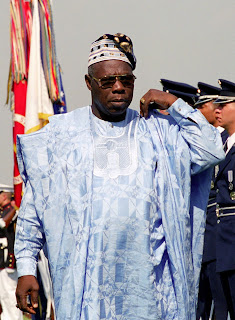
Olusegun Obasanjo


When the issue is Nigeria, former President Obasanjo is never afraid of controversy. It is the oxygen he effortlessly manufactures using the distillation process. Last week he took his battle with Pa Edwin Clark to another level by insisting “No territory in Nigeria, including the minerals found therein, belongs to the area of location. But except in Nigeria where military adventurers redesigned our federalism through arrogance of ignorance, we know of no other federation in the world where Obasanjo’s thesis has been validated.

Obasanjo also insisted the tribe has no role in a modern state. Again that has been settled after Europe debilitating tribal wars, often described as ‘world wars’ with a federal arrangement which confers dual citizenship on everyone and also prevents the tyranny of the state against individuals and groups.

The tragedy of our nation however has been this display of arrogance of ignorance by our successive leaders who equated their brainwaves to brilliant ideas to be imposed as government policy thrusts on the nation resulting in such aberrations as federal government-funded LGA that is accountable to state government, quota system aimed at lowering standard instead of building capacity for excellence, decreed political parties and decreed constitutions fraudulently foisted on Nigeria. Ironically these are the celebrated achievements our leaders bandy around to justify their statesmen, foremost patriot and father of modern Nigeria – titles.

But our leaders know themselves. It is therefore a relief that it was Pa Clark who last week dismissed Obasanjo in spite of his chest-beating as a hypocrite attracting Obasanjo’s response of I am ‘nobody’s lackey’. But what history, whether as record of our self-proclaiming heroes or summation of their quest to render selfless service to our nation has shown is that all our past leaders were lackeys to the two major political tendencies that have held Nigeria hostage since independence.

Tafawa Balewa was a minion of Ahmadu Bello who, as leader of victorious NPC, was expected to be crowned prime minister in 1959. He however in a deft political move picked as his lackey Tafawa Balewa, of Sayawas ethnic group of southern Bauchi, marginalized by their minority Fulani immigrant rulers. Indeed Trevor Clark, the biographer of ‘Tafawa Balewa: The Right Honorable Gentleman’, reminded us how his grandmother had agonised on her death bed over the presence of Fulani on their land and wanted all of them killed if they refused to leave.

And as Ahmadu Bello’s lackey, Balewa fought his master’s wars like a slave. In 1962, he imposed a state of emergency on the West over the throwing of chairs by Remi Fani-Kayode, leader of NCNC in the Western House and a few other Akintola supporters while he did not think Northern Region where Benue/Plateau’s armed insurrection had to be suppressed by the military required declaration of state of emergency. And then in 1965 while the ‘wild wild west’ burned following the resolve of the people to make Akintola and Fani-Kayode that had sowed the wind reap the whirlwind, Balewa writhed his hands waiting for his principal to return from hajj in Saudi Arabia until he was consumed by the crisis.

Similarly, Ironsi was a pencil in the hand of Igbo power-hungry elite who pressurized him to take over power following the disappearance of Tafawa Balewa instead of swearing in the most senior surviving minister as acting prime minister in line with constitutional provision. If there was any doubt that he was in government to serve Igbo interest, his decision to turn Nigeria into a unitary state, an NCNC/ Igbo agenda until 1959, following pressure from the Ibo politicians he surrounded himself with, laid such doubt to rest.

Gowon, the son of a Christian cleric is Angas from Lur in Kante Local Government of Plateau State was put in power by the surviving Fulani power-wielders instead of Murtala Mohammed, of Genawa Fulani clan of Kano State, the leader of the vengeance coup of July 1966. The 33 months war he led was termed ‘war of unity”. But since there is no perfect crime, Obasanjo’s latest Freudian slip that federal government victory in the civil war prevented Biafra from colonizing Niger Delta with its oil deposits was an admission the war was over ownership of Niger Delta oil.

It was obvious whose interest Murtala Muhammed, the leader of the vengeance coup that sought to sink Lagos with dynamite and secede after ferrying northern children and women back to Kaduna in a hijacked British Airways, was serving. Obasanjo who seized and centralized all regional interests from economic investments to education and health served the same interest as Murtala Mohammed. Since one good turn deserves another, Obasanjo was in 1998 brought out of prison and imposed as Yoruba candidate. He went on to literarily climb the palm tree from the top by winning the 1999 election despite his total rejection by his Yoruba people.

Of course Pa Clark and his Ijaw people on their part have since independence been lackeys to the Fulani ruling hegemonic class. Following Clark’s disagreement with northern elders over sponsorship of Boko Haram insurgency in 2012, he was quickly reminded by Alhaji Lawal Kaita, a fiery northern political commentator that he, Clark “used to be a very good friend of the north”.

It was not just that these lackeys served their principals, one thing they have in common is their contempt for Nigeria and Nigerians. Only last week, Wole Soyinka in his ‘forward’ to Pa Bisi Akande’s latest contribution to the literature on Nigerian leadership, “My Participations”, called our attention to “the repetition of the military opportunism that dons the wily garb of neutrality as it organizes an elaborate rituals of constitutional making with a predetermined outcome”, an assault he describes as “a contemptuous form of conduct that even the departing colonial powers did not impose on their fiefdom during their own rites of departure.”

One example of this, according to Bisi Akande was Obasanjo his junta’s ‘insertion of 19 amendments to the 1978/79 Constituent Assembly report to whittle down the authorities of the federating unit in their relationship with the central government”. But contemptuous treatment of Nigerians only got worse with the Babangida’s decreed political parties, Abacha’s hilarious constitution and “five fingers of a leprous hand” and Abdulsalami Abubakar 1999 constitution described by Professsor Akin Oyebode as ‘a military decree masquerading as a constitution’.

But while we were held in contempt by our leaders, we got better deal from the imperial powers as constitution making umpires. If they intervened, it was to protect Nigerians against self-serving politicians as when in order to stop the mischief of those canvassing a unitary constitution for a multi ethnic and multi-cultural Nigeria, they took side with protagonists of a federal constitution which they said would allow each group to develop at its own pace without interference from others. They also did the same at the 1957 Lancaster House debate when Zik and his allies lusting over Lagos land found a willing ally in Ahmadu Bello’s opposition to boundary adjustment in order to forestall losing Yoruba populated provinces in the north to the west by reneging on 1950 settled issue of status of Lagos. While the West did not get all they wanted, Zik and Ahmadu Bello’s motive to renounce a 1950 agreement was queried by Lord Milverton.

It is nothing but a sardonic humour that lackeys who have been confirmed to have served other tendencies instead of Nigeria, continue to pontificate, chair Bishop Kukah’s ‘National Peace Committee’ or preside over’ Nigeria Pray’ group as we search for the way forward.

---------------THE NATION

Tuesday, December 21, 2021

Travesty Of ECOWAS Court’s Verdicts Raises Concern

BY BOLA OLAJUWON


ABUJA, NIGERIA (THE NATION)--The ECOWAS Court of Justice marked its 20 years of existence with remarkable rulings, verdicts and opinions to show. But, critical stakeholders believe flouting of the community court’s judgments by member-states will not give succours to those in need of justice, ASSISTANT EDITOR BOLA OLAJUWON reports.

The ECOWAS Court of Justice few days ago rolled out the drum to mark its 20 years of existence. The organ of the Economic Community of West African States – a regional integration community of 15 member states in Western Africa – was created pursuant to the provisions of Articles 6 and 15 of the Revised Treaty of the regional organisation.

The court was created after the adoption of the Protocol on the Community Court of Justice in 1991, about 16 years after the ECOWAS itself was formed. The ECOWAS Revised Treaty of 1993 established the Court of Justice as an institution of the regional grouping.

The expansion of the court’s competences from just a mere community court to civil service tribunal, court of human rights and court of arbitration, gave the court an almost universal scope of intervention in many areas with significant increase in the number of cases handled in recent years. It is also seen as the last resort for those who saw national judicial templates as inept to give them justice.

Member-states shunning ECOWAS Community Court’s rulings

For the people of West Africa with a population of 416,631,763 – based on the latest United Nations estimates – obtaining justice in their individual country is like camel passing through the proverbial eye of the needle.

Still, with the setting up of the ECOWAS Court, the hope of some of those plaintiffs had been lost to inability of many member-states to abide by the court’s rulings.

For instance, the Court of Justice declared the arrest and continued detention of the immediate past former National Security Adviser, Col. Sambo Dasuki (retd), as unlawful, arbitrary and a violation of his right to liberty.

The court ordered that the former NSA be released from the custody of the Department of State Services, whose operatives re-arrested him shortly after he was released from Kuje Prison, Abuja on bail on December 29, 2015.

Dasuki, who was arrested for alleged economic crimes and other offences, was later granted bail by all three courts where he is currently facing charges relating to criminal diversion of funds meant for procurement of arms for fighting Boko Haram terrorists in the North-East.

But, in a ruling on the fundamental human rights enforcement suit filed by Dasuki, the ECOWAS court said it was wrong for the Federal Government to continue to detain him over undisclosed offences after he had been granted bail by different courts, where he was being prosecuted.

The court, in a unanimous judgment of a three-man panel, read by Justice Chijioke Nwoke, also awarded N15 million damages against the Federal Government.

But, despite the Nigerian courts and ECOWAS Court rulings, he remained in the custody of the DSS since he was re-arrested at Kuje prison, before he was finally released after meeting his bail conditions.

Also in 2016, the ECOWAS Court ordered the release of leader of the Islamic Movement in Nigeria (IMN), Sheikh Ibraheem el- Zakzaky and his wife, Zeenah. It described their detention as unlawful and arbitrary. But the government did not obey the order.

The Islamic cleric was arrested in December 2015, following a clash between his followers and the Nigeria Army in Zaria, Kaduna State.

Scores of people, mostly his followers were reportedly killed and buried in a mass grave in the Mando area of Kaduna metropolis.

On July 28, 2021, a Kaduna State High Court freed El-Zakzaky and his wife.

Just like Dasuki’s and El-Zakzaky’s cases, the Nigerian government refused to enforce ECOWAS’ judgments for the provision of free and basic education for Nigerian children as enshrined under chapter two of the Nigerian Constitution, in the case between Socio-Economic Rights and Accountability Project (SERAP) v. Federal Republic of Nigeria & Anor.

The community court on Friday, October 22, 2021, also ordered the Government of Cote d’Ivoire to pay 1,250,000,000 CFA Francs as compensation to Mr. Oumar Diawara, a Congolese resident of Abidjan (the applicant), for the violation of his right to a fair hearing and right to property. A symbolic one Franc was also awarded to him for the moral prejudice he suffered from how the case against him at the domestic court was handled.

In the judgment, which was delivered by Hon. Justice Dupe Atoki, the judge rapporteur in the suit, the court also ordered the Court’s Registry to assess the litigation costs in favour of the applicant.

However, till today, nothing has been heard about the implementation of the court’s decision.

In another case, the ECOWAS Court ordered the Republic of Niger to pay 7,564,250 CFA francs as recoverable costs to the heirs of late General Ibrahim Mainassara Bare, who ruled the country between January 1996 and April 1999, when he was assassinated while boarding an aircraft.

Justice Dupe Atoki, the judge rapporteur who read the order, said the court, having delivered an earlier judgment, had jurisdiction to hear the matter concerning recoverable costs in relation to the court’s judgment No ECW/CCJ/JUD/23/15 delivered on October 23, 2015.

The application, ECW/CCJ/APP/25/13/COSTS, filed on February 4, 2020, by Mr. Chaibou Abdourahaman, lawyer to the 17 heirs of the late General Bare, asked the court to review its judgment No ECW/CCJ/APP/23/15 based on an alleged omission by the court to specify an amount as recoverable costs to be awarded for the proceeding.

Abdourahaman told the court that part of the judgment reads: “The Republic of Niger shall bear the costs”, without specifying an amount, which resulted in the presentation of their incurred expenses to the court, seeking its order in this regard.

Still, the Niger Republic has not implemented the court’s decision.

Following the cold attitude of the ECOWAS member-states, human rights lawyer Femi Falana called on President Muhammadu Buhari and other leaders to obey court orders in the interest of political stability and justice.

He said the president should also comply with a court order compelling the Federal Government to release the details of stolen assets recovered so far.

“Buhari and ECOWAS leaders should comply with judgments and orders of municipal courts and regional tribunals in the interest of public accountability and political stability,” Falana said.

Lack of national authorities to implement rulings

Despite its achievements in the last six years, only six countries of the 15 member states met the pre-requisite for obeying the court’s rulings. All countries ought to have set up national authorities to implement its rulings.

The court’s president, Justice Edward Amoako Asante (Ghana), listed Guinea, Nigeria, Mali, Burkina Faso, Togo and Ghana, as the six countries that had set up a competent authority to implement the court rulings as stipulated in the protocol. But still, Nigeria refused to implement most of the cases adjudicated upon by the court.

The other member-countries yet to set up such authority include: Benin, Cape Verde, Côte d’Ivoire, The Gambia, Guinea Bissau, Liberia, Niger, Senegal and Sierra Leone.

The poor rate of compliance with the court’s judgments, currently standing at about 50 per cent, is of grave concern to the court, Justice Asante said.

“We regret that only six member states have appointed the competent national authorities for the enforcement of judgments of the court in their respective domains.

“These are the Republic of Guinea, Nigeria, Mali, Burkina Faso, Togo and Ghana. We will continue to appeal for the remaining members to do the needful,” he said.

But, the Speaker of the ECOWAS Parliament, Dr. Sidie Tunis, called on presidents and leaders of West Africa states to ensure obedience to the community court’s ruling.

Tunis said the attitude of selective adherence to the ruling of the court was also diminishing its reputation.

Lawyers to African govts: obey courts’ decisions

Lawyers from across Africa have urged governments of countries in the continent to learn to give effect to decisions of continental and sub-regional courts and tribunals as a way of bolstering democracy and rule of law in the continent.

The lawyers, under the aegis of the Pan African Lawyers Union (PALU) and other stakeholders deplored the growing practice where countries in the continent treat decisions of African international courts and tribunals

Among those who appealed to ECOWAS leaders are Vice President of the ECOWAS Court, Justice Gberi-Be Ouattara; Boniface Ogoti of the East African Court of Justice; Meredith Lwanga of the African Court on Human and Peoples’ Rights; and Falana (SAN).

Others included Donald Deya of PALU, Moussa Coulibaly, President of the West African Bar Association (WABA); Archilleus Romward of the East Africa Law Society; Deborah Nyokabi Mburu of the Network of African Human Rights Institutions (NANHRI); Osai Ojigho of Amnesty International (AI); Simitie Lawvalry of the Human Rights Commission of Sierra Leone, and Anne Mary Okutoyi of the Kenya Nation Commission of Human Rights.

Justice Ouattara, who expressed discomfort with some recent policy decisions of the governments of ECOWAS states in relation to the court, said it was becoming difficult for the court to meet its obligations.

He noted that, aside that most member states were reluctant to implement the court’s decisions, they have decided to reduce the number of its judges and their tenure despite the growing workload of the court.

Justice Ouattara noted that before now, the court had seven judges, who were entitled to a renewable term of five years, but now, the number has been reduced to five, with their tenure limited to four years, which is no longer renewable.

He argued that the relevance of a court lies in the implementation of and respect for its decisions, noting that no matter the quality of a court’s decision, if not implemented, it becomes useless.

Ogoti of the East African Court said his court is experiencing similar challenges as those identified by the ECOWAS Court, particularly in areas of implementation of its decisions and its capacity to monitor compliance.

“Currently, there are no means of monitoring enforcement/implementation of the court’s decisions. Whether judgments are enforced or not, we still depend on litigants to report back to us,” he said.

Lwanga of the African Court noted that her court’s still suffer from low patronage owing, partly to the reluctance of some African states to make the necessary commitment to allow their citizens access the court as well as insufficient information about the court’s operations.

Falana said there was need for sustained advocacy and engagements on the part of all stakeholders to ensure that African states and leaders realise the need to obey and respect the decisions of the courts.

Commendations and achievements

But, looking at the court in the last 20 years, Justice Asante described it as a pacesetter for other regional courts, particularly those in Africa. Asante asserted that although young, the court had through its jurisprudence set examples for other courts. He noted that the celebration “provides an opportunity to examine various dimensions of the young court, which has, through its enviable jurisprudence, become an exemplar among regional courts, particularly in Africa”.

According to Asante, the court also acts as an Arbitration tribunal with key role in the integration process of the community and as the guardian of the community law and protector of human rights.

“It is significant to note that the human rights mandate of the court has become the dominant aspect of its judicial functions. We are proud to note that due to its bold decisions on human rights complaints, the international community has recognised the evolving ECOWAS human rights regime.

“The unique feature of this human rights regime is that there is no requirement for the exhaustion of local remedies. Community citizens, therefore, have the option of lodging complaints for human rights violations before their national courts or the ECOWAS Court of Justice.

“With all humility, the ECOWAS Court of Justice is a source of pride for our community,” he said.

He thanked all past and serving judges of the court, who had contributed to its impressive judicial record.

ECOWAS Commission President Mr. Jean-Claude Brou, while looking at the court’s journey so far, asserted that the ECOWAS had in 2005 amended its protocol to strengthen the community court and made strong provisions for the execution of its judgments, to give citizens access to justice.

“The Court of Justice thus evolved into a major instrument of regional integration. This community’s organ is now better known to the citizens of the region.

“The expansion of its competences from Community Court to Civil Service Tribunal, Court of Human Rights and Court of Arbitration, gives it an almost universal scope of intervention in many areas, as shown by the significant increase in the number of cases handled in recent years,” he said.

The president noted that the protection of human rights remained particularly fundamental, along with the promotion of the rule of law among litigants, especially women and youth.

In spite of challenges confronting it, the court had registered 561 initiating applications and delivered 130 rulings and 301 judgments. It also registered 38 applications for revision of judgments from which it delivered 24 decisions. It has also given five advisory opinions. The court has held a total of 1,226 court sessions. It currently has 166 cases pending before it.

Going forward

Many of the cases before the court, bordering on human rights abuses in ECOWAS member-states, each carry the burden of exigency, which only five justices cannot meet in record time.

The court president insists the reduction of judges from seven as provided in the initial protocol to five in 2018 is of grave concern and has adverse effects. He lamented that despite the challenges, the cases yet to be heard continue to grow “astronomically”.

“In the light of the increasing caseload, it is obvious that a court composed of only five members cannot cope. It is also difficult to form more than one chamber in the court, since a chamber requires a minimum of three judges,” he said.

Asante also proposed a review of the tenure of justices from the four years non-renewable to the initial five years renewable for another term of five years. Falana, SAN, while corroborating Asante’s position, also lamented that the number of judges is too small, calling for it to be increased to 15.

The human rights lawyer called on the court to always make itself available to community’s citizens, especially in states that had been taken over by the military through coups.

He stressed that the ECOWAS, while suspending such countries, should give room for its citizens to seek redress on human rights violations, adding that ECOWAS should also seek to prevent coups by calling erring presidents to order.

“I suggest that the court must allow community citizens in countries where there is coup to assess the court. The suspension of those two countries from the ECOWAS should not prevent victims of human rights abuse from accessing the court,” he stressed.

Brou said the ECOWAS Court should help to promote good governance, rule of law and fundamental freedoms in West Africa.

He said it was important for the court to ensure access to fair, transparent and credible social justice in the region. These, he said, were shared universal values that would contribute to the development of the region and promote the culture of peace, consistent with the 2063 agenda of the African Union.

As part of its function, United Nations High Commission for Refugees (UNHCR) urged the ECOWAS Court of Justice to save 5.5 million possible displaced persons in West Africa.

Regional Director of UNHCR West & Central Africa, Ms. Millicent Mutuli, said the court, through its advocacy, held the key to curbing the rising spate of displacement and statelessness in the sub-region and protecting victims’ rights. Mutuli said the court also had a great responsibility in ensuring the rights of displaced persons were protected.

However, Falana advocated the setting up of an appellate division of the ECOWAS Court as a solution for flagrant disregard to court rulings by member states. But, a Justice of the court, Dupe Atoki, countered his position, saying that an appeal court is no solution to the impunity by member states and lack of enforcement of court rulings.

In an interview with The Nation, Professor Damilola S. Olawuyi, SAN and Global Vice Chair, International Law Association and Deputy Vice Chancellor, Afe Babalola University, Ado Ekiti (ABUAD), said as the judicial organ of ECOWAS, the ECOWAS Court was established to ensure the observance of law and justice in economic integration efforts across the West African community.

He said while the court has recorded some noteworthy achievements in advancing this goal, several practical challenges continue to limit its relevance and effectiveness.

“Chief amongst these is the flagrant disregard for the court’s decisions by several member states. The court has one of the lowest compliance rates of all regional or sub-regional courts in the world. Strengthening the court will therefore require greater commitment by all member states to comply with and implement the binding decisions of the court in accordance with norms of responsibility in international law.

“Another key challenge is the inadequate financial and technical resources that the court faces, which continues to slow down its modernisation and digitalisation when compared to other regional courts across the world. The COVID-19 pandemic has indeed accentuated the urgency of having innovative and technology-driven courts. While the ECOWAS Court promptly issued a Practice Direction on Electronic Case Management to enable the timely and efficient resolution of disputes during the pandemic, its implementation has not been seamless. Old developmental challenges such as lack of suitable accommodation space, inadequate remote technology and e-justice tools, and skills deficit, especially low number of ICT-competent staff and language translators, all mean that the ECOWAS court remains several years behind its peers.

“Without addressing these old developmental challenges, building a stronger and more relevant ECOWAS Court would be very difficult. One step would be for ECOWAS to immediately appoint a Working Group of eminent jurists and experts across the region, tasked with reviewing the progress of the court, and developing a strategic plan to strengthen the court’s relevance, modernisation, and future role in regional economic governance, including its legal structures and resource needs.

Therefore, the court, after remarkable achievements so far, needs more capacity and supports from member-states to deliver on its mandates and give succours to those in need of justice. The stakeholders told The Nation that ECOWAS must contemplate imposing sanctions, including suspension of member countries that flout rulings of the community court.

Flouting the community court’s ruling, they said, is against the dictates of the ‘Community Texts’’ and which also equates to disruption of democratic and justice processes.

Saturday, March 07, 2020

The 4TH REPUBLIC: Constitution Review: That Nigerians Would Not Be Taken For A Ride Again


This underlying mala fide has been the main reason restructuring Nigeria, desirable and imperative as it is, has become a taboo for some people.

Two very distinguished Nigerians, former President Olusegun Obasanjo and the Most Revd Matthew Hassan Kukah, Bishop of the Sokoto Diocese of the Catholic church, have of recent been talking to us, their Nigerian compatriots, just as the Catholic Bishops conference of Nigeria, (CBCN) has been at it, calling the Buhari government’s attention to its shortcomings as well as always encouraging the government unto good deeds.

As recently captured by the inimitable essayist, Emeritus Professor Olatunji Dare, Bishop Kukah’s elegy was “comprehensive in its sweep, magisterial in its scope and delicately balanced between hard thinking and strong feeling”. President Obasanjo’s speech, described elsewhere as his purgatory, being a denounciation of his long held belief in the inviolability of Nigeria as presently structured, is the one that really concerns us here.

Like President Umar Yar Adua denouncing the election that swept him into office in 2007, Obasanjo in his latest outing -not a letter this time around – acknowledged that the 1999 constitution on which he was sworn in that year, and subsequently for his 2nd term, is not working nor will it ever work. More tellingly, he opined that “nothing short of a new order (constitution), based on a restructured polity, can take Nigeria out of its present predicament”.

But have our National Assembly members, among them many former state governors, come to this realisation?

Of course, not.

Do they require robotic science to know that what Nigeria needs today is far beyond the perfunctory review of an old, jaded and totally inappropriate constitution, which was conceived by the professor who wrote its final draft for the goggled general, as nothing more than a tool to cast hegemonic intentions in stone. This underlying mala fide has been the main reason restructuring Nigeria, desirable and imperative as it is, has become a taboo for some people.

In case the National Assembly cannot comprehend this, let it be said, loud and clear, that what Nigeria needs now is for President Muhammadu Buhari to urgently set up a Constitution Drafting Committee of experts, whose report would be approved by Nigerians at a national referendum.

Unfortunately, from what we have come to know very well, even if the legislators are aware of this minimum desideratum for peace to reign in Nigeria, precedents already set by the National Assembly are too attractive, and tempting for them not to embark on another constitution review which is guaranteed to be another futile exercise.

Given the need to be on our guide and open our eyes very well, as they commence this round of review, I wish to bring to the attention of all Nigerians the unflattering report of the investigation conducted by the PREMIUM TIMES, and published 11, December 2015, on an earlier constitution review exercise.

In addition to warning us against the National Assembly’s predilection to turn every constitution review to a cash cow, the report should also alert the now rejuvenated EFCC, which recently demonstrated courage in commencing investigation into the N35B defense money believed to have been looted over a decade ago, to bring the legislators allegedly implicated in those shady deals under its purview . For those implicated that should serve to enable them clear their names for posterity, lest they go down in infamy.

But more crucially, and of greater benefit to Nigeria, the President would be giving, not only his name, but his place in history, a major lift if, rather than permit another sterile constitution review exercise, he would urgently convoke a Constitution Drafting Committee to fashion out for the country, a proper constitution which will not lie against itself, claiming to have been made “by we the people”.

It is therefore being suggested, as already opined by former President Obasanjo and many other eminent Nigerians, that it will be a sheer waste of time, and resources, to merely look on whilst the National Assembly continues with this chimera of a constitution review.

For full disclosure, the Senate President, Ahmad Lawal had, on February 6, 2020, set up a 56- member committee for this purpose with all the principal officers as members in addition to one senator from each state, and two others, selected to represent each geo-political zone.

Welcome then to the Prime Times report.

How lawmakers pocketed N8b in failed Constitution amendment

In an investigation lasting months, this newspaper found that between 2011 and 2015, the 53-member House of Representatives Ad-hoc Constitution Review Committee and its 49-member counterpart in the Senate in the 7th National Assembly withdrew N3,250,000,000.00 and N4,500,000,000.00 respectively to purportedly execute the fourth alteration of the Constitution.

It is not immediately clear how the lawmakers spent the outrageous funds but insiders say a huge chunk of it was pocketed by members of the committees in what one source described as ‘unprecedented naira bazaar’, by a committee of the National Assembly’.

Officials of the committees continued to make withdrawal even long after the exercise was concluded. It remains unclear what those withdrawals were spent on.

The Committees, which operated independently, withdrew the monies in tranches from their accounts domiciled in an Abuja branch of the Guarantee Trust Bank.

Curiously, some of the withdrawals were made long after they submitted their final reports to both chambers for consideration and a few weeks before the general elections and the inauguration of the 8th National Assembly.

The Committee withdrew N83.33m on March 2, 2015 and the same amount on March 23, five days before the Presidential and National Assembly elections and on April 13, barely two days after this year’s governorship election.” – PREMIUM TIMES, December 11, 2015.

The House Committee’s major activities during the process included a retreat in Port Harcourt, Rivers State, between May 27 and 29, 2012; Peoples Public Sessions held simultaneously in all the 360 federal constituencies on November 10, 2012; and public presentation of collated results on April 18, 2013.

It held 25 meetings altogether while the assignment lasted. There was also a retreat for the Technical Experts on Constitution and Legal matters who produced the work-plan as well as some civil society organisations drawn from the six geo-political zones. Members of the House subsequently voted on the various sections proposed for amendment on January 30, 2014.

The Senate Committee, on the other hand, held a retreat in Asaba, Delta State; organised zonal and national (Abuja) public hearings; conducted opinion polls; undertook study tour to the United States, Canada and India; held consultations with seasoned experts and constitutional lawyers; and organised town hall meetings in the senatorial zones. It presented its final report to the Senate on June 5, 2013.

The Committee whose membership included the principal officers of the upper chamber who served as “members of the steering committee,” finally organised a retreat in Lagos to consider a draft bill. That was after the senators voted on the amended sections on three occasions – July 2013, April 2014 and June 2014.

But those who should know say all these engagements could not have cost the nation more than N1billion altogether. They said some of the public sessions held in states were funded by state governments.

Authorities wouldn’t comment on withdrawals

The then Senate President, David Mark, could not be reached for comment. He did not answer or return multiple calls. Neither did he respond to a text message sent to him.

So also was Mr. Ekweremadu, who spearheaded most of the spending.

When contacted, Imam Imam, the media aide to the former Speaker of the House of Representatives, Aminu Tambuwal, asked this newspaper to direct all inquiries on the last constitution amendment to the Clerk of the House of Representatives, Sani Omolori.

Mr. Ihedioha, who chaired the House Ad-hoc Committee, also requested us to do the same.

“My dear, feel free to reach out to the Clerk of the House of Reps to furnish you with all details you will need,” the former deputy speaker said in a text message to one of our reporters.

Mr. Omolori could however not be reached as did not answer or return calls. He did not also respond to a text message sent to him. Several attempts by this newspapers to also speak with the Clerk to the National Assembly, Salisu Maikasuwa, failed.

The Director of Information of the National Assembly, Ishaku Dibal, told PREMIUM TIMES he was not in a position to speak on the matter. Also, the former spokesperson of the House, Zakari Mohammed, who served in the ad-hoc committee, did not answer calls by this newspaper.

But a former senator who served in the Senate ad-hoc committee, Anthony Adeniyi, said he was not certain about how much committee members spent on the constitutional amendment.

“I can’t confirm the figure you are quoting. I don’t think we spent that much,” he told PREMIUM TIMES in a telephone interview Thursday.

But another senator close to the constitution review committee, who requested not to be named for fear he might be attacked by his colleagues, said, “I can confirm that they withdrew more than that. Committee members were just sharing money”. That, Nigerians, was how N8 Billion got burnt.

Nigerians must be vigilant, this time around.


Saturday, February 29, 2020

Nigerian Varsity Don Discovers Cure For Coronavirus, Lassa Fever


BY CHRIS NJOKU

OWERRI (THE NATION
)--Professor of Virology, Maduike Ezeibe of the Michael Okpara University of Agriculture, Umudike, MOUAU, who once claimed to have discovered therapy for the cure of HIV/AIDS, said that his therapy has the potency to cure the dreaded coronavirus ravaging China and some Asian countries.

Ezeibe who is the Dean, College of Veterinary Medicine, MOUAU, made the claims Thursday in a statement, adding that the therapy can also cure Lassa fever.

The professor of Virology who gave the chemical equation of the therapy as (AI4(SiO4)3+3Mg2SiO4-2AI2Mg3(SiO4)3) said “it’s a mechanism for curing Covid -19 and Lassa fever”.

On how the therapy works, Professor Ezeibe explained that “electrostatic attraction would make electrically charged medicines mop pathogens which have opposite charges, is a known scientific fact and that viruses and abnormal (infected /tumor) cells are electrically charged is now known.

” Covid-19 virus and Lassa fever virus (DNA viruses) are negatively charged . Small sizes of viruses enable them infect cells, inaccessible to big molecules. So, existing antiviral medicines need immunity to complement their effects but some viruses cause immune deficiency.

As a silicate, AMS also normalises immunity and as a stabilizing agent it enhances efficacy of antimicrobials to achieve effective treatment secondary infections.

“Effective treatment of secondary infections would cure any viral /abnormal cell diseases including Covid -19 and Lassa fever “, the statement read.

Also, Professor Ezeibe challenged countries who are being ravaged by coronavirus to come and take his therapy for clinical trial on their patients.

He expressed confidence that the therapy which had already proved reliable in the treatment of HIV/AIDS would make coronavirus a thing of the past.

Asked about the cost of treatment, Professor Ezeibe said “cost is not an issue for now “, maintaining that what is of moment is to bring cure to the thousands of patients already infested with the virus.

Ezeibe however, said those already infested with coronavirus should not come to Nigeria to access the therapy to avoid spread of the virus.

He rather advised that their countries should make arrangements on how to obtain the therapy for their nationals.

Thursday, February 27, 2020

NOLLYWOOD: Tapping Into Nigeria’s $1b Cinema Industry


BY CHIKODI OKEREOCHA

The cinema industry’s value chain is huge. From cinema building to ticket sales, food, sponsorships, renting of space and advertising, among others, the industry is conservatively estimated at $1 billion. Yet, this potential gold mine, according to experts, has remained untapped due to lack of knowledge and awareness of its investment opportunities. But, a returnee London-trained architect and industrialist, Prince Tikare, is pushing to change the narrative, by offering services across the industry’s supply chain, Assistant Editor CHIKODI OKEREOCHA reports.

Lagos, Nigeria’s commercial capital, with estimated 23 million people, has only about 10 cinemas. In all, Nigeria, Africa’s largest and most populous economy, has about 45 cinemas serving an estimated 200 million people.

London alone, with a population of just nine million, boasts 100 cinemas. Birmingham Star City, which is said to be the biggest cinema in the United Kingdom (UK), with 392,000 square feet (36,400 m2) of leisure space, has 30 screens.

Now, what this shows is that despite a few pioneer cinema brands in Nigeria such as Silverbird Cinemas, Filmhouse Cinemas and Genesis Deluxe Cinema, the country is still scratching the surface of the burgeoning big screen business as the cinema industry is called.

More importantly, it also confirms the position of knowledgeable industry experts that the demand for cinemas in Nigeria is high, but the supply is low; that the cinema industry is a potential gold mine waiting to be tapped by discerning investors.

It is easy to see why the demand for cinemas in Nigeria is on the upswing. For one, there has been noticeable improvement, over the years, in the quality of films produced in the film industry, more popularly called Nollywood.

Most producers now seem to prefer using film premieres in cinemas, which is a common practice in developed climes. For the local film producers, the fear of piracy is the beginning of wisdom. Film premiere is their strategy to beat the menace of piracy.

Also, most Nigerian movies released in recent times, it was learnt, are high-budget films, with producers appearing to have an edge on their counterparts in other African countries, especially in the use of exotic locations for movie productions as well as in good storylines.

With such massive investments in quality film productions, movie premieres are becoming increasingly popular as visitors throng cinema houses across the country to see such films.

However, the huge investment opportunities this trend has thrown up have not been matched with significant investments to put the cinema industry on a steady growth path.

Tikare said:

“The cinema industry is slow because of lack of knowledge and awareness of its dynamics. It’s about people understanding what it takes to invest in building a brand. The fear of not getting return on investment is hindering people from delving into it.

“If the cinema industry is well managed, it is a very exquisite commercial asset. The opportunities are endless. It’s about how you market your product. It’s also about changing your business model.”

He estimated the value of the film/cinema industry at about $1 billion. “I put them together because film industry and cinema are connected. It’s the fastest growing sector of the economy. It’s competing with oil, he told The Nation in an interview in Lagos, last week.

Tikare should know. As an architect, he has carved a niche for himself building cinemas for American entertainment conglomerate Warner Bros International, and through freelancing across Europe for about three years, in Germany, Spain, Portugal and also in parts of Asia, such as China.

“Freelance gave me more money. I freelanced for about three years,” he said, noting that within his almost four year’s stint at Warner Bros, he built Birmingham Star City, the biggest cinema in England, with 30 screens.

Back in Nigeria, where he has thrown his hat into the cinema building ring since 2006, Tikare has also been busy with a couple of major cinema projects, such as Genesis Cinema in Woji, Port Harcourt. It was his first project.

He also did The Palms Lekki, Lagos. He was given 12 weeks to deliver The Palms, which eventually opened in late 2009.

Other major projects under his belt include Filmhouse Calabar, Filmhouse Asaba, Filmhouse Ibadan, Filmhouse Kano, Filmhouse Port Harcourt, Filmhouse Apapa, and Filmhouse Surulere.

In all, Tikare said he had done nine cinemas in Nigeria, with about five other major projects in the making. Noting that “In Nigeria, there is demand for cinemas, but the supply is low,” he, said despite the high cost of building cinema, investors could recoup their investments between 18 and 24 months.

“Building cinemas is expensive. Your Capital Expenditure (CAPEX) is high at the outset, but that shouldn’t be a deterrent; what you should look at is where you are going to break even. Typically in Europe, you are looking at breaking even between three and five years.

“This is because you are only relying on two sources of revenue, which is cinema tickets and foods. Whereas in Nigeria your revenue streams are different. You are not relying so much on tickets, because you cannot charge so much on tickets; you are relying on food, sponsorships, renting your space out for events, churches. You will break even much quicker, between 18 and 24 months,” he said.

Tikare said it costs between 80, 000 and 100, 000 pounds on the average to build a cinema (that is one auditorium). The actual cinema room is called a screen. “Building a cinema is a lot of money, but you need to look at the long term; the Return on Investment (RoI) in the business is high,” he emphasised.

Compelling value proposition
Aware of the growing demand for cinemas in Nigeria amid low supply, Tikare has, upon his return to Nigeria, strategically positioned himself to help fill the gap.

The dearth of professionals with relevant skills in the local cinema building industry may have also helped pave the way for Tikare to corner a chunk of Nigeria’s $1 billion film/cinema industry.

Listen to him: “There are not many professionals like me around. I worked with Warner Brothers for about four years. I know cinemas like the back of my hand. I understand the dynamics of the business, the whole supply chain.”

Perhaps, because he has been in the industry for so long and has garnered sufficient hands-on experience in cinema building and management, Tikare said he is offering bespoke services to would-be investors willing to take advantage of the high RoI in the cinema industry.

Again, he explained: “I am the only architect who does what I call a five dimensional service. I offer you design, construction, procurement, business planning (that is how to make your business work). We also help you manage the business, may be for two years, and train your staff.There are not many architects that offer that kind of service.”

For Tikare, the decision to look towards home and contribute his quota in changing the cinema industry’s narrative wasn’t just a mere business decision; it was also a long term emotional attachment to Africa, particularly Nigeria, where, according to him, he needed to bring his wealth of knowledge and expertise to bear on the local scene.

Explaining how it all started, he said: “I used to do a lot of business in China, and in some parts of China, which were even less developed than Nigeria, I saw the growth, the energy, and I said, ‘if they can go through this and grow, why not Nigeria’?

“And I said, ‘I have this body of knowledge, why don’t I get involved in transferring the technology to Africa so that it can grow. I also asked myself where is going to be the next china? It’s Africa, because it’s got the population, the resources and I have connections there because I am an African.

“I want to be part of the African success story. So, when the cinema thing came up, it was a massive opportunity for me to show that commitment. And. The emotional commitment is what drives me. I like the fact that a lot of people I trained go ahead and do more sophisticated work.”

Although Tikare has delivered nine cinemas in Nigeria, with five other projects in the works, he said in line with his plan to be part of the African success story, he also has his eyes on other African countries including Ghana, Senegal, Rwanda, Kenya, Namibia and Zambia.

According to him, a lot of people want to delve into cinema, but they don’t know what to do. “I want to make it simpler,” he declared, adding that the value chain in the cinema industry is endless, particularly in Nigeria.

Citing popcorn, for instance, he said there is plenty of corn in Nigeria. “Somebody can start making popcorn for the cinemas. That’s one huge industry that can employ lots of people, because what they will do is to invest in the type or breed of corn for quality popcorn,” he said.

Interestingly, the huge opportunities in the industry are not lost on the Federal Government. This was why it identified the industry as one of the priority sectors in its Economic Recovery and Growth Plan (ERGP) with a planned $1 billion in export revenue this year.

Although Tikare has positioned himself to take advantage of this huge, but largely untapped market, he is not relying only on expertise garnered over the years working full time in reputable global cinema building firms, as well as freelancing to succeed.

His enthusiasm and confidence also stemmed from his deep knowledge of the market, where, as CEO/Co-Founder, Smoodypod Group International (SGI), his fruit juice factory in Opebi, Ikeja, Lagos, rolled out premium Smoody drinks made of a blend of mango, banana, orange and ginger.

Although the industrialist started making juice commercially in 2006 in the UK, he brought the business home in 2010, underscoring his avowed commitment to be part of the African success story.


SOURCE: THE NATION (NIGERIA)

Monday, February 24, 2020

NIGERIA: Constitution Amendment And Ideology Of Centralism


The excitement of fellow Nigerians about the 2020 amendment exercise should not surprise observers of politics in the country.

By constitution we mean, whenever we speak with propriety and exactness, that assemblage of laws, institutions and customs, derived from certain fixed principles of reason, directed to certain fixed objects of public good, that compose the general system, according to which the community hath agreed to be governed—H. Bolingbroke

The strength of the Constitution lies entirely in the determination of each citizen to defend it. Only if every single citizen feels duty bound to do his share in this defence are the constitutional rights secure¯ Albert Einstein

I am certainly not an advocate for frequent and untried changes in laws and constitutions. I think moderate imperfections had better be borne with; because, when once known, we accommodate ourselves to them, and find practical means of correcting their ill effects. But I know also, that laws and institutions must go hand in hand with the progress of the human mind. As that becomes more developed, more enlightened, as new discoveries are made, new truths disclosed, and manners and opinions change with the change of circumstances, institutions must advance also, and keep pace with the times¯ Thomas Jefferson

As it often happens in Nigeria, citizens have started get excited about the 9th National Assembly’s decision to embark on another round of amendments of the 1999 Constitution. The excitement of fellow Nigerians about the 2020 amendment exercise should not surprise observers of politics in the country. Like many other nationals, Nigerians are easily infected by what the Yoruba refer to as Aisan Karounwi (the Karounwi Syndrome), literally, “just to have something to talk about” or creating huge noisemaking over something of little significance as a way of distracting people from more serious issues. Given the experience of amendments to a constitution inherited by post-military governments after the 1999 elections, serious-minded federalists ought not to be impressed by the huge noise about the 2020 amendment already in progress.

Of the close to forty amendments to the constitution from Obasanjo to Buhari, just a few amendments have addressed decades of agitation by critical sections of the society against centralism that has taken self-government away from federating units since the end of the Biafra-Nigeria War. Such amendments addressed peripherally the call for restoration of federal governance, such as (Financial Autonomy of State Legislatures) that seeks to provide for the funding of the Houses of Assembly of States directly from the Consolidated Revenue Fund of the State; alteration to the Second Schedule, Part I & II to move certain items to the Concurrent Legislative List to give more legislative powers to States and simultaneously delineate the extent to which the federal legislature and state assemblies can legislate on the items that have been moved to the Concurrent Legislative List.

Most of the amendments to a constitution that never received consent of citizens before coming into force in 1999 focused on enlarging managerialism rather than expanding democratic governance: Bill to amend the Third Schedule to include former Presidents of the Senate and Speakers of the House of Representatives in the composition of the Council of State; institutionalising legislative bureaucracy in the Constitution through creating National Legislative Commission to complement or rival the Civil Service Commission for the executive and the Judicial Service Commission for the judiciary, to cite a few.

In the character of previous amendments of the constitution, the 9th Assembly is already in the process of piling up amendments that further detract from a federal system of government by reinforcing institutions of centralised governance. For example, the first focus of 2020 lawmakers in respect of the constitution is to create a bureaucracy to de-radicalise former terrorists and reintegrate them into mainstream politics. Of all the problems facing the country from one decade of terrorism, compensating the country for a high percentage of national resources—internal and external—expended on fighting and reducing the negative outcomes of terrorism which could have gone into development of the Northeast and the country illustrates a warped sense of priority on the part of the 9th National Assembly.

Another item high on the list of the 9th Assembly, if news reports are anything to go by, is the proposal to delete the Land Use Act from the 1999 Constitution so as to make it easier to alter the Act and enable the federal government to be in control of ancestral pre-colonial land of indigenous communities that constitute the federation. The 8th Assembly tried to do this but failed, just as the same Assembly was unable to establish a law to pass control of all bodies of water—surface and underground—within the country to the control of the central government. If proposal to delete the Land Use Act is only kite-flying, it is a serious one for genuine believers in a united Nigeria to pay address at the right time.

Attempting to remove the most important provision of the current constitution that recognises existence of organic communities amalgamated by the British colonial government and such communities which all agreed to form an independent Nigeria in 1960 and to transform into a republic in 1963 may be too risky a constitutional amendment for a country as divided as Nigeria with ten-year threats to the membership of the Northeast as a peaceful part of the republic; and constant farmers-herders conflicts to undertake, more so when division along religious lines are already an international concern to friends of Nigeria and kidnapping and banditry abound across the country.

There is no doubt that federalists in many parts of the country are expending a lot of energy to fight what Oby Ezekwesili has characterised as “Monopoly Democracy.” Federalists have also been experiencing constant frustration from centralists or unitarists in power since 1999. For example, during the two-term administration of President Olusegun Obasanjo, an elaborate conference on political reforms achieved nothing to decrease centralist governance. Another conference to decentralise governance in 2014 at the instance of President Goodluck Jonathan did not have any outcome other than what happened under Obasanjo, just as General Muhammadu Buhari’s pledge to re-federalise Nigeria in 2015 is still in the cooler in the president’s second and final term in office.

But the task before federalists as the 9th Assembly embarks on constitutional amendments is to make their federal and state lawmakers democratically accountable. It is hard to know how many legislators have an understanding of what the issues are between unitarists in power and federalists in the constituencies. But democracy enjoins voters to guide their representatives about matters that voters consider very important to development of their communities. The notion that lawmakers in the National Assembly see themselves as federal lawmakers that owe their loyalty solely to the federal government is false. Lawmakers—state or federal—are first and foremost accountable to the electorate, before voting on matters that are crucial to the wellbeing of the constituencies that elect them. For example, a Nigeria with a constitution emptied of the Land Use Act is one that can spell doom to federalism in the country by completing the task of homogenisation of the polity and society started by decades of military dictatorship and civilian reproduction of unitary governance.

One important task that federalists must not miss is mobilising local communities and cultural leaders to re-educate representatives from their communities about the importance of the Land Use Act to their traditional roles in the various nationalities in the country. It is risky for traditional rulers to assume that their legislators understand the difference between centralism and federalism, especially the centrality of continued existence of the Land Use Act to protection and promotion of Nigeria’s distinct civilisations.

So far, the Land Use Act protects rights of minority nationalities in the country while bolstering existence of the country’s cultural diversity. Put most graphically, there is no space for Oba, Obi, Obong, and Emir where there is no indigenous community and removing the Land Use Act can only put an end to traditional communities as we know them.

Further, the struggle for restoring federal governance to Nigeria after several decades of military dictatorship and election into offices—executive and legislative—of men and women who may have knowingly internalised the consciousness of centralism or accidentally fallen victims of false consciousness, needs to transform into a political movement across the country. Doing this will demarcate the line between unitarists (in and out of power) from believers in federal democracy, with the consequence of sharpening the ideological differences between centralists and autonomists, especially at elections. In addition, federalists should push for a popular referendum provision as part of the 2020 constitutional amendments.


SOURCE: THE NATION

Tuesday, February 18, 2020

NIGERIA: Another Search For A People’s Constitution

Senate President Ahmad Ibrahim Lawan


Past efforts at constitutional review largely failed. Against this backdrop, the Senate has inaugurated a committee to have another go. What are its chances and what areas should it focus on? Legal Editor JOHN AUSTIN UNACHUKWU asks lawyers.

The search for a people’s constitution inched forward on January 30, when Senate President Ahmad Lawan

announced the composition of a 56-man Steering and Constitution Review Committee.

The committee, with all principal officers as members, also has a senator from each state, and two senators selected to represent each geo-political zone.

The committee

Principal officers on the membership of the Constitution Review Committee include: Deputy Senate President, Ovie Omo-Agege who will serve as its Chairman; Senate Leader, Yahaya Abdullahi; Deputy Leader, Ajayi Boroffice; Minority Leader, Enyinnaya Abaribe; Deputy Whip, Aliyu Sabi Abdullahi; Deputy Minority Leader, Emmanuel Bwacha; Minority Whip, Philip Aduda; and Deputy Minority Whip, Sahabi Alhaji Ya’u.

Lawmakers selected to represent each state include: Theordore Orji, Abia; Aishat Ahmed, Adamawa; Bassey Akpan, Akwa-Ibom; Stella Oduah, Anambra; Haliru Jika Dauda, Bauchi; Biobarukuma Deji-Eremenyo, Bayelsa; Gabriel Suswam, Benue; Abubakar Kyari, Borno; Gershom Bassey, Cross River; James Manager, Delta; Samuel Egwu, Ebonyi; Matthew Urhoghide, Edo; Opeyemi Bamidele, Ekiti; Ike Ekweremadu, Enugu; and Mohammed Danjuma Goje, Gombe.

Others are Rochas Okorocha, Imo; Sabo Mohammed, Jigawa; Uba Sani, Kaduna; Kabiru Gaya, Kano; Baba Ahmed Kaita, Katsina; Mohammed Adamu Aliero, Kebbi; Smart Adeyemi, Kogi; Suleiman Sadiq Umar, Kwara; Oluremi Tinubu, Lagos; Abdullahi Adamu, Nasarawa; Mohammed Sani Musa, Niger; Ibikunle Amosun, Ogun; Nicholas Olubukola, Ondo; Surajudeen Ajibola, Osun; Teslim Folarin, Oyo; Hezekiah Ayuba, Plateau; George Thompson Sekibo, Rivers; Aliyu Wamakko, Sokoto; Yusuf A. Yusuf, Taraba; Ibrahim Geidam, Yobe; and Mohammed Hassan, Zamfara.

Representatives of geo-political zones are Bala Ibn Na’Allah and Ibrahim Shekarau, North-West; Kashim Shettima and Lawal Yahaya, North-East; Tanko Al-Makura and Yakubu Oseni, North-Central; Abdulfatai Buhari and Biodun Olujimi, South-West; Lilian Uche Ekwunife and Chukwuka Utazi, South-East; Rose Oko and Akon Eyakenyi, South-South.

Inaugurating the committee, Lawan said: “There are several issues that Nigerians feel strongly about. “The Constitution Review Committee is supposed to be a platform where such issues will be brought, and where those who are interested should ensure that they make every possible effort, including presentations for their views to be considered.

“As a National Assembly, particularly the Senate, we want to have a very stable country. We want a country that gives every citizen the opportunity to actualise his or her dream. We want to have a security that is enhanced and an economy that works for everyone.

“Stability of the polity is important, we need to have a country before we run for elections, or indeed undertake any activity. So, we advise that any organisation or individual who has anything that should be taken on by the committee should make submissions to the Constitution Review Committee.”

Lawan’s statement suggests that the Senate wants the committee to produce a people’s constitution that will create a balance between the legislative, executive, and judicial arms of the government, meet the needs and welfare of Nigerians and provide a platform for them to actualise their dreams.

Past efforts

Efforts to amend the 1999 Constitution which was handed over to Nigerians by the Abdulsalami Abubakar military regime began in 2000 during the Senate presidency of Dr. Chuba Okadigbo.

In that exercise, then Deputy Senate President Haruna Abubakar and the Deputy Speaker of the House Chibudom Nwuche were named co-chairs of the National Assembly Joint Committee on Constitution Review (JCCR).

Terms of reference
The committee is expected to consider national issues including restructuring, true federalism, state police, revenue sharing formula and resource control, among others that have dominated public discourses in recent years.

It is not the first time a review has been attempted.

Speaking on the committee’s agenda, Deputy Senate President Senator Ovie Omo-Agege said it would consider the recommendations of the 2014 national conference.

That conference was convened under ex-President Goodluck Jonathan and chaired by former Chief Justice of Nigeria (CJN), the late Idris Legbo Kutigi. The conference proposed solutions to a number of the country’s challenges.

Omo-Agege also said that recommendations of the All Progressives Congress (APC) panel on restructuring would be considered. Thepanel was chaired by Nasir el-Rufai, Governor of Kaduna State.

Omo-Agege also said the committee would also consider altering the sixth schedule of the Constitution to provide for the establishment of pre-election matters tribunal, governorship pre-election matters tribunals and presidential pre-election matters tribunal.

He said: “This committee will consider the recommendations of the 2014 constitutional conference and the Governor Nasir el-Rufai-led committee on restructuring.

“It will suffice to say that an assignment of this magnitude demands diligence and commitment. So, as we embark on this very important legislative assignment, let us use this opportunity to build consensus on constitutional issues that will impact the lives of the people of our great country Nigeria.

“We must get it right for the good of our people and the unity of our great country. The Nigerian people deserve no less.”

SANs: Key areas the committee must consider
Senior lawyers including former Nigerian Bar Association (NBA) presidents Dr. Olisa Agbakoba (SAN) and Mr. Augustine Alegeh (SAN), as well as constitutional lawyer Dr. Kayode Ajulo commended the Senate’s move. They recommended several areas the committee must seek a review.

Agbakoba advised that the committee needed to develop a “Constitution review strategy.”

He expressed happiness that the committee will review the recommendations of the 2014 National Conference and the El- Rufai report on restructuring, set up by the All Progressive Congress (APC) in 2017.

According to him, restructuring or devolution of powers is crucial to deepening Nigeria’s democracy.

Agbakoba said: “The (Constitution review) strategy should consider some of the past reports of previous committees and the key points in various national conference reports, and develop a constitutional review formula that has national acceptance. The key thematic issues the committee may consider are as follows.”

Constitutional supremacy
He said: “Supremacy of the Constitution: This is contained in Section 1 of the Constitution which has three subsections.

We propose that in addition to the provision of Section 1(1) which provides that the provisions of the Constitution shall have binding force on all authorities and persons; every Nigerian should be expressly conferred with a constitutional right to approach the Courts to challenge constitutional infractions.

In addition to the provision of Section 1(2) which prohibits unconstitutional take-over of government, there may be a provision for sanctions for unconstitutional take-over of government. It shall be the unalterable and inalienable right of Nigerians to sanction violators of the constitutional order.”

Institutions consolidating democracy
Another area Agbakoba advised the committee to focus on is what he called “Institutions Consolidating Democracy”.

He said: “Some state institutions serve as gatekeepers and protectors of constitutional democracy. These institutions play a key role in administering and consolidating democracy and so they must be independent and constitutionally insulated from external interference and control by any person or organ of the state.

“Some of these institutions are contained in Section 153 of the 1999 Constitution and include the Code of Conduct Bureau, the National Judicial Council, the Federal Civil Service Commission, the Federal Judicial Service Commission, the Revenue Mobilisation and Fiscal Commission etc.

In order to ensure that these institutions consolidate democracy, it is important that their independence is constitutionally secured and guaranteed.

‘Section 153 of the Constitution falls far short of the requirement. It will be important to alter Section 153 and a good example will be Chapter 9 of the South African Constitution which provides for “State Institutions Supporting Constitutional Democracy”.

These include the Public Protector (who investigates certain conducts in state affairs), the Auditor-General, the Electoral Commission etc. in our case the EFCC, Police, Accountant General, Judiciary INEC etc. will run completely independent of other Government institutions. This process alone will dramatically alter the Nigeria democratic space.”

Judicial powers, ‘indigeneship’, devolution of powers

Other areas the lawyer advocated a review are judicial powers, ‘indigeneship’ and devolution of powers.

For indigene-ship, he said: “The Constitution provides for citizenship but what is recognised in practice is indigeneship. This may be an opportunity for the committee to reexamine and redefine the status of citizenship and indigeneship.”

He said as for power devolution, the scheme of devolution should examine which aspects of the 98 items of Legislative powers are best exercised by the Federal and State government.

“The issue of autonomy of the Local government system is vital, on the basis of the principle of subsidiarity.

“A new list of Legislative powers should be considered so as to distribute powers in a way that upholds the principles of “true” federalism.

“The Federal Government has no role in issuance of driver’s licence, marriage certificates and business permits.

“The Federal Government should devolve Legislative powers over prisons, education and health to the States. A contentious issue will be fiscal federalism but I expect the committee to take strong decisions for the common good.

“Hopefully, this will be the final process of Constitution review in a long while. It is time to turn attention to good governance.”

Revenue allocation, cost of running democracy, federal character
For Alegeh, revenue allocation, cost of running democracy, federal character concerns are among the issues that need reform.

He said: “From our electoral jurisprudence, if you look at these 14 days within which you have to file you complaints, it has knocked out so many viable petitions and so many viable claims. We need to review them in our electoral laws.

“Another area is the issue of revenue allocation. Why is the Federal Government still getting so much humongous sum while almost all the States cannot pay salaries? We have new areas of law that are emerging, we have the new media or digital media as you call it, the internet and so on that have not hitherto been there, they have not been mentioned in our Constitution.”

Alegeh suggested that when the constitution talks of the media for example, it had only the Nigerian Television Authority (NTA) and possibly Daily Times in mind.

He said: “I don’t think they had the private media organisations in mind. So the constitution now needs a holistic review to regulate them.

“The next is the cost of running our democracy, why do we have full time Senators, full time members of the House of Representatives, why can’t they be part time, how can we reduce their overall cost?

“Managing the issue of federal character, is it real or is it imagined, is there no need for further specifications in terms of Federal Character, the clamour in different parts of the country about how it appears that the federal character is being respected more in breach than in compliance.”

Rejig land ownership system

Alegeh said: “For example, in Lagos State, one cannot build on a federal piece of land with the Federal Government’s Certificate of Occupancy (C of O) without obtaining the state’s C of O.

“Lagos was a Federal Capital Territory, and by assimilating and having the Land Use Decree in the constitution, you now have a situation where there are challenges.

“You have a Federal Government C of O and Lagos says that you must get your town planning approval from the state, and Lagos State can refuse to give you town planning approval unless you have their own C of O, so you have so many people especially in Ikeja GRA, Apapa GRA and in Ikoyi, who are holding two C of Os.

“We need to have a total rejig of our system if Federal Government cannot give C of O, let them cede that power totally to Lagos State Government and if Lagos cannot do that let it cede the power to Federal Government.”

Judiciary

He added: “In the judiciary, there is a lot of room for specification for instance there is clamour for Senior Advocates of Nigeria (SANs) to be admitted into the Supreme Court Bench, because the constitution allows them to go, but the rules say that you must produce the judgments you have written before you are admitted into the Supreme Court bench.

“As a lawyer in practice, you only have briefs, you don’t have judgments, so how do you qualify, when the Rules say that you must bring at least 10 of your last judgments.

“How does a SAN in practice do this, how does he qualify, so that requirement in the constitution that once you are 15 years at the Bar, you entitled to be made a Supreme Court Justice is invalid given the current state of affairs, there are several issues to be addressed.

“When you hear of a 56-member committee, it means that they know that there is a lot of work to be done. And life is so dynamic that even if you amend the constitution today, by the 56-man committee, by the day the new constitution comes into effect, there will be parts of it that will need amendments.”.

Fundamental objectives and directive principles of state policy

Ajulo canvassed several areas that require a second look, including the Fundamental Objectives and Directive Principles of state policy.

He said: “It is my hope that the next amendment should correct the wrong on the justiciability or otherwise of the Chapter 2 of the Constitution mentioned above, better still, I foresee a situation where the Supreme Court under the dynamism of our jurisprudence do the needful by ensuring the justiciability of Chapter 2 which guards the fundamental objectives of state principles.

“Also, there is at present widespread discontent with the country’s federal structure and arrangements.

“All the constitutional, political and judicial aspects of the federal system need to be openly discussed.

“Issues such as revenue allocations from the Federation Account to the three levels of government; the position of local government in the federal system; sharia and customary laws under the Constitution; the power and functions of the National Judicial Council; the principle underlying the growing number of federal courts of first instance within a federal system; the formation and registration of political parties and their constitutional role; the electoral processes; etc. All of these need to be resolved on the basis of a general consensus.

Removal of immunity clause
Ajulo also suggested that the immunity clause should be removed if the offences attract criminal charges to encourage accountability by those managing the economy.

“It is, however, important to point attention to the fact that immunity is a fundamental and innate power of a sovereign which right is inalienable whether it is in the papers or not.

He added: “Personally, I must say that removing immunity is quite laughable and palpable: what is sovereignty without immunity!.”

Independent candidacy

Every Nigerian who meets the specified condition in the Electoral Act should be free to contest elections as an independent candidate,” Ajulo said.

Anti-corruption

He further advocated the establishment of Special Courts to handle corruption cases in the light of undue prolongation in the trials and prosecution of corruption cases in the regular courts.

Ajulo noted that whether it is a Sovereign National Conference, or an elected Constituent Assembly, or any other gathering that is put in place to prepare a new constitution, ‘it is highly desirable that the contents of that constitution should be widely discussed, generally understood and genuinely acceptable to all the communities and ethnic groups as well as all shades of opinion in the country.

“It is very important that several million copies of any Draft of the Constitution produced by a Constituent Assembly or a General Conference should be made available to the public throughout Nigeria before it is debated in the State Houses of Assembly.”

According to him, this will enable the people to make their views known to their representatives on specific provisions in the Draft before it is debated in the State Houses of Assembly and the National Assembly.

He added: ‘This will enable the people to make their views known to their representatives on specific provisions in the draft before it is debated in the State Houses of Assembly and the National Assembly.

“It will also enable knowledgeable contributions to be made to the debate from individuals who feel concerned about any aspects of the Constitution as well as on the document as a whole

“The making of a constitution for the country is so crucial for the social harmony, political stability and general well-being of the nation to deserve the widest possible circulation of the Draft of any constitution. Specifically, I suggest the putting into circulation of several million copies of any such Draft.

“In conclusion, I more fortified by the calibre and debonair of the members of the committee. Senator Ovie Omo-Agege is someone I know personally and I can vouch for his passion for people and constitutional development.

“Recall that he first secured his seat at the Senate on the platform of Labour Party when I was the National Secretary of the party. I am quite certain and positive on the outcome of the Committee”.


SOURCE: THYE NATION

Saturday, January 25, 2020

Nigeria Is Ripe For Referendum Democracy


Most of the world’s federal democracies today have made provisions for referendum in their governance

Long before inauguration of Western Nigeria Security Network (alias Operation Amotekun), many groups of Nigerians had asked for more involvement in determining important aspects of the form and process of governance in the federation. For example, citizens in many parts of the country had asked for Sovereign National Conference before the creation of a constitution for post-military governance. Others have called for restructuring of the federation, even after General Abdulsalaam Abubakar’s unearthing of the 1999 Constitution after the election in 1999 of President Obasanjo as the first post-military head of state. One theme that has been recurrent in these demands is the need for a Union Charter or Constitution that has direct input not only from their elected representatives but also directly from citizens in the manner of referendum, a standard constitutional provision in many countries including the one that created Nigeria.

But within the last ten days of the outing of Operation Amotekun, demands from within and abroad have multiplied on the need for more direct or participatory democracy on matters of important national interests for citizens on national issues and issues peculiar to the states. This call in the social media and largely at the hands of men and women in diaspora, have come in response to the attorney-general’s declaration of any form of subnational efforts to protect lives and property of citizens illegal in the federal republic and his fatwa on immediate punishment for those who associate with Amotekun. This stimulus got worse when the military assured President Buhari and citizens of its capacity and readiness to fight any manner of Operation Amotekun anywhere in the country.

From the geopolitical heat generated in the last few days, there is no doubt that there are many important issues that should not be limited to decisions by elected officials —legislative and executive. When an attempt by some federating units opt to make additional security measures to protect lives and property in a section of the federation ignites fear in people of other sections of the country not covered by such sectional arrangement, there becomes a need to rethink how we want to make it easier than it is at present to assure all sections that none of them is a group of subjects to other groups that claim to be citizens in the same federation. If the people of Yoruba region of the country did not challenge creation of Hisbah in core states of the north, why would Miyetti Allah or other organisations become enraged about measures taken by states other than their own to defend people in a part of the federation?

Given the proclivity of many sections of Nigeria to overlook actions that could have disqualified Nigeria from the list of democracies—advanced or emerging— such as the foisting on the country of a constitution in 1999, it is not surprising that the social media is now overflowing with calls for referendum democracy after the attack on the Southwest for taking required steps to defend its people. It is encouraging to have many sections of the country to be willing to overlook many flaws in the form and process of governance at the legislative and executive levels, but it is also dangerous for the country to allow such enthusiasm to sustain a united multinational federation to blind us to direct and indirect attempts to undermine the federal system by any section of the country, be they part of the central or subnational units.

The issue of a federal constitution that forbids subnational constitutions is one anomaly that needs to be removed in the interest of nurturing a united federation that is protected from avoidable irritations, such as the country has witnessed in the last two weeks. Modern federal constitutions created or re-created since the end of the Second World War in Germany, United Arab Republic, Belgium, South Africa, etc., have taken advantage of advances in democratic culture, particularly constitutional provisions that empower citizens to supplement representative democracy via the mechanism of referendum and plebiscite. Most of the world’s federal democracies today have made provisions for referendum in their governance. Even the United Kingdom, once a poster-child for unitary governance had included referendum as a means of involving citizens directly in making of important decisions. Two examples are the referendum that led to devolution of power to Scotland and Wales and more recently the decision of UK to leave the world’s largest federation—the European Union.

In addition, given the experience of the tepid and perfunctory response to the constitution by the legislative branch since 1999, the matter of a constitution conducive to peace, harmony, stability, and development in a multinational federation requires urgent attention from sections of the polity directly. Citizens were not given any chance to have a say on the type of constitution they wanted to carry them beyond military dictatorship, and since 1999, citizens were not given opportunity to determine the provisions of association of federating units, apart from what representatives elected on the authority of a flawed constitution are able to decide.

Given the many questions raised about the constitution on the social media since the birth of Amotekun, it is not an exaggeration to say that many citizens are still worried about a constitution that they never agreed to at any time in the country’s history, as it should have been done in a democracy. For example, the 1960 and 1963 constitutions are starkly different from the 1999 document. The former had input from citizens through their representatives while the latter did not. Given the attorney-general’s reading of the 1999 Constitution in respect of Amotekun and the comments of many citizens and groups about the interpretation, it is not surprising that citizens would prefer a re-invention of the country’s democracy away from the 1999 Constitution and in the direction of referendum democracy—a form of direct democracy in which the entire electorate of a country or a section of it in a federal state votes to accept or reject a policy proposal, especially important ones that affect the constitution, human rights, individual liberties, civic rights etc.

As Ines Pousadela has argued in Enigmas of Political Representation, “direct-democracy institutions need to become mechanisms of democracy in more than name—they need to be a part of the citizen’s toolbox rather than a tool at the disposal of political leaders.” The failings of the representative democracy practiced since 1999, not just the sparking of a constitutional crisis capable of setting federating units against each other that arose from Operation Amotekun, but also the compulsive centralisation of government processes sustained by the current constitution and the overlooking by elected leaders of the contradictions in the constitution which such officers had sworn to protect, it seems that Nigeria has been jinxed by its constitution to engage sporadically in a Sisyphean task of rolling boulders uphill just to see them roll down. The current crisis around Amotekun, like other crises since 1999, may evaporate sooner than governors and citizens in the Southwest can foresee, given the knack of members of the ruling class to make deals and compromises to keep the system going, rather than to reform the system so that national energies can be devoted to solving the myriad problems facing the federation. But such compromise may not be enough to solve similar problems in future.

The 1999 Constitution (as amended) carries too many contradictions and wrong decisions for a young federation like Nigeria. For example, contradictions in our federal system can be illustrated by existence of Hisbah in some Sharia states and Amotekun in Yoruba. Non-criticism of creation of Hisbah may have arisen from respect for cultural diversity and special needs of each of the federating cultures.

What is best for our federation is to have a constitutional arrangement that provides a level field for all sections as equals, i.e. federation of citizens and not subjects. The relationship between national and subnational governments are supposed to be friendly and not hostile, and the best way to achieve this is for the constitution to recognize both parts as coordinates, rather than the subnational being subordinate to the central government in the constitutional task of creating a successful federation of cultures that can make all parts happy. The type of constitution that can drive such coordination is yet to emerge in the country.

KNOCK, KNOCK

By issuing subpoenas to five Times journalists, the Trump administration reveals its first response to unwanted national security coverage: ...