Showing posts with label San Francisco. Show all posts

Sunday, August 11, 2024

How San Francisco’s Democratic Political Machine Led To Kamala Harris’ Presidential Campaign

Sen. George Moscone, right, roars with relief as he is congratulated by Congressman Phillip Burton on his close victory in San Francisco’s mayoral runoff, Dec. 12, 1975. AP Photo/Jim Palmer

BY LINCOLN MITCHELL
SCHOOL OF INTERNATIONAL 
AND PUBLIC AFFAIRS,
COLUMBIA UNIVERSITY

The political earthquake that has made Kamala Harris the Democratic Party’s nominee for president is a San Francisco story that began more than 60 years ago.

The cast of characters includes a chain-smoking, hard-drinking and profane political mastermind; a Polish Jewish activist who fled the Nazis and later became a member of Congress; a Black lawyer and civil rights activist from rural Texas; and the scion of a powerful political family who moved to San Francisco when she got married and made it to Congress in substantial part due to a deathbed endorsement from the refugee-turned-congresswoman.

Harris, whose first foray into electoral politics was in 2003 when she won a tough race for district attorney in San Francisco, and Nancy Pelosi, the longtime San Francisco congresswoman who was instrumental in persuading Joe Biden not to seek reelection, can both trace their political origins and their brand of liberal politics to the 1963 mayoral election in San Francisco.

The two major candidates in that race were the Republican, Harold Dobbs, and the Democrat, Jack Shelley. Shelley had served in Congress since 1949, had strong ties to organized labor and was seeking to become San Francisco’s first Democratic mayor in over half a century.

Dobbs was an affable businessman and one of the owners of a popular diner chain known as Mel’s Drive-In. In the days just before the election, there was a demonstration outside of a Mel’s Drive-In location in San Francisco because of the chain’s refusal to hire African Americans in customer-facing positions, such as waiters or waitresses. The young civil rights attorney who expertly organized that boycott and therefore helped deliver the election to Shelley was Willie Brown.

Shelley won the election, and that’s when the pieces started to fall into place that paved the way for, six decades later, Harris having the presidency within her reach.

Birth of a legacy

In an early 1964 special election, California Assemblyman Phil Burton, from San Francisco, won Shelly’s old seat in Congress. That’s where Burton’s reputation for profanity, drinking and political genius would grow for almost 20 years. Whether it was redistricting, candidate recruitment, messaging or campaign strategy, Burton was a mastermind.

In 1960, his brother John introduced Phil to a handsome, young and progressive Italian American attorney who had been an all-city basketball player interested in getting into politics. Phil Burton recognized the young man’s potential and told him to run for the California Assembly in 1960, and that although he would inevitably lose, the name recognition and reputation he would gain would position him to run for the city’s Board of Supervisors, San Francisco’s equivalent of the city council, a few years later.

The plan worked brilliantly, as George Moscone was elected to the Board of Supervisors in 1963, the state Senate in 1966, where he became majority leader in 1967 and eventually mayor of San Francisco in 1975.

Burton was able to help place people like Moscone into powerful political positions because he could deliver organized labor, raise money and ensure redistricting that would draw friendly lines for his allies.

Shortly after Phil Burton got elected to Congress, Phil’s brother John won Phil’s old California Assembly seat in another special election. The Burton brothers then had enough power to put together a formidable political operation in San Francisco – one whose impact is playing out on the national stage today.

A generation of powerful Bay Area politicians, including former U.S. Sen. Barbara Boxer, former U.S. Rep. George Miller, Moscone and others were part of the Burton political operation and benefited from its support.

In Congress, Phil Burton fought tirelessly for progressive causes. His most famous achievement may have been helping to create the 80,000-acre Golden Gate National Recreation Area that includes parts of Marin County and San Francisco.

The machine matures

The next thing the Burton brothers did after the 1963 election was to back Willie Brown in a Democratic primary later in 1964, in a different state Assembly district, against incumbent Democratic Assemblyman Ed Gaffney.

Brown won that primary and the subsequent general election and would hold onto that seat until he was elected mayor of San Francisco in 1995. For the final 15 years he was in the Assembly, Brown was the speaker of that body, becoming what one California politics journal called “the most powerful Black politician in the country in the 1980s and ‘90s.”

Phil Burton would serve in the House of Representatives until his death in 1983, and come within one vote of becoming House Majority Leader in 1976. Upon Burton’s death, his seat in Congress was taken by his widow, Sala Burton, a Jewish woman who had fled Poland and made her way to San Francisco in the late 1930s.

Four years later, in 1987, Brown was at the height of his powers in Sacramento. He was able to send money to embattled Democratic incumbents to ensure his majority in the Assembly until the 1994 election – and stop the more extreme plans of Republican governors. John Burton, after spending a decade in the state Assembly and another decade in Congress, was out of office and addressing some personal problems. Sala Burton was dying of colon cancer.

It is a San Francisco legend that everybody in politics wanted to know who Sala Burton and her brother-in-law John wanted to run for her seat – which was still seen as Phil Burton’s seat – because whichever candidate had the support of the Burton political operation was almost sure to win.

A deathbed anointment

Sala made it clear that she wanted “Nancy.”

Many, including John Burton, assumed she meant Nancy Walker, a member of the San Francisco Board of Supervisors.

Sala Burton had another Nancy in mind: a political insider and longtime ally of the Burtons who had never run for office but was well known for both her political savvy and her ability to raise money.

By 1987, the youngest of Nancy Pelosi’s five children had graduated from high school, so Pelosi was ready to run for office. With the backing of the Burtons, who had allies and supporters throughout San Francisco, Pelosi won that 1987 special election, defeating Supervisor Harry Britt. Pelosi has been reelected every two years since and is expected to win another term in November 2024.

Those events, from 1963-64 through 1987, set the stage for July 2024.

Enter Kamala Harris

In the mid-1990s, when Harris was a young prosecutor in Alameda County, she was romantically involved with Willie Brown. Brown was married at the time. By then, he had a decades-old reputation for squiring women other than his wife around San Francisco and Sacramento and being the best-dressed politician in California, and possibly anywhere.

After they broke up, Brown was Harris’ political mentor, helping her get started in San Francisco politics and win her upset victory in the 2003 district attorney’s race there. From there, she became the state attorney general, a U.S. senator, the Democratic vice president and, now, the Democratic nominee for president.

The Burton brothers set out in the 1960s to move the Democratic Party in California leftward, and in doing that put a chain of events in motion that has the whole world’s attention today. Now, Kamala Harris espouses the same progressive politics that were embodied by Phil Burton and his brother John and carried forward by their anointed heirs.

Former House Speaker Tip O’Neill’s statement that “all politics is local” is quoted too frequently, and is less true than in the past. But it turns out that in San Francisco, once in a while, all local politics are national.

READ ORIGINAL STORY HERE

Saturday, September 02, 2023

Billionaires Want To Build A New City In Rural California. They Must Convince Voters First

A group backed by Silicon Valley entrepreneurs has been purchasing rural land in southeastern Solano County, California, with an eye toward creating a new city between San Francisco and Sacramento. Source: AP Reports

BY JANIE HAR

SAN FRANCISCO (AP)
— Silicon Valley billionaires behind a secretive $800 million land-buying spree in Northern California have finally released some details about their plans for a new green city, but they still must win over skeptical voters and local leaders.

After years of ducking scrutiny, Jan Sramek, the former Goldman Sachs trader spearheading the effort, launched a website Thursday about “California Forever.” The site billed the project as “a chance for a new community, good paying local jobs, solar farms, and open space” in Solano, a rural county between San Francisco and Sacramento that is now home to 450,000 people.

He also began meeting with key politicians representing the area who have been trying unsuccessfully for years to find out who was behind the mysterious Flannery Associates LLC as it bought up huge swaths of land, making it the largest single landholder in the county.

An all-star roster of Silicon Valley entrepreneurs and venture capitalists are backing the project, including philanthropist Laurene Powell Jobs, LinkedIn co-founder Reid Hoffman, and venture capitalist Marc Andreessen. The New York Times first reported on the group’s investors and plans.

California Forever, the parent company of Flannery, has purchased more than 78 square miles (202 square kilometers) of farmland in Solano County since 2018, largely in the southeastern portion of the county, with parcels stretching from Fairfield to Rio Vista. According to the website, Sramek fell in love with the area over fishing trips and he and his wife recently purchased a home in the county for their growing family.


The project issued a poll to residents last month to gauge support for “a new city with tens of thousands of new homes,” solar energy farm and new parks funded entirely by the private sector.

But to build anything resembling a city on what is now farmland, the group must first convince Solano County voters to approve a ballot initiative to allow for urban uses on that land, a protection that has been in place since 1984. Local and federal officials still have questions about the group’s intentions.

Two area congressmen who sought for years to find out whether foreign adversaries or investors were behind the buying spree around a U.S. Air Force base vital to national security and the local economy are furious that Flannery kept its identity hidden for so long. The website say 97% of its funding is from U.S. investors and the rest are from the United Kingdom and Ireland.

“The FBI, the Department of Treasury, everyone has been doing work trying to figure out who these people are,” U.S. Rep. Mike Thompson, who represents much of the county, said this week after meeting with Sramek. “Their secrecy has caused a lot of problems, a lot of time, and a lot of expense.”

The investment group said secrecy was required until enough land was purchased, in order to avoid short-term speculation, but that it is now ready to hear from Solano households via a mailed survey and creation of a community advisory board. Past surveys showed parents were most concerned about their children’s future, the website said.

“Instead of watching our kids leave, we have the opportunity to build a new community that attracts new employers, creates good paying local jobs, builds homes in walkable neighborhoods, leads in environment stewardship, and fuels a growing tax base to serve the county at large,” it said.

California is in dire need of more housing, especially affordable homes for teachers, firefighters, service and hospitality workers. But cities and counties can’t figure out where to build as established neighborhoods argue against new homes that they say would congest their roads and spoil their quiet way of life.

In many ways, Solano County is ideal for development. It is 60 miles (96 kilometers) northeast of San Francisco and 35 miles (56 kilometers) southwest of California’s capital city of Sacramento. Solano County homes are among the most affordable in the San Francisco Bay Area, with a median sales price of $600,000 last month.

But Princess Washington, mayor pro tempore of Suisun City, said residents deliberately decided to protect open space and keep the area around Travis Air Force Base free of encroachment given its significance.

She’s suspicious that the group’s real purpose is “to create a city for the elite” under the guise of more housing.

“Economic blight is everywhere. So why do you need to spend upwards of a billion dollars to create a brand new city when you have all these other things that can be achieved throughout the Bay Area?” she said.

Flannery further infuriated locals in May when it sued several landowners in court, accusing them of conspiring to fix prices for their properties. The company disclosed it had purchased or was under contract to buy about 140 properties for more than $800 million.

Then last week, residents began receiving a push poll gauging voter support for “a major new project” that would include “a new city with tens of thousands of new homes.” The poll asked if they would be more likely to support the project if county residents were given priority and financial assistance to lease or purchase one of the new homes.

Thompson, the congressman, was unimpressed after meeting with Sramek, saying that the developer was vague on details and failed to display an understanding or appreciation of the county or its values.

Asked how he would help residents finance new homes, Thompson said Sramek told him he planned to use “all of his knowledge as a finance guy” to generate savings. Development in California is convoluted, but Thompson said Sramek told him they’re hoping for expedited permitting “because their project is so good and their intentions are so great.”

“He doesn’t have a plan, he’s not there yet,” Thompson said.

U.S. Rep. John Garamendi, whose district includes Travis and immediate areas around it, said base and county officials reached out roughly five years ago for help in figuring out who was buying up land. Garamendi, who is scheduled to meet with Sramek Friday, was appalled to learn who was backing the project.

“You big wealthy Silicon Valley billionaires, you’re party to all of this. This is the kind of people you are? This is how you want to operate?” he said. “What they’ve managed to do is to totally poison the well.”

Hoffman and Andreessen did not respond to emailed requests for comment, nor did Jobs through her business Emerson Collective.

Project developers said they will protect the military base and farmers who want to keep farming on their parcels can do so.

Flannery has purchased virtually all the land surrounding the small city of Rio Vista, said Mayor Ron Kott.

He suspects older people who make up half of the city’s 10,000 residents won’t appreciate the added congestion and noise, but others might like the improved medical care, nightlife and shopping that a sophisticated city nearby might bring.

“If it’s done correctly, I think there’s a lot of opportunities for the county. Their tax revenue base will increase quite a bit. So there’s going to be a big windfall from that. Property values would probably go up around here as well even further. And so I think from those perspectives it’s good,” Kott said.

“But again, I think you’re giving up a quality of lifestyle that’s kind of unique to this area.”

——-

AP video journalist Terry Chea contributed from Rio Vista.

Monday, May 01, 2023

Why First Republic Failed. Are Other Banks To Follow?

THE ASSOCIATED PRESS
People walk past the headquarters of First Republic Bank in San Francisco, Monday, May 1, 2023. Regulators seized troubled First Republic Bank early Monday, making it the second-largest bank failure in U.S. history, and promptly sold all of its deposits and most of its assets to JPMorgan Chase Bank in a bid to head off further banking turmoil in the U.S. (AP Photo/Haven Daley)

First Republic Bank has become the second large regional bank with assets over $200 billion to fail in just a few weeks. Like Silicon Valley Bank, which was seized by the government on March 10, First Republic catered to a wealthy clientele, which helped it grow deposits rapidly but may have also contributed to its undoing. The bank’s business model left it susceptible to a sudden rise in interest rates.

Since the collapse of Silicon Valley Bank — and Signature Bank the same weekend — investors have wondered who’s next. First Republic quickly rose to the top of that list, but investors and analysts worried about banks such as Comerica and KeyCorp, which also had large numbers of accounts with deposits above the federally-insured level of $250,000.

Here are some things to know about the collapse of First Republic Bank.

WHY DID FIRST REPUBLIC FAIL?

First Republic grew rapidly through deposits from wealthy individuals and companies. It used those deposits to make large loans, including jumbo mortgages, when interest rates were at historically low levels in hopes of then convincing customers to expand into more profitable products like wealth management.

Many of the bank’s accounts had deposits well north of the federally-insured $250,000. Once Silicon Valley Bank went under, clients pulled their money, fearful their deposits were in danger. First Republic said last week that depositors had withdrawn more than $100 billion, most of it during a few days in mid-March.

“Too many (First Republic) customers showed their true loyalties were to their own fears,” wrote Timothy Coffey, an analyst with Janney Montgomery Scott, in a note to investors.

What’s more, the large loans on First Republic’s books dropped in value as the Federal Reserve rapidly raised interest rates last year. So, if the bank tried to sell the loans to raise capital, it would do so at a loss. Similar circumstances had doomed Silicon Valley Bank.

First Republic planned to sell off unprofitable assets, including low interest mortgages that it provided to wealthy clients. It also announced plans to lay off up to a quarter of its workforce, which totaled about 7,200 employees in late 2022. But those plans were seen as too little, too late, by analysts.

By the middle of last week, it became clear government intervention in First Republic was necessary. Treasury officials asked banks to submit bids for First Republic, and bankers and regulators worked through the weekend to find a way forward.

WHAT BANK OR BANKS ARE NEXT?

For now, analysts expect the banking system will be spared any more large bank failures, saying the problems at Silicon Valley, Signature Bank and First Republic were unique to those companies.

Other midsize banks suffered large withdrawals of deposits and were forced to borrow from federal programs to shore up their balance sheets, but none were hit as hard as First Republic.

For example, Comerica, based in Dallas, said deposits fell by $3.7 billion after March 9 and the company borrowed $13 billion from federal programs “to provide a buffer in excess of normal operating levels.” Still the company earned $324 million in the first quarter, down slightly from the fourth quarter, but up from $189 million in the year-ago quarter.

Comerica shares dropped 37% in the week after Silicon Valley Bank failed, but have remained steady since. On Monday, the shares slipped almost 2%.

Shares of most midsize banks fell Monday, but the drops were moderate compared to the steep double-digits losses for many of them on March 13.

The trading “suggests little or no spillovers — consistent with the notion that there is no surprise” with the seizure of First Republic, said Krishna Guha at Evercore ISI.

WHAT HAPPENS TO FIRST REPUBLIC STOCKHOLDERS?

First Republic’s stock traded at $115 on March 8, then plummeted in the following days and weeks and closed Friday at $3.15. About $20 billion in market value has been wiped out. Trading in the stock was halted before U.S. markets opened Monday.

JPMorgan Chase, which has agreed to buy the deposits and most of the assets of First Republic, stressed that it is not assuming any of First Republic’s corporate debt or preferred stocks.

After a bank’s failure, bondholders are among the last to get paid — stockholders are at the very end of the line. The FDIC does not give estimates on how likely any creditor is to get repaid.

But the agency did say that its deposit insurance fund, which banks pay into, could take a $13 billion estimated loss as a result of First Republic’s failure.

While conditions could change over time, that likely leaves nothing left over for investors to recoup. Stockholders at Silicon Valley Bank and Signature were wiped out.

The outcome was just fine with one interested observer.

“While depositors are being protected, shareholders are losing their investments,” said President Joe Biden during a Rose Garden event focused on small businesses, when asked about the bank seizure. “Critically, taxpayers are not the ones who are on the hook.”

Wednesday, April 05, 2023

Bob Lee, Cash App Founder, Fatally Stabbed In San Francisco

Shown is the scene outside an apartment building below the San Francisco-Oakland Bay Bridge where a technology executive was fatally stabbed in San Francisco, Wednesday, April 5, 2023. Bob Lee, a technology executive who created Cash App and was currently chief product officer of MobileCoin, was fatally stabbed in San Francisco early Tuesday, April 4, 2023, according to the cryptocurrency platform and police. (AP Photo/Eric Risberg)

SAN FRANCISCO (AP) — Bob Lee, a technology executive who created Cash App and was currently chief product officer of MobileCoin, was fatally stabbed in downtown San Francisco early Tuesday, according to the cryptocurrency platform and police.

The San Francisco Police Department did not disclose details about the circumstances of the attack, but said in a statement that officers responded to a report of a stabbing near the city’s Embarcadero waterfront at 2:35 a.m. Tuesday. They found a 43-year-old man suffering from apparent stab wounds and the victim died at a hospital, the statement said.

Police did not identify the victim but MobileCoin confirmed Lee’s death in response to an email from The Associated Press on Wednesday.

“Our dear friend and colleague, Bob Lee passed away yesterday at the age of 43, survived by a loving family and collection of close friends and collaborators,” MobileCoin CEO Josh Goldbard said in a statement.

Lee was fatally stabbed in the densely populated Rincon Hill neighborhood of San Francisco, near Google’s office and Oracle Park, home to the San Francisco Giants. The neighborhood is a mix of offices and modern condo buildings.

His death further enflamed debate over public safety in San Francisco and its moribund downtown, which has not yet bounced back from the pandemic. Twitter’s owner Elon Musk took to the social media site to post that “violent crime in SF is horrific and even if attackers are caught, they are often released immediately” and tagged the city’s district attorney.

San Francisco suffers from property crime more than violent crime, which includes murder, rape, robbery and assault.

In a statement, San Francisco Mayor London Breed called the homicide “a horrible tragedy” and said that the city is prioritizing public safety.

“I’m confident that when the police make an arrest in cases like this, our district attorney will do what’s necessary to hold any individuals accountable for their actions,” she said.

Goldbard said Lee was “made for the new world.”

“From large contributions to Android at google, to being the first CTO of Square, in that time creating Cash App, and working with us here at Mobilecoin, Bob surely had an impact that will last far beyond his short time on earth,” Goldbard said.

Lee came to MobileCoin as an early stage investor and advisor, then became chief product officer and helped launch the Moby app, Goldbard said. Lee was the chief technology officer at digital payments company Square in 2013 when it launched a money transfer application now known as Cash App.

Among the tech leaders to share their devastation about Lee’s death was venture capitalist Wesley Chan, co-founder of FPV Ventures. Chan said he befriended Lee more than a decade ago when they both worked at Google, at a time when software engineers like Lee were helping to build the Android smartphone operating system before its 2008 release.

“He was an incredibly iconic founder in the tech world,” Chan said by phone Wednesday. “He wrote large parts of Android when he was at Google. He became the CTO of Square and helped build Cash App. His resume reads something like a Fortune cover article.”

But Chan said Lee was also generous in helping to coach and champion other engineers and tech entrepreneurs who’d call on him for advice. And he was modest about his key role in developing successful products, such as the widely used Cash App.

“With everything that Bob worked on, it was always a pleasant surprise,” Chan said. “That’s one of the things I loved about him. He was always humble about it, he’d say, ‘Oh, I don’t know if it’s going to work or not, but we’ll try.’”

Prominent venture capitalist Ron Conway, founder of the San Francisco-based investment firm SV Angel, tweeted Wednesday that Lee’s loss was an immense tragedy.

“Deepest condolences to Bob’s family and to the entire tech community,” Conway said. “Remembering fondly when Bob gave an inspiring talk at our CEO Summit. We’ve lost a great innovator, intelligence, and spirit. Praying a suspect is apprehended swiftly.”

The police statement did not provide any details on the circumstances of the stabbing.

“This is an open and active investigation. For that reason we are not releasing further information,” Officer Niccole Pacchetti, a public information officer, said in an email. “We will provide further details when they become available.”

Monday, January 09, 2023

Vibrant Alumni Chapters Keep UC Law SF Grads Connected In Los Angeles


Take a hike through Griffith Park in Los Angeles or check out a lively bar near the beach and you’re likely to run into some UC Law SF alumni.

The two Los Angeles alumni chapters – the Westside Chapter and the Downtown LA Chapter (DTLA) – are among the most vibrant and busy of the 20 alumni and affinity groups that crisscross the nation.

Westside Chapter co-chair Jon Davidi ’18 said, “The best thing about LA is its vibrancy, which makes it easy for alumni chapter leaders to get creative with our events.”

Through alumni get-togethers, UC Law SF graduates from diverse practice areas expand their networks, help each other succeed, and make a positive impact on the profession.

Rodolfo Estrada ’05, who has practiced special education law in New York and California and today serves as senior counsel with Olivarez Madruga Law Organization LLP, leads the Downtown LA (DTLA) UC Law SF alumni chapter with a roster of events with a definite outdoor flare. “SoCal’s natural beauty makes it easy to coordinate events like hikes in Eaton Canyon or Griffith Park, and meet for drinks a few blocks from the beach,” says Estrada.

Westside Co-chair Natalie Alameddine ’13, who also serves on the UC Law SF Alumni Association Board of Governors, said chapter leadership is a meaningful way to give back to her alma mater. Alumni chapters are also a source of critical career support throughout one’s legal career, she said.

A newly-appointed partner at Blank Rome focusing on labor and employment law, Alameddine said, “There will always be ups and downs in the legal market. UC Law SF alumni chapters are full of alumni willing to help students get their start, provide mock interviews, and make introductions that could help lead to that first job.” She adds that they are also a hub for valuable mentorships and firm and job leads for seasoned attorneys.

Davidi, a trial attorney handling complex personal injury cases with Panish Shea Boyle Ravipudi LLP, said he finds his UC Law SF ties more valuable than ever, “I loved Hastings for the people I met there. I formed some of my closest friendships and found my most important mentors and closest friendships while I was in law school. We share a bond through our time in San Francisco, our professors, and the many challenges of law school. Our alumni events help us stay connected so we can support each other’s success.”

The DTLA Chapter has hosted many events, keeping a focus on welcoming Hastings 1L students, including a hike for newly admitted students, and an in-person and virtual panel for students home on spring break. The two chapters also collaborated throughout the COVID-19 pandemic to host a popular series of virtual events that connected alumni from across the miles and decades.

The three attorneys, who also serve on the UC Law SF Alumni Board of Governors, had candid advice for today’s law students. Alameddine encouraged students to look beyond class rank and connect with alumni chapters to grow their careers. Estrada reminded that UC Law SF leaders are there to help students succeed long after graduation. While law school demands epic commitment, Davidi said students should set aside time to explore “fun, eccentric” San Francisco.

UC Law SF students or graduates who want to get more involved in the LA Chapters or any of the other 18 chapters can visit the UC Law SF Alumni Association web page. Estrada said, “The legal world can feel very overwhelming, especially for new lawyers starting their careers. When you join a chapter, you’re building valuable relationships with colleagues who truly understand your world, and they’re ready to share their knowledge and opportunities.”

Wednesday, December 28, 2022

Homelessness In San Francisco: Talk Of Frustration, Survival

A homeless encampment can be seen in San Francisco, Monday, Dec. 12, 2022. (AP Photo/Godofredo A. Vásquez)

BY JANIE HAR

SAN FRANCISCO (AP)
— On a frosty December morning, Victoria Solomon recounted how San Francisco police had rousted her awake hours earlier, and threatened to take her to jail if she didn’t clear out within 10 minutes.

They tried to force her out of a public area without offering a shelter bed as required by law, Solomon said. At least this time city workers didn’t trash her belongings, she said. This would have forced her to find a new tent, bedding and clothes — not to mention new identification and Social Security cards, as well as a cell phone.

“You can be as tough as you want on people, that’s not going to magically create a house for them. And they don’t have disappearing powers,” said Jennifer Friedenbach, executive director of the Coalition on Homelessness in San Francisco.

In September, the organization and seven individuals who are homeless or at risk of becoming homeless again sued San Francisco for violating the city’s own policies regarding providing shelter beds. They also said that city workers have thrown out peoples’ personal belongings such as medication, wheelchairs, prosthetics, laptops and cell phones, against city policy.

Solomon is among an estimated 7,800 people without a home in San Francisco, a city that has come to be seen as an emblem of California’s staggering inability to counter the homeless crisis. Homeowners, businesses and local leaders in San Francisco are frustrated with visible signs of homelessness — which includes public streets blocked by sprawling tents and trash.

Solomon is frustrated too. “Who says I’m not part of the community just because I’m homeless?” she said.

Two of the sweeps she experienced this year happened in the Castro neighborhood, where she noted that civil rights activists once stood up for marginalized peoples’ rights. Now, residents and nearby businesses call the police on her.

The 34-year-old has been homeless for about a decade. Solomon said she is bipolar and struggles with drug addiction, as well as grief from the deaths of her son and mother a year apart.

She travels lightly — a rolling suitcase, tent, dog food and two dogs — and is afraid to leave her belongings unattended. Law enforcement has threatened to take her to jail on an arrest warrant from another county — which she said was for minor drug possession.

Amid rising rents and a national shortage of affordable housing, more than 100,000 people are living on California’s streets. Hawaii, Oregon, and Arizona are among other western states where more homeless people live outside in cars and tents than indoors in shelters, despite billions spent to curb homelessness, including San Francisco’s $672 million annual budget.

Increasingly, advocates for people without housing are fighting back in court — as in the lawsuit filed in San Francisco, where the average monthly rent for a one-bedroom is $3,000.

Attorneys for the city deny that workers illegally force people to move or throw out personal items, saying there are strict policies that balance individual rights with the need to clean public spaces.

During a virtual hearing last week, Magistrate Judge Donna M. Ryu questioned the city’s tactics, given the overwhelming amount of data and eyewitness accounts provided by the coalition. Last week, she temporarily banned San Francisco from clearing homeless encampments.

Across the country, frustration over the crisis has unified Democratic and Republican leaders in embracing tough-on-homelessness tactics, much to the dismay of homeless advocates and even Democratic President Joe Biden’s administration, which has warned against hastily executed encampment closures.

This year Tennessee made outdoor camping on public land a felony and in Portland, Oregon, the city council voted to create at least three large campsites and to ban all other tent encampments.

In September, California Gov. Gavin Newsom signed into law a plan to provide medical care to homeless people with untreated psychosis, even against their will — and he has literally rolled up his shirt sleeves to join encampment cleanups. Under the program, people struggling with alcohol and opioid addiction won’t qualify for treatment unless they have a diagnosed psychiatric disorder.

The San Francisco Department of Emergency Management, which houses the Healthy Streets Operations Center that coordinates encampment cleanups, said in a statement that outreach workers talk to unhoused residents beforehand to explain the process and offer services, including shelter.

From June 2020 to September 2022, San Francisco carried out 1,200 formal encampment cleanups and outreach workers encountered more than 10,000 people, according to the emergency management department.

There are also informal requests for homeless people to move, like the one Solomon encountered, so it’s not possible to know the full scale of enforcement actions taken, or threatened to be taken, against people who are homeless.

Business owners are fed up, not necessarily with people who are unhoused but the city that ignores them, said Ryen Motzek, president of the Mission Merchants Association. “It’s a general issue of cleanliness and safety, that’s the No. 1 problem the city faces,” he said.

But Toro Castaño, one of the seven individual plaintiffs, said that without affordable housing, people who are unhoused like him are forced to move from place to place. “We’ll literally move across the street — in the other direction,” he said. “In a week we might move 14 times. Just from corner to corner to corner.”

In a court declaration, he said that in August 2020, he was given two hours to leave his tent, but the incident commander declared everything a fire hazard so city workers tossed all of his belongings into a dump truck. He lost his deceased mother’s wedding kimono, MacBook Pro laptop, a battery-powered heater and a bike worth $1,400.

The outreach team offered him a bed in a congregant shelter, but he declined it for fear of catching the coronavirus. Today, he’s in a hotel room paid for by the city.

Advocates say that many people who are homeless would rather stay outdoors than in shelters, where they risk contracting coronavirus, as well as encountering abuse or threats of violence. Homeless people who have pets, work night shifts, need mental health services, or have substance use disorders have a difficult time finding a shelter that will take them.

Shivering inside a crowded tent, Dylan Miner tried to rest upright. “You can gain your stuff back, but it takes a lot of work,” he said. During a recent sweep, he said city workers discarded his mattress and the wood pallets that keep him off the sidewalk — which was still wet from torrential rain.

Miner, 34, does carpentry, fixes bikes, and resells items he either buys or finds.

The city placed him in a downtown hotel for 10 months during the pandemic, but when the program shut down he was unable to find new housing. He is not part of the lawsuit, but expressed support for it.

Nobody is happy with the status quo response, Friedenbach said. She hopes the lawsuit will catalyze a “serious transformation” in how the city treats people who are unhoused.

“This is really connected to a bigger struggle for dignity,” she said. “And a bigger struggle for just a recognition of the humanity of folks who are too poor to afford rents.”

AP video journalist Terry Chea contributed to this report.

Thursday, December 22, 2022

California University Apologizes For Prisoner Experiments

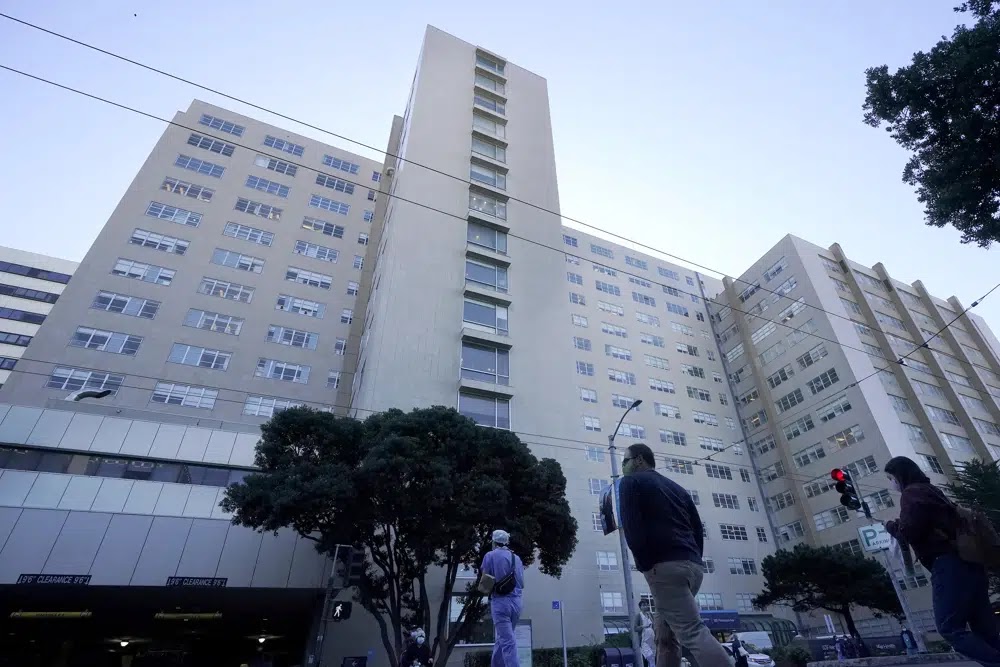
FILE - People cross the street in front of a University of California at San Francisco medical center in San Francisco on Nov. 30, 2020. A prominent California medical school has apologized for conducting unethical experimental medical treatments on 2,600 incarcerated men in the 1960s and 1970s. (AP Photo/Jeff Chiu, File)

SAN FRANCISCO (AP) — A prominent California medical school has apologized for conducting dozens of unethical medical experiments on at least 2,600 incarcerated men in the 1960s and 1970s, including putting pesticides and herbicides on the men’s skin and injecting it into their veins.

Two dermatologists at the University of California, San Francisco — one of whom remains at the university — conducted the experiments on men at the California Medical Facility, a prison hospital in Vacaville that’s about 50 miles (80.47 kilometers) northeast of San Francisco. The practice was halted in 1977.

The university’s Program for Historical Reconciliation issued a report about the experiments earlier this month, writing that the doctors engaged in “questionable informed consent practices” and performed procedures on men who did not have any of the diseases or conditions that the research aimed to treat. The San Francisco Chronicle first reported the program’s findings Wednesday.

“UCSF apologizes for its explicit role in the harm caused to the subjects, their families and our community by facilitating this research, and acknowledges the institution’s implicit role in perpetuating unethical treatment of vulnerable and underserved populations — regardless of the legal or perceptual standards of the time,” Executive Vice Chancellor and Provost Dan Lowenstein said in a statement.

The report said further analysis is needed to determine the extent of harms caused to the prisoners as a result of the experiments and what the university should do in response.

“We are still in the process of considering the recommendations and determining appropriate next steps,” the university said in a statement Thursday. “As we do so, it will be with humility and an ongoing commitment to a more just, equitable and ethical future.”

A spokesperson for the California Department of Corrections and Rehabilitation, Dana Simas, said officials had not yet read the report. However, the agency and California Correctional Health Care Services “strive to ensure the incarcerated population receive appropriate health care that meets the community standard of care and ethics,” Simas wrote.

The report focused on research by Dr. Howard Maibach and Dr. William Epstein. Maibach continues to work at the university, and Epstein died in 2006. It was not immediately clear whether Maibach would face any discipline in light of the report.

The experiments involved administering doses of pesticides and herbicides to the incarcerated men, who volunteered for the studies and were paid $30 a month for their participation — among the highest-paid roles at the prison and in high demand, according to a 1977 article of the university’s student newspaper, The Synapse.

Other experiments included placing small cages with mosquitos close to the participants’ arms or directly on their skin to determine “host attractiveness of humans to mosquitos,” the report stated.

The research ended in 1977 when California prohibited human subject research in state prisons, a year after the federal government halted the practice.

But Epstein in 1977 testified in state hearings in support of biomedical experimentation at prisons, the report found, and investigators could not find any evidence that he changed his opinion before he died.

While Maibach wrote that he regrets having participated in research that does not meet current standards in a letter to the university’s dermatology department, he said he believed the experiments had offered benefits to some of the patients.

“What I believed to be ethical as a matter of course forty or fifty years ago is not considered ethical today,” he wrote. “I do not recall in any way in which the studies caused medical harm to the participants.”

The university says there is no evidence that the doctors’ research was directed specifically at Black men, although they were trained by a now-deceased Philadelphia doctor whose research at a Pennsylvania prison was unethical and disrespectful toward the subjects, many of whom were incarcerated Black men

The report also found that many of Maibach’s publications during his career perpetuate the biologization of race — which he addressed in his letter by saying he has now “come to the understanding that race has always been a social and not a biological construct, something not appreciated by so many of us in a prior era.”

“While one of his (Maibach’s) recent articles hints at a possible reconsideration of the biology of race, we believe the long history of his research of skin differences along racial lines, with race as a possible biological factor, perpetuated the continuance of racial science in dermatology and has yet to be publicly addressed,” the report stated.

Maibach’s son, Edward Maibach, wrote in an email Thursday to The Associated Press that his father had suffered a stroke last week and was unable to respond to press inquiries.

The younger Maibach said his father had not been allowed to meet with the report’s authors or access their documents. The report and a press release from the university, he wrote, treated his father “as a ‘lone ranger’ who seemingly acted without knowledge or approval at others at UCSF. This, too, is incorrect.”

“Dr. Maibach’s activities at Vacaville were known to, and endorsed by, UCSF administrators, including the UCSF ethicist,” Edward Maibach wrote.

Wednesday, October 05, 2022

Former Chief Security Officer Of Uber Convicted Of Federal Charges For Covering Up Data Breach Involving Millions Of Uber User Records

Department of Justice
U.S. Attorney’s Office
Northern District of California
Wednesday, October 5, 2022

Federal Jury Finds Joseph Sullivan Guilty of Obstruction of the Federal Trade Commission and Misprision of a Felony


SAN FRANCISCO – A federal jury convicted Joseph Sullivan, the former Chief Security Officer of Uber Technologies, Inc. (“Uber”), of obstruction of proceedings of the Federal Trade Commission (“FTC”) and misprision of felony in connection with his attempted cover-up of a 2016 hack of Uber. The announcement was made by United States Attorney Stephanie M. Hinds and FBI San Francisco Special Agent in Charge Robert K. Tripp following a four week trial before the Hon. William H. Orrick, United States District Judge.

“Technology companies in the Northern District of California collect and store vast amounts of data from users,” said U.S. Attorney Hinds. “We expect those companies to protect that data and to alert customers and appropriate authorities when such data is stolen by hackers. Sullivan affirmatively worked to hide the data breach from the Federal Trade Commission and took steps to prevent the hackers from being caught. We will not tolerate concealment of important information from the public by corporate executives more interested in protecting their reputation and that of their employers than in protecting users. Where such conduct violates the federal law, it will be prosecuted.”

“The message in today’s guilty verdict is clear: companies storing their customers’ data have a responsibility to protect that data and do the right thing when breaches occur,” said FBI Special Agent In Charge Tripp. “The FBI and our government partners will not allow rogue technology company executives to put American consumers’ personal information at risk for their own gain."

The circumstances regarding Sullivan’s violations of the law involve two separate hacks of Uber’s databases—one in 2014 and another in 2016. The evidence at trial established that Sullivan was hired as Uber’s Chief Security Officer (“CSO”) in April 2015. At that time, Uber had recently disclosed to the FTC that it had been the victim of a data breach in 2014 (“2014 Data Breach”) and that the breach related to the unauthorized access of approximately 50,000 consumers’ personal information, including their names and driver’s license numbers. In the wake of that disclosure, the FTC’s Division of Privacy and Identity Protection embarked on an investigation of Uber's data security program and practices. In May 2015, the month after Sullivan was hired, the FTC served a detailed Civil Investigative Demand on Uber, which demanded both extensive information about any other instances of unauthorized access to user personal information, and information regarding Uber’s broader data security program and practices.

The evidence at trial demonstrated that Sullivan, in his new role as CSO, played a central role in Uber's response to the FTC. Specifically, Sullivan supervised Uber’s responses to the FTC’s questions, participated in a presentation to the FTC in March 2016, and testified under oath, at length, to the FTC on November 4, 2016, regarding Uber’s data security practices. Sullivan’s testimony included specific representations about steps he claimed Uber had taken to keep customer data secure.

Exactly ten days after his FTC testimony, Sullivan learned that Uber had been hacked again. The hackers reached out to Sullivan directly, via email, on November 14, 2016. The hackers informed Sullivan and others at Uber that they had stolen a significant amount of Uber user data, and they demanded a large ransom payment from Uber in exchange for their deletion of that data. Employees working for Sullivan quickly verified the accuracy of these claims and the massive theft of user data, which included records on approximately 57 million Uber users and 600,000 driver license numbers.

The evidence demonstrated that, shortly after learning the extent of the 2016 breach and rather than reporting it to the FTC, any other authorities, or Uber’s users, Sullivan executed a scheme to prevent any knowledge of the breach from reaching the FTC. For example, Sullivan told a subordinate that they “can’t let this get out,” instructed them that the information needed to be “tightly controlled,” and that the story outside of the security group was to be that “this investigation does not exist.” Sullivan then arranged to pay off the hackers in exchange for them signing non-disclosure agreements in which the hackers promised not to reveal the hack to anyone, and also contained the false representation that the hackers did not take or store any data in their hack. Uber paid the hackers $100,000 in bitcoin in December 2016, despite the fact that the hackers had refused to provide their true names. Uber was ultimately able to identify the two hackers in January of 2017 and required them to execute new copies of the non-disclosure agreements in their true names and emphasized that they were not allowed to talk about the hack to anyone else. Sullivan orchestrated these acts despite knowing that the hackers were hacking and extorting other companies as well as Uber, and that the hackers had obtained data from at least some of those other companies.

The evidence showed that, despite knowing in great detail that Uber had suffered another data breach directly responsive to the FTC’s inquiry, Sullivan continued to work with the Uber lawyers handling or overseeing that inquiry, including the General Counsel of Uber, and never mentioned the incident to them. Instead, he touted the work that he and his team had done on data security. Uber ultimately entered into a preliminary settlement with the FTC in summer 2016, supported fully by Sullivan, without disclosing the 2016 data breach to the FTC.

In Fall 2017, Uber’s new management began investigating facts surrounding the 2016 data breach. When asked by Uber’s new CEO that had happened, Sullivan lied, falsely telling the CEO that the hackers had only been paid after they were identified and deleting from a draft summary prepared by one of his reports that the hack had involved personally identifying information and a very large quantity of user data. Sullivan lied again to Uber’s outside lawyers conducting an investigation into the incident. Nonetheless, the truth about the breach was ultimately discovered by Uber’s new management, which disclosed the breach publicly, and to the FTC, in November 2017.

In addition, the two hackers identified by Uber were ultimately prosecuted in the Northern District of California. Both pleaded guilty on October 30, 2019, to computer fraud conspiracy charges and now await sentencing. The separate guilty pleas entered by the hackers demonstrate that after Sullivan assisted in covering up the the hack of Uber, the hackers were able to commit an additional intrusion at another corporate entity—Lynda.com—and attempt to ransom that data as well.

In finding Sullivan guilty, the jury concluded he obstructed justice, in violation of 18 U.S.C. § 1505, and that he committed misprision of felony (i.e., knew that a federal felony had been committed and took affirmative steps to conceal that felony), in violation of 18 U.S.C. § 4. Sullivan faces a maximum of five years in prison for the obstruction charge, and a maximum three years in prison for the misprision charge. However, any sentence following conviction would be imposed by the court after consideration of the U.S. Sentencing Guidelines and the federal statute governing the imposition of a sentence, 18 U.S.C. § 3553.

Sullivan remains free on bond pending sentencing. His sentencing will be set at a later date.

The case is being prosecuted by the Corporate and Securities Fraud Section of the U.S. Attorney’s Office. The prosecution is the result of an investigation by the FBI.

Wednesday, October 09, 2019

Power Outages Begin In California Amid Hot, Windy Weather

In this Dec. 3, 2018, file photo, a vehicle rests in front of a home leveled by the Camp Fire in Paradise, Calif. Two years to the day after some of the deadliest wildfires tore through Northern California wine country, two of the state's largest utilities were poised Tuesday, Oct. 8, 2019, to shut off power to more than 700,000 customers in 37 counties, in what would be the largest preventive shut-off to date as utilities try to head off wildfires caused by faulty power lines. (AP Photo/Noah Berger, File)

BY OLGA R. RODRIGUEZ, JANIE HAR

SAN FRANCISCO (AP)
— Millions of people in California woke up in the dark Wednesday after Pacific Gas & Electric started shutting off power to prevent what the utility called an unprecedented wildfire danger.

PG&E said it cut power to more than 500,000 customers in Northern California and that it plans to gradually turn off electricity to nearly 800,000 customers to prevent its equipment from starting wildfires during hot, windy weather.

A second group of about 234,000 customers will lose power starting at noon, the utility said.

The utility plans to shut off power in parts of 34 northern, central and coastal California counties to reduce the chance of fierce winds knocking down or toppling trees into power lines during a siege of hot, dry, gusty weather.

Gusts of 35 mph to 45 mph (56-72 kph) were forecast to sweep a vast swath of the state, from the San Francisco Bay area to the agricultural Central Valley and especially in the Sierra Nevada foothills, where a November wildfire blamed on PG&E transmission lines killed 85 people and virtually incinerated the town of Paradise.

The California Department of Forestry and Fire Prevention said it increased staffing in preparation for extreme fire weather.

The winds will be the strongest and most widespread the region has seen in two years, and given the scope of the danger, there was no other choice but to stage the largest preventive blackout in state history, PG&E said.

“This is a last resort,” said Sumeet Singh, head of the utility’s Community Wildfire Safety Program.

However, people should be outraged by the move, Gov. Gavin Newsom said. “No one is satisfied with this, no one is happy with this,” he said.

The utility needs to upgrade and fix its equipment so massive outages aren’t the norm going forward, he said.

It could take as many as five days to restore power after the danger has passed because every inch of power line must be checked to make sure it isn’t damaged or in danger of sparking a blaze, PG&E said.

The news came as residents in the region’s wine country north of San Francisco marked the two-year anniversary of deadly wildfires that killed 44 and destroyed thousands of homes. San Francisco is the only county in the nine-county Bay Area where power will not be affected.

To the south, Southern California Edison said more than 106,000 of its customers in parts of eight counties could face power cuts as early as Thursday as Santa Ana winds loomed.

The cutbacks followed a plan instituted after deadly wildfires — some blamed on downed PG&E transmission lines — destroyed dozens of lives and thousands of homes in recent years and forced the utility into bankruptcy over an estimated $30 billion in potential damages from lawsuits.

The outages Wednesday weren’t limited to fire-prone areas because the utilities must turn off entire distribution and transmission lines to much wider areas to minimize the risk of wildfires.

Classes were cancelled for thousands of schoolchildren and at the University of California, Berkeley, Sonoma State University and Mills College.

The California Department of Transportation said it was installing generators to avoid closing the Caldecott Tunnel linking the East Bay to San Francisco and the Tom Lantos Tunnel on State Route 1 in Pacifica.

“The tunnels can’t operate without power,” Caltrans tweeted.

PG&E had warned of the possibility of a widespread shut-off Monday, prompting residents to flock to stores for supplies as they prepared for dying cellphone batteries, automatic garage doors that won’t work and lukewarm refrigerators.

Residents of the Sonoma County city of Cloverdale, population 9,300, were preparing for the possibility of zero power and downed internet and cellphone lines, as happened during the wine country fires. Cloverdale homes were not burned then, but residents were worried sick over family in burn zones and in the dark without communications, Mayor Melanie Bagby said.

She accused PG&E of failing to upgrade its equipment.

“It’s inexcusable that we’re in the situation that we’re in,” she said. “We pay our bills, and we gave PG&E a monopoly to guarantee we would have” reliable power.

But Santa Rosa Mayor Tom Schwedhelm said he was grateful PG&E was taking proactive action. His city lost 5% of its housing a 2017 fire that killed 22 and torched nearly 6,000 structures in Sonoma and Napa counties. State investigators determined the fire was sparked by a private electrical system, and was not the fault of PG&E.

Hospitals would operate on backup power, but other systems could see their generators fail after a few days. Outages even posed a threat that fire hydrants wouldn’t work at a time of extreme fire danger.

The East Bay Municipal Utility District serving Alameda and Contra Costa counties, recently spent $409,000 to rent 29 backup generators for use beginning at noon Wednesday.

“The backup generators that we have are stationed at the pumping plants, which pump water to the fire hydrants,” spokeswoman Andrea Pook told the San Francisco Chronicle.

Counties activated their emergency centers and authorities urged people to have supplies of water for several days, to keep sensitive medicines such as insulin in cool places, to drive carefully because traffic lights could be out, to have a full gas tank for emergencies and to check the food in freezers and refrigerators for spoilage after power is restored.

PG&E set up about 30 community centers offering air conditioning, restrooms, bottled water and electronic charging stations during daylight hours.

Oakland Mayor Libby Schaaf asked residents Tuesday not to clog 911 lines with non-emergencies and urged people to be prepared. The city canceled all police officers’ days off in preparation for the outages.

PG&E said it was informing customers by text and email about where and when the power would be cut. But its website, where it directed people to check whether their addresses would be affected, was not working most of the day Tuesday after being overloaded with visitors.

Wednesday, June 05, 2019

Oakland Becomes 2nd US City To Legalize Magic Mushrooms

In this Friday, May 24, 2019 photo a vendor bags psilocybin mushrooms at a cannabis marketplace in Los Angeles. Oakland City Council will vote Tuesday, June 4, 2019, to decriminalize the possession and use of entheogenic, or psychoactive, plants and fungi. (AP Photo/Richard Vogel)

BY SAMANTHA MALDONADO

SAN FRANCISCO (AP)
— Oakland on Tuesday became the second U.S. city to decriminalize magic mushrooms after a string of speakers testified that psychedelics helped them overcome depression, drug addiction and post-traumatic stress disorder.

The City Council voted unanimously to decriminalize the adult use and possession of magic mushrooms and other entheogenic, or psychoactive, plants and fungi. Denver voters in May approved a similar measure for people 21 and older.

Speakers overwhelmingly supported the move, describing substances such as ayahuasca and peyote as traditional plant-based medicines.

Use of the plants “saved my life,” said one man who described himself as a former heroin addict. “I don’t how to describe it other than miraculous.”

Some offered mystical descriptions of the hallucinogens as providing spiritual healing.

The vote makes the investigation and arrest of adults who grow, possess, use or distribute entheogenic plants one of the lowest priorities for police. No city funds could be used to enforce laws criminalizing the substances, and the Alameda County District Attorney would stop prosecuting people who have been apprehended for use or possession.

Councilmember Noel Gallo, who introduced the resolution, had said decriminalizing such plants would enable Oakland police to focus on serious crime.

Amendments offered by Councilmember Loren Taylor added caveats that the substances “are not for everyone,” recommending that people with PTSD or major depression seek professional help before using them and that people “don’t go solo” but seek expert guidance and have a trusted friend present during the use.

The ordinance also directs the city administrator to come back within a year to provide the council with an assessment of the law’s community impact.

“Entheogenic plants and fungi are tremendous for helping to enable healing, particularly for folks who have experienced trauma in their lives,” Carlos Plazola, chair of the advocacy group Decriminalize Nature Oakland, said before the council meeting. “These plants are being recommended pretty extensively undercover, underground, by doctors and therapists.”

The Oakland Police Department did not respond to emailed messages from the Associated Press seeking comment before the meeting. Alameda County Deputy District Attorney Teresa Drenick declined to comment.

Magic mushrooms would remain illegal under both federal and state laws. Entheogenic substances are considered Schedule 1 drugs under the federal Controlled Substances Act, which categorizes drugs that have potential for abuse and no medical value.

Skeptics had raised concerns about unsafe use, especially in schools.

To address such concerns, Gallo said earlier, lawmakers would have to establish rules and regulations about the use of such substances, including what exactly can be used, how to use them and what associated risks are.

Entheogenic plants have long been used in religious and cultural contexts. Gallo remembers his grandmother treating his family members with plants, including entheogenic ones, for a variety of ailments.

“Growing up in the Mexican community, this was our cure,” Gallo said. Hemp oils, mushrooms and yerba buenas — an aromatic plant known for its medicinal properties — “that was our Walgreens. We didn’t have a Walgreens. We didn’t have a way to pay for any drugs. These are plants we have known for thousands of years in our community and that we continue to use.”

Thursday, November 01, 2018

Google Employees Leave Work To Protest Treatment Of Women

Workers protest against Google's handling of sexual misconduct allegations at the company's Mountain View, Calif., headquarters on Thursday, Nov. 1, 2018. (AP Photo/Noah Berger)

BY MICHAEL LIEDTKE

SAN FRANCISCO (AP)
— Carrying signs that included a mocking use of the company’s original “Don’t be evil” motto, thousands of Google employees around the world briefly walked off the job Thursday to protest what they said was the tech giant’s mishandling of sexual misconduct allegations against executives.

From Tokyo, Singapore and London to New York, Seattle and San Francisco, highly paid engineers and other workers staged walkouts of about an hour, reflecting rising #MeToo-era frustration among women over frat-house behavior and other misconduct in heavily male Silicon Valley.

In Dublin, organizers used megaphones to address the outdoor crowd of men and women, while in other places, workers gathered in packed conference rooms or lobbies. In New York, there appeared to be as many men as women out in the streets, while in Cambridge, Massachusetts, men outnumbered women by perhaps 6 to 1.

“Time is up on sexual harassment!” organizer Vicki Tardif Holland shouted, her voice hoarse, at a gathering of about 300 people in Cambridge. “Time is up on systemic racism. Time is up on abuses of power. Enough is enough!”

About 1,000 Google workers in San Francisco swarmed into a plaza in front of the city’s historic Ferry Building, chanting, “Women’s rights are workers’ rights!” Thousands turned out at Google’s Mountain View, California, headquarters.

The demonstrations reflected a sense among some of the 94,000 employees at Google and its parent Alphabet Inc. that the company isn’t living up to its professed ideals, as expressed in its “Don’t be evil” slogan and its newer injunction in its corporate code of conduct : “Do the right thing.”

“We have the eyes of many companies looking at us,” Google employee Tanuja Gupta said in New York. “We’ve always been a vanguard company, so if we don’t lead the way, nobody else will.”

The protests unfolded a week after The New York Times detailed allegations of sexual misconduct about the creator of Google’s Android software, Andy Rubin. The newspaper said Rubin received a $90 million severance package in 2014 after Google concluded the accusations were credible. Rubin has denied the allegations.

The same story also disclosed allegations of sexual misconduct against other executives, including Richard DeVaul, a director at the Google-affiliated lab that created self-driving cars and internet-beaming balloons. DeVaul had remained at the “X″ lab after the accusations surfaced a few years ago, but resigned on Tuesday without severance, Google said.

In an unsigned statement, the Google protesters called for an end to forced arbitration in harassment and discrimination cases, a practice that requires employees to give up their right to sue and often includes confidentiality agreements.

Besides being angry about what they contend has been lenient handling of executives who mistreat women, the protest organizers demanded more aggressive steps for gender pay equity and more inclusive hiring practices to reduce the high concentration of white and Asian men in the industry’s best-paying programming jobs.

Women account for 31 percent of Google’s employees worldwide, and it’s lower for leadership roles. The numbers are similar elsewhere in Silicon Valley.

“I have seen friends get hurt and have their careers destroyed by this, not just at Google but everywhere,” protester J.J. Wanda, a male software engineer, said in Mountain View. “We need to show that time’s up.”

In a statement, Google CEO Sundar Pichai said the company is reviewing all the “constructive ideas” from employees to improve policies and practices.

Beyond Google, Facebook has faced criticism over pay inequity and discrimination. The appearance of a Facebook executive behind Supreme Court nominee Brett Kavanaugh during his confirmation hearings also caused rifts inside the company.

As Thursday dawned, organizers had predicted about 1,500 employees would participate in the walkouts, mostly women. But the numbers appeared to exceed that, based on media accounts and images posted on the protest’s Twitter account.

The protests at Google are the latest sign that frustrations among women are reaching a boiling point, said Stephanie Creary, a professor who specializes in workplace and diversity issues at the University of Pennsylvania’s Wharton School.

“People simply aren’t willing to put up with it anymore,” Creary said. “The workers at Google seem to be saying, ‘How is it that we are still having to have this conversation?’”

Google’s CEO assured employees earlier this week that the company would support them in their protest. He also apologized for Google’s “past actions.”

“I understand the anger and disappointment that many of you feel,” Pichai said in an email. “I feel it as well, and I am fully committed to making progress on an issue that has persisted for far too long in our society ... and, yes, here at Google, too.”

Pichai last week sought to assure employees that the company had cracked down on misconduct, saying it had fired 48 employees, including 13 senior managers, for sexual harassment in recent years without giving any of them severance packages.

In recent months, Google and other Silicon Valley companies have also been plagued by dissension over other corporate policies, customer privacy and what some employees regard as misuses of technology.

More than 1,000 Google employees signed a letter protesting the company’s plan to build a search engine that would comply with Chinese censorship rules.

And thousands signed a petitio asking Google to cancel an artificial-intelligence protect to help the Pentagon improve the targeting of drone strikes. Google later said it won’t renew the contract, according to published reports, and opted not to bid for another military contract that could be worth $10 billion.

AP Technology Writers Mae Anderson in New York, Matt O’Brien in Providence, Rhode Island, and Frank Bajak in Cambridge, Massachusetts, and AP videojournalists Joe Frederick in New York and Haven Daley in Mountain View, California, contributed to this report.

Tuesday, October 23, 2018

San Francisco Is Allowing Non-Citizens To Vote, But Few Will

File - In this Nov. 8, 2016, file photo, voters cast ballots at City Hall in San Francisco. San Francisco will become the first city in California and one of only a handful nationwide to allow noncitizens to vote in a local election in November. They’re only allowed to vote in the school board race. (AP Photo/Jeff Chiu, File

SAN FRANCISCO (AP) — San Francisco has become the largest U.S. city to give people in the country illegally and other noncitizens the right to vote in a local election, but the possibility of the Trump administration learning their identities appears to have kept people away: only 35 noncitizens have registered.

It is among a handful of cities nationwide to allow people who aren’t citizens to vote, which is illegal in state and federal elections. In San Francisco, they can only participate in the school board race.

Voters in 2016 approved a measure allowing parents or guardians of a child in San Francisco schools to have a say in their children’s education by helping elect school board representatives regardless of their immigration status. In the same election, Donald Trump won the presidency and has since cracked down on illegal immigration and ramped up rhetoric against those living in the U.S. illegally.

“We’re in an unprecedented arena of animosity toward our immigrant community, and that has really stopped people from voting,” said San Francisco Supervisor Sandra Fewer, a former member of the school board and a supporter of the noncitizen voting measure.

Noncitizens must provide their address and date of birth to register. The number who had was low as of Monday, but people can still sign up and vote on Election Day.

The Chinese American Voters Education Committee has been holding voter registration campaigns on college campuses, in low-income neighborhoods, at festivals and in Chinatown. Volunteers have not registered a single noncitizen, including a green-card holder, executive director David Lee said.

“People are really fearful because the Trump administration is perceived to be very anti-immigrant,” Lee said. “There is legitimate concern that their information may be turned over to the federal government and that they may end up being detained or deported.”

Lee and other community groups have been inviting prospective voters to register but also warning them of the risks. The city election department also has warnings on its registration form and on flyers saying voter information would be public and could be seen by U.S. Immigration and Customs Enforcement and other agencies.

San Francisco is a “sanctuary city” that otherwise limits cooperation with federal immigration officials. The city has not shied away from confronting the U.S. government on immigration, suing the Trump administration over sanctuary protections for people in the country illegally.

Those who championed the voting ordinance say it aims to give immigrants a greater voice at the school board, which approves curriculum, hires staff and manages a nearly $900,000 annual budget.

The San Francisco School District does not keep a tally of its noncitizen parents or children but reports that 29 percent of its 54,000 students are English learners, with the majority listing Chinese or Spanish as their first language. At least 40,000 people in the city of 885,000 are in the country illegally, according to government estimates.

Harmeet Dhillon, a San Francisco attorney and committeewoman for the National Republican Committee, said allowing noncitizens to cast ballots devalues the rights of citizens.

“Voting is a sacred privilege and a sacred right of citizens. It should not be trivialized for political gain,” she said.

Dhillon, who handles election law cases, said she is not surprised that only a few noncitizens have registered because voting could jeopardize their chances of attaining citizenship in the future.

“By voting people are taking a big legal risk, and for what return?” Dhillon asked.

San Francisco is not the first place with such a measure. In Maryland, where an estimated 15 percent of residents are foreign-born, at least six cities allow noncitizens to vote in local elections.

The measures have been in effect since the 1980s but not without controversy. In College Park, home to the University of Maryland, an amendment that would have allowed noncitizen voting failed last year.

One reason so many cities in Maryland have enacted noncitizen voting laws is that municipalities are allowed to enact legislation and implement it right away, unlike other states, said Ron Hayduk, an associate professor of political science at San Francisco State University who studies noncitizen voting laws.

In Massachusetts, the cities of Amherst, Cambridge, Newton and Brookline have advanced laws to allow noncitizen voting, but they cannot implement them because they need the approval of state lawmakers, who have not acted, Hayduk said.

“Noncitizen voting is a very contentious issue, and that’s in part why it’s not more widespread,” Hayduk said.

In San Francisco, noncitizens who opt to vote will be listed on a separate roster from citizens and will get a ballot with just the school board contest, city elections chief John Arntz said.

Norma Garcia, director of policy and advocacy for the Mission Economic Development Agency, which advocates for immigrant rights, said she hopes more noncitizens will vote if the political climate changes in the future.

“The numbers are not what anyone would have wanted them to be, but we’re confident there will be increased participation once the political tide shifts,” Garcia said.

Associated Press writers Brian Witte in Annapolis, Maryland, and Bob Salsberg in Boston contributed to this report.

Thursday, August 02, 2018

Financial Fruit: Apple becomes 1st Trillion-Dollar Company

File--In this October 6, 2011 file photo, a photo of Apple co-founder Steve Jobs is displayed as a tribute at Nasdaq in New York. Jobs died Wednesday at age 56 after a long battle with cancer. Apple has become the world’s first company to be valued at $1 trillion, the financial fruit of tasteful technology that has redefined society since two mavericks named Steve started the company 42 years ago. (AP Photo/Mark Lennihan)


BY MICHAEL LIEDTKE


SAN FRANCISCO (AP)
— Apple is the world’s first publicly traded company to be valued at $1 trillion, the financial fruit of stylish technology that has redefined what we expect from our gadgets.

The milestone reached Thursday marks the latest triumph of a trend-setting company that two mavericks named Steve started in a Silicon Valley garage 42 years ago.

Apple’s shares gained $5.89 to close at $207.39, leaving the company’s market value a notch above $1 trillion — around $1,001,679,220,000, according to FactSet. Apple sits atop a U.S. stock market that has become dominated by technology-centered companies: Amazon, Google’s parent Alphabet, Microsoft and Facebook round out the top five in market value.

The achievement seemed unimaginable in 1997 when Apple teetered on the edge of bankruptcy, with its stock trading for less than $1, on a split-adjusted basis, and its market value dropping below $2 billion.

To survive, Apple brought back its once-exiled co-founder, Steve Jobs, as interim CEO and turned to its archrival Microsoft for a $150 million cash infusion to help pay its bills.

If someone had dared to buy $10,000 worth of stock at that point of desperation, the investment would now be worth about $2.6 million.

Jobs eventually shepherded a decade-long succession of iconic products such as iPhone that transformed Apple from a technological boutique to a cultural phenomenon and moneymaking machine.

The stock has been surging this week as anticipation mounts for the next generation of iPhone, expected to be released in September.

Although iPhone sales aren’t rising as rapidly as they were a few years ago, Apple has been adding enough new features to persuade consumers to pay higher prices for its top-of-the line devices. In its most recent quarter, Apple fetched an average price of $724 per iPhone — a nearly 20 percent increase from an average of $606 per iPhone at the same time last year.

The price escalation has widened Apple’s profit margins to the delight of investors, who have boosted the company’s market value by about $83 billion — nearly equal to the entire market value of American Express — since the quarterly report came out late Tuesday. The 9 percent gain was Apple’s biggest two-day advance in nearly a decade.

Apple’s stock has climbed by 23 percent so far this year, compared to a 6 percent gain for the Standard & Poor’s 500 index.

The recent rally in Apple’s stock contrasts sharply from a deep downturn in the fortunes of two social media companies, Facebook and Twitter that offer some of the most popular apps used on iPhones and other mobile devices. User growth and engagement on Facebook and Twitter has been wavering amid deepening concerns about their ability to protect people’s personal information and shield them from misinformation and other abuses that have been infecting their services.

As mighty as Apple may seem now, economic and cultural forces can quickly shift the corporate pecking order.

Consider the plight of Exxon Mobil, which was the most valuable U.S. company five years ago. Now, it ranks as the ninth most valuable, surpassed by Apple and a list consisting primarily on companies immersed in technology.

Some analysts believe e-commerce leader Amazon.com will supplant Apple as the world’s most valuable company in the next year or two as its spreading tentacles reach into new markets.

And Saudi Arabian Oil Co., known as Saudi Aramco, is planning an initial public offering that Saudi officials have said would value the giant oil company at about $2 trillion. But until the IPO is completed, Saudi Aramco’s actual value remains murky.

This much is certain: Apple wouldn’t be atop the corporate kingdom without Jobs, who died October 2011. His vision, showmanship and sense of style propelled Apple’s comeback.

But the recovery might not have happened if Jobs hadn’t evolved into a more mature leader after his exit from the company in 1985. His ignominious departure came after losing a power struggle with John Sculley, a former Pepsico executive who he recruited to become Apple’s CEO in 1983 — seven years after he and his geeky friend Steve Wozniak teamed up to start the company with the administrative help of Ronald Wayne.

Jobs remained mercurial when he returned to Apple, but he had also become more thoughtful and adept at spotting talent that would help him create a revolutionary innovation factory. One of his biggest coups came in 1998 when he lured a soft-spoken Southerner, Tim Cook, away from Compaq Computer at a time when Apple’s survival remained in doubt.

Cook’s hiring may have been one of the best things Jobs did for Apple. As Jobs’ top lieutenant, Cook oversaw the intricate supply chain that fed consumers’ appetite for Apple’s devices and then held the company together in 2004 when Jobs was stricken with a cancer that forced him to periodically step away from work — sometimes for extended leaves of absences.

Just months away from his death, Jobs officially handed off the CEO reins to Cook in August 2011.

Cook has leveraged the legacy that Jobs left behind to stunning heights. Since Cook became CEO, Apple’s annual revenue has more than doubled to $229 billion while its stock has quadrupled. More than $600 billion of Apple’s current market value has been created in that time.

Cook hasn’t escaped criticism, however. The Apple Watch has been the closest thing that the company has had to creating another mass-market sensation under Cook’s leadership, but that device hasn’t come close to breaking into the cultural consciousness like the iPhone or the iPad.

That has raised concerns that Apple has become far too dependent on the iPhone, especially since iPad sales tapered off several years ago. The iPhone now accounts for nearly two-thirds of Apple’s revenue.

But Cook has capitalized on the continuing popularity of the iPhone and other products invented under Jobs’ reign to sell services tailored for the more than 1.3 billion devices now powered by the company’s software.

Apple’s services division alone is on pace to generate about $35 billion in revenue this fiscal year — more than all but a few dozen U.S. companies churn out annually.

Apple had also come under fire as it accumulated more than $250 billion in taxes in overseas accounts, triggering accusations of tax dodging. Cook insisted what Apple was doing was legal and in the best interest of shareholders, given the offshore money would have been subjected to a 35 percent tax rate had if it were brought back to the U.S.

But that calculus changed under the administration of President Donald Trump, who pushed Congress to pass a sweeping overhaul of the U.S. tax code that includes a provision lowering this year’s rate to 15.5 percent on profits coming back from overseas.

Apple took advantage of that break to bring back virtually all of its overseas cash, triggering a $38 billion tax bill. All that money coming back to the U.S. also spurred Apple to raise its dividend by 16 percent and commit to buy back $100 billion of its own stock as part of an effort to drive its stock price even higher.

KNOCK, KNOCK

By issuing subpoenas to five Times journalists, the Trump administration reveals its first response to unwanted national security coverage: ...