Showing posts with label African Arguments. Show all posts

Tuesday, October 14, 2025

Making A Case For Aid: Less Donor-Curated Visibility, More Redistribution Of Narrative Power

Local communities often work on innovative solutions that remain invisible to major donors.

BY KEVIN MOFOKENG

There is a quiet power struggle unfolding across Africa’s development landscape, waged not through protest or policy, but through funding calls, curated dashboards, and strategy decks written far from the communities they aim to serve. At the centre of this ecosystem is what might be called the Social Impact Mafia: an influential and self-reinforcing network of consultants, NGO insiders, donor advisors, and programme officers.

This elite clique not only decides who receives funding but also shapes the contours of what qualifies as “good,” “innovative,” or “worthy.” The result is a growing disconnect between lived African realities and the narratives that dominate the development space.

This isn’t an abstract concern. Consider the case of birth registration in sub-Saharan Africa.

According to UNICEF, fewer than 51% of children under five are officially registered. In Zimbabwe, the figure fell below half in 2019, especially among rural and home births. Yet much of the funding continues to pour into digitization projects that benefit urban centres and areas already serviced. What remains is a gap between community needs and what donors are willing to fund, because the latter often prioritize tech-forward optics over grounded, context-sensitive work.

This misalignment is not limited to bureaucratic inefficiency, it is a symptom of a system obsessed with performance over substance. Development programmes are increasingly designed for global audiences: media-ready, metric-driven, and brand-compliant. Local knowledge is routinely undervalued unless it can be repackaged to fit donor logic. Even the language of participation has been commodified. “Community-led” has become a label to affix on a brochure, not a commitment to relinquish power.

The social impact mafia does not operate through malice. It functions through selectivity, and its tools are subtle: grant criteria that reward certain storytelling styles, eligibility requirements that demand professional networks inaccessible to grassroots actors, and partnerships that quietly favour those with pre-existing institutional legitimacy. In this world, trust is extended not based on
proximity to the problem, but on proximity to the funding circle. The consequence is the silent marginalization of Africa’s most disruptive, transformative ideas, because they are too radical, too informal, too slow, or too unbranded to fit into slick theory-of-change templates. Some of the most effective civic, gender justice, and economic resilience work is being carried out in informal settlements and rural nodes, but without the glossy visibility required to get a seat at the table.

This is not to suggest that alternatives don’t exist. The Segal Family Foundation, for instance, has adopted a more trust-based approach, prioritizing unrestricted, community-led funding across several African countries. Their model allows grantees to define success on their own terms. In 2020, over 800 organizations signed on to similar principles, calling for less bureaucracy, more listening, and a shift in power from funders to communities. But these remain exceptions. The centre still holds, and the gatekeepers are very much in place.

What’s especially troubling is how performative inclusion has become. Many institutions loudly proclaim their commitment to decolonizing aid, diversifying leadership, and elevating youth voices. But too often, this amounts to symbolic gestures: a panel here, a soundbite there. Young leaders are invited to speak but not to decide. Feminist and queer movements are tokenized, then defunded when they become inconvenient. And criticism from within the sector is tolerated only when it conforms to its own grammar of change.

This performativity is not harmless, it is structurally violent. It displaces accountability, erases dissent, and rewards conformity. More dangerously, it replaces transformation with theatre, projecting the illusion of progress while cementing existing hierarchies. Africa does not need more donor-curated visibility. It needs a redistribution of narrative power.

The recent moves to scale back US foreign assistance, particularly USAID funding, could radically alter this ecosystem. For years, USAID has shaped Africa’s development agenda through large-scale grants that often favour big implementers with the right connections and branding. A pullback could disrupt this status quo, forcing donors to rethink their reliance on elite intermediaries. But it could also deepen inequities: smaller, community-rooted organizations may be left scrambling as big players pivot to chase private capital and corporate partnerships. Whether this shift dismantles the social impact “gatekeepers” or simply reshuffles them depends on how funding is restructured and whether African governments and philanthropists step in to fill the gap.

As new funding flows into Africa, from green bonds to ESG investments, from climate justice to tech-for-good, there is an urgent question we must ask: whose vision of the future is being funded? If the power to define “good” remains confined to elite circles and institutional pipelines, we will only reproduce exclusion with a friendlier face.

It is not enough to rebrand development. What is required is a fundamental shift in who decides, who designs, and who tells the story. Otherwise, the continent’s most brilliant possibilities will remain unfunded, unheard, and unrecognized, not because they failed, but because they refused to perform.

READ ORIGINAL STORY HERE

Wednesday, August 16, 2023

Niger: The Resource Politics Of A Post-Colonial Revolt

Gen. Mohamed Toumba and his colleagues from the Council for the Safeguard of the Homeland, the junta that took power in Niger, acknowledging the support of the masses at the General Seyni Kountche stadium in Niamey, on 6 August 2023. Photo courtesy: Levée d’Afrique.

BY MOHAMED KHEI OMER 

Niger, a landlocked country in West Africa, grapples with a complex web of challenges that shape its present and future. The nation is at a critical juncture due to its history of French colonialism and coups, as well as the exploitation of its uranium resources.

Coups in Africa

Coups are not uncommon in Africa but are not limited to it. A study reveals that between 1950-2018, out of 486 coup attempts globally where 106 of them were successful, Africa’s share was about 44% in both cases. Of the 54 countries on the continent, 45 have had at least one coup attempt since 1950. Jonathan Powell, one of the study’s authors, told the VOA, “Coups have become increasingly limited to the poorest countries in the world, and the recent wave of coups fits into that.” He added that while most of Africa no longer sees coups as a threat, the Sahel region, which includes Burkina Faso, Mali, Chad and Sudan, still experiences many of the most common factors that lead to coups.

Since 1990, 21 of the 27 coups in sub-Saharan Africa have occurred in Francophone states. But according to the same source, four countries that have seen the most coup attempts since 1952 were under British rule: Nigeria (8), Ghana (10), Sierra Leone (10), with Sudan (17) topping the list.

Niger coup and population dynamics

Niger came into the spotlight on the July 26, when Republican Guard soldiers claimed to have overthrown Niger’s democratically elected president, Mohamed Bazoum, on state television. The junta announced two days later that Abdourahmane Tiani, the head of Niger’s Presidential guard, would be the new head of state. Some of the reasons given for the coup were the deteriorating security situation and poor economic and social governance. However, an investigation into the diversion of $125 million, nearly half the defence budget to private contractors linked to the top brass in the military during the entire tenure of the previous administration, according to Africa Confidential, may well be the reason the generals moved against President Mohamed Bazoum.

This was the fifth successful coup in the country since independence. Coup supporters took to the streets, waving Russian flags and burning French ones, apparently less out of love for Russia and more an expression of historical dissatisfaction with France’s exploitative policies in the country and the region. Some supporters attacked the French Embassy. Significantly, though both the USA and France have military forces in the country, there were no signs of anyone burning the US flag. Given the current dynamics, it is difficult to tell whether the demonstrations were spontaneous or mobilised by coup leaders.

Niger has a population of 25,396,840 (2023 est.). Hausa (53.1%), and Zarma/Songhai (21.2%), are the two major ethnic groups. The junta leader is from the Hausa (also a major group in neighbouring Nigeria); while President Bazoum comes from the Arab minority, which makes up about 0.4%. The country borders seven countries, four of which have good relations with Russia (Algeria); or have fallen under Russian influence recently (Mali and Burkina Faso). The Kremlin-linked Wagner Group also operates in Libya. Chad is unstable. The only two stable countries are Nigeria, with whom it has historical, ethnic and cultural relations, and Benin.

The Economic Community of West African States (ECOWAS) condemnation of the coup and subsequent one-week ultimatum has, in the face of the coup leaders’ refusal to back down – and the Community’s reluctance to send in troops, more recently morphed into a more nuanced engagement. While ECOWAS imposed stiff sanctions, the ultimatum has come and gone without military action. The Nigerian Senate voted against the use of force, and Nigerian states that border the country have advised against the use of force. Niger also hosts about 250,000 refugees, 73% of whom are Nigerians who fled extremist violence there. ECOWAS in its 2nd extraordinary summit ordered the deployment of the ECOWAS standby force to restore constitutional order in the Republic of Niger, underscoring its continued commitment to the restoration of constitutional order through peaceful means. Algeria, which shares a long border with Niger and Chad, also opposes the use of force.

ECOWAS’ strong stand against Niger is unusual. It did not previously threaten Mali and Burkina Faso with military action. Neither ECOWAS itself nor the African Union sanctioned Chad when the President’s son took power unconstitutionally, an especially notable omission given the current AU Commission chairperson’s links with the ancien regime in Djamena. The military threat against Niger has rallied the military juntas in Mali and Burkina Faso to its side. Wagner is also interested in helping the junta in Niamey. Wary of the military threat, Niger has taken precautions and closed its airspace. The junta formed a new 21-member government led by Ali Mahaman Lamine Zeine, an AfDB economist. Two-thirds of the members are civilians.

A confiscated, perverted sovereignty

At independence, former France’s colonies in Africa were forced to sign humiliating agreements which effectively tied independence to continued economic and political dependence on France. Those agreements reserved strategic resources like hydrocarbons, uranium, and other minerals for France. Additionally, France gained privileged access to African markets, ensuring its companies had priority for exports and were exempt from customs duties. Prime Minister Michel Debré underlined those policies on July 15, 1960, addressing the future President of the Gabonese State: “Independence is granted on condition that the State undertakes, once independent, to respect the cooperation agreements signed previously. Two systems come into effect simultaneously: independence and cooperation agreements. One does not go without the other.”

In 2021, Niger provided the European Union with nearly 25 percent of its uranium supplies, which produced electricity for millions of households. Yet 75% of electricity to Niger comes from Nigeria and has been cut off following ECOWAS sanctions, plunging villages and towns into blackouts, including the presidential palace. Its electricity production for 2021 was 0.45 billion kilowatt-hours, while the world average in 2021 based on 190 countries was 143.51 billion kilowatt-hours.

Africans in the French post-colony have been critical, but historically silent, of France’s presence and influence, rooted in strong perceptions that colonialist practices and paternalistic attitudes never really ended. From right to ‘centre-left’, from Nicholas Sarkozy to Emmanuel Macron, the barely concealed contempt for their former African possessions is these days only matched by the panicked response of France’s authorities against rising pauper immigration.

The silence around FrançAfrique, “a Janus-faced entity… the ultimate symbol of a confiscated, perverted sovereignty”, to quote Senegalese author, Boris Boubabcar Diop, is the result of the long-standing collaboration between the Elysée Palace and the ‘assimilated’ African elite, the latter still holding onto the illusion that their loyalty will somehow translate into social acceptance at the metropolitan centre. Nonetheless, it was the deal these elites signed at independence that has kept a steady supply of cheap raw materials – extracted almost at slace wages – to France’s industrial centres, thus ensuring that French workers remain in work, the French industrial machine keeps turning, and, as former French president, the late Jacques Chirac once remarked, France remains a first, rather than a third world, power.

Native losses = Metropolitan profits

In 2010, the two Orano (née Areva) subsidiaries extracted a total of 114,346 tons of uranium ore from Niger, representing an export value of 2,300 billion CFA francs (more than 3.5 billion euros). Of this sum, Niger would have received only 300 billion CFA francs (about 459 million euros), or 13% of the exported value. In 2012, Areva received tax exemptions worth €320 million. Although mining made up 70.8% of Niger’s exports in 2010, it contributed only 5.8% of the country’s gross domestic product.

In the first quarter of 2013 alone, Areva generated consolidated revenues of 2.279 billion euros, more than Niger’s total annual budget (around 2 billion euros). In the 3rd quarter of 2013, its turnover amounted to 6.8 billion euros, up in 2012, and its order book reached 42 billion euros (i.e., 21 years of Niger’s budget). In 2012, the group’s total turnover exceeded 9 billion euros, and its mining activities generated 1.36 billion euros. Niger, where more than 60% of the population make less than $1 per day, is ranked 189/191 in the 2022 UN Human Development Index.

The resource curse

Though about two-thirds of the world’s uranium production comes from Kazakhstan, Canada, and Australia. Niger is the world’s 7th biggest uranium producer (5 % of global production) and possesses Africa’s highest-grade uranium ores. France, the country’s former colonial ruler, imports Nigerien uranium, which powers the French civil nuclear industry. Orano the multinational 90% owned by the French state, operates several mines in the country.

According to WNA Niger has two significant uranium mines close to the twin mining towns of Arlit and Akokan, 900 km northeast of the capital Niamey (more than 1200 km by road) on the southern border of the Sahara. Uranium in Niger was discovered in 1957 by French researchers; Niger’s first commercial uranium mine began operating in 1971.

In 2021 Niger produced 2248 tU (tons of raw uranium), and cumulative production was about 150,000 tU by the end of 2019. The concentrates are trucked 1600 km to Parakou in Benin, then railed 400 km to the port at Cotonou. They are exported for conversion, mostly to Comurhex in France. Over the past ten years, the 88,200 tonnes of uranium ore imported into France came mainly from three countries: Kazakhstan (27%), Niger (20%), and Uzbekistan (19%).

The Niger government sought a revised deal based on the 2006 mining law, which raised royalty taxes from 5.5% in the 10-year license to between 12% and 15%, depending on profits. Niger’s struggle to secure greater benefits from its uranium was described by Oxfam in 2014 as a “fascinating David vs. Goliath struggle playing out in Niger – the poorest country in the world pitted against the French multinational uranium conglomerate, Areva.” It added: “Though it’s not getting much attention globally, the outcome could have important implications for other poor countries that are trying to get better deals for the minerals and oil dug out of their lands.”

The mines resumed operation at the end of January 2014 under the terms of a government decree. The deal stipulated for the first time that the firms’ boards would include Nigerien managing directors.

A radioactive legacy

Though the Orano website boasts that it is the world leader in nuclear reactor waste recycling worldwide, environmental watchdogs in Niger and abroad report that dangerous levels of radioactive waste were left among the local populations living near the mines. According to a French-based Independent Research Commission (CRIIRAD) on radioactivity, Niger’s northern town of Arlit has been left wallowing in 20 million tonnes of radioactive waste after a uranium mine run by Orano closed down. “The waste produces [the] radioactive gas radon. The strong wind of the desert spreads radioactive dust, which is then inhaled by the surrounding population,” said CRIIRAD’s scientist, Bruno Chareyron. Soil and underground water have also been contaminated. The 100,000 people in the area have no alternative but to drink that water. The report added that exposure to such dangerously high radiation levels can lead to birth defects, cancer, and several other disorders. Journalists who visited the mining sites recently spoke about the abject poverty of the population, patients complaining about radiation effects and lack of basic health facilities. They were struck by a very large cemetery and thus titled their documentary “Graveyards of Uranium.”

When Orano closed its Cominak mine that was exhausted in 2021, it dismantled all infrastructure including workers’ houses. To show it has not guilty of any wrongdoing it took a group of journalists to visit the mine.

Holistic solutions and partnerships

Problems in the Sahel, including extremism, result from a lack of improvement in people’s livelihoods since independence. This is due to elites, military or civilian, detached from the people and exploitative colonialist policies. Military interventions should be part of a holistic package that includes improving the economy. It is not just about protecting democracy; rulers come to power through elections. Indeed, elections are significant, but some elected leaders act like a junta in civilian clothes. There are issues with credible elections, manipulating the constitution for personal interests, and some are very corrupt.

Elected leaders must be held accountable to live up to democratic values.

The French and other Western countries have to rethink their Africa policies. Otherwise, they create golden opportunities for Russia and its mercenary Wagner group to step in. The military juntas use this opportunity to establish legitimacy among their populations by projecting themselves as anti-French. Africa needs real mutually beneficial partnerships, infrastructure development, and help with industrialization so that African countries can add value to their exports. This is not the donor-recipient template that focuses on fighting terrorism. As an FP article states, “Washington spends a fair amount on military assistance in friendly African countries, but this is mostly about protecting U.S. interests, such as the so-called war on terror.”

It is difficult to know how long the Niger coup will last or if ECOWAS will intervene militarily. It is difficult to know if the democratically elected government will get back or if the country has to move through a new road map for the transition to democracy. But the country has all the ingredients necessary for another coup. Military juntas cannot solve complex societal problems, and they should focus on the profession they are good at and leave governance to civilians.

‘One Army, One People’? The Ethnic and Regional Politics of Sudan’s Military and Militias and Their Role in Coups and Wars Past and Present


BY WILLOW BERRIDGE

In the wake of the devastation wrought by the Rapid Support Forces (RSF) in the Sudanese capital, many have renewed comparisons between its leader Himeidti and the Khalifa Abdullahi ibn Tai’sha, who ruled the Mahdist State in Sudan at the end of the 19th century (1885–98). Like Himeidti, the Khalifa was mocked for his rural background in Western Sudan and unfamiliar Arabic dialect (Holt 1958: 43–44). In the subsequent Anglo-Egyptian colonial period, the British colonisers restructured Sudan’s security order so that by the time independence came the officer class was dominated by officers from the northern region, and recruits from Western Sudan, like other regions, were left in more marginal roles. In line with the classic colonial ‘martial race’ logic, many Western Sudanese, such as the Nuba of southern Kordofan, were deemed capable of being excellent rank and file fighters (Keays 1939: 114), but not officer class material.

Given the subsequent role of the military in Sudan’s postcolonial governance, Westerners’ marginalisation from the officer class was mirrored by their marginalisation in Sudan as a whole. Throughout the military regime of Jafa’ar Nimeiri (1969–85) Western Sudanese NCOs and officers attempted to change the power dynamic through coups in Khartoum. One of the most significant efforts was led in 1975 by a group of officers backed by al-Jabha al-Qawmiyya,* a coalition of Western regionalist groups that sought to challenge the domination of the key government institutions by the northern region. Nuba regionalist groups had been developing cells within the military since the 1960s (Shurkian 2008), and many of the coup leaders were Nuba. However, the different organisations backing al-Jabha al-Qawmiyya included bodies representing communities that in the current international media reporting of the Darfur conflict would be described as ‘Arab’ or ‘African’ – such distinctions mattered far less in the 1970s.

In 1976, Khartoum was attacked by the opposition al-Jabha al-Wataniyya. The majority of the fighters were armed Western Sudanese civilians and followers of Umma Party and the Ansar, the religious order associated with the Mahdist State. In the midst of the raid, Nimeiri’s media organs condemned the al-Jabha al-Wataniyya fighters as ‘foreign mercenaries’, even using stock footage of the Biafra conflict in an effort to dupe the public into believing the majority of fighters were from West Africa (al-Badi 2009: 96). The fact that some of the al-Jabha al-Wataniyya fighters belonged to communities that straddled the border between Sudan and Chad was probably less significant than the attachment of Nimeiri’s security elites to a riverain-centred model of nationalism that saw many Western Sudanese as peripheral to the nation. The al-Jabha al-Wataniyya fighters’ exclusion from the army also represented their exclusion from the nation – the pro-regime protesters chanted ‘one army, one people’ (jayshun wahid, sha’abun wahid) (al-Badi 2009: 96). As was the case in 1975, extreme violence against the participants followed the defeat of the coup attempt.

The next raid across the Western Sudanese desert would come in 2008, launched by the Justice and Equality Movement (JEM). JEM’s leader was Khalil Ibrahim, a former leader in Sudan’s Popular Defence Forces who had rebelled after the Islamic Movement split over Khartoum’s refusal to decentralise power to regional governments. After the rebels were defeated, al-Bashir announced that those who participated in the raid ‘are basically all Chadian forces’, again exploiting the fact that many of JEM’s fighters belonged to the Zaghawa communities that straddled the Sudan-Chad borderline. The security forces subsequently perpetrated further ethnically motivated violence in Khartoum against Darfuris, and particularly Zaghawa.

In 2000, JEM published the Black Book, which sought to expose the domination of the government by a small clique from the riverain region to the north of Khartoum. The same went for the senior military officer class that dominated politics. For instance, the Black Book notes that of the 30 seats on the 1985 Transitional Military Council (TMC) – the predecessor to Burhan’s 2019 TMC – only one position went to an individual from the Western region, in contrast to 21 from the Northern region. That individual, Fadlallah Burma Nasir, would go on to become Sadiq al-Mahdi’s right-hand man in the subsequent Umma Party-led parliamentary government (1986–89). Although he retained his close ties to the army, he also re-recruited the National Front fighters into militias that would offer the Umma Party a power base outside the Northern dominated regular military (De Waal 2003). Yet these fighters had been influenced by Gaddafi’s Arab supremacist outlook, and the militia strategy proved extremely divisive both in Kordofan and Darfur, with Arab identifying nomadic communities being the principal beneficiaries of the new policy (Harir 1994: 170; Flint and De Waal 2008). After the 1989 coup many of those fighters were incorporated into the Popular Defence Forces, and then following the outbreak of conflict in Darfur in 2003 the government continued the militia policy by arming Janjaweed militia leaders, including Himeidti.

As the Umma Party (now the National Umma Party) re-emerged as a major political player through the Forces of Freedom and Change and then Forces of Freedom and Change Central Council, it openly courted Himeidti and his forces, harking back to its policy of aligning itself with militias in the 1980s. Nasir praised the RSF’s role during the 2018–19 revolution, and Sadiq al-Mahdi even invited the RSF to join the National Umma Party. Nearly a year after Burhan’s coup against the civilians in the transition government, Nasir as interim party leader following al-Mahdi’s passing met privately with both Burhan and Himeidti, subsequently announcing that Himeidti’s stance was more likely to meet the popular demands for democracy than that of Burhan. The National Umma Party subsequently played a leading role in the December 2022 Framework Agreement, but disagreements between Burhan and Himeidti over the integration of the RSF into the military led to the explosion of a major conflict in April 2023. The party could not control the RSF like the militia fighters of the 1970s and 1980s, and following the escalation of violence in Khartoum it saw its own properties ransacked and one of its own leaders killed by RSF troops.

After the outbreak of the conflict, the prominent Sudanese journalist Lubna Hussein penned a piece decrying the hypocrisy of the pro-Burhan NCP-era journalists who had heaped praise on Himeidti when he was fighting al-Bashir’s wars in the regions, but were now decrying the RSF as a ‘Chadian militia’ amidst the destruction in Khartoum. The government has often been willing to employ fighters from the Western region in the regular military and the militias, but like the coup plotters of 1975 and 1976, or JEM’s fighters in 2008, they ceased to be ‘Sudanese’ when they stopped being on the side of the government. Himeidti, due to his access to Darfur’s gold mines and involvement in the transnational mercenary market, has access to far greater manpower and resources than those that attempted to reshape the Sudanese nation through coups in the past – but regrettably he has far less of a principled commitment to empowering the marginalised regions than those who preceded him.

End Notes

This piece based on a draft journal article yet to be submitted.

*I have retained the Arabic to avoid confusion as both al-Jabha al-Qawmiyya and al-Jabha al-Wataniyya translate into English as ‘National Front’.

References

al-Badi, Siddiq, 2009, al-Jabha al-Wataniyya: Asrar wa Khafaya (Maktaba Dar al-Baida li’l-Nushr wa’l-Tawzia), 89–103.

De Waal, Alex, 2003, ‘Some comments on militias in the contemporary Sudan’, in M. W. Daly and Ahmad Alawad Sikainga, Civil War in Sudan (New York: British Academic Press).

Flint, Julie and Alex De Waal, 2008, Darfur: A New History of a Long War (London: Zed Books).

Harir, Sharif, 1994, ‘“Arab belt” versus “African belt”: ethno-political conflict in Darfur and the regional and cultural factors’, in Sharif Harir and Terje Tvedt, Short Cut to Decay: The Case of Sudan (Stockholm: Nordiska Afrikainsinstitutet).

Holt, P. M., 1958, The Mahdist State in the Sudan, 1881–1898 (Oxford: Clarendon Press).

Keays, 1939, G. A. V., ‘History of the camel Ccorps’, Sudan Notes and Records (22): 103–23.

Shurkian, Omer M., 2008, ‘The Nuba: a people’s struggle for political niche and equity in Sudan’, Sudan Tribune, 30 March, https://sudantribune.com/article26617/.

READ ORIGINAL MATERIAL HERE

Monday, March 23, 2020

COVID-19 And The Culture Of Eating Wild Animals In Central Africa

Logging cables cut and unraveled for hunting snares, Mompono (DRC) December 2017. Image: Theodore Trefon via African Arguments


The COVID-19 pandemic and other zoonotic outbreaks relating to the eating of wild animals are global challenges with local origins. Without addressing them in a holistic way, the human, social, economic and environmental costs could well become unmanageable.

Bushmeat consumption in Central Africa has devastating effects on the fragile web of biodiversity, local economies, conservation priorities, community well-being and public health. It is driven by rapid urban population growth, cultural attachment and economic opportunities. This post outlines these drivers and their relationships to diseases transmitted to humans by animals.

Global responses to minimize the impacts of COVID-19 may prove successful from a public health perspective if governments and people cooperate. The causes of diseases transmitted to humans from animals (zoonosis), however, cannot be adequately factored into long-term public health policies without making connections to the over-arching problems of human-induced environmental degradation and cultural factors. This is something the One Health approach promotes.

Seventy-five percent of all emerging infectious diseases are zoonotic. SARS (associated with bats and civet cats, MERS (transmitted to humans from camels in the Middle East), swine flu, bird flu, salmonella, mad cow disease, rabies, Lyme disease and bubonic plague (which resulted in an estimated 50 million deaths in Europe in the 14th century ) are just a few examples of zoonotic diseases that have existed for centuries.

Depending on the virus, bacteria or parasite, they can be transmitted through interactions with live or dead animals, animal waste or animal products. The human immunodeficiency virus (HIV) and Ebola are the two big zoonotic viruses in Central Africa. Like COVID-19 – which was first observed at a Chinese fresh meat market selling a wide range of creatures that crawl, slither, burrow and swim – both HIV and the Ebola virus were transmitted to humans from wild animals.

The precise origin of HIV – the virus responsible for acquired immunodeficiency syndrome (AIDS) – is unclear. Butchering bushmeat, however, may have had something to do with it. HIV-1 first appeared in the Democratic Republic of Congo (DRC), and resulted from a cross-species transmission of simian immunodeficiency viruses (SIVs) that naturally occur in African primate species like chimpanzees. SIVs, which are genetically similar to HIV, were somehow transmitted to humans by either chimpanzees or sooty mangabeys (a West African monkey species).

The ‘cut hunter hypothesis’ is the dominant transmission hypothesis. It is believed that a hunter cut himself while butchering a SIV-infected mangabey or chimpanzee and was contaminated by this blood-to-blood interaction. This type of accident with an animal-to-human transmission is quite rare but once the Central African human population became infected, human-to-human transmission thrived.

Social dynamics such as rapid urbanization, poor health delivery systems (including widespread use of unsterilized needles) and population mobility for work and trade created ideal conditions for the propagation of sexually transmitted diseases, and consequently facilitated the spread of HIV throughout the world.

First observed in 1976 in the DRC, Ebola is a rare but deadly disease affecting humans and nonhuman primates such as monkeys, gorillas and chimpanzees. Scientists believe that fruit bats are the most likely reservoir for spreading the virus to humans and other animals.

According to the U.S. Centers for Disease Control and Prevention (CDC) ‘viral and epidemiologic data suggest that Ebola virus existed long before these recorded outbreaks occurred. Factors like population growth, encroachment into forested areas, and direct interaction with wildlife (such as bushmeat consumption) may have contributed to the spread of the Ebola virus’.

Despite this scientifically-based hypothesis, bats are sold in many Central African markets for food. Freshly splayed bats continued to be traded at the Kisangani central market despite an ongoing Ebola outbreak. Some people said they knew about the connection and respected public health warnings. Others said they did not know about it. One man said he was informed about the risk but didn’t care: ‘I’ve been eating bats since I was a kid and am not about to stop. I can’t be afraid of a potential disease when real hunger is knocking at my door’.

During another Ebola outbreak, an unexplained influx of abnormally large bats arrived in the Congolese village of Mongbwalu, home to an Ashanti Gold Kilo mining site. The influx was described by one artisanal gold digger as a demonstration of ‘Divine Providence’. The belief that wild animals are a gift of God is widespread. In addition to preparing for the increasing pace of these kinds of outbreaks, public health experts need to take into account such attitudes.

Central Africans consume between five and six million tonnes of bushmeat annually, approximately equivalent to half of Brazil’s annual beef production. As wildlife levels diminish, the food supply of communities who live in forest areas does too. The development of commercial hunting for urban markets reduces access to meat because hunters increasingly privilege selling meat for money instead of putting it into the household pot. The nutritional consequences of this decline are enormous: one global survey estimated that more than one billion poor people depend on bushmeat for protein, most of the B-vitamin complex and the minerals of iron and zinc.

Bushmeat is a ‘total social fact’ in Central Africa à la Marcel Mauss. Motivations to eat and trade bushmeat are clustered around economic, nutritional, social and cultural needs. The thriving bushmeat trade is an economic opportunity for a range of individuals – hunters, transporters, wholesalers, urban market women and street restaurant owners. What may be cultural for one (‘a man needs to eat meat to be strong’), for example, may be subsistence for another (‘how am I going to pay my kids’ school fees if I don’t hunt’).

Eating certain species has deep symbolic meaning too: a rich man in Brazzaville who expects his pregnant wife to give birth to a strong boy will provide her with gorilla meat. By ingesting the meat, she appropriates the animal’s symbolic strength. At the social level, bushmeat is a frequent item on the table at weekend gatherings with family and friends. Serving it is good etiquette and ‘associated with a desire to please, reward, honour, show appreciation, or obtain favours’.

Conservationists are struggling to diminish consumption of wild animals through behaviour change campaigns, legislation and law enforcement – especially in African urban settings. But many consumers believe that eating bushmeat is quite simply normal, respectful of tradition, healthy, desirable and commonsensical. This is a well-known challenge to wildlife conservationists but one that is relatively new to public health experts confronted by known and yet-to-come zoonotic diseases.

SOURCE: AFRICAN ARGUMENTS

Monday, December 16, 2019

“Crying Since Morning”: Trafficking Survivors’ Double Trauma In Nigeria

Many survivors of sex and labor trafficking struggle with unaddressed health challenges, poverty, and abhorrent conditions upon their return to Nigeria. Nigerian authorities have failed to provide the assistance that survivors need to rebuild their lives and have unlawfully detained many of the already traumatized women and girls in shelters. Many women and girls rescued from trafficking report feeling forced to stay in shelters against their will. Image: SIM USA via African Arguments


BY AGNES ODHIAMBO

In 2017, 18-year-old Ebunoluwa E. from Lagos believed she was on her way to Russia to work as a model. It turned out the person who promised her a modelling career was, in fact, a human trafficker. Luckily, Ebunoluwa was intercepted at Mohammed Murtala International Airport by airline staff and state security services before she could depart Nigeria.

One might expect a happy ending from this, but after her rescue, Ebunoluwa was put in a shelter by the National Agency for the Prohibition of Trafficking in Persons (NAPTIP) and not allowed to leave. “I do not like this place; too many rules,” she said after three weeks in detention. “We are forced to wake up with a bell to pray. I have not been told when I will go home…I have been crying since morning.”

Last week, Nigeria joined other countries in marking the beginning of 16 Days of Activism Against Gender-Based Violence by launching a national registry of sex offenders. It should also prioritise ending widespread trafficking of women and girls. Large numbers of women and girls have been trafficked from Nigeria to Europe and Libya in recent years, and many have been exploited in Nigeria itself. Nigerian women and girls interviewed by Human Rights Watch for a new report said it was people they knew and trusted that linked them with traffickers. The traffickers deceived them with promises of well-paying jobs and education, then forced them into prostitution and domestic servitude. Survivors described suffering unspeakable abuses such as physical and sexual assault, forced abortions, forced marriage, debt bondage, and the denial of medical care and food.

As Ebunolwa’s experience shows, however, survivors can also face trauma after being repatriated or identified within Nigeria as trafficking victims. Human Rights Watch found that authorities have been treating survivors like criminals by keeping them in shelters against their will. Many victims said they felt overwhelmed by stress and desperation. They described lacking adequate care and support as they struggled with long-term mental and physical health problems as well as poverty, social stigma and isolation.

Nigerian authorities have taken some important steps to address the country’s trafficking problem and assist survivors. They have established ten shelters across the country to provide safe housing where they have assisted survivors with medical care, skills training, and help in setting up businesses. This assistance, however, lacks funding, coordination, accountability and oversight. It is sometimes poorly designed with the potential consequence of reinforcing gender inequality and failing to identify and serve victims. Another major problem is that most services are offered only within shelters as opposed to being community-based services. There is also little effort to involve survivors – who are struggling to regain control of their lives – in making decisions about what assistance they will receive and the goals of that assistance.

Several women and girls also told Human Rights Watch they did not want to remain in the NAPTIP shelters. They complained of poor conditions and services, and were distressed about not being in control of their lives. But since NAPTIP only provides services to trafficking survivors if they are in shelters, many feel resigned to give up their freedom. NAPTIP officials who were interviewed commonly sought to justify these detentions and denied keeping survivors in shelters against their will, arguing that it is a complex operating environment and that they must protect victims of trafficking.

While NAPTIP holds survivors in “closed” shelters, a parallel system of open shelters exists and appears to function reasonably well. Shelters managed by NGOs are open. In fact, NAPTIP itself refers survivors there after the six-week period of stay in their own shelters has expired. As the UN special rapporteur on trafficking has noted, this shows that operating open shelters is possible.

By detaining trafficking survivors in shelters, Nigerian authorities are inflicting harm on the very people they’re supposed to assist. It undermines Nigeria’s anti trafficking objectives and violates the country’s obligations under national and international law. Nigerian authorities should ensure that shelter policies and practices respect survivors’ human rights and develop and implement protocols for informed consent. They should also ensure that no one is detained in shelters, and assess the impact of its “closed” shelter approach. “Protection” cannot be an excuse to arbitrarily detain women and girls, and to cause additional trauma for those who have already suffered.


SOURCE: AFRICAN ARGUMENTS

Thursday, March 08, 2018

Nigeria Is Sadly Still Closer To Fela’s Anti-Feminism Than Wakanda’s Women


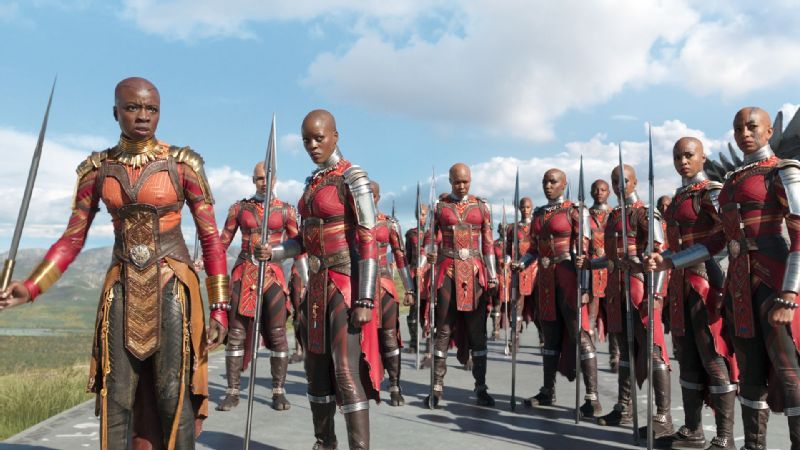
The blockbuster Black Panther depicts several strong female characters. Image via African Arguments.


LAGOS, NIGERIA (AFRICAN ARGUMENTS) -- Marvel’s Black Panther is a rare blockbuster to have achieved both box office domination and genuine cultural significance. One of the reasons for this is the film’s unlikely but welcomed focus on feminism. Set in the fictional Afrofuturistic nation of Wakanda, Black Panther boasts a dazzling array of fabulous female characters fully in possession of their power and unapologetic about wielding it.

In Lagos, Nigeria, where the film is a huge hit, many have been touting the badassery of the women of Wakanda. Okoye, the fierce army leader embodied by Danai Gurira is a particular favourite. So is scene-stealer Letitia Wright as Shuri, the princess who doesn’t let royalty stop her realising her full potential as the technological saviour of Wakanda.

This almost unanimous show of support for Black Panther’s forward-thinking depiction of women, however, does not erase the fact that much of Nigeria still holds onto archaic patriarchal ideologies. Wakanda’s gender parity is notable for just how far away it is from the sad reality.

In Nigeria, Okoye would have been warned from childhood to soften her features so she can find a man to marry her. Shuri would have been discouraged from spending too much time at the laboratory for the same reasons. And as for Nakia, everyone would ask: what kind of girl chooses a high-flying career over the chance to become queen?

Women who go against scripted societal norms are frowned upon, treated as outcasts, and erased from history. In 1929, for example, thousands of women in eastern Nigeria rallied together and confronted their British colonial rulers. The movement was on a scale the colonial state had never previously witnessed and led to significant changes. However, the heroic women who led the Aba Women’s Revolt – people such as Nwanyeruwa and Ikonnia – are largely left out of mainstream history books.

Fela and the women

Also left out of the narrative until recently have been the many women that formed a crucial part of Fela Kuti’s legendary career. The Afrobeat pioneer and political activist may be Nigeria’s most famous son. He has been immortalised in the Tony Award-winning Fela! The Musical and in the 2014 documentary Finding Fela. His legacy and music have been debated endlessly in conference rooms, music festivals and bars all over the world.

However, in all this, little interest has been devoted to Fela’s women – the merry band of singers, dancers, and supporters who thronged to his “Kalakuta Republic” sanctuary, who defied societal scorn and parental pressure, who loved him and inspired his sound.

There is no Fela without the women. They cannot just be heard on countless recordings joyously chanting “open and close”. They were an intrinsic and extricable part of the artistic legacy associated with Fela. Their striking fashion statements, creative use of beads, headgear, body art and Ankara prints remain indelible in today’s culture. Their graphic representations are rendered in music videos by pop stars from Wizkid to Niniola and in glossy magazine photo spreads.

But despite this rich legacy and gorgeous imagery, the stories and lives of Fela’s women have rarely been explored.

It is this imbalance that the splashy stage musical Fela and the Kalakuta Queens seeks to redress. Premiering in Lagos last December, the three-hour production follows Fela, the women that surrounded him, and the dynamics that influenced their relationship.

“I wondered why no one was talking about these women who were a significant part of Fela’s life and I wanted to know more about them,” director Bolanle Austen Peters remarked at one of the sold out showings.

The musical is commendable in shining a light on these female artists, pioneers and musicians. We learn some of the names of Fela’s “queens”, such as Funmilayo and Laide. However, in creating a crowd-pleasing fairy tale of female loyalty and companionship, the production, backed by Fela’s estate, fails to address the singer’s noted misogyny and violence towards women.

We gain little insight into why so many remained devoted to the cause, what made them tick, and what their own dreams and aspirations were. Most problematically, the play’s climactic scene – which depicts Fela’s highly controversial wedding to 27 women in a single ceremony – is played as an act of redemption set to the swirling instrumentation of Ololufe, a rare Fela love song.

Lady no be master
This form of female under-representation, even in a piece of art aiming to celebrate women, is not uncommon. This is the case around the world and certainly in Nigeria. Culture reflects society, which is in part shaped by politics and vested interests.

In Nigeria, for example, a gender equality bill which seeks to prohibit all forms of gender-based discrimination is waiting in the Senate. It has been stalled since 2016 due to opposition by religious and traditional groups. The Ministry of Women Affairs and Social Development has a national strategy to end child marriage, but according to UNICEF, 12 out of Nigeria’s 36 states are yet to enact the child rights act adopted at the national level in 2003.

In Lagos, the city that was both home and hell for the singer, Fela’s music blares out of speakers at night clubs, at parties, and on the radio. One of the songs one hears frequently is the classic Lady in which Fela castigates African women for daring to fancy themselves equal to men. “She want sit down for table before anybody, she want a piece of meat before anybody”, he complains scathingly.

That song was released in 1972, but for all the progress Nigeria has made on gender equality over the past half a century, Lady could have been released last week. Wakanda’s gender relations in Black Panther seem so far off, they could be from a thousand years in the future. Less than 6% of Nigeria’s lawmakers are women, the lowest proportion in Africa. Women own just 20% of enterprises in the formal sector. A third of women have experienced physical abuse.

One hopes that the women of Wakanda can inspire Nigeria’s women and girls, along with their male allies, to see things differently and transform gender relations in the country. But for now, it is sadly apparent that a girl born in the North is more likely to be married off at childhood than lead an army like Okoye, devote her life to study like Shuri, or unabashedly pursue her own calling like Nakia.

Black Panther may provide an aspirational blueprint, but for now, Fela won’t be worried. Nigeria is still a long way off before “Lady na master”.

Wednesday, October 10, 2012

‘There Was a Country’: a review of Chinua Achebe’s Biafran memoir


BY IKE ANYA, AFRICAN ARGUMENTS


In our house in Nsukka, the small university town in eastern Nigeria where I grew up, my parents’ bedroom harboured a cupboard, reached only by standing on a stepladder. In that cupboard lay a battered brown leather satchel, filled with memorabilia from Biafra. I remember Biafran stamps, currency notes and coins, photographs, receipts, letters and a small green hard backed pamphlet: The Ahiara Declaration.

From time to time, under conditions of great secrecy, the satchel would be brought down and my brothers and I would be allowed to rummage through it as my parents told us stories of their harrowing experiences during the war. We would look at photographs of friends and family “lost” in the conflict, or during the massacres of Igbos that preceded it. We would marvel at the lightness of the Biafran coins. I don’t remember my parents explicitly saying it, but somehow it was communicated to us that the satchel and its contents were not things to be discussed outside the family home.

In Nigeria in the 1970s when I grew up, Biafra was only talked about in hushed tones, in an atmosphere of an unspoken fear that talking about it could bring reprisals.

A few weeks ago, I was lucky enough to be invited to an early rough-cut screening of the film version of Chimamanda Adichie’s book, Half of a Yellow Sun. At the end, in the darkened room in Soho, as I joined others to congratulate the director Biyi Bandele, I found myself hugging him instead and felt to my embarrassment, tears running down my cheeks. As I apologised, avoiding the bemused stares from some of the staff at the venue, I explained to Biyi that I had felt such a powerful reaction because the story he was telling was the story of my family – of my parents and grandparents.

That evening, as on the phone I described my feelings watching Biafran refugees fleeing the university town of Nsukka to my mother, who had herself fled the town with my father and elder brother in 1967, she said “I am glad that our story is going to be told, that the world will remember”.

Chinua Achebe’s new book There Was A Country: A Personal History of Biafra emerges into this landscape of memory and remembrance, forty two years after the war ended. In the book Achebe, a few weeks before his 82nd birthday, finally sets out to tell the story of his Biafra. The format he adopts is novel – involving a rambling mix of anecdotes, summarized histories, analysis, reportage, declamation and haunting poetry. In some ways, reading the book feels like I imagine spending an hour or two chatting with the distinguished novelist might.

He roams from the story of how Nigeria came to be, to his schooldays and burgeoning friendships with prominent figures like the poet Christopher Okigbo, whose presence looms large through the book. Interspersing the historical account is the story of his father, one of the early Igbo converts to Christianity, and his experiences growing up with newly Christian, trailblazing parents caught between the old traditions and cosmology of the Igbo people and the new Christianity. The personal glimpses into his early life are hugely enjoyable and indeed tantalizing – often outlined so succinctly, that he leaves the reader greedy for more detail.

Approaching the events leading up to the war - the descent of the first post-independence Nigerian government into an abyss of corruption and misrule; the role that the colonial government played in setting the stage for this descent and the first military coup in 1966 – he acquires a less personal and more straightforward recounting tone. This continues until the latter part of the book, when he begins to describe the counter-coup of July 1966, the massacres of Igbos that followed the coup, the failed attempts at negotiating peace and the subsequent declaration of independence and the harrowing consequences that followed.

Achebe, as is his right, does not pull any punches, although he does make some concessions to alternative points of view, especially in relation to the legacy of colonialism and the moral imperative on writers to produce committed literature. He is less conciliatory on the question of whether the actions of the Federal Government of Nigeria during the war constituted war crimes and, possibly, genocide. He is scrupulous in naming the officers and individuals responsible, and where possible provides their viewpoints based on news and other reports.

He also highlights the role played by Western countries and the international community. And he challenges the popular perception that General Gowon’s “No Victor, No Vanquished” policy at the end of the war in 1970 led to the successful re-integration of the Igbos into Nigeria, highlighting the egregious government policy which wiped out the savings of every Biafran who had operated their bank accounts during the war with an “ex- gratia” payment of just 20 pounds. He is also laser sharp in his conviction that part of Nigeria’s problem stems from its anti-meritocratic suppression of the Igbo people, and the refusal of the country to face up to insalubrious aspects of its history, issues that he argues continue to haunt it.

Of particular interest are the snippets that emerge of life in Biafra – the intense emotional connection of a people united by the fear and anger at the massacres, the ingenuity of the engineers who fond ways to refine petrol or build bombs and the efforts of artists and intellectuals to contribute to building a new nation. He also describes his own forays to foreign capitals to seek their support for the Biafran dream and the eventual withering and death of that dream. Sprinkled through the book are excerpts from a series of interviews commissioned by the Achebe Foundation with many of the key players in Nigeria’s history. These, when eventually published, should provide a rich resource and other perspectives on the events that the author describes.

The final section of the book picks up on Nigeria’s journey since the end of the war, dipping into the failures of governance and the consequences, raising several questions that need to be addressed for the future.

The book could benefit from a closer proof-reading and fact-checking process by an informed editor. Irritating errors crop up like “maul over” for “mull over” “deferral” for “federal”, “Iwe Ihorin” for “Iwe Irohin” and St Elizabeth’s Hospital for Queen Elizabeth Hospital, but these do not detract from Achebe’s attempt to present, from his perspective, an account of those dark days. As he says in the book, “My aim is not to provide all the answers but to raise questions and perhaps to cause a few headaches”. It is clear that this is his book, his view and his own particular nostalgic ramble. Ultimately, it is important that he has shared it, warts, unevenness and all. In doing so, Achebe has helped bring the contents of my parents’ brown satchel back into the open.

Ike Anya is a Nigerian public health doctor and writer based in London. His essay People Don’t Get Depressed in Nigeria appears in the current edition of Granta Magazine

War, Erasure, And The Politics Of Culture In Sudan

BY LARISSA-DIANA FUHRMANN This article examines contemporary cultural erasure in Sudan. It highlights resilient Sudanese efforts and interna...