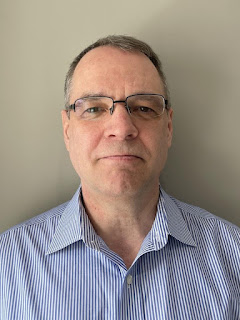
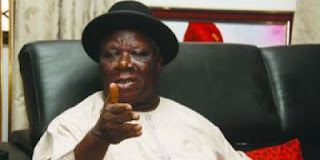
In this photo provided by Indian Foreign Minister S. Jaishankar's Twitter handle, Jaishankar and German Foreign Minister Annalena Baerbock, pose for a photograph during their meeting in New Delhi, India, Monday, Dec.5, 2022. (Indian Foreign Minister S. Jaishankar's Twitter handle via AP)
BY SHEIKH SAALIQ
NEW DELHI (AP) — India will prioritize its own energy needs and continue to buy oil from Russia, its foreign minister signaled Monday, as Western governments press Moscow with a price cap to squeeze its earnings from oil exports.
Minister of External Affairs Subrahmanyam Jaishankar made the comments after holding talks with his visiting German counterpart, Annalena Baerbock, in which they discussed bilateral relations and Russia’s war in Ukraine. Jaishankar said it isn’t right for European countries to prioritize their energy needs but “ask India to do something else.”
“Europe will make the choices it will make. It is their right,” he told reporters.
India has so far not committed to the $60-per-barrel price cap on Russian oil set by the Group of Seven major industrialized countries and European Union that is expected to come into effect Monday. The move is an attempt by Western governments to limit fossil fuel earnings that support Moscow’s budget, its military and its invasion of Ukraine, while also avoiding a possible sharp price spike if Russia’s oil is suddenly taken off the global market.
Jaishankar did not make any direct reference to the price cap but said the European Union was importing more fossil fuel from Russia than India. Indian officials have defended buying oil from Russia, saying the lower price benefits India.
Since the Russian invasion of Ukraine, India has steadily increased its purchases of discounted Russian oil. Indian imports of Russian oil hit a record high in October, with Russia becoming India’s top oil supplier in terms of barrels per day, the Press Trust of India news agency said, quoting data from energy tracker Vortexa.
India and Russia have close relations and New Delhi has not supported Western sanctions on Moscow, even though it has repeatedly urged an “immediate cessation of violence” in Ukraine. India, also a major market for Russian-made weapons, has so far abstained from U.N. resolutions critical of Moscow’s war.
Jaishankar and Baerbock, who is in India on a two-day visit, also discussed a diversification of trade between the two countries, global consequences of the Russian war on Ukraine and cooperation in the energy transition away from fossil fuels.
The two countries also signed a migration and mobility partnership which will make it easier for people to study, do research and work in each other’s country.
Germany is India’s largest trading partner in Europe and more than 1,700 German companies are operating in India. German investments in India are mainly in transportation, electrical equipment, construction, trading and automobiles.
Showing posts with label Oil. Show all posts
Monday, December 05, 2022
Russian Oil Price Cap, EU Ban Aim To Limit Kremlin War Chest
FILE - The logo of the Organization of the Petroleum Exporting Countries (OPEC) is seen outside of OPEC's headquarters in Vienna, Austria, on March 3, 2022. Oil prices rose Monday Dec. 5, 2022 as the first strong measures to limit Russia's oil profits over the war in Ukraine took effect, bringing with them uncertainty about how much crude could be lost to the global economy through the new sanctions or Russian retaliation. (AP Photo/Lisa Leutner, File)
BY DAVID MCHUGH
FRANKFURT, GERMANY (AP) — Major Western measures to limit Russia’s oil profits over the war in Ukraine took effect Monday, bringing with them uncertainty about how much crude could be lost to the world and whether they will unleash the hoped-for hit to a Russian economy that has held up better than many expected under sanctions.
In the most far-reaching efforts so far to target one of Moscow’s main sources of income, the European Union is banning most Russian oil and the Group of Seven democracies has imposed a price cap of $60 per barrel on Russian exports to other countries.
The impact of both measures, however, may be blunted because the world’s No. 2 oil producer has so far been able reroute much of its European seaborne shipments to China, India and Turkey, although at steep discounts, and the price cap is near what Russian oil already cost.
As it stands, Russia will likely have enough money to not only fund its military but support key industries and social programs, said Chris Weafer, CEO and Russian economy analyst at consulting firm Macro-Advisory.
“At this price level, that outlook really doesn’t change much. But what is key is how much volume Russia would be able to sell,” he said. “And that depends not only on the willingness of Asian buyers to continue buying Russian oil, but also what is the physical ability of Russia to shift that oil.”
Western leaders are walking a fine line between trying to cut Russia’s oil income and preventing an oil shortage that would cause a price spike and worsen the inflation plaguing economies and hurting consumers worldwide. They could later agree to lower the price cap to increase pressure on Russia, which says it will not sell to countries that observe the limit.
That could take oil off global markets and raise energy costs, including for gasoline at the pump. International benchmark Brent crude rose before falling 2.5% to $83.40 a barrel Monday.
To seriously cut Russian revenue, the cap must be lowered “quickly and progressively,” said Lauri Myllyvirta, lead analyst at the Finland-based Centre for Research on Energy and Clean Air.
Even the $60 cap, if enforced, would already push Russia to lower per-barrel tax, he said, calling it “by far the biggest step to date to cut off the fossil fuel export revenue that is funding and enabling Russia’s barbaric invasion of Ukraine.”
Russia has been living off the huge windfall from higher oil prices earlier this year and will be more vulnerable in the next several months when that money is spent, Myllyvirta said.
Kremlin spokesman Dmitry Peskov, asked in a conference call how the oil price cap might affect the war, said, “The economy of the Russian Federation has the necessary potential to fully meet all needs and requirements within the framework of the special military operation, and such measures will not affect this.”
The U.S., EU and allied countries have hit Russia with a slew of sanctions aimed at bank and financial transactions, technology imports and regime-connected individuals. But until now, those sanctions have for the most part not directly gone after the Kremlin’s biggest moneymaker, oil and natural gas.
Europe was heavily dependent on Russian oil and natural gas before the war and has had to scramble to find new supplies. Previously, the EU banned imports of Russian coal, and the U.S. and the U.K. halted their limited imports of Russian oil, but those steps had a much smaller economic impact.
Even as Western customers shunned Russian oil, the higher prices driven by fears of energy shortages helped offset lost oil sales, and Russian exporters have shipped more oil to Asian countries and Turkey in a major reshuffling of global oil flows. Russia’s economy has shrunk — but not by as much as many expected at the start of the war almost 10 months ago.
One unknown is how much of the oil formerly sold to Europe can be rerouted. Analysts think many, but not all, of the roughly 1 million barrels covered by the embargo will find new homes, tightening supply and raising prices in coming months.
The Biden administration doesn’t expect that Russia’s threats to cut off countries observing the cap and slow production would “have any impact long term on global oil prices,” National Security Council spokesman John Kirby said.
He said “this cap will lock in the discount on Russian oil” and countries like China and India would be able to bargain for steep price reductions.
Indian Foreign Minister Subrahmanyam Jaishankar indicated Monday that the country would keep buying oil from Russia to prioritize its energy needs. India so far hasn’t committed to the price cap.
The cap has a grace period for oil that was loaded before Monday and arrives at its destination before Jan. 19 to minimize disruption on oil markets.
The measure bars insurers or ship owners — most of them located in the EU or U.K. — from helping move Russian oil to non-Western countries unless that oil was priced at or below the cap.
The idea is to keep Russian oil flowing while reducing the Kremlin’s income. The U.S. and Europe leaned more toward preventing a price spike than provoking financial distress in Russia.
French Finance Minister Bruno Le Maire said the cap was “worth trying,” adding that “we will make an assessment of the efficiency of the old cap at the beginning of 2023.”
Ukraine’s President Volodymyr Zelenskyy had called for a price ceiling of around $30 per barrel. That would be near Russia’s cost of production, letting Russian oil companies earn enough only to avoid capping wells that can be hard to restart. Russia needs some $60 to $70 per barrel to balance its budget.
Russia could use methods to evade the sanctions such as those employed by Iran and Venezuela, including using “dark fleet” tankers with obscure ownership and ship-to-ship transfers of oil to tankers with oil of similar quality to hide its origin. Russia or China could also organize their own insurance. Sanctions experts say that those steps will impose higher costs on Russia.
The new EU sanctions led the Italian government to take temporary control of the Russian-owned ISAB refinery in Sicily last week. The government stopped short of nationalization but put the facility, where about 20% of Italy’s oil is refined, under receivership to protect 10,000 jobs linked to the refinery and its suppliers.
AP reporters Raf Casert in Brussels, Aamer Madhani in Washington, Sheikh Saaliq in New Delhi and Colleen Barry in Milan contributed.
BY DAVID MCHUGH
FRANKFURT, GERMANY (AP) — Major Western measures to limit Russia’s oil profits over the war in Ukraine took effect Monday, bringing with them uncertainty about how much crude could be lost to the world and whether they will unleash the hoped-for hit to a Russian economy that has held up better than many expected under sanctions.
In the most far-reaching efforts so far to target one of Moscow’s main sources of income, the European Union is banning most Russian oil and the Group of Seven democracies has imposed a price cap of $60 per barrel on Russian exports to other countries.
The impact of both measures, however, may be blunted because the world’s No. 2 oil producer has so far been able reroute much of its European seaborne shipments to China, India and Turkey, although at steep discounts, and the price cap is near what Russian oil already cost.
As it stands, Russia will likely have enough money to not only fund its military but support key industries and social programs, said Chris Weafer, CEO and Russian economy analyst at consulting firm Macro-Advisory.
“At this price level, that outlook really doesn’t change much. But what is key is how much volume Russia would be able to sell,” he said. “And that depends not only on the willingness of Asian buyers to continue buying Russian oil, but also what is the physical ability of Russia to shift that oil.”
Western leaders are walking a fine line between trying to cut Russia’s oil income and preventing an oil shortage that would cause a price spike and worsen the inflation plaguing economies and hurting consumers worldwide. They could later agree to lower the price cap to increase pressure on Russia, which says it will not sell to countries that observe the limit.
That could take oil off global markets and raise energy costs, including for gasoline at the pump. International benchmark Brent crude rose before falling 2.5% to $83.40 a barrel Monday.
To seriously cut Russian revenue, the cap must be lowered “quickly and progressively,” said Lauri Myllyvirta, lead analyst at the Finland-based Centre for Research on Energy and Clean Air.
Even the $60 cap, if enforced, would already push Russia to lower per-barrel tax, he said, calling it “by far the biggest step to date to cut off the fossil fuel export revenue that is funding and enabling Russia’s barbaric invasion of Ukraine.”
Russia has been living off the huge windfall from higher oil prices earlier this year and will be more vulnerable in the next several months when that money is spent, Myllyvirta said.
Kremlin spokesman Dmitry Peskov, asked in a conference call how the oil price cap might affect the war, said, “The economy of the Russian Federation has the necessary potential to fully meet all needs and requirements within the framework of the special military operation, and such measures will not affect this.”
The U.S., EU and allied countries have hit Russia with a slew of sanctions aimed at bank and financial transactions, technology imports and regime-connected individuals. But until now, those sanctions have for the most part not directly gone after the Kremlin’s biggest moneymaker, oil and natural gas.
Europe was heavily dependent on Russian oil and natural gas before the war and has had to scramble to find new supplies. Previously, the EU banned imports of Russian coal, and the U.S. and the U.K. halted their limited imports of Russian oil, but those steps had a much smaller economic impact.
Even as Western customers shunned Russian oil, the higher prices driven by fears of energy shortages helped offset lost oil sales, and Russian exporters have shipped more oil to Asian countries and Turkey in a major reshuffling of global oil flows. Russia’s economy has shrunk — but not by as much as many expected at the start of the war almost 10 months ago.
One unknown is how much of the oil formerly sold to Europe can be rerouted. Analysts think many, but not all, of the roughly 1 million barrels covered by the embargo will find new homes, tightening supply and raising prices in coming months.
The Biden administration doesn’t expect that Russia’s threats to cut off countries observing the cap and slow production would “have any impact long term on global oil prices,” National Security Council spokesman John Kirby said.
He said “this cap will lock in the discount on Russian oil” and countries like China and India would be able to bargain for steep price reductions.
Indian Foreign Minister Subrahmanyam Jaishankar indicated Monday that the country would keep buying oil from Russia to prioritize its energy needs. India so far hasn’t committed to the price cap.
The cap has a grace period for oil that was loaded before Monday and arrives at its destination before Jan. 19 to minimize disruption on oil markets.
The measure bars insurers or ship owners — most of them located in the EU or U.K. — from helping move Russian oil to non-Western countries unless that oil was priced at or below the cap.
The idea is to keep Russian oil flowing while reducing the Kremlin’s income. The U.S. and Europe leaned more toward preventing a price spike than provoking financial distress in Russia.
French Finance Minister Bruno Le Maire said the cap was “worth trying,” adding that “we will make an assessment of the efficiency of the old cap at the beginning of 2023.”
Ukraine’s President Volodymyr Zelenskyy had called for a price ceiling of around $30 per barrel. That would be near Russia’s cost of production, letting Russian oil companies earn enough only to avoid capping wells that can be hard to restart. Russia needs some $60 to $70 per barrel to balance its budget.
Russia could use methods to evade the sanctions such as those employed by Iran and Venezuela, including using “dark fleet” tankers with obscure ownership and ship-to-ship transfers of oil to tankers with oil of similar quality to hide its origin. Russia or China could also organize their own insurance. Sanctions experts say that those steps will impose higher costs on Russia.
The new EU sanctions led the Italian government to take temporary control of the Russian-owned ISAB refinery in Sicily last week. The government stopped short of nationalization but put the facility, where about 20% of Italy’s oil is refined, under receivership to protect 10,000 jobs linked to the refinery and its suppliers.
AP reporters Raf Casert in Brussels, Aamer Madhani in Washington, Sheikh Saaliq in New Delhi and Colleen Barry in Milan contributed.
Friday, December 02, 2022
Nigeria’s $11 Billion London Trial Will Expose Corruption, Court Hears
BY ESTELLE SHIRBON
LONDON (REUTERS) – A British lawyer representing Nigeria in a London court case in which $11 billion are at stake said on Friday the trial would reveal corruption “on an industrial scale”, not only of Nigerian officials but also of British lawyers.
The case stems from a contract for a gas project awarded by Nigeria in 2010 to a company called Process and Industrial Developments Limited (P&ID). The gas processing facility never materialised, for reasons that are disputed.
After years of legal wrangling, a London-based arbitration tribunal said in 2017 that Nigeria had not fulfilled its side of the contract and should pay P&ID $6.6 billion in compensation. With interest, the award is now worth $11 billion.
That sum represents close to 30% of Nigeria’s foreign exchange reserves, which stood at $37 billion at the end of November.
Nigeria has gone to court in London arguing that P&ID obtained the original contract through bribery and used the arbitration proceedings as a means of extorting a huge sum of money from Nigerian public coffers.
P&ID denies this and says Nigeria is trying to get out of paying what it owes.
An eight-week trial is due to start in January at the High Court in London, with witnesses appearing in person as well as remotely from Ireland and from Nigeria.
At a pre-trial review on Friday, lawyer Mark Howard, representing Nigeria, told the court that evidence of “widespread corruption and bribery on an industrial scale” would be put forward.
“Our case is it was bribery to get the contract, ongoing bribery to keep everyone on board, bribery of lawyers,” he said, alleging that two London-based British lawyers previously involved in the case had committed “serious misconduct”.
P&ID was originally established by two Irish nationals. Ownership of the firm has since passed to two Cayman Islands-based entities.
The case has become a cause celebre for the Nigerian government, with President Muhammadu Buhari denouncing it during a speech to the United Nations in 2019 as a scam designed to cheat Nigeria out of billions of dollars.
Buhari was in opposition at the time the contract was awarded.
The party then in power, the People’s Democratic Party, remains a major force in Nigerian politics and will be contesting the presidency as well as other elected offices in elections in February, while the London trial will be going on.
(Reporting by Estelle Shirbon; Editing by Mark Potter)
LONDON (REUTERS) – A British lawyer representing Nigeria in a London court case in which $11 billion are at stake said on Friday the trial would reveal corruption “on an industrial scale”, not only of Nigerian officials but also of British lawyers.
The case stems from a contract for a gas project awarded by Nigeria in 2010 to a company called Process and Industrial Developments Limited (P&ID). The gas processing facility never materialised, for reasons that are disputed.
After years of legal wrangling, a London-based arbitration tribunal said in 2017 that Nigeria had not fulfilled its side of the contract and should pay P&ID $6.6 billion in compensation. With interest, the award is now worth $11 billion.
That sum represents close to 30% of Nigeria’s foreign exchange reserves, which stood at $37 billion at the end of November.
Nigeria has gone to court in London arguing that P&ID obtained the original contract through bribery and used the arbitration proceedings as a means of extorting a huge sum of money from Nigerian public coffers.
P&ID denies this and says Nigeria is trying to get out of paying what it owes.
An eight-week trial is due to start in January at the High Court in London, with witnesses appearing in person as well as remotely from Ireland and from Nigeria.
At a pre-trial review on Friday, lawyer Mark Howard, representing Nigeria, told the court that evidence of “widespread corruption and bribery on an industrial scale” would be put forward.
“Our case is it was bribery to get the contract, ongoing bribery to keep everyone on board, bribery of lawyers,” he said, alleging that two London-based British lawyers previously involved in the case had committed “serious misconduct”.
P&ID was originally established by two Irish nationals. Ownership of the firm has since passed to two Cayman Islands-based entities.
The case has become a cause celebre for the Nigerian government, with President Muhammadu Buhari denouncing it during a speech to the United Nations in 2019 as a scam designed to cheat Nigeria out of billions of dollars.
Buhari was in opposition at the time the contract was awarded.
The party then in power, the People’s Democratic Party, remains a major force in Nigerian politics and will be contesting the presidency as well as other elected offices in elections in February, while the London trial will be going on.
(Reporting by Estelle Shirbon; Editing by Mark Potter)
Friday, September 16, 2022
Theft Hurts Nigeria’s Oil Output But Crackdown Intensifies
FILE- Arrested pirates that hijacked the Panama-flagged Maximus vessel are shown to the media in Lagos, Nigeria Monday, Feb. 22, 2016. Nigerian security forces say they are intensifying a clampdown on thieves that have stifled crude production in the West African nation after it lost its status as Africa's largest crude producer. A special military operation in the oil-rich Niger Delta region has led to the arrest of more than 100 suspected oil thieves and the seizure of 30 billion naira ($70 million) worth of oil assets since April this year, the Nigerian navy told the Associated Press on Thursday, Sept. 15, 2022. (AP Photo/Sunday Alamba, File)
ABUJA, NIGERIA (AP) — Nigeria is losing 470,000 barrels of crude oil per day to theft and pipeline vandalism, regulators say, and has now lost its status as Africa’s largest crude producer to Angola.
With the decline, Nigeria has dropped to fourth place among Africa’s largest crude-producing countries, according to the International Energy Agency’s latest oil market report released this week.
The problem is also making it more difficult for Nigeria to meet the 1.8 million barrels per day (bpd) production quota set by the Organisation of Petroleum Exporting Countries (OPEC). And it’s further hurting government finances amid an economic downturn in Africa’s most populous nation.
Nigerian President Muhammadu Buhari says the country’s revenue crisis “is caused mainly by the activities of unscrupulous citizens through the theft of our crude oil, a major contributor to our revenue base.”
Security forces say they are stepping up a crackdown on the thieves in Nigeria’s oil-rich Niger Delta region. Since April, more than 100 suspected oil thieves have been arrested and authorities have seized 30 billion naira ($70 million) worth of oil assets.
“The Nigerian Navy will continue to carry out operations in all our bases in the Niger Delta to ensure the operation of illegal refinery sites is no more possible,” spokesman Commodore Adedotun Ayo-Vaughan told The Associated Press on Thursday.
For many years, Nigeria’s oil sector has been crippled by theft and pipeline vandalism, defying government and security measures. Experts now fear the theft is having an unprecedented economic impact on the country’s finances and economy, which is Africa’s largest.
Government data shows the country’s crude output in August averaged 972,394 bpd, a multi-decade low.
Other factors including chronic underinvestment in the oil sector and spills from damaged pipelines have also affected Nigeria’s oil production capacity.
But more than anything else affecting Nigeria’s oil output, “what is much more difficult to manage is the issue of vandals which cut across every community,” Mele Kyari, head of the Nigerian National Petroleum Company Limited (NNPC) told reporters this month. “Wherever our product has gotten to, wherever our facilities pass, everybody has now become some form of vandal.”
Local authorities have also accused Nigeria’s security forces of working with the oil thieves, while the Nigerian Navy alleges that people with inside knowledge of the industry are involved in the theft.
“There is a lot of connivance with retired oil workers, oil workers from the Niger Delta; there is a lot of compromise by some of the people that work in the international oil companies,” said Ayo-Vaughan, the Navy spokesman.
The government’s recent launch of a mobile application to monitor oil theft is the latest action taken to address the challenge but analysts argue the government is not being sincere. Thieves and vandals have also found a way to bypass measures introduced, even adding insertions to oil pipelines so that they can divert supplies.
Crude oil has been critical in Nigeria’s infrastructural growth, accounting for 41% of the total federal government revenue in 2021, translating to 4.34 trillion naira ($10.1 billion) in earnings. But the economic impact and new style employed by oil thieves in the Niger Delta region “has not been this bad before,” said Olufola Wusu, a Lagos-based oil and gas expert.
“If we do not address the issue of oil and gas theft, it would discourage further investment,” Wusu said.
Wednesday, September 14, 2022
How Oil-Rich Nigeria Failed To Profit From An Oil Boom
A worker at a makeshift production camp in Nigeria’s swamps processed crude oil at an illegal oil refinery site near the river Nun in Bayelsa.Credit...Akintunde Akinleye/Reuters
A surge in oil prices can do astonishing things. In Saudi Arabia a futuristic city is planned to rise from the desert, replete with an artificial moon made of drones. Angola’s long-beleaguered currency has suddenly become one of the strongest performers against the greenback. In the Middle East and Central Asia oil exporters are cock-a-hoop, since they may pocket $320bn more in oil revenues this year than previously forecast. Yet there is a conspicuous absentee from this merry petro-party. The net effect of the high oil price for the country that is usually Africa’s biggest oil producer is “nil or negative”, laments Zainab Ahmed, Nigeria’s minister of finance.
Africa’s most populous country, around 220m-strong, desperately needs the money an oil boom could bring. Some 40% of its people live on less than the equivalent of $1.90 a day. The government is struggling to service its debts. Social services are dire. The woeful economy has contributed to the violence that afflicts much of the country. In the first half of this year, nearly 6,000 people were killed by jihadists, kidnappers, bandits or the army.
Price controls are the biggest reason the boom is ruining the public purse. Elsewhere, as the price of crude rises, drivers pay more at the pump. Not in Nigeria. Petrol is about 175 naira ($0.42) a litre, among the world’s cheapest, yet the government has not raised the official price since December 2020. In January President Muhammadu Buhari reneged on his latest promise to reform the system, leaving the government to pay for the vast gap between Nigeria’s low fixed price and the global one. The state-owned Nigerian National Petroleum Corporation (nnpc) covers the fuel subsidy from its profits and sends what is left to the government. But in the first half of this year it sent nothing at all.
The prognosis is grim. The World Bank forecast in June that the government will spend 5.4 trn naira ($12.6bn) on fuel subsidies this year, more than three times what it coughed up last year. That is more than the increase in revenue the government will get from higher crude oil prices, reckons the World Bank (see chart 1). As a result Nigeria’s net oil revenues are likely to be about 40% lower than last year, despite the high global price. That squeezes everything else. In this year’s amended budget the government allocated more to the fuel subsidy than to education, health care and welfare combined.
Price-fixing has other ill effects. Because petrol is artificially cheap, Nigerians burn more of it. Consumption of petrol has risen from about 58m litres a day in 2021 to around 70m this year, according to the nnpc’s import figures. Some Nigerians, unsurprisingly, buy cheap subsidised petrol, smuggle it across the border and sell it at a huge mark-up in neighbouring countries. Such smuggling is most lucrative when global prices are high. Also, although Nigeria pumps crude oil, its refineries are so dysfunctional they have been closed down, so it imports almost all of its refined fuel. Rising domestic consumption thus weighs on the current account.
Another reason Nigeria’s public finances benefit so little from high oil prices is that production itself has slumped to 1.13m barrels per day, the lowest in more than 50 years (see chart 2), which is partly why the oil industry has also been a drag on headline economic growth. Output has been dipping slowly since 2005. This year it has dived. Angola’s output recently overtook Nigeria’s.
One reason for falling output is that the nnpc is so short of cash after paying for petrol subsidies that it struggles to cover production costs for pumping crude oil. Yet another is that a lot of oil is never counted as part of Nigeria’s output because it has been stolen.
Estimates vary, but the oil industry’s regulator says thieves are snaffling 108,000 barrels a day, about 7% of production. This cost the government $1bn in the first quarter of this year alone. Watchdogs estimate that between 5% and 20% of Nigeria’s oil is stolen. The Trans Niger pipeline, which can transport 180,000 barrels a day (about 16% of the country’s current production) suffers so much theft that its flow has been halted since June. Another big pipeline that carries 150,000 barrels a day has also been repeatedly attacked. Shell, a big oil firm, has declared force majeure since March on all its exports of Bonny light, a high-quality crude, permitting it not to meet its contractual obligations. Nigeria could produce another 700,000 barrels a day, but for theft and oil companies having to cut back production to avoid it, claims Mele Kyari, the nnpc’s head. The spate of vandalism at one point prompted the nnpc to shut down its entire network of pipelines, he said.
One way to steal is to overload legitimate shipments with more oil than is declared. Another is to break into pipelines and siphon oil off, then cook it up in bush refineries before selling. Five years ago the Stakeholder Democracy Network, a watchdog in the Niger delta, carried out a survey that found more than a hundred such refineries in just two of Nigeria’s nine oil-producing states. Lacking other ways to make a good living, hundreds of thousands of young people are involved in illegal refining, says Ledum Mitee, a local leader from Ogoniland, a region in the delta.
Plenty of stolen crude goes straight into the international market. Small boats glide along the delta’s canals, filling up from illegally tapped pipelines. They deliver it to offshore tankers or floating oil platforms. Sometimes the stolen crude is mixed with the legal variety, then sold to unknowing buyers. Much of it, however, is bought by traders who pretend not to know it is stolen, or do not care. “There’s a huge black market off the coast of west Africa,” says Alexander Sewell of the Stakeholder Democracy Network.
“This is being perpetrated by the big boys,” says Mr Mitee. Tapping into the pipes for large volumes, heated to keep the crude flowing, requires real expertise. It also requires complicity from some of the officials running the pipelines and from the security forces supposedly guarding them, says an observer who requests anonymity for safety.
A galaxy of thieves
Exactly who the big boys are is hotly disputed. Mr Kyari recently alleged that the army officers, government officials and even religious leaders are involved. The navy’s spokesmen claim that so large a scale of theft is implausible because—they argue perversely—their patrols would have spotted the boats and stopped them. The nnpc itself is “the north star in its [Nigeria’s] kleptocratic constellation”, says Matthew Page of Chatham House, a think-tank in London. This is “transnational organised crime run by a lot of violent people”, warns the anonymous observer.
Mr Buhari has promised a crackdown. The nnpc’s first move was to hire private security firms to protect the pipelines—a telling indictment of the army. But it is unlikely to solve the problem. Two of the firms are part-owned by a former warlord, Government Ekpemupolo, better known as Tompolo. He led a guerrilla campaign in the 2000s for the locals to control the delta’s oil, before agreeing to a deal whereby he would stop blowing up the pipelines in exchange for an amnesty—and for lucrative security contracts. That has fallen apart under Mr Buhari’s government, which in 2016 issued a warrant for his arrest. Yet Tompolo is now bizarrely both a government contractor and still on the wanted list of Nigeria’s anti-corruption agency, which says he has earned $105m through graft. (He denies wrongdoing.)
Ordinary Nigerians might at least console themselves that their petrol is still cheap. However, it sometimes runs out, as price-controlled goods often do. This year there have been three bouts of shortages. Exasperated motorists in long queues ruminating on the country’s corruption may be forgiven for uttering a popular Yoruba catchphrase: Japa, meaning emigrate.
READ ORIGINAL STORY HERE
Wednesday, August 24, 2022
US Set To Ship Record Crude Into 2023 As Energy Crisis Deepens
Storage tanks are seen at Marathon Petroleum's Los Angeles Refinery, which processes domestic & imported crude oil into California Air Resources Board (CARB), gasoline, diesel fuel, and other petroleum products, in Carson, California, U.S., March 11, 2022. REUTERS/Bing Guan
WASHINGTON (BLOOMBERG) -- US crude sales overseas are set to hit fresh records through next year as American oil increasingly takes market share in Europe.
Earlier this month, weekly government figures showed an unprecedented 5 million barrels a day of US crude being exported. Shipments are poised to average over 4 million barrels a day over the next few months and into next year, according to the most optimistic in the oil industry.
In a world grappling with one of the worst energy crises in history, the US is steadily becoming the go-to supplier of incremental barrels. It’s likely to remain in that position as Opec+ spare capacity is limited and the EU looks to wind down most Russian crude purchases in December. Fuel prices soared after Russia’s invasion of Ukraine upended flows, while “extreme” volatility in the oil futures market as a result of low liquidity has prompted Saudi Arabia’s oil minister to consider further supply cuts despite shortages in consuming nations.
WASHINGTON (BLOOMBERG) -- US crude sales overseas are set to hit fresh records through next year as American oil increasingly takes market share in Europe.
Earlier this month, weekly government figures showed an unprecedented 5 million barrels a day of US crude being exported. Shipments are poised to average over 4 million barrels a day over the next few months and into next year, according to the most optimistic in the oil industry.
In a world grappling with one of the worst energy crises in history, the US is steadily becoming the go-to supplier of incremental barrels. It’s likely to remain in that position as Opec+ spare capacity is limited and the EU looks to wind down most Russian crude purchases in December. Fuel prices soared after Russia’s invasion of Ukraine upended flows, while “extreme” volatility in the oil futures market as a result of low liquidity has prompted Saudi Arabia’s oil minister to consider further supply cuts despite shortages in consuming nations.
US suppliers that have captured market share across Europe will likely hold onto it over the next 2 years as other producers, including those in the North Sea and West Africa, have not been growing their output as steadily, said Conor McFadden, head of oil for Europe at Trafigura, among the biggest exporters of US crude.
While the end of American reserve oil releases this fall might slow exports briefly, it’s unlikely to dent these mammoth outflows long term, according to a poll of industry analysts. US drillers have been growing production, even if at moderate rates, and the country’s refining capacity is not expected to expand, leaving more oil for export. In fact, weekly exports have exceeded 4 million barrels a day for consecutive weeks for the first time since the export ban was lifted at the end of 2015, according to the latest Energy Information Administration data released Wednesday.
Annual US crude shipments abroad are expected to average from 3.3 million barrels a day to as high as 3.6 million barrels a day this year, from nearly 3 million in 2021, according to oil analysts at Esai Energy, Rapidan Energy Group and Kpler. Outflows are likely to average as much as 4.3 million next year, according to Esai oil analyst Elisabeth Murphy.
Much of that will cater to Europeans drawing new supply lines ahead of the December boycott of Russian energy by the region’s trade bloc. Currently, the US accounts for only about 16 per cent of Europe’s waterborne crude imports, up slightly from 15.3 per cent before the war, said Vortexa senior oil market analyst Rohit Rathod.
And there’s room to capture more Russian market share. “EU-27 countries are still taking about 1.1 million barrels a day of Russian seaborne crude,” said Kpler oil analyst Matt Smith.
It’s not just about filling Europe’s gaping energy hole left behind by Russia either. American flows already are replacing barrels from other traditional suppliers to Europe, including Kazakhstan where its flagship CPC crude has seen multiple export disruptions because of technical problems.
US volumes are nipping into West Africa’s market share in Europe as well as helping offset disrupted crude flows from Libya due to politically-driven production outages, said Hunter Kornfeind, an oil market analyst at Rapidan.
European refiners have become more comfortable using American oil that is shipped reliably and stably, Trafigura’s McFadden said. “When the world’s energy supply chains got so stressed, this was the crude that filled the hole. When Europe didn’t know who they were gonna buy from they went to Midland because they know it will arrive,” he said.
The influx of US barrels has also pressured regional European crudes. At the start of the week, Ekofisk crude, a light-sweet grade in the North Sea that competes with US supplies, was trading about US$3.50 above Dated Brent. That compared with about US$7 a month earlier. Meanwhile Forties crude, another North Sea grade, was trading at a discount of 70 cents to Dated Brent compared with a premium of more than US$5 a month prior.
Looking ahead, purchases from Asia are also key in keeping US crude exports elevated. Over the past 2 months, Asian countries have scooped up large volumes of American oil, as competition with Middle Eastern supplies heats up. Even so, greater volumes of Russian oil are still headed to China and India since the invasion of Ukraine.
While the end of American reserve oil releases this fall might slow exports briefly, it’s unlikely to dent these mammoth outflows long term, according to a poll of industry analysts. US drillers have been growing production, even if at moderate rates, and the country’s refining capacity is not expected to expand, leaving more oil for export. In fact, weekly exports have exceeded 4 million barrels a day for consecutive weeks for the first time since the export ban was lifted at the end of 2015, according to the latest Energy Information Administration data released Wednesday.
Annual US crude shipments abroad are expected to average from 3.3 million barrels a day to as high as 3.6 million barrels a day this year, from nearly 3 million in 2021, according to oil analysts at Esai Energy, Rapidan Energy Group and Kpler. Outflows are likely to average as much as 4.3 million next year, according to Esai oil analyst Elisabeth Murphy.
Much of that will cater to Europeans drawing new supply lines ahead of the December boycott of Russian energy by the region’s trade bloc. Currently, the US accounts for only about 16 per cent of Europe’s waterborne crude imports, up slightly from 15.3 per cent before the war, said Vortexa senior oil market analyst Rohit Rathod.
And there’s room to capture more Russian market share. “EU-27 countries are still taking about 1.1 million barrels a day of Russian seaborne crude,” said Kpler oil analyst Matt Smith.
It’s not just about filling Europe’s gaping energy hole left behind by Russia either. American flows already are replacing barrels from other traditional suppliers to Europe, including Kazakhstan where its flagship CPC crude has seen multiple export disruptions because of technical problems.
US volumes are nipping into West Africa’s market share in Europe as well as helping offset disrupted crude flows from Libya due to politically-driven production outages, said Hunter Kornfeind, an oil market analyst at Rapidan.
European refiners have become more comfortable using American oil that is shipped reliably and stably, Trafigura’s McFadden said. “When the world’s energy supply chains got so stressed, this was the crude that filled the hole. When Europe didn’t know who they were gonna buy from they went to Midland because they know it will arrive,” he said.
The influx of US barrels has also pressured regional European crudes. At the start of the week, Ekofisk crude, a light-sweet grade in the North Sea that competes with US supplies, was trading about US$3.50 above Dated Brent. That compared with about US$7 a month earlier. Meanwhile Forties crude, another North Sea grade, was trading at a discount of 70 cents to Dated Brent compared with a premium of more than US$5 a month prior.
Looking ahead, purchases from Asia are also key in keeping US crude exports elevated. Over the past 2 months, Asian countries have scooped up large volumes of American oil, as competition with Middle Eastern supplies heats up. Even so, greater volumes of Russian oil are still headed to China and India since the invasion of Ukraine.
“The long-term trend in a world that needs more oil is that the US is going to be exporting more,” McFadden said.
Tuesday, August 23, 2022
For The First Time In Almost 50 Years: Change Of Power In Angola Possible
A young girl walks through the Buracos market, in the Angolan restive region of Cabinda, on April 9, 2019 in Cabinda, Angola. Image: Daniel Garelo Pensador
BY RICHARD KLUGJOHANNESBURG, SOUTH AFRICA (GLOBE ECHO) -- For the first time since Angola gained independence in 1975, the opposition could win the elections. The ruling MPLA party and its opponents from Unita are in a neck-and-neck race. Angola’s young voters are likely to make the difference.
For the first time since the end of the civil war in Angola, things are getting tight for the “Movimento Popular de Libertação de Angola” (MPLA), the “People’s Movement for the Liberation of Angola”. She has ruled the country for almost 50 years. Her greatest adversary, the “União Nacional para a Independência Total de Angola” (Unita), in English “National Union for the Complete Independence of Angola”, has not stood a chance in all previous elections. MPLA and Unita – it sounds like the war of independence against Portugal is still ongoing; strange names for two parties in a country that has been independent since 1975. But Angola is also a country where civil war raged until 2002. A country that for many years was – and for the most part still is – a symbol of corruption and nepotism.
The party with the most votes automatically appoints the president in Angola; he is not directly elected. As of 2017, that is the MPLA’s João Lourenço, a 68-year-old ex-general who was the country’s defense minister from 2014 to 2017. Before him, José Eduardo dos Santos had ruled Angola since 1979 and was considered one of the greatest kleptocrats on the African continent. He died in July. The Unita candidates have never had a chance against dos Santos since 2008 – the first re-election since the end of the civil war.
Now, however, Unita has entered into an alliance with other opposition parties, which, however, was not recognized as a list by the electoral commission. The Unita candidate’s name is Adalberto Costa Junior, or “ACJ” for short: 60 years old, charismatic, a good speaker who is well received by Angola’s youth. That counts for a lot in a country where 60 percent of the population is under the age of 24. In polls, he is just ahead of the incumbent, the two parties are level.
Adalberto Costa Junior, known as ACJ, is well received by Angola’s youth with his eloquence.
Rich country – poor people
Angola is actually a rich country, the third largest economy in sub-Saharan Africa. According to figures from the Organization of the Petroleum Exporting Countries (OPEC), Angola has been the largest oil producer in sub-Saharan Africa since May – a title for which the country is competing with Nigeria. There are large diamond deposits, economic growth has been the highest on the continent for three years. At the same time, Angola’s people are destitute, about half of the population lives below the poverty line, especially in rural areas. The reason: corruption and nepotism.
Former President dos Santos and his family are considered a prime example of this. According to research by the Financial Times, between 2007 and 2010 alone, more than 32 billion US dollars disappeared from the national budget. His daughter Isabel’s assets were partially frozen two years ago, also because of allegations of corruption. Since João Lourenço took office in 2017, the dos Santos family was suddenly no longer unassailable.
Sluggish fight against corruption
Despite this spectacular success, the current president is making little progress in fighting corruption. Although Lourenço points to the more than 700 criminal cases that are pending, this is not enough for large sections of civil society. According to Transparency International, Angola is still among the 50 most corrupt countries in the world, although the organization notes that Angola has moved up 31 spots since 2017.
Progress is also sluggish in the fight against poverty. The “miracle” promised by Lourenço did not happen, which may also have been due to the Covid pandemic. He had promised 500,000 new jobs, he wanted to broaden the economy – no longer just rely on oil and diamonds. So far he has failed. Inflation is 25 percent and unemployment is 30 percent. The country’s infrastructure has still not been restored 20 years after the end of the civil war. Close economic ties with China have not brought any relief to Angola either: the numerous roads financed by Beijing have to be completely renovated every two years, and numerous residential buildings built by Chinese are in danger of collapsing.
Now it looks as if the young Angolans will play the decisive role in the election. Their values and beliefs differ dramatically from those in power, they say. Around 14 million Angolans are called to vote. But what if the opposition actually manages to change power, but the result is then suppressed? The country’s security apparatus is still considered to be as repressive as it was under dos Santos. Even before election day, Amnesty International denounced human rights violations: Activists were repeatedly shot while they were demonstrating peacefully. The first results are expected on Friday.
READ ORIGINAL ARTICLE HERE
Monday, June 06, 2022
As Oil Nations Boom, Nigeria Returns Empty-Handed
Nigerians should ordinarily be rejoicing over the rising prices of crude oil in the international market. However, unlike many oil-producing countries, the country is not feeling the impact of the rocketing commodity prices for various reasons.
Aside the many wrong-headed policy decisions and neglect of major fundamentals, previous administrations and the present government have largely mouthed slogans, rather than get down to the hard work of giving the oil industry a general turnaround.
While other forward-looking nations are cognisant of the fact that investment remains key to the continuity of the sector, Nigeria has always seen it as a cash cow.
The unwritten rule has been to take and take more without giving back. Unfortunately, the sector does not work that way. Like it is done in farming, the sector requires planting (investment) before harvest (returns).
To be sure, the issues bedeviling the petroleum sector in Nigeria are not recent, but what is different with the current situation is that it is far worse than what obtained in the past—more like a mess.
NNPC’s Failure to Meet Obligations
As it is, Nigeria through the Nigerian National Petroleum Company (NNPC) cannot meet any of its obligations, whether in terms of gas supply, crude production, refining, remittances to the federation account, among others.
Benefiting optimally from the production of its oil and gas resources, has now become an uphill task, due in part, to Nigeria’s non-domestication of the proceeds of its resources, leading to a haemorrhage of the sector.
While in the past, it was taken for granted that once the prices of oil start rising in the international market, even for non-economists, it will rub off on the Nigerian economy vis-à-vis its foreign reserves, strengthening the naira and generally creating a more robust economic environment, many are now lost as to why the situation has changed.
Indeed, Nigeria’s most prized export commodity has risen from a low of $10 in 2020 to a high of $85 in 2021 and now around $120 in 2022. Recall that at some point it hit a record $139.
On the contrary, Nigeria continues to borrow massively in spite of what ordinarily should be a boom period for the economy and for foreign exchange inflow.
To the discerning, the reasons are not far-fetched. Nigeria now has to deal with paying more subsidy since there’s a positive relationship between the international prices of the commodity and how much Nigerians get the product at the pump.
While N400 billion was initially budgeted for the purpose, President Muhammadu Buhari has recently secured the stamp of the National Assembly to up it to N4 trillion for the year. This followed the deferment of petrol subsidy removal, which is part of the much-talked-about Petroleum Industry Act (PIA) by 18 months.
What that simply means is that the little gains from the sector, irrespective of the irredeemable inefficiency of the NNPC, is now being deployed in the payment of petrol subsidy.
With a consistently weakening price of the naira versus the dollar, things are now worse, since transactions in the oil industry are mostly dollar-denominated.
To put this in proper context, in the whole of the 12 months of 2021, petrol subsidy rose to N1.43 trillion, according to data from the NNPC. But total deductions in the first four months this year for the purpose has nearly hit N1 trillion (N947.53 billion). It has also exceeded the company’s initial projected N400 billion budget by N799.95 billion as of April.
Invariably, it has also significantly impacted the NNPC’s remittances to the Federation Accounts this year, because as it is, not even a kobo has been remitted to the joint account this year.
NNPC Imports Petroleum Products
Recall that the NNPC is currently the sole importer of the product into Nigeria as other marketers have stopped importing the commodity due to their inability to adequately access dollars for transactions.
A corollary to the payment of subsidies is the almost 100 per cent importation of all consumed products including petrol, diesel, kerosene and even percentage of gas, although the country has a whopping 206 TCF of proven gas reserves.
As it is, Nigeria does not refine a drop of products, so it imports all it needs to power the economy, costing billions in dollars, thereby fleecing the country of the much needed forex. Both the funding of subsidies and importation of products are largely opaque.
Nigeria’s Minister of Finance, Zainab Ahmed, recently attempted to explain the paradox between rising oil prices and negligible impact on the economy.
According to her, the situation of rising prices was having little impact because of corresponding increase in expenditures.
“The high price of oil means that we would be able to earn more revenue…but we also have the challenge of having to buy petroleum products for use in-country, because we do not have functional refineries. So that eats into the revenues we would have otherwise realised,” the minister said.
Another major reason Nigeria cannot take advantage of massive rise in crude oil prices is that it has not been able to meet its production allocation by the Organisation of Petroleum Exporting Countries (OPEC). So it has significantly under-produced for many months.
These challenges range from technical to community issues, outright oil theft, to ageing upstream assets, then incessant force majeure as well as its inability to restart its oil assets shut down in the wake of the Covid-19 pandemic in 2020.
Declining Oil Rigs
For instance, Data obtained from Baker Hughes Incorporated and OPEC showed that Nigeria’s oil rigs, which depict the level of oil production activities by operators, had reduced to 11 at the end of April 2022, a sharp decline from a three-year high of 30 rigs count recorded in 2015. According to the upstream commission, Nigeria has as many as 53 oil wells.
OPEC’s data also showed that Nigeria’s oil production has slumped to an average of 1.35 million barrels per day recently. Although it hit roughly 1.4 million bpd in May, according to secondary sources, Nigeria still has a deficit of 350,000 barrels per day.
At a price of $120 per barrel, that would translate to a whopping $42 million per day and roughly $1.302 billion every month. That would make massive difference in the country’s ailing economy.
In addition, Nigeria’s resources even if optimised, will make little impact on an uncontrolled population. Unlike small countries like Qatar and Saudi Arabia with small populations, Nigeria does not have a population policy, or if it exists it is not implemented.
Despite its huge oil reserves, Nigeria has one of the lowest production per capita among oil-producing countries in the world, producing less than a barrel per 100 people.
In Saudi Arabia, for instance, it is about 28 barrels per 100 people, in Kuwait it is roughly 60 barrels per 100 people, while in the United Arab Emirates (UAE) production per capita is 32 barrels per 100 people.
For mostly religious reasons, despite the urgent need to do so, Nigeria has refused to do something about its surging population, precipitated by a very high birth rate.
So, even if oil prices move higher than it is today, chances are that it will still a drop in the ocean, given a surging population and with the fact that Nigeria is producing less oil than it was drilling 25 years ago.
As a result, the economic indices remain grim. There’s simply no miracle to it. It’s pure garbage in, garbage out! For example, although oil prices rose by over 50 per cent in 2021, the Nigerian currency, the naira, fell 55.92 per cent in 2021, declining in value from N363/$ to N566/$, according to a recent report by the Financial Derivatives Company (FDC) Limited.
Declining income per capita
The Lagos-based research and consultancy firm further stated that the country’s income per capita shrank by 3 per cent to $2,100 during the year 2021, with Nigeria hit by two recessions in two years.
With life expectancy at 55.75 years, the 4th lowest in the world, and unemployment rate at 33.3 per cent, still the 4th highest in Africa, the report stated that Nigeria’s misery index hit 48.7 per cent last year.
Added to that, the FDC document indicated that 93.3 million Nigerians are currently neck-deep in poverty, even as diaspora remittance dropped by 26.09 per cent to $17 billion.
But while it would appear that there are no immediate solutions to the depressing economic indicators, however the silver lining may be that the country should be able to streamline its massive spending on importation of petroleum products if the expected Dangote refinery coupled with the rehabilitation of the state-owned refineries come online any time from next year.
With the planned completion of the humongous Dangote refinery, worth roughly $20 billion and covering around 250,000 hectares, the foreign exchange frittered on importing refined products could be retained in-country.
Once in full operation, the refinery is expected to produce petrol and other petrochemical products such as polyethylene and polypropylene.
Recently, the Central Bank Governor, Godwin Emefiele, said the federal government currently spends about 30 per cent of its dollar earnings on the importation of petroleum products, putting pressure on the local currency.
“By the time the Dangote refinery begins operation, it would be a major FX saving source for Nigeria. Right now, the overall forex we spend on imported items, the importation of petroleum products consumes close to 30 percent,” he said.
Somehow, all players in the industry agree that the current situation is unacceptable.
Minister of State, Petroleum Resources, Mr Timipre Sylva, this week in an interview with The Energy Year, a market intelligence organisation, described Nigeria’s situation as “precarious” because of the multitude of challenges besetting the oil sector.
According to the minister, while the goal is to restore Nigeria as the leading crude oil producer in Africa, if the country can tackle security and technical issues, it should be able to ramp up production to 2.6 million bpd, and in the long run, boost it to 3 million bpd.
Describing fuel subsidies as “the biggest impediment to the growth of the downstream sector, Sylva stated that nobody wants to invest in an industry where they cannot even recover their cost of production.
“Once the subsidies are removed and these projects are operational, a golden period for the Nigerian downstream sector will begin,” he maintained.
On Wednesday, Chairman, House Committee Chair on Public Accounts, Wole Oke, lamented that while many countries with oil endowments have been able to utilise the resources for the benefit of their citizens, Nigeria has not been able to do so.
He lamented that although Nigeria has similar potential as Saudi Arabia however, as at 2022, its Gross Domestic Product (GDP) per capita is 5,000 USD, while that of Saudi Arabia is $24, 224.
Oke said that while other nations were making progress, since the first quarter of 2022, NNPC has failed to make remittances to the Federation Account despite the current rise in price of crude oil, describing it as depressing. Where does Nigeria go from here? Well, as they say, there are no shortcuts!
READ ORIGINAL ARTICLE HERE
Wednesday, June 01, 2022
As Gas Prices Soar, Biden Leans Toward Visiting Saudi Arabia
In this photo released by Saudi Royal Palace, Saudi Crown Prince Mohammed bin Salman, speaks during the Gulf Cooperation Council (GCC) Summit in Riyadh, Saudi Arabia, Tuesday, Dec. 14, 2021. Strategic U.S. interests in oil and security are pushing President Joe Biden toward meeting with Saudi Crown Prince Mohammed bin Salman during an overseas trip later this month. (Bandar Aljaloud/Saudi Royal Palace via AP, File)
BY AAMER MADHANI AND ELLEN KNICKMEYER
WASHINGTON (AP) — President Joe Biden is leaning towards making a visit to Saudi Arabia — a trip that would likely bring him face-to-face with the Saudi crown prince he once shunned as a killer.
The White House is weighing a visit to Saudi Arabia that would also include a meeting of the leaders of the Gulf Cooperation Council countries (Bahrain, Kuwait, Oman, Qatar, Saudi Arabia and United Arab Emirates) as well as Egypt, Iraq and Jordan, according to a person familiar with White House planning. The person spoke on the condition of anonymity to discuss the yet-to-be finalized plans.
It comes at a moment when overriding U.S. strategic interests in oil and security have pushed the administration to rethink the arms-length stance that Biden pledged to take with the Saudis as a candidate for the White House.
Any meeting between Biden and de facto Saudi ruler Prince Mohammed bin Salman during a Biden visit to the Middle East could offer hope of some relief for U.S. gasoline consumers, who are wincing as a squeaky-tight global oil supply drives up prices. Biden would be expected to meet with Prince Mohammed, who is often referred to by his initials, MBS — if the Saudi visit happens, according to the person familiar with the deliberations.
Such a meeting could also ease one of the most fraught and uncertain periods in a partnership between Saudi Arabia, the world’s top oil exporter, and the United States, the world’s top economic and military power, that has stood for more than three-quarters of a century.
But it also risks a public humbling for the U.S. leader, who in 2019 pledged to make a “pariah” of the Saudi royal family over the 2018 killing and dismemberment of U.S.-based journalist Jamal Khashoggi, a newspaper critic of many of the brutal ways that Prince Mohammed operates.
White House press secretary Karine Jean-Pierre on Wednesday declined to comment on whether Biden will travel to Saudi Arabia. Biden is expected to travel to Europe at the end of June. He could tack on a stop in Saudi Arabia to meet with Prince Mohammed, Saudi King Salman and other leaders. The president would also likely visit Israel should he extend his upcoming travels to include Saudi Arabia.
Last week, the White House confirmed that NSC Middle East coordinator Brett McGurk and Amos Hochstein, a senior adviser for energy security at the State Department, were recently in the region. Secretary of State Antony Blinken spoke by phone Monday with his Saudi counterpart.
McGurk and Hochstein, as well as Tim Lenderking, the U.S. special envoy for Yemen, have repeatedly visited Saudi Arabia for talks with Saudi officials about energy supplies, Biden administration efforts to revive the Iran nuclear deal and Saudi’s war in Yemen, recently calmed by a cease-fire.
For Biden, the political dangers of offering his hand to Prince Mohammed include the potential for an embarrassing last-minute public rebuff from a still-offended crown prince known for imperious, harsh actions. Since Prince Mohammed became crown prince in 2017, that has included detaining his own royal uncles and cousins as well as Saudi rights advocates, and, according to the U.S. intelligence community, directing Khashoggi’s killing. Saudi Arabia denies involvement by the crown prince.
Still, Biden stood ready to greet the prince at last October’s G20 summit in Rome, but Prince Mohammed did not attend.
And any Biden climbdown from his passionate human-rights pledge — Saudi rulers would “pay the price” for Khashoggi’s killing, Biden vowed on the debate stage during his campaign — risks more disillusionment for Democratic voters. They have watched Biden struggle to accomplish his domestic agenda in the face of a strong GOP minority in the Senate.
Democrats appear less vocal now in demands that the U.S. take a hard line with Saudi Arabia’s crown prince. Near-record gas prices are endangering their prospects in the November midterm election.
A leading congressional critic of the Saudi government, Rep. Gerald Connolly of Virginia, said in an email the United States “should reassess its unconditional support for Saudi Arabia.” But he and other Democrats are not publicly telling Biden he shouldn’t meet with Prince Mohammed.
Lawmakers point especially to Saudi Arabia’s refusal despite months of Western appeals to veer from an oil production cap brokered largely between the Saudi kingdom and oil-producer Russia. The production cap is adding to oil supply shortfalls stemming from Russia’s invasion of Ukraine.
At the same time, British Prime Minister Boris Johnson and French President Emmanuel Macron have privately urged Biden to work to soothe U.S.-Saudi relations as has Israel, which sees the kingdom as an essential player in countering Iran.
Besides helping to keep gas prices high for consumers globally, the tight supply helps Russia get better prices for the oil and gas it is selling to fund its invasion of Ukraine. Russian Foreign Minister Sergey Lavrov visited the Saudi kingdom Tuesday, even as talk of a possible Biden-Prince Mohammed meeting grew in Washington.
Frequent, warm visits among Saudi, Russian and Chinese officials during the freeze between Biden and the Saudi crown prince have heightened Western concern that Saudi Arabia is breaking from Western strategic interests.
The United States for decades has ensured U.S. or allied aircraft carriers, troops and trainers and missile batteries remain deployed in defense of Saudi Arabia and its oil fields, and in defense of other Gulf states. The military commitment recognizes that a stable global oil market and a Gulf counterbalance to Iran are in U.S. strategic interests.
From Saudi Arabia, the United States is looking “for real assurances that it is going to be firmly aligned with the United States internationally, and not drift toward or hedge by trying to have comparable relationships with Russia and China. That goes beyond just oil,” said Dan Shapiro, a former U.S. ambassador to Israel. Shapiro is an advocate of bilateral Abraham accords that have helped establish closer ties between some Arab states and Israel.
“The United States needs to have some assurance that it’s going to provide those security guarantees and it has a real partner that’s going to be like a partner,” said Shapiro, now a distinguished fellow at the Atlantic Council.
Officials in Saudi Arabia and the United Arab Emirates, for their part, often see Biden as the latest of several U.S. presidents to neglect the U.S. military’s longstanding protector role in the Gulf, as Washington tries to extricate itself from Middle East conflicts to focus on China.
Those Gulf security worries may be eased by the U.S. move last year bringing control of its forces in Israel under U.S. Central Command. That effectively increases interaction between Israel’s U.S.-equipped military and Arab forces under the U.S. military umbrella, Shapiro said.
Deputy Saudi Defense Minister Khalid bin Salman visited CENTCOM headquarters in Florida last month. Regional coordination was one of the main topics, including, Shapiro said, the possibility of such steps as coordinating the Middle East’s air defense capabilities.
Blinken and White House national security adviser Jake Sullivan also met last month with the Saudi defense official. Sullivan said he talked energy. CIA Director William Burns visited Prince Mohammed in Saudi Arabia in April.
Biden administration officials bristle at the notion that a stepped-up engagement is simply about getting the Saudis to help ease gas prices. Jean-Pierre said last week after McGurk and Hochstein’s most recent travels to the region that the idea that the White House is asking the Saudis to pump more oil “is simply wrong” and “a misunderstanding of both the complexity of that issue, as well as our multifaceted discussions with the Saudis.”
“The president’s words still stand,” she added Wednesday, of Biden’s pledge that the Saudis would “pay a price.”
Jon Gambrell in Dubai, United Arab Emirates, contributed to this report.
WASHINGTON (AP) — President Joe Biden is leaning towards making a visit to Saudi Arabia — a trip that would likely bring him face-to-face with the Saudi crown prince he once shunned as a killer.
The White House is weighing a visit to Saudi Arabia that would also include a meeting of the leaders of the Gulf Cooperation Council countries (Bahrain, Kuwait, Oman, Qatar, Saudi Arabia and United Arab Emirates) as well as Egypt, Iraq and Jordan, according to a person familiar with White House planning. The person spoke on the condition of anonymity to discuss the yet-to-be finalized plans.
It comes at a moment when overriding U.S. strategic interests in oil and security have pushed the administration to rethink the arms-length stance that Biden pledged to take with the Saudis as a candidate for the White House.
Any meeting between Biden and de facto Saudi ruler Prince Mohammed bin Salman during a Biden visit to the Middle East could offer hope of some relief for U.S. gasoline consumers, who are wincing as a squeaky-tight global oil supply drives up prices. Biden would be expected to meet with Prince Mohammed, who is often referred to by his initials, MBS — if the Saudi visit happens, according to the person familiar with the deliberations.
Such a meeting could also ease one of the most fraught and uncertain periods in a partnership between Saudi Arabia, the world’s top oil exporter, and the United States, the world’s top economic and military power, that has stood for more than three-quarters of a century.
But it also risks a public humbling for the U.S. leader, who in 2019 pledged to make a “pariah” of the Saudi royal family over the 2018 killing and dismemberment of U.S.-based journalist Jamal Khashoggi, a newspaper critic of many of the brutal ways that Prince Mohammed operates.
White House press secretary Karine Jean-Pierre on Wednesday declined to comment on whether Biden will travel to Saudi Arabia. Biden is expected to travel to Europe at the end of June. He could tack on a stop in Saudi Arabia to meet with Prince Mohammed, Saudi King Salman and other leaders. The president would also likely visit Israel should he extend his upcoming travels to include Saudi Arabia.
Last week, the White House confirmed that NSC Middle East coordinator Brett McGurk and Amos Hochstein, a senior adviser for energy security at the State Department, were recently in the region. Secretary of State Antony Blinken spoke by phone Monday with his Saudi counterpart.
McGurk and Hochstein, as well as Tim Lenderking, the U.S. special envoy for Yemen, have repeatedly visited Saudi Arabia for talks with Saudi officials about energy supplies, Biden administration efforts to revive the Iran nuclear deal and Saudi’s war in Yemen, recently calmed by a cease-fire.
For Biden, the political dangers of offering his hand to Prince Mohammed include the potential for an embarrassing last-minute public rebuff from a still-offended crown prince known for imperious, harsh actions. Since Prince Mohammed became crown prince in 2017, that has included detaining his own royal uncles and cousins as well as Saudi rights advocates, and, according to the U.S. intelligence community, directing Khashoggi’s killing. Saudi Arabia denies involvement by the crown prince.
Still, Biden stood ready to greet the prince at last October’s G20 summit in Rome, but Prince Mohammed did not attend.
And any Biden climbdown from his passionate human-rights pledge — Saudi rulers would “pay the price” for Khashoggi’s killing, Biden vowed on the debate stage during his campaign — risks more disillusionment for Democratic voters. They have watched Biden struggle to accomplish his domestic agenda in the face of a strong GOP minority in the Senate.
Democrats appear less vocal now in demands that the U.S. take a hard line with Saudi Arabia’s crown prince. Near-record gas prices are endangering their prospects in the November midterm election.
A leading congressional critic of the Saudi government, Rep. Gerald Connolly of Virginia, said in an email the United States “should reassess its unconditional support for Saudi Arabia.” But he and other Democrats are not publicly telling Biden he shouldn’t meet with Prince Mohammed.
Lawmakers point especially to Saudi Arabia’s refusal despite months of Western appeals to veer from an oil production cap brokered largely between the Saudi kingdom and oil-producer Russia. The production cap is adding to oil supply shortfalls stemming from Russia’s invasion of Ukraine.
At the same time, British Prime Minister Boris Johnson and French President Emmanuel Macron have privately urged Biden to work to soothe U.S.-Saudi relations as has Israel, which sees the kingdom as an essential player in countering Iran.
Besides helping to keep gas prices high for consumers globally, the tight supply helps Russia get better prices for the oil and gas it is selling to fund its invasion of Ukraine. Russian Foreign Minister Sergey Lavrov visited the Saudi kingdom Tuesday, even as talk of a possible Biden-Prince Mohammed meeting grew in Washington.
Frequent, warm visits among Saudi, Russian and Chinese officials during the freeze between Biden and the Saudi crown prince have heightened Western concern that Saudi Arabia is breaking from Western strategic interests.
The United States for decades has ensured U.S. or allied aircraft carriers, troops and trainers and missile batteries remain deployed in defense of Saudi Arabia and its oil fields, and in defense of other Gulf states. The military commitment recognizes that a stable global oil market and a Gulf counterbalance to Iran are in U.S. strategic interests.
From Saudi Arabia, the United States is looking “for real assurances that it is going to be firmly aligned with the United States internationally, and not drift toward or hedge by trying to have comparable relationships with Russia and China. That goes beyond just oil,” said Dan Shapiro, a former U.S. ambassador to Israel. Shapiro is an advocate of bilateral Abraham accords that have helped establish closer ties between some Arab states and Israel.
“The United States needs to have some assurance that it’s going to provide those security guarantees and it has a real partner that’s going to be like a partner,” said Shapiro, now a distinguished fellow at the Atlantic Council.
Officials in Saudi Arabia and the United Arab Emirates, for their part, often see Biden as the latest of several U.S. presidents to neglect the U.S. military’s longstanding protector role in the Gulf, as Washington tries to extricate itself from Middle East conflicts to focus on China.
Those Gulf security worries may be eased by the U.S. move last year bringing control of its forces in Israel under U.S. Central Command. That effectively increases interaction between Israel’s U.S.-equipped military and Arab forces under the U.S. military umbrella, Shapiro said.
Deputy Saudi Defense Minister Khalid bin Salman visited CENTCOM headquarters in Florida last month. Regional coordination was one of the main topics, including, Shapiro said, the possibility of such steps as coordinating the Middle East’s air defense capabilities.
Blinken and White House national security adviser Jake Sullivan also met last month with the Saudi defense official. Sullivan said he talked energy. CIA Director William Burns visited Prince Mohammed in Saudi Arabia in April.
Biden administration officials bristle at the notion that a stepped-up engagement is simply about getting the Saudis to help ease gas prices. Jean-Pierre said last week after McGurk and Hochstein’s most recent travels to the region that the idea that the White House is asking the Saudis to pump more oil “is simply wrong” and “a misunderstanding of both the complexity of that issue, as well as our multifaceted discussions with the Saudis.”
“The president’s words still stand,” she added Wednesday, of Biden’s pledge that the Saudis would “pay a price.”
Jon Gambrell in Dubai, United Arab Emirates, contributed to this report.
Tuesday, May 03, 2022
EU Plans To Court Africa To Help Replace Russian Gas Imports
EU drafts action plan to cut energy dependence on Moscow
Europe to work with major producers and consumers of LNG
Countries in Africa, in particular in the western part of the continent, such as Nigeria, Senegal, and Angola, offer largely untapped potential for liquified natural gas, according to a draft EU document seen by Bloomberg News. The communication on external energy engagement is set to be adopted by the European Commission later this month as part of a package to implement the bloc’s plan to cut energy reliance on Moscow.
The 27-nation bloc wants to shift away from its biggest supplier after President Vladimir Putin invaded Ukraine. Its draft energy strategy also seeks to prepare the region for imports of 10 million tons of renewable hydrogen by 2030 to help replace gas from Russia, in line with the ambitious EU Green Deal to walk away from fossil fuels and reach climate neutrality by mid-century.
The EU plan to increase LNG imports by 50 billion cubic meters and boost shipments of pipeline gas from countries other than Russia by 10 billion cubic meters requires setting relationships with traditional suppliers on a new basis and extending trade to new emerging suppliers, according to the document.
Key steps include fully implementing the agreement with the U.S. for the delivery of 15 billion cubic meters of additional LNG in 2022 and around 50 billion cubic meters annually until 2030. Another target is to sign a trilateral memorandum of understanding with Egypt and Israel to boost LNG supplies to Europe by summer this year.
The bloc also plans to support the doubling of the capacity of the Southern Gas Corridor, which brings gas from Azerbaijan, to 20 billion cubic meters per year. And while a working group with Canada has been set to look at increasing gas deliveries in the coming years, Japan and South Korea already redirected a number of LNG cargoes to Europe.
“Qatar stands ready to facilitate swaps with Asian countries,” the commission said in the draft strategy. “In terms of pipeline gas, Norway has already increased its deliveries to Europe and both Algeria and Azerbaijan have indicated their willingness to do so.”
The EU’s executive arm also said in the document that the bloc must work to ensure “open, flexible, liquid and well-functioning global LNG markets,” both with major producers, such as the U.S., Australia and Qatar, and consumers, including China, Japan and South Korea.
The increased purchases by Europe, coming amid growing global demand and already high LNG prices, will have an effect on global trade.
“The EU also needs to send consistent signals to the market to balance the short and medium term needs with longer term goals,” according to the document. “All this requires a much more coordinated gas policy to exploit the market and political weight of the union and developing a tool for a joint action.”
SOURCE: BLOOMBERG
Tuesday, March 15, 2022
Russia And Ukraine -- Oil And Gas Fallout For The World, Now And Looking Ahead.
BY IAN PALMER
Martin Rylance is the Discipline Lead and Distinguished Advisor for Reservoir and Well Enhancement at THREE60 ENERGY Ltd. Previously he worked at bp, their NOJVs and partner companies for more than 37 years. Having lived in 12 Countries (30 years connected with Russia) and pumped in 45 he has a truly international footprint in fracturing and stimulation services, well control and multilateral drilling. He is a co-author of several books, including “Modern Fracturing: Enhancing Natural Gas Production”, and author of more than 200 industry technical papers, articles and patents.
Rylance has been an SPE Distinguished Lecturer in 2007, 2013 and again in 2018. He is a Distinguished Member of the SPE and received the SPE Completions Optimization and Technology Award for the SPE GCS in 2015 and Globally in 2021.
Natural gas prices increased by 150% in UK and EU since the Ukraine war. But only by 10% in US. Why is this?
Gas prices in the UK had already dramatically increased in the last 6 months, due to a variety of reasons, one of these is wholesale gas price rise (300% over last 12 months) and the government recently shifting the CAP which suppliers are allowed to charge. The Russian invasion of Ukraine will exacerbate this further, although the UK has relatively low import levels of Russian Gas < 3%. Countries in the EU are more exposed to imports of Russian gas, with Germany at 49%, Italy at 45%, and France at 25%. Certainly, in North America, the wider availability of gas either as a direct or secondary (with oil) production phase has insulated the USA from the full magnitude of these effects.
Can Russia survive loss of oil and gas income, from oil and gas bans on Russian exports and consequences of bp, Shell, etc. offloading their businesses in Russia.
The amount of revenue that Russia can access will be driven by the oil and gas market. Even under sanctions Iran and Venezuela continued to ship and sell oil and gas, albeit at a discount from the primary market. It is certainly likely that those countries which abstained from the recent UN General Assembly vote will have no qualms about buying cheaper oil and gas if directly available from Russia. Countries like this will continue to find ways and means of trading and purchasing cargoes, through a range of complicated approaches. This discounted secondary market, and the pricing of oil and gas as it stabilizes, will determine how much revenue Russia is able to replace. Note that the USA, only, has directly banned Russian oil and gas imports, although the UK will phase them out through 2022, but these amounts are both relatively insignificant.
Can liquefied natural gas (LNG) from Qatar, Australia, and US fill the gas shortage in Europe?
As far as I am aware, Russia is continuing to pump gas to Europe, so no change so far. As noted, there are some countries that have quite a large exposure to the Russian gas market, but those offtakes are not directly subject to sanction. If they should become so or if Russia closes the taps to Europe, then it is likely that the sources that you name as well as others such as Algeria, Nigeria, etc. could come into play to fill the gap. Some short-term deficit is likely to take place until infrastructure and logistics catch-up with the changing nature of the supply, but this is likely to be manageable. A number of EU countries, such as Germany, may consider temporarily restarting mothballed nuclear power plants to help fill that gap.
What are your predictions for the future of oil and gas production, and the prices of oil and gas, if Russia does takeover Ukraine and stay in there to sustain a Russian-imposed government?
As Niels Bohr, the famous quantum physicist, once stated “Prediction is very difficult, especially if it is about the future”. However, we can look at past trends/occurrences and speculate what might occur. I would expect a higher stabilized oil-price once the global market is settled, perhaps in the 70 – 90 USD/bbl range, and gas at a healthy pricing as it has been for some months now. Countries such as Libya, Iran and even Venezuela may likely play a larger role in the primary market with Russia servicing a secondary market at a discounted pricing.
Additionally, I believe that there will also be a new drive for enhanced recovery within our existing unconventional developments, particularly shale oil and gas, and that the well and gathering system and infrastructure will have a new lease of life as a result. I don’t believe that it is beyond the bounds of reasonable consideration to think that the recovery factors could potentially be doubled. Techniques such as tailored Huff n’ Puff with specialized approaches long proposed, developed and applied by companies like GaStimTech are now gaining impetus with a number of operators performing pilot studies. Continued innovation if combined with competent fiscal control in North American unconventionals, offers a bright future as oil and gas takes its place in the energy mix and also assists with technologies in the renewable and sustainability efforts such as conventional geothermal, Enhanced Geothermal Systems (EGS) and Carbon Capture Use and Storage (CCUS).
Martin Rylance. Image: Martin Rylance via Forbes
Martin Rylance is the Discipline Lead and Distinguished Advisor for Reservoir and Well Enhancement at THREE60 ENERGY Ltd. Previously he worked at bp, their NOJVs and partner companies for more than 37 years. Having lived in 12 Countries (30 years connected with Russia) and pumped in 45 he has a truly international footprint in fracturing and stimulation services, well control and multilateral drilling. He is a co-author of several books, including “Modern Fracturing: Enhancing Natural Gas Production”, and author of more than 200 industry technical papers, articles and patents.
Rylance has been an SPE Distinguished Lecturer in 2007, 2013 and again in 2018. He is a Distinguished Member of the SPE and received the SPE Completions Optimization and Technology Award for the SPE GCS in 2015 and Globally in 2021.
Natural gas prices increased by 150% in UK and EU since the Ukraine war. But only by 10% in US. Why is this?
Gas prices in the UK had already dramatically increased in the last 6 months, due to a variety of reasons, one of these is wholesale gas price rise (300% over last 12 months) and the government recently shifting the CAP which suppliers are allowed to charge. The Russian invasion of Ukraine will exacerbate this further, although the UK has relatively low import levels of Russian Gas < 3%. Countries in the EU are more exposed to imports of Russian gas, with Germany at 49%, Italy at 45%, and France at 25%. Certainly, in North America, the wider availability of gas either as a direct or secondary (with oil) production phase has insulated the USA from the full magnitude of these effects.
Can Russia survive loss of oil and gas income, from oil and gas bans on Russian exports and consequences of bp, Shell, etc. offloading their businesses in Russia.
The amount of revenue that Russia can access will be driven by the oil and gas market. Even under sanctions Iran and Venezuela continued to ship and sell oil and gas, albeit at a discount from the primary market. It is certainly likely that those countries which abstained from the recent UN General Assembly vote will have no qualms about buying cheaper oil and gas if directly available from Russia. Countries like this will continue to find ways and means of trading and purchasing cargoes, through a range of complicated approaches. This discounted secondary market, and the pricing of oil and gas as it stabilizes, will determine how much revenue Russia is able to replace. Note that the USA, only, has directly banned Russian oil and gas imports, although the UK will phase them out through 2022, but these amounts are both relatively insignificant.
Can liquefied natural gas (LNG) from Qatar, Australia, and US fill the gas shortage in Europe?
As far as I am aware, Russia is continuing to pump gas to Europe, so no change so far. As noted, there are some countries that have quite a large exposure to the Russian gas market, but those offtakes are not directly subject to sanction. If they should become so or if Russia closes the taps to Europe, then it is likely that the sources that you name as well as others such as Algeria, Nigeria, etc. could come into play to fill the gap. Some short-term deficit is likely to take place until infrastructure and logistics catch-up with the changing nature of the supply, but this is likely to be manageable. A number of EU countries, such as Germany, may consider temporarily restarting mothballed nuclear power plants to help fill that gap.
What are your predictions for the future of oil and gas production, and the prices of oil and gas, if Russia does takeover Ukraine and stay in there to sustain a Russian-imposed government?
As Niels Bohr, the famous quantum physicist, once stated “Prediction is very difficult, especially if it is about the future”. However, we can look at past trends/occurrences and speculate what might occur. I would expect a higher stabilized oil-price once the global market is settled, perhaps in the 70 – 90 USD/bbl range, and gas at a healthy pricing as it has been for some months now. Countries such as Libya, Iran and even Venezuela may likely play a larger role in the primary market with Russia servicing a secondary market at a discounted pricing.
Additionally, I believe that there will also be a new drive for enhanced recovery within our existing unconventional developments, particularly shale oil and gas, and that the well and gathering system and infrastructure will have a new lease of life as a result. I don’t believe that it is beyond the bounds of reasonable consideration to think that the recovery factors could potentially be doubled. Techniques such as tailored Huff n’ Puff with specialized approaches long proposed, developed and applied by companies like GaStimTech are now gaining impetus with a number of operators performing pilot studies. Continued innovation if combined with competent fiscal control in North American unconventionals, offers a bright future as oil and gas takes its place in the energy mix and also assists with technologies in the renewable and sustainability efforts such as conventional geothermal, Enhanced Geothermal Systems (EGS) and Carbon Capture Use and Storage (CCUS).
Friday, February 04, 2022
Nigerian Oil Production And Storage Vessel Explodes
BY TIFE OWOLABI
WARRI, NIGERIA, (REUTERS) - An oil production and storage vessel exploded off the coast of Nigeria early on Wednesday with 10 crew members on board though it was unclear if there were any casualties or how much crude might have spilled into the sea.
Nigeria's Shebah Exploration & Production Company Ltd (SEPCOL) said on Thursday that flames had engulfed the Trinity Spirit floating production, storage and offloading (FPSO) vessel following the blast a day earlier.
Joe Sunday, an assistant boat driver, said he was in one of two speed boats out at sea on Wednesday morning to pick some crew who were due to take time off from work but could not reach the vessel because it was consumed by fire.
"We drove round to see if we could see people but we did not see anybody and the fire was still blazing," Sunday told Reuters at a port in Warri.
Tiby Tea, chairman of Maritime Union for Nigerian Ports Authority in Warri, confirmed that two boats sent out to the vessel could not find anyone.
"At this time there are no reported fatalities but we can confirm that there were 10 crewmen on board the vessel prior to the incident and we are prioritising investigations with respect to their safety and security," SEPCOL Chief Executive Ikemefuna Okafor said in a statement.
The Trinity Spirit can process up to 22,000 barrels of oil a day and store up to 2 million barrels, SEPCOL's website said.
One industry source active in Nigeria's oil sector said the vessel had about 50,000 barrels in storage but was not pumping crude from the Ukpokiti oilfield in the OML 108 block when it exploded.
The Nigerian regulator now known as the Nigerian Upstream Petroleum Regulatory Commission (NUPRC) revoked its production licence for OML 108 in 2019. SEPCOL is the technical operator of the block though the production licence was held by consortium member Express Petroleum.
SEPCOL, which is in receivership, did not respond to requests for comment about how much crude Trinity Spirit was storing at the time of the blast.
BP's Deepwater Horizon oil rig was pumping tens of thousands of barrels a day when it exploded in 2010. By the time the well was plugged 87 days later, 4 million barrels of crude had flowed into the Gulf of Mexico causing an environmental disaster.
"We got information of the fire incident yesterday and we immediately ordered our field officers to commence investigation. Investigations are still ongoing," Gbenga Komolafe, NUPRC's chief executive, told Reuters.
"It is only after when we have received the report of this investigation from our team that we will issue a comprehensive statement devoid of speculation," he said.
SEPCOL's Okafor said investigations were underway to establish the cause of the explosion while attempts to contain the situation were being made with help from local communities and U.S. oil firm Chevron (CVX.N), which has a facility nearby.
The Trinity Spirit is the primary production facility for OML 108 which covers 750 square km (290 square miles) of water off the Niger Delta, ranging from a depth of 30 metres to 213 metres, SEPCOL's website said.
Tuesday, January 25, 2022
INTERVIEW: ‘Despite Our Oil, The Niger-Delta Is Underdeveloped’
THIS DAY LIVE
At 94, Chief Edwin Kiagbodo Clark OFR, CON, a Lawyer by training, remains sharp, witty, and fearless, with undying patriotism for Nigeria. One cannot encounter this elder statesman, former Information Minister and Leader of the Ijaw nation, without being inspired and enlightened about Nigeria and its myriad of complexities. Onikepo Braithwaite and Jude Igbanoi spent quality time with Chief Clark at his Abuja residence, and left in awe at his sagacity, clear recall of events, dates, names and places. He went down memory lane and reminisced on his glowing career as a Lawyer, Activist and Nationalist. He also discussed several issues, including the grievances of the Nigeria-Delta people, underdevelopment and pollution of the region, restructuring of Nigeria and the 2023 elections
You are a Lawyer by training Sir. Did you ever practice as one or you went straight into politics after you finished your studies and returned to Nigeria? Tell us about the highlights in your life/career
I am a qualified Lawyer from the Honourable Society of Inner Temple, London. I graduated from Holbon College, London. One of my classmates was Justice Akintan, formerly of the Supreme Court. Also, Justice Jinadu of the Lagos State High Court, Justice Kaltugo and so many of them.
In 1965 I returned to Nigeria as a Lawyer, as a member of the English Bar and I attended the three months course at the Nigerian Law School, then at Igbosere Road, Lagos. Then we were qualified as legal practitioners, and I went practice in Warri.
First I practiced under Dr Mudiaga Odje, SAN and also under Hon. Justice Rufus Ogbobine. My Chambers at No. 16 Roberts Road, Warri.
I was the Lawyer of the Ogbijaws of Warri, especially those who had cases with the Itsekiris of Warri. They asked me to do their cases for them. First, the then Governor, Major General Ejoor (Colonel at the time). He set up a Commission of Enquiry in 1966, to look into the affairs of the Town Planning Authority and the Itsekiri Communal Land Trust. I, as a Lawyer prepared to appear for the Ijaws and to give evidence. The Lawyers for the Itsekiris, were led by Godwin Boyo of blessed memory. Since that time, I was recognised as a Lawyer, and I conducted many cases. The first case I did when I returned from England was a murder case, which I also won. It was reported in the law reports of Nigeria. Later I had junior Lawyers working under me, including three who became Judges of the High Court. Stella Agbasa later became President of the Customary Court at Asaba.
I was the first Secretary of the Nigerian Bar Association in Warri, as far back as 1966. Members of the NBA back then included the Hon. Justice Ayo Irikefe, who later became the Chief Justice of Nigeria. Justice Ogbobine was the Chairman. Later, Dr Mudiaga Odje SAN took over from him. So, today you go to the office of the NBA Warri Branch – my photograph is there!
In December 1967, I went to a party, and Chief S.O. Esiri who was the Chairman of the District Council called me and said ‘I heard that you are being appointed as a Commissioner in Benin City’. I didn’t believe him. When I got home I got a call, and I heard my name announced on the radio. I became the Commissioner of Education.
How did you then veer into Politics and Activism?
When in the first Republic, there was a party called NCNC, National Party of Nigeria and Cameroun. Dr Nnamdi Azikiwe was the leader of that party. There were some youth organisations, the Zikist Movement and Zikist Vanguard; and I was a member of Zikist Vanguard. So, as far back as 1958, I was an activist at that time. When I went to London to study law, I was more of an activist than any other student. I was the Secretary of the Midwest Students Union. I was also the founder and Chairman of the Izon Students, in the United Kingdom. I remember I was the Secretary of the Zikist Vanguard, in London. I remember categorically, when we were to have that election in London, there was one Godwin Okigbo who had just arrived in London. We were to elect officers, and after the Chairman had been elected, they said, Secretary, and someone nominated Okigbo. So, I stood up and said: ‘this man only arrived last month in London. I have been a member of the Zikist Movement here in London! What type of tribalism are you practising? Is the party an Igbo party?!’ So, they apologised and they said I should be; I reluctantly accepted and became the Secretary of the Zikist Movement in London.
Another one was, in 1962 and 1963, President Nkrumah was becoming a dictator in Ghana. He sacked Busia and Gbedemah. I led students to Hyde Park Corner in London. We demanded the resignation of Nkrumah.
So, I have been an activist, even in London. And, I was a member of the Nigerian Students Union.
In 1996, you more or the less became one of the major voices of the Ijaw nation due to an ethnic crisis in Warri. Since then, you have been one of the leaders of the Niger Delta region, an activist against what many see as an injustice against the region that has generated the bulk of Nigeria’s income since the 1970s.
Thank you. First, let me correct you. I did not become leader of our people in 1996. This position I have held even when I was in Government. I told you I was the founder and President of Ijaw Students Union, and Secretary of the Midwest Students Association. Since I came back in 1965, I have been a leader of our people, and that position I have held to date.
When I became Commissioner of Education in 1968, there was only one Grammar School in the whole of Ijaw land, called Brendan College; and there was one Teacher Training College, Senebe. I knew that education solves the problems of backwardness of any society. So, I went to my Governor and said: ‘I will accept being Commissioner of Education in your Government, please, give me a freehand to develop my place before the whole of the Midwest. Before I left in 1971, I established nine secondary schools in Ijaw land, and converted the only Grammar School to Government College, Bomadi. We built dormitories and so on.
I remember when Governor Ogbemudia was to commission the building we had built, he came with the Governor of Lagos State, Col. Mobolaji Johnson. We entered boat to go to Bomadi, and he said he would copy our pattern to build his schools in Lagos.
I saw to it that every girl who gained admission to tertiary institution got automatic scholarship, and I can name many who got it. I also gave scholarship to the boys, and later to the whole of Midwest State.
In 1996, now that you mention it, there was problem of the ownership of Warri and I led my people. I have Itsekiri blood in me, and I hate injustice. I have Urhobo blood in me. I have Isoko blood in me, and I am an Ijaw man! Its only western Igbo I don’t have relationship with, but I have a child over there. So, I knew the whole of Midwest State which later became Bendel State. When the Itsekiris were lording over the Urhobos of Warri, I took the leadership of these people. Warri belongs to the three ethnic groups! In fact I have just completed the book, ‘The Owners of Warri’. It will soon be published, to show how Warri developed. At that time, Itsekiri youth burnt my two houses in Warri! The houses were located at No. 6 Baptist Mission Road, Warri.
They destroyed my law Chambers, which occupied one of the two buildings. They burnt all my law books, my gown and everything. That was the time I stopped practising law, because I had no law books available to me again. They thought I was in my house, but fortunately that evening I got a call from the Military Administrator, John Duru that I should proceed to Asaba. So, five Chiefs of the Ogbijo of Warri followed me. Before we left, a prayer was said. Some people phoned to find out whether I was in town; one Lawyer, Bosseh picked it up, and he told them yes, I was. So, we left for Asaba and we got there by 11pm. I spoke to my family. One of my daughters was celebrating her 16th birthday that day. In the morning, I wanted to speak with them, the call didn’t go through, and we went to the meeting. At the end of the meeting, the Governor stood and said, ‘Chief Clark, your houses were burnt last night.’ I said ‘what about my children?’ the Commissioner of Police stood up and said, ‘they are safe’. He said ‘Do you want to go home?’ I said ‘yes, I must go’. They gave me some Policemen, and we left.
I arrived Warri to see that my houses were burnt. As I was about to enter, I saw Policemen carrying the dead body of my security man, Mr Ndukwe. They carried the body like a roasted ram! That was how the trouble started.
So, its not true that I was supporting any ethnic group. In 1996, the Idoko Commission of Enquiry was appointed, and I played a leading role. I must tell you that, I am still playing that role. I was not a leader of the Ijaw people alone. I became a leader of the of Midwest State and I took part in the creation of Delta State in 1991. When Delta State was created, I was involved in the leadership. After having been Minister of State in the Federal Government, there was nothing else for me to do.
In a few words, can you articulate the major grievances of the Niger Delta people? Government gave the Niger Delta OMPADEC and NDDC with the mandate of developing the region, but, yet the region is not only under-developed, but suffering from serious pollution and despoliation. Why have these bodies failed to make any impact, despite the fact that successive administrations of the Federal Government have made a lot of funds available? Have you ever been a beneficiary of any of the contracts given by any of these bodies?
The grievances of the Niger-Delta People is that the area is underdeveloped, despite the oil we are producing!
I remember Senator Olusola Saraki, he visited the Niger-Delta. He visited Burutu and Ogidigben in Escravos. When he came back he asked me ‘are these people part of Nigeria?’ that was Senator Saraki!
So, we have no water, yet we sit on top of water. The water is polluted by the oil companies, operating in this area. We don’t have electricity! We have nothing! The oil companies have never built any house, in the area. They choose to hire and live on houseboats. When they finish their operation in a particular location they move to another, so that you’ll think that the company has never operated in that place.
But, they have their own settlements in Ogborodo where they live. Chevron has a very good village in Ogidigben with electricity, tarred roads, water, everything. But, their hosts Ogborodo, which is less than one kilometre from them, have no water or any amenities. All these facilities I mentioned, were not extended to them.
And, we are not lifting oil. All the oil blocks were given to Northerners, and people from the Western Region! We have never benefited. 90% of the oil blocks have been allocated to Northerners, and a few people from the West. Apart from Chief Lulu-Briggs who died recently, no other Niger-Delta man has an oil block. I remember Olorogun Michael Ibru, the oil block he had was taken away from him by President Olusegun Obasanjo. None of us from the Niger-Delta lift oil, nor have oil blocks.
Today, 95% of senior appointments at the NNPC are held by Northerners! I have the list. When Buhari appointed members of the NNPC Board of Directors, they were nine. One was given to Niger-Delta, one to South-West, all the remainder went to the North, including the late Abba Kyari. I complained to Mr President that it is pure injustice, and very inequitable. You are oppressing us! You don’t produce oil. Why must you appoint a board of directors, six members from the North that doesn’t produce oil?
Even the South-East, they produce oil in Imo and Abia States. The West produces about 4 to 5% of oil produced in Nigeria, in Ondo State, mostly Ogidigben and the Ijaw areas of Ondo State. Only one member, and I don’t think the person is even from Ondo State.
The GMDs of NNPC for sometime now, have only been Northerners. They change from one to another! Now, there is one Petroleum Development Fund, a subsidiary of NNPC, and its controlled by Northerners. Used by Northerners alone, and they award about 1,000 scholarships every year. They built their headquarters there with billions of Naira, while they don’t produce any oil.
Remember in 1963, the Constitution recommended that 50% of revenue must go to the area or region where the resources come from. That is why at the early stage, the West produced cocoa with which Chief Obafemi Awolowo developed the whole Western Region, with the exception of Midwest. When the Israeli company was working there, they did not come to Midwest. They only concentrated in Yoruba areas. When television came in 1959, Chief Awolowo didn’t extend it to the Midwest! When it came to free primary education, they included us. But, Cocoa House and every other thing that was built, the Ikeja Industrial Estate, the Apapa Industrial Estate, Western House and Odua Investment Company, they excluded us.
When finally Midwest was created, we said let us share assets and liabilities. They said ‘No! You didn’t contribute to the economy of Western Nigeria’. Till today, nothing in the assets of Western Nigeria has been shared. But, today the irony of it, the Niger-Delta now produces 90% the oil. So, this is one thing I want to point out to you. That we are not benefiting at all, from the resources of our land.
See the Ogoni cleanup. A report by the United Nations was produced. The Government, to implement that report, they haven’t done anything, and Ogoni remains as it was. Apart from Ogoni, what is happening there, is happening to the rest of the Niger-Delta. Go to Bayelsa State, Delta, Rivers, Edo Ondo, Akwa Ibom; the pollution is everywhere and people are suffering.
You saw recently the soot or you may have experienced it. The entire Niger-Delta is covered in black soot! Nobody cares!
Today Kano State has 44 local government councils. But, Bayelsa has only eight local government councils! Why were these States created? Just to make money! Today, the 44 local government councils in Kano receive money directly from the Federation Account. So, at the end of it what the local governments receive and what their government receive, is more than most of our own.
The development that is going on in Nigeria today, particularly by this President Buhari’s Government. He has done nothing in the South-South, and in the Niger-Delta. The only road we have, the East-West Road, hasn’t been completed in 10 years. Whereas they are building roads everywhere! Lagos-Ibadan Expressway, Kano-Maiduguri Expressway! Recently, they awarded N70 billion for the construction of roads in Kano. Where does the money come from? Then you have NNPC serving only one part of the country, whereas the headquarters of this NNPC could have been located in the Niger-Delta, like Port Harcourt. What is happening? You have what is called Equalisation Fund Act by the Federal Government, which makes the price of oil the same level in every part of the country. You can’t buy fuel for N30 where it comes from, and buy it for the same price in Kano. So, they brought the equalisation of funds, that you must buy fuel for the same price in any part of the country, wasting our money.
Recently the PIB has been passed into law. What has happened? We kicked against it. We wanted 10% which the Government proposed, but the National Assembly in collaboration with the Executive, reduced it to 3% for the host communities. Whereas, they provided 30% for oil exploration in the North.
They have been exploring for oil in the North for many years, with our oil money. Its not political. Its not by force! If God has not provided oil in your area, He’ll give you another thing. Why must you spend money looking for oil in every place?! The recent one is that, areas that have no oil, will become host communities. Like Sokoto, Bauchi and some places.
Will they also be getting the 3% for host communities?
Yes! Let me tell you, they said host communities will be impacted areas. Like, where you have pipelines passing through. They will be treated as host communities, all the way to the North! We are still waiting.
The President didn’t waste any time, in signing the PIB. They didn’t even read it to him. At the end, they resubmitted it to him for amendment.
When the Electoral Bill went to Mr President, he was looking at it for 30 days and refused to sign it for petty reasons.
What about NDDC?
When Obasanjo took office in 1999 as President, I came to see him in Abuja. He had just been sworn in, but he had not appointed Ministers. I knew him very well. We were both members of the cabinet of General Yakubu Gowon, in 1975. I was the Minister of Information, and Obasanjo was the Minister of Works and Housing. Murtala Mohammed was Minister of Communications, Alhaji Shehu Shagari was Minister of Finance. Three of them later became Heads of State. Murtala, Obasanjo and Shagari. The mere fact that I have not been President, does not mean I should not speak my mind on issues. I am not the leader of the Ijaws alone. I am a leader in Nigeria. In the South-South, I am their leader.
So, when Obasanjo visited the South-South, after my visit to him Abuja, he later visited Warri and later went to Port Harcourt. He sent me plane to take me to Port Harcourt from Warri, to join the meeting. It was then he produced a Draft Bill for the creation of NDDC. Harold Dappa-Biriye was our leader of the South-South Peoples Conference, which later became South-South Peoples Assembly. We were there, and he later invited us to Abuja. We sat down with him at dinner, including Senator Brume of blessed memory. We redrafted the Bill. Then he called us again and said he wanted Ondo, Abia and Imo to be included, because they also produce oil. But. I said ‘they are not part of the Niger-Delta!’ I said if you find oil in Sokoto, will Sokoto become part of the Niger-Delta?
So, we came to Abuja to meet the National Assembly members of the South-West and South-East. We had meetings. But, at the end, he refused to sign Bill. The National Assembly went back, and ensured the Bill was passed after 30 days.
NDDC has been like that. It provided for Directors form the oil producing areas. It also provided for three Directors from the non-oil producing areas; the three Northern zones, North-East, North-West and North-Central. The people nominated from the North, outclassed our own people! Former Ministers, former Senators and so on. So, our people were feeling inferior to them. Most of the contracts, went to people who are not Niger-Deltans.
What has happened! Every member of the National Assembly who was a member of the Committee on Niger-Delta which we now call NDDC, were exploiting the NDDC. They change the budget, include their own projects. This is what has been happening. Let me give you an example. There one member of the National Assembly, from Ondo State. He is not Ilaje, he is not from Ijaw area. He is from somewhere in the North of Ondo! They don’t produce oil. Within a short time, he awarded N10 billion contracts, to the area he comes from. The records are there! Then you have one Member from my place, Bomadi who has been in the National Assembly for 20 years! He has never moved a motion. He has never submitted a Bill. Today, imagine what damage that man has done. He is now facing charges of corruption, by the EFCC. This is how they take the money. The contracts are awarded, they tip the Directors of NDDC, and you don’t know how those contracts are executed.
Then one Managing Director from Akwa Ibom was appointed as MD of NDDC; because he wanted to be Governor, all he did was to syphon the money of NDDC under the guise of emergency contracts. Billions of Naira!
The Presidency can’t be excluded from this. They send contractors, and these people who are holding positions at the mercy of the Presidency, and some of these contracts will not be carried out.
So, I am not surprised that over 2,000 contracts awarded have not been executed. You submitted a forensic audit report, and for over two months now nothing has been heard about it. No white paper has been produced, and that is the problem we have been facing.
You asked whether I have benefited from the contracts, No! Recently, I saw in the papers that they awarded contracts in Ogborumabri, Bayelsa State in billions of Naira. I asked my Lawyer, Dr Kayode Ajulo to write to them about it, and he did. I was in London. He sent me another publication about this thing. Luckily Ajulo and Dotun Sowemimo, they searched for it and wrote to them again. After that, the man who got the contract owned up that he owned the contract. The documents are there!
How have the IOCs been able to get away with not cleaning up the Niger Delta environment that has become contaminated by their oil exploration activities? Is it that the Government/FEPA isn’t holding them accountable, or what really is the problem?
Thank you very much! The IOCs, Shell, Chevron and others, the Federal Government own 60% of the shareholding, while the oil companies have 40%. But, when they want to do something for the host communities, like building houses, Federal Government will say no. That it will reduce their profits. Chevron for instance can’t award any project for the building of houses in the Niger-Delta above N20 million, and it has to be split into two, N10 million each.
So, NNPC controls the operations of the oil companies. The oil companies now hide under the cloak of NNPC, and they are very proud. We have met them several times. They believe that the Federal Government, is behind them. Our people have gone to court and have won their cases. The money they won, has never been paid to them. The Federal Government is behind these oil companies, and they don’t care!
So, there is no plan for cleanup?
That is why I told you about Ogoni. The Ministry of Environment has a department, IFEP, and they are not doing anything. The pollution in Ogoni is not worse than the pollution in other parts of Niger-Delta. The oil companies sign MOUs with the host communities; they don’t even comply with it.
In 1964, there was a crisis at the airport in Warri, two Ijaws had been killed while fighting. I was sent for. They said they were militants. The oil company officials were employing divers and seamen from other parts of the country, to go and do the jobs in the Niger-Delta where they know we have traditional swimmers and traditional divers! So, the boys said ‘No! You deprive us of every other thing. But, this is an area where we specialise in naturally, and you don’t employ us’. That was what caused the fight. Big trouble, and I had to intervene – as far back as 1964. So, the people are aggrieved.
Look at what happened in Bayelsa State recently, in Basambiri and Gbolumabri in Nembe area. One oil company sold their company to this Nigerian company, Aiteo that has no technical knowledge nor technology. So, when the oil spillage happened, they couldn’t control it for over three weeks! The oil was flowing out, polluting the entire place. Today, if you go to Rivers, Bayelsa or Delta, you have fishes floating on top of the rivers. You cant eat them. The Ijaw man never ate iced fish before. Its because of this oil exploration, no more fishes in the area. Niger-Delta people now eat iced fish. When I was a school boy, in the Ijaw area, we go school and come back. After eating we take out pots to the river to wash, and fish will come inside the pot. We took the fish home, to cook again. Today, you can’t find the fish anymore. That is our plight now.
So, this is our problem. We are neglected. The President doesn’t listen to us. He said recently and I am going to answer him; that he has been able to still the problem of the North-East and South-South. He did not! We submitted a 16-point agenda to him in 2016. He has not replied. He has not said anything. So, if our boys are kicking, you can’t say you have been able to stop it.
I remember when the Niger-Delta Avengers, the militants came in at the time Buhari came in 2015, he couldn’t stop them. They were destroying pipelines. They were destroying oil platforms. I met the Chief of Army Staff, Buratai for the first time at the airport in Benin. He came to greet me. He introduced himself and said he was just coming from Sapele where he went to commission Operation Crocodile Smile, as if that is the problem of the Niger-Delta. I told him ‘you didn’t have to do that’. Unfortunately for them, they couldn’t succeed. But, the damage to the area continued until I decided to convene a meeting of the leaders of the Niger-Delta at Petroleum Training Institute in Warri. That was when we formed the Niger-Delta forum, PANDEF, which appealed to the youths to stop their operations and they did.
As a result of that, I led a one hundred team of traditional rulers and eminent personalities, including former Senators, Ministers and Youths. I led MEND leaders to Aso Rock, and we submitted this document. Till today, nothing has been done. Its only the Vice President ,when the President was sick in London, that visited the area, Okerenkoko. That is when he approved the establishment of the Maritime University in Okerenkoko.
You said again, EPZ, the gas company in Ogidigben, in Escravos River, which was to take off in Jonathan’s time, the foreign companies had come to the area. But, they abandoned it and they are now establishing gas companies in Ajaokuta, Kaduna and Kano and many other places. Where do you treat people like that?
In 2005, Obasanjo set up the Political Reform Conference in Abuja here. I was the leader of the South-South delegation. We pressed for 50% to be introduced, they refused. We said ok. We reduced it to 25%, and the Chairman of the Finance Committee of the Conference was Justice Babalakin who died recently. The Committee said they have approved 18% and we said ‘No, we want 25%’. When the whole assembly refused. We staged a walkout, and that was the collapse of the Confab.
Then the whole thing was manipulated by the Northern delegation. They said they won’t increase the 13%. We came to the 2014 National Conference, the same thing happened. The Northerners said they don’t want an increase. Yet, if my oil belongs to the whole of this country, why does the gold found in Zamfara not belong to the entire country?
I was coming to that question.
So, that is the problem we are facing.
You recently engaged the former President, Chief Olusegun Obasanjo over the ownership of Nigeria’s mineral resources in the Niger-Delta. Many believe that as a Lawyer you know who truly owns Nigeria’s oil, but deliberately chose a contrary position. What really is your position on the issue?
Listen, I had told you earlier that Obasanjo was my colleague in government. He doesn’t believe in any government, that comes into office. He criticised Shagari, he criticised every other government that came after him. He criticised Jonathan. That was our difference.
But, he now helped APC to win the election! We thought he was an APC man, because he submitted some documents to Buhari that this is what he should follow. But, when he discovered that Buhari was not taking his directives, he now went against APC. He has published it. They then came to us, Afenifere, the Middle Belt and Ohaneze. We have what is called Southern and Midwest Leaders Forum, of which I am the Chairman. Ayo Adebanjo is the Chairman representing Afenifere. John Nwodo was the one representing Ohaneze, and now Ambassador Obiozor. Then we have Dr Bitrus Pogu representing the Middle Belt. We had a meeting with him at Yar’Adua Centre. That was why we came together. Last year, he invited us again to a meeting in Transcorp Hilton. He invited former Heads of State, first class traditional rulers, former Chief Justice of Nigeria, Academicians and others. We held a meeting which lasted for nine hours. He said he had the permission of the President to convene the meeting, that the President was aware of what we were doing. Therefore, the communiqué we issued should not be published. Till today, that communiqué has not been published.
Then he invited us again to another meeting on the 14th of January. But, I have been sick. He said he was coming to see me. Meanwhile, on Monday there was another meeting he called Global Peace Foundation. I didn’t want to go. So, we sent representatives. Ambassador Igali, Mark Imakpore who was Director in NTA and the Secretary General of the Ijaw National Congress, an Engineer, Mr Wodu. He attended on my behalf. So, when Wodu was making a presentation about happened in Nembe about this oil spillage and how we have been deprived of our resources, Obasanjo shouted ‘Will you shut up! When did the oil in Nigeria belong to you?! It belongs to the whole of Nigeria’.
But, in the evening he came to visit me at about 6pm and he didn’t mention this. The following day, Ambassador Igali and his people now came to report to me, and brought the video. That is what happened. When I saw it, I said let me write him a letter. We used to exchange letters. I did and he replied. I haven’t sent him another reply, because people have been condemning him, including Cardinal Okogie, Mike Ozekhome, SAN. Everybody has been condemning him, so I decided not to reply him again.
So what is your position on the ownership of the oil in the Niger-Delta?
My position is that, I am a Lawyer, and he quoted all the various laws to me.
If I have a piece of land, and you come to take my land and I say no, and you continue to take that land, using the Land Use Decree which Obasanjo established in 1978. The land belongs to the State Governors, and they are the trustees of that land on behalf of the people who own the land. It’s a part of the Nigerian Constitution, and can’t be repealed by any legislation, except they want to amend the Constitution.
That doesn’t prevent me from saying that this land belongs to me. The resources you acquired belong to me. You are not using the same yardstick for other resources, in other places like Zamfara State. There is gold in Zamfara. There is lead in Nasarawa. Why oil alone? That is my problem.
But, what is the evidence that people have? Because I have been hearing this lately, that the gold in Zamfara belongs only to Zamfara
Listen!
The Governor of Zamfara, Matawalle, accompanied by the Governor of Central Bank went with gold to see Mr President that this is their gold! They sold gold for N5 billion. The Governor is not denying it. It is now that the Minister of Mines and Power, that is running around the country because of the complaints that people give. You can’t treat people with double standards. If you say the oil belongs to the whole of Nigeria because you have brought some legislation to take my land, what happens in every Federation?
Go to America. Oil found in my area belongs to me. I pay tax to the Federal Government. Go to California, they are very rich in oil. It is just a State. For the State of New York, they have other things, not oil. The American Government has not enacted a law to say that the oil found in America belongs to their Federal Government. Except where they have interest in the offshore oil. Go to other countries, it’s the same thing. But, in Nigeria, its different, because you want to oppress the Niger-Delta people.
1963 Constitution says that 50% of revenue should go to the region where the resources emanate from. 20% to the Federal Government. 30% to to be shared by the Federal Government and the regions again. The question I now ask is, have you changed the 1963 Constitution, and you now say that because you have the 1999 Constitution we have nothing again? That is my problem with Obasanjo.
So what would you say in terms of how it should be? Do you think its should go back to 50%?
No. we are not even demanding 50%. We are not a greedy people. We are part of Nigeria. We said ‘first of all, give us 25%. Thereafter, give us 5% every year until we get to 50% in five years. We are following the 1963 Constitution.
Basically what you are saying that Niger-Delta land and what is in it belongs to Niger-Delta?
Exactly! The land and the resources belong to Niger-Delta. That was the Constitution of this country, in 1963. The Military Government for about 27 years, didn’t observe this until Shagari came into office. Professor Ambrose Alli, the then Governor of Bendel State took the Federal Government to court, and the court gave him judgement that indeed, the land and the oil belong to Niger-Delta people. He was joined by Melford Okilo, the Governor of Rivers State, who was in NPN. They were in different parties, but he joined him and they won. So, 1% was approved. Then to 3%. That was when OMPADEC was established. From there to 13%, at one of the constitutional conferences. President Shehu Yar’Adua contributed a lot. That was how we got 13%. The Section 162 of the 1999 Constitution provides for a minimum of 13%, which can be increased by Parliament when they desire. Since 1999, no increase has been made. We remain at 13% up till today. That is one of our grievances.
So, in a nutshell sir, what you want is an increase of that 13% to 25%?
Yes. And to be graduated to 50% over a period of five years as it happened in 1963.
Are you and your South-South governors, all on the same page?
Oh yes!
And you have a good relationship with them?
Oh yes!
Lately, there have been a few secessionist movements. Like Nnamdi Kanu and IPOB, and Sunday Igboho. What are your views on this?
We all believe in a united Nigeria. In 1914, Lord Lugard amalgamated the South and North. He didn’t make it in way that one region will dominate the other. We came to that union on equal basis.
But, what has happened? Over the years, deliberate attempts have been made to increase the Northern population over the South. Today, you have more members of the House of Representatives from the North. Its only in the Senate that you have equal members.
Is there equal representation in the Senate?
No, let me come! North West has 7 States. South-South has 6, South East 5. They go to share money and others State would have more money than the South-East. You established universities in all States, whereas South-East has only five federal universities.
So, the people are oppressed. When the civil war was fought, after the war, I accompanied my Governor, Ogbemudia to visit the Head of State, General Gowon at Dodan Barracks in Lagos, to congratulate him. He said ‘No. you don’t have to congratulate me. No victor, no vanquished. It’s a family war. We have come together. You go home and carry out my policy of rehabilitation, reconstruction and reconciliation’ .
The Ibos fought a war, should they continue to be punished and victimised? I said no. These are traces of the cause of what is happening now.
So, this Nnamdi Kanu is not the first to do it. Uwazurike started it. They detained him and so on. So, this boy came, and instead of fighting, started an academic war with the Federal Government. So, they now declared them terrorists. Their claim, I will say it when my autobiography is published.
These young Ibos don’t want to be second-class citizens in their own country. They don’t see their future, in a place where they are being discriminated against. That is why they said ‘if we cannot come back to be equal in Nigeria, let us go back to fight the war that has ended’. But, they don’t believe in violence. Due to the bad governance of the Federal Government, that is why the young man in the West and the young man in the East decided to break away.
This is what they are fighting for. Apartheid in South Africa, Murtala Mohammed fought against it. If everybody is equal in Nigeria, when you qualify for appointment, you get it, because its on merit, nobody will complain. Today, all the Federal appointments are held by Fulanis and Hausas to the exclusion of our people. That is what they are fighting for. They found themselves second-class citizens in their own country, where apartheid is being practised.
So, Federal Government should not declare them terrorists. This is not a matter for the courts.
Asari Dokubo was charged for treasonable felony. I met President Obasanjo and the matter was treated politically, and Asari Dokubo was later released after he had spent one year in prison. I sent a team of Niger-Delta leaders to Abuja, when Alabo Graham-Douglas was Minister of Aviation in Abacha and Obasanjo’s government. He used his house in Abuja here, as surety. That was how Asari Dokubo left prison, and the matter was allowed to die down.
Do you think that they should follow the same route with Nnamdi Kanu?
That is what I am saying. Kanu and Igboho should follow the Asari Dokubo wxample. The same charge given to Asari Dokubo was given to Nnamdi Kanu, but I negotiated with Presient Obasanjo and the matter was treated politically. That is the position.
2023 is round the corner and Nigeria’s nationhood and democracy is being tested. Should the Presidency be zoned to a particular section or ethnic group? If so, which section of the country do you think should produce the next President? Some say it shouldn’t be about zone or ethnicity, but about capacity; that zoning is not provided for in the Constitution; so that, if a candidate emerges from one of the zones that may have had a bite of the Presidency before or had it repeatedly, it should be about such a person’s capabilities and being able to take Nigeria out of the rut it is in, and not whether the South East or North East zones haven’t had a bite before. Kindly, share your views on this.
My views are very simple. Without rotation or zoning there will be no Nigeria, because the present Nigeria we are in, some people are oppressing others because they believe they own Nigeria.
Now, zoning has been in existence conventionally, even before independence. When Tafawa Balewa was Prime Minister of Nigeria, Dr. Nnamdi Azikiwe was Governor General of Nigeria. He is from the East, and there was President of the Senate. I remember when Alhaji Ribadu was Minister of Defence in the first Republic, General Maimalari was the most qualified Officer in the Nigerian Army who should take over from the British. The Northerners said no. That Ribadu was the Minister of Defence and Maimalari cannot be the General Officer Commanding the Nigerian Army, that they are from the same North.
That was why it went to Aguyi Ironsi, otherwise Maimalari was more qualified. He went to Sandhurst, Aguyi Ironsi didn’t got to Sandhurst. So, this zoning has been in existence.
During the NPN, Shagari’s Government, in 1982, we went to Kaduna for convention and this matter was argued. That after Shagari the Presidency should go to the South. The late Umaru Diko said, that because the people who overthrew Shagari felt that the Presidency will now leave the North, that was why they staged a coup.
Nobody has refuted it. So, what am I saying? There must be zoning, if you want Nigeria to survive and be a united country.
So, whose turn should it be?
Its must be to the South!
South or South-East?
No! It should not be zoned to South-East now. It should be zoned to the South, and the South will then decide who should have it. We may then give it to the South-East who have not had it before. All I am saying is that, the Presidency must be zoned to the South. Then we’ll now zone it to the South-East, when it comes.
Many have posited that the American styled presidential system of governance which Nigeria presently operates, has failed us. While some advocate a return to the old parliamentary system, others advocate an admixture of both. As an elder statesman who has seen Nigeria through many seasons, what are your views? Why are you insisting that we return to the 1963 Republican Constitution? How do you think Nigeria should be restructured?
Let me say this, the American Constitution is what we copied. But, the powers being exercised by the President of Nigeria today, is more than that of the American President.
Are you saying it is autocratic?
It’s autocratic! It’s dictatorial! A situation where you have about 70 items on the Exclusive List of the Federal Government.
But, that was not the making of this administration
I am not talking about this administration alone. But, the President will abuse the system, believing in the Constitution.
We want a Constitution, whether a Republican Constitution or America, power devolves to the States like the USA. So, we need a reconstruction of the country, whereby power will now go back to the States. The States should operate on their own, and at their own pace. Not where they will carry briefcase to Abuja every month, to carry money from the Federal Government. As a result, the States are not doing anything now on their own.
So, this diversification of our resources is not happening now, because of easy money from the centre.
These Ministers in the Federal Government now, are not accountable to anybody. But, in the 11963 Constitution, you must contest election and be a member of Parliament to become a Minister. If you lost your election, you couldn’t be a Minister. So, you were accountable to your people.
Not like now, where you’ll be in Lagos, and they just nominate you because you are a friend. You must go to your constituency where you are elected. So, whether its Parliamentary or American, the Constitution must go back to its pattern of 1963, where it looked like Parliamentary and Republican. That is what we want. When you restructure this country in accordance with 1963 Constitution, we are safe and dry.
As the Buhari Administration enters its twilight, how would you rate its performance vis-à-vis its three major campaign promises – fighting insurgency and corruption, and revamping Nigeria’s economy?
You can only rate a Government based on its performance. When Buhari came to power in 2015, during the campaigns, there were three cardinal points they mentioned. Eradication of corruption, security and improvement of the economy.
Today, the insecurity in Nigeria, the killings, kidnappings, rape and everything, are worse than at any other time in Nigeria. We are at the height of insecurity in Nigeria. So, the Government has not done anything! They claim that when they came into power, that they were the ones that cleared insurgents from the 14 local government areas in Borno. That is why Lai Mohammed, like Paul Goebbels of Germany, speaking lies at all times, saying we are to be grateful to General Buhari. Because without him, Nigeria would have been taken over by Islam. But, Jonathan in his book, ‘My Transition Hours’, stated he cleared the insurgents from Borno before the elections.
They had to suspend the elections at that time for six weeks. He published his book in 2018. The Government has not refuted this. Jonathan cleared the insurgents just before the elections. That was when they brought in mercenaries from South Africa, to drive away the insurgents. Buhari did not do it.
Today, the Governor of Borno State, Prof Zulum, said that two local governments in Borno State, are now occupied by insurgents. But, you’ll hear the Federal Government saying they have cleared the insurgents from Borno. That is not true. Recently, the Mobile Police College was invaded by insurgents, and they kidnapped some of the instructors. Even though the Federal Government denied it, but they carried away everything. We were even told that they attacked the Army headquarters in one of these places.
They are riding high. Go to Katsina where the President comes from, they have been kidnapping people. They kidnapped and killed a medical doctor in Katsina.
During Buharis’s visit to Daura, several students were kidnapped and taken away! What are the security people doing? While I praise them, they should put in more effort.
Corruption is reigning high in Nigeria today. Go to the Presidency, the Judiciary, and the National Assembly, corruption is there! Go to the private sector, corruption is there. Where is there no corruption? What has President Buhari done? He came and said he was going to fight corruption, but, he hasn’t done anything. So, why do you want me to rate them? Give them what? 10 upon what? Zero point upon what? They have not performed. Simple.
You are a Lawyer by training Sir. Did you ever practice as one or you went straight into politics after you finished your studies and returned to Nigeria? Tell us about the highlights in your life/career
I am a qualified Lawyer from the Honourable Society of Inner Temple, London. I graduated from Holbon College, London. One of my classmates was Justice Akintan, formerly of the Supreme Court. Also, Justice Jinadu of the Lagos State High Court, Justice Kaltugo and so many of them.
In 1965 I returned to Nigeria as a Lawyer, as a member of the English Bar and I attended the three months course at the Nigerian Law School, then at Igbosere Road, Lagos. Then we were qualified as legal practitioners, and I went practice in Warri.
First I practiced under Dr Mudiaga Odje, SAN and also under Hon. Justice Rufus Ogbobine. My Chambers at No. 16 Roberts Road, Warri.
I was the Lawyer of the Ogbijaws of Warri, especially those who had cases with the Itsekiris of Warri. They asked me to do their cases for them. First, the then Governor, Major General Ejoor (Colonel at the time). He set up a Commission of Enquiry in 1966, to look into the affairs of the Town Planning Authority and the Itsekiri Communal Land Trust. I, as a Lawyer prepared to appear for the Ijaws and to give evidence. The Lawyers for the Itsekiris, were led by Godwin Boyo of blessed memory. Since that time, I was recognised as a Lawyer, and I conducted many cases. The first case I did when I returned from England was a murder case, which I also won. It was reported in the law reports of Nigeria. Later I had junior Lawyers working under me, including three who became Judges of the High Court. Stella Agbasa later became President of the Customary Court at Asaba.
I was the first Secretary of the Nigerian Bar Association in Warri, as far back as 1966. Members of the NBA back then included the Hon. Justice Ayo Irikefe, who later became the Chief Justice of Nigeria. Justice Ogbobine was the Chairman. Later, Dr Mudiaga Odje SAN took over from him. So, today you go to the office of the NBA Warri Branch – my photograph is there!
In December 1967, I went to a party, and Chief S.O. Esiri who was the Chairman of the District Council called me and said ‘I heard that you are being appointed as a Commissioner in Benin City’. I didn’t believe him. When I got home I got a call, and I heard my name announced on the radio. I became the Commissioner of Education.
How did you then veer into Politics and Activism?
When in the first Republic, there was a party called NCNC, National Party of Nigeria and Cameroun. Dr Nnamdi Azikiwe was the leader of that party. There were some youth organisations, the Zikist Movement and Zikist Vanguard; and I was a member of Zikist Vanguard. So, as far back as 1958, I was an activist at that time. When I went to London to study law, I was more of an activist than any other student. I was the Secretary of the Midwest Students Union. I was also the founder and Chairman of the Izon Students, in the United Kingdom. I remember I was the Secretary of the Zikist Vanguard, in London. I remember categorically, when we were to have that election in London, there was one Godwin Okigbo who had just arrived in London. We were to elect officers, and after the Chairman had been elected, they said, Secretary, and someone nominated Okigbo. So, I stood up and said: ‘this man only arrived last month in London. I have been a member of the Zikist Movement here in London! What type of tribalism are you practising? Is the party an Igbo party?!’ So, they apologised and they said I should be; I reluctantly accepted and became the Secretary of the Zikist Movement in London.
Another one was, in 1962 and 1963, President Nkrumah was becoming a dictator in Ghana. He sacked Busia and Gbedemah. I led students to Hyde Park Corner in London. We demanded the resignation of Nkrumah.
So, I have been an activist, even in London. And, I was a member of the Nigerian Students Union.
In 1996, you more or the less became one of the major voices of the Ijaw nation due to an ethnic crisis in Warri. Since then, you have been one of the leaders of the Niger Delta region, an activist against what many see as an injustice against the region that has generated the bulk of Nigeria’s income since the 1970s.
Thank you. First, let me correct you. I did not become leader of our people in 1996. This position I have held even when I was in Government. I told you I was the founder and President of Ijaw Students Union, and Secretary of the Midwest Students Association. Since I came back in 1965, I have been a leader of our people, and that position I have held to date.
When I became Commissioner of Education in 1968, there was only one Grammar School in the whole of Ijaw land, called Brendan College; and there was one Teacher Training College, Senebe. I knew that education solves the problems of backwardness of any society. So, I went to my Governor and said: ‘I will accept being Commissioner of Education in your Government, please, give me a freehand to develop my place before the whole of the Midwest. Before I left in 1971, I established nine secondary schools in Ijaw land, and converted the only Grammar School to Government College, Bomadi. We built dormitories and so on.
I remember when Governor Ogbemudia was to commission the building we had built, he came with the Governor of Lagos State, Col. Mobolaji Johnson. We entered boat to go to Bomadi, and he said he would copy our pattern to build his schools in Lagos.
I saw to it that every girl who gained admission to tertiary institution got automatic scholarship, and I can name many who got it. I also gave scholarship to the boys, and later to the whole of Midwest State.
In 1996, now that you mention it, there was problem of the ownership of Warri and I led my people. I have Itsekiri blood in me, and I hate injustice. I have Urhobo blood in me. I have Isoko blood in me, and I am an Ijaw man! Its only western Igbo I don’t have relationship with, but I have a child over there. So, I knew the whole of Midwest State which later became Bendel State. When the Itsekiris were lording over the Urhobos of Warri, I took the leadership of these people. Warri belongs to the three ethnic groups! In fact I have just completed the book, ‘The Owners of Warri’. It will soon be published, to show how Warri developed. At that time, Itsekiri youth burnt my two houses in Warri! The houses were located at No. 6 Baptist Mission Road, Warri.
They destroyed my law Chambers, which occupied one of the two buildings. They burnt all my law books, my gown and everything. That was the time I stopped practising law, because I had no law books available to me again. They thought I was in my house, but fortunately that evening I got a call from the Military Administrator, John Duru that I should proceed to Asaba. So, five Chiefs of the Ogbijo of Warri followed me. Before we left, a prayer was said. Some people phoned to find out whether I was in town; one Lawyer, Bosseh picked it up, and he told them yes, I was. So, we left for Asaba and we got there by 11pm. I spoke to my family. One of my daughters was celebrating her 16th birthday that day. In the morning, I wanted to speak with them, the call didn’t go through, and we went to the meeting. At the end of the meeting, the Governor stood and said, ‘Chief Clark, your houses were burnt last night.’ I said ‘what about my children?’ the Commissioner of Police stood up and said, ‘they are safe’. He said ‘Do you want to go home?’ I said ‘yes, I must go’. They gave me some Policemen, and we left.
I arrived Warri to see that my houses were burnt. As I was about to enter, I saw Policemen carrying the dead body of my security man, Mr Ndukwe. They carried the body like a roasted ram! That was how the trouble started.
So, its not true that I was supporting any ethnic group. In 1996, the Idoko Commission of Enquiry was appointed, and I played a leading role. I must tell you that, I am still playing that role. I was not a leader of the Ijaw people alone. I became a leader of the of Midwest State and I took part in the creation of Delta State in 1991. When Delta State was created, I was involved in the leadership. After having been Minister of State in the Federal Government, there was nothing else for me to do.
In a few words, can you articulate the major grievances of the Niger Delta people? Government gave the Niger Delta OMPADEC and NDDC with the mandate of developing the region, but, yet the region is not only under-developed, but suffering from serious pollution and despoliation. Why have these bodies failed to make any impact, despite the fact that successive administrations of the Federal Government have made a lot of funds available? Have you ever been a beneficiary of any of the contracts given by any of these bodies?
The grievances of the Niger-Delta People is that the area is underdeveloped, despite the oil we are producing!
I remember Senator Olusola Saraki, he visited the Niger-Delta. He visited Burutu and Ogidigben in Escravos. When he came back he asked me ‘are these people part of Nigeria?’ that was Senator Saraki!
So, we have no water, yet we sit on top of water. The water is polluted by the oil companies, operating in this area. We don’t have electricity! We have nothing! The oil companies have never built any house, in the area. They choose to hire and live on houseboats. When they finish their operation in a particular location they move to another, so that you’ll think that the company has never operated in that place.
But, they have their own settlements in Ogborodo where they live. Chevron has a very good village in Ogidigben with electricity, tarred roads, water, everything. But, their hosts Ogborodo, which is less than one kilometre from them, have no water or any amenities. All these facilities I mentioned, were not extended to them.
And, we are not lifting oil. All the oil blocks were given to Northerners, and people from the Western Region! We have never benefited. 90% of the oil blocks have been allocated to Northerners, and a few people from the West. Apart from Chief Lulu-Briggs who died recently, no other Niger-Delta man has an oil block. I remember Olorogun Michael Ibru, the oil block he had was taken away from him by President Olusegun Obasanjo. None of us from the Niger-Delta lift oil, nor have oil blocks.
Today, 95% of senior appointments at the NNPC are held by Northerners! I have the list. When Buhari appointed members of the NNPC Board of Directors, they were nine. One was given to Niger-Delta, one to South-West, all the remainder went to the North, including the late Abba Kyari. I complained to Mr President that it is pure injustice, and very inequitable. You are oppressing us! You don’t produce oil. Why must you appoint a board of directors, six members from the North that doesn’t produce oil?
Even the South-East, they produce oil in Imo and Abia States. The West produces about 4 to 5% of oil produced in Nigeria, in Ondo State, mostly Ogidigben and the Ijaw areas of Ondo State. Only one member, and I don’t think the person is even from Ondo State.
The GMDs of NNPC for sometime now, have only been Northerners. They change from one to another! Now, there is one Petroleum Development Fund, a subsidiary of NNPC, and its controlled by Northerners. Used by Northerners alone, and they award about 1,000 scholarships every year. They built their headquarters there with billions of Naira, while they don’t produce any oil.
Remember in 1963, the Constitution recommended that 50% of revenue must go to the area or region where the resources come from. That is why at the early stage, the West produced cocoa with which Chief Obafemi Awolowo developed the whole Western Region, with the exception of Midwest. When the Israeli company was working there, they did not come to Midwest. They only concentrated in Yoruba areas. When television came in 1959, Chief Awolowo didn’t extend it to the Midwest! When it came to free primary education, they included us. But, Cocoa House and every other thing that was built, the Ikeja Industrial Estate, the Apapa Industrial Estate, Western House and Odua Investment Company, they excluded us.
When finally Midwest was created, we said let us share assets and liabilities. They said ‘No! You didn’t contribute to the economy of Western Nigeria’. Till today, nothing in the assets of Western Nigeria has been shared. But, today the irony of it, the Niger-Delta now produces 90% the oil. So, this is one thing I want to point out to you. That we are not benefiting at all, from the resources of our land.
See the Ogoni cleanup. A report by the United Nations was produced. The Government, to implement that report, they haven’t done anything, and Ogoni remains as it was. Apart from Ogoni, what is happening there, is happening to the rest of the Niger-Delta. Go to Bayelsa State, Delta, Rivers, Edo Ondo, Akwa Ibom; the pollution is everywhere and people are suffering.
You saw recently the soot or you may have experienced it. The entire Niger-Delta is covered in black soot! Nobody cares!
Today Kano State has 44 local government councils. But, Bayelsa has only eight local government councils! Why were these States created? Just to make money! Today, the 44 local government councils in Kano receive money directly from the Federation Account. So, at the end of it what the local governments receive and what their government receive, is more than most of our own.
The development that is going on in Nigeria today, particularly by this President Buhari’s Government. He has done nothing in the South-South, and in the Niger-Delta. The only road we have, the East-West Road, hasn’t been completed in 10 years. Whereas they are building roads everywhere! Lagos-Ibadan Expressway, Kano-Maiduguri Expressway! Recently, they awarded N70 billion for the construction of roads in Kano. Where does the money come from? Then you have NNPC serving only one part of the country, whereas the headquarters of this NNPC could have been located in the Niger-Delta, like Port Harcourt. What is happening? You have what is called Equalisation Fund Act by the Federal Government, which makes the price of oil the same level in every part of the country. You can’t buy fuel for N30 where it comes from, and buy it for the same price in Kano. So, they brought the equalisation of funds, that you must buy fuel for the same price in any part of the country, wasting our money.
Recently the PIB has been passed into law. What has happened? We kicked against it. We wanted 10% which the Government proposed, but the National Assembly in collaboration with the Executive, reduced it to 3% for the host communities. Whereas, they provided 30% for oil exploration in the North.
They have been exploring for oil in the North for many years, with our oil money. Its not political. Its not by force! If God has not provided oil in your area, He’ll give you another thing. Why must you spend money looking for oil in every place?! The recent one is that, areas that have no oil, will become host communities. Like Sokoto, Bauchi and some places.
Will they also be getting the 3% for host communities?
Yes! Let me tell you, they said host communities will be impacted areas. Like, where you have pipelines passing through. They will be treated as host communities, all the way to the North! We are still waiting.
The President didn’t waste any time, in signing the PIB. They didn’t even read it to him. At the end, they resubmitted it to him for amendment.
When the Electoral Bill went to Mr President, he was looking at it for 30 days and refused to sign it for petty reasons.
What about NDDC?
When Obasanjo took office in 1999 as President, I came to see him in Abuja. He had just been sworn in, but he had not appointed Ministers. I knew him very well. We were both members of the cabinet of General Yakubu Gowon, in 1975. I was the Minister of Information, and Obasanjo was the Minister of Works and Housing. Murtala Mohammed was Minister of Communications, Alhaji Shehu Shagari was Minister of Finance. Three of them later became Heads of State. Murtala, Obasanjo and Shagari. The mere fact that I have not been President, does not mean I should not speak my mind on issues. I am not the leader of the Ijaws alone. I am a leader in Nigeria. In the South-South, I am their leader.
So, when Obasanjo visited the South-South, after my visit to him Abuja, he later visited Warri and later went to Port Harcourt. He sent me plane to take me to Port Harcourt from Warri, to join the meeting. It was then he produced a Draft Bill for the creation of NDDC. Harold Dappa-Biriye was our leader of the South-South Peoples Conference, which later became South-South Peoples Assembly. We were there, and he later invited us to Abuja. We sat down with him at dinner, including Senator Brume of blessed memory. We redrafted the Bill. Then he called us again and said he wanted Ondo, Abia and Imo to be included, because they also produce oil. But. I said ‘they are not part of the Niger-Delta!’ I said if you find oil in Sokoto, will Sokoto become part of the Niger-Delta?
So, we came to Abuja to meet the National Assembly members of the South-West and South-East. We had meetings. But, at the end, he refused to sign Bill. The National Assembly went back, and ensured the Bill was passed after 30 days.
NDDC has been like that. It provided for Directors form the oil producing areas. It also provided for three Directors from the non-oil producing areas; the three Northern zones, North-East, North-West and North-Central. The people nominated from the North, outclassed our own people! Former Ministers, former Senators and so on. So, our people were feeling inferior to them. Most of the contracts, went to people who are not Niger-Deltans.
What has happened! Every member of the National Assembly who was a member of the Committee on Niger-Delta which we now call NDDC, were exploiting the NDDC. They change the budget, include their own projects. This is what has been happening. Let me give you an example. There one member of the National Assembly, from Ondo State. He is not Ilaje, he is not from Ijaw area. He is from somewhere in the North of Ondo! They don’t produce oil. Within a short time, he awarded N10 billion contracts, to the area he comes from. The records are there! Then you have one Member from my place, Bomadi who has been in the National Assembly for 20 years! He has never moved a motion. He has never submitted a Bill. Today, imagine what damage that man has done. He is now facing charges of corruption, by the EFCC. This is how they take the money. The contracts are awarded, they tip the Directors of NDDC, and you don’t know how those contracts are executed.
Then one Managing Director from Akwa Ibom was appointed as MD of NDDC; because he wanted to be Governor, all he did was to syphon the money of NDDC under the guise of emergency contracts. Billions of Naira!
The Presidency can’t be excluded from this. They send contractors, and these people who are holding positions at the mercy of the Presidency, and some of these contracts will not be carried out.
So, I am not surprised that over 2,000 contracts awarded have not been executed. You submitted a forensic audit report, and for over two months now nothing has been heard about it. No white paper has been produced, and that is the problem we have been facing.
You asked whether I have benefited from the contracts, No! Recently, I saw in the papers that they awarded contracts in Ogborumabri, Bayelsa State in billions of Naira. I asked my Lawyer, Dr Kayode Ajulo to write to them about it, and he did. I was in London. He sent me another publication about this thing. Luckily Ajulo and Dotun Sowemimo, they searched for it and wrote to them again. After that, the man who got the contract owned up that he owned the contract. The documents are there!
How have the IOCs been able to get away with not cleaning up the Niger Delta environment that has become contaminated by their oil exploration activities? Is it that the Government/FEPA isn’t holding them accountable, or what really is the problem?
Thank you very much! The IOCs, Shell, Chevron and others, the Federal Government own 60% of the shareholding, while the oil companies have 40%. But, when they want to do something for the host communities, like building houses, Federal Government will say no. That it will reduce their profits. Chevron for instance can’t award any project for the building of houses in the Niger-Delta above N20 million, and it has to be split into two, N10 million each.
So, NNPC controls the operations of the oil companies. The oil companies now hide under the cloak of NNPC, and they are very proud. We have met them several times. They believe that the Federal Government, is behind them. Our people have gone to court and have won their cases. The money they won, has never been paid to them. The Federal Government is behind these oil companies, and they don’t care!
So, there is no plan for cleanup?
That is why I told you about Ogoni. The Ministry of Environment has a department, IFEP, and they are not doing anything. The pollution in Ogoni is not worse than the pollution in other parts of Niger-Delta. The oil companies sign MOUs with the host communities; they don’t even comply with it.
In 1964, there was a crisis at the airport in Warri, two Ijaws had been killed while fighting. I was sent for. They said they were militants. The oil company officials were employing divers and seamen from other parts of the country, to go and do the jobs in the Niger-Delta where they know we have traditional swimmers and traditional divers! So, the boys said ‘No! You deprive us of every other thing. But, this is an area where we specialise in naturally, and you don’t employ us’. That was what caused the fight. Big trouble, and I had to intervene – as far back as 1964. So, the people are aggrieved.
Look at what happened in Bayelsa State recently, in Basambiri and Gbolumabri in Nembe area. One oil company sold their company to this Nigerian company, Aiteo that has no technical knowledge nor technology. So, when the oil spillage happened, they couldn’t control it for over three weeks! The oil was flowing out, polluting the entire place. Today, if you go to Rivers, Bayelsa or Delta, you have fishes floating on top of the rivers. You cant eat them. The Ijaw man never ate iced fish before. Its because of this oil exploration, no more fishes in the area. Niger-Delta people now eat iced fish. When I was a school boy, in the Ijaw area, we go school and come back. After eating we take out pots to the river to wash, and fish will come inside the pot. We took the fish home, to cook again. Today, you can’t find the fish anymore. That is our plight now.
So, this is our problem. We are neglected. The President doesn’t listen to us. He said recently and I am going to answer him; that he has been able to still the problem of the North-East and South-South. He did not! We submitted a 16-point agenda to him in 2016. He has not replied. He has not said anything. So, if our boys are kicking, you can’t say you have been able to stop it.
I remember when the Niger-Delta Avengers, the militants came in at the time Buhari came in 2015, he couldn’t stop them. They were destroying pipelines. They were destroying oil platforms. I met the Chief of Army Staff, Buratai for the first time at the airport in Benin. He came to greet me. He introduced himself and said he was just coming from Sapele where he went to commission Operation Crocodile Smile, as if that is the problem of the Niger-Delta. I told him ‘you didn’t have to do that’. Unfortunately for them, they couldn’t succeed. But, the damage to the area continued until I decided to convene a meeting of the leaders of the Niger-Delta at Petroleum Training Institute in Warri. That was when we formed the Niger-Delta forum, PANDEF, which appealed to the youths to stop their operations and they did.
As a result of that, I led a one hundred team of traditional rulers and eminent personalities, including former Senators, Ministers and Youths. I led MEND leaders to Aso Rock, and we submitted this document. Till today, nothing has been done. Its only the Vice President ,when the President was sick in London, that visited the area, Okerenkoko. That is when he approved the establishment of the Maritime University in Okerenkoko.
You said again, EPZ, the gas company in Ogidigben, in Escravos River, which was to take off in Jonathan’s time, the foreign companies had come to the area. But, they abandoned it and they are now establishing gas companies in Ajaokuta, Kaduna and Kano and many other places. Where do you treat people like that?
In 2005, Obasanjo set up the Political Reform Conference in Abuja here. I was the leader of the South-South delegation. We pressed for 50% to be introduced, they refused. We said ok. We reduced it to 25%, and the Chairman of the Finance Committee of the Conference was Justice Babalakin who died recently. The Committee said they have approved 18% and we said ‘No, we want 25%’. When the whole assembly refused. We staged a walkout, and that was the collapse of the Confab.
Then the whole thing was manipulated by the Northern delegation. They said they won’t increase the 13%. We came to the 2014 National Conference, the same thing happened. The Northerners said they don’t want an increase. Yet, if my oil belongs to the whole of this country, why does the gold found in Zamfara not belong to the entire country?
I was coming to that question.
So, that is the problem we are facing.
You recently engaged the former President, Chief Olusegun Obasanjo over the ownership of Nigeria’s mineral resources in the Niger-Delta. Many believe that as a Lawyer you know who truly owns Nigeria’s oil, but deliberately chose a contrary position. What really is your position on the issue?
Listen, I had told you earlier that Obasanjo was my colleague in government. He doesn’t believe in any government, that comes into office. He criticised Shagari, he criticised every other government that came after him. He criticised Jonathan. That was our difference.
But, he now helped APC to win the election! We thought he was an APC man, because he submitted some documents to Buhari that this is what he should follow. But, when he discovered that Buhari was not taking his directives, he now went against APC. He has published it. They then came to us, Afenifere, the Middle Belt and Ohaneze. We have what is called Southern and Midwest Leaders Forum, of which I am the Chairman. Ayo Adebanjo is the Chairman representing Afenifere. John Nwodo was the one representing Ohaneze, and now Ambassador Obiozor. Then we have Dr Bitrus Pogu representing the Middle Belt. We had a meeting with him at Yar’Adua Centre. That was why we came together. Last year, he invited us again to a meeting in Transcorp Hilton. He invited former Heads of State, first class traditional rulers, former Chief Justice of Nigeria, Academicians and others. We held a meeting which lasted for nine hours. He said he had the permission of the President to convene the meeting, that the President was aware of what we were doing. Therefore, the communiqué we issued should not be published. Till today, that communiqué has not been published.
Then he invited us again to another meeting on the 14th of January. But, I have been sick. He said he was coming to see me. Meanwhile, on Monday there was another meeting he called Global Peace Foundation. I didn’t want to go. So, we sent representatives. Ambassador Igali, Mark Imakpore who was Director in NTA and the Secretary General of the Ijaw National Congress, an Engineer, Mr Wodu. He attended on my behalf. So, when Wodu was making a presentation about happened in Nembe about this oil spillage and how we have been deprived of our resources, Obasanjo shouted ‘Will you shut up! When did the oil in Nigeria belong to you?! It belongs to the whole of Nigeria’.
But, in the evening he came to visit me at about 6pm and he didn’t mention this. The following day, Ambassador Igali and his people now came to report to me, and brought the video. That is what happened. When I saw it, I said let me write him a letter. We used to exchange letters. I did and he replied. I haven’t sent him another reply, because people have been condemning him, including Cardinal Okogie, Mike Ozekhome, SAN. Everybody has been condemning him, so I decided not to reply him again.
So what is your position on the ownership of the oil in the Niger-Delta?
My position is that, I am a Lawyer, and he quoted all the various laws to me.
If I have a piece of land, and you come to take my land and I say no, and you continue to take that land, using the Land Use Decree which Obasanjo established in 1978. The land belongs to the State Governors, and they are the trustees of that land on behalf of the people who own the land. It’s a part of the Nigerian Constitution, and can’t be repealed by any legislation, except they want to amend the Constitution.
That doesn’t prevent me from saying that this land belongs to me. The resources you acquired belong to me. You are not using the same yardstick for other resources, in other places like Zamfara State. There is gold in Zamfara. There is lead in Nasarawa. Why oil alone? That is my problem.
But, what is the evidence that people have? Because I have been hearing this lately, that the gold in Zamfara belongs only to Zamfara
Listen!
The Governor of Zamfara, Matawalle, accompanied by the Governor of Central Bank went with gold to see Mr President that this is their gold! They sold gold for N5 billion. The Governor is not denying it. It is now that the Minister of Mines and Power, that is running around the country because of the complaints that people give. You can’t treat people with double standards. If you say the oil belongs to the whole of Nigeria because you have brought some legislation to take my land, what happens in every Federation?
Go to America. Oil found in my area belongs to me. I pay tax to the Federal Government. Go to California, they are very rich in oil. It is just a State. For the State of New York, they have other things, not oil. The American Government has not enacted a law to say that the oil found in America belongs to their Federal Government. Except where they have interest in the offshore oil. Go to other countries, it’s the same thing. But, in Nigeria, its different, because you want to oppress the Niger-Delta people.
1963 Constitution says that 50% of revenue should go to the region where the resources emanate from. 20% to the Federal Government. 30% to to be shared by the Federal Government and the regions again. The question I now ask is, have you changed the 1963 Constitution, and you now say that because you have the 1999 Constitution we have nothing again? That is my problem with Obasanjo.
So what would you say in terms of how it should be? Do you think its should go back to 50%?
No. we are not even demanding 50%. We are not a greedy people. We are part of Nigeria. We said ‘first of all, give us 25%. Thereafter, give us 5% every year until we get to 50% in five years. We are following the 1963 Constitution.
Basically what you are saying that Niger-Delta land and what is in it belongs to Niger-Delta?
Exactly! The land and the resources belong to Niger-Delta. That was the Constitution of this country, in 1963. The Military Government for about 27 years, didn’t observe this until Shagari came into office. Professor Ambrose Alli, the then Governor of Bendel State took the Federal Government to court, and the court gave him judgement that indeed, the land and the oil belong to Niger-Delta people. He was joined by Melford Okilo, the Governor of Rivers State, who was in NPN. They were in different parties, but he joined him and they won. So, 1% was approved. Then to 3%. That was when OMPADEC was established. From there to 13%, at one of the constitutional conferences. President Shehu Yar’Adua contributed a lot. That was how we got 13%. The Section 162 of the 1999 Constitution provides for a minimum of 13%, which can be increased by Parliament when they desire. Since 1999, no increase has been made. We remain at 13% up till today. That is one of our grievances.
So, in a nutshell sir, what you want is an increase of that 13% to 25%?
Yes. And to be graduated to 50% over a period of five years as it happened in 1963.
Are you and your South-South governors, all on the same page?
Oh yes!
And you have a good relationship with them?
Oh yes!
Lately, there have been a few secessionist movements. Like Nnamdi Kanu and IPOB, and Sunday Igboho. What are your views on this?
We all believe in a united Nigeria. In 1914, Lord Lugard amalgamated the South and North. He didn’t make it in way that one region will dominate the other. We came to that union on equal basis.
But, what has happened? Over the years, deliberate attempts have been made to increase the Northern population over the South. Today, you have more members of the House of Representatives from the North. Its only in the Senate that you have equal members.
Is there equal representation in the Senate?
No, let me come! North West has 7 States. South-South has 6, South East 5. They go to share money and others State would have more money than the South-East. You established universities in all States, whereas South-East has only five federal universities.
So, the people are oppressed. When the civil war was fought, after the war, I accompanied my Governor, Ogbemudia to visit the Head of State, General Gowon at Dodan Barracks in Lagos, to congratulate him. He said ‘No. you don’t have to congratulate me. No victor, no vanquished. It’s a family war. We have come together. You go home and carry out my policy of rehabilitation, reconstruction and reconciliation’ .
The Ibos fought a war, should they continue to be punished and victimised? I said no. These are traces of the cause of what is happening now.
So, this Nnamdi Kanu is not the first to do it. Uwazurike started it. They detained him and so on. So, this boy came, and instead of fighting, started an academic war with the Federal Government. So, they now declared them terrorists. Their claim, I will say it when my autobiography is published.
These young Ibos don’t want to be second-class citizens in their own country. They don’t see their future, in a place where they are being discriminated against. That is why they said ‘if we cannot come back to be equal in Nigeria, let us go back to fight the war that has ended’. But, they don’t believe in violence. Due to the bad governance of the Federal Government, that is why the young man in the West and the young man in the East decided to break away.
This is what they are fighting for. Apartheid in South Africa, Murtala Mohammed fought against it. If everybody is equal in Nigeria, when you qualify for appointment, you get it, because its on merit, nobody will complain. Today, all the Federal appointments are held by Fulanis and Hausas to the exclusion of our people. That is what they are fighting for. They found themselves second-class citizens in their own country, where apartheid is being practised.
So, Federal Government should not declare them terrorists. This is not a matter for the courts.
Asari Dokubo was charged for treasonable felony. I met President Obasanjo and the matter was treated politically, and Asari Dokubo was later released after he had spent one year in prison. I sent a team of Niger-Delta leaders to Abuja, when Alabo Graham-Douglas was Minister of Aviation in Abacha and Obasanjo’s government. He used his house in Abuja here, as surety. That was how Asari Dokubo left prison, and the matter was allowed to die down.
Do you think that they should follow the same route with Nnamdi Kanu?
That is what I am saying. Kanu and Igboho should follow the Asari Dokubo wxample. The same charge given to Asari Dokubo was given to Nnamdi Kanu, but I negotiated with Presient Obasanjo and the matter was treated politically. That is the position.
2023 is round the corner and Nigeria’s nationhood and democracy is being tested. Should the Presidency be zoned to a particular section or ethnic group? If so, which section of the country do you think should produce the next President? Some say it shouldn’t be about zone or ethnicity, but about capacity; that zoning is not provided for in the Constitution; so that, if a candidate emerges from one of the zones that may have had a bite of the Presidency before or had it repeatedly, it should be about such a person’s capabilities and being able to take Nigeria out of the rut it is in, and not whether the South East or North East zones haven’t had a bite before. Kindly, share your views on this.
My views are very simple. Without rotation or zoning there will be no Nigeria, because the present Nigeria we are in, some people are oppressing others because they believe they own Nigeria.
Now, zoning has been in existence conventionally, even before independence. When Tafawa Balewa was Prime Minister of Nigeria, Dr. Nnamdi Azikiwe was Governor General of Nigeria. He is from the East, and there was President of the Senate. I remember when Alhaji Ribadu was Minister of Defence in the first Republic, General Maimalari was the most qualified Officer in the Nigerian Army who should take over from the British. The Northerners said no. That Ribadu was the Minister of Defence and Maimalari cannot be the General Officer Commanding the Nigerian Army, that they are from the same North.
That was why it went to Aguyi Ironsi, otherwise Maimalari was more qualified. He went to Sandhurst, Aguyi Ironsi didn’t got to Sandhurst. So, this zoning has been in existence.
During the NPN, Shagari’s Government, in 1982, we went to Kaduna for convention and this matter was argued. That after Shagari the Presidency should go to the South. The late Umaru Diko said, that because the people who overthrew Shagari felt that the Presidency will now leave the North, that was why they staged a coup.
Nobody has refuted it. So, what am I saying? There must be zoning, if you want Nigeria to survive and be a united country.
So, whose turn should it be?
Its must be to the South!
South or South-East?
No! It should not be zoned to South-East now. It should be zoned to the South, and the South will then decide who should have it. We may then give it to the South-East who have not had it before. All I am saying is that, the Presidency must be zoned to the South. Then we’ll now zone it to the South-East, when it comes.
Many have posited that the American styled presidential system of governance which Nigeria presently operates, has failed us. While some advocate a return to the old parliamentary system, others advocate an admixture of both. As an elder statesman who has seen Nigeria through many seasons, what are your views? Why are you insisting that we return to the 1963 Republican Constitution? How do you think Nigeria should be restructured?
Let me say this, the American Constitution is what we copied. But, the powers being exercised by the President of Nigeria today, is more than that of the American President.
Are you saying it is autocratic?
It’s autocratic! It’s dictatorial! A situation where you have about 70 items on the Exclusive List of the Federal Government.
But, that was not the making of this administration
I am not talking about this administration alone. But, the President will abuse the system, believing in the Constitution.
We want a Constitution, whether a Republican Constitution or America, power devolves to the States like the USA. So, we need a reconstruction of the country, whereby power will now go back to the States. The States should operate on their own, and at their own pace. Not where they will carry briefcase to Abuja every month, to carry money from the Federal Government. As a result, the States are not doing anything now on their own.
So, this diversification of our resources is not happening now, because of easy money from the centre.
These Ministers in the Federal Government now, are not accountable to anybody. But, in the 11963 Constitution, you must contest election and be a member of Parliament to become a Minister. If you lost your election, you couldn’t be a Minister. So, you were accountable to your people.
Not like now, where you’ll be in Lagos, and they just nominate you because you are a friend. You must go to your constituency where you are elected. So, whether its Parliamentary or American, the Constitution must go back to its pattern of 1963, where it looked like Parliamentary and Republican. That is what we want. When you restructure this country in accordance with 1963 Constitution, we are safe and dry.
As the Buhari Administration enters its twilight, how would you rate its performance vis-à-vis its three major campaign promises – fighting insurgency and corruption, and revamping Nigeria’s economy?
You can only rate a Government based on its performance. When Buhari came to power in 2015, during the campaigns, there were three cardinal points they mentioned. Eradication of corruption, security and improvement of the economy.
Today, the insecurity in Nigeria, the killings, kidnappings, rape and everything, are worse than at any other time in Nigeria. We are at the height of insecurity in Nigeria. So, the Government has not done anything! They claim that when they came into power, that they were the ones that cleared insurgents from the 14 local government areas in Borno. That is why Lai Mohammed, like Paul Goebbels of Germany, speaking lies at all times, saying we are to be grateful to General Buhari. Because without him, Nigeria would have been taken over by Islam. But, Jonathan in his book, ‘My Transition Hours’, stated he cleared the insurgents from Borno before the elections.
They had to suspend the elections at that time for six weeks. He published his book in 2018. The Government has not refuted this. Jonathan cleared the insurgents just before the elections. That was when they brought in mercenaries from South Africa, to drive away the insurgents. Buhari did not do it.
Today, the Governor of Borno State, Prof Zulum, said that two local governments in Borno State, are now occupied by insurgents. But, you’ll hear the Federal Government saying they have cleared the insurgents from Borno. That is not true. Recently, the Mobile Police College was invaded by insurgents, and they kidnapped some of the instructors. Even though the Federal Government denied it, but they carried away everything. We were even told that they attacked the Army headquarters in one of these places.
They are riding high. Go to Katsina where the President comes from, they have been kidnapping people. They kidnapped and killed a medical doctor in Katsina.
During Buharis’s visit to Daura, several students were kidnapped and taken away! What are the security people doing? While I praise them, they should put in more effort.
Corruption is reigning high in Nigeria today. Go to the Presidency, the Judiciary, and the National Assembly, corruption is there! Go to the private sector, corruption is there. Where is there no corruption? What has President Buhari done? He came and said he was going to fight corruption, but, he hasn’t done anything. So, why do you want me to rate them? Give them what? 10 upon what? Zero point upon what? They have not performed. Simple.
Subscribe to:
Posts (Atom)
KNOCK, KNOCK
By issuing subpoenas to five Times journalists, the Trump administration reveals its first response to unwanted national security coverage: ...
-
This cover image released by Knopf shows "Lincoln’s Peace: The Struggle to End the American Civil War" by Michael Vorenberg. (Kn...
-
Sarah Wynn-Williams. Photograph: Sarah Wynn-Williams BY STUART JEFFRIES Shortly after her waters broke, Sarah Wynn-Williams was lying in hos...