Showing posts with label Travel. Show all posts

Tuesday, December 26, 2023

Kwanzaa Celebrations Around The World


BY BRUNNO BRAGA

Kwanzaa celebrations transcend national boundaries, resonating not only within the United States but also across the globe. The African-rooted celebration is based on several “First Fruits Festivals” held throughout the continent, known by various names (for example, “Odwira” among the Ashanti, “Eje” among the Yoruba, “Umkhosi” among the Amazulu, and so on).

Based on rigorous research, a group of African-American scholars led by Dr. Maulana Karenga established Kwanzaa in 1966. They intended to create a Pan-African celebration for the union of all the people from the African Diaspora. Beyond its roots in the U.S., this festival of African heritage has found a vibrant home in various countries. Each adds a unique flavor to the global tapestry of Kwanzaa celebrations.

Canada: Embracing Kwanzaa’s Principles of Unity

In Canada, Kwanzaa has found a warm reception as a celebration that goes beyond geographical confines. Canadians have embraced the principles of unity, self-determination, collective work and responsibility, cooperative economics, purpose, creativity, and faith. The festival has become a platform for Canadians to engage with and appreciate the depth of African heritage, promoting unity and understanding in diverse communities.

Brazil: Kwanzaa as a Cultural Bridge

In Brazil, Kwanzaa has woven itself into the nation’s diverse celebrations of culture. Afro-Brazilians partake in small festivities that honor their African roots in cities like São Paulo and Rio de Janeiro. The vibrant celebrations in Brazil underscore the universal appeal of Kwanzaa. They foster an environment where diverse backgrounds converge in a collective celebration of identity and shared principles. This celebration in Brazil is not just a celebration but a cultural exchange that enriches the nation’s cultural identity.

Jamaica: Strengthening Ties to African Ancestry

Jamaica, with its rich cultural diversity, embraces the celebration as an opportunity to strengthen ties to African ancestry. The principles of Kwanzaa resonate deeply with the Jamaican ethos, emphasizing the importance of community, creativity, and shared responsibility. As Kwanzaa lights illuminate Jamaican households, the island nation stands as a testament to the festival’s ability to transcend borders and unite communities. In Jamaica, Kwanzaa is more than a celebration; it is a cultural affirmation that deepens the connection to African heritage.

South Africa: Echoes of Resilience and Unity

South Africa, with its history of resilience and triumph over adversity, finds in Kwanzaa a celebration that aligns with its spirit. The seven principles of Kwanzaa echo in the hearts of South Africans. It is a moment when they provide a framework for reflection and collective action. The global unity fostered by Kwanzaa extends its influence to South Africa, keeping native traditions at the heart of the holiday.

READ ORIGINAL STORY HERE

6 U.S. Cities That Celebrate The Spirit Of Kwanzaa In Style


BY BRUNNO BRAGA

As the holiday season unfolds, communities across the United States eagerly embrace the vibrant and culturally rich festival of Kwanzaa. From Los Angeles to Detroit, each city takes on a unique hue to celebrate the seven principles of Kwanzaa. From December 26th to January 1st, this seven-day festival becomes a canvas for diverse expressions of unity and Black heritage. Here are some of the unique celebrations happening around the country that make this holiday a special time for African-American communities.

Los Angeles: City of Angels’ Rich Kwanzaa Heritage

The City of Angels, Los Angeles, showcases a rich heritage during Kwanzaa. Iconic locations like Leimert Park and the California African American Museum witness nightly Kinara lightings, setting the stage for immersive cultural experiences. Dynamic community gatherings in neighborhoods like South L.A. and Crenshaw culminate in the 48th annual Kwanzaa Gwaride parade. Performances include jazz, R&B, reggae, spoken word, and African drumming that pay homage to ancestors and the principles of Kwanzaa.

St. Louis: Tradition and Community Spirit Unfold

In St. Louis, the traditions of Kwanzaa come alive through special events and workshops at venues like the Sheldon Concert Hall, the Luminary, and the St. Louis Art Museum. Diverse neighborhoods, including the Delmar Loop and Grand Center, warmly embrace community spirit with nightly Kinara lightings at locations like the Missouri History Museum and the Griot Museum of Black History.
Philadelphia: Historical Backdrop for Diverse Celebrations

Philadelphia, steeped in history and culture, provides a diverse array of Kwanzaa celebrations. From special events at the Charles L. Blockson Afro-American Collection at Temple University to the Imhotep Institute Charter High School’s 57th-anniversary Kwanzaa Celebration, the city showcases its commitment to diversity and community. Nightly Kinara lightings at Malcolm X Park set the stage for immersing yourself in the local Kwanzaa festivities.

Atlanta: Cultural Heritage Amidst Diverse Neighborhoods

Atlanta, with its rich cultural heritage, paints a meaningful canvas for the Kwanzaa holiday. Nightly Kinara lightings at local parks and special events at cultural institutions like the National Center for Civil and Human Rights and the Martin Luther King Jr. Center immerse residents and visitors in the celebration. The city’s diverse neighborhoods, including West End and Sweet Auburn, are also hosting Kwanzaa events.

Chicago: Nightly Kinara Lightings and Cultural Celebrations

Chicago is another popular hub for Kwanzaa activities. Join nightly Kinara lightings at Flossmoor Park or join in special events at the DuSable Museum of African American History, Chicago Public Library, City Colleges of Chicago, and the Bronzeville Children’s Museum. For families seeking a delightful experience, Garfield Park transforms into a festival of art, music, and food. Meanwhile, the Fleetwood-Jourdain Theatre in Evanston presents the fourth-annual production of “Merry Kwanzaa,” adding a theatrical touch to the celebrations.

Detroit: A Towering Tribute to Heritage

The Motor City proudly stands as the home to one of the largest Kwanzaa celebrations in the United States. Campus Martius Park, in Downtown Detroit, hosts a monumental display. Here, you’ll find the world’s largest Kinara, a towering structure standing at an impressive 30 feet. This grand display honoring African American life is a focal point amid the holiday landscape, sharing space with a Christmas tree and menorah. The Charles H. Wright Museum of African American History also invites visitors to experience the essence of Kwanzaa through special events and exhibits.

READ ORIGINAL STORY HERE

Monday, December 25, 2023

Visit Togo In West Africa And See The World's Hidden Wonders for Yourself


BY FAITH KATUNGA

While the world may overlook Togo, those who venture here are rewarded with the warmth of Togolese hospitality, the diversity of landscapes, and the richness of its culture. Situated in West Africa, this pint-sized country packs a punch, offering travelers experiences that defy its modest size. Pack your curiosity, leave behind preconceptions, and step into Togo – a journey that promises to redefine how you perceive West Africa.

Explore Lomé, Togo’s Largest City

First things first, let’s talk about the capital, Lomé. Think again if you expect a bustling metropolis with skyscrapers and traffic jams. Lomé has laid-back vibes and vibrant street markets. The Grand Marché, a labyrinth of stalls selling everything from colorful fabrics to curious talismans, will satisfy shopaholics and culture enthusiasts equally. You haven’t truly experienced Lomé until you’ve tried street food from a vendor who swears by their secret spice.

Once you’ve had your fill of city life, it’s time to venture into Togo’s natural wonders. The Togolese landscape, though small, is as diverse as it gets. Head north, and you’ll find yourself amid the rolling hills and terracotta-hued landscapes of Koutammakou.
 
Head To Koutammakou, The Land Of The Batammariba

Koutammakou, a UNESCO World Heritage site, is home to the Batammariba people and their iconic mud tower houses. It’s an open-air museum and a cultural sanctuary. The landscape, dominated by terracotta-hued hills and lush greenery, serves as the canvas upon which the Batammariba have painted their rich heritage.

The mud tower houses, known locally as “Takienta,” with conical roofs and intricate patterns, are living symbols of Batammariba’s identity. The Batammariba people, also known as the Tammari, have inhabited this region for centuries. Their distinctive architectural style reflects both practicality and spirituality.

Unwind Along Togo’s Coastline

For the beach bums among us, Togo’s coastline offers a sun-soaked paradise that will make your trip worthwhile. The beaches are pristine, the water is crystal clear, and you won’t find yourself elbow-to-elbow with other visitors fighting for a spot in the sand.

To achieve a state of deep relaxation, all you need is a coconut, a hammock, and the soothing sound of the waves. All you have to do is take a dip in the water or place another order for fresh seafood from the seaside shack.

Witness The Beauty Of The Fazao-Malfakassa National Park

Togo’s crown jewel is the Fazao-Malfakassa National Park. This national park is a haven for nature lovers and wildlife enthusiasts. The park is home to various species, including elephants, buffalo, and many primates. Strap on your hiking boots and prepare for a trek through one of West Africa’s best-kept secrets.

READ ORIGINAL STORY HERE

The Caribbean Island Of Martinique Is A Melting Pot Of Culture - Here's What You Should Know

The Garden of Balata, Martinique tropical landscape. (Alex Getting Lost)

BY FAITH KATUNGA

Sunlight caresses the beaches of Martinique as the trade winds rustle the palm trees, and the aroma of slow living fills the air. Calling the Caribbean home, this small island is more than just a tropical paradise; it is a fusion of natural wonders, vibrant culture, and an unmistakable French influence.

While its more popular Caribbean neighbors get all the attention, Martinique remains a stunning island in its own right. When you leave this beauty, you’ll take more than just pictures of sandy beaches and swaying palm trees—you’ll take home a bit of the island’s spirit, and justifiably so.

Martinique’s Tropical Landscapes Will Astound You

First and foremost, upon your arrival, you will immediately understand that Martinique is a rich canvas painted by Mother Nature. Rustling palm trees and the soothing sounds of the Caribbean Sea greet you the instant you step onto its shores. The scenery is a work of art in and of itself, ranging from volcanic peaks to white sandy beaches that spread like ribbons along the coast.

One of the island’s crown jewels is Mount Pelée, an imposing volcanic peak that commands attention from all corners of Martinique. Hiking enthusiasts can embark on a journey to its summit, where the panoramic views are a reward for the trek. Alternatively, the Jardin de Balata, a botanical garden perched on the hills, offers a more leisurely exploration of the island’s rich flora.

Then There’s That Bit Of French Flair In The Caribbean

Despite its Caribbean location, Martinique is an overseas department of France, and this mix of tropical and European influences is evident at every turn. The capital city, Fort-de-France, is a testament to this fusion, with its bustling markets, colonial architecture, and a certain je ne sais quoi that only the French can provide. Here, baguettes meet Accra, and a casual “Bonjour” accompanies the rhythm of reggae.

The island’s gastronomy boasts African, Indian, Caribbean, and French influences. Seafood lovers will find paradise in Martinique, where the day’s catch transforms into delectable dishes like court-bouillon, a rich fish stew seasoned with local spices. And then there’s the ubiquitous Accras, crispy fritters made from cod, herbs, and a pinch of magic. For those seeking a spicy kick, the local colombo, a curry-infused dish, is a must-try.

And, of course, no culinary journey in Martinique is complete without indulging in the island’s world-renowned rum. With a history deeply rooted in sugar cane cultivation, Martinique produces some of the finest rums in the Caribbean. Tour a distillery, sip on a Ti’ Punch, and let the island’s spirit infuse your senses.

In Martinique, You Can Find Everything From Carnival To Creole Music

Festivities abound on Martinique’s cultural calendar, capturing the essence of the island’s vibrant personality. Music and dance come alive at the yearly Carnival. Locals and visitors alike join in the revelry, donning elaborate costumes and taking to the streets in a celebration that lasts for weeks.

Furthermore, the rhythms of Martinique are as diverse as its landscapes. Zouk, a genre of music that originated on the island, fills the air with its infectious beats. At the same time, traditional Creole dance performances offer a glimpse into the island’s African and Caribbean roots.

READ ORIGINAL STORY HERE

Thursday, December 21, 2023

Why You Should Visit Africa's Only Spanish-Speaking Country

BY AYA  A.

The African continent is known for its diversity of cultures, breathtaking landscapes, and incredible wildlife. While people are widely familiar with popular destinations like South Africa, Kenya or Egypt, there is one hidden gem that often goes unnoticed —Equatorial Guinea. The West African nation is also unique in that it is the only Spanish-speaking country in the Motherland. With its blend of African and European influences, Equatorial Guinea offers visitors a truly unique travel experience. Here are some reasons you should consider adding it to your travel bucket list.
Cultural Fusion

Equatorial Guinea’s history has resulted in a fascinating fusion of cultures. In addition to its national and official language of Spanish, native languages like Fang and Bube are also spoken. Though the Spanish influence is apparent in the architecture, cuisine and primary religion of the country, many Equatoguineans still practice their traditional customs and rituals. By exploring its cities, such as Bata and Malabo, visitors will witness the harmonious coexistence of cultures, making for a one-of-a-kind experience.

Vibrant Festivals

Equatorial Guinea is a country that loves to celebrate, and its vibrant festivals are a testament to its cultural wealth. Throughout the year, various festivals take place, providing visitors with a unique glimpse into the local customs and traditions. One of the most notable festivals is the Abira, a celebration the locals believe cleanses the community of evil. The Music Day Festival is another major event celebrated on a different date each year in honor of the musical and artistic heritage of Equatorial Guinea. Song, dance and traditional instruments play an important role in the nation’s culture, so the festival is a huge celebration. Musicians as well as dancers come to Malabo from all over the country to perform for thousands of spectators.

Pristine Beaches

With 296 km of coastline, Equatorial Guinea boasts breathtaking beaches that can easily rival those found in more popular destinations. The island of Bioko is home to stunning white sandy beaches, palm trees and clear waters. The unspoiled beauty of Riaba Beach, Alena Beach and Ureca Beach will also leave you in awe. Whether you want to relax under the shade of a palm tree or indulge in water sports like snorkeling or boating, Equatorial Guinea has it all.
Unique Cuisine

Equatorial Guinea’s cuisine reflects the blending of African and Spanish influences, providing a mouthwatering culinary experience. Try traditional dishes like pambota–a plantain based dish commonly made with meat, and akwadu–a dessert made from banana and coconut. Visitors can also indulge in delectable delights like pepe soup–a spicy fish soup, or try local favorites like bilola–or sea snails, and the national dish, succotash.
 
Ecotourism Opportunities

Equatorial Guinea is a haven for nature lovers. The country is blessed with lush rainforests, rugged mountain ranges, and diverse wildlife. Monte Alen National Park, located in the heart of the country, is a protected area that offers a unique opportunity to explore tropical rainforests teeming with rare and endangered species. A hotbed of biodiversity, the park is home to 105 species of mammals, including 16 different primate species. Birdwatchers will also be delighted by the variety of avian species found in the country. The West African batis and the black-collared lovebird are just two of the many types of birds found there.

An Off the Beaten Path Experience

Equatorial Guinea often remains off the radar for mainstream tourism. This means that travelers seeking a more authentic and off the beaten path experience will find solace in the hidden gems of Equatorial Guinea. You can explore the rugged landscapes, interact with locals who have not been influenced by over-tourism and immerse yourself in a truly authentic African experience.

READ ORIGINAL STORY HERE

Tuesday, May 09, 2023

Príncipe Past & Present: A University Of Oxford Expedition


BY CARLA VERONICA FUENTESLOPEZ

In early 2023, a University of Oxford expedition ventured beyond the UK for the first time since the pandemic. The four explorers embarked to Príncipe, part of the two-island state of São Tomé and Príncipe off the coast of equatorial West Africa, to better understand the environmental history, and contemporary human-environment interactions on the island.

"The four explorers embarked to Principe, a short documentary which aims to amplify local voices."

São Tomé & Príncipe (STP) have never been connected to mainland Africa, and their relative isolation have allowed the evolution of endemic species – species that are found nowhere else – much like on the Galapagos islands, which were the basis of Darwin’s Theory of Evolution. Despite their rich and unique biodiversity, São Tomé & Príncipe remain relatively understudied – especially the smaller island of Príncipe. Key knowledge gaps remain about the effect of early human settlement and activity on the islands on its native biodiversity. 

STP poses an interesting case study for our research, as the islands are thought to have been uninhabited until relatively recently.  Human settlement on the islands likely only started in the late 15th century, when the islands were discovered by the Portuguese. It is understood that human arrival on islands can significantly change ecosystems. Although it is known that a large part of the vegetation and agricultural crops grown extensively on Príncipe were brought from other parts of the world, there is no quantitative information on the island’s vegetation before its human colonisation. We therefore do not know how human-mediated species introductions have changed these earlier ecosystems. By reconstructing ecosystems of the past, we may be able to find out how human colonisation and settlement influenced biodiversity throughout time and provide lessons relevant for contemporary environmental management. 

To answer these questions, we collected sediment cores from open water bodies on Príncipe. To collect these, we stand on a raft – so as to not disturb the sediment below us – and carefully lower a sediment corer into the water. Now that our fieldwork period is complete, we will analyse these sediment core samples. Amongst other things, we will be checking for the presence of pollen which can tell us about the plant species present at different points in time. Combined with botanical surveys, these will allow us to understand the state of the environment throughout time by studying changes in vegetation.

We also interviewed local people to understand environmental stewardship practices and empirical environmental knowledge, as well as oral histories. These interviews will form the input for a short documentary which aims to amplify local voices.  

The Experience

We were Príncipe for a few weeks – it was a very intense but incredibly rewarding experience. In the first few days, we focused on preparing all the equipment and scouting the lagoas for the surveys. In my case, those first days were filled with designing, prototyping and testing. We wanted to reuse materials discarded by local establishments as much as possible, with the idea of generating minimal waste from our expedition. For example, the raft we used for the sediment coring was built using wooden planks that were left over from hotel furniture.

Once we started conducting the biodiversity surveys and the sediment coring, we all took on different roles. For instance, Denise and I  conducted the depth measurement surveys of the lagoas (all that kayaking and rowing experience came in very handy!) before we started doing the sediment coring. For the botanical surveys, Bastiaan and Denise took measurements of selected plants while I collected voucher samples and Sophie photographed these. These samples were then processed and pressed for long-term preservation, and we are  now working on finishing this herbarium1. Throughout the expedition, Sophie filmed not only the fieldwork but also the interviews with people of Príncipe.

Next Steps

Now that the fieldwork period is complete, we are analysing the sediment core samples. Amongst others, we will be checking the presence of pollen which can tell us something about the plant species present at different points in time. The botanical surveys will contribute to this analysis, and the voucher samples collected will be identified by a botanist. Once all the data has been analysed, we’ll share our results in scientific publications and in Conferences – we’re presenting our research at the Society of Africanist Archaeologist 2023 this June!

The documentary is currently under production and, once this stage is completed, will be submitted to a few film festivals. After the film has been assessed by festivals, it will be made available to the public online. Through ongoing social media & website posts and the documentary, we hope to raise awareness on the need for environmental conservation and inspire others to develop and implement strategies for a sustainable management of the natural environment.

"we hope to raise awareness on the need for environmental conservation

The next season of the Príncipe Past & Present project will focus on further research in selected sites – informed by the results obtained from the first field season – through additional sediment coring. The objective for these samples will be to obtain deeper cores. In terms of the biodiversity surveys, the aim is to build up on the first season and do genetic mapping on site. These results will not only complement the findings from the first season, but also contribute to a larger collaboration with other sites across the Gulf of Guinea.

In addition to the aims of the expedition, the team carried out opportunistic surveys of marine habitats in the north coast of Príncipe as well as explorative archaeological surveys of Ribeira Ize and Mangal Abade. These produced very promising results and provide a first insight into the archaeological material culture of Príncipe. In these sites, large quantities of mixed ceramics were identified and the expedition team mapped surveyed structures. These explorative archaeological surveys are particularly exciting as STP is thought to be the only country in the world where no systematic archaeological research has taken place (Mitchell and Lunn-Rockliffe, 2022), so the findings of these surveys could pave the way for such research!

Impact 

Biodiversity is under pressure globally from rapid environmental changes. Because of their size and isolation, biodiversity on smaller island nations as São Tomé and Príncipe may be particularly vulnerable to such changes. These include the effects of climate change, such as sea level rise, extreme weather, and reduced crop yields, but also direct human activities resulting in the degradation or conversion of ecosystems. Better knowledge of the unique biodiversity of the islands host will facilitate education and conservation of these unique ecosystems. 

"São Tomé and Príncipe may be particularly vulnerable to changes in biodiversity

We are hoping that the data collected during the expedition will provide new insights into environmental change and human environment interactions, past and present. We also hope that this field season will form the basis for longer term multi-disciplinary collaboration. Through our documentary we further aim to share the story of Príncipe with the world and inspire others to work towards the sustainable stewardship of their own local environments. 

READ ORIGINAL STORY HERE

Thursday, December 15, 2022

How Californians Celebrate The Holidays

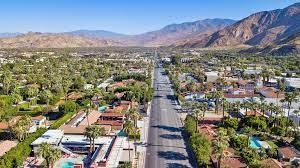
Downtown Palm Springs, Image via Planetware

BY SOUMYA KARLAMANGLA

PALM SPRINGS (THE NEW YORK TIMES
— The holiday season is upon us.

On a recent visit to this desert retreat, I walked a main drag decked out with giant inflatable Santas, bauble-covered Christmas trees and twinkling lights draped over just about everything. Palm Springs had become a winter wonderland, but a distinctly California one.

Under awnings decorated with mistletoe, diners sat outside enjoying the 70 degree weather. Palm trees towered over tinsel-wrapped lampposts. And the entire festive scene was amid a backdrop of massive brown mountains and cloudless blue skies.

For most Californians, winter doesn’t usually resemble a snowy paradise. But, as you well know, we savor the holiday season nonetheless.

You’ve been writing to me about how you mark this time of year, whether with a chilly walk by the beach, a batch of tamales or stargazing in the desert. Here’s some of what you shared, lightly edited:

“My friends and I have been baking together every holiday season for the past 25 years. We call it the annual ‘bake-a-thon.’ The bakers consist of my girlfriends, who are now in their 70s — we’ve been friends since kindergarten at Carthay Center Elementary School — as well as their daughters and granddaughters.

The host is our dear friend Suzy, who opens her Culver City home and kitchen to us every year. Each person brings their favorite cookie recipe and we bake together. Another friend travels from Ojai with our favorite coffee cake, which is made from the recipe we grew up with from the L.A. Unified School District. After we bake, we put all the cookies out for display, fill tins and containers and share the bounty. Suzy makes a delicious homemade lunch and we leave her home full of good food and wonderful memories.” — Judith Penchansky, Culver City

“I come from a mixed family background, and luckily, both sides really center around food. Each year, we kick off the holiday season with a Hanukkah feast complete with latkes, brisket, kugel and challah — perhaps also some rugelach or mandel bread. Then, on Christmas Eve, after my brother has finished prepping sauces, meat and masa, we all get together to wrap tamales while my mom makes beans, rice and veggies. For us, it always comes back to latkes and tamales. Foods that bring comfort, joy and a sense of home.” — Leanne Greenberg, Mountain View

“Every year on Dec. 26, my husband, kids and I spend the day at the beach — no matter the weather. We bundle up with coats, beanies and blankets, paired with our flip flops. We make a stop at our favorite local coffee shop for some warm drinks to take with us. After all the hustle and bustle of Christmas, it’s such a relaxing breath of salty ocean air.” — Ashley Pansoy, San Jose

“My husband and I leave home a few days before the new year every December to spend time camping and hiking in one of California’s many desert parks. Though it gets dark some seven hours before midnight and it’s often a struggle to stay awake, we make it a point to ring in the new year while stargazing under the vast night sky. Bundled up, we look out at light emitted by celestial objects years ago, steeped in quiet reflection. This ritual serves as a reminder that being in touch with life’s timeless side is within reach.” — Edith de Guzman, Los Angeles

Tuesday, October 25, 2022

Dubai: The Power Of Vision

Dubai Image: Hotels Combined

BY MOHAMMED BELLO YUNUSA

Dubai is not a hidden destination for glamour policymakers, politicians, small and big business people and leaders of countries that are constantly in search of pleasure and money among others. Indeed for global shopping, Dubai is the destination for many including leaders of African countries. My mission to Dubai is to learn and see things for myself. I am curious to know how other nations are governed and other cities outside Nigeria exist.

The first incidence of how other countries are ruled at the material time of writing this was the British Prime Minister Liz Truss’s demonstration of ‘I am in charge.’ In a swift move on the British political chess board, the Prime Minister sacked the Chancellor of the Exchequer mainly because “the mini budget went further and faster than the market expects”. Such a budget was making a negative wave on the economy and that was bad for the citizens and businesses. Truss quickly appointed another to reverse the damaging policies. Thereafter, Truss assumed responsibilities for the prevailing economic and political woes; she resigned! African countries need someone to call the shots and assume responsibilities. Knowing who is in charge of Dubai city did not come to me this vividly.

Sure, I did not come to Dubai to study how it is governed. With knowledge acquisition and dispensing as my trade, I came to Dubai in search of new ideas and perspectives. This is to last for a week. With time limitations, I only had glimpses of the beautiful city. Though the city has a record of sand storms, it lacks the filth of Nigerian cities and the potential for flooding as in Lokoja. There are no uncovered drainage and littered polythene bags.

The small fishing village of the 15th century has become a sprawling city that provides commerce and pleasure to the global population. For shopping, education, health and leisure and other tourist attractions, certainly, Dubai is a place to go. Dubai is a safe and secured city. It is said that you can leave your bag of money on the street and come back for it the following day without a heart attack. On the first day in the city, I ventured into a grocery. The elderly Pakistani shopkeeper volunteered an assurance that I should feel free to go anywhere any time without fear of kidnap, one chance or any harm to my person. A taxi driver confirmed that safety and security in the city at all times do not exist anywhere outside Dubai.

The serenity is inherent in vehicular traffic. The city is extremely neat. The roads are kept clean by appointed persons. However, the streets can be littered with SPA advert handbills. Don’t pick any as you may be led to buying services from the opposite gender. Other than the fact that there is effective separation of vehicular traffic from pedestrians, drivers generally respect pedestrians like their parents. The entire traffic can come to a stand still for only one pedestrian to cross the road. Yet no horn sounds. I am sure people don’t greet people with vehicle horns there.

With the overlaying road network and metro line interchanges, added to massive and exotic building structures, Dubai is a fine example of concrete jungle. All urban services, cables and pipes are well encased in mother earth. Those that cannot be encased are at the rooftop of buildings. Rooftops are places for gas cylinders, air-conditioning engines and swimming pools. In all these I did not see or hear the sound of electricity generators. Yet, bulbs do not blink let alone go off. The electricity is a good manager of vehicular and pedestrian traffic. Water supply is as forceful on the thousandth floor as it is on the ground floor. Dubai is a place where city infrastructure works just as the city never sleeps.

Dubai appears to be ahead of its time. Urban development is set to attract new investments. In several places, construction of high rise buildings, commercial or residential, is ongoing. Yet, there are several notices on vacant places as adverts of residential or business places. A place to rent is not an issue for new investors and entrepreneurs. The rate of building development is promoted by the non-payment of tenement rates by property owners. The only tax people pay in the United Arab Emirates is value added tax. This makes workers’ personal income wholly personal.

In this jungle and amazing infrastructural performance, a few houses have flower pots on their balconies in the high rise residential buildings. Along the streets and open spaces, there are few plants. A view of the city from the window of the hotel only reveals limited instances of trees and shrubs in the city. Few plants dot the city. Urban vegetation is a major challenge for the city. With the sand storms, huge possibilities of emissions of pro-climate change gases, the city can be better with increased density of plants and shrubs. The state in collaboration with residents can do something.

The bottom line is that Dubai is safe, secure, functional and economically boisterous though bereft of climate change mitigation item, urban vegetation cover. The wonder is: what are the take homes that leaders and policymakers of Africa bring back? African leaders and policymakers need to add value to their national development from experiences of other countries and even cities. If we cannot think it out, we should be able to copy. This is desirable because of our levels of development and performance. The state of many African cities, including Nigeria is, unfortunately, to say the least, dysfunctional, unsafe and unattractive to investors and enjoyment seekers. It is time for governments to begin to measure the influence of foreign visits, study tours and others by leaders and policymakers on policies, actual development and quality of life in Africa. Experience of other countries must be brought to bear on our vision and activities for the good of our lives.

The development, governance of and service delivery in Dubai is overwhelming and impressive. In the next full travel package to Dubai, do me a favour, pencil me down.

Yunusa is Executive Director, Socioeconomic and Environment Advocacy Centre, Zaria

Saturday, March 05, 2022

EMIR OF KANO VS AIR PEACE: WHY NIGERIA DOES NOT WORK

BY TUNDE AKANDE

Combo of Aminu Ado Bayero and Allen Onyeama

The usually volatile ancient city of Kano may erupt in protest any moment from now, except urgent actions are taken by the appropriate authorities to stem the tide. And when as it now threatens to do, Nigerians will be able to understand the dynamics behind such past occurrences that happened in the city. Kano may erupt because the god in control of Nigeria is wounded and unless it is appeased will bare its fangs and the street urchins of Kano may take to the streets once again in protests. Of course, such protests usually turn violent.

The recently coronated Emir of Kano, Alhaji Aminu Ado Bayero who recently gave his daughter in marriage to the son of President Muhammadu Buhari, Yusuf Buhari, is embroiled in a face-off with the management of Air Peace and its chairman, Allen Onyeama. Many will recall that the lavish royal wedding was celebrated by moneybags who flew at least 100 jets to the city and where gift items such as laptops and iPhone 12 were given out freely to privileged Nigerians who attended the wedding.

Alhaji Ado Bayero a few days ago was coming from Banjul, the Gambia when his flight was delayed for one hour. Promptly, through his cousin and protocol officer, Isa Bayero, who described himself as a pilot, put an early morning call to Allen Onyeama who was still in bed at 5:52 am. Onyeama did not pick up the call. But a second call came in at 5:59 am which woke Onyeama up. Seeing that the call was from Isa Bayero, Onyeama received it wondering why Isa was calling that early morning. Isa told his story: ‘revered’ Emir of Kano, Alhaji Aminu Ado Bayero, will be landing at the Murtala Airport that morning and therefore Onyeama should delay the Air Peace flight to Kano for 6 am so that it could take the emir and his entourage of 10 to Kano.

Onyeama asked to be allowed to check happenings at the airport concerning the flight. Onyeama got the airline’s Chief Operating Officer, Toyin Olajide who advised Onyeama that it was impossible because the plane was loaded and already taxiing. Delaying the flight for another one hour, only to open its doors for Emir Aminu Ado Bayero and his entourage of 10 will attract media outrage which will not augur well for the image of both the emir and the airline.

The airline offered the emir and his entourage another flight at 7 am, just one hour later. To Onyeama, that was a fair deal to save the image of the emir and the airline. To Isa Bayero, that was a great disrespect to the emir. Isa dragged the people of Kano into the dispute by saying that the action of Onyeama and his airline had desecrated the traditional institution of the people of Kano.

For Onyeama, with his business mind, it was businesslike not to favour just one passenger over more than one hundred others who may also have business appointments in Kano where the flight is headed. But Onyeama operates in an environment where one animal might be better than 1 million others. The Emir of Kano must be preferred above any other Nigerian because he is special. Whatever the constitution says about equality of all Nigerians must stop where the shoe of the emir begins. Whatever consequences such decision as delay of a flight for the pleasure of an emir does not matter, the pleasure of the emir, especially that of Emir of Kano must be served.

Enraged and disappointed, Isa Bayero threatened to get the Nigerian Civil Aviation Authority (NCAA), to punish Onyeama and his airline. It was not an empty threat especially if the personalities that head both the NCAA and the Ministry of Aviation are factored in. At the NCAA is Musa Shuaib Nuhu as the Director-General while at the Ministry of Aviation is Hadi Sirika, both of them from the North.

Hadi Sirika, an experienced aviation technocrat had exhibited great patriotism when he took side with Onyeama and his Air Peace in their face-off with UAE until he compelled a fair and legal deal from UAE. Hadi Sirika took his stern approach during a Muslim festival where Nigerian rich Muslims virtually empty out into UAE. He took to social media to explain his stern action and asked the Muslims to bear with the nation. It was a rare display of patriotism that got the applause of all Nigerians.

Despite this, we may not doubt the fact that Isa Bayero was emboldened in his threat to get the NCAA to punish Onyeama and Air Peace because these two bodies are headed by kith and kin, “subjects” of the emir, perhaps. It is not unusual in Nigeria. That is why the heavyweights ensure that major ministries are in the hands of “our people”. Most are known to be recommended into offices by traditional rulers not for competence but for connection and possible use in the future. The Oluwo of Iwo, Abdul Rasheed Akanbi, recently reportedly requested the sum of 20 million naira from the Osun State government to wed a daughter of the Emir of Kano to consolidate a religious and traditional alliance.

With royal fiat, Isa Bayero also gave Allen Onyeama and Air Peace three days to apologize to the emir and go to Kano physically to tender the apology. One news outlet, PM news put it bluntly as “to prostrate” an apology to the emir. Only Yoruba people will know the full meaning of that. Prostration is given by the low to the high, from a slave to his master, from a child to his parents. We don’t know exactly what Isa Bayero will do if Onyeama calls his bluff. But Isa said he and the emir will go to any length to correct the “disrespect”.

But many Nigerians are wondering why a simple business dispute should mean going to any length to extract a pound of flesh. Many can’t understand why the emir and his cousin, Isa Bayero didn’t just go to court. But going to court is not in the Nigerian character, drafting the common people to the street to attack enemies do the job better. It is not the first time. So if there is street brawling in Kano whether now or in the near future and especially if it is against the Igbo, the tribe from which businessman Onyeama hail, it must be clear to discerning Nigerians that the need to maintain and enforce the status of the emir is the cause.

Nigeria Airways, the nation’s former carrier failed because of attitudes such as this when some high-class Nigerians used it in a less than businesslike manner; when traditional rulers and the political class commandeered its flights for purely private business, and often ended up not paying the airline. During the last yuletide season, the Nigerian Railways got the approval of the president to carry people free all over the country; in a service built with loans from China which must be paid back. We must expect that when it is time for a Muslim holiday, the same gesture will be offered to make a balance between the two major religions, Islam and Christianity. It will be nothing but another preparation for failure.

If Nigeria must succeed, if it must get up from its slumber, if it must catch up with other nations that started with it at the same time but that have left it behind, Nigeria must be run like a business concern. The likes of Isa Bayero and his threats must be roundly condemned. Onyeama and other businessmen and women must run their businesses according to sound business principles. If they fail they fail but it must not be because the whim of an Emir or an Oba or an Obi or Igwe is imposed on their business.

Most importantly, Nigeria must run on the basis of true equality, justice, and competence. No Nigerian must be bigger or superior to any other. Time has come to remove all our traditional institutions because they have outlived their usefulness. They have become irrelevant to our quest to modernize. You can be sure that all the ten in the entourage of the emir including Isa Bayero are maintained by the government of Kano. You can be sure that eight of that entourage are ‘dongaris’ or palace guards, fellow Nigerians who are made to serve the emir.

We can no longer run the nation with principles developed in the 13th century. The Emir of Kano must be told in very clear terms that he is no bigger or better than any other citizen of Kano and Nigeria. All who seek to rule over other Nigerians must submit themselves to elections and seek the votes of Nigerians. It is then we know they have the consent of Nigerians. A system based on gerontocracy, aristocracy, and not a meritocracy, according to Professor Akinwunmi Adesina, the high-performing president of African Development Bank (AfDB) will tend toward mediocrity. That is the reason Nigeria is not working.

Tuesday, February 08, 2022

Rwanda Now A Hot Cake In Tourism Post Covid-19 Pandemic


Rwanda is one of the countries that have aggressively fought the spread of Covid-19 in the world.

About nine million people (60%) have at least received their first shot of the vaccine and about two million have already gotten their booster jab.

President Paul Kagame has personally played a meaningful role in engaging global leaders to seek permanent solutions to the pandemic.

He was able to secure vaccines not only for Rwandans, but also been at the forefront in advocating for equatable access of vaccines to developing countries, especially in Africa.

In a more serious effort, in September 2021, Rwanda Development Board (RDB) on behalf of the goverment of Rwanda, signed a collaboration agreement with the International Finance Cooperation (IFC) that will see developments in the vaccine manufacturing capacity and contribute to expanding vaccine production in Africa.

Subsequently, Rwanda signed an agreement with German pharmaceutical firm, BioNTech SE, to begin manufacturing vaccines and other drugs in Rwanda.

More so, these measures against the spread of the pandemic, have yielded tangible results, but the pandemic did not fail to dismantle the economy, particularly the tourism and hospitality sector that succumbed to complete wreckages.

However, RDB has been trying to make adjustments to see how the sector comes back on its knees, a sector that earned the economy about US$500 million in 2019.

Notably, as the pandemic pounded the sector, it inadvertently triggered the appreciation and exploitation of domestic tourism that had traditionally been undermined. A lesson has been learnt that investments and promotion of domestic tourism makes substantial contribution to revenue generation to players in the tourism and hospitality sector.

Moving forward, as the world increases measures against the pandemic, ‘Covid-19 survivors’ are beginning to look around the world for safer and organized destinations to run to, two years after multiple lockdowns and travel restrictions.

In fact, data from the Centre of Reservations in Rwanda indicate that there is an anticipated boom coming soon. This phenomenon is also being experienced at a time when Rwanda is a complete package of a destination than being an extension for East Africa as previously considered by some tourists.

And, the recent announcement by the Commonwealth Secretary-General, the Rt.Hon. Patricia Scotland that member countries agreed to host the Commonwealth Heads of Government Meeting (CHOGM) in Kigali in June 2022, despite it having been postponed twice due to COVID-19 pandemic, is a vote of confidence that Rwanda is now a safe country.

Taarifa has spoken to players in the tourism and hospitality sector. They see the light at the end of the tunnel. According to Paul Muvunyi, the Chairman and Representative of Abarcombie and Kent (A&K) in Rwanda and owner of 3B Group of Hotels, following the government efforts to revive the sector, “establishments are recording high number of bookings more than even before the pandemic, in 2019.

“We appreciate RDB’s support and efforts to continue promoting the country as a high-end touristic destination,” Muvunyi said. “We also appreciate the government’s continued efforts to control the spread of COVID-19.”

Meanwhile, in February 2021, RDB produced a physical and ecotourism masterplan near Akagera National Park. From the conceptualization and structural plan perspectives that Taarifa has seen, coming to the use of land, general zoning was elaborated into two major zones, one being the both Eastern part potential for ecotourism facilities development, while the remaining one is zoned as a core conservation zone.

Almost two hundred hectares have been designated. The demarcation is detailed and forward thinking. Some animals such as Zebras, Impalas, Bushbucs, Warthogs, Waterbucs and Klipspringers will be spared space in the zone.

Facilities that are being set up, such as Akagera Safari Camp will soon be opening doors to the general public. This area has modern infrastructure like roads, water, electricity and fast speed internet.

According to Clare Akamanzi, the CEO of RDB, a lot of progress has been registered over the past decade as Rwanda truly emerged as a leading destination for Investment, Innovation and Tourism.

This, she says, “has been as a result of key initiatives the Government has pursued to which RDB has contributed, notably; Visit Rwanda, Meet in Rwanda, Start in Rwanda and Made in Rwanda.”

By end of 2019, Akagera National Park was receiving over 50,000 visitors annually, up from about 10,000 in 2010 when RDB handed over the park to a South African based conservation group, African Parks Network (APN).

In 2011, the park received 20,657 visitors, which was a substantial 35% increase in the parks visitor numbers from 2010. In 2012, the park received 23,048 visitors, an increase of 12% from 2011 and an overall 24% increase then.

APN formally took over the management of the park in January 2010 and promised to deliver on biodiversity conservation, and sustainable natural resource utilisation.

Had it not been for the pandemic, Akagera would be making a lot more. Visits dropped from about 50,000 which generated US$2.5 million to 15,844 in 2020, a 68% decrease compared to 2019.

Meanwhile, in other parks, Nyungwe park revenues reached over US$ 21.1 million (Rwf 19 billion) in 2018, while more than 5,000 tourists visited Virunga National Park in 2019, generating nearly US$7.5 million, just to mention a few.

Now, while these numbers paint a promising future as the pandemic slows its stance, there is a lot that has to be done.

Specifically, in the area of policy adjustments to facilitate recovery of the sector and to attract both local and international investments.

Consider this, Akagera National Park has a maximum of 123 rooms of accommodation inside and outside the park combined. The largest is the Game Lodge with 68 rooms. This is a fundamental gap and needs a quick intervention. Local investors have tried to play their role.

Akagera Transit Lodge has 13 rooms just at the entrance of the park. Akagera Rhino Lodge, a unique eco-tourism experience overlooking the park has just 7 rooms and Akagera Safari Camp, a mixture of safari and modern actecture also overlooking the park and a rare view of Ihema Lake, will be opening soon with 35 rooms. There is definately an acute shortage of rooms.

In the meantime, these facilities also claim that they would be making more revenues from park tourists if RDB made adjustments. “If a tourist spends a night at our lodge, and needs to take a rest before taking a park tour in the morning to watch carnivores or take a boat ride to watch birds, they are required to buy another permit for a night tour because the park closes at 6pm and a tourist who does not have a room inside the park lodges has to exit,” says Longi Mfizi Nkaka, the proprietor of Transit Game Lodge (Vegas).

Yet, there is a rationale that is prohibitive for tourists.

Akagera has a unique ecological setting. It is a home to all sorts of biodiversity. It is the only National Park in the region with the Big 5 and other animals.

“A tourist should be allowed multiple entry within 24 hours because these animals have a different lifestyle, a tourist needs to allocate park tours in different times of the day,” says Nkaka.

Another concern is that Akagera Park has only one entrance. For tourists staying at hotels in a geographically different location to the main entrance, are forced to travel dozens of kilometres to the existing single entry (main entrance).

Example, tourists staying at Epic Hotel in Nyagatare, have to drive all along to Rwinkwavu. There is thus, need for creation of other entrances.

“The adjustments will make us a distinct and unique destination, but also increase revenues for hotels around the park. It could be Nyungwe or Akagera,” Nkaka says.

Akamanzi told Taarifa that she will look into the matter and act accordingly. “I need to investigate further,” she said.

Nevertheless, Rwanda, sooner than later, will be one of the few countries that will emerge as a winer post Covid-19.

But that’s not enough, both government and players in the sector must improve the quality of services in the entire value chain to cement the ambition of becoming a high-end destination. At the same time, government must revise its policies to maximize the contribution of tourism in economic development.

Monday, January 24, 2022

Rwanda The 6th Safest country For Solo Travellers, New Survey Finds

Downtown Kigali. Image: Canva via Euro News


BY JONNY WALFISZ

KIGALI, RWANDA (EURO NEWS) -- Rwanda has been named as the sixth safest country in the world and safest country in Africa for solo travellers.

Switzerland topped the ranking, with Japan coming in third, the only other country not in Europe to list in the top 10 safest countries.

Usebounce, a luggage storage app, created the ranking by combining a crime index and a safety index to evaluate where solo travellers would feel safest. These indexes were made using data from Numbeo.


The rest of the top 10 includes Slovenia, Georgia, Iceland, Croatia, Czechia, Austria and Denmark.

For many people, Rwanda is still associated with the brutal genocide in 1994. But the country has become widely recognised as one of the safest in Africa for some time.

“Rwanda has invested much effort in its national security, by building competent and professional security organs,” the survey noted.

In the capital city Kigali, low levels of crime mean tourists don’t have to worry. In a 2018 Global Law and Order study by Gallup, 88 per cent of Rwandans said they felt safe to walk alone at night, the same figure as in Finland, Slovenia and Tajikistan.


The only places where more people said they felt safe were Singapore, Norway and Hong Kong.
Travel advice for Rwanda

With Rwanda recognised as one of the safest countries in Africa for solo travellers, it’s still worth noting some things to be considerate of while there.

Rwanda’s direct neighbours have experienced a lot of instability that sometimes spills over the borders. UK travel advice reminds potential travellers to be aware that conflicts on the borders with neighbouring countries of the Democratic Republic of Congo and Burundi can flare up without notice.

Buses are a great way to travel around, but make sure to buy tickets direct from the company you are travelling with as touts are known to try and prey on unsuspecting tourists. Similarly, cabs are a safe and reliable way to travel around the city of Kigali.

Homosexuality is legal in Rwanda and there are a number of queer-friendly spots, but there is still not country-wide acceptance and LGBTQ+ people should be conscious of remaining taboos.

And a big no-no is taking pictures of anything related to the government or military such as post offices, banks or border crossings.
When you are there

One of the most exciting things to do in Rwanda is to see the gorillas. To do this you can go on gorilla treks. The Rwandan government has worked to make guided tours safe for both tourists and the animals so it’s important to book one of these if you want to see any of the protected animals.

In a move to help the environment, Rwanda also banned plastic non-biodegradable bags in 2008. Make sure you don’t bring any into the country as you could face a heavy fine. And you wouldn’t want to be that tourist getting into trouble with officials because you had to bring a plastic bag into Rwanda.

Currently due to the pandemic, COVID restrictions are still in place for travellers entering and exiting Rwanda. To curb the spread of the virus, the country has an active curfew between the hours of 10pm and 4am. Tourists must also take a PCR test 72 hours before visiting any of the country’s national parks.

Thursday, January 09, 2020

Meet Mark Essien: Nigerian Entrepreneur Transforming The Travel Industry Across Africa

Hotel, NG Team. Image: Mark Essien via Forbes


BY TOMMY WILLIAMS

Much can be said about the budding tech scene in Africa, with many startups founded within the last decade making big wins in the industry. However, in the midst of the hype, there is a distinct lack of local talent that is being nurtured and brought into the businesses, with many founders opting to import expensive expatriates. This strategy is not just inefficient for startups in the longer term, but also for the African economics. One serial entrepreneur who has established a number of successful businesses (including Africa’s biggest hotel booking platform Hotels.ng) whilst training up the next generation of African tech leaders is Mark Essien.

Early Beginnings

Essien was born in Nigeria to business-minded parents who owned a number of schools and was a high school student during the tumultuous military coup in the late nineties. He went on to graduate and accepted an offer at a German university. Unsurprising, with Germany being one of the world’s most innovative countries, he quickly recognised the rise in demand for digital products during the ‘dot com’ era. He became fascinated and, although he did not own a computer at the time, his older sister, who was also based in Germany, allowed him to use her own, along with her dial-up internet.

Essien was soon hooked on everything internet-related and invested all of his spare time into trying to understand it. After mastering the basics, he purchased some visual basic software and learned how to develop software. His first idea was a file sharing service (similar to Napster) called Gnumm, a platform that would go a step beyond peer-to-peer sharing by allowing individuals to share data via multiple networks. The app soon had many downloads. The app garnered attention and eventually an acquisition proposal from Snoopstar, an augmented reality platform which was part of the Bertelmann group. After the acquisition, he postponed his studies and started working for Bertelmann as part of the software development team.

After a few years at Bertelsmann and having experienced a taste of entrepreneurship with Gnumm, Essien now focused on computer programming. He tried his hand at a number of different projects, writing the code himself from his university dorm. At this time, he had returned to Beuth University of Applied Science to complete his degree. He created a platform named Standard MPEG, which was one of the first MPEG encoder software available for the DirectShow platform. Essien sold his software to a number of notable clients, including Disney and the US military. The income from his endeavours meant he was able to support himself financially through his studies, whilst also developing his entrepreneurial flair.

Although Essien has become an expert in building software for PCs, the age of the smartphone had begun and the popularity of the devices had skyrocketed. Smartphones transformed the way we use technology and so, Essien adapted accordingly. Over the next few years, he developed apps for the Apple’s App Store with mixed success. The market for apps in Western countries became saturated and so Essien saw an opportunity to take the technology to Africa. He had researched the start-up climate in the continent and saw that things in South Africa had started to take off. However, the industry in wider Africa was nascent, so he shifted his focus to consumer facing startups. The travel industry in Africa was active but many providers lacked an effective consumer experience, particularly the travel booking process. Essien identified an opportunity to develop an efficient technology solution.

Establishing Hotels, NG

Essien moved back to Nigeria to build his hotel booking platform. Although Lagos is the commercial capital of Nigeria, he set his sights on the city of Calabar, a popular holiday destination for natives and other Africans. The dense population of hotels in the city provided a large number of potential clients. He divided his time between developing the website and visiting hotels in order to share his platform with their management. The sign-up responses were positive as the platform was mutually beneficial, given that each hotel could advertise its products and gain new customers. Ultimately, “no hotel wants fewer guests,” Essien states.

After signing up the majority of the hotels in the Calabar market, it was time to expand. However, larger cities do not benefit from the same density of hotels and the higher levels of traffic make transportation challenging. Seeking investment, Essien met with a well-known African entrepreneur, Jason Njoku, founder of iROKO Partners Limited, who, at the time, had started his own investment fund. Njoku offered him USD 75,000 in seed funding. Given the lean business model and Essien’s ability to develop the website himself, the funding was mainly used for recruiting sales agents, who would sign hotels up to the platform. As the business grew, the number of agents increased to 300, many of whom were contacted and hired via Facebook.

Today, Hotels.NG has a team of 150 people, serving hotels and customers across Nigeria, with plans to expand across Africa and to eventually offer the full end-to-end travel experience. The journey has been tough but rewarding for Essien. When asked about the biggest challenges that he has faced so far, he mentions recruitment, as the tech industry in Africa in still in its early stages therefore finding trained talent proved to be difficult. The problem is compounded by international companies and startups who outsource or hire expatriates to fill their technical roles. Essein was reluctant to adopt this strategy as he is passionate about seeing the African technology ecosystem and economy grow and thrive. With this in mind, he established an initiative to train local developers, some of whom have become some of Hotels.NG strongest employees.

Creating The HNG Internship

HNG Internship is an initiative which came about when Essien needed to hire three local developers. The search was challenging, however he eventually found three talented individuals who were also keen to develop their technical skills. The next year, he decided to advertise the programme and 170 people applied. Rather than filtering through CVs, he gave the applicants a technical task and each day he eliminated the weakest 10. Eventually, he was left with 10 candidates who proved to be exceptional interns. He repeated the process in the following year and received 800 applications. Neither Essien or his team has the capacity to mentor the interns personally, so he brought in the previous 10 winners to filter through these applicants using the same recruitment process. The most recent cohort of the internship had 13,000 applicants and 40 mentors. Essien feels proud that, although he is not able to hire all of the applicants, local developers are being exposed to practical programming experience, which can be difficult to obtain in the region. Essien is considering launching the initiative out of Hotels.NG, so he can reach even more talent across Africa.

After reading about many of the challenges faced by high-profile startups in Africa over the last year, it’s exciting and encouraging to learn about Essien’s his entrepreneurial journey. His genuine passion to see Africa thrive will continue to be key to his success.


SOURCE: FORBES

Monday, December 30, 2019

Ethiopian Airlines Launches Nonstop Flights To Houston, Texas

Ethiopian airline staff. Image Skytrax


BY JOHN WANJOHI
Ethiopian Airlines has launched direct flights from Africa to Houston, Texas part of its efforts to spread its services across major cities in the world.

The giant airline will operate three frequencies weekly from Lome, Togo, to Houston using the 270-capacity Boeing 787 Dreamliner aircraft, according to Ethiopian Chief Executive Officer Tewolde Gabrielmariam. The route, code-sharing with Togo’s ASKY Airlines, will be operated on Mondays, Wednesdays and Saturdays.

Speaking at the launch of the inaugural flight held at the George Bush International Airport in Houston on December 16th, Gabrielmariam said this is the airline’s 127th destination in the world. He added that Ethiopian is now the largest airline in Africa with a fleet of 130 aircraft.

‘‘This is also a very important connection for East Africa, South Africa, and Central Africa and also a very important connection to West Africa. This is the only direct connection to West Africa because we are using our second half in Lome for West Africa to connect passengers to the entire West and Central Africa.”

“The connectivity that we have established is beyond Lome as we have set out to serve our esteemed customers. It is the fastest and shortest in the history of the aviation industry,” said Gabrielmariam.

At a brief ceremony before the flight took off in Lome, Ethiopian Airlines Vice-President Rahel Assefail, said: "Ethiopian Airlines is happy to connect more cities in America to Africa because of the connection between West Africa and Houston. We, as a company, decided to route the airlines from Lome, West Africa, instead of home base in Addis Ababa. We hope this will increase the relationship between Africa and America."

Houston Airport Executive Director, Mario Daiz, said the historic flight would improve connectivity between Africa and Houston and contribute about $100 million into the US economy annually.

“Houston is now officially reconnected to the African continent through the efforts of Ethiopian Airlines to make business seamless for international travelers and others in the corporate world. Through the flight to Houston, Ethiopian Airlines is creating unity among people of diverse groups, promoting culture and strengthening values,” he noted.

“This route will not only save time, but it will also provide job opportunities then inject multi-million dollars into the Houston economy,” he added.

Some of the passengers on the maiden flight expressed their excitement over the launch of the new route.

Obinna Oruche, a Houston-based Nigerian medical doctor, said: “I have been in the US for 10 years but try to visit Nigeria once in a year. This inaugural flight is a big deal and relief considering the hassles of traveling from Houston to Addis Ababa, which is 16 hours. With this, we don’t have to fly from Addis to Nigeria, which takes another four to six hours sometimes. With Lome is 12 hours. So the business move is good. I want to commend the Ethiopian Airlines management for this initiative. It has been a pleasant experience for me. The plane is clean, neat. The hostesses are good. They had this permanent smiles on their faces. I will be flying them more often.”

Wese Obiabaka, stated: “I didn’t know it was an inaugural flight. I just found out online. I am lucky to have flown the airline and it is my first time flying the airline. I have two kids and it is the only flight that we found that has the shortest time. Others have longer waiting periods like 11 hours. But this is short and we opted for it. It is epic. The experience so far has been wonderful. It is an airbus. I like air hostesses. They are free; not tight-fisted. They are going to enjoy Nigerian patronage because Houston is like an extension of Lagos.”

An Ethiopian, Solomon Tamrat, noted: “This is my first time in the (United) States and it is a good experience for me. The airline is good. The service is good. And being an Ethiopian, I can say Ethiopian Airlines is me and I will continue to fly it.”


SOURCE: MWAKILISHI

Friday, December 08, 2017

State Dept Says Trump Travel Ban Fully Implemented

Washington Solicitor General Noah Purcell, center, speaks during a protest rally, Wednesday, Dec. 6, 2017, outside a federal courthouse in Seattle. The U.S. Supreme Court decision allowing President Donald Trump's third travel ban to take effect has intensified the attention on a legal showdown Wednesday before three judges in Seattle who have been cool to the policy as they hear arguments in Hawaii's challenge to the ban, which restricts travel to the United States by residents of six mostly Muslim countries and has been reviled by critics as discriminatory.

WASHINGTON (AP) — The State Department says President Donald Trump's travel ban on citizens of six mainly Muslim countries, North Korea and Venezuela is now fully operational. The announcement follows the Supreme Court's decision earlier this week to allow enforcement of the ban as it is challenged in lower courts.

The department said it began fully implementing the ban at the opening of business at all U.S. embassies and consulates on Friday. The ban restricts citizens Chad, Iran, Libya, North Korea, Syria, Somalia and Yemen from getting U.S. visas. Some Venezuelan officials are also covered.

The administration says the restrictions are based on an assessment of each country's security situation and its willingness to share information. Critics say the measure is an attempt to bar Muslims from coming to the U.S.


Sunday, November 17, 2013

American Tradition: Legendary Highway 61


The restored but abandoned art deco Greyhound bus station in Clarksdale, Mississippi is a symbol of the Black Diaspora. When African-Americans escaped the poverty of the South in search of industrial jobs and potential prosperity in the north at the beginning of the 20th century, they also brought their musical tradition - the blues - with them by travelling North from New Orleans on Highway 61 by car, Greyhound bus or train to get to Clarksdale, Memphis, Saint Louis or Chicago where the blues thrived.Image: John Van Hasselt

Tuesday, August 25, 2009

DIARY: That Art & Soul Festival In Oakland, California

BY AMBROSE EHIRIM


The last time I was in the Bay Area, I did not pay much attention to the goings on, particularly Oakland from around which I hadn't been anywhere in the city for quite some time. It had been in and out, business as usual, so, not much to talk about in that regard. But this time around, a whole lot turned out differently. I wasn't aware of the turn around of things in downtown Oakland and for not to have checked in for a while, I was impressed. The city changed, indeed!

The raggedy, skid row, home of the Black Panthers and the classless sleep on your door step, ghetto-crawling neigborhood is no longer what it used to be. Oakland is totally transformed, and thanks to Jerry Brown who as Mayor of Oakland saw the necessary steps required to making things happen for folks long abandoned. The story of Oakland and its overnight transformation is overwhelming.

As it happened, the 9th Annual Arts & Soul Festival in Oakland had to be my calling since I have not seen the city in many years, and besides, each time I pop up in the Bay Area, Oakland never crossed my mind for I had thought of where it's jamming -- San Francisco, San Jose, Berkeley, Saratoga, Stockton, Santa Rosa, the farming-vineyards of Sonoma County coupled with other big recreational neigborhoods in the Bay Area, of the Woodstock and Coachella type -- for the groove and all that stuff.

But nevertheless, this time around, there was an event and I had to be focused to see how it unfolds. Quite fascinating.

August 14: I arrived Oakland and checked into the Ambassador Hotel on the corner of Franklin and 13th Street. A little bit tired, I made some calls to see who is around town. Not much, though, and for Friday night, I couldn't figure out what's it I was going to do before the festival kicks out the next day. I decided to go to bed and get some rest. No, I did not go to bed immediately; I popped up the news networks to see what's happening in my neck of the woods and what the Republican airheads are talking about.

However, it turned out to be the same old song -- the mud-slinging so-called conservatives who only think for themselves and how to protect their ill-gotten wealth negating the fact that under any circumstances in a democratic fabric, that there are people, underprivileged, who will always need help of some sort to overcome their predicament. It is natural and the Republicans and the newly coined Blue Dog Democrats, whatever that is, don't seem to realize and unfortunately they are not getting it. I still don't get it myself and I am not going to be part of a debate that does not make sense at all in a situation a desperately dying fellow should be allowed to die on the grounds of having no medical coverage.

What are we talking about here?

An organized society?

Well, since politics, they say, makes strange bed-fellows, let's believe in the rule of law, upholding and respecting democracy; and hopefully the Republican airheads would come to terms with reality and do the right thing. Cable News Network and all that news-related channels, including Fox, had become a bore.

August 15: I got up fresh and ready like Freddy for the festival. There wasn't much happening on the streets of the high-towered downtown Oakland when I peeped through the window of my hotel room.

At 10:45 AM, I was already on Broadway and 14th Street checking out the vendors, the area's local press and patrons who had showed up with delight for the festival's 9th year anniversary. The streets and sidewalks had already been flooded with the four stages ready to explode with performances of the day. On the stage at 12th and Clay, Loquet, BoDeans and Grammy Award winning artist, Shawn Colvin, were scheduled to perform. The stage in front of Oakland City Hall scheduled Abby and the Pipsqueaks, Jump Street and some local voices. The stage on 12th and Broadway had a Gospel showcase presented by Edwin Hawkins and the Community of Unity featuring Bishop Walter L. Hawkins of the Love Center Choir, Terrence Kelly and the Oakland Interfaith Choir,Sharon Wynn Davison, Sunny Hawkins and the Music Department, Men of Edurance, Derrick Hall and Company, while on 12th and Jefferson it was an all out jazz enssemble. The crowd was awesome and with summer almost winding down the vendors and organizers did the best they could to go with the flow especially in a 'slowmo' economy.

I walked around the four points of the festival and bumped into an artist whose booth had displayed all her finest works with the husband setting up the gallery. We chatted for a moment before the festival rose for the day. She was optimistic the festival "will eventually" be one of the big shows to be talked about in the near future despite its 9th-year of existence. I strolled down to the Oakland Convention Center on Broadway and 14th Street which is about 12 minutes away from the Oakland International Airport. Going inside the Convention Center sits Oakland China Town, The Preservation Park and some shopping complexes. A few short blocks took me to the Waterfront, Jack London Square and the Paramount Theatre which also is blocks away from my hotel room.

At about 7:45 PM, I checked back to my room for some rest before my buddy, South African-born, Berkeley-based sports freak, Johnson Boipelo Andile, comes around for some crazy sports talk and all that follows in a night of showdowns and pub-crawling. Andile had arrived late and we still hanged out anyway, talking about boxing which turned out to be his favorite sports, and he is really crazy about it going back to the heydays when boxing was real and very entertaining.

He talked about how boxing "is" no longer what it used to be and that all the fuss about Dominican Republic born undefeated Fernando Guerrero who now fights out of Salisbury, Maryland, is being overrated towards his upcoming fight August 29, when he meets Louis Turner in the middleweight division at Fitzgerald's Casino in Tunica, Mississippi. I'm not sure if I have been following up nowadays in what's been going on in boxing ever since it was commercialized nobody takes the sport seriously anymore. I had no idea who Gurrero was until he popped it up and on a critical note, he agreed with me "boxing ain't longer what it used to be."

We had talked extensively about the good-old days of boxing when all division were powerhouses. The days of Jeff Chandler, Azumah Nelson, Roberto Duran, Mustafa Hamsho, Salvador Sanchez, Eddie Mustapha Muhammad, Mathew Saad Muhammad, Dwight Braxton, Cornelius Boza Edwards, Michael Spinks, Sugar Ray Leonard-Thomas "Hitman" Hearns' "The Showdown," Marvellous Marvin Hagle-John "The Beast" Mugabi duel, Larry Holmes-Gerry Cooney race war, Muhammad Ali, Joe Frazier, George Foreman, Ken Norton, Ernie Shavers and numerous other superb pugilists of the day.

After all these talks on boxing greats over some drinks at the hotel lobby, we drove out on San Pablo running through University Avenue where it meets Oxford at UC Bekeley. We found a spot, a bar and hangout, kind of, continuing our discourses on boxing retrieving "The Spinks Jinx," "Thriller in Manila," "Rumble in the Jungle," "Aaron Pryor-Alexis Arguello 1 & 2," and things like that related to boxing of the profound era when boxing had class.

August 16: It's been fun all over the previous day and I'm already up to deal with the happenings around downtown Oakland. The show continued with style and the performances were all great. Smooth jazz artist Bobby Caldwell had played and the crowd he had pulled was unbelievable. A night of jazz. The two day festival reached its climax.

August 17: I had traveled to Concord meeting Emmanuel Onyeador at his friend's ranch and vineyard. We talked more over some fine wine. David Iphie who lives in Pittsburg had stopped by to join us. Iphie picked Onyeador and myself and we drove to his house in the embrace of his wife and uncle, UC Davis trained agronomist, Humphrey Ezuma, who was visiting the shores of this land for a moment. The usual local politics popped up which I will be writing about in a different essay, while Iphie's wife prepared a delicious ofe olugbo, bitter leaf soup with varieties of meat and dried fish. We talked more and I enjoyed the company.

August 18: Back to the crazy-dubby Los Angeles-Hollywood where every 'damn' soul is really freaking out, and business as usual, I guess. It was indeed a trip to remember, and Oakland, for your excellence in the arts, I think I would like to visit again.

Wednesday, May 27, 2009

A Beautiful Holiday Weekend In Los Angeles


About a couple of weeks ago, a friend of mine had talked me into going to the Bay area to watch Stephen Bishop perform at the Intramuros, South San Francisco, in a benefit concert. She had wanted to see the concert so bad. I had been preoccupied in Los Angeles. She wants to play a role in the concert for worthy causes. For the concert, and about our friendship, we are a study of compare and contrast.

She's into old-school -- the Norman Whitfield/Barrett Strong and Kenneth Gamble/Leon Huff composition-era. I'm into all vibes, a musicologist. She's a hardcore liberal; garrulous. I'm reserved, a somehow liberal conservative; a centrist. She's a fashion freak. I'm careless, fashionwise. She reads fiction and believes in the Zodiac signs. I'm the non-fiction reader kinda guy and have no faith in astrology. She's Libra. I'm Virgo. She cooks good. I'm a mixologist. She has shoulder length curly hair. I'm ishi nkwocha, shaved bald. She's Tonga, a Pacific Islander. I'm Igbo, an African. She's straight. I'm straight. She loves outdoors, and I do, too. She wears contact lenses. I wear prescription glasses; and both coasts are clear.

To make up for ditching Bishop's concert at the Intramuros, she brought up a set of rules on her own terms and whatever she said was going to be the rules. I said "Okay!" She got her way and ordered me around the house. That was cool!

Her set of rules was specifically for the Memorial Day weekend and that whenever it's all over I could take back my manly stuff and go ahead with my own set of rules she'd not have problems complying with. The rules were set as follows: There would be no driving and Friday which commences the holiday weekend would be set for eating out, perhaps a little bit of home cooking and checking out the movies. I knew it was going to be a hell of a fun since summer was just breezing around the corner.

School is over for some -- my daughter is back and it's going to be a long, beautiful summer, especially her tales of academia and life in the dorm. The weather's quite nice. Lots of sunshine. The beaches are full to capacity. Bikinis. Hot pants. Those fine, dark sunglasses. Beautiful faces sipping cocktails in the sun.

The volleyball tournaments: Hermosa Beach. Redondo Beach. Venice Beach. Rockweller Beach. Santa Monica Beach. The mark of summer.

The eateries and the random popped up in-house restaurants. The real deal and summer jams. Ceccone's on Melrose Avenue in West Hollywood. Jane's House on Hollywood Blvd. The Standard in Downtown Los Angeles. The Mint on Pico Blvd. in West Los Angeles. Club Tatou on Boylston Street in Los Angeles. O'Brien's Irish Pub and Restaurant on Main Street in Santa Monica. The Amazon Hut Brazilian Juice Bar on Ocean Avenue in Santa Monica.

The new arrivals on the bookshelves. "Rinnavation: Getting Your Best Life Ever," by Lisa Rinna on life's amazing journey. "Bad Mother: A Chronicle Of Maternal Crimes, Minor Calamities, And Occasional Moments Of Grace," by Ayelet Waldman.

At the movies as the summer hits pops up in June. "Public Enemies," directed by Michael Mann and starring Johnny Depp as John Dillinger, the notorious Depression-era bank robber, and Christian Bale as Melvin Purvis, the fedral agent who tailed Dillinger. "The Taking Of Pelham 123," starring Academy Award winner Denzel Washington as Walter Mathau, of a New York transit dispatcher and directed by Tony Scott. Here, John Travolta stars as leader of the gang. James Gandofini appears as Mayor of New York whom Travolta must fear. "Funny People," directed by Judd Apatow and starring Adam Sandler, Leslie Mann and Seth Regan. The film is all comedy but Sandler's role as a dying middle-aged man might turn movie goers off.

"Taking Woodstock," directed by Ang Lee based on a true story of Elliot Tiber, an employee at a motel in the Castkills who inadvertantly made Woodstock happen. "Inglorious Bastards," -- another World War 2 story of Nazi occupied France written and directed by Quentin Terantino. The movie features Brad Pitt as the leader of the Jewish-American soldiers dispatched to perform targeted acts of retribution on German troops occupying France. "Transformers: Revenge of the Fallen," which opens in all theaters June 24. Michael Bay directed, starring Shia LeBeouf as Sam who becomes enmeshed in a battle between two extraterrestial clans "when he buys his first car and it turns out to be an alien robot in disguise." And, of course, there's Eddie Murphy's "Imagine That."

These, and too many others we talked about. So as it happened, she's the one calling the shots. She wanted some African dish, and I was like, o yeah, again? She did not know what was running through my mind about her quest for African food. She's the one calling the shots, remember? I had to oblige since this great country of ours is a nation of rules, fact why it's organized.

For some reason, she figured I was not comfortable with the African restaurant kind of stuff she's been persistent asking for. We have all the time in the world to eat ofe olugbo, bitter leaf soup (dunno why it's my favorite) coupled with the okporoko, stockfish, eju, snail, dried fish and anu ewu, goat meat, as long as her weekend rules were upheld and respected.

However, on Friday, May 22, she decided we should go whole grain, vegetables and stuff like that. One spot was not too far from our location. We walked down about six blocks to this restaurant on the Westside. It was kind of regular and approximately a nice way to begin the long weekend. The restaurant, recently remodelled had a gracious and attentive service. We ordered some seafoods that was served with chunks of salmon, perfectly cooked shrimp with lotta veggies and other health-related fiber stuff. She loves wholesome sweetners such as honey, maple syrup, sorhum, sucanet and stevia.

A good looking evening, we hopped on the bus to the Archlight Cinema in Hollywood to see Ron Howard's "Angels & demons," starring Tom Hanks which to me should be Howard's last in that category. The movie's full of surprises.

On Saturday, May 23, the rules did not change. No driving, remember? After cleaning up and doing the normal around house work, we concluded it's Metro Line time. We arrived at the Wilshire/Vermont Blue Line Station and hopped on the train. Checking out from the Hollywood/Highland Station, we took the steps and bumped on tourists from all walks of life who took pictures of stars and the accomplished on the Hollywood Walk of Fame. Walking further down where Hollywood Blvd. meets Vine Street, and on the south of Hollywood laid the plaque of Apollo 13 -- Neil Armstrong, Edwin Aldrin Jr. and Michael Collins -- the first American astronauts to visit the moon.

On the north sits the landmark Capitol Records Tower known to have either recorded or marketed from the 50s to date, Frank Sinatra, Nat king Cole, Duran Duran, Richard Marx, David Bowie, The Beatles, The Beastie Boys, Kenny Rogers, Yellow Card, George Clinton, Selena Quintalline, Poison, The Band, Ice Cube, Radiohead, Tina Turner, Billy Holliday, Miles Davis, Grand Funk Railroad, Pink Floyd, Peter Tosh, Steve Miller Band, Maze, Dave Koz, Freddie Jackson, Snoop Dogg, Grace Jones, Kim Carnes, Queen, Eddie Harris and many others.

In continuation of our excursion, we went underground and hopped back on the train to the North Hollywood Station. A girl sitting next to us was reading a book on Andrew Jackson, an indication President Barack Obama's "The New Dawn" is doing stuff for the "era of the common man" and Jacksonian democracy to have replicated in the age of internet. While the train was about to station, I called my friend, Pascal, that we were on our way to his apartment. We popped up at the 5400 block of fair Avenue at the luxury NoHo (North Hollywood) Commons Apartments. We had arrived on time to watch the Los Angeles Lakers play the Dencer Nuggets in Game 3 of the Western Conference Finals. Three other guys and two gorgeous ladies were also visiting my friend, Pascal, and it seemed very much the guys were having a heart attack due to the uncertainties that had clouded Lakers' game during the series.

Our Lakers had pulled this one out to silence the cynics. Even Derek Fisher who had been written off, delivered and helped our Lakers pull a 103-97 victory over the Nuggets. Immediately after the game, we drove in two set of cars to The Echo on Sunset Blvd. in Hollywood. It's our kind of place. Time is telling. The place had a full bar, a dance floor and more than electric. It's a joint where the 70s and 80s pure funk would blow your mind. It was a blast and by the time it was over, we all realized Hollywood was a city of its own.

On Sunday, May 25, she had asked if I would be going to church. She's a practicing Catholic while I was born a Catholic. A difference. But I had shown her my new religious affiliation. The anonymously written book "I AM GOD: Here's My Message." I told her I would be ordering an additional copy as that might change her thinking on how religion has caused all the world's troubles. She prepared breakfast and we ate.

With that in place, we both agreed it's time to relax our driving restrictions and check out Hollywood proper; where Santa Monica Blvd. meets Western Avenue on the sidewalks women of easy virtue and prostitutes hang out. On the corner of Santa Monica Blvd. and Wilcox, Dragonfly, the sensational pot-smoking and reggae jams on Thursday nights. Amoeba Music, for all your record albums in any music category, facing the CNN building on Cahuenga and Sunset. The same sex ridden hangouts in West Hollywood on Sunset and Roxbury. After touring Hollywood for a minute coupled with sightseeing we took off for another round at the movies. We saw "Terminator Salvation" at the Mann Theaters in Hollywood. Kind of strange, though, the movie, to me, wasn't anything spectacular. A sequel to the three respective "Terminator" movies. I could not read her feelings about the movie.

On Monday, May 25, the awaited Memorial Day, arrived, eventually. We had been up early. There was the 2009 Los Angeles Marathon which I had never been part of, but have gone to see it, anyway. On this particular day and since all roads had been blocked, we chanced parking around Miracle Mile on the Wilshire Corridor. We had treked about 11 blocks and had stationed on the corner of La Brea Avenue and 3rd Street in Hancock Park. The marathon stretched from da hood through the "Black Township" of the Crenshaw thoroughfare all the way to Hancock Park and finishing up in Koreatown.

We had been almost exhausted and it's time for the last jam to end the holiday weekend. The jam: 23rd Annual UCLA Jazz Reggae Festival on the playgrounds of the campus' Intramural Field in Westwood, California. The previous night, Day 1 of the festival, which we missed as a result of other engagements had Erykah Badu, People Under the Stairs, Leela James and De La Soul take center stage. Day 2 had been slated to run between 12 P.M. until 7 P.M. It went later than that and, as usual, too much of a jam. The line up: Mavado, a.k.a "The Gully God" who performed live for the first time in LA, took the show to another level with his new band. He was equal to the occasion. Other casts in the reggae jam and finale were Michael Montano, Assassin, The Dirty Heads and Morgan Heritage.

Like Woodstock of the hippie-era and a replicated Coachella event in Indio, I had been exhausted from the excursions and partying hard the preceding days, and had laid flat on the field while the ragamuffin vibes transmitted through my head. The stomping UCLA campers and the voices of roots reggae did go through my head, and it was all good.

PHOTOS clockwise from bottom left: (2009 Los Angeles Marathon courtesy of Ian Sephton; MTA Tap Machine; Metro Rail Line; Metro Bus Line 770, Leela James takes center stage and performs "let's Do It Again," courtesy of Singers Room; and the 2009 UCLA Jazz Reggae Festival banner courtesy of The Deli Magazine.)

KNOCK, KNOCK

By issuing subpoenas to five Times journalists, the Trump administration reveals its first response to unwanted national security coverage: ...