Showing posts with label COVID. Show all posts

Wednesday, May 21, 2025

FDA Limits Access To COVID-19 Vaccine To Older Adults And Other High-Risk Groups – A Public Health Expert Explains The New Rules


BY LIBBY RICHARDS
PROFESSOR OF NURSING,
PURDUE UNIVERSITY

On May 20, 2025, the Food and Drug Administration announced a new stance on who should receive the COVID-19 vaccine.

The agency said it would approve new versions of the vaccine only for adults 65 years of age and older as well as for people with one or more risk factors for severe COVID-19 outcomes. These risk factors include medical conditions such as asthma, cancer, chronic kidney disease, heart disease and diabetes.

However, healthy younger adults and children who fall outside of these groups may not be eligible to receive the COVID-19 shot this fall. Vaccine manufacturers will have to conduct clinical trials to demonstrate that the vaccine benefits low-risk groups.

FDA Commissioner Martin Makary and the agency’s head of vaccines, Vinay Prasad, described the new framework in an article published in the New England Journal of Medicine and in a public webcast.


The Conversation U.S. asked Libby Richards, a nursing professor involved in public health promotion, to explain why the changes were made and what they mean for the general public.
Why did the FDA diverge from past practice?


Until the May 20 announcement, getting a yearly COVID-19 vaccine was recommended for everyone ages 6 months and older, regardless of their health risk.

According to Makary and Prasad, the Food and Drug Administration is moving away from these universal recommendations and instead taking a risk-based approach based on its interpretation of public health trends – specifically, the declining COVID-19 booster uptake, a lack of strong evidence that repeated boosters improve health outcomes for healthy people and the fact that natural immunity from past COVID-19 infections is widespread.

The FDA states it wants to ensure the vaccine is backed by solid clinical trial data, especially for low-risk groups.

Was this a controversial decision or a clear consensus?

The FDA’s decision to adopt a risk-based framework for the COVID-19 vaccine aligns with the expected recommendations from the Advisory Committee on Immunization Practices, an advisory group of vaccine experts offering expert guidance to the Centers for Disease Control and Prevention on vaccine policy, which is scheduled to meet in June 2025. But while this advisory committee was also expected to recommend allowing low-risk people to get annual COVID-19 vaccines if they want to, the FDA’s policy will likely make that difficult.

Although the FDA states that its new policy aims to promote greater transparency and evidenced-based decision-making, the change is controversial – in part because it circumvents the usual process for evaluating vaccine recommendations. The FDA is enacting this policy change by limiting its approval of the vaccine to high-risk groups, and it is doing so without any new data supporting its decision. Usually, however, the FDA broadly approves a vaccine based on whether it is safe and effective, and decisions on who should be eligible to receive it are left to the CDC, which receives research-based guidance from the Advisory Committee on Immunization Practices.

Additionally, FDA officials point to Canada, Australia and some European countries that limit vaccine recommendations to older adults and other high-risk people as a model for its revised framework. But vaccine strategies vary widely, and this more conservative approach has not necessarily proven superior. Also, those countries have universal health care systems and have a track record of more equitable access to COVID-19 care and better COVID-19 outcomes.

Another question is how health officials’ positions on COVID-19 vaccines affect public perception. Makary and Prasad noted that COVID-19 vaccination campaigns may have actually eroded public trust in vaccination. But some vaccine experts have expressed concerns that limiting COVID-19 vaccine access might further fuel vaccine hesitancy because any barrier to vaccine access can reduce uptake and hinder efforts to achieve widespread immunity.

What conditions count as risk factors?

The New England Journal of Medicine article includes a lengthy list of conditions that increase the risk of severe COVID-19 and notes that about 100 million to 200 million people will fall into this category and will thus be eligible to get the vaccine.

Pregnancy is included. Some items on the list, however, are unclear. For example, the list includes asthma, but the data that asthma is a risk factor for severe COVID-19 is scant.

Also on the list is physical inactivity, which likely applies to a vast swath of Americans and is difficult to define. Studies have found links between regular physical activity and reduced risk of severe COVID-19 infection, but it’s unclear how health care providers will define and measure physical inactivity when assessing a patient’s eligibility for COVID-19 vaccines.

Most importantly, the list leaves out an important group – caregivers and household members of people at high risk of severe illness from COVID-19 infection. This omission leaves high-risk people more vulnerable to exposure to COVID-19 from healthy people they regularly interact with. Multiple countries the new framework refers to do include this group.

Why is the FDA requiring new clinical trials?

According to the FDA, the benefits of multiple doses of COVID-19 vaccines for healthy adults are currently unproven. It’s true that studies beyond the fourth vaccine dose are scarce. However, multiple studies have demonstrated that the vaccine is effective at preventing the risk of severe COVID-19 infection, hospitalization and death in low-risk adults and children. Receiving multiple doses of COVID-19 vaccines has also been shown to reduce the risk of long COVID.

The FDA is requiring vaccine manufactures to conduct additional large randomized clinical trials to further evaluate the safety and effectiveness of COVID-19 boosters for healthy adults and children. These trials will primarily test whether the vaccines prevent symptomatic infections, and secondarily whether they prevent hospitalization and death. Such trials are more complex, costly and time-consuming than the more common approach of testing for immunological response.

This requirement will likely delay both the timeliness and the availability of COVID-19 vaccine boosters and slow public health decision-making.

Will low-risk people be able to get a COVID-19 shot?

Not automatically. Under the new FDA framework, healthy adults who wish to receive the fall COVID-19 vaccine will face obstacles. Health care providers can administer vaccines “off-label”, but insurance coverage is widely based on FDA recommendations. The new, narrower FDA approval will likely reduce both access to COVID-19 vaccines for the general public and insurance coverage for COVID-19 vaccines.

The FDA’s focus on individual risks and benefits may overlook broader public health benefits. Communities with higher vaccination rates have fewer opportunities to spread the virus.

What about vaccines for children?

High-risk children age 6 months and older who have conditions that increase the risk of severe COVID-19 are still eligible for the vaccine under the new framework. As of now, healthy children age 6 months and older without underlying medical conditions will not have routine access to COVID-19 vaccines until further clinical trial data is available.

Existing vaccines already on the market will remain available, but it is unclear how long they will stay authorized and how the change will affect childhood vaccination overall.

READ ORIGINAL STORY HERE

Friday, March 10, 2023

Three years on, the COVID pandemic may never end – but the public health impact is becoming more manageable


BY MICHAEL HEAD

Three years ago, on March 11 2020, World Health Organization (WHO) director-general Tedros Adhanom Ghebreyesus first formally described COVID-19 as a pandemic.

The impact of the pandemic on all aspects of society has been enormous, but we’ve come a long way since March 2020. The toll of this novel coronavirus has been blunted thanks to responses across science, healthcare and public health.

At this point, it’s not unreasonable to wonder when the pandemic will be over. But the WHO continues to regard COVID as a pandemic. Let’s take a look back at how we got here and explore where we might be heading.

First, what actually is a pandemic?

The term “pandemic” can have slightly different definitions depending on where you look. However, perhaps the most common use of the term applies to an emerging threat that is spreading across multiple countries: “an epidemic occurring worldwide”.

Essentially, a pandemic is one level above a public health emergency of international concern (PHEIC). The WHO declared COVID a PHEIC (pronounced “fake”) on January 30, 2020.

A PHEIC, as defined in the International Health Regulations, is “an extraordinary event” where there’s a risk of international disease spread, and which might require a coordinated international response. Previous examples include the 2014 West Africa Ebola outbreak, the 2016 emergence of the Zika virus, and the 2022 mpox (monkeypox) outbreak.

Interestingly though, in contrast to a PHEIC, the WHO doesn’t have the power to officially declare the start or end of a pandemic. This is because the term is not a category in the International Health Regulations, an important legal instrument. However, the WHO’s labelling of COVID as a pandemic carries a lot of weight and it has become widely regarded as such.

Emergency committees may decide what constitutes a pandemic versus a PHEIC based on factors including the severity of the disease, its mode of transmission, and its impact on nations.

A transition point

On January 30 2023, exactly three years after the PHEIC declaration, the WHO released a new statement indicating that COVID should still be regarded as a PHEIC, but noting that “the COVID-19 pandemic is probably at a transition point”. This recognises the fact that high levels of immunity to COVID are now limiting its impact.

The transition point refers to the de-escalation of COVID as a PHEIC, which some have speculated may happen in April. Indeed, Adhanom Ghebreyesus said in December 2022 that the WHO was hopeful that “we will be able to say that COVID-19 is no longer a global health emergency” at in some point in 2023.

This shift would lessen available funding and international co-ordination. This must be balanced alongside appropriate action that considers the continuing burden of COVID, recognising that each country will be at a different stage of their pandemic management.

In that statement, there’s continued reference to an ongoing “pandemic”. This is not unreasonable, as COVID really continues to meet any commonly used definition. There is, and will be for the foreseeable future, sustained transmission across multiple countries alongside a significant burden of hospitalisations and deaths. Therefore, we may end up in the situation where there is technically an ongoing pandemic despite a declared end to the PHEIC. Such are the difficulties in defining the different stages of a global crises.

There are still around 150,000 confirmed cases globally each day, with many more not being recorded as real-time data management is relaxed across most countries.

Nations such as China have reported numerous outbreaks across late 2022 and early 2023, with significant impact on their health services. Long COVID will continue to affect millions of people.

The extensive misinformation from influential anti-vaccination activists continues to be a problem, with the WHO citing the need to “address the infodemic”.

So despite the incredible success of the COVID vaccines, and other public health efforts to bring outbreaks largely under control, the pandemic isn’t yet past tense. We are, however, moving out of the emergency response phase.

How did other pandemics end?

There was a declared and definitive end to the 2009-2010 swine flu pandemic. This was a little easier due to the seasonal influenza patterns, something we don’t see with COVID.

Although real-time surveillance would have been limited, there were also relatively clear ends to the influenza pandemics of 1918–1919 and 1957–1958.

The precise ends to pandemics further back in history such as the Black Death in the 14th century and the large-scale outbreak of smallpox in the 16th century are unclear, but ultimately defined from retrospective reporting in the history books, rather than scientific committees.

Read more: COVID treatments and prevention are still improving – so the longer you can avoid it the better

It’s somewhat easier to declare a new PHEIC or define the start of pandemic, compared with the end. If the outbreak simply does not end, then declaring a time point at which “it’s over” is understandably tricky.

As the WHO indicate in their recent statement, there needs to be a continued focus on COVID beyond any defined end of the public health emergency. This focus must remain even as countries consider how to mainstream their disease control into more routine public health and health service infrastructure.

The COVID pandemic may never be over. However, the public health threat of this virus should continue to decline. The need to learn lessons from this pandemic ahead of the inevitable next time is essential. History has shown us that infectious diseases have the capacity to evolve and emerge unpredictably. The next pandemic may be just around the corner – and we don’t know which corner.

READ ORIGINAL ARTICLE HERE

Wednesday, January 25, 2023

COVID-19 deaths in the US continue to be undercounted, research shows, despite claims of ‘overcounts’


BY ANDREW STOKES, DIELLE LUNDBERG, ELIZABETH WRIGLEY-FIELD AND YEA-HUNG CHEN


Since the COVID-19 pandemic was declared in March 2020, a recurring topic of debate has been whether official COVID-19 death statistics in the U.S. accurately capture the fatalities associated with SARS-CoV-2, the virus that causes COVID-19.

Some politicians and a few public health practitioners have argued that COVID-19 deaths are overcounted. For instance, a January 2023 opinion piece in The Washington Post claims that COVID-19 death tallies include not only those who died from COVID-19 but those who died from other causes but happened to have COVID-19.

Most scientists, however, have suggested that COVID-19 death tallies represent underestimates because they fail to capture COVID-19 deaths that were misclassified to other causes of death.

We are part of a team of researchers at Boston University, University of Minnesota, University of California San Francisco and other institutions who have been tracking COVID-19 deaths since the beginning of the pandemic. A major goal for our team has been to assess whether the undercounting of COVID-19 deaths has occurred, and if so in which parts of the country.
Examining excess deaths

One way to examine the issue is to look at what population health researchers call excess mortality. It’s a measure which, in this case, compares the number of deaths that occurred during the pandemic to the number of deaths that would have been expected based on pre-pandemic trends.

Excess mortality captures deaths that arose from COVID-19 directly or through indirect pathways such as patients avoiding hospitals during COVID-19 surges. While determining a cause of death can be a complex process, recording whether or not someone died is more straightforward. For this reason, calculations of excess deaths are viewed as the least biased estimate of the pandemic’s death toll.

As a general rule of thumb – with some important caveats that we explain below – if there are more COVID-19 deaths than excess deaths, COVID-19 deaths were likely overestimated. If there are more excess deaths than COVID-19 deaths, COVID-19 deaths were likely underestimated.

In a newly released study that has not yet been peer-reviewed, our team found that during the first two years of the pandemic – from March 2020 to February 2022 – there were between 996,869 and 1,278,540 excess deaths in the U.S. Among these, 866,187 were recognized as COVID-19 on death certificates. This means that there were between 130,682 and 412,353 more excess deaths than COVID-19 deaths. The gap between excess deaths and COVID-19 deaths was large in both the first and second years of the pandemic. This suggests that COVID-19 deaths were undercounted even after the pandemic’s chaotic early months.

Major studies have also concluded that excess deaths exceeded COVID-19 deaths at the national level during the first two years of the pandemic. And preliminary analyses by our team have found that the gap between excess deaths and COVID-19 deaths has persisted into the third year of the pandemic. This suggests that COVID-19 deaths are still being undercounted.
Making sense of the discrepancy

Explaining the discrepancy between excess deaths and reported COVID-19 deaths is a more challenging task. But several threads of evidence support the idea that the difference largely reflects uncounted COVID-19 deaths.

In a recent study, we found that excess deaths peaked immediately before spikes in reported COVID-19 deaths. This was the case even for excess deaths associated with causes like Alzheimer’s disease that are unlikely to rapidly change due to patients avoiding hospitals or other changes in behavior during the pandemic.

This finding aligns with the observation that COVID-19 deaths may go unrecognized – and be misclassified to other causes of death – at the beginning of COVID-19 surges. At this time, COVID-19 testing may be less frequent in the community, among medical providers and among death investigators. If excess deaths were not caused by COVID-19, they would instead either remain relatively constant during COVID-19 surges or they would peak afterwards when hospitals were overcrowded and deaths may have resulted from health care interruptions.

Excess deaths related to external causes of death such as drug overdose also increased during the pandemic. However, a preliminary study found that the scale of this increase was small relative to the overall increase in excess deaths. So deaths from external factors alone cannot explain the gap between excess and COVID-19 deaths.

This evidence is worth considering in light of the prominent opinion piece in the Washington Post mentioned earlier, which suggests that the U.S.‘s tally of COVID-19 deaths is a substantial overcount. The author argues that in some hospitals, widespread COVID-19 testing has led patients with COVID-19 who died of other causes to still have COVID-19 included as a cause on their death certificate. There is a fundamental misunderstanding, however, in generalizing these hospital deaths to the entire country.

One reason this overgeneralization is flawed is because hospital deaths are distinct from out-of-hospital deaths. In out-of-hospital settings, COVID-19 testing is often lacking and death investigators have less training and less information about the deceased. In fact, our research suggests that COVID-19 deaths are largely undercounted in out-of-hospital settings.

Investigative reporting among coroners in rural areas has also revealed significant variability in out-of-hospital cause of death assignment. Some coroners have even gone on record to state that they do not include COVID-19 on death records if it contradicts their own political beliefs or if families wish for it to be omitted.

The other problem with the overgeneralization is geographic. Our preliminary study demonstrates that excess deaths exceeded COVID-19 deaths in the vast majority of counties across the U.S. In particular, counties in the South, the Rocky Mountain states and rural areas had many more excess deaths than COVID-19 deaths. This suggests that COVID-19 deaths were likely undercounted in these areas.

The idea that COVID-19 deaths are sometimes overreported is, to a very limited extent, supported by our analyses. A select number of large and medium-sized metro areas in New England and the mid-Atlantic states have had more COVID-19 deaths than excess deaths. But most of the country has not followed the patterns of this small group of counties.

While it is possible that some deaths assigned to COVID-19 in New England and the mid-Atlantic states were not actually caused by COVID-19, other explanations are also possible. First, COVID-19 mitigation efforts could have prevented deaths in these areas via pathways unrelated to COVID-19, reducing excess deaths. For example, some people living in wealthy, urban counties had the privilege to work from home and avoid household crowding, which may have reduced their risk of dying from flu. Flu is typically responsible for as many as 50,000 deaths each year.

In fact, the 2020-2021 flu season was minimal, likely because of social distancing. Another possible explanation is that later in the first two years of the pandemic, there may have also been fewer deaths than expected in some areas because some of the least healthy people in the area had already died of COVID-19. These alternative explanations imply that, even in those New England and mid-Atlantic counties where more COVID-19 deaths were recorded than estimated excess deaths, many COVID-19 deaths may still have occurred even as other kinds of deaths decreased.
Why it matters

Ultimately, figuring out how many people have died as a result of the COVID-19 pandemic is a major scientific undertaking that has significant political importance. Knowing how many people died and where these deaths occurred has widespread implications for informing how current pandemic response resources are allocated and for preparing for future public health emergencies.

As a result, in our view, it is critical that the scientific community carefully reviews the rigor of the science behind the counting of COVID-19 deaths. Given the intense politicization of the pandemic, claims of overcounting or undercounting need to be made cautiously.

Finally, research by our team and investigative reporting conducted in partnership with our team has found that the undercounting of COVID-19 deaths is significantly more common in Black, Hispanic and Native American communities as well as low-income areas. Claims that COVID-19 deaths have been overcounted undermine efforts to reconcile the undercounts in these communities and to ensure resources are being allocated to those most affected. For example, if a person does not have COVID-19 assigned as a cause on their death certificate, their family is ineligible for pandemic social programs such as the FEMA funeral assistance program.

To understand where the U.S. public health system has succeeded and fallen short during the pandemic, a full accounting of deaths caused by COVID-19 is needed. More than that, families, friends and loved ones of those who have died so far also deserve to know the true toll that COVID-19 has taken.

READ ORIGINAL ARTICLE HERE

Thursday, February 03, 2022

COVID Inequity: In Africa, At-Home Tests Are Scarce, Costly

A man is tested for Covid-19 at a private health centre in Harare, Zimbabwe, Thursday, Feb, 3, 2022. African nations have very limited access to COVID-19 tests, especially at-home tests. In the absence of vaccines, that discrepancy has denied millions of poor people an easy way to stem the spread of the coronavirus, health officials say. (AP Photo/Tsvangirayi Mukwazhi)

BY MARIA CHENG AND FARAI MUTSAKA

HARARE, ZIMBABWE (AP) — After learning that a friend tested positive for COVID-19, Thembi Ndlovu went to a health clinic in Zimbabwe’s capital in search of a free coronavirus test. But there were none left that day, leaving the 34-year-old hairdresser unsure if she needed to take precautions to protect clients.

“I wish we could just walk into a pharmacy and buy a cheap self-testing kit like we do with pregnancy or HIV,” she said as she left the clinic in a working-class township of Harare. “It would be much easier.”

For millions of people in rich countries, COVID-19 self-tests are abundant and free, including in Britain, Canada, France and Germany. But most people across Africa have limited access to them.

Zimbabwe introduced free walk-in testing centers in November 2020, but supplies are tight and the country still has no national program to distribute at-home tests.

Although self-tests are available in some Zimbabwean pharmacies, they cost up to $15 each, a fortune in a country where more than 70% of the population lives in extreme poverty made worse by the pandemic. The situation is similar elsewhere across the continent — and in parts of Asia and Latin America — with few, if any, opportunities for people to easily test themselves.

Perhaps the biggest obstacle to making inexpensive, self-tests widely available in the developing world is that the World Health Organization has yet to issue guidance on their use. Without the resources of wealthy countries to buy tests or evaluate their safety, poor countries must wait for WHO approval before aid groups and international agencies are willing to donate them in large numbers.

“Donors cannot deploy the tests until WHO say it’s OK to deploy, and countries themselves don’t want to use the tests until they get that guidance,” said Brook Baker, a professor at Northeastern University who advises the WHO and others on equitable access to COVID-19 medicines and tests.

Some health officials say the discrepancy between rich and poor countries is discriminatory and has denied poor countries a chance to stem the spread of the coronavirus in the absence of vaccines. And unlike the massive global effort to share vaccines, little has been done to roll out more tests of any kind across much of Africa.

The omicron surge appears to have peaked across Africa, as it has in other parts of the world. In the last week, the WHO says Africa recorded at least 125,000 COVID cases and 1,600 deaths, although that is likely an undercount due to the lack of testing.

Baker and other experts have estimated the self-testing kits might not be widely available in the developing world until sometime next year.

In a statement, WHO said that setting guidelines is a “rigorous process that takes time” and that it expects to finalize advice for the use of COVID-19 self-tests in March. The agency said it has supplied more than 31 million rapid tests to health professionals in developing countries.

In an open letter to WHO chief Tedros Adhanom Ghebreyesus, more than 100 organizations last week called on the U.N. agency to speed its release of the self-testing guidelines, saying that 85% of infections are likely going unnoticed in Africa.

“We cannot tolerate a situation in which access to widespread testing, along with linkage to care and treatment, becomes the norm in the populations of wealthier countries while diagnostic access ... is missing in (poor) countries,” wrote the authors, whose signatories included Amnesty International and Oxfam. They called it “part of the same ‘medical apartheid’ that has plagued the rollout of COVID-19 vaccines.”

Groups that work closely with WHO say there is enough evidence that the self-tests help slow transmission based on rich countries’ experience and that the guidelines should have been issued long ago.

“There’s no reason to think that people swabbing their noses in the U.K. are going to do it any differently than people in Malawi,” said Bill Rodriguez, CEO of FIND, a Geneva-based global alliance for diagnostics.

With the extra-contagious omicron variant driving global transmission, Rodriguez and others say the rapid self-tests are sorely needed everywhere.

“Without high levels of vaccination in developing countries, we need to give people every tool possible to reduce their risk,” Rodriguez said.

John Nkengasong, director of the Africa Centres for Disease Control and Prevention, said people would be more empowered to take action if at-home tests were available.

“We have learned from HIV that self-testing is so critical because when people know their status, they do the right thing,” he said.

Others pointed out that with generic versions of COVID-19 pills made by Merck and Pfizer on the way — after the companies agreed to let dozens of manufacturers make versions for poor countries — the tests will be even more crucial in the coming months.

“It seems kind of puzzling that we could have the treatments before we have the testing that tells us which people should get the treatments,” said Northeastern’s Baker.

Dr. Mamunur Rahman Malik, WHO’s representative in Somalia, said a pilot study in that country found that health workers using the tests led to a 40% increase of cases being detected.

“Without these tests, we do not have a full picture of how the epidemic is evolving,” Malik said, adding that the project showed the tests’ use are also possible in difficult, conflict-ridden environments like Somalia.

Rodriguez said WHO self-testing guidelines are also needed so authorities can address other potential issues, including ramping up the production of inexpensive testing kits. Some of the same problems that complicated COVID-19 vaccine production exist for test manufacturing, namely a shortage of raw materials and competent producers, but they are not as acute, he said.

He said that inexpensive self-tests were being made in countries such as Brazil, India, Morocco, Senegal and South Africa.

Still, even wealthy countries have struggled to maintain adequate supplies of the at-home tests, with demand far outpacing supply at times in the U.S., Canada and elsewhere.

Back in Harare, public health specialist Dr. Johannes Marisa despaired that people were not keen to get tested unless they were sick or needed a negative result to work, compromising efforts to stop the pandemic.

“It becomes deadly because many people only present themselves at health facilities when they become seriously sick and sometimes it’s too late to save them,” he said. Marisa said more education was needed to convince people to get tested earlier.

Ndlovu, the hairdresser, was told to return to the clinic in two days to get tested. She had several clients wanting to get their hair braided and wanted to avoid putting them at risk, but could not afford the private tests elsewhere that might cost up to $60.

“Monday is far (away),” she said. “I am too anxious.”

___

Cheng reported from Toronto. Mogomotsi Magome in Johannesburg contributed to this report.

___

Follow AP’s pandemic coverage at https://apnews.com/hub/coronavirus-pandemic

Friday, January 28, 2022

Omicron Drives US Deaths Higher Than In Fall’s Delta Wave

THE ASSOCIATED PRESS
BY CARLA K. JOHNSON

FILE — Robert Rodriguez, 14, looks at his phone while waiting in line for a test at a mobile COVID-19 testing site in Paramount, Calif., Wednesday, Jan. 12, 2022. California is showing signs that it may have turned the corner on the latest omicron wave of the corona virus pandemic with cases falling and hospitalizations short of the overwhelming deluge that officials had predicted earlier. (AP Photo/Jae C. Hong, File)


Omicron, the highly contagious coronavirus variant sweeping across the country, is driving the daily American death toll higher than during last fall’s delta wave, with deaths likely to keep rising for days or even weeks.

The seven-day rolling average for daily new COVID-19 deaths in the U.S. has been climbing since mid-November, reaching 2,267 on Thursday and surpassing a September peak of 2,100 when delta was the dominant variant.

Now omicron is estimated to account for nearly all the virus circulating in the nation. And even though it causes less severe disease for most people, the fact that it is more transmissible means more people are falling ill and dying.

“Omicron will push us over a million deaths,” said Andrew Noymer, a public health professor at the University of California, Irvine. “That will cause a lot of soul searching. There will be a lot of discussion about what we could have done differently, how many of the deaths were preventable.”

Omicron symptoms are often milder, and some infected people show no symptoms, researchers agree. But like the flu, it can be deadly, especially for people who are older, have other health problems or who are unvaccinated.

“Importantly, ‘milder’ does not mean ‘mild,’” Centers for Disease Control and Prevention Director Dr. Rochelle Walensky said this week during a White House briefing.

Until recently, Chuck Culotta was a healthy middle-aged man who ran a power-washing business in Milford, Delaware. As the omicron wave was ravaging the Northeast, he felt the first symptoms before Christmas and tested positive on Christmas Day. He died less than a week later, on Dec. 31, nine days short of his 51st birthday.

He was unvaccinated, said his brother, Todd, because he had questions about the long-term effects of the vaccine.

“He just wasn’t sure it was the right thing to do — yet,” said Todd Culotta, who got his shots during the summer.

At one urban hospital in Kansas, 50 COVID-19 patients have died this month and more than 200 are being treated. University of Kansas Hospital in Kansas City, Kansas, posted a video from its morgue showing bagged bodies in a refrigeration unit and a worker marking one white body bag with the word “COVID.”

“This is real,” said Ciara Wright, the hospital’s decedent affairs coordinator. “Our concerns are, ‘Are the funeral homes going to come fast enough?’ We do have access to a refrigerated truck. We don’t want to use it if we don’t have to.”

Dr. Katie Dennis, a pathologist who does autopsies for the health system, said the morgue has been at or above capacity almost every day in January, “which is definitely unusual.”

With more than 878,000 deaths, the United States has the largest COVID-19 toll of any nation.

During the coming week, almost every U.S. state will see a faster increase in deaths, although deaths have peaked in a few states, including New Jersey, Pennsylvania, Iowa, Maryland, Alaska and Georgia, according to the COVID-19 Forecast Hub.

New hospital admissions have started to fall for all age groups, according to CDC data, and a drop in deaths is expected to follow.

“In a pre-pandemic world, during some flu seasons, we see 10,000 or 15,000 deaths. We see that in the course of a week sometimes with COVID,” said Nicholas Reich, who aggregates coronavirus projections for the hub in collaboration with the CDC.

“The toll and the sadness and suffering is staggering and very humbling,” said Reich, a professor of biostatistics at University of Massachusetts, Amherst.

In other developments:

— The White House said Friday that about 60 million households ordered 240 million home-test kits under a new government program to expand testing opportunities. The government also said it has shipped tens of millions of masks to convenient locations around the country, including deliveries Friday to community centers in Delaware, Maryland and Virginia.

— The national drugstore chain Walgreens is among pharmacies receiving the government-provided masks. The chain has started offering N95 masks for free at several stores, as long as supplies last. The company’s website lists locations in the Midwest for the initial wave of stores offering masks, but Walgreens said more stores will offer them soon.

— The leading organization for state and local public health officials has called on governments to stop conducting widespread contact tracing, saying it’s no longer necessary. The Association of State and Territorial Health Officials urged governments to focus contact tracing efforts on high-risk, vulnerable populations such as people in homeless shelters and nursing homes.

Associated Press writers Heather Hollingsworth in Mission, Kansas; Tom Murphy in Indianapolis; and Jim Salter in O’Fallon, Missouri, contributed to this report.

Sunday, January 16, 2022

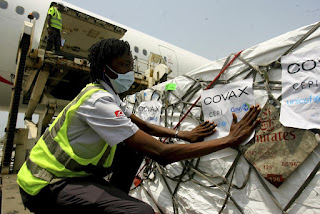
COVID Program Delivers 1 Billion Doses To Poorer Countries

FILE - A shipment of COVID-19 vaccines distributed by the COVAX Facility arrives in Abidjan, Ivory Coast, Friday Feb. 25, 2021. The World Health Organization says a U.N.-backed program shipping coronavirus vaccines to many poor countries has now delivered 1 billion doses, but that milestone “is only a reminder of the work that remains” after hoarding and stockpiling in rich countries. The U.N. health agency said Sunday, Jan. 16, 2022 that a shipment of 1.1 million COVID-19 vaccine doses to Rwanda this weekend included the billionth dose supplied via the COVAX program. (AP Photo/Diomande Ble Blonde, File)


BERLIN (AP) — The World Health Organization said Sunday that a U.N.-backed program shipping coronavirus vaccines to many poor countries has now delivered 1 billion doses, but that milestone “is only a reminder of the work that remains” after hoarding and stockpiling in rich countries.

A shipment of 1.1 million COVID-19 vaccine doses to Rwanda on Saturday included the billionth dose supplied via the COVAX program, the U.N. health agency said.

WHO has long criticized unequal distribution of vaccines and called for manufacturers and other countries to prioritize COVAX. It said that, as of Thursday, 36 of its 194 member countries had vaccinated less than 10% of their population and 88 had vaccinated less than 40%.

The program has made deliveries to 144 countries so far, “but the work that has gone into this milestone is only a reminder of the work that remains,” WHO said in a statement.

“COVAX’s ambition was compromised by hoarding/stockpiling in rich countries, catastrophic outbreaks leading to borders and supply being locked,” it added. “And a lack of sharing of licenses, technology and know-how by pharmaceutical companies meant manufacturing capacity went unused.”

At the end of December, WHO Director-General Tedros Adhanom Ghebreyesus urged everyone to make a “new year’s resolution” to get behind a campaign to vaccinate 70% of countries’ populations by the beginning of July.

In a newspaper interview published Sunday, Germany’s new international development minister said she wants to use her country’s presidency this year of the Group of Seven industrial nations to ensure that COVAX gets the resources it needs in 2022.

“Unfortunately, there are still too few countries participating in the financing of the global vaccination campaign,” Svenja Schulze was quoted as telling the Funke newspaper group. “Alongside Sweden, Norway, Canada and the U.S., we are the ones who are giving most. The other industrial countries have significant ground to catch up.”

Germany has said it donated 103 million doses to poorer countries last year and plans to donate another 75 million in 2022.

Schulze signaled that she wants to expand help for developing countries to produce vaccines themselves, with partnerships between companies to produce vaccines under license a favored aim.

Asked whether it would make sense to waive patents on COVID-19 patents, which Germany’s previous government opposed, she replied: “I doubt that developing countries would get vaccines more easily if we waive the patents.” The issue is only a small part of the production process, she argued.

Follow AP’s pandemic coverage at https://apnews.com/hub/coronavirus-pandemic

KNOCK, KNOCK

By issuing subpoenas to five Times journalists, the Trump administration reveals its first response to unwanted national security coverage: ...