Showing posts with label Legend. Show all posts

Tuesday, July 18, 2023

Nelson Mandela’s Legacy: Striving For A Liberated Society

SOUTH AFRICA - FEBRUARY 15: Nelson Mandela at home in Soweto, South Africa on February 15, 1990. (Photo by Pool BOUVET/DE KEERLE/Gamma-Rapho via Getty Images)

BY SUMAYA HENDRICKS

As we mark a decade since Madiba’s death, South Africa is riddled with what feels like intractable challenges.

This can be overwhelming and confusing, leading to uncertainty regarding the actions different societal actors should take – particularly civil society. Against this backdrop, the Nelson Mandela Foundation hosted a dialogue titled “What does this moment call for?” in recognition that, like many other people and organisations, we were asking ourselves this question.

The dialogue, which was held on 28 March, commenced with opening remarks by former president Kgalema Motlanthe.

The panel discussion that followed featured notable voices, including Wits University’s Professor Tshepo Madlingozi, Nontando Ngamlana, an experienced NGO leader, along with political commentator Aubrey Matshiqi and academic Sithembile Mbete.

When asked about the changes that panellists believed should be realised, Madlingozi called on us to interrogate our motivations. More specifically, why did we want to “save” democratic South Africa and for whom, when injustice prevails for the majority. Is the project of saving South Africa merely for the benefit of middle-class South Africans, to protect our privilege?

To take seriously the questions he posed requires personal reflection and here drawing on another language is useful. In Arabic, “adl” and “qist” are often translated as “justice” but these two words carry nuances absent in English.

The former can be used to describe justice in relation to the self, while the latter in relation to society. Through this lens, there is a differentiation between inward and outward justice. In short, outward manifestations of justice do not equate to a person being inwardly just, as their intention could arise from other imperatives, such as political expediency.

For instance, if we are truly just, we should be prepared to “share” even in the absence of a legal mandate to do so. Put differently, and in response to the challenge posed by Madlingozi, we must reflect on whether our change-making is an outward manifestation of our desire for societal justice or a tactic to preserve our privilege.

While we must address day-to-day issues, including potholes and electricity outages, this must not be to the expense of deep-rooted, systemic issues such as racism and economic inequality. Matshiqi’s characterisation of our society as “anti-black, anti-poor and anti-women” is insightful, as the antithesis of this would represent a liberated society and should be the primary focus of our endeavours.

A liberated society, as the ultimate objective, involves transcending emancipation as the final goal. While emancipation is about the formal process of removing legal constraints and the granting of rights to people who previously did not have them, liberation is something more. It is about freeing people from oppression and domination. It acknowledges the need for repairing and restoring through the mediums of redress and redistribution. This distinction can be articulated in different ways.

For instance, Thomas Piketty at the 2015 Nelson Mandela Annual lecture asserted that “equality in formal rights is not sufficient to reach real equality”. He gave the example of someone having the right to live anywhere but who lacked the financial means to realise this right. Motlanthe, in his opening remarks, also emphasised that despite possessing rights, many people are unable to access them under the current system. He portrayed democracy as a destination we must journey towards and that we needed to fight for the kind of democracy we desire.

This is not to dismiss the emancipation that was achieved in 1994 which was necessary, as highlighted by Ngamlana. However, we failed to enter that era with the understanding that a collective vision of transformation still needed to be developed and pursued. As she noted, we made numerous false assumptions and believed that someone with our best interests at heart would create and maintain that vision for us, which has not been the case.

If we are to understand the 1994 moment as being that which facilitated emancipation as opposed to liberation, this helps to set an agenda for change. Moreover, it means recognising that individual emancipation does not necessarily translate and aggregate into a liberated society.

This necessitates a different set of questions, which puts our collective condition at the heart of any change-making. This is because liberation is more about the collective in contrast to emancipation which is more individually focused. Regarding the collective, in line with Mbete’s remarks made during the panel discussion, the “pie” is only so big which therefore necessitates sharing. In apartheid, white people thrived at the expense of everyone else and, as such, if we want to all thrive now, this requires a greater degree of sharing.

Implementing an agenda for change demands orchestration. It often seems as if we expect the efforts of people and organisations in various spaces to organically culminate in the desired change, rather than intentionally orchestrating it. With that said, working together also does not guarantee effectiveness if the approach is wanting. Consequently, we must reflect on whether our existing organisational structures are sufficient to reach our intended destination. Repurposing existing organisations and creating new ones might be necessary.

Taking the question of “what this moment calls for” requires pushing ourselves to envision and work towards a liberated society where individual well-being is measured by collective prosperity. Madiba knew that his hopes and dreams might not be realised in his lifetime; this lament need not be ours. A liberated society is within our reach if we are prepared to engage in critical conversations and commit to the hard work of bringing it to fruition.

Thursday, May 11, 2023

New Book On Bob Dylan Will Feature Hundreds Of Rare Images


Arts & Entertainment shows “Bob Dylan: Mixing Up the Medicine,” a 600-page book of images from the archives of singer-songwriter. The book, expected in the fall, will include dozens of essays, with novelist Michael Ondaatje, critic Greil Marcus and former U.S. poet laureate Joy Harjo among the contributors. (Callaway Arts & Entertainment via AP)

NEW YORK (AP) — Hundreds of rare photos and other images from the archives of singer-songwriter Bob Dylan will be featured in “Bob Dylan: Mixing Up the Medicine,” coming out this fall. The new release also will include dozens of essays, with novelist Michael Ondaatje, critic Greil Marcus and former U.S. poet laureate Joy Harjo among the contributors.

Callaway Arts & Entertainment announced Thursday that the 600-page book will come out Oct. 24. The founder of Callaway, Nicholas Callaway, said in a statement that “Mixing Up the Medicine” will “introduce the full scope of this artist’s monumental creativity and achievements to a new generation.”

The book is edited by Mark Davidson and Parker Fishel of the Bob Dylan Center, based in Tulsa, Oklahoma. “Mixing Up the Medicine” refers to a line from Dylan’s classic “Subterranean Homesick Blues.”

According to the publisher, “Mixing Up the Medicine” will include draft lyrics, photographs, drawings and other materials. The release has a list price of $100.

Monday, May 01, 2023

Legacy Of Ahmad Jamal: Jazz Legend Who Found His Way To Islam

Exclusive promotional portrait of jazz pianist Ahmad Jamal leaning with one arm over the keys of a piano. Image: James J. Kriegsmann, Getty Images

BY SEDAT ANAR

Ahmed Jamal was a legendary jazz pianist known for his unique playing style and innovative improvisation who converted to Islam at the age of 20, finding harmony between his music and faith

Ahmad Jamal, one of the world's most influential jazz pianists who influenced hundreds of musicians throughout his 70-year music career, passed away on April 16, leaving behind hundreds of compositions. As a fellow musician, I felt we owe him a debt of gratitude and thought it was important to write about Ahmad Jamal. It was disappointing that in Türkiye, apart from some brief news articles stating "Ahmad Jamal passed away," there was no other news coverage even though he was one of the most influential jazz pianists in the world.

For this very reason, inspired by his decision to convert to Islam at the age of 20 and how it was reflected in his music, I decided to honor him in an article.

Starting from the 1940s, some black jazz musicians adopted Islam as their religion. Over time, some black musicians became Muslims, particularly in the 1960s. In a 1959 interview, Ahmad Jamal said: "When my people were brought here from Asia and Africa, they were given various names like Jones and Smith. I didn't acquire a name. So as part of the history and heritage of my ancestors, I redefined my original name. I returned to my origin and became Ahmad Jamal."

Some of these Muslim musicians developed their unique style of music, moving away from the famous bebop jazz era in the 1940s. At that time, and even now, there was a bias that "rock, jazz or pop music is only for Christians, and Muslims cannot make it." These musicians broke this prejudice.

For this, my particular interest lies in the musicians who chose Islam.

In the 1950s and '60s, many African American figures such as Mohammed Ali, Malcolm X and Idris Muhammed converted to Islam. However, this didn't always prevent cliche news about religion from being used in the media. Some even went so far as to suggest that Ahmad Jamal converted to Islam because he was a distant cousin of Malcolm X, who also converted during the same period. However, this information was denied by Ahmad Jamal himself.

Composers and musicians such as Yusef Lateef, Max Roach, Abdullah Ibrahim, Art Blakey and Ahmad Jamal have shown audiences worldwide that jazz carries no language or cultural barriers from an Islamic perspective but instead can be a universal language of communication. But, of course, they faced racist rhetoric and had to fight musical battles. For example, Ahmad Jamal's bank accounts were blocked during a concert in Germany for a ridiculous reason; they mistook him for a terrorist because of his name and surname. Isn't that a joke?

After converting to Islam, Ahmad Jamal responded to questions about his religious conversion by saying, "Listen to my music; the answer is there." During his performances, he would ask the audience to be quiet during the call to prayer and even took short breaks for prayer during concerts. His album "After Fajr," also my favorite, was inspired by the morning prayer. Along with Ahmad Jamal, all the musicians mentioned above are people from whom I draw inspiration, not just from their music but also from their life stories and perspectives. You don't have to be a musician to gain inspiration from them; their attitudes toward life can teach us a lot.

In 2006, after giving a concert in Istanbul, Jamal was interviewed by Esra Okutan for the Mesam magazine. When asked about his religious conversion, Okutan asked: "Your name was Fritz Jones. How did you choose Islam?" Jamal replied: "My name is Ahmad Jamal. I was born a Muslim." When Okutan asked the question again, she received the same answer.

After examining Jamal's English interviews individually, I found the part where he explained why and how he converted to Islam.

"Usually, I don't give interviews because I express what I want to say through the piano. My name is Arabic, but I prefer not to get into religious debates. Because life taught me that if I waste my time talking to fools, I will eventually start speaking like them. I take my outlook on life from the Quran. My life motto is 'Love for all, hatred for none.' When I was 21 and studying philosophy of religion, I chose Islam because it led me from darkness to light and helped me find direction," he said.

Many critics in the jazz world hailed Jamal as the legendary figure that came after the genius Charlie Parker in jazz. Unfortunately, some jazz critics and historians have not given him the importance he deserves, even calling him a "cocktail pianist." However, it should be noted that critics did not criticize him because he is a Muslim. The main criticism was his unique playing technique incorporating silence and pauses in his touches, which differed from the usual improvisational approach in jazz based on continuous and enthusiastic improvisation. This made him a subject of criticism, as this approach is not typical in jazz. This is a problem that all innovative composers who approach music in a new way face.

Ahmad Jamal was one of the pioneers of a new style of improvisation, which Miles Davis, John Coltrane and Herbie Hancock would later develop and refine.

While these negative critiques continued, Ahmad Jamal achieved his first significant success with his live album "Live at the Pershing: But Not For Me" in 1958. The album spent 108 weeks on the bestseller list. Clint Eastwood also helped popularize the album by using two tracks in his films.

In addition to this success, there is another well-known fact about Jamal among jazz enthusiasts: his influence on Miles Davis. Miles Davis, who lived next door to Jamal for a period, was greatly impressed by his sense of rhythm, his concept of leaving space while playing, and the lightness of his touch on the keys, as he often mentioned. He even said he would listen to Ahmad Jamal whenever he got stuck while composing. Not only Miles Davis but also world-renowned jazz pianists like Herbie Hancock and Keith Jarrett are among those influenced by Jamal's music.

Jamal, who has won numerous awards throughout his career, received his most important award, the Grammy Award, in 2017.

Ahmad Jamal compared his piano playing technique with classical Western music. He criticized the often-assumed dichotomy between jazz and classical music, stating that American classical music is jazz. He also criticized the perfectionism of European classical music, saying that it is a restrictive structure for composers and, therefore, a genre of improvisation.

At the beginning of the 20th century, composers such as Claude Achille Debussy, Ravel and Igor Stravinsky opened the doors to freedom in melody, harmony, sound intensity, rhythm and tone. His rhythm sense, the concept of playing with spaces, the lightness of his touch in his compositions, and the pauses in his improvisations are reminiscent of this freedom. With this inspiration, he developed a new improvisation form in jazz.

Music career

Jamal was born in 1930 in Pittsburgh as a child of a Christian family. He moved to Chicago in 1950 and converted to Islam, taking the name Ahmad Jamal. In 1951, during a night they performed as a trio at The Embers, a nightclub in Manhattan, they caught the attention of the famous record producer and talent scout John Hammond and collaborated on an album.

In 1961, he opened a jazz cafe in Chicago called "Ahmad Jamal's Alhambra," which served only nonalcoholic drinks but closed due to financial difficulties. Throughout his career, Jamal released more than 60 albums, with live recordings being his most successful and popular recordings. From the 1980s until his death, he focused on playing in America's major clubs and important European jazz festivals. Most of the listeners in Türkiye have known him through the event called "Cazz during Ramadan," organized by Hakan Erdoğan, who brought together Muslim jazz artists from around the world in Istanbul.

Jamal brought silence and space to jazz. His music became a part of his life as he said: "Music and personality must travel together."

When he came to Türkiye for a concert, translator and writer Sevin Okyay interviewed him. While reading the interview, a question and answer caught my attention. I thought there was no need to say another word after this answer.

"What does it take to be a good and responsible musician?" asked Okyay.

"To live right. This is already true for every profession. Live right," Jamal replied.

READ ORIGINAL STORY HERE

Thursday, April 27, 2023

Harry Belafonte Leveraged Stardom For Social Change, His Powerful Voice Always Singing A Song For Justice


BY ARAM GOUDSOUZIAN, UNIVERSITY OF MEMPHIS

In May 1963, as civil rights demonstrations rocked the city of Birmingham, Alabama, Harry Belafonte was at a cocktail party in Manhattan, scolding the then-attorney general of the United States.

“You may think you’re doing enough,” he recalled telling Robert F. Kennedy, “but you don’t live with us, you don’t even visit our pain.”

Belafonte had many frank and heated conversations with Kennedy. In fact, the singer, actor and activist was on intimate terms with many pivotal figures of the civil rights era.

He was a confidant and adviser to Martin Luther King Jr and allied with Ahmed Sékou Touré, the president of Guinea. He funded the grassroots activists of the Student Nonviolent Coordinating Committee (SNCC) as it battled Jim Crow, and he brought a delegation of Hollywood stars to the March on Washington. Along with his best friend and sometimes-rival, actor Sidney Poitier, Belafonte delivered funds to civil rights volunteers in Greenwood, Mississippi, while the Ku Klux Klan watched their every move.

Belafonte, who died on April 25, 2023, at the age of 96, was a unique figure in the history of the Black freedom struggle in the U.S. No other entertainer immersed themselves so deeply in the Civil Rights Movement; no other activist occupied a niche at so many levels of American politics. If he was a powerful voice for justice, it was because he leveraged his celebrity.

A remarkable career

On stage, Belafonte was something to behold, a beacon of charisma. Clad in body-hugging shirts with his chest bare, drawing his audience’s eyes to the looping metal rings at the belt of his tight silk pants, he oozed with seduction. Women swooned.

And he was wildly successful. In 1957, Belafonte sold more records than Frank Sinatra and Elvis Presley. His repertoire resembled neither Sinatra’s classic pop nor Presley’s up-and-coming rock ‘n’ roll.

The son of West Indian/Carribean immigrants, Belafonte inspired a short-lived craze for calypso music thanks to hits such as “Day O” and “Jamaica Farewell,” and he adapted ethnic folk music for popular consumption – his mainstays included “Hava Nagila,” the Jewish celebration song.

He also starred in Hollywood films such as “Bright Road” (1953) and “Carmen Jones” (1954). “Island in the Sun,” released in 1957, caused a furor. Though Belafonte never kisses his white co-star, Joan Fontaine, on screen, the film explores the theme of interracial romance. The Southern censors banned it.

Belafonte danced around the taboos of race and sex. This exceptionally handsome Black man was charming primarily white audiences, though his light skin color and facial features softened that threat. As a performer, he nudged at racial boundaries without jabbing through them.

“Harry Belafonte stands at the peak of one of the remarkable careers in U.S, entertainment,” proclaimed Time magazine in a 1959 cover feature. He had come a long way from a childhood split between Harlem and Jamaica, from stints in the Navy and as a struggling actor. By then, he was earning about US$750,000 a year, with a lucrative residency at the Riviera Hotel in Las Vegas.

Civil rights activism

That stardom connected Belafonte to Martin Luther King, Jr.

The civil rights leader called him in 1956 during the Montgomery Bus Boycott. Soon Belafonte was part of the movement itself. Following King, he embraced nonviolence. As their friendship strengthened, Belafonte realized the crosses that King bore: the burden of leadership, the fear of death.

Belafonte bought a 21-room apartment on West End Avenue in Manhattan. “Martin would come to think of it as his home away from home, staying with us on many of his New York trips,” he recalled in his memoir, “My Song.”

“On occasion, he brought with him two or three of his closest advisers, and by the mid-sixties, the apartment was one of the movement’s headquarters.” It was a place to both plan strategy and blow off steam, laughing at stories and sipping Harveys Bristol Cream.

Ironically, for such a public figure, much of Belafonte’s work was in private.

In the 1960s, he served as an essential link between King and the SNCC. He not only bankrolled the young militant activists, but he also listened to their concerns, respected their organizing efforts and communicated their perspectives to influential power brokers.

That responsibility to speak for the movement led Belafonte to chide Bobby Kennedy in May 1963. Throughout the early 1960s, he expressed frustration with the attorney general’s detachment from the activists’ struggle. But over time, he came to appreciate Kennedy’s evolution, as he became a U.S. senator and emerged as a voice for the poor, for racial minorities, for “The Other America.”

Famously, in February 1968, Belafonte hosted “The Tonight Show” for a week, using his platform to illuminate Black perspectives and spotlight social injustice. His guests included King, who was about to launch his Poor People’s Campaign, and Kennedy, whom Belafonte urged to start a presidential campaign.

Within months, both men were assassinated.

For more than a half-century, Belafonte carried on the legacy of the 1960s, often taking provocative positions from the far-left edge of the political spectrum. Like few others, he blended the worlds of culture and politics, singing a song of justice.

Thursday, December 29, 2022

As The 'King', Pele Enchanted Fans And Dazzled Opponents

FILE - Brazilian soccer star Pele relaxes after a workout in Santos, Brazil, June 3, 1975. Pelé, the Brazilian king of soccer who won a record three World Cups and became one of the most commanding sports figures of the last century, died in Sao Paulo on Thursday, Dec. 29, 2022. He was 82. (AP Photo, File)

BY TALES AZZONI AND MAURICIO SAVARESE

SAO PAULO (AP) — Pelé was simply “The King.” He embraced “the beautiful game” of soccer in his 1958 World Cup debut for Brazil and never really let go.

He won a record three World Cups and was widely regarded as one of his sport’s greatest players. His majestic and galvanizing presence set him among the most recognizable figures in the world.

Pelé died Thursday at 82. He had undergone treatment for colon cancer since 2021.

Pelé was among the game’s most prolific scorers and spent nearly two decades enchanting fans and dazzling opponents. His grace, athleticism and moves on soccer’s highest stage transfixed all. He orchestrated a fast, fluid style of play that revolutionized the sport — a flair that personified Brazilian elegance on the field.

He carried his country to soccer’s heights and became a global ambassador for his sport in a journey that began on the streets of Sao Paulo state, where he would kick a sock stuffed with newspapers or rags.

“Pelé changed everything. He transformed football into art, entertainment,” Neymar, a fellow Brazilian soccer player, said on Instagram. “Football and Brazil elevated their standing thanks to the King! He is gone, but his magic will endure. Pelé is eternal!”

In the conversation about soccer’s greatest player, only the late Diego Maradona, Lionel Messi and Cristiano Ronaldo are mentioned alongside him.

Different sources, counting different sets of games, list Pelé’s goal totals anywhere between 650 (league matches) to 1,281 (all senior matches, some against low-level competition). When Maradona once interviewed Pelé, he playfully asked the Brazilian how he accumulated so many goals.

The player who would be dubbed “The King” was introduced to the world at 17 at the 1958 World Cup in Sweden, the youngest player ever at the tournament.

Pelé was the emblem of his country’s World Cup triumph of 1970 in Mexico. He scored in the final and set up Carlos Alberto with a nonchalant pass for the last goal in a 4-1 victory over Italy.

The image of Pelé in a bright-yellow Brazil jersey, with the No. 10 stamped on the back, remains alive with soccer fans everywhere. As does his trademark goal celebration — a leap with a right fist thrust high above his head.

Pelé’s fame was such that in 1967 factions of a civil war in Nigeria agreed to a brief cease-fire so he could play an exhibition match in the country. He was knighted by Britain’s Queen Elizabeth II in 1997. When Pelé visited Washington to help popularize the game in North America, it was the U.S. president who stuck out his hand first.

“You don’t need to introduce yourself because everyone knows who Pelé is,” Ronald Reagan said.

Pelé was Brazil’s first modern Black national hero but rarely spoke about racism in a country where the rich and powerful tend to hail from the white minority.

Opposing fans taunted Pelé with monkey chants at home and all over the world.

“He said that he would never play if he had to stop every time he heard those chants,” said Angelica Basthi, one of Pelé’s biographers. “He is key for Black people’s pride in Brazil, but never wanted to be a flagbearer.”

Pelé’s life after soccer took many forms. He was a politician — Brazil’s Extraordinary Minister for Sport — a wealthy businessman, and an ambassador for UNESCO and the United Nations.

He had roles in movies, soap operas and even composed songs and recorded CDs of popular Brazilian music.

Pelé was an ambassador for his sport until his final years but as his health deteriorated his travels and appearances became less frequent. After needing a hip replacement, he started using a cane.

He was often seen in a wheelchair during his final years and did not attend a ceremony to unveil a statue of him representing Brazil’s 1970 World Cup team.

“He gets very shy, he gets very embarrassed,” his son Edinho told Globoesporte.com. “He doesn’t want to go out.”

Pelé spent his 80th birthday with a few relatives.

Pelé spent a month hospitalized in 2021 after surgery to remove a tumor from his colon. Pelé said he was ready “to play 90 minutes, plus extra time,” but soon started chemotherapy.

Born Edson Arantes do Nascimento, in the small city of Tres Coracoes in the interior of Minas Gerais state on Oct. 23, 1940, Pelé grew up shining shoes to buy his modest soccer gear. His father was also a player.

Pelé’s talent drew notice when he was 11, and a local professional player brought him to Santos’ youth squads. Despite his youth and 5-foot-8 frame Pelé’ scored against grown men with the same ease he displayed against friends back home. He debuted with the Brazilian club at 15 in 1956, and the club quickly gained worldwide recognition.


The name Pelé came from him mispronouncing the name of a player called Bilé. He later became known simply as ‘O Rei’ – The King.

Pelé went to the 1958 World Cup as a reserve but became a key part for his country’s championship team. His first goal, in which he flicked the ball over the head of a defender and raced around him to volley it home, was voted as one of the best in World Cup history.

“When Pelé scored,” veteran Swedish midfielder Sigge Parling said, “I have to be honest and say I felt like applauding.”

The 1966 World Cup in England — won by the hosts — was a bitter one for Pelé, by then already considered the world’s top player. Brazil was knocked out at the group stage and Pelé, angry at fouls and hard tackles by Portugal, swore it was his last World Cup.

He changed his mind and was rejuvenated in the 1970 World Cup. In a game against England, he struck a header for a certain score, but the great goalkeeper Gordon Banks flipped the ball over the bar in an astonishing move. Pelé likened the save — one of the best in World Cup history — to a “salmon climbing up a waterfall.” Later, he scored the opening goal in the final against Italy, his last World Cup match.

In all, Pelé played 114 matches with Brazil, scoring a record 95 goals — including 77 in official matches. Most of his goals came with Santos, which he led to five national titles, two Copa Libertadores trophies and two club world championships — all in the 1960s.

His run with Santos stretched over three decades until he went into semi-retirement after the 1972 season. Wealthy European clubs tried to sign him, but the Brazilian government intervened to keep him from being sold, declaring him a national treasure.

On the field, Pelé’s energy, vision and imagination drove a gifted Brazilian national team, with intricate passing combinations slicing defenses while leaving room for players to showcase flashy skills.

The fast, fluid style of play exemplified “O Jogo Bonito” — Portuguese for “The Beautiful Game.” And at the center of it all, like a maestro in command of his orchestra, was Pelé. It was his 1977 autobiography, “My Life and the Beautiful Game,” that made the phrase part of soccer’s lexicon.

In 1975, he joined the New York Cosmos of the North American Soccer League. Although he was past his prime at 34 years old, Pelé briefly gave soccer a higher profile in North America before ending his career on Oct. 1, 1977, in an exhibition between the Cosmos and Santos. Among the dignitaries on hand was perhaps the only other athlete whose renown spanned the globe — Muhammad Ali.

Pelé had two daughters out of wedlock and five children from his first two marriages, to Rosemeri dos Reis Cholbi and Assiria Seixas Lemos. He later married businesswoman Marcia Cibele Aoki.

Azzoni is based in Madrid.

Thursday, December 05, 2013

Obama Mourns Death Of Icon Nelson Mandela

President Barack Obama turns from the podium after speaking in the briefing room of the White House in Washington, Thursday, Dec. 5, 2013, about the death of Nelson Mandela. Obama says the world has lost an influential, courageous and 'profoundly good' man with the death of anti-apartheid icon Mandela.

WASHINGTON (AP) — Counting himself among the millions influenced by Nelson Mandela, President Barack Obama on Thursday mourned the death of the anti-apartheid icon with whom he shares the distinction of being his nation's first black president.
"He no longer belongs to us. He belongs to the ages," Obama said in a somber appearance at the White House. "I am one of the countless millions who drew inspiration from Nelson Mandela's life," he continued. "And like so many around the globe, I cannot fully imagine my own life without the example that Nelson Mandela set."
Mandela died earlier Thursday at 95. He had spent much of the year in and out of the hospital, and his illness prevented a meeting with Obama when the U.S. president visited South Africa this summer. Still, the former South African president's legacy influenced nearly every aspect of Obama's trip. Obama, along with wife Michelle and daughters Malia and Sasha, made an emotional visit to Robben Island, standing quietly together in the tiny cell where Mandela spent 18 of his 27 years in prison. Obama also met privately with members of Mandela's family.
The president is likely to travel to South Africa for Mandela's funeral, though a trip has not yet been announced. Other former U.S. presidents and dignitaries are also likely to attend. Obama ordered that the U.S. flag be flown at half-staff at the White House, federal buildings, military bases and embassies until sunset Monday.
Obama's political rise has drawn inevitable comparisons to the South African leader. Both are Nobel Peace Prize winners and the first black men elected to lead their countries. However, the two men met in person only once, a hastily arranged meeting in a Washington hotel room in 2005 when Obama was a U.S. senator. A photo of the meeting hangs in Obama's personal office at the White House, showing a smiling Mandela sitting on a chair, his legs outstretched, as the young senator reaches down to shake his hand. A copy of the photo also hung in Mandela's office in Johannesburg.
The two presidents did speak occasionally on the phone, including after the 2008 election, when Mandela called Obama to congratulate him on his victory. The U.S. president called Mandela in 2010 after the South African leader's young granddaughter was killed in a car accident. Obama also wrote the introduction to Mandela's memoir, "Conversations With Myself."
Mandela had already shaped Obama's political beliefs well before their first encounter. As a student at Occidental College in Los Angeles, Obama joined protests against the school's investments during South Africa's apartheid era. In 1981, Obama focused his first public political speech on the topic.
"It's happening an ocean away," Obama said, according to a retelling of the story in his memoir "Dreams From My Father." ''But it's a struggle that touches each and every one of us. Whether we know it or not. Whether we want it or not."
Follow Julie Pace at http://twitter.com/jpaceDC

Nelson Mandela (1918 - 2013)

African National Congress leader Nelson Mandela raises his fist as he speaks to a crowded stadium in Soweto after his release from prison. Date: February 11, 1990. Image: Peter Turnley


A Xhosa born to the Thembu royal family, Nelson Mandela attended the Fort Hare University and the University of Witwatersrand, where he studied law. Living in Johannesburg, he became involved in anti-colonial politics, joining the ANC and becoming a founding member of its Youth League. After the Afrikaner nationalists of the National Party came to power in 1948 and began implementing the policy of apartheid, he rose to prominence in the ANC's 1952 Defiance Campaign, was elected President of the Transvaal ANC Branch and oversaw the 1955 Congress of the People. Working as a lawyer, he was repeatedly arrested for seditious activities and, with the ANC leadership, was prosecuted in the Treason Trial from 1956 to 1961 but was found not guilty. Although initially committed to non-violent protest, in association with the South African Communist Party he co-founded the militant Umkhonto we Sizwe (MK) in 1961, leading a bombing campaign against government targets. In 1962 he was arrested, convicted of sabotage and conspiracy to overthrow the government, and sentenced to life imprisonment in the Rivonia Trial.

Mandela served 27 years in prison, first on Robben Island, and later in Pollsmoor Prison and Victor Verster Prison. An international campaign lobbied for his release, which was granted in 1990 amid escalating civil strife. Becoming ANC President, Mandela publishedhis autobiography and led negotiations with President F.W. de Klerk to abolish apartheid and establish multiracial elections in 1994, in which he led the ANC to victory. He was elected President and formed a Government of National Unity in an attempt to defuse ethnic tensions. As President, he promulgated a new constitution and initiated the Truth and Reconciliation Commission to investigate pasthuman rights abuses. Continuing the former government's liberal economic policy, his administration introduced measures to encourage land reform, combat poverty, and expand healthcare services. Internationally, he acted as mediator between Libya and the United Kingdom in the Pan Am Flight 103 bombing trial, and oversaw military intervention in Lesotho. He declined to run for a second term, and was succeeded by his deputy, Thabo Mbeki. Mandela subsequently became an elder statesman, focusing on charitable work in combating poverty and HIV/AIDS through the Nelson Mandela Foundation.

Mandela was born July 18, 1918 and died December 5, 2013. He was 95


SOURCE: WIKI

Friday, March 18, 2011

Memorable Images and Time: 80s Big Fights

Challenger Ray "Boom Boom" Mancini (L) of Youngstown, Ohio and WBC Lightweight Champion Alexis Arguello exchange blows during the 11th round of their 15-round title bout here 10/3. Arguello retained his title with a TKO in the 14th. Date: October 3, 1982. Location: Atlantic City, New Jersey. A Bettmann Colection.


4/15/1985-Las Vegas, NV- Referee Richard Steele counts over middleweight Thomas "Hitman" Hearns, who lies flat on his back in the ring after being knocked down by Marvelous Marvin Hagler in the third round. Hearns regained his feet, but Steele stopped the middleweight title fight.


4/6/1987-Las Vegas, NV: Sugar Ray Leonard taunts Marvin Hagler during the middleweight title bout.


Deuk-Koo Kim, 134 1/4, drops to the canvas as he is knocked out in the 14th round by World Boxing Association lightweight champion Ray Mancini. Mancini retained his title and Kim was hopitalized without regaining consciousness. Date: November 13, 1982. Location:Las Vegas, Nevada


9/21/1985-Las Vegas, Nevada. New world heavyweight champion Michael Spinks connects with a left to the head of Larry Holmes in the early rounds of their title fight 9/21. Spinks won a unanimous decision.


8/21/1981-Las Vegas, NV- Puffy-eyed Wilfredo Gomez (L) looks dazed after being hit by defending champion Salvador Sanchez for the last time during eighth round action of their title bout. Referee Carlos Padilla stepped to stop the fight after this blow to the head of Gomez. Sanchez won in the eighth round TKO to retain his title.


September 9, 1983-Las Vegas, Nevada: Aaron Pryor lands a left on Alexis Arguello (Right) in the fourth round of their WBA Junior Welterweight title fight at Caesars Pavilion. Bettmann.

Saturday, October 24, 2009

Memorable Images and Time

Muhammad Ali sightseeing downtown Kinshasha, Zaire on September 17, 1974 greets fans before fighting opponent George Foreman, twice his size in Kinshasha on October 30, 1974. Ali gave Foreman a stunning defeat in "Rumble in the Jungle." (Associated Press Photo)

Nelson Mandela, center, sings with supporters and fellow accused during his first treason trial in Johannesburg. Mandela and the other 150 people accused were acquitted after a four and a half year trial. Photo taken in 1956 by Peter Megubane/Associated Press.

1961: Nelson Mandela and his then wife, Winnie, show off their firstborn daughter, Zindzi, at their home in Soweto. Mandela fled into exile overseas as the political situation in South Africa worsened, returning only to be arrested and sentenced to life improsonment in what became known as the Rivonia Trial. Alf Khumalo/Associated Press.

Dr. Martin Luther King Jr. presents his "I Have a Dream" speech at the Lincoln Memorial, August 28, 1963. (AP Photo)

The release of "Yellow Fever" was composed, arranged and produced at the Chief Priest, Fela Anikulapo Kuti's communal compound called Kalakuta Republik, located on Agege Motor Road. Who steal my bleaching...I buy am for shopping...your mustache go show...your nyash go black...I go die o...

The Showdown: Undisputed World Welterweight Champion Sugar Ray Leonard and Thomas "Hitman/Motor City Cobra" Hearns battle it out in 1981 during the golden era of boxing when the sport was for pride and passion not for profit and commercial success. I had a bet with my brother, then, but Sugar Ray came from behind and knocked out Hearns in the 14th Round on a TKO.

Monday, June 29, 2009

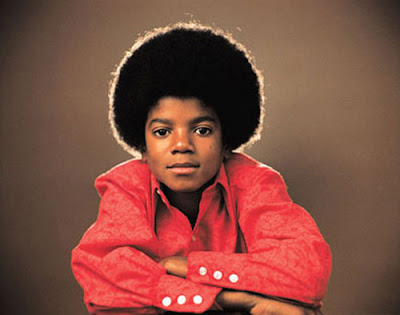
Michael Jackson: Remembering and the Celebration of Life


June 25, 2009, was what looked like a beautiful day when I woke up in the morning for another thank Lord, I made it day, feeling summer all around me. And the coastal weather did look nice through the afternoon. Nobody had expected any sad story, not of Michael Jackson.

Around some minutes after three o'clock in the afternoon, a friend called me and said, "Michael Jackson is dead. He had suffered a cardiac arrest at his Holmby Hills home. Doctors couldn't revive him."

"What?" I said.

"Michael Jackson is dead," he further exclaimed.

"I am stunned, let me call you back," I said.

On the other line was my daughter whom I guess was coming up with the same breaking news of Michael's death. "Dad, did you hear what happened?" she asked.

"Michael Jackson died, right?" I said.

While my daughter was still on the phone, another call came from Maryland whose voice wasn't clear -- Michael's death has broken people down and everybody is talking about what might have went wrong in the King of Pop's sudden death after going through some rehearsals the previous day in preparation for his O2 Arena concert in London.

"Ah, they killed him," my friend, Emeka Amanze, would say. Another call came from a friend who said, "Babe, I know you love music and you love Michael Jackson... it's sad he died." The calls kept coming in, Michael Jackson is dead.

I have been speechless and do not know what to do. Michael Jackson is gone and we all hope he finds peace that eluded him while on Earth.

On June 4, I had blogged on Michael's new image and the O2 Arena concerts coupled with movie deals, record deals, memorabilia, world tour and other packages that was going to net him a staggering four hundred and something million dollars by the time he's done with all the shows. He never made it. He's gone.

I have vivid memories of the 70s Motown blasts. As a little kid, Michael, little as well, had already turned what would be Hitsville into something else, evolving from a 5-year-old singing sensation to a superstar by the time he turned 13. The group Jackson 5 had appeared on the Ed Sullivan Show and the whole world had seen a rising star.

While in high school through the late 70s, the Jackson 5 went through many paths --Motown, Philly Sounds and Epic Records. Growing up in the disco era when Harry Wayne Casey and colleagues at TK Records changed our moods catapulting most to the top, disco fever was all over and, the epidemic was widespread and had become hard to find a cure. We all had been stricken by this disease called disco fever and in UK, it was more like the 1920's influenza epidemic.

When disco popped up, Michael was still there, and an incredible talent about to blow up. He had been a Jackson 5 all along, cutting some solo singles on the way. During the days of our high school ballroom dances, proms and other social events around the dorm, Michael was there but not loud enough. There was the pure funk engineered by George Clinton which saw the likes of Bootsy Collins' chained Rubber Band and Uncle Jams Parliament/Funkadelic. And there was the New, New Super Heavy Funk ordained to the Godfather of Soul, James Brown, as Minister, who had been Michael's mentor in those amazing steps. But then again, came da groove, da soul, da funk and da dance, a collective from the three major recording concerns of back in the day studio recordings that exploded in the 70s through the 80s.

Berry Gordy's Motown, Kenneth Gamble and Leon Huff's Philly Sounds and Dick Griffey's Sound of Los Angeles Records were the three major labels that produced top performers in between two decades in the class of funk, soul and R&B.

The competition was tight and the vibes came in different flavors. But Michael was special from the moment he went solo after Jackson 5 opened up acts for James Brown, and Gladys Knight and the Pips. That did it. Hits upon hits were made. "ABC." "I Want You Back." "I'll Be There," etc. and Michael's number one single on the Billboard charts "Got To Be There."

I was not into Michael and all the Jackson growing up tunes which blended rock, soul and funk until the Jacksons first all out written songs produced the album "Destiny." That was in the summer of 1978 and the single "Blame It On The Boogie" began to jam around all the pubs, the hangouts and in my neck of the woods. You don't blame it on the sunshine, you don't blame it on the moonlight, you blame it on the boogie; such was the vibe.

Also, before the "Destiny" album smashes, Teddy Pendergrass' "Life Is A Song Worth Singing," album, Chic's "Le Freak Ces't Shit," Fat Larry's Band "Down On The Avenue," George Clinton's "One Nation Under A groove," Brass Construction's "Changing," B.T. Express' "Bus Stop," T Connection's "Do What Ya Wanna Do," and the reggae explosions of U Roy, I Roy, Nicodemus, Prince Jazzbo, Dillinger, Mighty Diamonds, Bob Marley, Peter Tosh, Bunny Wailer, Johnny Clark, Max Romeo, Burning Spear, Lee "Scratch" Perry coupled with the studio time sessions of Sly Dumbar and Robbie Shakespeare, had made significant impacts in my days, growing up.

"Destiny" changed all that and Michael had just arrived, independent, free of Gordy, an adult, already 20 and ready to prove his point. In every gathering, ballroom dances, the melting nite clubs, even at the makeshift mama put, the roadside food joints, "Shake Your Body (Down To The Ground)" was the song of all songs. Anywhere you go, you got to shout, dance and shake your body to the ground because the rhythm was so compelling one had no choice. Yes, let's dance, let's shout... A blend of of some soul, jazz and funk had been ushered in and disco had begun to wane.

Da moves, da groove, da dance and da funk, Michael turned everything around. In every party you got to shake that your body to the ground. But hey, it wasn't long after the overwhelming commercial success of the "Destiny" album that the original studio rat, Quincy Jones, found home in the complex of Epic Records for a thorough and tasty dish we all will be licking our fingers up until today.

The year was 1979, and it was around summer, I think, and we were just hanging out on the front porch of Esther's Beer Parlor at 21 Item Street, D-Line, Port Harcourt, and everybody was just loud, perhaps for the fact that US and UK imports invaded our entire neigborhood. This was before Boy George's Culture Club and Eurythmics invaded the United States. Yes, it was nothing but US, UK imports overshadowing our local ensembles -- Wings, The Apostles, Doves, Heads Funk, SJOB Movement, Black Children, Black Souls and the rest.

Hanging out at Esther's and academic pursuits, and youths on job hunts, was just fun. There was Kaje Igwah, George Ekweh, Fidelis Awasianya, Mike Uzoma (I nicknamed him Jack Lord, and he took it), Onyema Uche, Mike Ozulumba, Kawawa (never knew his real name), Ajamiwe "Ajammy Junky" Ihekwoba, Obiora Ihekwoba, Cornelius "Hugo" Kanu, Charles Douglas, Joy Douglas, Eddie Bongo Brown of Nteje who loved storytelling and numerous others. The girls stopped by a whole lot and the gist always was about Michael and what had happened to the music world.

Da moves, da groove, da dance and da funk, Michael Jackson, a new era had just begun. Igwah, Ekweh and I had just been back from what youngsters normally do. We walked into the complex of 21 Item Street, and the place was being blasted with some loud speakers set up by Ajamiwe, and the music was what the studio rat had cooked for a year, and the artist was none other than Michael, and the album was "Off the Wall," and the track was "Don't Stop till You Get Enough," and it was all boys and girls, and the party had just begun and we all had fun. Never have I seen anything like that. Da moves, da groove, da dance and da funk, Michael Jackson, it's a new era.

So did the grooves of Michael's vibes and those amazing steps took us to the jams at Orupolo Nite Club, Lido Nite Club, Manatee and the Presidential Hotel Night Club on Aba Road. You can never stop until you get enough. Every dish in "Off the Wall" was well cooked and tasty. Quincy Jones, the studio rat, did it here superbly. Michael has exceeded superstardom, but the best is yet to come.

I was in Lagos and my hangouts were similar to the Port Harcourt days. There was the Afternoon Jump at the National Assembly complex that had been turned to jam sessions, and radio DJ's, Pat Oke, Jacob Akinyemi Johnson, Bode Seriki and many others stopped by to spin, and Michael's "Off the Wall" was always on top. Michael has taken over all the airwaves rocking every soul.

Da moves, da groove, da dance and da funk. Everybody wants to be like Mike. The glittering white socks. The tux. The gloves. The handcrafted custom made shoes. Michael conquered the universe. It was all over the pubs in Lagos. Club Phoenicia at Bristol Hotel. Gondola Nite Club. Ikoyi Hotel. Jazz Temple. Club Ace. Fantasy Nite Club. Tagged Restaurant. Durbar Hotel Night Club. Ritz. Hot Spot. The local pot-smoking joints in the ghettos of Ajegunle, Mushin, Agege, Iponri, Amukoko, Orile, Olodi and the surrounding red light districts, you name it, Michael was all over rocking with every soul. He was simply the best. I had emulated my rhythm and dance steps from him. And we never stopped until we got enough.

The studio rat had thought about Michael's remarkable success and how "Off the Wall" brought in a new era. He went back to Epic to prepare some more delicious dishes. Right On, Black Beat, Hit Parader and Rolline Stone Magazines wrote extensively about it -- a new blend had been in the making.

As of 1981, when Brothers Johnson, Kool & the Gang, Shalamar, Dynasty, Delegation, Whispers and Klymax had trooped to rock National Theater, Orile, Iganmu, courtesy of Ben Bruce Murray's Silverbird Productions, we Michael fanatics wondered what had happened in a new album. But our worries would soon be over.

In 1982, what would be the biggest selling album in history -- covering rock, funk, soul, R&B and jazz funk in a new generation -- was out with all casts. Eddie Van Halen. "Beat It," "Billy Jean," "Thriller," "Wanna Be Starting Something," and all that funk. The music videos, first of its kind in the modern era. The concerts and all the awards. Motown's 25th Anniversary and hell getting loose upon Michael performing the moonwalk suspense "Billy Jean." The Grammys. The Hollywood Walk of Fame.

There was nothing like that moment when Motown came home as predicted by Diana Ross in "Someday We'll Be Together." I watch that classic all the time for many reasons: memories, my boyhood, Michael's "Billy Jean," Richard Pryor's character, Diana Ross, Berry Gordy and how he built Motown and developed Hitsville.

When the 1984 Grammy Award nominees were announced, the news spread fast. I had walked into Suru Lere Nite Club for happy hours with my colleagues before the jam sessions. The news was all over. And we were in Lagos not in Hollywood. Michael's "Thriller" had 12 nominations. Lionel Richie had been assigned to MC the one of its kind function. Puerto Rican native, Irene Cara, had been scheduled to perform her hit single "What A Feeling." The talk was all over town. The newspapers and magazines carried it. Michael Jackson had won 8 of 12 Grammy nominations including Best Rock, "Beat It," smashing all records. Michael Jackson is the new King of Pop. He earned it.

And right now, we have a legend. It's a bottleneck driving through the Jackson's family compound on Havenhurst and Ventura Blvd. in Encino. The entire area around his Holmby Hills home by Sunset is totally closed to the public. There has been a 24/7 vigil on his star in Hollywood. His songs are played 24/7 on every station that knows what the stuff is all about.

Michael, you are a legend. The King of Pop. You called the shots in showbizness.

Rest In Peace, my man!
Michael Jackson visits Freddie Mercury backstage. 1980.

Michael Jackson and Paul McCartney, who team up on duets, are seen recently in a recording studio. Jackson was 5 when the Beatles invaded America. He and McCartney also spend hours together watching cartoons. Both are collectors. (1983). Image: Linda McCartney.

The Jackson 5, the famous pop singer group, where Michael Jackson began his singing career at age five with his four brothers, pose with legendary singer Diana Ross. (1970)

Sunday, March 29, 2009

The Trend, The Time and Bob Marley


Old pirates yes they rob I
sold I to the merchant ships
minutes after the took I
from the bottomless pit
but my hand was made strong
by the hand of the Almighty

we forward in this generation
triuphantly
won't you help to sing
the songs of freedom
'cuz' all I only have
redemption song...redemption song

emancipate yourself from mental slavery
none but ourselves can free our minds
have no fear for atomic energy
'cuz' none of them can stop the time
how long shall they kill our prophets
while we stand aside and look

some say it's just a part of it
\we got to fulfill the book
won't you help to sing
the songs of freedom
'cuz' all I only have
redemption song...


"Yes, the lyrics is baked in my genes from the moment the album was released. And I 'dunno' if this is becoming craziness. But, no, I am trying to figure out how it all popped up, and of what origin am beginning to sense that this is not something new or probably I may be losing it because the lyrics itself had a whole lot to do about my being,and specifically the pirates who had thought they were doing my being a favor which led to the mess that seemingly has consumed the world today, and certainly a world that continues to be troubled."

"Hey, man, what's wrong with you and what the hell are you talking about... are you alright, man!?"

"Oh, yeah, 'am alright. It's just that something is baked in my genes and it continues to give me that natural high. I really 'dunno' what it is."

"What's going on and what exactly is baked in your genes?"

"Well, I just gave you a hint and it's not rocket science. Simple and clear, but since you are too dumb like Fred Sanford would tell his son when they ran the salvage company, Sanford & Son, let's try it again. It's called 'The Trend and The Time", not Morris Day & The Time, perhaps before "Purple Rain." Did you get it?"

"Nope."

"So what do you want me to do? Stuff it?"

"What are you talking about for goodness sake?"

"Here we go again, he wants to know everything."

"Of course, I do. Have you been smoking some weed or something?"

And, what's that... you see what I mean? Each time something pops up, it's all about weed."

"Look, man, I'm through with you."

"Really?!"

"Really!"

"Ok, let's see, have you ever heard of Bob Marley?"

"Of course, who doesn't know Bob Marley, the legend."

"Here you go. You are becoming a good boy and I am proud of you. But let me ask you, though, did he ever made sense to you?"

"Yep, and now what?"

"This is the deal, and make sure you take notes when I lecture."

Funny and confusing, huh? It all depends on which way you look at it. Not much happenned for the gone week but I did chew on some few stuff. Too many books popped up about Bob Marley, though I haven't made time to check them out at the bookstores, but I read the review, "The Bob Marley Story", well-done by Joshua Jelly-Schapiro in the April 9, 2009 edition of the of The New York Review of Books. Summing it all up, to one essay, Schapiro provided a lot of information from the following: "Before the Legend: The Rise of Bob Marley", by Christopher John Farley; "Bob Marley: Herald of the Postcolonial World," by Jason Toynbee; "The Book of Exodus: The Making and Meaning of Bob Marley and the Wailers' Album of the CEntury", by Vivien Goldman; and "Soul Rebel: An Intimate Portrait of Bob Marley", by David Burnett.

Good piece and in-depth, and Schapiro writes;

"Marley is the only third world performer to be elected to the Rock and Roll Hall of Fame. In 1999, the BBC named his "One Love" the "Song of the Millennium", the same year Time Magazine declared his 1977 "Exodus" the "Best Album of the Twentieth Century" voted the third greates songwriter of all time in 2001 by BBC poll (behind Bob Dylan and John Lennon...)"

Bob Marley was something else. He changed everything about reggae which evolved from ska, rocksteady and prophesy after his neigborhood buddies, Winston McIntosh and Neville "Bunny" Wailer" Livingstoe would join him in forming the Wailers. McIntosh went by the name of Peter Tosh while Livingstone would be Bunny Wailer. And, the rest would be history.

"The Harder They Come" and the Venice Film Festival. Jimmy Cliff. Perry Henzell. Rita Anderson (Marley's wife). Christopher Blackwell, the brain behind Island Records. Lee "Scratch" Perry, the gem behind reggae explosion. Desmond Dekker, the first reggae artist whose album "Israelites" catapulted reggae to the top. Robert Mugabe's ZANU-PF freedom fighters and independence for Zimbabwe. And, all in all, Blackwell was the man. And reggae came to stay, and the vibe would change the world; and of course, the flow made sense.

And as it goes, so I found myself knowing more stuff about the legend. There was Aston "Family man" Barrett who claimed to have fathered 52 children; there was Bruce Dunbar in the era of the reggae explosion; there was Coxsone Dodds label that paid poorly; there was the American group, The Drifters, Marley listened to growing up in Jamaica and there was a group that admired the works of Marcus Garvey and celebrating "the 1930 coronation of Haile Selassie 1 as emperor of Ethiopia as a fulfilment of Garvey's supposed prophecy to 'look to the East for the crowning of the African King'"

Marley, the legend, you did stuff and you changed the world. Your legacy lives.

KNOCK, KNOCK

By issuing subpoenas to five Times journalists, the Trump administration reveals its first response to unwanted national security coverage: ...