Wednesday, December 29, 2021

Osi Umenyiora Has Been Finding Football Talent in Nigeria, But He Wants To Do More

Osi Umenyiora


BY JELANI SCOTT, NFL

Osi Umenyiora's feats on and off the football field provided him with an opportunity to become a hero in more ways than one.

For 20 years, the former New York Giants defensive end has quietly donated resources to his homeland of Nigeria, but over time, those efforts began to feel to Umenyiora like "pouring a cup of water into the ocean." So he regrouped and soon realized he could use his influence to give his people something invaluable: "The opportunity to help themselves."

As Umenyiora explained: "Education is the most important thing, and I think that you'll realize that most people who come from Africa, it's like a mindset, it's something that is instilled in them."

In a recent interview with NFL.com, the NFL star-turned-businessman discussed his latest humanitarian effort, known as The Uprise, a football program established in Nigeria by Umenyiora and former Nigerian pro basketball player Ejike Ugboaja, whom Umenyiora has known for nearly a decade, earlier this year.

The program was recently spotlighted in an episode of NFL Network's NFL 360, which chronicled a group of talented prospects as they competed for a chance to train at the NFL Academy in London or for a spot in the NFL's International Player Pathway Program.

But the work that was covered there is now behind them -- and Umenyiora's hoping the work that lies ahead will go beyond football. He said while he's proud of the overall level of talent he's seen thus far, the organization still has "a long way to go."

"We had some of the guys come over to the UK combine, and the people who saw them were wowed," Umenyiora said. "They were amazed by the level of size, strength and athleticism these guys have, and I was just telling them there's so many more of them there who just need that opportunity, right? And the mentality and the work ethic that they all have, it's not just, 'Oh, I need to make it the NFL.' They want to go to school, they just want a chance to do something better with their lives, and American football is pretty much a sport that gives them that opportunity."

Umenyiora was born in London and made his name as a 21-year-old standout at Troy University. But from the ages of 7 to 14, he lived with his family in Nigeria. And that upbringing appears to have played a sizable role in determining both who he was as a player and who he is as a man.

So when Umenyiora speaks of a "mentality," it's clear he's not talking about a team mantra or writings on a chalkboard, but a state of mind shared by those who grew up in a similar environment.

"My parents didn't want me to play football, and that story is very common amongst a lot of African households," he explained. "The parents aren't really interested in sport; they're very interested in education. So, for me, I got my degree in business administration; whether or not I made it to the NFL, I might not have been super successful but at least I would've been OK. Like, I would've been better than I was when I was over there.

"I think that the main principle of this whole program is the kids who are coming, the people who are coming, they need to understand that yes, football is great, yes, football can do incredible things for you, but the percentage of people that make it is so low that you have to be focused on your education, so we're going to make sure that they do that."

The three young men who had the chance to travel to the International Combine in London in October -- Kehinde Oginni Hassan, Haggai Chisom Ndubuisi and Chigbo Roy Mbaeteka -- were representing not just The Uprise, but the power of having an opportunity to overcome your surroundings.

What cannot be overlooked about The Uprise is its function as a potential beacon of hope in a society where those that are fortunate enough to go to college struggle mightily to find employment after graduation. Those under Umenyiora and Ugboaja's tutelage could have additional doors opened to them by their participation in the program.

Umenyiora, a former mid-major star, hopes their efforts steer an abundance of prospects to HBCUs, a previously underserved sector of talent that the NFL has made a recent attempt to show more support toward.

"Why does Texas and Oklahoma and Alabama," Umenyiora expressed, "why do they have to have all the five-star athletes? Why can't Troy and FAMU [Florida A&M University] and ... the HBCUs, why can't they have five-star talent also? We can provide that. So, as long as there's demand and we have the athleticism to provide, we're gonna be fine."

Could The Uprise one day cultivate a high school phenom whose signing sends Jackson State-level shockwaves across the country? It's certainly possible, based on what the program has accomplished already.

It was abundantly evident in speaking with Umenyiora that he is as focused on getting players into classrooms as he is getting them into the end zone. When asked to look ahead, he made it clear that the future of the program will be centered around accomplishing that goal.

"If we're able to get hundreds of players into schools in America, a bunch of players into the academy in the UK, prep schools, high schools, colleges, if we're able to get that, that's pretty much the only thing that I'm going to consider a success, and I believe it's very possible, because the level of talent is there," he said.

As for what's up next for The Uprise in 2022, Umenyiora said there are plans to host high-level camps in Kenya, Senegal, Cameroon, Uganda and, of course, Nigeria. He said they are looking at a "bunch of companies to host these camps," but those talks are ongoing.

From there, the top 50 prospects from those sessions will be sent to a NFL-operated camp in Ghana in June, where NFL players and coaches, and potentially a few colleges, are scheduled to be on-site. Only the top 20 will move on to one of the NFL's programs.

Umenyiora said the main camp in Ghana is meant to be a showcase of "what we're all about." So far, the chances of that being a good impression are trending upward.

Nigeria’s Deadly Tug Of War Over Free Expression


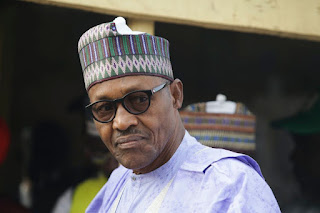
Muhammadu Buhari. Image: George Esiri


This article is part of the THE FREE SPEECH PROJECT, a collaboration between Future Tense and the Tech, Law, & Security Program at American University Washington College of Law that examines the ways technology is influencing how we think about speech.

ABUJA, NIGERIA (FUTURE TENSE
)--For years, Steven Kefas was an operations manager at an environmental services company in Port Harcourt, a booming oil town at the mouth of the Niger River delta in southern Nigeria. In 2009, he signed up on Facebook just like any other young Nigerian at a time when Facebooking was the new cool. He simply wanted to post pictures. In 2010, he joined Twitter.

Now, on his Twitter profile, Kefas describes himself as an “accidental journalist,” a former “terror reporter,” and a former “political prisoner for 162 days.” He’s also become a symbol of Nigeria’s threatened press freedoms, even appearing in the U.S. State Department’s annual report on human rights in 2019. His story exemplifies Nigerian authorities’ assault on free expression.

Beginning around 2013, Kefas began to receive troubling news from Kaduna, his home state in northwest Nigeria. Loved ones were sending him accounts and photographs of bloody and sometimes fatal attacks against people in Southern Kaduna, an area occupied by mostly Indigenous agrarian communities. The killings were reportedly carried out by herdsmen, mostly members of the dominant Fulani group. Kefas began posting the news and photos on Facebook and Twitter.

Kefas told me earlier this year that he believed his social media activism forced Nigerian security agencies to become more responsive to the attacks in the region—but also made him a target. On April 5, 2018, after several years, things reached a turning point when he posted pictures of the dead bodies of two young men who had been killed in a massacre. Facebook user Comr (short for “Comrade”) Mohammed Idris, a member of Nigeria’s ruling All Progressives Congress party in Kaduna state, responded: “YOU WILL BE JAILED soon if you fail to answer some questions from security.” That same month, Kaduna Gov. Nasir Ahmad el-Rufai tweeted at him: “Dear Mr Kefas: This irresponsible and defamatory statement will require a response. So I hope when you receive from court summons, you will be able to prove your defamation? We are tracing your address for service of court processes. Help the processes by providing it early.”

While some Nigerians—and the Nigerian government—see the violence in Kaduna as a series of skirmishes over land between cattle-grazing herdsmen (the Fulani) and farmers (the Southern Kaduna people), Kefas, like many in his region, sees the killings as a form of genocide or ethnic cleansing. The situation was exacerbated in October 2018, when His Royal Highness Maiwada Raphael Galadima, the Agom Adara, the traditional ruler of the Adara people (a prominent ethnic group in Southern Kaduna), traveled to meet with the governor of Kaduna state, Mallam Nasir el-Rufai, a Fulani. The Adara chief, whose position is recognized by the Nigerian state, visited the governor to discuss the deteriorating security situation in Adara land. On his return home, he and his wife were kidnapped by suspected Fulani herdsmen. His wife was released, seven days later. But the monarch was killed—even though the Adara people had paid a ransom. Not long after, despite the warnings he received in April, Kefas published a post titled “How the Kajuru Genocide Started,” arguing that the killing was not a random criminal act but a political murder. (Kajuru is the epicenter of violent attacks against farming communities in Kaduna state.) Despite the trouble it would lead to for him, Kefas is proud of the post. “It was the first time anyone had boldly written any article with a chronicle of events that connect the dots in a way that points to the complicity of the Kaduna state government in the happenings in Southern Kaduna,” he told me in an interview. With the absence of a sanctioned press reporting comprehensively on the Southern Kaduna crisis, Kefas said he stepped into the information void and created awareness about the killings through his social media activism.

“At the peak of those killings, whenever a village is under attack, the villagers will call me instead of calling the government or calling the security agencies,” he told me.

I asked Kefas how he verified most of the sensitive information he shared, considering that he was not a trained or professional journalist.

He said that he trusted his sources, as they were credible individuals such as community leaders and traditional chiefs. “There has never been any occasion where any information given to me turned out to be false. Instead, when they tell me they have 10 casualties, at the end of the day, there may be up to 50,” he said.

On some occasions when he received distress calls from community leaders, Kefas said he could hear a staccato of gunfire in the background and screams of women and children running for their lives. “In my mobile phone that is currently with the police, I have call records with gunshots in the background, commotion and people running. In that mobile phone, there are some images that have never been shared in the public domain.” The phone has been with law enforcement since May 2019, when he was arrested and remained in detention for 162 days.

Kefas believes that his phones were tapped well before his arrest, and for a long time he refrained from using his personal device. Instead, he felt more comfortable using his work phone. Despite his precautions, he said the Nigerian police were able to find and arrest him after monitoring his phone communications with a close friend.

The same strategy has been used several times by the Nigerian police. Since 2017, there have been at least four documented cases of the Nigerian police using phone records to lure, arrest, and arraign journalists with criminal charges for their work, according to a report published by the Committee to Protect Journalists in February 2020.

When Kefas asked the detectives who came to arrest him if they had a warrant, they presented a bulky document that contained several of his tweets and Facebook posts about the Kaduna governor and developments in the state since 2017. (He says some of them were only retweets, though.)

In the petition, Kefas was accused of inciting disturbance and injurious falsehood against the governor of Kaduna state via his Twitter account @realKefason—an account now deactivated by Twitter for inactivity, during the period Kefas spent in detention.

Kefas was charged with defamation of character, injurious falsehood, inciting disturbance, and cyberstalking. Under Section 24 of Nigeria’s Cybercrimes Act, “cyberstalking”—an offense often used by Nigerian authorities to target journalists and activists under President Muhammadu Buhari’s regime—stipulates a punishment of a roughly $15,500 fine, three years of imprisonment, or both.

Social media and free expression are in crisis all over the world, but if in the United States that largely centers on calls for regulation in response to the proliferation of misinformation, in countries like Nigeria, the picture is even more complicated. On June 4, the Nigerian government banned Twitter entirely. (The ban remains in effect, though many people are getting around it by using virtual private networks.) In Nigeria, social media has been a vital source of uncensored information—such as Kefas’ posts about the atrocities in Kaduna. But the Nigerian government uses it as both a tool and a weapon to identify and punish dissent as well as to suppress undesirable speech. How Africa’s most populous nation resolves the struggle between democracy and the impulses of authoritarian rule—as well as the freedom social media can engender and the threats it can also pose—remains to be seen. But it is clear that this is a critical moment for the future of Nigeria.

Kefas is only one of several victims in the wave of civic repression that is sweeping across Nigeria, targeting activists, prominent opinion leaders, and journalists.

In November 2018, activist Deji Adeyanju was arrested and detained for criticizing officials of the Buhari regime on social media. He was subsequently rearrested and spent 78 days in detention before his release on March 1, 2019.

On Aug. 1, 2019, Abubakar Idris, a young Nigerian who often criticized Kaduna’s governor and the Buhari regime on social media, was abducted by suspected agents of the State Security Service from his residence in Kaduna. Amnesty International has said that Idris is a victim of enforced disappearance.

On Aug. 3, 2019, Omoyele Sowore—a human rights activist, founder of the online newspaper Sahara Reporters, and a presidential candidate during Nigeria’s election earlier that year—was arrested by the State Security Service after he called for a mass nationwide protest. In September 2019, he was charged with “conspiracy to commit treason” and “insulting” Buhari. Despite two separate court rulings ordering Sowore’s release from detention, the State Security Service refused to release him. Following international outrage and pressure from six U.S. lawmakers, Sowore was released on Dec. 24, 2019, albeit under strict bail conditions that bar him from leaving Abuja, the country’s capital. (He remains under these restrictions.)

On Oct. 20, 2020, during Nigeria’s #EndSARS protests against police brutality, Nigerian authorities met protesters with excessive military force, killing at least 10 people according to Amnesty International. Obianuju Catherine Udeh, popularly known as DJ Switch, livestreamed the attacks to her more than 900,000 followers on Instagram. Udeh, who said she counted at least 15 bodies of protesters shot by Nigerian security forces, has since fled Nigeria after claims she was being targeted by the authorities for her viral livestream of the violent attacks.

More recently, in January, the Nigerian government blocked access to the privately owned online newspaper Peoples Gazette after a series of reports critical of Buhari’s government.

Nigeria is currently listed in the CPJ 2021 prison census among countries where journalists are in detention. (CPJ cited the case of journalist Luka Binniyat arrested in November over a complaint by Samuel Aruwan, the Kaduna state commissioner for internal security and home affairs.)

Kefas said that social media has become the nightmare of Nigerian authorities seeking to exert absolute control over communication and information dissemination. “In Kaduna state, whenever you hear the governor speak, he is not really bothered about the terrorists that are known to be terrorizing the villages. His obsession is with social media users. And so also is the federal government.” (El-Rufai did not respond to a request for comment.)

The Nigerian situation, Kefas noted, would escalate further without any international pressure from countries like the U.S.

Unfortunately, the chances of U.S. political leaders stepping out to intervene in external circumstances are slim. “We haven’t even figured out how to address the problem in the domestic context,” Joel Simon, the executive director of the Committee to Protect Journalists, told me in an interview. “So the global context is for now, I think, completely out of reach.”

Susan Benesch, faculty associate of the Berkman Klein Center for Internet and Society at Harvard University and founder of the Dangerous Speech Project, said Kefas’ story illustrates how social media can be a force for good and a tool in the hands of governments who want to silence dissent. Social media allows activists to accomplish all kinds of things that they couldn’t without the internet. But “it’s the very same feature that allows certain governments to persecute them,” she told me in an interview.

In August 2019, during Kefas’ detention at the Kaduna Convict Prison, Kefas’ mother paid him a visit and pleaded with him to forgo his activism. But Kefas decided that he would devote his life to activism and that there was no going back. He remains active online, including on Twitter—and the attacks in Kaduna are still happening.

Although he now walks as a free man, he remains concerned about his personal safety. He remains afraid that he might meet the same fate as Abubakar Idris, who has not been seen since August 2019.

Future Tense is a partnership of Slate, New America, and Arizona State University that examines emerging technologies, public policy, and society.

EXPLAINER: Lbya Future At Stake After Failing To Hold Vote

FILE - This photo provided by the High National Elections Commission shows Seif al-Islam Gadhafi, left, the son and one-time heir apparent of late Libyan dictator Moammar Gadhafi registering his candidacy for the country's presidential elections next month in Sabha, Libya, Nov. 14, 2021. Libya has failed to hold its first presidential election as planned in Dec. 2021. The vote has faced many challenges, including controversial presidential hopefuls, disputes over laws governing the elections and occasional infighting among armed groups. (Libyan High National Elections Commission via AP, File)


BY SAM MAGDY

CAIRO (AP)
— Libya failed to hold its first presidential election as planned this month, a major blow to international efforts to end a decade of chaos in the oil-rich Mediterranean country.

The postponement of the Dec. 24 vote has opened up uncertainty over what comes next in the tenuous peace process, raising worries Libya could slide into new round of violence after more than a year of relative calm.

The planned vote was the lynchpin of international peace efforts, and major regional and international powers had for months pushed for it to take place as scheduled.

But many inside and outside Libya doubted the election would proceed as planned. Some warned that holding the vote could destabilize the country, given the continued polarization.

Libya descended into chaos following the 2011 NATO-backed uprising that ousted and then killed longtime dictator Moammar Gadhafi. Since then, armed groups have proliferated, including local and tribal militias, nationalist and mainstream Islamist groups, al-Qaida and the Islamic State group.

Since parliamentary elections in 2014, the country has been divided between two main rival administrations: one in the east backed by military commander Khalifa Hifter, and another in the west - an array of militias loosely allied with a weak, U.N.-recognized government in the capital Tripoli.

WHAT WAS THE PLAN?

Hifter, who was senior officer under Gadhafi but defected in the 1980s, is based in the eastern city of Benghazi, the epicenter of the 2011 uprising. His forces, the self-styled Libyan Arab Armed Forces, control much of eastern and southern Libya, including its oil fields and terminals. He is backed by Russia, the United Arab Emirates and Egypt.

In April 2019, Hifter and his forces launched an offensive on Tripoli, but Turkey and Qatar stepped up their military support for his Tripoli-based rivals, including deploying troops and Syrian mercenaries. The offensive failed after 14 months of fighting.

An internationally brokered October 2020 cease-fire has kept a relative peace since. But some its main provisions — the withdrawal of all foreign forces and mercenaries within three months and adherence to a U.N. arms embargo — have not been met.

After the cease-fire deal, the U.N. led a political process called the Libyan Political Dialogue Forum, which includes 75 delegates from across the country.

The forum set presidential and parliamentary elections for Dec. 24. It also appointed an interim government that included a three-member Presidential Council led by an eastern figure, and a Cabinet led by Prime Minister Abdul Hamid Mohammed Dbeibah, a powerful businessman from the western city of Misrata.

The interim government’s main task was to prepare the country for the elections.

WHAT HAPPENED?

From the beginning, the process was hampered by disputes.

The main leadership body in the west, the Tripoli-based Supreme Council of State, denounced the rules governing the election, drawn up by the eastern-based parliament. Dbeibeh joined the criticism. With legal challenges over the rules still unresolved, the Council of State persistently called for the vote to be delayed.

Mistrust deepened when lawmakers decided to hold parliamentary elections a month after the planned Dec. 24 presidential vote, rather than simultaneously.

The presidential election became sharply polarized when several figures who were considered intolerable by their opponents declared their intention to run — particularly Hifter and Seif al-Islam Gadhafi, the ousted dictator’s son and one-time heir apparent.

Khalid al-Mishri, the head of the Supreme Council of State, threatened violence to prevent Hifter from taking office if he is elected.

Seif al-Islam’s declaration of his candidacy prompted vows from opponents never to allow a return of Gadhafi family rule. The election commission disqualified him along with two dozen other would-be candidates. But on appeal, courts restored most of them, including Seif al-Islam.

Dbeibeh also declared his candidacy, causing outrage because when he was appointed to the head the transitional government, he had promised not to run.

Around 100 people submitted documents to run for president, but with legal disputes still roiling, the election commission was unable to declare a final list of candidates.

It was also never clear what would happen after the elections. All sides agree the constitution needs to be rewritten, but there has been no agreement on who will do so or when.

With so much at stake and so much still unresolved, militias showed their discontent. Militias demanding a postponement blocked roads in parts of Tripoli, raising warnings from the U.N. mission in Libya that the tensions could explode into violence.

And each side in the country’s main east-west split remains ready for a fight, bolstered by mercenaries provided by their foreign backers who have not withdrawn. The current number of mercenaries is not known, but according to the U.N., they have numbered as high as 20,000, including Syrians, Russians, and Sudanese in the country.

WHAT IS NEXT?

The failure to hold the vote as planned threatens to open a political vacuum.

Lawmakers have argued that the interim government’s mandate ended on Dec. 24. They say the government failed in its main tasks, preparing the country for the vote, unifying its institutions, and dismantling militias or integrating them into regular security forces.

Dbeibeh, the interim prime minister, said in a televised address Tuesday that he and his administration would remain until “real elections” are held. He said the election laws were “flawed” and called for the vote to be based on a newly crafted constitution.

Major Western governments have called for the government to remain in power until “prompt” parliamentary and presidential elections are held.

The election commission proposed Jan. 24 as a new date.

But it’s not clear when or if the factions can resolve the disputes that led to the failure to hold the vote as planned. Stephanie Williams, the U.N. special adviser on Libya, has for two weeks shuttled between major Libyan players.

A legislative committee for the election blamed militias that it said wanted “to craft a distorted electoral process,” an apparent reference to complaints from Tripoli over the election rules.

The committee suggested drawing a “practical roadmap” for elections and restructuring the interim government to “achieve stability,” without specifying dates.

More than 100 lawmakers held two days of deliberations this week in the eastern city of Tobruk over the future of the electoral process and the interim government. The session ended without a decision and is expected to continue next week.

Tutu’s Advocacy For LGBTQ Rights Did not Sway Most Of Africa

FILE - An activist supporting the LGBTQ community, wearing a rainbow flag, walks past a gathering of Christians opposed to the decriminalization of homosexuality, after a ruling by the High Court in Nairobi, Kenya, May 24, 2019. Desmond Tutu is being remembered for his passionate advocacy on behalf of LGBTQ people as well as his fight for racial justice. But the South African archbishop's campaign against homophobia had limited impact in the rest of Africa. (AP Photo/Ben Curtis, File)

BY DAVID CRARY
ASSOCIATED PRESS

Desmond Tutu is being remembered for his passionate advocacy on behalf of LGBTQ people as well as his fight for racial justice. But the South African archbishop’s campaign against homophobia had limited impact in the rest of Africa, where same-sex marriage remains illegal and most countries criminalize gay sex.

Even within his own denomination, the Anglican Communion, there has been no continentwide embrace of LGBTQ rights. Leaders of Ghana’s Anglican Church, for example, have joined other religious leaders there in endorsing a bill that would impose prison sentences on people who identify as LGBTQ or support that community.

Before Tutu died Sunday at age 90, most African religious leaders rejected his LGBTQ positions, and those who agreed with him often were cautious, said Kenya-based researcher Yvonne Wamari of Outright Action International, a global LGBTQ-rights organization.

“Most of them are unwilling to offer their contrary views due to fear of reprisal and backlash for not conforming with ‘African values,’” Wamari said via email. “As long as the religious leaders are unwilling to interpret the Bible from the lens of love for all, as Tutu did, homophobia and transphobia will remain a part of our lives.”

Homosexual activity remains outlawed in more than 30 of Africa’s 54 countries; in a few, it is punishable by death. Many LGBTQ Africans are subject to stigma and abuse, facing unemployment, homelessness and estrangement from their families.

Stephen Brown, a professor at the University of Ottawa’s School of Political Studies, described Tutu as “a moral giant” who held to his convictions — including support for LGBTQ people — no matter how risky or unpopular it could be.

For example, Tutu was mocked in 2013 by Robert Mugabe, then the repressive leader of Zimbabwe.

“Tutu should just step down because he supports gays, something that is evil,” Mugabe told a political rally.

That same year, Tutu uttered one of his most memorable comments about LGBTQ inclusion.

“I would not worship a God who is homophobic,” he said. “I would refuse to go to a homophobic heaven. No, I would say, ‘Sorry, I would much rather go to the other place.’”

South Africa is the only African country that has legalized same-sex marriage, and its constitution protects against anti-LGBTQ discrimination. Yet even there, violence against LGBTQ people remains common.

In Cape Town, where Tutu was the Anglican archbishop, members of the LGBTQ community reacted to his death with tributes.

Throughout his life, Tutu stuck “to the ideas of promoting absolute love, absolute acceptance and absolute kindness, no matter who you are, no matter your sexuality or race,” activist Saya Pierce-Jones said.

Daniel Jay, who works in the medical industry, said Tutu’s support for LGBTQ people was pivotal in South Africa’s decision to make HIV drugs available at no cost.

“I love him to bits,” Jay said.

Beyond South Africa’s borders, a few recent developments have encouraged LGBTQ-rights supporters.

— In Botswana, the Court of Appeal last month unanimously upheld a 2019 ruling that decriminalized consensual same-sex activities. Previously, gay sex was outlawed and offenders faced up to seven years in prison. A few other African countries also have decriminalized same-sex relationships in recent years, including Angola, Mozambique and the Seychelles.

— In Namibia, the LGBTQ community recently held its biggest Pride event — a weeklong celebration in Windhoek, the capital, that began Nov. 27. During the parade at the end of the week, some marchers urged repeal of a Namibian anti-sodomy law that remains on the books though is not enforced.

The winner of the 2021 Mr. Gay World pageant – Louw Breytenbach of South Africa – was the parade’s grand marshal. He later posted a tribute to Tutu on Facebook: “RIP to one of the most amazing humans to ever walk this earth! A champion for human rights. A warrior for gay rights.”

In many African countries, anti-LGBTQ violence is a persistent threat.

A prominent LGBTQ activist in Tunisia reported that two men, one in a police uniform, beat and kicked him during an assault in October they said was punishment for his attempts to file complaints against officers for previous mistreatment. The attack left Badr Baabou, president of the Tunisian Association for Justice and Equality, with extensive welts and bruises.

Last month, according to Human Rights Watch, a mob in Cameroon beat and sexually assaulted a 27-year-old intersex person. The perpetrators made videos of the prolonged attack that circulated on social media.

At the government level, Senegal and Ghana are under scrutiny from LGBTQ-rights supporters.

In Senegal, 13 opposition legislators recently introduced a bill to toughen penalties against homosexuality, doubling the maximum sentence to 10 years. Parliament members from the governing coalition say such a measure is unnecessary since homosexual acts are already illegal.

In Ghana, parliament members continue to work on a bill that has been condemned by LGBTQ-rights supporters in the West African country and abroad. Among other things, the bill seeks to criminalize the promotion and funding of LGBTQ activities, and disseminating information about LGBTQ people.

Alex Kofi Donkor, director of LGBT+ Rights Ghana, expressed regret that relatively few African faith leaders shared Tutu’s outlook.

“A lot of African preachers hold a lot of prejudice, hate and disgust for the LGBTQ community,” he said.

Controversy over the Ghana bill has highlighted the challenges facing the global Anglican Communion, which has taken LGBTQ-friendly positions not embraced by many Anglican leaders in Africa.

In October, Justin Welby, the Church of England’s archbishop of Canterbury and the symbolic head of Anglicans worldwide, said he was “gravely concerned” about the bill and would discuss the Anglican Church of Ghana’s response to the bill with Ghana’s archbishop.

He issued a statement reminding Ghana’s Anglican leaders that the global body of Anglican leaders had committed itself to opposing anti-LGBTQ discrimination and the criminalization of same-sex activity.

But in mid-November, Welby apologized for failing to speak to the Ghanaian church before issuing his statement of concern.

“I have no authority over the Church of Ghana, nor would I want any,” he said.

A few days later, he issued another ambivalent statement, referring to ongoing “private conversations” that would become “useless or harmful” if made public.

The Rev. Susan Russell, who is on the staff of All Saints Episcopal Church in Pasadena, California, recalled a visit by Tutu to the church in 2005, shortly after the Episcopal Church’s ordination of its first openly gay bishop, Gene Robinson of New Hampshire, touched off a controversy that still roils the Anglican Communion.

She recalled that Tutu talked about how all people are embraced by God, regardless of gender or race — and when he also included gays and lesbians in that list, “there really was an audible gasp in the room of amazement and relief and delight.”

“When you’re struggling on the margins, and the powers seem to be galvanizing against you, and you have Desmond Tutu on your side, almost anything seems possible,” she said.

___

Associated Press writers Sylvia Hui in London; Farai Mutsaka in Harare, Zimbabwe; Wesley Fester in Cape Town, South Africa; Francis Kokutse in Accra, Ghana; Kwasi Asiedu in New York and Peter Smith in Pittsburgh contributed to this report.

___

Associated Press religion coverage receives support from the Lilly Endowment through The Conversation U.S. The AP is solely responsible for this content.

Monday, December 27, 2021

Young South Africans Learn Of Tutu’s Activism For Equality

People take photos at a statue of Anglican Archbishop Desmond Tutu at the V&A Waterfront in Cape Town, South Africa, Sunday, Dec. 26, 2021. South Africa's president says Tutu, South Africa's Nobel Peace Prize-winning activist for racial justice and LGBT rights and the retired Anglican Archbishop of Cape Town, has died at the age of 90. (AP Photo)


BY MOGOMOTSI MAGOME AND ANDREW MELDRUM

JOHANNESBURG (THE ASSOCIATED PRESS)
— Archbishop Desmond Tutu’s legacy is reverberating among young South Africans, many of whom were not born when the clergyman battled apartheid and sought full rights for the nation’s Black majority.

Tutu, who died Sunday at the age of 90, was awarded the Nobel Peace Prize in 1984 for those efforts.

Even though they did not know much about him, some young South Africans told The Associated Press on Monday that they understood his role as one of the most prominent figures to help their country become a democracy.

Zinhle Gamede, 16, said she found out about Tutu’s passing on social media and has learned more about him over the past day.

“At first I only knew that he was an archbishop. I really did not know much else,” Gamede said.

She said Tutu’s death had inspired her to learn more about South Africa’s history, especially the struggle against white minority rule.

“I think that people who fought for our freedom are great people. We are in a better place because of them. Today I am living my life freely, unlike in the olden days where there was no freedom,” she said.

Following the end of apartheid in 1994, when South Africa became a democracy, Tutu chaired the Truth and Reconciliation Commission that documented atrocities during apartheid and sought to promote national reconciliation. Tutu also became one of the world’s most prominent religious leaders to champion LGBTQ rights.

“As a gay person, it is rare to hear people from the church speaking openly about gay issues, but I found out about him through gay activists who sometimes use his quotes during campaigns,” said Lesley Morake, 25. “That is how I knew about him, and that is what I will remember about him.”

Tshepo Nkatlo, 32, said he is focusing on the positive things he hears about Tutu, instead of some negative sentiments he saw on social media.

“One of the things I picked up on Facebook and Twitter was that some people were criticizing him for the TRC (Truth and Reconciliation Commission) because there are still many issues regarding the TRC,” Nkatlo said, referring to some who say Tutu should have been tougher on whites who perpetrated abuses under apartheid and should have ordered that they be prosecuted.

South Africa is holding a week of mourning for Tutu. Bells rang at midday Monday from St. George’s Anglican Cathedral in Cape Town to honor him. The bells at “the people’s cathedral,” where Tutu worked to unite South Africans of all races against apartheid, will toll for 10 minutes at noon for five days to mark Tutu’s life.

“We ask all who hear the bells to pause their busy schedules for a moment in tribute” to Tutu, the current archbishop of Cape Town, Thabo Makgoba, said. Anglican churches across South Africa will also ring their bells at noon this week, and the Angelus prayer will be recited.

Several services in South Africa were being planned to honor Tutu’s life, as tributes came in from around the world.

Tutu’s coffin will be displayed Friday at the cathedral in Cape Town to allow the public to file past the casket, “which will reflect the simplicity with which he asked to be buried,” Makgoba said in a statement. On Friday night Tutu’s body will “lie alone in the cathedral which he loved.”

A requiem Mass will be held Saturday and, according to Tutu’s wishes, he will be cremated and his ashes placed in the cathedral’s mausoleum, church officials said Monday.

In addition, an ecumenical and interfaith service will be held for Tutu on Thursday in South Africa’s capital, Pretoria.

South Africans are laying flowers at the cathedral, in front of Tutu’s home in Cape Town’s Milnerton area, and in front of his former home in Soweto.

President Cyril Ramaphosa visited Tutu’s home Monday in Cape Town where he paid his respects to Tutu’s widow, Leah.

“He knew in his soul that good would triumph over evil, that justice would prevail over iniquity, and that reconciliation would prevail over revenge and recrimination. He knew that apartheid would end, that democracy would come,” Ramaphosa said Sunday night in a nationally broadcast address.

“He knew that our people would be free. By the same measure, he was convinced, even to the end of his life, that poverty, hunger and misery can be defeated; that all people can live together in peace, security and comfort,” said Ramaphosa who added that South Africa’s flags will be flown at half-staff this week.

“May we follow in his footsteps,” Ramaphosa said. “May we, too, be worthy inheritors of the mantle of service, of selflessness, of courage, and of principled solidarity with the poor and marginalized.”

Sunday, December 26, 2021

Obama Calls Desmond Tutu The World’s ‘Moral Compass’

FILE - Retired Anglican Archbishop Desmond Tutu of South Africa gestures during the opening concert for the soccer World Cup at Orlando stadium in Soweto, South Africa, Thursday, June 10, 2010. Tutu, South Africa’s Nobel Peace Prize-winning activist for racial justice and LGBT rights and retired Anglican Archbishop of Cape Town, has died, South African President Cyril Ramaphosa announced Sunday, Dec. 26, 2021. He was 90. (AP Photo/Hassan Ammar, File)


JOHANNESBURG (AP) — Reactions to the death Sunday of Nobel Peace Prize laureate and former Archbishop of Cape Town Desmond Tutu:

“Archbishop Desmond Tutu was a mentor, a friend, and a moral compass for me and so many others. A universal spirit, Archbishop Tutu was grounded in the struggle for liberation and justice in his own country, but also concerned with injustice everywhere. He never lost his impish sense of humor and willingness to find humanity in his adversaries, and Michelle and I will miss him dearly.” — Former U.S. President Barack Obama.

“The death of Archbishop Desmond Tutu (always known as Arch) is news that we receive with profound sadness — but also with profound gratitude as we reflect upon his life. ... Arch’s love transformed the lives of politicians and priests, township dwellers and world leaders. The world is different because of this man.” — Archbishop of Canterbury Justin Welby.

“Indeed the big baobab tree has fallen. South Africa and the mass democratic movement has lost a tower of moral conscience and an epitome of wisdom.” — The African National Congress, South Africa’s ruling party.

“The friendship and the spiritual bond between us was something we cherished. Archbishop Desmond Tutu was entirely dedicated to serving his brothers and sisters for the greater common good. He was a true humanitarian and a committed advocate of human rights.” — the Dalai Lama, Tibet’s exiled spiritual leader.

“I am deeply saddened to hear of the death of Archbishop Desmond Tutu. He was a critical figure in the fight against apartheid and in the struggle to create a new South Africa — and will be remembered for his spiritual leadership and irrepressible good humor.” — British Prime Minister Boris Johnson.

“No words better exemplify his ministry than the three he contributed to a work of art at The Carter Center: love, freedom, and compassion. He lived his values in the long struggle to end apartheid in South Africa, in his leadership of the national campaign for truth and reconciliation, and in his role as a global citizen. His warmth and compassion offered us a spiritual message that is eternal.” — former U.S. President Jimmy Carter.

“He was never afraid to call out human rights violators no matter who they were and his legacy must be honored by continuing his work to ensure equality for all.” — Amnesty International South Africa Executive Director Shenilla Mohamed.

“The loss of Archbishop Emeritus Desmond Mpilo Tutu is immeasurable. He was larger than life, and for so many in South Africa and around the world his life has been a blessing. His contributions to struggles against injustice, locally and globally, are matched only by the depth of his thinking about the making of liberatory futures for human societies.” — The Nelson Mandela Foundation.

“I’m saddened to learn of the death of global sage, human rights leader, and powerful pilgrim on earth. ... A great, influential elder is now an eternal, witnessing ancestor. And we are better because he was here.” — Dr. Bernice King, youngest daughter of the Rev. Martin Luther King Jr.

“We are all devastated at the loss of Archbishop Desmond Tutu. The Elders would not be who they are today without his passion, commitment and keen moral compass. He inspired me to be a ‘prisoner of hope’, in his inimitable phrase. Arch was respected around the world for his dedication to justice, equality and freedom. Today we mourn his death but affirm our determination to keep his beliefs alive.” — Mary Robinson, former president of Ireland and chair of The Elders, an independent group of world leaders and human rights activists.

Tutu’s passing “closes an important chapter in Africa’s long and painful struggle for justice, liberty and democracy and the continent’s current efforts to create prosperity and stand find its competitive edge in the rest of the world. For South Africans, it is a major reckoning with the reality that one-by-one, its heroic liberators are leaving.” — Raila Odinga, Kenya’s former prime minister and opposition leader.

“His legacy is moral strength, moral courage and clarity. He felt with the people. In public and alone, he cried because he felt people’s pain. And he laughed — no, not just laughed, he cackled with delight — when he shared their joy.” — Anglican Archbishop of Cape Town Thabo Makgoba.

“His Holiness Pope Francis was saddened to learn of the death of Archbishop Desmond Tutu, and he offers heartfelt condolences to his family and loved ones. Mindful of his service to the Gospel through the promotion of racial equality and reconciliation in his native South Africa, His Holiness commends his soul to the loving mercy of Almighty God.” — Telegram sent by the Vatican secretary of state, Cardinal Pietro Parolin.

“A powerful and courageous voice for nonviolence, reconciliation and peace. He will be very much missed in our troubled world. May he Rest In Peace.” — Egypt’s former vice president and Nobel Peace Prize laureate Mohamed ElBaradei.

“Through his distinguished work over the years as a cleric, freedom fighter and peacemaker, Archbishop Tutu inspired a generation of African leaders who embraced his non-violent approaches in the liberation struggle.” — Kenyan President Uhuru Kenyatta.

Tutu’s death was “a loss for justice, truth and peace in the world. ... He loved Palestine and Palestine loved him.” — Mohammed Shtayyeh, prime minister of the Western-backed Palestinian Authority.

Desmond Tutu, South Africa’s Nobel Peace Winner, Dies At 90

FILE - Archbishop Emeritus Desmond Tutu addresses new University of Oklahoma graduates, at a ceremony at the university after he received a honorary degree, Tuesday April 25, 2000 in Norman, Okla. Tutu, South Africa’s Nobel Peace Prize-winning activist for racial justice and LGBT rights and retired Anglican Archbishop of Cape Town, has died at the age of 90, South African President Cyril Ramaphosa has announced. (AP Photo/J. Pat Carter, File)


BY ANDREW MELDRUM

JOHANNESBURG (AP)
— Desmond Tutu, South Africa’s Nobel Peace Prize-winning icon, an uncompromising foe of the country’s past racist policy of apartheid and a modern-day activist for racial justice and LGBT rights, died Sunday at 90. South Africans, world leaders and people around the globe mourned the death of the man viewed as the country’s moral conscience.

Tutu worked passionately, tirelessly and non-violently to tear down apartheid — South Africa’s brutal, decades-long regime of oppression against its Black majority that only ended in 1994.

The buoyant, blunt-spoken clergyman used his pulpit as the first Black bishop of Johannesburg and later the Anglican Archbishop of Cape Town as well as frequent public demonstrations to galvanize public opinion against racial inequity, both at home and globally.

Nicknamed “the Arch,” Tutu was diminutive, with an impish sense of humor, but became a towering figure in his nation’s history, comparable to fellow Nobel laureate Nelson Mandela, a prisoner during white rule who became South Africa’s first Black president. Tutu and Mandela shared a commitment to building a better, more equal South Africa.

Upon becoming president in 1994, Mandela appointed Tutu to be chairman of the Truth and Reconciliation Commission, which uncovered the abuses of the apartheid system.

Tutu’s death on Sunday “is another chapter of bereavement in our nation’s farewell to a generation of outstanding South Africans who have bequeathed us a liberated South Africa,” South African President Cyril Ramaphosa said.

“From the pavements of resistance in South Africa to the pulpits of the world’s great cathedrals and places of worship, and the prestigious setting of the Nobel Peace Prize ceremony, the Arch distinguished himself as a non-sectarian, inclusive champion of universal human rights.”

Tutu died peacefully at the Oasis Frail Care Center in Cape Town, the Archbishop Desmond Tutu Trust said Sunday. He had been hospitalized several times since 2015 after being diagnosed with prostate cancer in 1997.

“Typically he turned his own misfortune into a teaching opportunity to raise awareness and reduce the suffering of others,” said the Tutu trust. “He wanted the world to know that he had prostate cancer, and that the sooner it is detected the better the chance of managing it.”

In recent years he and his wife, Leah, lived in a retirement community outside Cape Town.

“His legacy is moral strength, moral courage and clarity,” Anglican Archbishop of Cape Town Thabo Makgoba said in a video statement. “He felt with the people. In public and alone, he cried because he felt people’s pain. And he laughed — no, not just laughed, he cackled with delight — when he shared their joy.”

A seven-day mourning period is planned in Cape Town before Tutu’s burial, including a two-day lying in state, an ecumenical service and an Anglican requiem mass at St. George’s Cathedral in Cape Town, according to church officials. Cape Town’s landmark Table Mountain will be lit in purple, the color of the robes Tutu wore as archbishop.

British Prime Minister Boris Johnson was among the world leaders paying tribute to Tutu. “He was a critical figure in the fight against apartheid and in the struggle to create a new South Africa — and will be remembered for his spiritual leadership and irrepressible good humor.”

Throughout the 1980s — when South Africa was gripped by anti-apartheid violence and a state of emergency giving police and the military sweeping powers — Tutu was one of the most prominent Black leaders able to speak out against abuses.

A lively wit lightened Tutu’s hard-hitting messages and warmed otherwise grim protests, funerals and marches. Short, plucky, tenacious, he was a formidable force, and apartheid leaders learned not to discount his canny talent for quoting apt scriptures to harness righteous support for change.

The Nobel Peace Prize in 1984 highlighted his stature as one of the world’s most effective champions for human rights, a responsibility he took seriously for the rest of his life.

With the end of apartheid and South Africa’s first democratic elections in 1994, Tutu celebrated the country’s multi-racial society, calling it a “rainbow nation,” a phrase that captured the heady optimism of the moment.

In 1990, after 27 years in prison, Mandela spent his first night of freedom at Tutu’s residence in Cape Town. Later, Mandela called Tutu “the people’s archbishop.”

Tutu also campaigned internationally for human rights, especially LGBT rights and same-sex marriage.

“I would not worship a God who is homophobic and that is how deeply I feel about this,” he said in 2013, launching a campaign for LGBT rights in Cape Town. “I would refuse to go to a homophobic heaven. No, I would say, ‘Sorry, I would much rather go to the other place.’”

Tutu said he was “as passionate about this campaign (for LGBT rights) as I ever was about apartheid. For me, it is at the same level.” He was one of the most prominent religious leaders to advocate LGBT rights.

Tutu’s very public stance for LGBT rights put him at odds with many in South Africa and across the continent as well as within the Anglican church.

South Africa, Tutu said, was a “rainbow” nation of promise for racial reconciliation and equality, even though he grew disillusioned with the African National Congress, the anti-apartheid movement that became the ruling party in 1994 elections. His outspoken remarks long after apartheid sometimes angered partisans who accused him of being biased or out of touch.

Tutu was particularly incensed by the South African government’s refusal to grant a visa to the Dalai Lama, preventing the Tibetan spiritual leader from attending Tutu’s 80th birthday celebration as well as a planned gathering of Nobel laureates in Cape Town. South Africa rejected Tutu’s accusations that it was bowing to pressure from China, a major trading partner.

Early in 2016, Tutu defended the reconciliation policy that ended white minority rule amid increasing frustration among some South Africans who felt they had not seen the expected economic opportunities and other benefits since apartheid ended. Tutu had chaired the Truth and Reconciliation Commission that investigated atrocities under apartheid and granted amnesty to some perpetrators, but some people believe more former white officials should have been prosecuted.

Desmond Mpilo Tutu was born Oct. 7, 1931, in Klerksdorp, west of Johannesburg, and became a teacher before entering St. Peter’s Theological College in Rosetenville in 1958 for training as a priest. He was ordained in 1961 and six years later became chaplain at the University of Fort Hare.

Moves to the tiny southern African kingdom of Lesotho and to Britain followed, with Tutu returning home in 1975. He became bishop of Lesotho, chairman of the South African Council of Churches and, in 1985 the first Black Anglican bishop of Johannesburg and then in 1986, the first Black archbishop of Cape Town. He ordained women priests and promoted gay priests.

Tutu was arrested in 1980 for taking part in a protest and later had his passport confiscated for the first time. He got it back for trips to the United States and Europe, where he held talks with the U.N. secretary-general, the pope and other church leaders.

Tutu called for international sanctions against South Africa and talks to end the conflict.

Tutu often conducted funeral services after the massacres that marked the negotiating period of 1990-1994. He railed against black-on-black political violence, asking crowds, “Why are we doing this to ourselves?” In one powerful moment, Tutu defused the rage of thousands of mourners in a township soccer stadium after the Boipatong massacre of 42 people in 1992, leading the crowd in chants proclaiming their love of God and themselves.

As head of the truth commission to promote racial reconciliation, Tutu and his panel listened to harrowing testimony about torture, killings and other atrocities during apartheid. At some hearings, Tutu wept openly.

“Without forgiveness, there is no future,” he said at the time.

The commission’s 1998 report lay most of the blame on the forces of apartheid, but also found the African National Congress guilty of human rights violations. The ANC sued to block the document’s release, earning a rebuke from Tutu. “I didn’t struggle in order to remove one set of those who thought they were tin gods to replace them with others who are tempted to think they are,” Tutu said.

In July 2015, Tutu renewed his 1955 wedding vows with wife Leah. The Tutus’ four children and other relatives surrounded the elderly couple in a church ceremony.

“You can see that we followed the biblical injunction: We multiplied and we’re fruitful,” Tutu told the congregation. “But all of us here want to say thank you ... We knew that without you, we are nothing.”

Tutu is survived by his wife of 66 years and their four children.

Asked once how he wanted to be remembered, he told The Associated Press: “He loved. He laughed. He cried. He was forgiven. He forgave. Greatly privileged.”

Saturday, December 25, 2021

COVID-19 Spike Worsens Africa’s Severe Poverty, Hunger Woes

Elderly people, many without face masks or not fitted properly, stand in tightly packed lines waiting to withdraw their pensions in Harare, Zimbabwe in Monday, Dec. 13, 2021. In Zimbabwe and other African nations, the virus's resurgence is threatening the very survival of millions of people who have already been driven to the edge by a pandemic that has devastated their economies. When putting food on the table is not a given, worries about whether to gather with family members for the holiday or heed public announcements urging COVID-19 precautions take a back seat. (AP Photo/Tsvangirayi Mukwazhi)


BY FARAI MUTSAKA

HARARE, ZIMBABWE (AP)
— Outside a foreign currency exchange in Zimbabwe’s capital, hordes of people desperate for U.S. dollars are pushed up against each other.

“That’s it, keep it tight,” some shout, trying to prevent others from jumping the line to buy the money that could get them a discount on goods pegged to a quickly devaluing local currency.

Nearly two years into a global pandemic, a new spike in coronavirus cases driven by the omicron variant is once again shuttering businesses, halting travel, reviving fears of overwhelmed hospitals and upending travel and holiday plans in countries around the world.

But in Zimbabwe and other African nations, the virus’s resurgence is threatening the very survival of millions of people who have already been driven to the edge by a pandemic that has devastated their economies. When putting food on the table is not a given, worries about whether to gather with family members for the holiday or heed public announcements urging COVID-19 precautions take a back seat.

“Yes, I have heard of the new variant, but it can never be worse than having nothing to eat at home right now,” says furniture store clerk Joshua Nyoni, one of the dozens waiting outside the exchange. Like many others in the chaotic crowd, Nyoni alternately wears his face mask below his chin or puts it in his pocket.

The United Nations Economic Commission on Africa, or ECA, noted in March that about 9 in 10 of the world’s extremely poor people live in Africa. The ECA now warns that the economic effects already felt since the pandemic began in 2020 “will push an additional 5 to 29 million below the extreme poverty line.”

“If the impact of the pandemic is not limited by 2021, an additional 59 million people could suffer the same fate, which would bring the total number of extremely poor Africans to 514 million people,” the agency says.

The World Bank estimates the economy went from 2.4% growth in 2019 to a 3.3% contraction in 2020, plunging Africa into its first recession in 25 years.

“The economic disruption wrought by COVID-19 has pushed hunger crises off a cliff,” Sean Granville-Ross, Africa regional director for the nonprofit charitable organization Mercy Corps, told The Associated Press.

Granville-Ross says his organization in 2021 saw “an alarming spike in need” in regions such as the Sahel, West Africa, East Africa and southern Africa where some countries were already experiencing humanitarian crises and conflict before COVID-19.

Worry is now intensifying amid a spike in COVID infections in Africa, which currently accounts for about 9 million of the world’s roughly 275 million cases.

The World Health Organization has for months described Africa as “one of the least affected regions in the world” in its weekly pandemic reports. But in mid-December it said the number of new cases was “currently doubling every five days, the fastest rate this year” as the delta and omicron variants push up infections. Both South Africa and Zimbabwe have been reporting reduced numbers over the past week, but authorities remain cautious.

Renewed travel restrictions and possible lockdowns “will only push millions more people to poverty and undermine the slight economic recovery we have started to see,” Granville-Ross says.

Compared to the continent as a whole, where just over 7% of the population has received two shots of the coronavirus vaccine, Zimbabwe is regarded as a success story — even though only about 20% of its 15 million people have been fully vaccinated.

Amid lingering hesitancy, the government has threatened to widen vaccine mandates. But for many people, virus infection fears have taken a back seat to the more urgent task of finding enough money to feed their families.

Dozens of residents desperate for access to money in an economy where cash, especially the U.S. dollar, is king, sleep outside both foreign currency exchanges and banks, huddled closely together for days. Elderly people, many without face masks or not properly wearing them, stand in tightly packed lines that snake for kilometers, waiting to withdraw their pensions.

“I would rather spend my time here than queue for the vaccine,” says Nyoni, outside the crowded foreign currency exchange.

“If I catch the virus, they may quarantine me, treat me or even feed me if I am hospitalized,” he says. “But hunger is different: You can’t be put in quarantine because the family has nothing to eat. People just watch you die.”

The United Nations Economic Commission on Africa, or ECA, noted in March that about 9 in 10 of the world’s extremely poor people live in Africa. The ECA now warns that the economic effects already felt since the pandemic began in 2020 “will push an additional 5 to 29 million below the extreme poverty line.”

“If the impact of the pandemic is not limited by 2021, an additional 59 million people could suffer the same fate, which would bring the total number of extremely poor Africans to 514 million people,” the agency says.

The World Bank estimates the economy went from 2.4% growth in 2019 to a 3.3% contraction in 2020, plunging Africa into its first recession in 25 years.

“The economic disruption wrought by COVID-19 has pushed hunger crises off a cliff,” Sean Granville-Ross, Africa regional director for the nonprofit charitable organization Mercy Corps, told The Associated Press.

Granville-Ross says his organization in 2021 saw “an alarming spike in need” in regions such as the Sahel, West Africa, East Africa and southern Africa where some countries were already experiencing humanitarian crises and conflict before COVID-19.

Worry is now intensifying amid a spike in COVID infections in Africa, which currently accounts for about 9 million of the world’s roughly 275 million cases.

The World Health Organization has for months described Africa as “one of the least affected regions in the world” in its weekly pandemic reports. But in mid-December it said the number of new cases was “currently doubling every five days, the fastest rate this year” as the delta and omicron variants push up infections. Both South Africa and Zimbabwe have been reporting reduced numbers over the past week, but authorities remain cautious.

Renewed travel restrictions and possible lockdowns “will only push millions more people to poverty and undermine the slight economic recovery we have started to see,” Granville-Ross says.

Compared to the continent as a whole, where just over 7% of the population has received two shots of the coronavirus vaccine, Zimbabwe is regarded as a success story — even though only about 20% of its 15 million people have been fully vaccinated.

Amid lingering hesitancy, the government has threatened to widen vaccine mandates. But for many people, virus infection fears have taken a back seat to the more urgent task of finding enough money to feed their families.

Dozens of residents desperate for access to money in an economy where cash, especially the U.S. dollar, is king, sleep outside both foreign currency exchanges and banks, huddled closely together for days. Elderly people, many without face masks or not properly wearing them, stand in tightly packed lines that snake for kilometers, waiting to withdraw their pensions.

“I would rather spend my time here than queue for the vaccine,” says Nyoni, outside the crowded foreign currency exchange.

“If I catch the virus, they may quarantine me, treat me or even feed me if I am hospitalized,” he says. “But hunger is different: You can’t be put in quarantine because the family has nothing to eat. People just watch you die.”

Gambia Commission Recommends Ex-Dictator Jammeh Face Trial

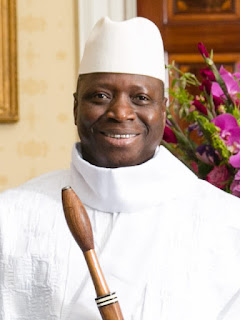
Yahya Jammeh


BY ABDOULIE JOHN

BANJUL, GAMBIA (AP)
— Gambia’s former dictator, Yahya Jammeh, should face prosecution for murder, torture and sexual violence, according to a new report by a truth, reconciliation and reparations commission established after he fled into exile five years ago.

The long-awaited report recommends that a special international court be set up to try Jammeh and others in West Africa, but outside of Gambia.

The report, which is based on years of witness testimonies, already had been presented to President Adama Barrow, but its posting online late Friday marked the first time that the complete findings were made public.

Gambian Justice Minister Amadou Dawda Jallow said that the government was “committed to the implementation of the report,” but wouldn’t release a paper before May on how it plans to go forward.

Reed Brody with the International Commission of Jurists said he expected pressure to now mount on Gambia’s leader “to deliver justice without further delay for victims who have already waited five years, and in some cases much longer.”

“There is still a lot that needs to be done, but I wouldn’t be surprised if we see Yahya Jammeh in a court sooner rather than later,” said Brody, who also played an instrumental role in bringing former Chadian dictator Hissene Habre to trial at a special court in Senegal.

Jammeh, who ruled Gambia for 22 years, lost the 2016 presidential election, but he refused to concede defeat to Barrow. He ultimately took exile in Equatorial Guinea amid threats of a regional military intervention to force him from power.

It remains unclear whether Equatorial Guinean authorities would extradite Jammeh should criminal charges be filed.

Barrow, who ultimately prevailed after the 2016 vote, was reelected earlier this month.

The truth commission was mandated to establish an impartial historical record of abuses committed from July 1994 to January 2017, when Jammeh fled the country. More than two years of hearings that led to the report documented human rights abuses and horrors that occurred under Jammeh’s rule.

Human rights groups say arbitrary arrests, enforced disappearances and summary executions became the hallmark of the regime. Testimonies made by perpetrators before the truth commission confirmed that some killings were done at Jammeh’s direction.

The truth commission report also said that Jammeh had raped women including Fatou Jallow, who later testified before the truth commission and published a book earlier this year about her ordeal.

Jammeh denies any wrongdoing.

Sudanese Rally In New Anti-Coup Protests Amid Tight Security

BY SAM MAGDY

A man chants slogans during a protest to denounce the October military coup, in Khartoum, Sudan, Saturday, Dec. 25, 2021. Sudanese security forces fired tear gas to disperse protesters as thousands rallied since earlier in the day, even as authorities tightened security across Khartoum, deploying troops and closing all bridges over the Nile River linking the capital with its twin city of Omdurman and the district of Bahri, the state-run SUNA news agency reported.(AP Photo/Marwan Ali)


CAIRO (AP) — Sudanese security forces fired tear gas to disperse protesters in Khartoum on Saturday as demonstrators once again took to the streets in the country’s capital and elsewhere to denounce the October military coup.

Thousands rallied since earlier in the day, even as authorities tightened security across Khartoum, deploying troops and closing all bridges over the Nile River linking the capital with its twin city of Omdurman and the district of Bahri, the state-run SUNA news agency reported.

Authorities had warned protesters against approaching “sovereign and strategic” sites in central Khartoum — a reference to main government buildings and key institutions. The city’s Security Committee said Sudanese forces would “deal with chaos and violations,” SUNA had reported.

The marches started in different locations, from where the protesters meant to converge on the presidential palace. Security forces used tear gas to disperse those attempting to approach the palace, said activist Nazim Sirag. There were no immediate reports of injuries.

Rallies were also underway in other cities, including Wad Madani and Atbara.

Last weekend, security forces violently dispersed demonstrators when they attempted to stage a sit-in near the presidential palace. At least three protesters were killed, and more than 300 were wounded on Sunday. There were also allegations of sexual violence, including rape and gang rape by security forces against female protesters, according to the United Nations.

Volker Perthes, the U.N. special envoy for Sudan, urged security forces to “protect” the planned protests, and refrain from arresting people for simply wanting to take part in the demonstrations.

“Freedom of expression is a human right. This includes full access to the internet. No one should be arrested for his or her intention to protest peacefully,” he said in a Twitter post.

Ahead of the demonstrations Saturday, activists reported disruption of internet access on phones in Khartoum, a tactic that had been used by the generals when they seized power on Oct. 25.

Advocacy group NetBlocks said Sudan was experiencing mobile internet disruptions early Saturday. “The mechanism appears similar or identical to that used during the October post-coup blackout,” Alp Toker, the group’s director, told The Associated Press.

The government did not comment on the disruptions.

The October military takeover upended a fragile planned transition to democratic rule and led to relentless street demonstrations across Sudan. At least 47 people were killed and hundreds wounded in protests triggered by the coup, according to a tally by a Sudanese medical group.

Prime Minister Abdalla Hamdok, a former U.N. official seen as the civilian face of Sudan’s transitional government, was reinstated last month amid international pressure in a deal that calls for an independent technocratic Cabinet under military oversight led by him.

That deal, however, was rejected by the pro-democracy movement, which insists that power be handed over to a fully civilian government tasked with leading the transition.

The prime minister is continuing discussions on finding a way out of the political deadlock. He met Friday with leaders of the country’s largest Umma Party, his office said.

Thursday, December 23, 2021

How Multiple Generations Of The Disney Family Come Together To Fund Social Justice In LA and Beyond

BY ADE ADENIJI

Susan Disney-Lord, Chair, Roy Patricia Disney Family Foundation. Image via Inside Philanthropy


Editor’s Note: This article is part of an ongoing series on the many forms of family philanthropy, in partnership with the National Center for Family Philanthropy, and produced by Inside Philanthropy’s editorial team.

It all began at Disney Brothers Cartoon Studio in October 1923. Here, bright young cartoonist Walt Disney and his older brother Roy O. Disney established the upstart studio in Hollywood, California. Walt arrived in Los Angeles from the Midwest after his previous effort, Laugh-O-Gram Studio, went bankrupt. But in sunny Southern California, the brothers found great success, starting with the short film “Alice’s Wonderland,” and then “Steamboat Willie”—which unleashed Mickey Mouse to the world.

Today, the Walt Disney Company boasts some 200,000 employees worldwide with revenues exceeding $67 billion, according to Disney’s annual report for the fiscal year 2021. More recently, Disney has emerged as a major television streaming player powered by Disney Plus and Star Wars sensation “The Mandalorian.”

As for how much the Disney family is worth these days, that’s not entirely clear. According to Walt Disney’s grand-nephew, Roy Patrick Disney, Walt and Roy owned about 20% of the company by 1960 and today the whole family owns less than 3% of it. Most of the family has stayed out of the business.

Many members of the Disney clan have engaged in some significant philanthropy over the years, starting with late matriarch Lillian Disney, Walt’s wife, who helped launch what would become the Walt Disney Concert Hall, with an initial gift of $50 million all the way back in 1987. The venue opened in Downtown Los Angeles in 2003.

Then there’s other branches of the Disney family tree. Roy’s son, Roy E. Disney was a longtime Disney senior executive, and had four children—Susan, Roy P., Tim and Abigail. Now in their 60s, they engage in philanthropy at various levels.

Perhaps the most public Disney philanthropist, Abigail Disney, said she had given away around $70 million as of 2019. She and her husband Pierre founded the Daphne Foundation, which focuses on empowering disenfranchised New Yorkers affected by poverty, violence, and discrimination. Tim Disney, a writer, producer and investor, runs the Adamma Foundation (meaning “beautiful child” in the Nigerian language of Igbo) with his wife Neda, which has similar aims as Daphne but focused on Los Angeles.

And then there’s Susan Disney Lord, mother of five and owner of The Bel-Air, a fine dining restaurant in Los Angeles, where she focuses much of her philanthropy. She’s board chair of the Roy + Patricia Disney Family Foundation (RPDFF), a multi-generational family philanthropy that has upwards of a dozen members of the Disney clan involved in decision-making. The foundation supports a combination of criminal justice reform, housing, and environmental issues in Los Angeles, New Orleans, and Tacoma, Washington, and gives around $6 million annually.

In a recent interview with Susan Disney Lord and RPDFF Executive Director Shawn Escoffrey, I learned more about how Susan and her siblings directed a large bequest toward philanthropy, how the foundation evolved to focus on social justice, and leadership at the foundation, which includes family members, non-family, and a small staff.

A philanthropic start

Daughter of Roy E. Disney, Walt’s nephew, and Patricia Ann Daley, Susan Disney Lord’s earliest experience in philanthropy was working as a candy striper hospital volunteer while in high school, which she really enjoyed. Looming above was the family’s foundation, launched in the 1960s by her grandfather Roy O. Disney.

Susan recalls that when her grandfather passed, her parents began to steer the foundation, focusing on causes personally important to them. The foundation was small and unstaffed. “My father generally gave to what he cared about,” Susan says.

But soon enough, the foundation became a family affair. As she and her siblings each turned 18, they were brought on to the board and allowed to make small annual grants of $10,000 to causes of their choosing. Susan immediately rallied around the cause of supporting a children’s hospital, and says that’s where a bunch of her gifts went for a while.

Around 2000, when Roy E. Disney was in his 60s, Susan and her siblings began to fully steer the Roy and Patricia Disney Family Foundation. Still, as she and her siblings took more control, some of their interests overlapped with their father’s, especially a passion for the environment. For example, the Disney Conservation Fund, since 1995, has directed $100 million to support nonprofit organizations including International Fund for Animal Welfare (IFAW).

“Time to get serious”

Donors ramp up their philanthropy for many reasons. Sometimes it happens when a couple retire from business and have more bandwidth for other projects. In the case of Susan and her siblings, the inflection point came when their mother Patricia passed away in 2012, and left what Susan calls a good deal of money. Susan had been board chair since the 1990s, and so was tasked with hiring staff and really getting serious about how the family conducted their giving.

Their founding CEO, Sylia Obagi, now works at the Arthur M. Blank Foundation. But Susan credits Obagi with “creating something out of nothing,” and helping establish a set of values, rules and regulations. Susan also used this moment to bring her children aboard, much like she was involved with the foundation from her teenage years.

“It’s brought them all in and helped them become educated in philanthropy, even more so than I had been. And I’m really proud of that. They’re all extremely engaged at this point. It’s been maybe eight years now,” Susan says.

In the early days of their revamped foundation, Susan says it was sort of a case of learning as they grew. She says her children are much more sophisticated now and she’s even bringing in her niece, Olivia, to be involved in the board of directors. Early on, though, she says it was a matter of finding a “sweet spot” as far as what the family would collectively focus on. Ultimately, the foundation settled on three key areas—criminal justice reform, affordable housing preservation, and environmental justice.

Today, RPDFF’s small staff includes Executive Director Shawn Escoffery, who once worked at the Surdna Foundation. He joined the foundation in 2018 and Susan credits him with helping make the family’s joint vision cohere.

A three-pronged focus

RPDFF states that its mission is to “invest in innovative solutions and community leaders to build a more just, equitable, and sustainable world in which all people thrive.” The foundation takes a place-based approach to grantmaking, focusing on multi-year general and project-level support, pilot projects, and capacity-building initiatives.

A major geographic focus area for the foundation is Los Angeles, which of course looms large for the Disney family. In L.A., the foundation focuses on at-risk communities in South and East Los Angeles. RPDFF’s grantmaking also touches New Orleans and Tacoma—secondary markets, as the foundation describes them—where other Disney family members have personal ties.

“We all believe that change has to be driven locally and that locally, people know what their community needs are better than any of us could say. I think that’s where the answers come. From right there on the ground and the places where the people are affected the most,” Susan explains.

This social justice lens, which focuses on strategic and systems-level interventions and putting power in the hands of its grantees, took some time to evolve toward, and is animated by several forces. As Susan tells it, this work is really driven by next generation family members who are now in their 20s and a few in their 30s. “They have really awakened because of the political climate and the election a few years ago,” she says.

She also mentions the influence of her sister, Abigail, an active philanthropist and documentary filmmaker who has been increasingly outspoken on political issues. “I’m kind of a lefty, New York City, Manhattan, pointy-headed intellectual type,” Abigail Disney said in an interview in 2019.

Abigail starred in a “NowThis” video voicing her opposition to tax breaks for the wealthy and has used her personal Twitter account to take on Trump. And her film “The Armor of Light,” tells the story of an anti-abortion activist and Evangelical minister who becomes an unlikely activist for gun control.

Abigail’s children, Susan says, were more steeped in the world of philanthropy. “They thought about these things earlier on in life. And so they were always able to add things to the conversation. But all of the kids do care a lot. They don’t want to see injustice. They want to do what they can,” she says.

This shift toward a more progressive outlook is not unique to the Disney family and can be seen in wealthy American families across the country. As the children, grandchildren, and great-grandchildren of a family inherit wealth or a family foundation, they get to decide what traditions to keep, and what new virtues to uphold. That often, though not always, translates to a shift toward concerns over social justice and equality.

The foundation’s three focus areas are brought together by the idea of civic empowerment, understanding that systemic change can only be accomplished through grassroots power building, shifts in political representation and public policy, and ensuring equitable access to resources and influence.

RPDFF’s criminal justice reform portfolio includes Anti-Recidivism Coalition and JustLeadershipUSA, which aims to cut the U.S. prison population in half by 2030. On the environmental justice front, grantees have included East Yard Communities for Environmental Justice. And its affordable housing preservation portfolio backs organizations like East LA Community Corporation (ELACC), a neighborhood-based development organization focusing on social and economic justice.

ELACC helped organize on the ground work to respond to the construction of the Gold Line Metro rail in Los Angeles. Cutting through the Boyle Heights neighborhood, local residents were concerned that land and property would be lost.

“We went from hearing from Metro that there wouldn’t be affordable housing to now every single lot that Metro owns in Boyle Heights already has or will have affordable housing,” explained Isela Gracian, ELACC president.

The foundation is also part of a public-private partnership that includes the Chan Zuckerberg Initiative, focused on a pilot program preserving affordable housing and preventing foreclosures of rental properties in South Los Angeles. If successful, this is a model they hope to bring to all of Los Angeles County.

Giving at home and abroad

Most of the Disney family resides in the Los Angeles area. Patricia was born in New Orleans, where several of Susan’s nieces live. Another niece lives in Tacoma, Washington, influencing giving in that region. In the past, grantmaking also touched New York.

“We try to make sure everyone feels included. That’s part of this whole thing, working with the family, and everyone joining together and making sure they’re being heard,” Susan says.

The foundation also has a unique, time-limited initiative located in Nairobi, Kenya, which is just now wrapping up. The story here, in part, involves Abigail Disney again, who along with her two daughters, Wesleyan alumnae, connected with Kennedy Odede. A Wesleyan man himself, Odede founded Shining Hope for Communities (SHOFCO), a grassroots movement that works in urban slums across Kenya, setting up and running a free school for girls, providing access to clean water and medical care, and helping individuals start small businesses.

Later, a number of Disney family members traveled to the African country.

“My sister [Abigail] actually took all of my kids to Kibera slum, getting down and dirty building latrines while they were there. It was a great experience for them. And Kennedy is such a dynamic and brilliant guy and his wife, as well. So we’ve remained loyal to him. We believe in what he’s doing and that he needs to be able to ramp it up,” Susan says.

RPDFF Executive Director Shawn Escoffery mentions that next year, the foundation is looking to launch a new international program, likely focusing elsewhere in the Global South.

“Over the next couple of months we’ll be meeting with a couple of intermediaries.… We’re looking for places where we can have impact and where our investment can be catalytic,” Escoffery says.

Philanthropy and social justice

I talked to Susan Disney Lord and Shawn Escoffery the very same morning that Kyle Rittenhouse was acquitted, which prompted the question of how philanthropy could be a better ally to social justice.

Susan believes that in addition to listening to voices on the ground, and making local grants in communities, philanthropy also needs to focus on leveraging collective power.

“Anyone working together in advocacy should work together, because your voice just gets louder,” she adds.

The foundation has also tried to make the application process more user friendly so that nonprofits—those vital grassroots organizations on the ground—are less encumbered by paperwork. And once an organization receives a grant, the foundation has tried to reduce the burden of reporting.

In addition, Susan mentioned a program they ran this year that allowed some of their partners and community members to decide where some of the foundation’s money would go. This is a growing trend in philanthropies of all shapes and sizes as more donors seek to share power with participatory giving practices.

“We just got feedback at our last board meeting. It was interesting to hear from them about how it opened their eyes about how challenging it is from the foundation point of view. Obviously, we know they have unique challenges, too.… We’re probably going to do it again next year,” Susan says.

Down in NOLA, and keeping ears to the ground

The Roy and Patricia Disney Family Foundation also works down in New Orleans, where Escoffery once served as deputy director of the New Orleans Neighborhood Development Collaborative (NONDC), a community organizing, planning and housing development organization focused on post- Katrina neighborhood revitalization.

The foundation is partnering with JP Morgan Chase and a housing group, working with small landlords and property owners to preserve affordability and create affordable housing districts.

“It’s another sort of old industrial city,” Escoffery says of New Orleans, adding, “It has the constant start-stop caused by natural disasters. But for the most part it is a very resilient city that’s always focused on trying to be better.”

Escoffery also mentions the Los Angeles Local Rental Owners Collaborative (LROC), a pilot program which offers qualifying owners comprehensive benefits like short-term rental relief grants combined with long-term financial consulting services, technology tools, and property management resources. LROC is a cross-sector collaborative which includes RPDFF, Chan Zuckerberg Initiative (CZI), Coalition for Responsible Community Development (CRCD), and others.

Overall, the foundation makes a point of maintaining a presence in the communities that it serves, whether that is South and East Los Angeles, New Orleans, or Tacoma. Escoffery says he personally shows up to random events in Los Angeles over the weekend, not representing the foundation but just as a community member.

“We want to do everything we can to address power imbalances between grantmakers and grantseekers.… We do a lot more listening than we do talking. It’s about listening to community members and nonprofits, and believing and really hearing what they’re saying,” Escoffery says.

A lean structure, balancing input, and reflecting

Joining Escoffery are a handful of other staff members, including a grants manager and program officer. RPDFF also runs a fellowship program, now in its second year, where the formerly incarcerated are actually staffed at the foundation. This year, the foundation partnered with Project Rebound at California State University Northridge for the fellowship and next year the foundation will pull in a fellow from A New Way of Life, which works with formerly incarcerated women.

With so many family members involved, governance of such a family foundation can be a tricky affair.

Escoffery explained how it operates. RPDFF actually has two boards. Its fiduciary board includes seven people—five family members and two non-family members—and a member board that family members can opt in or out of on an annual basis. This past year, the foundation had 12 active family members total, along with the two non-family members. Members meet at least three times a year and approve all of the grants during those meetings after a presentation by staff. These meetings are well attended, usually at 100%.

Staff present the grants docket and members ask clarifying questions. There’s also a learning component to each meeting where an outside guest speaks. Typically staff update the members on finances and impact investing work as well. Members then host an executive session without staff to end the meeting.

Since the pandemic, the foundation has been meeting virtually. Escoffery has also added a fun activity to each meeting, like a baking or pottery class.

Susan added that she can’t recall an instance where staff brought something to the board that was denied. While board meetings do cover things like financials, leadership spend most of their time talking about grants, she explains. “We know everything that’s been brought to us has been carefully curated and investigated.”

She also says the foundation plans on keeping this lean structure, because that means more money that can be put toward supporting their grantees.

Reflecting on what the foundation has accomplished so far, Susan recalls that their inaugural executive director Sylia Obagi brought in Anti-Recidivism Coalition (ARC). One formerly incarcerated individual, Tommy Morris Jr., spoke and moved the entire room, including Susan and her children. Years later, the foundation made a grant to ARC, bringing in Tommy to work as a fellow at RPDFF for a year.

“Tommy is amazing and he just got a new job at Liberty Hill Foundation. He was a kid who was lost, who wanted to set his life in a better direction.… He was a sponge, just so eager. And now he’s launched a career in the nonprofit world. I can’t think of anything that we’re more proud of than that.”

Susan also reflects on the progress that her own children have made in philanthropy, reminding me that at this point, her own children, and her siblings’ children, far outnumber them in terms of leadership.

“My brother and sister and I really want them to take this on one day and run it. And that’s the vision my mother had. And it’s come to fruition…. We really do take our cue from them,” Susan says.

Better Parenting Starts With Knowing What Works. We Tested A Project In 8 African Countries

BY INGE VALLANCE AND GENEVIEVE HAUPT RONNIE Raising adolescents can be difficult under the best of circumstances. On top of that, some famil...