Friday, December 31, 2021

NIGERIA: How Peace Returned To S-East —Police, Stakeholders

Map of the South-East. Image via Research Gate


*We took war to criminals before Yuletide —Imo Police


*Serious efforts were made to achieve peace —Imo Govt

*Agitators heeded advice of Elders — Ebonyi leader

*Attacks imported by external forces —Methodist Archbishop


By Anayo Okoli, Peter Okutu, Chimaobi Nwaiwu, Chinonso Alozie, Ikechukwu Odu, Emmanuel Iheaka

SOUTH-EAST (VANGUARD)
-- On the heels of the no-sit-at home in the southeast last Monday, relative peace is being experienced in the region after reports of violence, kidnappings by hoodlums for the past few months, burning of police stations and public buildings in the region.


These violent activities are in the past presently and people are move around freely without fear.

Looking back, stakeholders tried to explain the carnage that held sway in the region for months, attributing it to many forces.

For Alaigbo Development Foundation, ADF, “Christmas is a period of celebration and criminals, bandits and unknown gunmen may not be able to put their acts together in such a period.

“Everyone is busy celebrating Christmas and New Year. Crime requires planning and execution. Human beings must be involved in planning and execution. But during Yuletide, it is difficult to gather together for the effective execution of high-level crimes. Everyone is busy celebrating”, ADF spokesman, Abia Onyike said.

In his reaction, the Methodist Archbishop of Okigwe Archdiocese, Most Rev. Livinus Biereonwu Onuagha said the relative peace in the southeast region now and lack of attacks on people and institutions depicts the peaceful nature of an Igbo man.

“The Igbo by nature are not violent people. All violent attacks that have been happening in the S-East were imported and staged by external forces, they are man-made, imported into South East.

The Igbo man is peaceful. We accommodate people and are harmless. All these violent attacks that have been happening in the southeast are imported and staged by external forces. The violence we experienced is alien to the people of the southeast.

“It is not our nature to be violent. So wherever you are seeing violence in the southeast, it is because people who have a vested interest in one area or the other have planted it. The Igbo man by nature is peaceable, he is a communal person and not an individualistic person. The Igbo man loves staying with his people, always likes to be in the midst of his people, his brothers, and sisters. Anytime death happens in the southeast, every aspect of society is brought to a standstill.

“So, you cannot have interest in killing yourself and then you go out and start shouting. It is not part of the Igbo man’s character or style. Violence is alien to us.

“If the Nigerian government will not allow Igbo to become a Republic of Biafra, which is the mindset of many people, the federal government should let us control our resources and develop like Western Germany. They are delaying us, they are delaying the pace of our development.

“Do you know that there is nothing like Chemical Engineering Department in the University of Nigeria Nsukka immediately after the war and up till this moment? Do you know why it is like that? The reason is that our people are proactive. During the war, we used our scientists in the university to fight the war which the whole world fought against us.

“Since then, they don’t want us to move an inch. They just want us to remain at a place that is alien to us. Our nature is development: morning, afternoon, and night. And when you stop our development, you have stopped our breathing and that is exactly what the Nigerian situation is doing to the Igbo man.

“Let them allow us to exercise our God-given nature and potentials in every area of development, every area of the economy. We can do it by the grace of God. We can accommodate t hem at any time but they should not bring in desert spirit to our people.”

We took war to criminals before Yuletide —Imo Police

The police in Imo State said they took war to criminals before the Yuletide, the reason the state recorded crime-free celebration.

State Police Public Relations Officer, CSP Micheal Abattam said that the state police command was proactive about recording a crime-free Yuletide in the state, in line with the assurance made by the Commissioner of Police.

He said the police deployed both uniform and plaincloth personnel to identify flashpoints to tackle any crime attempt.

“The Commissioner of Police, CP Rabiu Hussaini had told Imolites that the Yuletide would be crime-free. He had detailed officers and men and directed them on how best to police the state. If you look around, you will see that we have more policemen on the streets, both uniform and plainclothes policemen.

“Apart from that, he made sure he pushed in enough of our Search and Flush Patrol Teams to man the three senatorial zones. And they are all there.

“Again, the areas we see as black spots, which we felt might give us problems were policed earlier before now. And based on the proactive nature of the tactical teams as directed by the Commissioner of Police, we were able to take the war to the doorsteps of the criminals and a lot of them were arrested. So, instead of causing problems, we removed them and put them where they are supposed to be.

“The Commissioner of Police also made sure that the border areas of the state were manned by fierce policemen. People coming in and going out were searched. If nothing incriminating was found, they are allowed to continue their journey. A lot of criminals were arrested”, he submitted.

Govts should engage youths—Imo AA Chairman

The Chairman, Action Alliance (AA), Imo State, Comrade Ifeanyi Okponwa-Eze, expressed joy over the crime-free celebration recorded in the region.

Okponwa-Eze submitted that there is no alternative to peace, but urged state governments to create jobs to engage youths.

“We thank God for a peaceful Yuletide. We have appealed several times for peace to be given a chance. No matter what the grievances maybe, I do not see any justification in one setting his house on fire. We are the ones to suffer the consequences.

“Imo State and the entire southeast zone had no peace in 2021. As we bid farewell to 2021, and without violence, I want to believe we are also saying bye to violence in South East.

“While we call for peace, governments must rise to their responsibilities as a way of curbing insecurity. Part of the responsibility is the creation of jobs to engage the youths. It is a fact that a high level of unemployment is ravaging the zone, particularly Imo State.

“Governor Hope Uzodimma should rise to the occasion by engaging the youths meaningfully. Good governance has a way of discouraging insecurity.

“In all, we pray and hope for a better and prosperous 2022 that will be devoid of violence”, he stated.

Serious efforts were made to achieve peace—Imo Govt

Reacting, the Imo State government through the state Commissioner for Information and Strategy, Declan Emelumba said: “First of all, let me thank God for giving us the wisdom to achieve this. This goes a long way to prove that the efforts of the Imo State government in collaboration with security agencies have started to yield positive results and which will be sustained to ensure that Imo people enjoy themselves, especially in this yuletide season. I can assure you that the government will sustain it.”

Speaking also, the President of Igbo National Council, INC, Chilos Godsent, said: “What we have is a relative reduction of violence. The reason is because of the intervention by stakeholders and groups to ensure there is peace in the region.

“There was a certain level of intervention urging aggrieved groups to toe the line of dialogue so that the areas of disputes can be resolved and peace will return to the troubled areas.”

Agitators heeded advice of Elders – Ebonyi leader

AN Igbo leader of thought and serving lawmaker of Ebonyi State House of Assembly, Oliver Osi in his reaction explained that the recent peace and calmness within the South East was due to the advice given by the critical Elders to agitating youths of the region.

In his words: “I think one of the reasons peace and calmness returned to the South East region of the country was the critical interventions made by critical leaders of the region.

“Some of them who have access to these unknown gunmen and the leadership of IPOB was able to talk to them. Talking to these persons in the language they will understand brought about the peace and calmness we are witnessing now.

“Again, you are aware that most persons have carried out propaganda against the South East that we do not deserve power in 2023 because we are the supposed problem of the country. That being said, we need to advise ourselves because as you can see, the southeast is favoured to produce the next President of the country.

“This popular political postulation has helped to reduce unnecessary agitations in the region. What is happening in Imo State is politically motivated as it has nothing to do with IPOB or any form of agitation.

“Furthermore, I must say that the peace-making disposition and wisdom of the elders of the region helped to the extent that youths started to jettison the issue of sitting at home.

“They must have equally reasoned as the elders have emphasized that the development was gradually destroying the economy of the south east which was rebuilt after the civil war. So, the development you are witnessing in the region was made possible through the acceptability of popular and genuine argument.”

Enemies are stealing peace in southeast—Ex CBN Director

Reacting to the new development, a former Central Bank of Nigeria, CBN, Director, Mike Ejinima said enemies were trying to steal the peace in southeast.

Ejinima also bemoaned the marginalisation of the zone in the politics of the country, adding that Nigeria would experience unprecedented economic and political fortunes if an Igbo man should become the president of Nigeria.

He equally said that the “no victor, no vanquished,” stance of the federal government was a deceptive assertion of the government, stressing that considering the treatment of the south east zone by the powers that be in Nigeria, the Igbos were the vanquished in the civil war.

He, however, hinged the return of peace in the southeast zone on the gradual identification of the enemies of the zone, who he said were hitherto bent on destroying the investments and people of the zone.

Who Owns The Oil? Okogie Asks

Archbishop Emeritus of Lagos Anthony Olubunmi Okogie. Image: Facebook


BY SAM EYOBOKA

LAGOS (VANGUARD)
-- The fearless outspoken Catholic Archbishop Emeritus of Lagos, Anthony Cardinal Olubunmi Okogie has advanced the controversy involving the former President Olusegun Obasanjo and Ijaw Leader who is also PANDEF Leader, Chief Edwin Kiagbodo Clark together with some lawyers including Senior Advocate of Nigeria, Mike Ozekonme over the ownership of the Niger Delta Oil Wells.

According to the fiery preacher in a lengthy response on Friday: “The inquiry Sonny Okosun made four decades ago in his song “Papa’s Land”, remains a task. “We want to know who owns the land,” he sang. Today, we still need to ask ourselves that question: who owns the land?

“It has once again come to fore in former President Olusegun Obasanjo’s riposte to Chief Edwin Clark. The latter had criticized President Obasanjo of hatred towards the people of Niger Delta. The former denied in self-defence. But if he had stopped at self-defence, it would have been sufficient. He went beyond an apologia pro vita sua to declare that the oil in the Niger Delta belongs to Nigeria. His declaration has helped to formulate a new version of Okosun’s inquiry. The question now is not just: who owns the land? It is: who owns the oil?

The owners of the land own whatever is on the land or under the land. To deprive them of that right is to be patently unjust. Only a regime of imperialist intent would do such a thing. Unfortunately, this has been the Nigerian narrative from the advent of British imperialist colonialists until the current dispensation. The British came, conquered the land around the Niger and its peoples, declared amalgamation, and handed over to a state operated on imperialist logic. That logic is that the land and the peoples belong to the state.

Military rule exacerbated this vicious logic. By the time the coup plotters of July 29, 1966 saw the prospects for oil, the struggle for which was a major factor in the Nigeria-Biafra War of 1967-70, that class of coup plotters created their own Nigerian empire. Soldiers who ought to protect the land dispossessed rightful owners of their land. The principal target was the oil. And, to perpetuate that Nigerian empire of their making, they bequeathed before their first departure in 1979 an imperial constitution dressed in the robes of a federal constitution. That constitution, and its 1999 replica, reposed sovereignty in the state and not in the people, placed Niger-Delta oil under the control of the government at the centre by placing mineral resources on the exclusive legislative list. To ensure protection of the loot, the same constitution placed security of a land as vast and diverse as Nigeria on the exclusive legislative list.

When President Obasanjo made his recent declaration that the oil in the Niger Delta belongs to Nigeria, one cannot but recall that he, as military ruler and head of the remnant of the mutinous soldiers of July 29, 1966, presided over the final redaction of the constitution that places control of Nigeria’s oil under the control of the government at the centre—one hesitates to call it a federal government because what is obtained in this country today cannot be honestly described as federalism.

The inclusion of mineral resources on the exclusive legislative list in the 1979 and 1999 Constitutions effectively legitimizes the unjust deprivation to which the people of Nigeria have been subjected for decades. The declaration that Niger Delta oil belongs to Nigeria justifies the imperialist intent of the final redactors of the 1979 Constitution.

As we all know, the Niger Delta that produces the oil has turned out to be one of the poorest, if not the poorest region of Nigeria. Proceeds from the sale of Niger Delta oil have been used and is still being used to service the expensive but ineffective government that the twin constitutions have imposed on Nigerians. Proceeds from the sale of this same oil have been used to build bridges and highways in Lagos, and in Abuja where there are not rivers, while the Niger Delta, full of rivers and creeks has only a few bridges.

President Obasanjo’s declaration, as disturbing as it is, reminds us of an act of injustice that urgently needs to be redressed, and that is: Nigeria is not set up to benefit the regional, ethnic or religious community to which government functionaries belong; Nigeria is set up to benefit the elite from these communities. Whichever section of the elite gains access to corridors of power in Abuja or state capitals or local government areas gains access to Nigeria’s oil wealth. That is why our elections are muddy and bloody.

Contrary to President Obasanjo’s declaration, the oil in the Niger Delta does not belong to Nigeria. Neither does it belong to the state or local governments in that region. It belongs to the people of the region. Land belongs to the people, not to the government. The resources on the land, any land, not just the Niger Delta, belongs to the people and not to the government. Nigeria’s problems became greater when government decided to get into oil business. That is the major contributing factor to corruption, poverty and insecurity.

Given our historical and geographical inter-connectedness, our various ethnic communities will do business with each other with the resources we have on our land. The Niger Deltan needs onions and tomatoes to cook his Banga soup. The farmer in northern Nigeria who produces onions and tomatoes needs petroleum products to drive his tractors. Their respective needs compel them to start an economic union that must precede a political union. Unfortunately in Nigeria, we have been insisting on a political union without an economic union. So we end up making this country a land of monkey dey work baboon dey chop.

It is in our interest to form a political union where any Nigerian can settle and acquire property anywhere in Nigeria, do business and contribute to the common good. But the current imperialist constitution, predicated on President Obasanjo’s recent declaration, needs to undergo far-reaching amendments. Not to do so is to continue to provoke cries of marginalization. It is to allow the wounds of corruption, insecurity, and poverty to fester.

Thursday, December 30, 2021

Vatican Agency Reveals Number Of Missionaries Murdered Around World During 2021


VATICAN PRESS OFFICE (CATHOLIC NEWS AGENCY) -- 22 Catholic missionaries were killed around the world in 2021, half of them in Africa, according to a report released by the Fides News Agency and distributed Thursday by the Vatican press office.

Fides, the news agency of the Congregation for the Evangelization of Peoples, reported that of the 22 missionaries killed in 2021, 13 were priests, two were women religious, one was a male religious, and six were lay people. Half of the total were killed in Africa: seven priests, two religious sisters, and two lay people.

In its report, Fides explains that their annual list “has not only included missionaries ad gentes in the strict sense, but has tried to register all Catholic Christians engaged in some way in a pastoral activity who died violently, not expressly ‘in hatred of the faith’.”

According to the report, seven missionaries were murdered in Latin America, three in Asia, and one in Europe.

“In recent years, Africa and Latin America have alternated in the first place of this tragic ranking. From 2000 to 2020, according to our data, 536 missionaries were killed worldwide,” says the report.

The full report (in a MSWord document,) provides a detailed list of all the missionaries; but summarizes the motives and different circumstances of their killing: “Parish priests killed in their communities, in Africa and the Americas, tortured, kidnapped by criminals in search of non-existent treasures or attracted by the mirage of easy redemptions or to silence uncomfortable voices, which urged not to passively submit to the regime of crime; priests engaged in social works, as in Haiti, killed to rob them of what was needed to run such activities, or even killed by those they were helping, as in France, or in Venezuela, where a religious was killed by thieves in the same school where he taught to young people how to build a future.”

“Nuns hunted and killed in cold blood by bandits in South Sudan. And still many lay people, whose number is growing: catechists killed by armed clashes together with the communities that animated South Sudan; youths killed by snipers while trying to bring aid to displaced people fleeing clashes between the army and guerrillas in Myanmar; a female lay missionary brutally murdered to steal her cellphone in Peru.”

The Fides report, nevertheless, avoids any mention of the number of Catholics in Africa, mostly priests, killed by Islamist radicals, especially in Nigeria. The report only mentions the victims as being killed by “a group of armed men,” with no mention to their connection to radical Islamist organizations in sub-Saharan Africa such as Boko Haram.

According to Fides, to this list, “must be added the long list of the many, of whom perhaps we will never know or whose name we will not even know, who in every corner of the planet suffer and pay with their lives their faith in Jesus Christ.”

The Catholic News Agency (CNA) has been, since 2004, one of the fastest growing Catholic news providers to the English speaking world. The Catholic News Agency takes much of its mission from its sister agency, ACI Prensa, which was founded in Lima, Peru, in 1980 by Fr. Adalbert Marie Mohm (†1986).

THE OLD MEN’S FIGHT OVER RESOURCE CONTROL

Bolaji Adebiyi argues that the conversations around resource control should shift from ownership to impact

Combo of former President Olusegun Obasanjo and Edwin Clark. Image via Trust TV

BY BOLAJI ADEBIYI

DECEMBER 30, 2021 (THIS DAY) -- The altercation between the nation’s former president, Olusegun Obasanjo, and former information minister, Edwin Clark, over the ownership of oil resources beneath the ground of Niger Delta earlier this week roused a dormant debate which unless resolved quickly would continue to be a sore point in the nation’s conversations on the control of its mineral resources.

Although both old men raised no fresh issues safe to advance the existing divide on the matter, their passion even at their age reinstated the seriousness and the continuous danger the irresolution of the contention posed to the prospect of the nation remaining one and indivisible country.


Clark fired the first salvo when he accused Obasanjo of being a Niger Delta hater for the reason of the former president’s insistence that the oil-rich region could not exclusively appropriate the ownership of the black gold simply because it is located under its soil. The Ijaw leader only echoed the widespread belief in the region that it ought to control the exploitation of the oil resource and pay tax to the federal government. This proposition has the sympathy of many politicians, policy analysts and academics from the southern part of the country. Its other name is resource control, a component of the much-touted but controversial restructuring.

Obasanjo’s response denied hating anybody or group, stating for the record that his position has the backing of the 1999 Constitution as altered and the laws regulating the control and exploitation of mineral resources generally, including oil. To ground his contention, he cited Section 140 of the 1963 Constitution which implied ownership and control of mineral resources was in the hands of the federal government but established the derivation principle. Subsequent grundnorms have adopted this provision. His citation seeks to correct the popular notion that it was the military that hijacked the control of mineral resources from the states for the federation.

Without a doubt, Obasanjo’s position is robustly grounded in the constitution and the law. And none of his trenchant critics, including Mike Ozekhome, learned silk and social activist, has been able to successfully argue with the former president’s tenacious hugging of the strictly legal and constitutional point, which incidentally is largely supported by northern politicians, policy analysts and academics.

Put simply, Obasanjo argues the law while Clark’s case is essentially a proposition for the review of it. Ordinarily, these two are not mutually exclusive and it was in the realisation of this that they had been the source of hot debates at every post-independence constituent assembly and constitutional conference in the country. Yet despite the heat at the meets, there had always been a middle ground. The challenge was the implementation of the consensus.

There are three main issues: ownership, control and distribution of benefits from mineral resources. The constitution and mining rights laws placed all three in the hands of the federal government but established the derivation principle by dedicating a percentage of the financial resources derived from mineral exploration and exploitation to the state where the resource is located. The derivation principle speaks to the sense of social justice which seeks to ensure that a mineral-bearing entity derives equitable benefits from the resource located in its soil and environment.

The case for federal control is that Nigeria being a federation, its resources must be preserved and used for the benefits of the entire unit in order that no part of the whole is left behind in terms of economic and social development. The regionalists do not necessarily disagree with the federalists on this but make the point that regional ownership and control would not deprive the rest of the federation of the benefits of the resource since taxes from proceeds would be paid to the centre.

These positions were canvassed at the three post-independent constitutional conferences in 1994, 2005 and 2014 and the matters were resolved in favour of federal control with compromises on derivation. Although the regionalists, having lost the argument for control, asked for a return to the 50 per cent derivation principle enshrined in the 1963 Constitution, not less than 13 per cent was approved in 1994, up to 17 per cent in 2005 while the 2014 conference advised that a technical committee be set up to advise on the percentage to be allocated to derivation.

Somehow, safe for the 1994 recommendation that was eventually incorporated into the 1999 Constitution as altered, the follow-up conferences’ recommendations were never implemented. It is the frustrations arising from the none implementation of the latter conferences coupled with the lack of positive impact of the subsisting 13 per cent derivation principle on the oil-bearing communities as well as the inequitable application of the principle across the board that has continued to generate tension in the oil-bearing region and communities.

The frustrations are two-fold. Despite the application of the 13 per cent derivation, most communities in the oil-bearing states are still steep in poverty and underdevelopment with the oil-bearing communities worst off. Youth restiveness and agitations for a better deal manifested in the militancy in the region forcing the federal government to deploy enormous security assets to calm the region. When this failed, pacification policies, including the establishment of development intervention agencies such as the Niger Delta Development Commission and Amnesty Programme were deployed. That too would appear to have failed to mitigate the abject poverty and under-development of the oil-bearing communities.

The other level of frustration is the inequitable application of the derivation principle. Whereas the federal government has enforced its control of the oil resource in the Niger Delta and other littoral states, including Imo, Anambra and Lagos, it has been unable to exert the same control over the mining of rich mineral resources including gold in most part of the North, particularly Kebbi and Zamfara States, with the effect that individuals and the state governments have been exploring and exploiting those benefits for their exclusive benefits. Salt was added to injury sometime last year when the Central Bank of Nigeria bought some gold bars from the Zamfara State government. It is this type of double standard that has continued to fuel the resource control debate and agitation.

The way forward to hemming the agitations, therefore, is to shift the conversation more towards not only the equitable application of the derivation principle but also a just distribution of the benefits of proceeds of mining resources in such a way that it maximally impacts the resource-bearing communities in particular and the generality of Nigerians in general. From what we have seen so far, the impact on both the host communities and the generality of Nigerians has been abysmally low with the outcome that the nearer you are to the rich resource the more poverty-stricken you are. This, therefore, is the substantive issue, and the inequity and social injustice cannot persist without dire consequences for the polity.

Adebiyi, the managing editor of THISDAY Newspapers, writes from bolaji.adebiyi@thisdayonline.com

One Of Calgary's Top Lawyers Charles Osuji Recipient Of Prestigious Awards In 2021

PRESS RELEASE
Charles Osuji. Image courtesy of Charles Osuji


CALGARY, AB, DECEMBER 30, 2021 (24-7 PRESS RELEASE) — Osuji’s acclaim began in 2016 when he was nominated as the 2016 Professional of the Year by Obsidian, Alberta. The next year, he was rated one of the Top 3 Employment Lawyers in Calgary, Alberta for 2017 – an award he’s won every year since then.

2021 Awards & Recognition for Charles Osuji

This winning trend continues today. In 2021, Osuji added many awards and recognitions to his already lengthy list of accomplishments, including being named “one of the best lawyers in Canada.”

Lexpert Rising Star: 2021 Leading Lawyers Under 40, Canada

Every year, Lexpert selects lawyers who are “at the top of their professional game while still dedicated to giving back.” This year, Lexpert named Charles Osuji a 2021 Rising Star in Canada’s Leading Lawyers Under 40 category.

Osuji has risen in the Canadian legal community “fast and furiously” while maintaining his humility, kindness, and generosity with his time and professional talent. “His unique combination of high intellect, tireless work ethic and business acumen fuels this rising star, but Osuji remains grounded by his role as a model citizen for all young professionals.”

Best Lawyers: Ones to Watch in Canada, 2022

Charles Osuji was recognized and chosen by peer review as a Best Lawyers: Ones to Watch in Canada, 2022, for his outstanding professional excellence in private practice. For Osuji, this award is “yet another confirmation that there’s a place for you at the table if you consistently put in the work and keep a good name while surrounded by a tribe of supporters…There are no limits!”

2021 Avenue Calgary Top 40 Under 40

Avenue Calgary recognized Osuji as a Top 40 Under 40 this year for his ability to “champion diversity at his law firm and mentor other immigrants to succeed in business. Osuji says, “Excellence in diversity – that’s the story I want to tell.” And he tells it well by inspiring, hiring, and mentoring locally and internationally trained lawyers from a range of cultural heritages.

2021 Power of Inclusion Community Award

The Council of Nigerian Professionals, an organization that empowers people to enrich our community with a focus on Canada’s socio-economic and political needs, recognized Osuji’s contributions to the community with the Power of Inclusion Community Award.

The Power of Inclusion Award is given to “individuals, leaders and community members working tirelessly within their sphere of influence to be inclusive of others irrespective of culture, creed, beliefs, social class, sexual orientation and more.”

2021 Top 25 DEI Persons of the Year Award

The Canadian Multicultural Group named Charles Osuji one of the Top 25 DEI Persons of the Year in 2021. The Group recognized Osuji’s unique approach to law and leadership, and highlighted the prominence of diversity in his practice.

Evidence of this diversity is in the multilingual staff at Osuji & Smith, who speak English, Igbo, Bengali, Edo, Spanish, Arabic, Japanese, Korean, Arabic, French, Hindi, Punjabi, Gujarati, Marathi, and Urdu.

Top 3 Lawyers in Calgary, Alberta

Besides all this national recognition, Osuji was recognized as one of the Top 3 Employment Lawyers in Calgary, Alberta by ThreeBestRated for the fifth year in a row. He was also named one of the Top 3 Business Lawyers in Calgary, Alberta for the third year in a row, and one of the Top 3 Divorce Lawyers in Calgary, Top 3 Estate Planning Lawyers in Calgary, and Top 3 Civil Litigation Lawyers in Calgary, Alberta for the second year in a row.

2021 Nominations

The accolades don’t end there for Charles Osuji in 2021. In addition to the awards, he was nominated for the Black Excellence Award by Calgary Black Chambers, the 2021 Les Prix Canie Awards’ Black Entrepreneur Award, and the 2021 Torch Awards by Better Business Bureau.

Ongoing Nominations & Awards for Charles Osuji

The acclamation of 2021 followed increasing recognition in 2020, including being named a Young Influencer by Canadian Magazine in their list of Canada’s Top 25 Most Influential Lawyers, and the 2020 Immigrant of Distinction (Achievement Under 35) Award by Immigrant Services Calgary.

Osuji was also nominated for the 2020 Employer Awards for Newcomer Employment by Immigration, Refugees and Citizenship Canada and the 2020 Canadian Bar Association’s Douglas Miller Rising Star Award.

Awards Osuji won in 2019 included the 2019 Hope Awards by Aspen Family and Community Network Society, the 2019 Entrepreneur of the Year (Afro Canadians) Award by Diversity Magazine, and the 2019 CY Ekwulugo Award for Volunteering and Community Service, courtesy of the Igbo Cultural Association of Calgary, Alberta.

Influential & Award-Winning Lawyer Charles Osuji

Despite all this attention, Osuji remains dedicated to giving back to the community in various ways while leading his own law firm with excellence. His entrepreneurial, multicultural, and holistic approach to the practice of law makes him a role model for diversity and the legal profession in general.

Besides running a free legal clinic primarily for Calgary’s newcomer population, and mentoring Canadian immigrants through the Calgary Catholic Immigration Society, Osuji continues to offer his expertise with:

– Alberta Legal Aid,
– the Alberta Law Society Lawyer Referral Service,
– Igbo Cultural Association of Calgary,
– the Mustard Seed,
– Habitat for Humanity, and
– his church, where he plays piano.

Osuji’s law firm Osuji & Smith Lawyers has won awards and recognitions as well, including:

Top Choice of Business Law Services of 2021 in Calgary
– 2021 Best Business in Canada by Canadian Business Review Board
– Best Employment Lawyers in Calgary
– Best Real Estate Lawyers in Calgary
– Best Family Lawyers in Calgary
– Best Divorce Lawyers in Calgary

Osuji & Smith Lawyers provides services in various areas of law including employment and labour law, family, real estate, wills and estate, corporate commercial and business, personal injury, civil litigation, and immigration law.

Contact Lawyer Charles Osuji, one of Calgary’s top lawyers, at 403-283-8018 or by email at info@osujismith.ca.

Founded in 1980, Osuji & Smith: Calgary Employment, Business & Family Lawyers is a diverse, fast-growing, award-winning Calgary full-service law firm with a focus on Employment Law, Civil Litigation, Real Estate, Family & Divorce, Personal Injury, Immigration, Business and Corporate, Wills and Estate.

Wednesday, December 29, 2021

2021: The Year Of Failed Political Leadership

BY NANJALANYABOLA
AL JAZEERA

A protester holds a placard during a demonstration demanding more action while G20 climate and environment ministers hold a meeting in Naples, Italy, July 22, 2021 [File: Reuters/Guglielmo Mangiapane]


This year has shown that governance guided only by ideology without any concern for moral outcomes is dangerous.

2021 was the year of political leadership, or more importantly, lack of it, and an invitation to reflect on the social consequences of leadership failures. I think for many of us, it was the year that felt like when time slows down while you are witnessing an accident happen – two seconds that feel like two minutes – or in this case, twelve months that feel like a decade of closings, openings, lockdowns, mandates, curfews, hoarding and devastation.


In this year, in which millions of people lost everything, we are reminded that the purpose of leadership goes beyond telling people what to do. We are prompted to consider – in the spirit of recently departed philosopher bell hooks – how governance that has no love for the people it oversees is vulnerable to tyranny and failure.

Since the end of World War II, the dominant thinking in political science was that we were all stuck in a battle for ideas, that ideology was the most important thing to debate and that everything would flow from that. Communism versus capitalism was the thing, never mind the violence that proponents of both ideologies inflicted all around the world in the name of ideology.

Capitalist governments assassinated communist leaders in poor countries and funded shadow wars while ignoring the leadership vacuums they created, while communist governments sponsored never-ending conflicts while discounting their human cost.

From the so-called Third World, we watched as each side went to exactly the same extreme as the other, often in our countries, but tried to reassure us that when they enacted violence on us, it was out of love and when the other side did it, it was out of greed and hatred.

There was only limited engagement with the moral claims that the various leaders made: what mattered was that they sang from the correct ideological hymnbook.

2021 has reminded us that governance guided only by ideology without any concern for moral outcomes is a dangerous and deadly trap. Around the world, countries of various political persuasion are making a mockery of the claim that ideology can be an accurate predictor of how a country will perform in the middle of a crisis.

The main challenge is of course the COVID-19 pandemic, crashing into its third year and causing unprecedented upheaval and devastation. At the time of writing there were 280 million cases reported worldwide and up to 5.4 million deaths – i.e. the equivalent of a country the size of Slovakia being wiped out.

With the Omicron variant, countries like France and the United States are reporting their highest number of cases since the beginning of the pandemic, despite having vaccines in abundance. At the same time, there is a real anxiety in countries that have been denied access to vaccines through the complicity of the world’s wealthiest nations that this is the wave that will break through their meagre defences and the cycle of lockdowns and travel bans they have been depending on.

But it is not just COVID-19 that has revealed the paucity of moral leadership in the world. The global refugee and migrant crisis continues, with an increasing number of people on the move all over the world because of conflict, economic collapse and climate change.

The return of the Taliban in Afghanistan left hundreds of thousands of Afghans scrambling for an exit, the vast majority ending up in neighbouring countries like Pakistan and Iran without a plan except to avoid the reprisals that have since been enacted against those considered to have collaborated with the US occupation. In Myanmar, minorities persecuted by the junta are arriving in Bangladesh and Thailand by the hundreds, while the slow collapse of several Central American nations into political uncertainty and gang violence continues to send caravans towards the US-Mexico border.

The Mediterranean Sea remains a watery grave for thousands of people denied safe routes to asylum or migration while the English Channel and the Belarussian-Polish border have turned into new fronts where European countries can play politics with the lives of vulnerable people. Uighur people are still languishing in detention camps in China and the war in Yemen rages on, driven by Gulf countries and fought with weapons manufactured in the West.

2021 was also the year that the climate crisis hinted at the scale of devastation that is knocking at our doors. Flood waters rushed through and destroyed towns and cities in countries as far apart as Germany, the Philippines, Australia, Indonesia and Brazil. Unprecedented rainfall all over the world surged rivers that had quietly run their course for hundreds of years and they suddenly burst their banks.

In 2021, temperatures in the Arctic peaked, while scientists warned that Antarctica’s Doomsday Glacier threatens to collapse in the next three years and could raise sea levels by more than half a metre (about 20 inches), damning coastal cities like New York, Mumbai, and Mombasa. And yet, the UN Climate Conference held in Glasgow culminated in a mealy-mouthed statement and a heartbroken conference chair softly weeping at the podium as a result of the failure.

2021 is an invitation to reconsider ideology as the be all and end all for measuring how governments perform, inviting us instead to judge them by what they do and not just what they say. The capitalism of the United States has failed to deliver a meaningful response to the COVID-19 pandemic; it has secured a glut of vaccines but failed in establishing a functioning COVID-19 testing system or retaining medical staff, as doctors and nurses leave the profession for lack of support.

Meanwhile tiny communist Cuba has developed its own vaccine, fully inoculated 85 percent of its population and kept a low mortality rate of 0.9 percent compared to the US’s 1.6 percent.

Canada, often vaunted as an example of democracy and progress has been one of the worst offenders in regards to hoarding vaccines and taking discriminatory political action, including racist bans against Southern African countries for flagging the emergence of the new strain.

Russia is spoiling for a war in Ukraine even while the COVID-19 death rate in the country hovers at around 2.9 percent.

By contrast, the leadership of Prime Minister Jacinda Adern in New Zealand continues to set a new global standard for what governance beyond rhetoric and ideological competition should look like – providing for people, maintaining open lines of communication between government and the governed, responding swiftly to emerging challenges.

All of these contradictions and more are an invitation to think beyond ideology as a simplistic frame of reference. 2021 has reminded us that there is an emptiness behind the simplistic “us-versus-them” narratives that currently dominate political thinking and practice. These are approaches to politics that are centred on competition rather than cooperation, and jingoistic nationalism that privileges the political survival of the few over the collective well-being of the many.

In the spirit of bell hooks, whose untimely death has robbed the world of a scholar who created a framework of thinking about politics and society rooted in values like love, 2021 was the year that a tiny virus invited us to remember why we enter society in the first place – to make sure that we are all better off and not to pursue empty ideological triumphs at the expense of others. Political leaders should take heed if 2022 is to be any better.


Nanjala Nyabola is a writer and political analyst based in Nairobi, Kenya. She is the author of "Digital Democracy, Analogue Politics", a book on the impact of the internet on Kenyan politics (Zed Books, 2018)

US Catholic Clergy Shortage Eased By Recruits from Africa

The Rev. Athanasius Abanulo introduces newborn, Nathalia Perez, to the congregation at Immaculate Conception Catholic Church on Sunday, Dec. 12, 2021, in Wedowee, Ala. Originally from Nigeria, Abanulo is one of numerous international clergy helping ease a U.S. priest shortage by serving in Catholic dioceses across the country. (AP Photo/Jessie Wardarski)


BY KWASI GYAMFI ASIEDU

WEDOWEE,  ALA. (ASSOCIATED PRESS)
--The Rev. Athanasius Chidi Abanulo — using skills honed in his African homeland to minister effectively in rural Alabama— determines just how long he can stretch out his Sunday homilies based on who is sitting in the pews.

Seven minutes is the sweet spot for the mostly white and retired parishioners who attend the English-language Mass at Immaculate Conception Catholic Church in the small town of Wedowee. “If you go beyond that, you lose the attention of the people,” he said.

For the Spanish-language Mass an hour later, the Nigerian-born priest — one of numerous African clergy serving in the U.S. — knows he can quadruple his teaching time. “The more you preach, the better for them,” he said.

As he moves from one American post to the next, Abanulo has learned how to tailor his ministry to the culture of the communities he is serving while infusing some of the spirit of his homeland into the universal rhythms of the Mass.

“Nigerian people are relaxed when they come to church,” Abanulo said. “They love to sing, they love to dance. The liturgy can last for two hours. They don’t worry about that.”

During his 18 years in the U.S., Abanulo has filled various chaplain and pastor roles across the country, epitomizing an ongoing trend in the American Catholic church. As fewer American-born men and women enter seminaries and convents, U.S. dioceses and Catholic institutions have turned to international recruitment to fill their vacancies.

The Diocese of Birmingham, where Abanulo leads two parishes, has widened its search for clergy to places with burgeoning religious vocations like Nigeria and Cameroon, said Birmingham Bishop Steven Raica. Priests from Africa were also vital in the Michigan diocese where Raica previously served.

“They have been an enormous help to us to be able to provide the breadth and scope of ministry that we have available to us,” he said.

Africa is the Catholic church’s fastest-growing region. There, the seminaries are “fairly full,” said the Rev. Thomas Gaunt, director of Georgetown University’s Center for Applied Research in the Apostolate, which conducts research about the Catholic church.

It’s different in the U.S. where the Catholic church faces significant hurdles in recruiting home-grown clergy following decades of declining church attendance and the damaging effects of widespread clergy sex abuse scandals.

Catholic women and married men remain barred from the priesthood; arguments that lifting those bans would ease the priest shortage have not gained traction with the faith’s top leadership.

“What we have is a much smaller number beginning in the 1970s entering seminaries or to convents across the country,” Gaunt said. “Those who entered back in the ‘50s and ’60s are now elderly and so the numbers are determined much more by mortality.”

From 1970 to 2020, the number of priests in the U.S. dropped by 60%, according to data from the Georgetown center. This has left more than 3,500 parishes without a resident pastor.

Abanulo oversees two parishes in rural Alabama. His typical Sunday starts with an English-language Mass at Holy Family Catholic Church in Lanett, about 125 miles (200 kilometers) from Birmingham along the Alabama-Georgia state line. After that, he is driven an hour north to Wedowee, where he celebrates one Mass in English, another in Spanish.

“He just breaks out in song and a lot of his lectures, he ties in his boyhood, and I just love hearing those stories,” said Amber Moosman, a first-grade teacher who has been a parishioner at Holy Family since 1988.

For Moosman, Abanulo’s preaching style is very different from the priests she’s witnessed previously. “There was no all of a sudden, the priest sings, nothing like that…It was very quiet, very ceremonial, very strict,” she said. “It’s a lot different now.”

Abanulo was ordained in Nigeria in 1990 and came to the U.S. in 2003 after a stint in Chad. His first U.S. role was as an associate pastor in the diocese of Oakland, California, where his ministry focused on the fast-growing Nigerian Catholic community. Since then, he has been a hospital chaplain and pastor in Nashville, Tennessee, and a chaplain at the University of Alabama.

Amid the U.S. clergy shortage, religious sisters have experienced the sharpest declines, dropping 75% since 1970, according to the Georgetown center.

When Maria Sheri Rukwishuro was told she was being sent from the Sisters of the Infant Jesus order in Zimbabwe to West Virginia to work as a missionary nun, she asked her mother superior, “Where is West Virginia?”

She was scared, worrying about the unknowns.

“What kind of people am I going to? I’m just a Black nun coming to a white country,” Rukwishuro told The Associated Press from Clarksburg, West Virginia, where she has been teaching religious education to public and Catholic school students since arriving in 2004.

Rukwishuro vividly remembers that at her introduction, a little girl walked to her and “rubbed her finger on my fingers all the way, then she looked at her finger and she smiled but my heart sank…She thought I was dirty.” Despite that, Rukwishuro says most people have been very welcoming. She’s now a U.S. citizen and says, “It feels like home.”

One of her first culture shocks was an overnight snowfall. “I really screamed. I thought it was the end of the world,” she said. “Now I love it. I do my meditations to that.”

During their integration into American life, it is commonplace for newly arrived clergy to face culture shocks.

For Sister Christiana Onyewuche of Nigeria, a hospital chaplain in Boston administering last rites for the dying, it was cremation. She recalled thinking, “Like really? …How can they burn somebody? I can’t even imagine.”

She came to the U.S. 18 years ago and previously served as the president of African Conference of Catholic Clergy and Religious, a support group for African missionaries serving in the U.S.

Onyewuche said African clergy can face communication challenges with the Americans they serve. To address this, many dioceses have offered training to soften accents, she said. Abanulo, who went through the training in Oakland, says it helped him slow down his speech and improve his pronunciations.

Abanulo, who moved to Alabama in 2020, admits he was initially apprehensive about his latest posting, which meant exchanging a comfortable role as university chaplain for two rural parishes.

“People were telling me ‘Father, don’t go there. The people there are rednecks,’” he said.

But after a year, and a warm reception, he says he now tells his friends, “There are no rednecks here. All I see are Jesus necks.”

Associated Press religion coverage receives support from the Lilly Endowment through The Conversation U.S. The AP is solely responsible for this content.

There Are No African American Saints. A Lay Catholic Group Seeks To Change That

 BY ALEJANDRA MOLINA

Thea Bowman is among six African American candidates for sainthood. Bowman, the only African American member of the Franciscan Sisters of Perpetual Adoration, died in 1990 at age 52


Frustrated with a church that didn't reflect his identity, Ralph Moore went into St. Pius Church in West Baltimore late one night with his friends and painted the statues of Jesus and Mary black — a "parting shot" before he left Catholicism.

He recalled a Stations of the Cross depiction — painting Jesus black but leaving white the Roman soldiers abusing him, tugging at his clothes. To Moore, this was a statement on Black liberation.

"We were trying to make the church relevant," said Moore, who remembers sitting in church wondering, "Why are all the images here white?"

This was 50 years ago. Moore has since returned to the church and is now part of a lay Catholic effort that's pushing Pope Francis to canonize six African American candidates into sainthood. It's fitting, Moore said, to commemorate this anniversary by continuing "to teach the institution who God is, because white supremacy practices don't come from God, they come from men."

Moore is a member of the social justice committee at St. Ann's Church in East Baltimore that for the past two months has been collecting several hundred signatures on a letter they drafted and addressed to Francis, highlighting how embarrassing it is "that in the church where we worship, there are no United States African American saints recognized by the highest church authorities."

Of the more than 10,000 men and women recognized as saints, which includes 11 Americans and a total of 899 that have been canonized by Francis, none are African Americans.

"They don't see us. We're like hidden members and they need to learn how to see us," Moore said. 

On Dec. 14, they mailed their first batch of more than 1,000 letters to the Vatican. The effort, which began in November, is ongoing. The movement is organized by parishioners of St. Ann's, St. Francis Xavier and St. Wenceslaus.

But the advocates are doing more than calling for sainthood; they're also urging the pope to redefine the rigorous process the Catholic Church undergoes toward canonization. The process is "unfair" and reaps "uneven results," the advocates say.

As Dorian Llywelyn, president of the Institute for Advanced Catholic Studies, notes in The Conversation, the process, which examines the life and holiness of a candidate, can take years or even centuries.

It starts with a bishop opening an investigation into the life of a person, after their death, who's carried a reputation for "exceptional holiness." The person, at this stage, can be given the title "Servant of God," Llywelyn writes, and further research is needed to reach the "Venerable" recognition, which is the next stage in canonization.

All six of the African American candidates have been deemed "Servants of God," and Toussaint, Tolton and DeLille are Venerable.

Next is beatification, "when someone is declared 'Blessed,'" during which, as Llywelyn notes, the Vatican is usually required to confirm the person performed a "miracle" by interceding with God. Two miracles are required in order to be declared a saint.

But instead of focusing on miracles, Ralph Moore said the church should recognize the hardships African American Catholics have endured over the years — being expected to sit in the back of the church or receiving Communion only after white Catholics had done so.

"African Americans and brown people, particularly in this country, have endured enslavement, have endured segregation even within churches, have endured mass incarceration and mass poverty, and yet we have remained faithful," Ralph Moore said.

"Martin Luther King used to say that unearned suffering is redemptive, and we think we've had unearned suffering in this country, in this church, and that should be enough," he added.

Members of this effort say they have received nationwide support, including from white Americans and from people of other faiths. The movement was launched Nov. 1 with a Mass at St. Ann's, where parishioners carried portraits of the six candidates for sainthood.

To Betty Lutz, a cradle Catholic who is white, "this deficit in church attention is so blatant that even white people get it."

"This endeavor has taken on a life of its own when people are informed," said Lutz, who is a member of the social justice committee.

Mary Sewell, also a member of the committee, said this movement "really opened my eyes."

"Although I was raised a Catholic, I never thought of a white saint, black saint. I didn't realize there were no (African American) saints, and once that presented to me, I saw the realization of it. I was proud to jump on this cause," Sewell said.

The Untold Truth Of Palm Oil

Palm oil plantation in Malaysia. Image: Carol Nora/Getty


BY ANITA SUREWICZ

From baked goods to toothpaste, palm oil is an ingredient in a huge number of everyday staples. In fact, each of us consumes around eight kilograms of palm oil a year (via Guardian). Grown on oil palm trees, palm oil comes in two varieties. The first one is extracted from the mesocarp or pulp that sits between the seed or kernel and the outer skin of the fruit. And the second is from the fruit's kernel. While the former is commonly used in edibles, the latter makes frequent appearances in products such as cosmetics, soaps, and candles. Palm oil is also often used to make biofuels (via Report Linker).

There's a good reason why palm oil is such a popular commodity. The crop is cheap and efficient to grow — the tall, leafy plants need around one-ninth of the land required by some other oil-producing crops to cultivate the same amount of vegetable oil (via Mongabay News). The news isn't all good, however. Despite its effectiveness, palm oil has attracted its fair share of controversy, with the contentious plant blamed for deforestation, loss of biodiversity, and increased CO2 emissions. Keep reading to find out more about this ubiquitous ingredient.

Palm oil originated in West Africa

Palm fruit, kernels, and oil were already a part of the West African diet around 5,000 years ago. Indigenous to the area, the crop became popular in Western and Central Africa after a prolonged dry period some 2,500 years ago when it was grown in semi-wild groves. Today, palm oil is still used in West African cuisine and is a key element of Nigeria's Yoruba culture. "When a couple is about to get married, [their loved ones] bless them with palm oil and they say, may their life be as sweet as the palm oil is," Simi Adebajo, the head chef and owner of San Francisco catering business Eko Kitchen told Eater.

The palm oil boom in Europe started with the slave trade in the 16th century when the crop was used to feed enslaved African people while in transit on ships. Later, palm oil started being used to lubricate machinery and make soap. After the African slave trade was made illegal in 1807, Europeans continued to transport palm oil as a product. In fact, when European countries divided Africa at the Berlin Conference of 1884, England ended up with colonial powers over Nigeria, partly due to the influence of a British palm oil estate owner George Goldie who had been transporting the commodity from West Africa.

Most of the world's palm oil is harvested in Indonesia and Malaysia

While Nigeria remains a substantial producer of palm oil, today most of the crop is harvested in Indonesia and Malaysia. In fact, the two Southeast Asian countries make up 84% of the world's palm oil production (via Green Palm). This isn't surprising since the optimal growing conditions for palm oil are the tropical climates within 10 degrees of the equator. And West Africa stopped being an appealing producer option in the 1960s due to the region's deteriorating political situation.

Palm oil is not indigenous to Southeast Asia. Rather, it was first brought to the region as an ornamental plant in the 19th century. The story is that Dutch botanists planted some of the first palm oil seedlings at the botanical gardens in Bogor just outside Indonesia's capital Jakarta. Impressed with how well the plants adapted to the Southeast Asian climate, Belgian entrepreneur Adrien Hallet founded Indonesia's first palm oil plantation at Poeloe Radja in Sumatra in 1911. He then helped to establish Malaysia's first commercial plantation in Selangor in 1917. In 1936, Sumatra alone had eclipsed Nigeria in palm oil exports. By 1939, there were more than 100,000 hectares of estates in Malaysia and Indonesia (via China Dialogue).

Palm oil is an extremely efficient crop

Out of the world's four main oil crops — the other three include sunflower oil, canola oil, and soybean oil — palm oil is by far the most efficient. Around 40% of the world's palm oil is grown on just 6% of the land used to cultivate all other vegetable oils (via CSPO). According to The Conversation, over 50 million additional hectares of land would be required if other oil crops were to replace the edible oil produced by palm trees.

More specifically, a single palm tree can produce approximately 40 kilograms of palm oil annually, with one hectare of the crop producing around 3.8 tons of palm oil every year — this is seven times more than canola oil plants, 10 times more than sunflower oil plants, and 11 times more than soybean oil plants (via Palm Oil Alliance). In addition, palm oil trees have a 25-year life cycle and are a perennial crop that produces fruit all year long.

Palm oil is popular for cooking

Not all oils — or cooking fats — are created equal. Some fats, such as olive oil, are great when consumed cold as a part of salad dressings while others perform better as cooking oils. Palm oil has a rich and creamy texture and no smell, which makes it a favorite ingredient in grilling, frying, sautéing, and baking. Palm oil is also rich in vitamin E tocotrienols, an antioxidant credited with delaying the aging process. Plus, red palm oil retains its vitamin E content even after it's been used for frying three times when other oils lose their vitamin content after a single use. On the downside, palm oil is relatively high in saturated fats, a substance that has been linked with heart disease (via WebMD).

Some oils release toxic chemicals when heated above a certain temperature. Since saturated fats are more stable when heated and palm oil is composed of around 50% saturated fat, it's extremely heat resistant, which makes it great for cooking. Palm oil has a smoke point of 450 degrees Fahrenheit compared to 380 degrees Fahrenheit for olive oil and 400 degrees Fahrenheit for canola oil (via Palm Oil Health). In addition, palm oil acts as a natural preservative for both edibles and other products, allowing food products to retain both their flavor and texture for longer.

Around half of the goods purchased in the U.S. contain palm oil

From ready-to-eat foods to cosmetics or even glue, around 50% of the goods sold in the U.S. contain palm oil. The ingredient is commonly used in lipsticks since it's tasteless and has a high melting point and smooth application. It's also often used to pre-cook instant noodles, and to give a creamy texture to both ice cream and cookies. Margarine is also packed with palm oil due to the fact that the ingredient solidifies at room temperature and contains no trans fats. Away from edibles, palm oil can be found in shampoos, detergents, soaps, and washing powders (via World Wildlife Fund).

Telling whether a product contains palm oil can be a tall order since its derivatives are often listed under a plethora of names, such as glyceryl stearate, Elaeis guineensis, or stearic acid (via Friends of the Earth). And while palm oil is ubiquitous on supermarket shelves, only around 10% of products that contain it feature the words "palm oil" clearly marked on the label (via Guardian).

Palm oil is used in the biofuel industry

Biofuels, or fuels made from plant products, were once considered an eco-friendly alternative to diesel and petrol. In 2003, the E.U. mandated that biofuels would have to make up 10% of all fuel used for transport by 2020. However, things didn't work out according to plan. A 2015 report found that greenhouse emissions caused by palm oil-related deforestation were three times higher than the CO2 emissions they replaced. Not surprisingly, the E.U. has now taken steps to reduce imports of palm oil used to make biofuels. (via China Dialogue).

Today, only a tiny percentage of palm oil is used for biofuel production in Western countries, with most of it added to food products and cosmetics. More specifically, only around 5% of the palm oil imported into the E.U. was utilized as an energy source for electricity, heat, and biodiesel in 2016. The U.S. uses corn and soybeans, rather than palm oil, to produce biodiesel (via BMC). Unfortunately, while the E.U is working to reduce palm oil biofuels, some Asian countries such as Indonesia and Malaysia are actually moving to increase their use of biodiesel.

Palm oil is one of the leading causes of deforestation and biodiversity loss

According to Rainforest Rescue, palm oil plantations cover over 27 million hectares of land across the globe. And each year, more and more tropical rainforests are being decimated to make room for palm oil plantations. It's been estimated that an area the size of 300 football fields is cleared each hour to make way for palm oil estates. According to satellite data released by Global Forest Watch, the size of humid primary forest decreased by 10% in Indonesia and 17% in Malaysia between 2002 and 2020 due to forest clearing (via Bloomberg).

The relentless deforestation has had a devastating effect on wildlife, destroying the habitat of endangered species such as Sumatran rhinos and orangutans. A 2020 study found that Bornean Orangutans lost over one-third of their habitat due to land clearing from 1973 to 2015. In addition, palm oil-related deforestation is currently a threat to around 200 at-risk animal species (via Union for the Conservation of Nature).

Palm oil also contributes to greenhouse gas emissions and global warming through the processing and transportation of the product. According to the International Council on Clean Transportation, palm oil plantations contribute to the release of around 500 million tons of carbon dioxide each year — this is 1.4% of the world's net CO2 emissions (via Bloomberg). This is partly because peatlands, which contain 10 times the carbon of mineral soil, are burned to make way for plantations, releasing huge amounts of CO2 into the atmosphere (via The Great Projects).

Demand for palm oil is on the rise

Palm oil is widely used in edibles, cosmetics, and other products, and the demand for the crop is not showing any signs of slowing down. In 2020, more than 73 million tons of palm oil were consumed worldwide. And the demand for the crop is projected to quadruple by 2050 reaching around 250 to 300 million tons (via Eater). Likewise, the global palm oil market is expected to grow from $42.8 billion in 2020 to $57.2 billion by 2026.

The global need for palm oil has been growing steadily along with globalization. In the U.S. and Europe, palm oil imports started increasing dramatically after the regulators began banning unhealthy trans fats from edible goods. Between 1995 and 2015 alone, the yearly production of palm oil increased four-fold from 15.2 million tons to 62.6 million tons (via Guardian). In the U.S., palm oil imports increased almost tenfold from 2000 to 2020, with the country making up 26.98% of the world's palm oil market share in 2021.

Certified sustainable palm oil products are better for the planet

While palm oil is blamed for deforestation and loss of biodiversity in Southeast Asia, boycotting the product is unlikely to be an answer to the problem. In Malaysia and Indonesia, around 4.5 million people make a living from palm oil. And since palm oil is such an effective crop, replacing it with another product would require even more land, which would mean even more logging and burning of peatland.

Luckily, the rise of sustainable palm oil production in the past 15 years is leading to a shift in the production methods within the industry. The movement has been spurred by governments and organizations such as the Roundtable on Sustainable Palm Oil (RSPO), which has set standards to improve sustainability across the industry. Companies within the palm oil production chain that adhere to these standards receive the Certified Sustainable Palm Oil (CSPO) accreditation. Set up in 2004, today RSPO has over 4,000 members, with 20% of the palm oil cultivated in 2020 classified as CSPO (via The Conversation).

ESPN's Top 10 Male African Footballers Of 2021


Mohamed Salah. Image: Paul Ellis/AFP via Getty


As 2021 draws to a close, ESPN's Ed Dove ranks the top 10 male African players in the world during the calendar year.

10. Kalidou Koulibaly

Still the outstanding African centre-back in world football -- despite competition from Joel Matip -- Koulibaly also retained his place in the ESPN FC 100 this year.

He may have dropped from fourth place in 2020 to seventh this time around, but his value to Napoli remains undiminished.

The 30-year-old's highlight this season was the late winner in Napoli's comeback victory over Juventus in September, and he was influential as the Partenopei went 12 games unbeaten to start the campaign.

Indeed, across the first 11 fixtures in which Koulibaly featured, they conceded just three goals -- keeping eight clean sheets -- while their drop in form since his recent injury setback has been marked.

In their last four fixtures -- all without the Senegal stopper -- Napoli have lost three and conceded five. The composed defender's importance to their title challenge has never been more evident.

9. Emmanuel Dennis

Squeezing out fellow Nigerian strikers Taiwo Awoniyi and Dominic Solanke to make the top 10, Dennis is enjoying a remarkable redemption arc in the Premier League with Watford.

When 2020 came to a close, the forward was best known as being the guy who had stormed off the Club Brugge team bus ahead of a Champions League game with Borussia Dortmund after finding someone else sat in his seat. It was a ludicrous fit of pique from the striker, and allowed concerns about his off-field character to detract from his on-field qualities.

A loan move to FC Koln didn't work out -- zero goals in nine Bundesliga appearances meant he ended 2020-21 without a single league goal in Germany or Belgium -- and eyebrows were raised when he signed for Watford during the offseason.

The club were stung by the disastrous acquisition of Dennis's compatriot Isaac Success -- another whose off-field 'reputation' goes before him -- but the new boy has been a revelation in Hertfordshire so far.

He's scored eight and contributed five assists this term -- only Mohamed Salah has had a hand in more Premier League goals -- while Dennis's club form has also led to a return to international football and a spot in Nigeria's Africa Cup of Nations squad.

8. Victor Osimhen

Another African star at Napoli whose injury woes have slowed their title challenge, Osimhen finally started finding his feet in Serie A in 2021 after a testing start to life in Italy in 2020.

In fairness to Osimhen, he's had to overcome various complications in Napoli -- from an elevated transfer fee to a coronavirus diagnosis, from injuries to the dismissal of mentor Gennaro Gattuso -- but he's excelled under Luciano Spalletti.

Osimhen was averaging a goal every other game in Serie A before sustaining a shocking injury against Internazionale last month, beginning the campaign with a run of nine goals eight fixtures in all competitions.

His improving link-up with his fellow forwards at Napoli is further testament to his improvement, while he is also realising the Rashidi Yekini parallels by top scoring for Nigeria during the Africa Cup of Nations qualification campaign.

Super Eagles fans will now be praying that he has recovered fully from his facial injury in order to star for the West African giants in Cameroon.

7. Franck Kessie

Currently the subject of reported transfer interest from Tottenham Hotspur and Paris Saint-Germain, Kessie has taken his game to new heights over the last 12 months.

Already, he started the 2020-21 season strongly as AC Milan sought to return to the pinnacle of the Italian game, and has continued to grow in stature at the San Siro.

His defensive qualities were not previously in doubt, but Kessie has demonstrated his aptitude as a leader -- steadily replacing the influence of ageing and increasingly injury-prone Zlatan Ibrahimovic -- and as a difference-maker in the biggest matches.

"Franck is a complete player," Milan coach Stefano Pioli told journalists earlier this year. "He gives us physicality, energy, quality, protects the defence and knits the moves going forward too.

"He has this eternally positive mentality during the matches, he's the first to help out a teammate or reassure them."

After bagging a career-high 13 goals last term, he already has five this season, and is eclipsing Thomas Partey as the finest African midfielder of his generation.

6. Sebastien Haller

Like Dennis, Haller is also rebuilding his reputation in game following a failed move to West Ham United and a £45 million price tag that weighed heavy upon him.

Despite winning the Premier League Goal of the Month award in December 2020, he signed for Ajax in January and hit the ground running -- registering 11 in 19 outings en route to an Eredivisie winner's medal.

Of course, there was the Europa League fiasco -- when an administrative error at the club meant he wasn't registered for the knockout stages -- but Haller has made up for lost time in the Champions League this term.

He's 10 goals in six group-stage matches means he's the quickest player to hit double figures in the competition, and he became the first player to score four goals on his UCL debut since Marco van Basten 29 years ago when he devastated Sporting Lisbon in September.

Only Cristiano Ronaldo has previously scored in all six group-stage games, while Haller already has 12 in 17 Eredivisie games and tops the league's goalscoring charts.

5. Achraf Hakimi

Admittedly, things haven't entirely gone to plan for Hakimi since signing for Paris Saint-Germain during the offseason, although there's still optimism that the Ligue 1 giants will yet compete for the biggest honours this term.

Nonetheless, there have still been some outstanding moments from the right-back since leaving Internazionale during the offseason, notably the double against FC Metz in September and a magnificent vibrant display down PSG's right flank as they defeated Manchester City in the Champions League.

Parisian fans will be keen to see the quality Hakimi demonstrated during Inter's title-winning campaign on a consistent basis at the Parc des Princes, with the Morocco international proving his ability to influence the tightest matches during the title run-in.

Notably, he contributed an assist for Nicolo Barella as Inter defeated Crotone 2-0 to win their first title for 11 years, and ended the season with 15 goal contributions before bidding 'arrivederci' to Lombardy.

4. Sadio Mane

Just missing out on our top three, Mane struggled to maintain his high standards over the last 12 months, and even described the 2020-21 campaign as the worst of his career.

It's testament to his high standards that, even though he acknowledged some very real self-doubt, he still ended the year with 11 goals and a further seven assists.

This term, he's already struck seven times in the Reds' first 19 games of the season as they've returned to the title picture, and appears well placed to lead a strong Senegal team to their first African title at next month's Africa Cup of Nations.

3. Riyad Mahrez

Last season was the campaign when Mahrez truly proved that he was a player who could decide the biggest games, rather than merely decorate them.

Compare, for example, Pep Guardiola's decision to omit the Algeria playmaker from Manchester City's ill-fated Champions League exit by Olympique Lyonnais in the 2019-20 season, to the semifinal double-header against Paris Saint-Germain earlier this year.

Mahrez's performances in those matches -- in which he scored three of City's four goals across both legs -- were among the finest by an African player at the business end of club football's biggest competition.

He already has five goals in six UCL group stage matches this term, eclipsing Lionel Messi when City again squared off with a bolstered PSG team.

With nine goals/assists in 15 league games so far this season, the 30-year-old appears to be at the top of his game as City look to defend their Premier League crown.

2. Edouard Mendy

Mendy's omission from the Ballon d'Or shortlist prompted an outcry within African football, and surely the Senegal stopper deserved more credit than he got for his maiden season at Chelsea.

After breaking several records during his first months at Stamford Bridge in late 2020, the goalkeeper further established himself during Thomas Tuchel's early tenure.

Not only did he become the first African goalkeeper to start in a Champions League final, but he also won it as Chelsea defeated Manchester City to win the top prize in the European game.

Mendy was largely untroubled in the final, although his save to deny Karim Benzema in the semifinal victory over Real Madrid was the kind of key intervention that should have led to greater recognition among the Ballon d'Or panel.

1. Mohamed Salah

Salah's 2021 can be split into two halves, although goals and match-winning contributions have been a consistent for the Egypt superstar across a magnificent calendar year in which he's further established himself as Africa's finest player.

During the latter portion of 2020-21, his focus was on salvaging Liverpool's miserable season, weighing in with a series of inspired displays -- and 31 goals -- as the Reds ousted Leicester City from the Champions League qualifying positions.

This season, the goals have been even more relentless, as Salah has focused on helping Jurgen Klopp's side -- now without the injury woes that hamstrung them last term -- return to the pinnacle of the Premier League.

He equalled Jamie Vardy's record for making a goal contribution in 15 consecutive top flight matches while simultaneously becoming the first Liverpool player since Ian Rush to hit 20 goals in five successive campaigns.

Salah surely deserved better than his seventh-placed finish in the Ballon d'Or.

Honourable Mentions

Andre Frank Zambo-Anguissa, Joel Matip, Silas Katompa Mvumpa, Ben Malango, Evan Ndicka, Taiwo Awoniyi, Dominic Solanke, Amine Gouiri, Kamaldeen Sulemana, Patson Daka

130 Years After, Nigerian Researchers Declare Bishop Ajayi Crowther National Hero

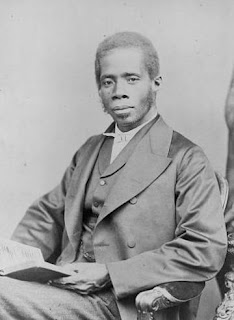
Samuel Ajai Crowther
 

LAGOS, NIGERIA (NAN)--The researchers say it is imperative to look into the life and times of the Bishop Ajayi Crowther 130 years after his death.

Samuel Ajayi Crowther, Nigeria’s foremost clergyman, deserves to be declared a national hero, some researchers say.

The late cleric was the multi-linguist who translated the Holy Bible into Yoruba language.

He was born at Osogun in present-day Ibarapa East Local Government Area of Oyo State around 1807 and died in Lagos on Dec. 31, 1891.

His death predated Nigeria as a country.

Slave traders captured him alongside members of his family when he was 12 years old. He was later returned to Sierra Leone.

Pelumi Awofeso is one of the researchers who spoke with the News Agency of Nigeria (NAN) in Lagos on Tuesday about Mr Crowther.

He said it was imperative to look into the life and times of the cleric 130 years after his departure.

“I started the research about Bishop Crowther after I stumbled on a tweet that talked about his death.

“Looking at the date at which he died, I realised that it is a milestone to celebrate him and dig out more research about him and his activities as a priest, educator, linguist, nationalist and a peacemaker.


“I thought it wise that something should be done in terms of having a documentary about him.

“I do not know the plans of the Anglican Communion, a church where he served as a bishop,’’ he said.

Mr Awofeso said what Mr Crowther stood for has not been fully appreciated adding that his life transcended the Bible translation to his nationalistic movement.

“Bishop Crowther did not translate the entire Bible in one fell swoop, when he was in Badagry as he moved from place to place on other assignments.

“It took him about 40 years to complete the translation.

“All that he did would be exposed in the documentary and how he created national consciousness among the people he met and his impact as an evangelist,’’ he said.

Findings

He also said the team of researchers has been able to unravel more about Mr Crowther after visiting 12 states.

“The team found that there are more than a thousand things he did which are not in the peoples’ consciousness.


“Bishop Crowther could be described as a man of passion who translated the Bible when there was no formal alphabetical order, no electricity, technology or other luxury that we enjoy these days.

“The man was able to keep his sanity in spite of the harsh conditions around him; he was also a linguist of repute who could be regarded as a Professor Emeritus of languages in our time,’’ he added.

“Bishop Crowther’s character and comportment had a lot to teach us in this 21st century. We have it on record that he was able to speak and teach 13 languages both foreign and local.

“He was a self-taught linguist in Latin, Nupe, Igbo, Hausa and other languages. He was always keeping the journals of his travels across the globe.

“Bishop Crowther also authored the Yoruba Primer and other books used in the Anglican Communion.

“He was a man that appreciated western education and always made sure that he built schools anywhere he went to evangelize.

“Many did not know his profession as a carpenter aside from his ministerial work as a priest and also had a lot of empowerment programmes for the people,’’ he stressed.
Funding

Mr Awofeso called for support for the project from Nigerians, noting that the documentary was a self- funded adventure running into millions of Naira.

A co-researcher, Sesede Simeon, also told NAN that Mr Crowther was well grounded educationally and had his education at the highest levels during his time.

“After Bishop Crowther was resettled in Sierra Leone, he was schooled at the famous Fourah Bay College and later he studied Latin and Greek and other things he could learn.

“He lived in different cities such as Ota, Abeokuta, Lokoja, Bonny Island, Freetown, Asaba and many more. He was also awarded an honorary Doctoral Degree at Oxford University.


“I think the sage had been grossly undervalued and underappreciated in the scheme of things.


“It takes a lot before a Blackman could rise to the level of a Bishop in a White-dominated setting.

“We need to attach the requisite honour to this man because he was a hero by all standards,’’ she said.

Better Parenting Starts With Knowing What Works. We Tested A Project In 8 African Countries

BY INGE VALLANCE AND GENEVIEVE HAUPT RONNIE Raising adolescents can be difficult under the best of circumstances. On top of that, some famil...